On Citizenship

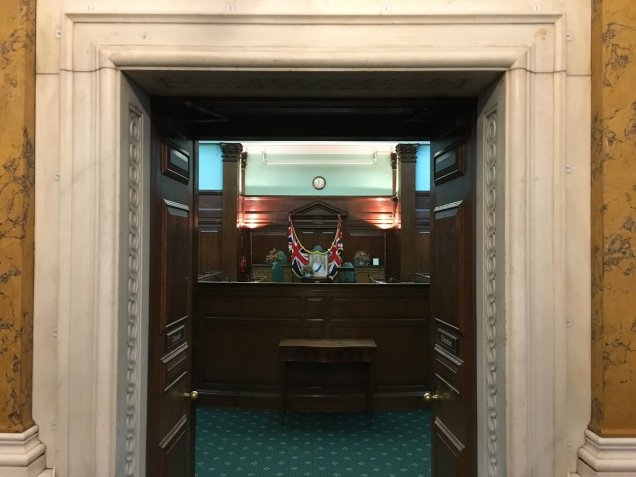
Camden Town Hall council chamber doorway - Citizenship ceremony - British UK flags and Queen Elizabeth portrait

The unexpectedly moving experience of watching forty strangers become fellow citizens and compatriots at a UK citizenship ceremony

“Citizenship is more than an individual exchange of freedoms for rights; it is also membership in a body politic, a nation, and a community”
— Melissa Harris-Perry

“There can be no daily democracy without daily citizenship”
— Ralph Nader

On Wednesday this week I had the privilege of attending a citizenship ceremony at Camden Town Hall, as my American wife finally took the oaths and became a British citizen.

This journey has been quite the odyssey for us. Jenny first came to this country on a short study abroad programme, staying for only a matter of months. She returned a couple of years later to study for her postgraduate degree, which is when we met, and after marrying we moved back to London (she on a spousal visa) and have been living here together since 2012.

The subsequent steps – applying for indefinite leave to remain, studying for and taking the Life in the UK test, providing biometric data more often than one would think necessary given the unchanging nature of one’s fingerprints and of course forking over large sums of money to the Home Office at regular intervals – were frequently stressful and time consuming, but there was never a question that this was a step we were going to take.

Britain is home for Jenny just as much as is the United States of America. She may have stubbornly refused to learn the 24-hour clock, use Celsius when talking about the weather or guzzle tea ten times a day along with everyone else at her office, but she is indisputably a proud Brit and a Londoner. She understands our cultural quirks, appreciates our history, loves the natural beauty of our countryside and maintains a richer social life and a wider network of British friends than I have ever cobbled together for myself.

Thus, naturalisation was simply a case of formalising on paper a transformation which had already taken place in her heart and mind. Jenny was already British in pectore; we were simply waiting for the legal side of things to catch up with reality. And so it was that I found myself sitting in the gallery of the council chamber at Camden Town Hall in King’s Cross, witnessing my wife and a diverse group of strangers complete the long and arduous process to become something which (through accident of birth) I have been fortunate to take for granted my entire life.

It was a genuine honour to be present as over 40 people from all backgrounds, races, religions and countries of birth solemnly affirmed their commitment to our United Kingdom. Many people are content to live in this country, building lives here, contributing and receiving back, without making this gesture of commitment. But I believe that it is very important, and admire those who do so.

Citizenship is more than a basket of rights, privileges and perks. It is also a binding commitment to the society in which we live. Choosing to naturalise means a willingness to undertake obligations as well as demand one’s due. Becoming a citizen is a declaration that one is bound to one’s fellow citizens by something more than temporary convenience or the accidental byproduct of an overseas work assignment or relationship.

This bond is hard to describe or put down in words, which is perhaps why so many self-declared “citizens of the world” – people who consider themselves to have transcended national alignment and who flit from place to place without ever making a binding commitment to anywhere they set foot – don’t understand why it matters.

But if you have built a life in Britain over the course of years or even decades, why would one not want to formalise that connection? Yes it costs money, and yes the Home Office does its damnedest to make the process as bureaucratic, expensive, frustrating and opaque as possible, often actively throwing barriers in the way of people who desperately want citizenship. But if one has the means and the opportunity, why not take the pledge and acquire the passport? Failing to do so is the civic version of cohabiting with a partner but never marrying, one foot always out the door, one eye always casting around for something better.

If I was a non-citizen living in Britain, I would take citizenship in a heartbeat. In fact, as a natural born citizen of this country I was almost envious that the immigrants who were naturalised today in King’s Cross were able to solemnly mark the event. Those of us born here often take our citizenship for granted, but these immigrants strove and sacrificed to attain their status.

With the ongoing debates around Brexit, I encounter all manner of arguments from people who clearly don’t understand the first thing about what citizenship entails or represents. For example, many are genuinely outraged that EU citizens could not vote in the 2016 referendum. I find it to be astonishing that people who live here but are unwilling to share the bond of citizenship with me seriously believe that they should still have the right to help determine the future of my country.

At this point I inevitably hear outraged spluttering along the lines of “I pay my taxes / serve in Our Blessed NHS / help employ local people, so why shouldn’t I have a say?” But this only highlights the transactional view of citizenship that many now hold, with paying taxes and claiming benefits the only relationship one might possibly have with a country.

And to be fair this transactional view of citizenship is also encouraged by the UK government, which rather than pursuing an immigration policy optimised for economic growth, social stability or national security instead blindly chases an arbitrary and unattainably low net migration number. When the state makes clear its view of immigrants as a problem to be mitigated and prospective citizens as purely a bureaucratic burden to be processed it is difficult to demand greater fealty or civic engagement from immigrants themselves.

Yet citizenship still matters, despite its somewhat tarnished image. Only citizens are able to participate fully in our civic life – voting, running for office, serving on a jury. If one is unwilling to undertake these commitments 99% of the time, as long-term EU residents who choose not to take citizenship are essentially declaring, you can’t object when you are then prohibited for participating in the one very specific event (voting in the EU referendum) in which you have a direct interest. That kind of cafeteria civics would represent a one-way flow of benefits from the state to the individual and undermine the reciprocity needed for society to function.

The Brexit debate has highlighted just how degraded our conception of citizenship has become. With reduced and increasingly ineffectual armed forces, only a very limited opportunity for national service (the National Citizen Service being one of the few entirely positive policies enacted by David Cameron) and our exquisite embarrassment about any display of patriotism, it is really no wonder that we have come to see citizenship as just a bunch of perks.

As I wrote back in September last year:

This very transactional approach has frayed the contract or bond between citizen/resident and the state. Of course, people still expect the state to protect them from foreign foes, guard against domestic security threats, provide healthcare, offer a welfare safety net and distribute various domestic and EU services. But even as they make these demands they offer rapidly diminishing loyalty to the state in which they live. People are increasingly insatiable for the benefits while being less and less willing to accept the responsibility.

I am sure that some of those who naturalised in the citizenship ceremony today did so for purely practical or transactional reasons. But I hope that even they will look back on today with pride and now feel a deeper connection to the country they call home.

Ultimately there is nothing magical about naturalisation. The certificate does not hold any special magical powers. It is not a measure of personal worth, and of course many UK residents who are non-citizens on paper are far better citizens in practice than many of us who are natural born. Naturalisation is just one indicator, albeit a very important one, of an important responsibility solemnly accepted.

Of course, none of this will be the case in perpetuity. The nation state is not forever, and in a century or two, civics and geopolitics will doubtless look very different. But for now, the nation state remains the best guarantor of freedom and incubator of prosperity that mankind has yet devised, and attachment to the nation state has been the means of securing these blessings for an individual. Wishing for its premature demise is foolish.

To those citizens of the world, outraged by Brexit, who hold their EU citizenship more dear than their British citizenship, I would simply point out that any objective, dispassionate analysis shows us that the European Union is not the only (nor best) vehicle for international cooperation, its status as the natural successor to the nation state is far from certain and it will never possess the essential spirit of democracy until there is a European demos – a body of citizens willing to take the oath that my wife and forty others willingly gave to the United Kingdom.

Watching these people – as diverse as one would imagine forty people randomly plucked from the streets of Camden to be – take the oaths of allegiance was to witness them transform from being strangers and fellow immigrants to being compatriots. It was nearly as emotional for me, sitting perched in the gallery, as it clearly was for many of them.

And if only more of us knew the journey involved and the sacrifices made by these people so that they might share the same rights and responsibilities that we enjoy as British citizens, we would not be so cavalier about our own citizenship and all that it represents.

Camden Town Hall council chamber - view from public gallery - Citizenship ceremony

Oath of allegiance - British UK Citizenship ceremony

Support Semi-Partisan Politics with a one-time or recurring donation:

Agree with this article? Violently disagree? Scroll down to leave a comment.

Follow Semi-Partisan Politics on TwitterFacebook and Medium.

Are Technocrats To Blame For The Rise Of The Know-Nothing Celebrity Politician?

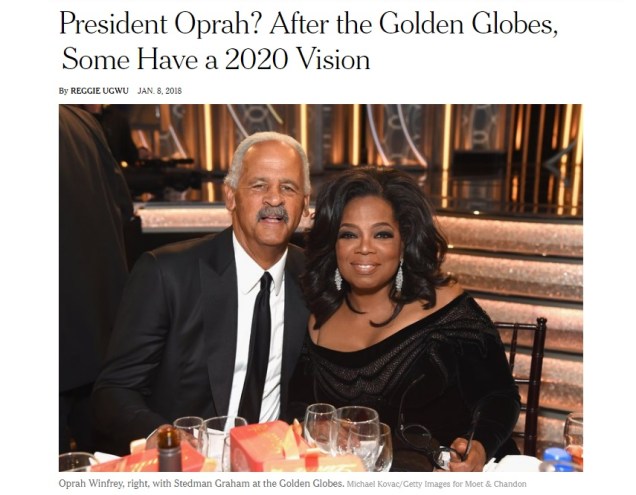
Oprah Winfrey - Golden Globes acceptance speech - MeToo - President Oprah

When unelected technocrats increasingly set policy and carry out the day-to-day business of governance we should not be surprised that electoral politics, castrated and less consequential than ever before, is becoming a circus freak show

Michael Brendan Dougherty has a new piece in the National Review which so succinctly captures the state of Western democratic politics that busy as I am this week, I feel the immediate need to blog a response/reaction to it.

Dougherty’s jumping off point is the sudden, feverish interest among assorted leftists and Democrats for television personality Oprah Winfrey (yes…) to run for president against Donald Trump in 2020, driven almost entirely by a speech Winfrey gave about the #MeToo movement while picking up an award at last night’s Golden Globes.

You might think it a little hypocritical for people who have spent the past two years bashing Donald Trump as an inexperienced dilettante in way over his head, a reality TV blowhard with no credentials and no right to occupy the office he holds, to immediately embrace a similar figure from their own side of the political divide – and you would be correct in thinking so. But the mere fact that voters are being drawn to these celebrity candidates is itself noteworthy, and crucially, Dougherty places the blame not with the voters but with the bland, interchangeable technocrats of the political class who offer those voters no compelling alternative.

Dougherty writes:

The average voter is going to be blamed for this. The great disdain of the educated class will fall on the Uhmurkans who have been hypnotized by their televisions. Maybe some of that’s right. But I blame the wonks. It was the wonks who, unawares, made the celebrity president not just desirable but logically necessary.

The wonk’s role is well-fitted to the centrist political ideal in the post–Cold War West. For them, government is most highly admirable when it is totally denuded of questions of value or morality (these having obvious and uncontroversial answers), and reduced to a purely technical exercise. The politician working with the wonk finds that his job is reconciling the public with what’s good for them. And this fits the machinery of the executive branch, which is filled with hundreds of thousands of civil servants, overseen by a much smaller retinue of political appointees almost all chosen from within the governing class of the country. Where this model of government is most advanced — in Europe — policy questions are routinely taken away from the passions of democratic peoples, and quarantined for expert management.

Taken together, these trends are more or less the abolition of traditional democratic politics. And so there is little use for the traditional politician, a person of judgment and charisma who represents the community from which he or she emerges, using his own wisdom in reconciling the diverse interests and needs of his nation and constituency.

You couldn’t write a better paragraph describing the impact of Westminster centrism and EU integration on our democracy, even though Dougherty is talking in his essay about American politics as much as European. On both sides of the Atlantic, political leaders have behaved as though we are living in the End of History even when Francis Fukuyama’s prediction has long since been disproven through bitter experience. Elections, while often bitter and hard fought, have generally offered little meaningful choice when it comes to big questions about how the nation can best order society and relate to the world. Even when political rhetoric has been heated and the candidates have seemed very different, the economic system and world order they ultimately support has tended to be the same, an embrace of the status quo.

Michael Lind also wrote at length in 2017 about the severing of the compact between the ruling class and the governed, with those in the political, professional and creative classes increasingly feeling no bond of kinship with or obligation to others in society, those they look down upon for holding “incorrect” or “oppressive views” (which can often be taken to mean “that which was mainstream twenty years ago”. And many politicians, nearly all drawn from this class (or inducted into it soon after election) do indeed spend their time explaining and defending the status quo to the citizens they nominally represent, rather than striving to change the status quo on their behalf.

I noted the same phenomenon only last month, in the context of Brexit:

Look at the big issues facing the West and the world in general in 2017 – global migration flows, Islamist terror, globalisation, outsourcing, automation and more – and there is not one of these complex problems which we as a country have failed to comprehensively sweep under the rug or otherwise avoid meeting the challenge.

Even on those occasions when the people have recognised burning problems and the need for bold new solutions, public opinion (such as on Brexit and immigration) has been repeatedly slapped down over the years by a cohort of politicians who think it is their job to explain and defend the current status quo to the citizenry rather than change the status quo according to the demands of the citizenry.

As I have also written, this managerialist technocratic approach to government, with the wonks in the driving seat and politicians as mere interlocutors to the public can potentially be justifiable when things are in steady-state, when times are good, society and the economy stable and when no large threats loom on the horizon. However, rather than a benevolent steady-state we instead live in interesting times, with numerous opportunities and threats ranged around us. This is the discontinuity about which I have been writing so much of late.

In such periods of discontinuity politicians must not remain in the back seat, because it then falls to unelected civil servants and powerful economic agents to dictate the nature and scope of change on their own terms and to their own advantage. For two decades now, globalisation, automation, outsourcing and immigration have changed the structure of our economies and the very meaning of work, and yet there has been no meaningful political debate about these topics until public dissatisfaction reached such a level that the debate could no longer be suppressed.

Nowhere has the debate been suppressed more effectively than on the subject of immigration, and nobody has done more to suppress that debate (thus pushing it toward the unpleasant fringes) than the Labour Party. On immigration, Labour and left-wing politicians very much see themselves as interlocutors rather than elected representatives. When people (including many of their own constituents) raise concerns about the dramatic levels of net migration since 2004, left-wing politicians and commentators see it as their job to explain why unprecedentedly high immigration is actually a good thing rather than seriously engage with voter concerns and amend policy based on that feedback.

When politicians refuse to take voters at their word and assume that their qualms about immigration are really about something else, this is not only patronising but ultimately counterproductive. One of Labour’s favourite fallbacks when it comes to immigration concerns is to pivot to worker exploitation. They think that by instituting new laws to crack down on hiring workers for less than minimum wage (as though it were not already illegal) the public will be placated because foreign workers will no longer be able to undercut local labour. Another favoured technique is to talk about infrastructure, a glib pseudo-concession to the reality that roads do not automatically widen nor hospitals acquire additional beds with every new migrant who lands at Heathrow. Of course, if they really cared about matching infrastructure to population increases caused by immigration they would have done so when they had the opportunity, so this is yet another evasion.

And even now that this tactic of ignoring voter sentiment and patronisingly explaining to voters why they are wrong to be concerned about mass immigration has spectacularly blown up in their faces, still the key voices of the Left can imagine no other way of functioning. Accepting that voters may have a point and amending their policies to reflect the democratic mood doesn’t occur to them. Instead we just see more earnest think pieces about how voters need to be better taught the benefits of immigration.

But immigration is only the most prominent policy area where we see this behaviour from politicians. The same haughty dismissal of public opinion occurs in nearly every sphere. As another example, both Labour and the Conservatives have long since coalesced around what is basically a social democratic economic worldview where profits were tolerated (though rarely celebrated) because the resulting taxes on those profits fund the massive, omnipresent public sector. This locked old-school socialists and more free-market conservatives out of the conversation until Ed Miliband’s failure to win the 2015 election saw Jeremy Corbyn bust open the consensus on the Left and take Labour in a more ideological direction. Theresa May still stubbornly refuses to come to an accommodation of her own with the libertarian right of her party, and this obstinacy and unwillingness to allow alternative views to influence policy is one of many reasons why the Conservative government is idling in neutral, doing nothing of value for the country and waiting for somebody to put it out of its misery.

So given the fact that our politicians (at least the ones who get ahead) tend to be dismal functionaries rather than inspired leaders with disruptive new ideas to meet the period of discontinuity in which we find ourselves, it is perhaps less surprising that many voters gravitate toward someone, anyone with charisma and a willingness to do something more than patiently explain to voters why all of the things they dislike are actually really good for them.

Dougherty writes:

Having eliminated the need for real probity in politicians, why shouldn’t the parties turn to celebrities as their political leaders? The celebrity will do the job of winning elections and riling up the public, but the machinery of government will go on, almost undisturbed.

This may be cathartic for some voters, but it has not taken long for the establishment blob to get the measure of most populist uprisings and swiftly tame them in all but rhetoric. In France for example, Emmanuel Macron discovered that by jumping around on stage and shouting a lot he could amass huge numbers of disillusioned voters and easily see off the threat from Marie Le Pen’s Front National, even though Macron is himself little more than a young face and a neat hairdo atop the same policies which so irritate the public and have increasingly proven inadequate to our present challenges.

And so it is too in America. Dougherty writes:

We can see how the permanent class of Republicans in government almost immediately tamed the Trump presidency. Instead of the populist presidency Trump promised, Trump is ushering in much of the pre-existing “moderate” Republican agenda of corporate tax cuts and economic deregulation. The political class and the media allied to it were able to expunge most of the populist figures from the administration. Soon, they might even succeed in expunging Trump, too.

We are thus heading toward a place where the theatre of democracy is almost entirely divorced from the process of governing. The connection between national elections and meaningful policy reform is becoming about as tenuous as the link between scripted reality TV and actual reality – in other words, almost nonexistent.

In this increasingly dystopian world, all our favourite celebrities can duke it out to become nominal presidents or prime ministers while the technocratic wonks pay no heed to the sideshow and quietly continue to go about implementing their preferred policies relatively unmolested.

But the blob may no more have the national interest at heart than the populist celebrity politician. Both are prone to self-interest, and while the celebrity politician’s interest likely lies in self-aggrandisement, the blob has often proven itself to be more interested in perpetuating policies which benefit its constituent classes in the short to medium term than strategically positioning the nation(s) they effectively govern to face the challenges and reap the rewards of the future.

And the blob is especially dangerous right now, having been moved to anger by unprecedented popular rejection in 2016. The disruptors may have thought that they could summon a good rage or indulge in a lavish pity party when they wanted, but their antics have proven to be nothing compared to the centrist persecution complex the displaced establishment has conjured up in response.

Neither side does their country any favours. The populists – whose figureheads are Donald Trump in America and the Hard Brexit Ultras in Britain – have by now proven their unseriousness and detachment from reality, but the blob still seems to be of the opinion that things can go back to the way they were once what they see as these temporary aberrations are over and the populist rebellions put down.

Patrick Deneen put it best in the Spectator this week, remarking that we now have “a liberal elite without a populace, and a populace without a moderating elite.” And so we are left to pick our poison – on the one hand an arrogant technocratic class which even now shows no humility or willingness to change its ways, and on the other a succession of telegenic performers who are great at channelling public anger but totally lacking the knowledge or leadership ability to turn anger into smart policy.

Not an enviable choice.

donald-trump-anxiety-therapy

Support Semi-Partisan Politics with a one-time or recurring donation:

Agree with this article? Violently disagree? Scroll down to leave a comment.

Follow Semi-Partisan Politics on TwitterFacebook and Medium.

The Story Of Hamilton Is Also The Story Of Brexit

Hamilton musical - London - Brexit

What do the latest imported smash hit musical from America and Britain’s historic vote for Brexit have in common? The answer, it turns out, is nearly everything.

It has been frequently remarked, that it seems to have been reserved to the people of this country, by their conduct and example, to decide the important question, whether societies of men are really capable or not, of establishing good government from reflection and choice, or whether they are forever destined to depend, for their political constitutions, on accident and force
—  Federalist No. 1, Alexander Hamilton

Yesterday evening I succumbed to the hype and went to see the London production of Lin-Manuel Miranda’s hit musical Hamilton, newly opened at the Victoria Palace Theatre.

Hamilton tells the story of Alexander Hamilton, American statesman and Founding Father, most famous for having been a delegate at the constitutional convention of 1786, writing many of the Federalist Papers, moulding the new country’s financial system as Treasury Secretary during George Washington’s presidency and having been killed in a dual by political rival Aaron Burr. Through his words and intellect, Hamilton made an enormous contribution to the birth of America, yet his untimely death robbed him of as prominent a place in history as his legacy deserved.

At first glance this might not seem the most promising material for a musical show, but theatre aficionados have been buzzing about Hamilton since it premiered in New York to rave reviews back in 2015. Such has been the show’s rapturous reception that it is fairly hard to find a negative review, let alone a ticket, especially in New York where tickets for the Broadway production have traded hands on the secondary market for insane sums of money.

Being something of a contrarian, I arrived at the theatre in sceptical mood, perhaps too eager to find fault with something that was being universally praised by everyone else. I was sceptical that the rap and hip-hop musical styles which predominate would be a good fit with the narrative material, and worried that the much-discussed “colour-conscious casting” might be little more than a convenient excuse to shoehorn an identity politics lecture into what should be an evening of entertainment.

As it turned out, my scepticism was blown away and any worries about ideological virtue signalling were (mostly) unfounded. Hamilton is an excellent show, the musical genres and clever allusions to other composers from Gilbert & Sullivan to The Notorious B.I.G. draw you in to the story rather than distracting from it, and the source material (Lin-Manuel Miranda based his show on the 2004 biography of Alexander Hamilton written by Ron Chernow) is catnip for history and constitutional geeks like me.

But as I watched the first act build to a climax – after Alexander Hamilton has arrived in New York, become involved in the revolutionary movement, served as General George Washington’s aide-de-camp, fought at Yorktown, studied law in New York after independence was won and ultimately chosen to be that state’s junior delegate to the constitutional convention in Philadelphia, which laid the foundations for the United States of America as we know it today – something else occurred to me.

It provoked groans and assorted expressions of incredulity from my wife and our friend when I confessed my epiphany during the interval, but as the show progressed I realised that the story of Hamilton – of people forging a new and uncertain path through a world in flux – is also the story of Brexit. Bear with me, and I shall explain why.

After they won the War of Independence, Americans didn’t know exactly what they were creating or the experiment they were embarking on. They knew that remote and authoritarian rule from an overseas power was intolerable and injurious to their right to freedom and self-determination, but having thrown off the shackles of monarchy there was no set template for them to follow, no clear-cut alternative to which they should naturally gravitate.

Much of the detail as to how freedom from empire would actually work in practice had to be hashed out in contentious discussions, first formalised in the 1777 Articles of Confederation between the thirteen original states and later in the 1787 Constitutional Convention. This was a time of uncertainty, but it was also an exciting time ripe with promise. Then, as now, there was a new world to build.

Today, we face similarly profound questions about how humanity should best govern itself in changing times, as the epoch of the nation state finds itself threatened and undermined by powerful forces such as globalisation, automation, mass migration and the need to balance smart regulation of international trade in all its technical complexity with the need to preserve democracy and the ability of ordinary people to defend their local priorities and concerns in the face of corporate technocracy.

The existing political order has never looked less equipped to deal with these challenges, or been so discredited and seemingly unequal to the serious task at hand. In Britain, the political class have forged ahead with a centrist, corporatist vision regardless of which political party was in power for the past three decades, an incredibly narrow Overton Window effectively shutting out a huge range of reasonable, non-extremist political ideas from the national political debate. And in the United States, politicians of both parties peddled the illusion that the post-war manufacturing economy could be resurrected together with the promise of a comfortable middle-class lifestyle sustained by semi-skilled manual labour requiring limited education.

In both cases the people themselves were partially to blame for falling for false promises and in some cases practically demanding to be lied to by pandering politicians, but regardless of ultimate fault it has increasingly dawned on people that national and international institutions as presently configured have not met the challenge of our times and can not keep pace with a world increasingly knitted together by technology.

The European Union, held up by its naive supporters as the unquestionably superior way for nations to peacefully cooperate (despite not being replicated on any other continent), has conspicuously failed to effectively tackle nearly all of the big challenges thrown its way, from the migration crisis to the pitfalls of monetary union to rampant corruption in some member states and growing authoritarianism in others. And through all this, despite Herculean efforts and vast sums of money spent with the aim of forging a cohesive European demos – a body of people who hold their European identity in equal or greater worth than their national identity – no such demos has formed.

The EU’s “if you build it, they will come” strategy, creating all of the institutions required for a supranational political state in the expectation that a demos would magically follow along to grant them legitimacy, has failed. Outside Britain, where misguided and low-information young idealists sing Kumbaya and paint the EU flag on their faces, euroscepticism among young people is increasing as more people recognise that the institutions of Brussels present a beguiling but erroneous vision of the future. To all these challenges and more the European Union has nothing to offer save more political integration for the sake of political integration. The EU has no answer, just as remote and exploitative monarchy failed to redress the legitimate grievances of the American colonists.

A recent article by Bradley Birzer in The American Conservative about the limited lifespan of any system or institution of government certainly applies to the European Union and other pillars of the post-war world order as much as it does to the nation state:

One must remember that no republicans believe their republic can last forever. A republic, by its very essence, must rely on its organic nature, a living thing that is born, flourishes, decays, and dies. It is, by nature, trapped in the cycles of life, bounded by the walls of time. While a cosmic republic might exist—as understood by Cicero’s “Cosmopolis” and Augustine’s “City of God”—it existed in eternity and, therefore, aloof of time.

For better or worse, the Roman Republic reflected not just nature, but the Edenic fall of nature as well. We can, the Roman republican Livy recorded, “trace the process of our moral decline, to watch, first, the sinking of the foundations of morality as the old teaching was allowed to lapse, then the rapidly increasing disintegration, then the final collapse of the whole edifice.” The virtues of the commonwealth—the duties of labor, fate, and piety—gave way to the avaricious desires for private wealth. When young, the Romans rejoiced in the little they had, knowing that their liberty from the Etruscans meant more than all the wealth of the material world. “Poverty, with us, went hand in hand with contentment.” As the republic evolved and wealth became the focus of the community, not sacrifice, so the soul decayed. “Of late years,” Livy continued, “wealth has made us greedy, and self-indulgence has brought us, through every form of sensual excess, to be, if I may so put it, in love with death both individual and collective.”

Who can deny that some aspects of our present society – our materialism, individualism and instinctive fear of anything that might (no matter its virtue or long-term benefits) temporarily disrupt the steady accumulation of wealth, assets and positive experiences which we increasingly expect and demand – are worryingly reflected in Livy’s words?

To paraphrase Birzer, all things must come to an end. The Britain of today is not the Britain of thirty years ago, just as the dogmas of Ronald Reagan’s “Morning in America” no longer automatically apply to the American present. We have witnessed tremendous progress in that time, but also political and social atrophy. We are not what we once were, and neither should we cling on in futility to what is past. Many Remainers, having fixed in their minds the false image of Brexiteers as Mafeking stereotypes – curmudgeonly old retired colonels pining for lost empire – fail to realise that through their devotion to the European Union it is they who yearn to preserve the past, slavishly devoted to an anachronistic mid-century blueprint for a new world order, one which came to partial fruition, peaked and then found itself wholly inadequate to the stormy present.

Brexit is not a magical elixir sufficient to address the stormy present or dissipate the challenges we face, but it is a necessary first step to confronting them, just as Alexander Hamilton and the other Founding Fathers could not fully contemplate and realise their revolutionary new system of government until they had first thrown off the shackles of monarchy. Looking at Brexit as a narrow and obstinate project to reclaim full sovereignty or purely as a technocratic matter of trade regulations is to miss the point – we are seeking not to go back but forward, and Brexit is a necessary (though not a sufficient) condition to enable this progress.

It pains me to read much of the coverage and commentary around Brexit, which overwhelmingly ignores the big picture and the long term to obsess over speculative short term costs. It is vital to consider short-term costs and risks in any endeavour, but good policymaking is only possible when short-term considerations are balanced with a broader, longer-term perspective. Remainers often react with incredulity to the suggestion that anything might matter beyond next year’s GDP growth rate, but the American colonists of Hamilton’s day were every bit as concerned about their economic prosperity and security as their modern-day British counterparts; they just also realised that other issues were at stake, issues worth enduring the hardship and destruction of a revolutionary war to correct.

We in modern Britain are called to make no sacrifice remotely comparable to that of the inhabitants of the thirteen colonies as they struck out on their own to form a more perfect union. It would be laughable to compare even the worst of mismanaged Brexits to the price that Hamilton’s peers paid for their freedom and for the opportunity to advance the model of human governance. Yet so great is our present culture of consumerism and so diminished our sense of citizenship or civic duty that few of us are capable of thinking in terms greater than the pursuit of whatever might sate our present desire for comfort and stability. And even when this stability is under long-term threat, such is our fear of disruption that we would rather cling on to the slow, familiar degredation than take any risk by seeking to prevent it.

Today we have a tendency to think of ourselves as having transcended our past, that we inhabit what Francis Fukuyama called “The End of History”, a time when all major human challenges have been vanquished and we inhabit some kind of permanent, beneficent steady-state from which any departure would be an intolerable disruption. And from this perspective, Brexit does indeed appear to be a crazy, irrational endeavour, threatening to unleash a backslide into the fascism and totalitarianism with which we struggled in the twentieth century.

But of course we have not reached the end of history. We are continually presented with new challenges and opportunities, and try as we might to pretend that our existing institutions and policies need only tweaking or adjusting to meet them, recent events have proven this to be patently false. Not all Brexiteers may have voted to leave the European Union based on these high ideals but as Shakespeare wrote, “There is a tide in the affairs of men. Which, taken at the flood, leads on to fortune. Omitted, all the voyage of their life is bound in shallows and in miseries.”

Through Brexit, history has gifted us the opportunity to imagine a new and improved form of government, one which strives to meet our future challenges rather than cower from them (all that EU membership offers, most telling in the rhetoric used by Remainers) or pretend that they do not exist (favoured by the more retrograde Brexiteers who envisage a simple rollback to the old nation state). We must seize this opportunity and be a beacon for other nations, all of which must ultimately grapple with the same issues though they may deny or postpone them for a time.

As I recently wrote:

It has been decades since Britain truly took the lead in influencing world affairs. But having voted for Brexit and thrown into the open many pressing debates which other countries remain desperate to defer or ignore, we can now be both a laboratory and a beacon for the world.

Rather than feeling rancour or relitigating the 2016 referendum result, we should feel the same sense of excitement and possibility that Alexander Hamilton and his co-revolutionaries felt as they debated among themselves how to keep the new republic that they had created. We must rediscover that spark within ourselves.

Perhaps it is no coincidence that a stirring tale about forging a new, more democratic future, a story kindled in America, is set to take Britain by storm as we negotiate our secession from the European Union and look questioningly but optimistically towards the future. Perhaps it is no coincidence that the spirit of Alexander Hamilton is flickering back to life on a London stage at this specific time and place.

Because when you strip away the political games and the media sideshow, the catastrophisation, recriminations, denunciations, speculations and bifurcations, the story of Hamilton may just also be the story of Brexit – if we have the courage and vision to make it so.


Hamilton tickets and information here.


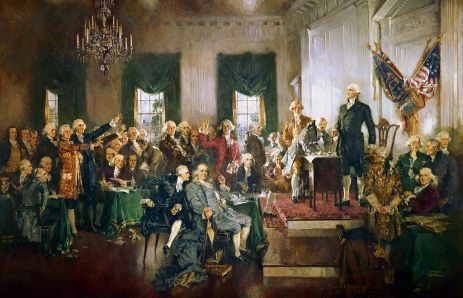
Scene at the signing of the Constitution of the United States - Howard Chandler Christy - Hamilton musical - Brexit

Support Semi-Partisan Politics with a one-time or recurring donation:

Agree with this article? Violently disagree? Scroll down to leave a comment.

Follow Semi-Partisan Politics on TwitterFacebook and Medium.

Heathrow Airport Expansion And Decision Paralysis, A Symbol Of British Political Failure

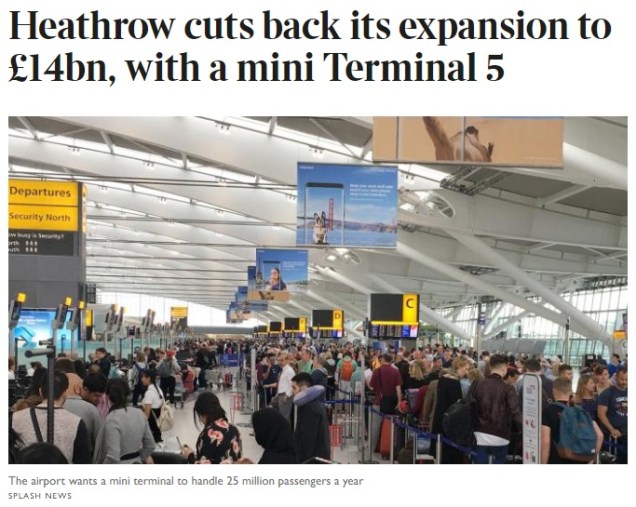
Heathrow airport expansion cut back - third runway - mini terminal 5 - infrastructure planning in Britain

Government indecision and cowardice over the expansion of Heathrow Airport is just one tangible, high profile manifestation of the British political disease

There is no better analogy for the broken, dysfunctional nature of British politics and strategic government planning than the ongoing saga over whether and how to expand London’s Heathrow Airport, an undertaking which most serious people concede needs to happen yet generations of Cabinet ministers seem quite unable to make a reality.

A year after it finally appeared that the decades-long decision process had at long last produced a result, we now learn that plans for a new terminal are being scaled back and the timeline further extended.

From the Times:

Heathrow is planning to build a mini version of Terminal 5 as part of slimmed-down proposals to expand Europe’s biggest airport.

The airport is considering building a new terminal a few hundred metres west of T5 to handle 25 million passengers a year as part of updated plans for a third runway, The Times has learnt.

Heathrow is also planning to phase all building work over as many as 15 years to reduce the cost of expansion by about £2.5 billion. The plan will be one of a series of options put to public consultation in mid-January.

Heathrow says that the proposals would bring the total cost down to about £14 billion, allowing the airport to keep passenger landing charges close to current levels.

Airlines have been concerned that Heathrow’s private owners would increase charges to pay for the project, potentially pricing out many passengers. At present fees add £21.75 to the price of each ticket. Chris Grayling, the transport secretary, has indicated that keeping landing charges flat would be a condition of building a third runway. The proposals have to pass a parliamentary vote early next year and be approved by planners in the 2020s.

In other words, the original plans for a new full-size terminal located next to the planned new runway have been downgraded to plans for what amounts to little more than a satellite terminal adjacent to Terminal 5.

And even this reduced ambition has to be justified to the grey mass of naysayers who would sooner go their whole lives without ever making a consequential decision, with Heathrow Airport’s owner now deliberately emphasising what a small, puny and inadequate solution this new micro-terminal would actually be, as though mediocrity and lack of ambition were a selling point (which in today’s Britain they are):

Any comparison with T5, which cost £4.2 billion and was delayed by a four-year planning inquiry, could cause major concerns. However, Heathrow insists that the new terminal would be smaller, catering for 25 million passengers compared with 35.5 million at T5. It would be built in two blocks, creating an initial facility for 15 million.

Wait! We can make this development worse and ensure that it fails even more to keep up with capacity demand by the time it gets built! Give Heathrow Airport another year and they will be proposing little more than a wedding marquee tent and a few folding tables.

The government understandably does not want air passengers to pay an unbearably steep cost to finance the expansion, yet it does not occur to them that adequate relief could easily be provided to passengers by cutting the ludicrously high Air Passenger Duty, an exercise in environmental virtue-signalling which makes Britain one of the most expensive and unattractive countries to fly from, and which is close to being a national embarrassment.

A real Conservative government might see the ideal opportunity and justification for a tax cut in this case, but sadly we do not have a real Conservative government at present – we have Theresa May’s strong and stable government, limping from day to day by offering as many concessions to the Left as is humanly possible without changing the Tory party logo from a tree to a hammer and sickle.

Of course there are some very specific reasons why countries like China and the United Arab Emirates can complete vast civil engineering projects in the same time it takes Britain to convene a planning committee – an authoritarian government, the absence of inconvenient democracy, few planning regulations, lax health and safety standards, cheap labour and/or a tolerance for slave labour being among the chief distinguishing factors.

And indeed one of the key factors which sets Britain apart from certain other countries is the importance we place on our preserving our heritage, our built environment and taking local concerns into account when giving the green light to major new projects. Any government can quickly see to the construction of a giant, soulless mega-mall in the desert, or a dubious national ego-boosting skyscraper in a locale where there is no real need to build upward. It takes far more inspiration and resourcefulness to create and expand critical national infrastructure or important new commercial developments in sympathy with natural surroundings which have often existed for many centuries.

But still, Britain is too hesitant when it comes to authorising critical new infrastructure projects of national importance, and our failure holds us back as a country. Whether it is central government failing to bite the bullet and commit to a decision for fear of political fallout, NIMBY campaigns effectively trumping the national interest with the local or ill-considered privatisations or public-private partnerships allowing responsibility for key decisions to slip through the cracks, decisions which should be made at a local level in a healthy democracy are instead commandeered by central government, and strategic decisions which should take two years instead take twenty.

One of the very first pieces written on this blog nearly six years ago lambasted the Tory-LibDem coalition government for kicking the can down the road on Heathrow airport expansion. It is a subject I have returned to again and again in subsequent years – and yet we are no closer to striking ground on a project which is essential to maintaining the pre-eminence of Heathrow as a key European hub. At this point, even if one of the alternative schemes (such as Gatwick expansion or a new airport in the Thames estuary) is chosen instead of a third runway and new terminals at Heathrow, we are rapidly reaching the point where any decision is better than no decision.

And as it is with Heathrow Airport expansion, so it is with nearly everything else in British politics. There are an array of slow-burning, pressing issues facing this country which successive governments have either tackled half-heartedly or ignored altogether. It is wrong to call them “crises” as there will be no sudden national implosion if they are not all fixed within six months, but our continued failure to tackle the housing shortage, low worker productivity, education reform, healthcare reform and immigration leads to a slow and steady erosion of trust in politics and our democratic institutions, as well as making Britain a less attractive place to live, work or invest.

The retrenchment of British ambition and capability is not emblemised by Brexit, as many tremulous Remainers like to claim. The symptoms have been all around us for years, decades even, and we have been too lazy or calculating to subordinate the short-term political interest to the long-term strategic need. Look at the big issues facing the West and the world in general in 2017 – global migration flows, Islamist terror, globalisation, outsourcing, automation and more – and there is not one of these complex problems which we as a country have failed to comprehensively sweep under the rug or otherwise avoid meeting the challenge.

Even on those occasions when the people have recognised burning problems and the need for bold new solutions, public opinion (such as on Brexit and immigration) has been repeatedly slapped down over the years by a cohort of politicians who think it is their job to explain and defend the current status quo to the citizenry rather than change the status quo according to the demands of the citizenry.

The managerialist, consensus politics which has characterised Britain since the end of the Thatcher and Major governments is partially justifiable when the economy, society and the world are operating in something like steady-state, and governments have but to tweak a few dials here or there to keep the system running smoothly. But this brand of aloof technocracy is lethal to national prosperity and security in times of discontinuity such as the period in which we find ourselves today, when the prevailing political consensus is conspicuously broken and the worn-out old policy prescriptions no longer command sufficient confidence or support.

As this blog has been warning repeatedly, and will continue to warn – even if nobody listens – the time for denial and evasions is over. But so too is the time for cosmetic, superficial pseudo-reforms or scattergun crisis management. Rather, we need to develop a set of mutually supporting new policies based on a clear analysis and understanding of the challenges facing modern Britain and the various ways in which they are interlinked. This is what the CPS did in 1977 with their “Stepping Stones” report, paving the way for Margaret Thatcher’s transformative government, and that is what we must do again today.

And until such time as we demand political solutions and visionary government equal to the challenges of the stormy present, every aspect of future Britain will soon come to resemble the cautionary tale of Heathrow Airport – dilapidated, twenty years behind the curve, fatally stymied by strategic indecision and increasingly avoided by anyone with the means to do so.


UPDATE – 19 December

Based on positive reader feedback to this and other articles, I am actually now trying to do something to turn this idea (the need to respond to discontinuity with radical but coordinated new policies) from a mere blog post to an actual project or initiative in the real world. We clearly can’t leave it to the usual inhabitants of Westminster to do this on their own – new ideas and fresh faces will be needed, just as they were in 1977.

If anyone who reads this article feels called to action, please do get in touch with me, either using the “contact” menu link at the top of the page, or directly at semipartisansam@gmail.com

Thanks.

Conservative Party Logo - Torch Liberty - Tree

Globalisation

Support Semi-Partisan Politics with a one-time or recurring donation:

Agree with this article? Violently disagree? Scroll down to leave a comment.

Follow Semi-Partisan Politics on TwitterFacebook and Medium.

Upset An MP On Social Media? Prepare To Lose Your Voting Rights

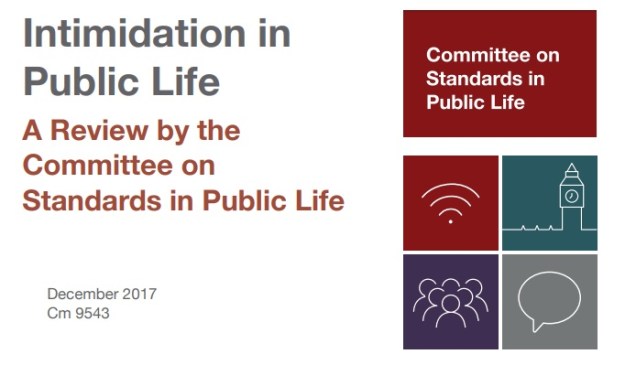
Intimidation in Public Life report - Committee on Standards in Public life - Parliament - Britain - UK - online social media abuse

Hurt an MP’s feelings and lose your civil rights. This could be a reality in the prissy, authoritarian, neo-puritanical Britain we inhabit

Having learned nothing from the past three years of populist insurgency, rather than facing up to their shortcomings and accepting the validity of justified criticism (and the inevitability of unjustified criticism) the political class is instead preparing to further insulate itself from public accountability.

A new report published by the Committee on Standards in Public Life proposes punishments such as barring people from voting or removing them from the electoral register as suitable punishments for the “new electoral offence of intimidating
Parliamentary candidates and party campaigners during an election” – which if enforced with the same arbitrary capriciousness as all other UK speech laws would inevitably see many people unjustly stripped of their basic civil rights while other, worse “offenders” who happen to hold officially sanctioned opinions go unmolested.

We in Britain now have a government which would give convicted prisoners the right to vote while stripping the franchise from certain free citizens who commit vague and loosely-defined acts of speechcrime – including hurting the feelings of an MP or Parliamentary candidate.

The report (prefaced with a quote from the late Jo Cox MP, so as to imbue the document with an air of incontestable wisdom and grace) graciously concedes that the existing restrictive framework of draconian anti-free speech laws does not need augmenting to protect the feelings of MPs at this time, but then immediately ventures the possibility of unprecedented new punishments for those accused of speechcrime:

Electoral law can overlap with and complement the criminal law, such that offences with criminal sanctions can also involve sanctions under electoral law. These sanctions are specific to the election process, such as being barred from voting for a certain period, or removal from the electoral register. Such sanctions recognise that these offences, such as undue influence or electoral fraud, are offences against the integrity of the electoral process, and that it is therefore appropriate that individuals face sanctions relating to their own privileges within that process.

[…] However, the Committee considers that the issue of intimidation is of particular significance because of the threat that it poses to the integrity of public service and the democratic process.

During an election period, it would therefore be appropriate to have specific electoral sanctions that reflect the threat that intimidation of Parliamentary candidates and their supporters poses to the integrity of elections. Any such offence in electoral law should be tightly defined, to capture intimidatory behaviour that is directed towards an individual specifically in their capacity as a Parliamentary candidate or party campaigner, which intends unduly to influence the result of the election (for example, by affecting their candidature or inhibiting their campaigning).

[..] the introduction of a distinct electoral offence will serve to highlight the seriousness of the threat of intimidation of Parliamentary candidates to the integrity of public life and of the electoral process, and will result in more appropriate sanctions. We believe that specific electoral offences will also serve as an effective deterrent to those who are specifically targeting Parliamentary candidates and their supporters.

The Committee on Standards in Public Life, a body whose intended purpose was to ensure that elected and non-elected officials uphold standards of behaviour appropriate to those who serve the public in high office, now seems far more interested in passing haughty judgment on whether members of the public are abiding by the new speech codes dictated by our puritanical, thin-skinned rulers.

I would be interested to know which of the Seven Principles of Public Life the committee believes it is defending by proposing new speechcrime punishments which attack so fundamental a civic right as voting – particularly as each of these principles sets a standard specifically for “holders of public office” and not private citizens. The only tenuous link offered in the entire report is this throwaway sentence:

[..] the Committee considers that the issue of intimidation is of particular significance because of the threat that it poses to the integrity of public service and the democratic process.

Ah, that’s okay then. So because the rowdy public is supposedly threatening “the integrity of public service” (presumably by scaring people away from getting involved in politics, because those who are already inclined to get involved in politics of course tend to be shy fauns who take fright at verbal hostility) the Committee on Standards in Public Life can use this as an excuse to regulate the behaviour not of people in positions of power, but of those who seek to express their feelings about people in power.

Of course, MPs are not the only people to find themselves at the receiving end of vitriol on social media, as anybody with even a semi-public profile or the desire to talk about politics on Facebook or Twitter can attest. Twice in recent months I have been at the receiving end of such a barrage, first when a “comedian” chose to misrepresent one of my tweets to his baying audience of pro-EU Remain supporters and again when an SNP MP sicced his Twitter supporters on me for daring to write about the office of Scottish First Minister in less than worshipful terms. None of the hate I received (on those occasions) amounted to the level of death threats, but other private citizens have suffered far worse.

Yet the political class seem to want to carve out a special protection in terms of exempting themselves from harsh criticism while doing nothing for anybody else. As Members of Parliament they already occupy a high-status, well-remunerated position in society, are generally endowed with a level of intelligence which enables them to articulate their priorities and concerns and be taken seriously, and make laws and decisions which impact our present reality and future happiness. Yet many of these same people now seem determined to portray themselves as shrinking violets, vulnerable victims-in-waiting, a discriminated against minority group who require the special and proactive additional protection of the law. This is absurd and insulting to the citizenry they notionally represent.

But in addition to protecting the powerful from the masses, these puritanical proposals also fundamentally misunderstand the problem. As even many victims of social media harassment would likely agree, the really damaging part of online abuse is not the individual insults but their combined, collective effect. One person insulting or mocking you can be laughed off or brushed aside, but this is not so easily done when one’s notifications fill up with a constant wall of such derogatory, negative messages. Indeed, when under attack on social media, at times it can be difficult to step back and remember that the strident opinions of social media moralisers is not reflective of the feelings of the country or society as a whole. At times, I myself have momentarily allowed hate and derision on social media to interfere with my self-esteem, despite my fairly thick skin.

The answer to online trolling and abuse (whether directed at politicians or private citizens) is not to criminalise individual acts of strident, unpleasant or insulting speech, let alone to curtail the fundamental civil rights of individual citizens as punishment for (or deterrence of) something which is in large part a swarm effect, an unpleasant but distastefully necessarily defensible part of our society’s commitment to free speech.

To do so would be akin to criminalising the act of gathering together in crowds because of the risk that somebody might be crushed or trampled, punishing individuals for what in itself is often a very small contribution to a larger group effect. No single individual is usually responsible for a stampede, just as very few individuals commit specific acts on social media which alone trigger substantial distress, and barring such people from voting (one wonders what offence merits losing the franchise while retaining one’s liberty) will not deal with the vast bulk of abuse on social media and consequently the vast bulk of suffering resulting from it.

The issues addressed by the report are real, worthy of discussion, and are already being debated at length. There is no lack of editorialising or scholarship on the impact of social media on public political discourse, and the way in which the semi-anonymity of interacting online brings out a far more vicious side of human nature than is usually visible during face-to-face interactions. These are problems which we need to face up to as a society at a time when we are learning on the go. But the solution is not to announce further new restrictions on freedom of expression, as though filling in gaps in the statute books will in any way compensate for filling in the mental and spiritual void which turns some people (including the highly educated and outwardly successful) into social media trolls.

Furthermore, at a time when the yawning disconnect between the ruling class and many of the people they represent is growing wider and fuelling all kind of populist outbursts (some welcome and others far less so) it is the height of irresponsibility for those in power to publicly toy with the notion of punishing the plebs for insulting their masters by stripping them of their voting rights.

The Committee on Standards in Public Life should cast their haughty, disapproving gaze back where it belongs – on those who debase their political offices or abuse the public trust. Now more than ever is a time for humility and introspection from the ruling class, not a whinnying list of grievances about those who fail to sing their praises.


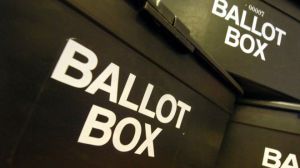
By election - ballot box - Democracy

Support Semi-Partisan Politics with a one-time or recurring donation:

Agree with this article? Violently disagree? Scroll down to leave a comment.

Follow Semi-Partisan Politics on TwitterFacebook and Medium.