American Conservatives For Brexit, Part 2

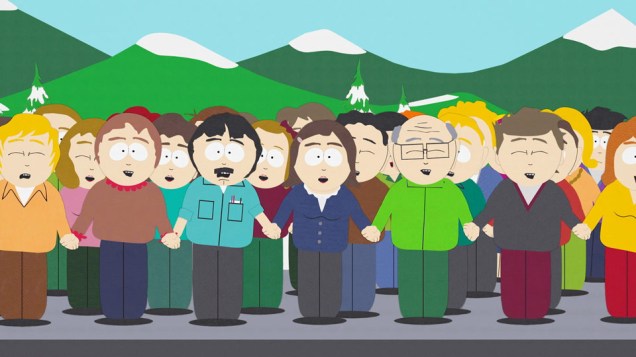
Kumbaya - South Park - Brexit - European Union - EU Referendum

While we are on the subject of Americans arguing eloquently in favour of Brexit, here is Doug Bandow, Senior Fellow at the Cato Institute and former special assistant to President Reagan, writing in Forbes:

Some folks, generally more leftish in orientation, like being able to appeal to Europe to override the stodgy British parliament at home. But the majority of Britons are not so happy.

After all, there’s an inchoate sense of sovereignty and self-government. It doesn’t matter who people are. Most everyone prefers to control their own lives. The British don’t care if someone else, whether in Brussels or elsewhere, is theoretically more qualified to govern Britain. (Not likely, but that was the theory of British colonialism for others.) Most Britons want to do the job themselves. Yet the UK government figures about half of economically significant laws originate in EU legislation.

That’s a major transfer of authority and sovereignty to a body which suffers from a “democratic deficit.” The EU has a top-heavy but fragmented—and unelected—executive, with three different “presidents.” The European Parliament is elected, but only rarely do voters choose representatives based on European issues. People usually use their EP votes to punish or reward national parties based on national issues. Moreover, the Brussels elite, a gaggle of bureaucrats, politicians, journalists, academics, businessmen, and more, is determined to impose its views irrespective of the opinions of normal folks. Indeed, the Eurocrats routinely avoid public input and block votes on EU issues. So it’s not surprising that many Britons, as well as citizens of most other European countries, feel alienated from Brussels.

All fair criticism of the EU – my only correction would be that Bandow actually underestimates the number of Presidents of the European Union. Bandow says three, but the real count puts it at five.

In his piece, Bandow asks semi-rhetorically whether Americans should follow Britain’s lead and throw off the yoke of federal government from Washington D.C.:

The British will soon vote on leaving the European Union. There are many reasons people want to quit. Perhaps the most important is self-government. Britons are tired of being bossed around by nameless and faceless bureaucrats in Brussels. Americans should follow the British in reconsidering the wisdom of living under a centralized Leviathan in a distant capital, that is, Washington.

Indeed, the Brexit cause is one which should find sympathy among any people who currently chafe at their present aloof, unrepresentative governments. Obviously America is a single demos – having lived in the United States, I know just how strongly people “feel” American – and so it is right that government sits at that level. One assumes that Bandow is suggesting a renewed emphasis on federalism and states’ rights rather than mass secession from the United States.

Europe, of course, has no such demos – no matter how strongly the EU’s most ardent cheerleaders and apologists try to wish it into existence. In fact, any effort to impose a new identity where none exists before – especially when done at the expense of national identity – is likely to breed far more resistance and resentment than it will create unity. And those who deny the EU’s aspirations to statehood are frankly burying their heads in the sand – the evidence is abundant, and out in the open.

But what’s really good about this piece is that it touches on the fact that the EU is deliberately designed to remove awkward public opinion from the decision making process – that “the Brussels elite [..] is determined to impose its views irrespective of the opinions of normal folks”. And that, of course, is the entire point of supranational government. Aside from being the favoured mechanism for ratcheting the countries of Europe toward their “destiny” of common statehood, it also ensures that decisions are made so remotely, and by people so lacking in democratic legitimacy, that EU leaders are largely free to go about their business unscrutinised.

This is no way to run any kind of organisation, let alone a nascent country. Yet many, particularly those Stockholm Syndrome sufferers on the Left, persist in believing that the EU can be changed and transformed into a European socialist Utopia, if only leftists from across the continent join hands and sing Kumbaya loudly enough.

This is sheer folly. And it is good to see conservatives in America as well as Britain recognise it as such, and see the European Union for what it really is.


European Union - United Kingdom - Britain - Flags

Agree with this article? Violently disagree? Scroll down to leave a comment.

Follow Semi-Partisan Politics on TwitterFacebook and Medium.

American Conservatives For Brexit

Union Jack - Stars and Stripes - Britain and America - Special Relationship

Daniel Larison joins the ranks:

Personally, I am hoping that the Remain campaign loses. The EU is famously lacking in democratic accountability. If the only way to hold its institutions and leaders in check is by the threat of leaving, at some point one or more of its members has to make good on the threat to leave. Whatever the short-term economic disruption of withdrawing from the EU may be (and I assume there will be some), the case for leaving has always been a political one concerned with the ability of the governed to hold their government to account for what it does. British voters can’t fully do that right now as part of the EU. The Remain campaign has had to resort to constant fear-mongering because it cannot make a positive case for staying a part of a dysfunctional transnational organization for which almost no one feels any real loyalty or affection, and so it has to conjure up nightmare scenarios to frighten voters to their side.

Whatever the result is on June 23, the U.S. should aim to maintain good relations with the U.K. If Britain votes to leave, the U.S. should do what it can within reason to help make the transition easier, and we should do so in recognition that our relationship with the U.K. is a long, well-established, and close one that long predates the EU.

As fair and eloquent a case as you will hear. Though Larison’s expectation of some short-term economic disruption needn’t come true – particularly if we follow the Flexcit model and leave to an interim EFTA/EEA position, maintaining our access to the single market – he is right that the real argument is a democratic one. The crux of the matter is that British voters have no practical way of holding EU leaders to account that is not at least twenty steps removed, relying on other people doing other things. That is no democracy – despite the desperate attempts of some EU apologists to claim that the various elections to EU institutions make the EU a beacon of good governance.

Larison is right too that the United States should and will maintain good relations with Britain after Brexit. For while regained British independence from the EU may thwart the State Department’s dream of having just one telephone number to dial when they want to call Europe, in every important respect – military power, willingness to commit military forces, foreign direct investment, defence cooperation, security cooperation, academic and trade cooperation, cultural affinity – Britain is America’s closest and strongest ally, and in ways which have absolutely nothing to do with our membership of the European Union.

Remainers and EU apologists love to paint Britain as a puny and insignificant nation whose clout only comes about through our membership of international bodies (most of which have existed for little more than half a century, rather undermining the claim), but the special relationship between Britain and the United States is a partnership between two consequential countries which have and will continue to shape world events well into the future – at least if both countries can finally rediscover their national confidence.

And in this fight to make Britain a consequential player in the world again rather than a timid vassal of euro-parochialism, it is good to have the support of Daniel Larison and The American Conservative.


European Union - United Kingdom - Britain - Flags

Top Image: City AM

Agree with this article? Violently disagree? Scroll down to leave a comment.

Follow Semi-Partisan Politics on TwitterFacebook and Medium.

Unmasking The Anti-Democratic European Union

Democracy - European Union - EU Democratic Deficit - Referendum - Brexit

Elections alone do not make democracy

You’ll probably have heard it a thousand times by now, from a succession of glazed eyed EU apologists – “people have a nerve calling the EU anti-democratic! The European Parliament has proportional representation, which is better than the House of Commons! And what about the unelected Lords?”

The insidious idea that because parts of the British constitutional framework are undemocratic we should freely accept the deliberately antidemocratic governance of the European Union is glib and toxic, and deserves to be rebutted.

Fortunately, the bloggers of The Leave Alliance have been hard at work doing just that.

Lost Leonardo of the Independent Britain blog breaks it down to basics:

Democracy, from the Greek—demos and kratia—literally means ‘people power’. A democratic system is one in which decisions are taken as closely to the people as possible. The UK system of parliamentary or representative democracy could be said to be a limited democracy while the Swiss system of direct democracy is what one might call a true democracy.

The EU government, for that is what it is, is not only undemocratic but anti-democratic. The people have no control over the decision-making process whatsoever.

First of all, there is no self-identifying European demos. I am happy to identify as European, but I do not regard German or French people as my fellow countrymen. Although we are all born of the same civilisation, our different languages, cultures, customs and traditions makes us foreign to one another. The kind of solidarity needed to constitute a demos cannot be forced or faked and it is simply not present at the continental level. I am British first, not European.

As a result, the idea that the European Parliament represents the people of Europe is absurd. European elections are not really European elections so much as snapshots of how discontented a given people are with the politicians in charge of their respective national governments. Turnout in European elections is low, not only in Britain, and very few people take the results seriously. The European Parliament is the weakest of the five most important EU institutions: the European Commission, the European Parliament, the European Court of Justice, the European Council and the Council of the EU.

Lost Leonardo then goes on to detail how the strength and breadth of the EU Commission’s power alone is proof that the system was deliberately designed to lift power and decision making as far above the heads of the people as possible:

There are three features of the EU system which cement the European Commission’s dominance. First of all, the EU is the supreme law-making authority in the Member States. The precedents for this are long-established in European and English law. EU law trumps British law, and where the two conflict, the judge will find in favour of the EU. In the event that a decision is disputed, the final judgement is made by what is, while Britain remains in the EU, the highest court in the land, the European Court of Justice (ECJ).

Second, the European Commission has sole “right of initiative” within the EU. No new EU law can be proposed, amended or repealed without Commission involvement and approval. This is the key to the anti-democratic character of the EU. There is no way to “reform” this aspect of the EU because no initiative can or will progress without Commission consent. There is no mechanism to compel the Commission to act; legislative proposals put to the Commission by other EU institutions are advisory only.

The Commission is the executive arm of a supranational government, but the commissioners are not directly accountable to anybody. The European Parliament has the power to unseat the entire Commission, which has happened once, but there is no mechanism to hold individual commissioners to account.

Third, the Commission itself is comprised of political appointees who swear an oath of allegiance to act in the interests of the EU as a whole rather than representing the interests of any particular nation-state. Thereby does the Commission protect the body of EU law from democratic accountability.

This is the inverse of the British idea of freedom under law which is founded on the principle that no Parliament may bind its successor. Under the EU system of governance, every law is sacrosanct unless or until the Commission says otherwise.

Some EU apologists will try to hold up the fact that there is always a British commissioner as some kind of safeguard or firewall protecting our interests, but as Lost Leonardo points out this is entirely misleading – their allegiance is to the European Union only.

Tony Edwards of The Brexit Door blog gives us an overview of the type of calibre individuals which often make it to the European Commission:

Our present commissioner is Lord Hill, his role is in the financial stability portfolio. He has never been elected to any office in the UK. Other commissioners have often been failed or deposed politicians, none so more that the UK representatives: Mandleson, Kinnock, Patten, Jenkins, Brittan. Others were totally unelected at any stage such as Baroness Aston who was held the foreign affairs portfolio during the failed Ukraine adventure.

Which is less than ideal, because:

Individual commissioners cannot be removed by anyone but the commission or the council. The entire commission can be removed by a no confidence vote in the parliament.

So in essence the executive is almost unassailable, has prerogative on all legislative matters and its members are unelected. Not only that, they cannot be removed by the will of the people unless the parliament is willing to unseat the entire commission – a very unlikely scenario.

And Edwards rightly concludes:

The structures of the EU are in a sense democratic in one feature, in that they hold elections. But the power of the people is incredibly far removed from the real holders of power, the commission itself, which is not democratically elected nor removable by the people directly. It is not democracy in any form that would be acceptable in the UK institutions, and the people are largely voiceless in it.

Not only that, the bodies are constituted in such a way that those who are against the general direction of further federalisation are always in the minority. In effect, once a competence has been passed to the EU, there is no mechanism for it to be returned. The ECJ, by activism can also extend the role of the EU through interpretation of the treaties, and this transfer of competencies is also irreversible in practice. Any move to repeal legislation must realistically be made by or sanctioned by the Commission.

Reform of the EU is therefore impossible. It is designed with only one purpose, to integrate more and more power to the Commission which then acts as the head of a European Superstate. The commission makes the law and sets the direction of travel with little resistance from the EU representative structure.

But still, Remainers love to suggest that it is the United Kingdom which is democratically broken, and the European Union the white knight come to rescue us. Of course our British democracy has its flaws. The unelected nature of the House of Lords. The fact that Britain ranks alongside Iran as the only other country to have unelected clerics sitting in its upper legislative chamber – a literal theocracy.

But these are reasons to take back power first from the European Union, and then set about reforming our broken government in Westminster. We need root and branch constitutional reform to unpick decades and centuries of patching, fixing and bribing, so that at long last we have a constitutional settlement we might be proud of (or at least less ashamed of having to explain to perplexed foreigners).

We should devolve power equally to the four home nations of the United Kingdom, giving Wales, Northern Ireland and England the kind of policymaking and fiscal autonomy currently enjoyed by Scotland. Tax should be devolved even further, with a low base rate of UK income tax to fund the functions of the federal Westminster government – things like defence and foreign affairs – topped up by the home nations, regions and local authorities as they see fit, according to local needs and priorities.

But even if you disagree wholeheartedly with this suggested approach, these are decisions that Britain should make as an independent, sovereign state, not as a vassal of the European Union, which exists solely to act as a ratchet towards political union and for whom good governance is very much an afterthought.

But as Pete North darkly warns, we should be under no illusion as to what will happen if we fail to take this opportunity to wrest back power from the European Union as the first step toward revitalising our democracy:

Having failed to break the political deadlock the referendum will be used as an excuse to ignore the dissent and resentment bubbling under the surface. They will be free to do as they please as though a remain vote was a mandate. The cycle of introverted navel gazing will continue among our political class while the vitality of the media continues to drain away and journalism slides into the abyss.

And having surrendered the substance of government we shall see a further abdication from grown up decision making. We will have lost any kind of effective early warning system by way of having totally dysfunctional politics and we will be forever be on the backfoot, responding ineptly to crisis after crisis without the means to defend ourselves and lacking the political intelligence to formulate policy.

In that regard, one might have some sympathy with the remainer view that Britain does not have the capacity for self-governance. We have already squandered much of it. And if that be so, and the verdict from this referendum is that we should simply surrender and fade into obscurity, travesty though that will be, then this really is the end of Britain as an independent nation.

And what then?

There is a fork in the road. One road leads to a reboot; a collective reorganisation of everything to reshape our country to meet the challenges of the future. The other road leads to subordination, irrelevance and the quiet death of democracy.

In this, should we choose to remain, I don’t expect to see a big implosion. Just a very gradual crisis of competence. Things will break down without anybody quite knowing why – or even noticing that they are broken. Taxes will go up, prices will go up, the number and quality of services will decline. We will find ourselves paying for that which we assume we have already paid.

Corporates and government will do as they please to us as they will have figured out that all of the power is theirs and we won’t resist. We won’t rock the boat. We won’t risk anything radical. We will do anything to preserve the status quo and not let anything difficult intrude on our lives. Obedience is always the path of least resistance.

In that, you will be free in your gilded cage. Free so long as you live within the margins and pay your bills on time. If you make a stand individually you will be picked off. The whole weight of the system will come crashing down on you. You will have no democratic recourse. No day in court. No defence. No justice.

The European Union exists first and foremost as a ratchet process toward the full economic and political union of its constituent member states. You don’t have to take my word for it, or anyone else’s – the EU’s founders and past and present leaders openly admit as much. Only in Britain do we bury our heads in the sand as to this crucial fact.

This is the EU’s first and only priority. And if achieving it means dooming the south to permanent recession, exacerbating a worsening migrant crisis or committing any other kind of governmental vandalism, so be it. The EU certainly has no particular desire for individuals and communities to gain more control over their lives and the decisions which affect them – indeed, the entire structure of the EU reflects an enormous fear and disdain for the sentiments and priorities of ordinary people among the sainted “founding fathers”.

So whatever flaws may exist in our imperfect British democracy, do not believe for a moment that we shall transcend them by fearfully voting to remain in the European Union. We shall not.

And if you think things are bad now, wait until our Westminster parliament is truly just a council chamber in Europe.

 

European Union - United Kingdom - Britain - Flags

Top Image: The Economist

Agree with this article? Violently disagree? Scroll down to leave a comment.

Follow Semi-Partisan Politics on TwitterFacebook and Medium.

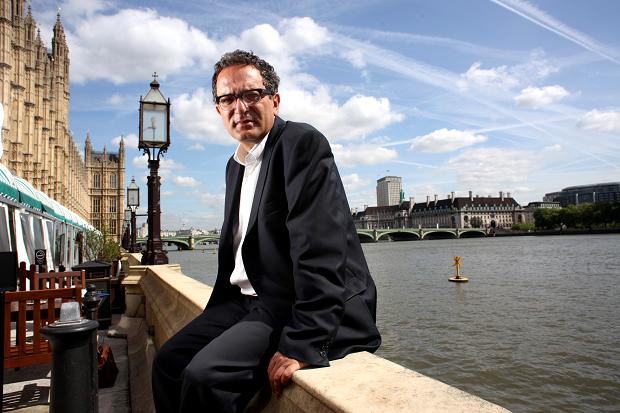
Maurice Glasman Makes A Thoughtful Left Wing Case For Brexit

Maurice Glasman - EU Referendum - Blue Labour - Brexit

Maurice Glasman’s thoughtful intervention in the EU referendum debate is more proof that left-wing thinkers who value democracy naturally gravitate toward Brexit

The glib, feeble left-wing case for Britain remaining in the European Union can basically be summed up as “don’t give us back democracy, because the British people might be so foolish as to demand conservative policies and vote for conservative politicians”. It is, in other words, profoundly and actively anti-democratic, springing from a toxic and elitist mindset which hates and distrusts the people.

Unsurprisingly, the great and the good of the modern Labour Party have therefore flocked to its banner, endlessly repeating the shocking (to them) warning that if Britain did not have certain values imposed from above by a higher authority in the form of the EU, the British people themselves might not be so enlightened as to choose left-wing policies for themselves.

This is a weak and contemptible argument, and those advocating it – from Jeremy Corbyn to Owen Jones to Yanis Varoufakis – should know better, and quite probably do know better, deep down. This makes their betrayal of British democracy all the more unforgivable.

But there is a left-wing case for Brexit of more substance and nuance, and Maurice (Lord) Glasman now makes it in LabourList. At its core is still the desire to favour left-wing politics in particular rather than seek to regain democracy in the abstract, but at least Glasman puts some actual thought into his argument.

Glasman concedes that the EU was flawed from the start:

Unfortunately, probably from the outset, and certainly by the Rome Treaty of 1957 a Jacobin tradition of unmediated space, emptied of decentralised institutions had asserted itself, particularly through the head of the High Authority, that became the European Commission, Jean Monet.  He asserted that economic exchange and legal uniformity would, over time, produce political unification.

Perhaps naturally, Glasman traces the EU’s decline firmly back to the accession of Britain in 1973:

Under the leadership of Edward Heath, who had a genuine feeling for the fate of Europe, Britain did join the Common Market, as it was called it for a long time.  It did not go well from that time on as the Common Market was not based on a shared political economy. 

Britain is an island and was always at an angle to Europe.  It avoided the continental territorial struggle for domination and developed a maritime rather than a landed economy as well as distinctive political institutions based upon the balance of powers within the Ancient Constitution. 

De Gaulle, in continuation with Napoleon, thought that all Britain cared about was free trade and the primacy of the City of London. He argued that the British State could never agree with either the administrative directives favoured by the French or the institutional co-operation embodied in the German Social Market. 

The difference between territorial rule underpinned by an army and central directives and a maritime economy based on the Navy and free trade was what was at stake in the Napoleonic wars.   In boycotting Britain and building a Europe of administrative conformity Napoleon continually blasted Russian, German and Austrian leaders for continuing to trade with Britain, which as a maritime power traded with the world.  Napoleon’s career ended when he voluntarily boarded a Royal Navy ship and was taken to a faraway island where his board and lodging was paid for by the City of London.  Despite the conclusive result of that conflict it was not the end of the argument. 

The political and economic systems of Britain and France was very significantly different.  Britain had dispensed with its peasantry during the last stages of enclosure and the Corn Laws, it had embraced the market at home as well as free trade abroad. On joining the Common Market the very unhappy marriage of Napoleonic directives and free trade objectives began which threatened the European Community’s earlier achievements of agricultural protection and worker participation.  The Common Market, or European Economic Community as it then became known, had been built on a substantive conception of an economy based upon agriculture and industry, land and labour.  Britain, in contrast, brought a model of a financial and services based economy in which free movement rather than social partnership was the primary goal of political union. 

And correctly identifies the anti-democratic black hole which appears when the EU technocracy instinctively recoils from the people and their dangerous passions:

As the European Union becomes more general, abstract and administrative it will naturally side with capital and directives, viewing politics itself as populist.  The reaction is already present within each European State. When I was in Berlin last weekend the AfD had surpassed the SPD in the polls.  When reason itself becomes desiccated and exclusively rational, severing itself from institutional judgement and historical experience it turns all forms of resistance into demagogy and madness.  And yet, democracy is the European way of resisting the outrageous claims of capitalism to own, commodify and de-contextualise human beings, nature and all civic institutions.  The tension between democracy and markets can no longer be resolved at the level of the EU, which through its inverted definition of subsidiarity in which the larger subsumes the smaller, is hostile to democracy, distinctive local and national institutions.

Obviously Glasman is particularly interested in democracy as a means for the people to resist what he sees as the “neo-liberal” agenda of the EU – he is not advocating Brexit for the pure sake of democracy. But at least democracy gets a look-in in Glasman’s argument, which is more than can be said of the Jeremy Corbyn / Owen Jones position, which unashamedly seeks to cling on to the European Union precisely as a means of suppressing British democracy.

Glasman’s conclusion is particularly devastating (my emphasis in bold):

For many years the European project has served as an alternative to Labour having a serious politics of national transformation, of building the coalitions necessary to constrain capital and strengthen democracy. It was a national political weakness that led to the enthusiastic embrace of the EU and it remains a refuge from domestic political defeat.  Labour should be robust in supporting free and democratic trade unions throughout Europe, in championing a balance of interests in corporate governance and strong civic self-government with a deep partnership between universities, cities and firms.  The question is whether being part of the EU hinders this.  Britain is already outside the Eurozone and the Schengen agreement.   It is gratuitous to remain part of a political union that is so hostile to diversity and democracy and so disposed to the consolidation of big capital that it has become a remorseless machine for the liberalisation of trade and the disintegration of society, in which the demand for liquidity has dissolved solidarity. Perhaps it is time to think again.

This really gets to the heart of it – the EU has indeed been an poor alternative to having a serious national political conversation about how we wish to govern ourselves. Labour are not exclusively to blame in this regard. Politicians from all parties have gladly surrendered power to the European Union, eagerly seizing the opportunity to keep the trappings of power for themselves while divesting themselves of ever more responsibility for the outcomes of decisions now made in Brussels.

And how refreshing it is to hear a personality from within the Labour Party actually suggest that maybe – just maybe – it should be the job of left wingers to argue their case in public and seek to convince the British electorate of the attractiveness of socialist policies rather than seek to bypass the electorate and impose social democracy from above via the EU.

In fact, Maurice Glasman, founder of Blue Labour, is exactly the type of voice that the Labour Party needs to listen to and place front and centre of their policymaking if they want to staunch the exodus of working class support from a party which increasingly resembles a middle class, creative industry, virtue-signalling talking shop.

A party which lost seats to the Tories because of traditional voters defecting to UKIP – and facing the prospect of Nigel Farage’s party nipping at its heels in a swathe of Northern constituencies – would make a place of honour for someone like Maurice Glasman, and perhaps even listen to what he has to say about the European Union.

But they can’t do it. Jeremy Corbyn and co. were happy to enrage the party establishment and donors on all manner of issues, from the Syria military action vote to their perceived tolerance of anti-Semitism. But on the crucial issue of Britain’s membership of the European Union, suddenly Stockholm syndrome kicks in and everybody robotically sings from the same worshipful hymn sheet. It’s pathetic.

There is still an element within the Labour Party that actually cares about the hopes, dreams, fears and priorities of the working class. But you won’t find it within Jeremy Corbyn’s inner circle, or the mainstream party in exile. This dwindling branch of the Labour Party is now much like the Popular Front in Monty Python’s “Life of Brian” – a solitary man, sitting on his own, ignored by everybody else.

In their unthinking support for the European Union, the shining practitioners of the New Politics have thrown the working class – indeed , everyone who loves democracy – well and truly under the bus. And at some point there will probably be a reckoning for that.


European Union - United Kingdom - Britain - Flags

Top Image: The Times

Agree with this article? Violently disagree? Scroll down to leave a comment.

Follow Semi-Partisan Politics on TwitterFacebook and Medium.

Warning Of ‘Tory Brexit’, Labour’s Unspeakable Shadow Chancellor Parades His Contempt For Democracy

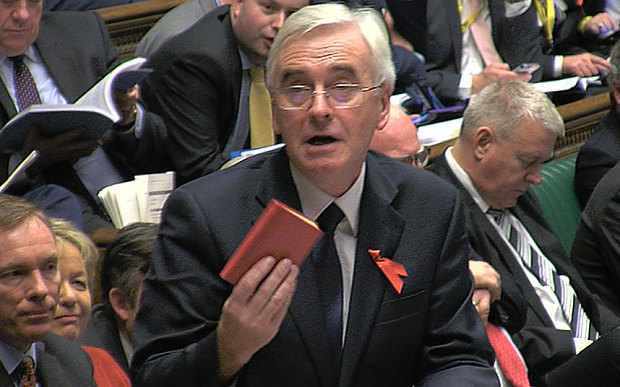
John McDonnell - Little Red Book - Tory Brexit

The Labour Party doubles down on its sick, openly anti-democratic case for Britain remaining in the European Union

That slobbering, Marxist, assassination-approving, lynching-advocating IRA-supporter John McDonnell continues to show his contempt for democracy by loudly opposing Brexit on the grounds that freedom from the European Union might make it easier for a democratically elected British government to actually, y’know, govern.

Of course this would be terrible and cannot possibly be allowed to happen – when the incumbent government is a Tory one, that is.

Labour’s unspeakable shadow chancellor is now taking to the pages of the New Statesman to promote his pie-in-the-sky, fantasy land “Another Europe”, whereby an explicitly integrationist and federalist club can be magically transformed by McDonnell, Jeremy Corbyn, Yanis Varoufakis and other assorted left-wingers into some kind of Utopian, socialist paradise.

McDonnell, trialling his “Tory Brexit” catchphrase again, writes:

The undeniable truth about the referendum is that what is on offer is a Tory Brexit. On 24 June, we will still have a Tory government, because under the Fixed-Term Parliaments Act the Conservatives could change leader from David Cameron to Boris Johnson and still try to cling on until 2020.

This would be a disgraceful betrayal of democracy. But what over the past six years has suggested to you that anything would be beneath the Tories? And, regardless of who would be leader of their party, the initial trade negotiations following a Tory Brexit could resemble TTIP on steroids.

We know what they think of the Working Time Directive; can you imagine what other workplace rights they would trade away and try to blame on someone else? With global economic uncertainties combined with George Osborne’s economic incompetence, the UK is uniquely exposed to the risk of an immediate economic fallout from a Tory Brexit.

Odd, you might think, that Labour’s shadow chancellor is so happy to associate the movement to restore democracy and independence to Britain with his lifelong enemies in the Conservative Party. But then these are not ordinary times.

McDonnell continues:

I want to see a reformed EU in which we make many of its institutions more transparent and democratic. For the first time in a generation, there is a growing coalition of socialists across the EU who can help us achieve this together. By choosing Labour’s “Another Europe” agenda, our country can stand with others across Europe to make a positive case to end austerity, offer a more humane response to the migrant crisis and protect and expand workplace rights.

And the evidence that this Magical Candyland Europe spoken of so warmly by leftists from Jeremy Corbyn to Owen Jones is actually achievable? Zip. Zilch. Nada. Tumbleweeds. The very purpose of the European Union is to facilitate a process of integration towards a common European state. Don’t take my word for it – see what the EU’s own leading voices openly say about their creation. In this grand endeavour, democracy is the mortal enemy. And John McDonnell seriously thinks that he can make EU institutions deliberately designed to shut out popular opinion more democratic?

Whether or not there is indeed a growing coalition of socialists, there is absolutely nothing to suggest that they currently form – or could conceivably form in the future – a bloc powerful enough to wrest control of the key European Union institutions. Even if the parties of the far-left somehow manage to defeat the parties of the centre, centre-right and far right and become a force in the European Parliament (itself an impossibly tall order), so what? The European Parliament is a rubber stamp, the least important and least powerful of all the EU institutions. How does that alter the makeup or direction of the Commission or the ECJ? The answer, of course, is that it doesn’t.

The very best scenario that McDonnell and friends could conceivably hope for is to jam the European Parliament with a bunch more angry leftists. But any anti-establishment wave which helps the left is generally likely to help the right, too. In fact, the radical right have been running rings around the socialists for some time. McDonnell’s dream scenario, therefore, is one where parties like Podemos and Syriza scream at parties like UKIP and others much further to the right, and bring the European Parliament to a cacophonous deadlock, while the other EU institutions – the ones which actually matter – glide on, unchecked.

Here is a political party – and an approximation of a man – who have let their blind, seething, inchoate rage against the Evil Tories snuff out what little dedication they ever had to democracy or respect for the will of the people. Here is a shadow chancellor and broader left-wing movement who are so wedded to their policy of unthinking, virtue-signalling pseudo-internationalism that they would sooner doom Britain to remain trapped in an antidemocratic, dysfunctional, failing political union than admit the terminal flaws in the European Union and fight for left-wing policies in a newly independent Britain.

But more than all of that, this is a left wing movement which cares about democracy only when it advances their own particular narrow agenda. John McDonnell isn’t willing to energetically make the case for the things he claims are under threat in case of Brexit. He simply wants those things to be undemocratically imposed on the British people by a higher, supranational authority. He wants to win without trying, to impose his beliefs on others without doing the hard work of winning them over. McDonnell literally doesn’t care how his policies are implemented, or who is steamrollered in the process – just as long as those clapped-out old left-wing policies somehow see the light of day.

You can call that “passionate” and “principled” if you want, if you are still enthralled by the Corbynite glow. But the rest of us should call it what it is – narrow minded, bigoted authoritarianism.

Meet your friendly Labour Party of 2016 – happy to throw democracy and British independence under the bus in pursuit of the fevered hallucination of a united, socialist Europe.


European Union - United Kingdom - Britain - Flags

Top Image: Telegraph

Agree with this article? Violently disagree? Scroll down to leave a comment.

Follow Semi-Partisan Politics on TwitterFacebook and Medium.