REFERENDUM DAY: The Last Word

The last word

I wanted to write one last great exhortation encouraging people to vote Leave today – a grand summary bringing together all of the compelling reason to reject the miserabilist, pessimistic, soul-sickeningly unambitious case put forward by the Remain campaign and embrace instead the possibility of real democratic renewal which can only come about with a Leave vote.

But someone has already made the closing argument much better than I ever could. And they did so before I was even born, in 1975 at the time of our last referendum on whether to remain part of the European Economic Community.

If you read this blog, you already know my thoughts on the EU referendum. And if you follow the work of The Leave Alliance you know the type of Brexiteer that I am.I will not restate all of these arguments now. I will leave you instead with the words of the late Peter Shore MP, a man whose politics could hardly be more different to my own, but whose understanding of and commitment to British democracy is second to none.

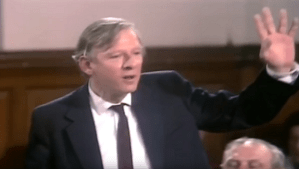
Speaking at a 1975 EU referendum debate at the Oxford Union, Peter Shore MP concluded his remarks with this devastating critique of Britain’s accession negotiation – all of which can be applied to David Cameron’s failed renegotiation – followed by a stirring rejection of the EU’s antidemocratic, supranational form of government in general:

I say to you this is not a treaty which in any way is a fair and equal treaty. It was not negotiated, it was accepted. Not one word, not a comma, let alone a clause, let alone a paragraph of the Rome Treaty – not one comma has been altered in order to meet the perfectly legitimate and serious differences that exist between Britain and the Common Market.

And now the experience itself – three and a half years ago, when they were urging us to go in. Oh, what a campaign it was. “You’ve got to get in to get on” was the slogan of that day. Five or six pounds a week better off for Britain, if we could only get in to the common market. All the goodies were read out – Donald Stokes of Leyland buying one-page advertisements saying all we need is a great domestic market of 250 million, and we will sweep Europe!

[..] When you add to that the burdens I mentioned a moment ago, and we are under great threat, we are in peril at the present time, and the country must know it.

Therefore now what do they say? What is the message that comes now? No longer to tell the British people about the goodies that lie there. No longer that – that won’t wash, will it? Because the evidence will no longer support it. So the message, the message that comes up is fear, fear, fear.

Fear because you won’t have any food. Fear of unemployment. Fear that we’ve somehow been so reduced as a country that we can no longer, as it were, totter about in the world independent as a nation. And a constant attrition of our morale, a constant attempt to tell us that what we have – and what we have is not only our own achievement but what generations of Englishmen have helped us to achieve – is not worth a damn, the kind of laughter that greeted the early references that I made that what was involved was the transfer of the whole of our democratic system to others. Not a damn.

Well I tell you what we now have to face in Britain, what the whole argument is about now that the fraud and the promise has been exposed. What it’s about is basically the morale and the self-confidence of our people. We can shape our future. We are 55 million people. If you look around the world today – I listened to Gough Whitlam and his 14 million Australians, and he trades heavily with Japan, I’m very fond of the Australians – but do you think he’s going to enter into a relationship with Japan where he gives Japan the right to make the laws in Australia? Do you think Canada, 22 million of them, and to the south a great and friendly nation, yes they are, but do you think Canada is going to allow its laws to be written by the 200 million people in some union in America? No, no, of course not. The whole thing is an absurdity.

And therefore I urge you, I urge you to reject it, I urge you to say no to this motion, and I urge the whole British country to say no on Thursday in the referendum.

All of this beautiful prose – a relic from a bygone age when political speeches didn’t make one want to jump out of the window to escape the boredom – was delivered while a stony-faced Edward Heath looked on, chastened.

God willing, today we will have the opportunity to chasten our current prime minister David Cameron – a man who has conducted himself in many ways like a lame Ted Heath tribute act – by ignoring his pro-EU campaign of lies, distortions and intimidation.

I can say no better than Peter Shore. But please – if you have not already done so, go to your polling station and vote for democracy, vote for Britain, vote to leave the European Union.
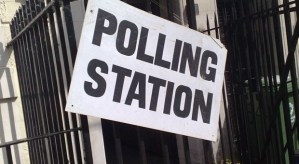
 

Polling Station - Voter Apathy - Voter Disengagement - General Election 2015

Peter Shore MP - Oxford Union - EU Referendum - 1975 - Brexit

European Union - United Kingdom - Britain - Flags

Agree with this article? Violently disagree? Scroll down to leave a comment.

Follow Semi-Partisan Politics on TwitterFacebook and Medium.

American Conservatives For Brexit, Part 5 – The National Review Endorses Brexit

Americans for Brexit - EU Referendum

If the future is a post-democratic world then Brexiteers should be proud to have the support of the magazine founded by William F Buckley in order to stand athwart history yelling “Stop!”

“A conservative is someone who stands athwart history, yelling Stop, at a time when no one is inclined to do so, or to have much patience with those who so urge it”William F Buckley

The National Review comes out forcefully for Brexit, in an excellent piece which takes David Cameron to task for the tawdry and nauseatingly left-wing campaign he has run.

Money quote:

One of the less noticed aspects of the referendum campaign has been the extent to which Cameron has had to rely more and more on fundamentally left-wing arguments to make the case for the EU — and, indeed, to rely more and more on Labour and trade-union organizations, too. He removed from the government’s program some items of legislation that were especially offensive to labor unions in return for the unions’ spending more on campaigns to arouse their apathetic members (many of whom are in fact Euro-skeptic). That oddity has gradually revealed two hitherto unseen truths about the campaign: First, the EU is essentially a left-wing corporatist cause that is hard to support on conservative grounds; second, the traditional Tory arguments of patriotism and free enterprise not only can’t be appealed to, but would arouse emotions on the right that would weaken Remain’s entire case, including its only positive argument for staying in.

That argument is that Britain would face ruin outside the EU and prosperity inside, as all “experts” know. Those experts turn out to be (some) corporate businessmen, the leaders of international organizations such as the International Monetary Fund, and heads of governments such as President Obama. Delegations of all three have been turning up in London and issuing grave warnings about Brexit at regular intervals. Small businesses and native entrepreneurs such as inventor James Dyson apparently don’t count as experts, but they have been speaking out in favor of Brexit, as have a significant number of leaders of both British and multinational corporations. What is emerging as a fault line is that this battle is between Davos Man and the rest of us.

The National Review goes on to criticise the sheer defeatism and pessimism of the Remain campaign, whose pitch to the electorate has basically been that Britain is too small, weak and puny to prosper outside of the EU’s political union:

It would be easy to continue rebuking the alarmist scare stories from Remain — and distinguished economists, including two former British finance ministers, have been doing so with zest. What is more important is to realize that they are designed not to persuade but to instil a sense of defeatism in the British people. Their consistent message is that the Brits are rubbish, can’t hack it, need the protection of Europe, and that anyone who differs from this masochistic view is in the grip of an imperialist nostalgia.

That is nonsense. The Brits are an unusually influential middle-ranking power in military, diplomatic, and intelligence terms. Culturally speaking, they are a global superpower. And — to repeat — Britain is the fifth-largest economy in the world, a leading member of all the main international bodies and likely to remain so, and a country which is a byword for effective democratic constitutional governance. It is — or ought to be — shocking that a British government should seek to instil a false sense of failure and dependency in its citizens in order to win a campaign they can’t win on the intellectual merits of the case.

And of the three explanations later offered by the National Review for this appalling behaviour from the British establishment, the third is the most persuasive:

Third, and above all, a half-conscious rejection of democracy. For the EU is a mechanism that enables the political and other elites in Britain to escape from the constraints of democracy. It removes power from institutions subject to the voters in elections, such as the House of Commons, and vests it increasingly in courts and bureaucracies in Brussels that are effectively free of democratic control and even of democratic oversight. As a result, the EU is seductively appealing to those who want to exercise power and who believe they would do so more responsibly and successfully if they did not have to account for their decisions to… well, ordinary people like their relatives.

All three passions are temptations to the power-hungry, and they have shaped a Remain campaign reflecting the interests and values of post-national, post-democratic elites. Once we step outside the moral universe of these elites, however, there is no case whatever for Britain to surrender its self-governing democracy to Brussels.

With the due deference of outsiders, we urge the British people, our friends in peace, our allies in war, to be true to themselves and to their democratic traditions on Thursday. That should be more than enough.

A good argument, well made. When publications as diverse as the National Review and Spiked are making the same case, warning against the attempt by European elites to construct an unaccountable, post-democratic society, alarm bells should seriously start to ring.

And in the fight against the dystopian, post-democratic future heralded by the European Union, it is good to have the endorsement and support of the American publication whose founding mission is to “stand athwart history, yelling Stop!”


European Union - United Kingdom - Britain - Flags

Top Image: CNN

Agree with this article? Violently disagree? Scroll down to leave a comment.

Follow Semi-Partisan Politics on TwitterFacebook and Medium.

Quote Of The Day

Angry Mob Fun Run

Standing athwart the European Union, yelling “Stop!”

This, from William F. Buckley Jr.‘s 1955 founding mission statement inaugurating the American conservative journal National Review, seems particularly apt at this point in British political history:

Radical conservatives in this country have an interesting time of it, for when they are not being suppressed or mutilated by the Liberals, they are being ignored or humiliated by a great many of those of the well-fed Right, whose ignorance and amorality have never been exaggerated for the same reason that one cannot exaggerate infinity.

This certainly holds true for small-c conservative Brexiteers, who have been not only ignored and humiliated but also scorned and threatened by the current Conservative prime minister, he and his chancellor both staunch members of the “well-fed Right”.

But perhaps this later quote from the same article might give hope to Brexiteers regardless of what happens on referendum day, and even if our efforts come up short:

That, a thousand Liberals who read this sentiment will say with relief, is clearly not enough! It isn’t enough. But it is at this point that we steal the march. For we offer, besides ourselves, a position that has not grown old under the weight of a gigantic, parasitic bureaucracy, a position untempered by the doctoral dissertations of a generation of Ph.D’s in social architecture, unattenuated by a thousand vulgar promises to a thousand different pressure groups, uncorroded by a cynical contempt for human freedom. And that, ladies and gentlemen, leaves us just about the hottest thing in town.

Having right on one’s side is no small thing, and we Brexiteers have it. The human desire for freedom and self-determination is not a fad or a passing fashion. It does not grow old, and despite the European Union’s continual attempts to snuff it out, it will only grow stronger the more the EU infringes on our right to exercise meaningful control over our lives and communities, and hold our leaders to proper account.

Brexit will happen one day, whether that process begins with a Leave vote in the referendum this Thursday, in some future referendum or by the unilateral decision of a future British government faced with no other choice. Brexit will happen, even if only when the entire rotten apparatus of the EU’s supranational government disintegrates and comes crashing down around us. This anachronistic attempt to build a post-democratic society of consumers rather than citizens will fail.

As Pete North so eloquently puts it:

But Brexit is not a word that will die quietly because it is an idea, behind which there is passion and a body of knowledge which cannot be silenced. And so for as long as there is no mandate for the EU and people willing to do whatever it takes to get us out, we will be here time and again.

We are told that Brexit is the province of fearful old men, but as I look at my co-conspirators I see thriving minds of all ages, each with their own motives, all of whom have different ideas – but agree on one thing. The EU is not a democracy and there is no resolution until we leave.

Among them are technicians, physicians, lawyers, writers, engineers, scientists, teachers and labourers. In this there is no racism, no seething nationalism and no nostalgic delusions. Just a recognition that the EU remains a thorn in our side and a brake parachute on progress.

And what I can tell you about these people is that they are all kind, warm, dedicated people. It has been humbling to see how many sacrifices they have made to give all that they can to this campaign. A far cry from the devious, scheming liars whom we are pitted against.

And that is why I know we will leave the EU one way or another. That decency will prevail. Maybe not on Thursday, but probably in my lifetime. In the coming months and years, having had this bitter debate, we will all come to know the EU as the castle of lies it has always been.

No matter the result, the democratic case for Brexit (advocated by The Leave Alliance, this blog and our many generous readers and supporters) will not be vanquished. And while it may be stretching truth to describe us as “the hottest thing in town”, it is certain, absolutely certain, that our day will come.


European Union - United Kingdom - Britain - Flags

Agree with this article? Violently disagree? Scroll down to leave a comment.

Follow Semi-Partisan Politics on TwitterFacebook and Medium.


Every American Should Support Brexit

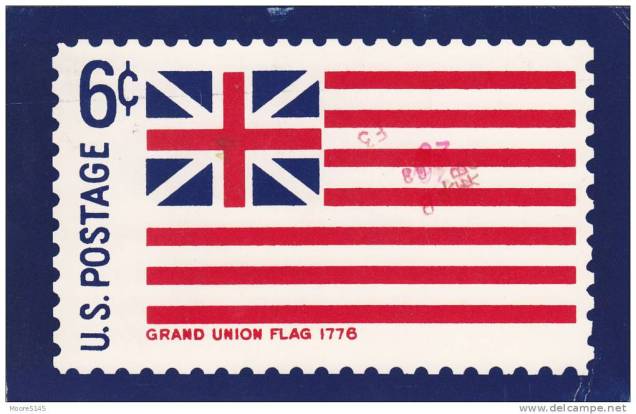
Grand Union Flag

Finally, the democratic case  for Brexit is explained to Americans

With many leading American voices so illogically hostile to Brexit, it is great that one of our own – Ben Kelly of The Sceptic Isle and the Leave Alliancehas seen his concise democratic argument for Brexit published in the New York Times.

Kelly patiently lays out the case for Brexit to an audience which has regrettably proved more likely to skip the democratic question entirely and wrongly view leaving the EU as an illogical, regressive act:

There are worrying levels of resentment in British society. People have little faith in their ability to bring about change through who they vote for and this breeds apathy and represents a grave threat to participatory democracy. And, no, not all of that can be blamed on the E.U., but we have now lost too many policy making powers and essential democratic safeguards. The E.U. maintain exclusive control of our trade policy, fishing and agricultural regulations, and is rapidly gaining power over British policies for foreign affairs, energy, environment, transport and telecommunications.

The E.U. is a supranational government with an executive body in the unelected European Commission, a legislature in the European Parliament and the Council of the E.U., and a powerful judiciary in the European Court of Justice. The “invisible hand” of its power operates through the husks of British political institutions: Our Ministers, MPs and councillors are constrained and must work within imposed parameters that are not conducive to new ideas and innovation. The E.U. hinders effective governance and disempowers and disconnects elected officials from the people who elected them.

When power is so far removed from the people, anger and disillusionment are inevitable. And democracies die when there is little connection between the electorate and those who rule them. Now, there is a pressing need to shift the balance of power back to the people and restore democratic accountability. It is the only hope for rebuilding faith in politics and quelling our current state of discontentment.

Restoring self-governance could inspire British society with a renewed sense of identity, vigor and pride. It means the construction of a new nation and a reversal of the degradation of our political culture. None of this can happen automatically and Brexit is not a silver bullet. But it unlocks the potential for change, and Britain should rise to the occasion.

It should not be necessary to explain these things to Americans, particularly those in the establishment most likely to want Britain to stay in the EU. These people, possessed of a solid understanding of their own nation’s history, should be our natural allies in wanting to free Britain from an increasingly powerful, antidemocratic and unrepresentative supranational government.

The rebellious American colonists because known for the phrase “no taxation without representation”. The EU has not yet – quite – reached the point of directly taxing its citizens, though the day may not be far off. But the phrase “no regulation without representation” applies very well to the Brexit cause. In an age of globalisation, when regulatory harmonisation is important to promote further economic growth, it is more important than ever that the people have an input into the process of making global regulations – particularly when that process has the power to wipe out entire industries at the stroke of a pen.

An independent nation state can wield its “right of reservation” as a last resort, exempting itself from new regulation which it deems particularly harmful to the national interest. A member state of the EU, like Britain, has no such power. The EU has exclusive competency on matters relating to trade, and we must swallow whatever the European Commission agrees on our behalf.

Those roles and institutions within the EU which are directly elected are nothing more than democratic fig leaves. The European Parliament is a toothless rubber-stamping institution which cannot propose new legislation or strike down old. And those who claim that the Council of Ministers or European Council allow national interests to be exerted forget that governing elites from the 28 member states often have far more in common with each other than they do with the ordinary people they represent, and will always face the tendency to do what is best for themselves and the European Union which they serve rather than what is best for the people who put them in office.

In every single way, the European Union as it currently stands should be offensive to the American national psyche. That it is widely popular among American opinion-formers reflects a failure on the part of Brexiteers to do a better job co-opting an important international ally. But more than that it represents a failure of the American elites, who having lost faith and confidence in their own country expect that we should do the same with ours.


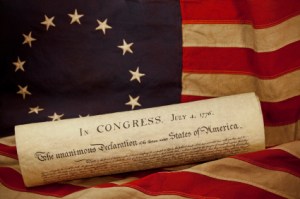
USA Declaration of Independence Lying on Grungy Betsy Ross Flag

European Union - United Kingdom - Britain - Flags

Top Image: delcampe.net

Agree with this article? Violently disagree? Scroll down to leave a comment.

Follow Semi-Partisan Politics on TwitterFacebook and Medium.

American Conservatives For Brexit, Part 3

Jim DeMint - Brexit - European Union - EU Referendum

A bold warning against supranationalism

This blog has rarely found common cause with former Senator for South Carolina Jim DeMint, but his OpEd in CapX (written with Nile Gardiner) is a welcome expression of solidarity with the Brexit cause.

From the OpEd:

The contrast could not have been starker – between a message of genuine optimism on the Brexit side, and the language of gloom and doom emanating from the Remain camp. It was frankly sad to witness an intensely negative campaign by those who suggest that Britain will not benefit from being a free and independent nation.

It is unthinkable that Americans would ever subject themselves to the kind of suffocating supranationalism that exists within the EU, with nation states surrendering large amounts of their sovereignty to unelected bureaucrats in a distant capital, with their courts overruled by foreign judges. It is all the more disturbing therefore that the leader of the free world, the president of the United States, has chosen to warn our British friends against leaving the EU.

This very much echoes the sentiments of this blog – the United States branches of government would not for one second tolerate the kind of subjugation to a supranational entity and curtailments on sovereignty that are required of EU member states – therefore, Barack Obama’s intervention in the EU referendum debate was very much a case of “do as I say, not as I do”.

Moving on to security, they point out:

Ignore the childish scaremongering coming from the White House. If the British people decide to leave the EU, their national security will be enhanced, not least because Britain can retake full control of its own borders. And the NATO alliance would actually be strengthened, rather than weakened, if Britain left the EU. The European Commission’s drive to create a European Union Army would draw vital resources away from NATO, and lead to duplication of key military assets in Europe. It is NATO, not the EU, that has secured peace in Europe in the post-World War Two era.

Before concluding:

A British exit from the EU would be good for Britain, Europe, and the United States. A United Kingdom that is not shackled to a declining EU that is mired in a culture of big government, soaring public debt and welfare dependency, would be a better partner for the US. A resurgent, self-confident Britain that looks outward to the world instead of inward, that is free to shape its own destiny, decide its own laws, craft its own foreign and security policies, and negotiate its own trade deals, can only strengthen the Anglo-American Special Relationship. A Great Britain that has absolute control of its own borders will also be a stronger partner in the fight against ISIS and Islamist terrorism.

Our former Heritage Patron, Margaret Thatcher, loved the United States and cherished the bonds that tie our two great nations together. She condemned the European Project, the idea of a European superstate, as “perhaps the greatest folly of the modern era.” The Iron Lady was absolutely right about the dangers of ever-closer union and rampant supranationalism in Europe, and how it threatened both Britain and the transatlantic alliance. We owe a huge debt of gratitude to Lady Thatcher’s leadership on the world stage. Her warnings against a federal Europe have come true. Today, Great Britain has an opportunity to be a free country once again. If the British people seize the day and break free of the EU, this should be a cause for celebration and rejoicing on both sides of the Atlantic.

Jim DeMint and Nile Gardiner are quite right to warn about “rampant supranationalism”. A point which has rarely been made in the EU referendum debate is the fact that no other countries in the world have rushed to replicate the EU model. One might point to the African Union and its Pan-African Parliament, but the two institutions are hardly comparable – the second objective of the African Union is “to defend the sovereignty, territorial integrity and independence of its Member States”, a goal to which the EU most certainly does not subscribe, in theory or in practice.

Look elsewhere in the developed world, to Asia, Australia and the Americas, and there is no desire whatsoever to form a political union based on the supranational form of government, in which a new pan-national entity takes on more and more of the traditional roles of the nation state. This should tell us something – and yet the EU persists with the steady, stealthy implementation of its mid 20th century blueprint even as globalisation and the emerging global regulatory system makes it increasingly irrelevant, a clumsy middleman rather than an effective defence.

And at a time when too many voices from the United States – the one country which should truly understand the desire for independent self government – have been fearfully urging Britain to stay in the EU, it is good to hear some bold conservative voices supporting Brexit.


European Union - United Kingdom - Britain - Flags

Top Image: Washington Post

Agree with this article? Violently disagree? Scroll down to leave a comment.

Follow Semi-Partisan Politics on TwitterFacebook and Medium.