Submission, Part 2

labour-plp-centrist-mps-praise-jeremy-corbyn-pmqs-guido-fawkes-twitter-compilation

More signs of the humiliating capitulation to come

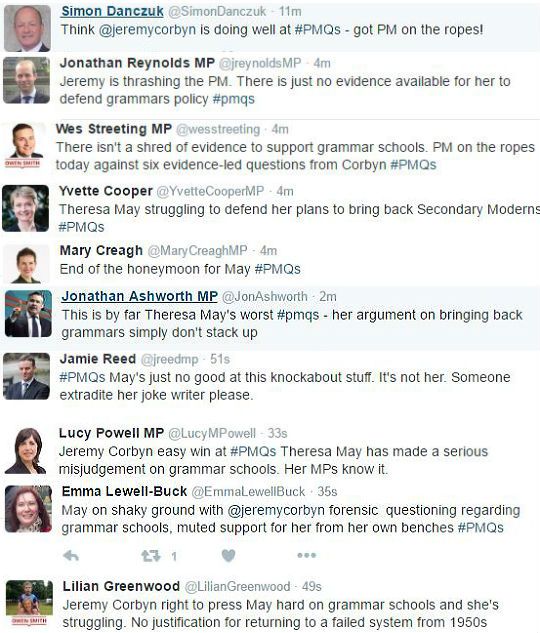
After Jeremy Corbyn managed to surprise everyone and trounce Theresa May at yesterday’s Prime Minister’s Questions, it was interesting to note the fulsome praise he received, even from many of his staunchest critics.

Guido compiled some of the most striking olive branches as they flashed across Twitter, and it makes for interesting reading – see the image above.

And so we have yet more evidence of the PLP resigning itself to Owen Smith’s inevitable defeat and trying to make nice with the man they so opportunistically stabbed in the back in the panicked aftermath of the EU referendum. MPs who haven’t had a single kind word to say about Jeremy Corbyn in months are now keen to be seen cheering on their leader.

Is this just a collective expression of relief that Corbyn didn’t self-immolate at the dispatch box for once? No, clearly something more is at work here.

Why? Because many of these centrist Labour MPs realise that they have put themselves in an untenable position. In their fury at being sidelined, these MPs queued up to publicly declare that Jeremy Corbyn was awful and that there was simply no way that they could productively work together. Now Jeremy Corbyn is about to receive another stonking mandate from the party membership, which rather leaves the door open for the centrists, not Corbyn, to leave the party if they don’t like the direction the members have set. All the while, the ominous threat of deselection hangs over their heads, and so these MPs – many of whom have absolutely infuriated their local party branches with their disloyal behaviour – are understandably desperately seeking to shore up their positions.

As this blog recently pointed out:

The Parliamentary Labour Party called Jeremy Corbyn’s bluff and lost, badly. There is ample blame to go around – some for the remaining “big beasts” of the party who were too cowardly and self-serving to put their names forward as leadership contenders, leaving it to unloved support acts like Angela Eagle and the contemptible Owen Smith; some for misbehaving shadow ministers like Hilary Benn who took the job and then rebelled and briefed against their leader at every opportunity; and last but not least, a portion of the blame rests with every single one of the 172 Labour MPs who opportunistically calculated that the confused aftermath of the EU referendum provided a great “fog of war” in which they could go full Brutus on Jeremy Corbyn’s Caesar and get away with it.

Well, it didn’t work. Nobody viable stepped forward, the party membership was enraged at the parliamentary party challenging their pick for leader less than a year into the job, and Owen Smith’s damp squib of a campaign lurched from one unforced error to the next.

[..] And so the unhappy bedfellows will likely limp on together, Corbynites and centrists openly despising one another but remaining stuck with each other thanks to the British political system. The centrists will continue to moan to any journalist who will listen, Dan Hodges will have more material for his Mail on Sunday column than he knows what to do with, the PLP will do everything they can to make Jeremy Corbyn’s life a living hell, and Corbyn’s team will do all they can to set the stage for a purge of the centrists, either at the upcoming constituency boundary review or when it comes time to choose candidates for the 2020 general election.

But of course, if anyone is capable of seizing defeat from the jaws of victory (or at least taking 1.5 steps back for every 2 steps forward) it is Jeremy Corbyn. And so it is again today, with news that overzealous Corbynite aides have prepared another one of their infamous enemy lists, this time superciliously keeping note of those centrist MPs who have supposedly undermined Corbyn’s leadership in the past.

From the Guardian:

Jeremy Corbyn’s campaign team has issued a list singling out 14 Labour MPs, including deputy leader Tom Watson, who it claims have abused the leader and his allies, triggering a new row in the party.

Corbyn’s team said the list was sent out by mistake by a junior staff member, but the leader later appeared to stand by the substance of the allegations, saying all the remarks had been made on the record.

In the release, Owen Smith, the challenger for the Labour leadership, was accused of being the “real disunity candidate”, who has failed to tackle abuse meted out by his own supporters.

The list, obtained by Press Association, highlighted the behaviour of a number of Labour MPs, including Jess Phillips for telling Corbyn’s ally Diane Abbott to “fuck off”, John Woodcock for dismissing the party leader as a “fucking disaster” and Tristram Hunt for describing Labour as “in the shit”.

Watson was highlighted for calling the grassroots Corbyn campaign Momentum a “rabble”.

Cue lots of sanctimonious outrage from those MPs on the list – Jess Phillips is already parading her supposed vulnerability to crazed Corbynite violent attacks on social media.

This doesn’t make anyone look good. One of the most dispiriting things about the Labour Party in recent years, particularly since the departure of Ed Miliband, has been the continual games of competitive weaponised victimhood played by centrists and Corbynites alike. Both sides are clearly drinking deep from the well of social justice and identity politics, and have decided that the best way to win (or at least shut down) an argument they don’t like is to screech hysterically that the other side is somehow encouraging or tacitly accepting violence.

We are used to seeing this from the centrists, furious at their fall from power and lashing out at anyone and everyone who dares to suggest that their plight might just be self-inflicted. But it is depressing to see Corbynites now adopting the same behaviour, keeping finickity little lists of those MPs who have “abused” them or made them feel “unsafe”.

This, more than anything else, is why the British public views the Labour Party as an unelectable dumpster fire of a political party right now. Yes, Jeremy Corbyn’s outdated socialism is failing to win over centrists (in what is a broadly centre-right country, as recently reasserted by a new non-partisan report as well as by common sense), but far worse than that is the constant spectacle of briefing, counter-briefing and backbiting. These are the seething, petty politics of the student union, being practised by grown adults with prestigious jobs and £74,000 salaries. Frankly, it is pathetic.

But this is all just a flash in the pan. However much some Labour MPs may huff and puff about being placed on Corbyn’s enemy list, the majority of the PLP will fall into line. In fact, given the continual and widespread criticism that he has endured from his own back (and front) benches, the real miracle is that there are only fourteen names on the list.

And there are only fourteen names on the list because in this one key respect, Jeremy Corbyn acknowledges reality rather than struggling against it. Corbyn knows that most of the PLP, whatever histrionics they may have engaged in over the past year, will come trudging meekly back through the door of his tent the moment he finishes wiping Owen Smith’s blood off his sword. And like any smart vanquishing general trying to occupy hostile territory, Corbyn knows that the best thing to do is to make a very public example of those who were most disloyal to him while granting the majority a reprieve contingent on future behaviour.

Having utterly failed in their opportunistic and self-serving bid to rid Labour of Jeremy Corbyn, nearly all of his restive MPs – even the ones who pompously declared the impossibility of ever working with their leader – will shortly bend the knee in a humiliating show of submission.

This is Jeremy Corbyn’s party now, and the centrists are going to have to do a hell of a lot better than Twitter tantrums and Owen Smith if they are serious about changing that fact.


Jeremy Corbyn - PMQs

Support Semi-Partisan Politics with a one-time or recurring donation:

Agree with this article? Violently disagree? Scroll down to leave a comment.

Follow Semi-Partisan Politics on TwitterFacebook and Medium.

What Became Of The Great British Progressive Majority? It Never Existed

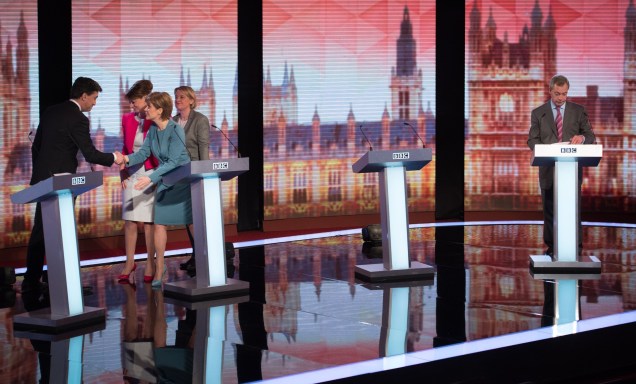
BBC Challengers Debate - Leaders Debate - General Election 2015 - Nigel Farage Stands Alone

Turns out that pooling their strength and holding hands beneath a big progressive rainbow will not help Britain’s left-wing parties get back into power after all. What a shame.

Remember the Great British Progressive Majority, that overwhelmingly large (yet always infuriatingly hidden) bloc of centre-leftish voters who together wielded the power to lock the Evil Tories out of 10 Downing Street and government forever, if only they could be organised and persuaded to vote tactically?

You know, that vast conclave of redistributionist, environmentalist, identity politics-wielding, Big Government-supporting luvvies who supposedly outweigh the 11.3 million British voters who re-elected the Conservative government last May?

Well, no worries if you don’t recall the fabled progressive majority. Because it turns out that it doesn’t exist after all, and never has.

Guido reports:

This morning the centrist, cross-party Social Market Foundation held a well attended seminar headlined by Chuka Umunna, Nicky Morgan and Nick Clegg. It felt like a wake for the Labour Party. SMF claims – on the back of research from Opinium – that there’s no progressive left-leaning majority in the country – the majority of voters hold “traditionally right-wing views” that will guarantee a “healthy majority” in the future for the right-wing parties.

The wonks categorised voters’ attitudes into eight political tribes/parties that share very distinctive political views. Despite the majority of voters self-describing as “centrist”, most voters actually identified with centre-right and right-wing political attitudes.

But…but…but Nicola Sturgeon promised us! One can hear the wailing from trendy lefty dinner tables from Brighton to Aberdeen. And so she did. So did they all – Sturgeon, Nick Clegg of the forgotten “Lib Dem” tribe, Plaid Cymru’s Leanne Wood, the Green Party’s underwhelming Natalie Bennett. In the tawdry hunt for votes, all of these party leaders told the electorate that between them, they carried the votes to “lock David Cameron out of Number 10 Downing Street“.

The only one to object, as all of this unfolded, was the hapless Ed Miliband, whose votes these other parties were ruthlessly cannibalising. Miliband, still entertaining sweetly pathetic hopes of becoming prime minister, had no great desire to share power in a leftist coalition, to have moralising Scottish and Welsh nationalists perched on either shoulder, scolding him for his insufficient fidelity to socialist principles.

But Miliband need not have worried about sharing power. Between them, the main parties of the Left – Labour, the LibDems, Plaid Cymru, the SNP and the Green Party – managed to accumulate just 13,102,483 votes in the 2015 general election. Meanwhile, the main parties of the Right – Conservative and UKIP – racked up 15,215,675 votes. This gave the parties of the Right an edge of well over 2 million votes, despite the fact that David Cameron’s lacklustre Coke Zero Conservatives hardly put a spring in people’s steps as they went to the polling station. Britain’s fabled progressive majority didn’t show up on polling day. And they didn’t show up because they don’t exist other than in the minds of starry-eyed leftists.

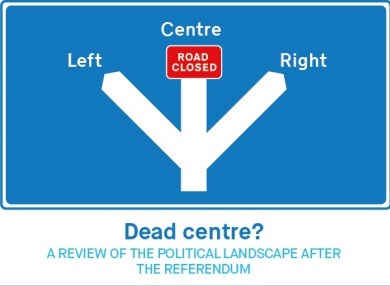
social-market-foundation-britain-progressive-majority

If you have the time, the whole report – entitled “Dead centre? A review of the political landscape after the referendum” – is worth a read. Yes, it contains the obligatory sprinkling of shellshocked establishment wailing about Brexit, and is published by a think tank which claims to represent something (the so-called “radical centre”) which by definition can not exist. But the report nonetheless highlights the key reason why the parties of the Left cannot unite in opposition to the Evil Tor-ees, as many of their activists clearly want to happen.

Money quote:

On the whole, our analysis makes more cheerful reading for those on the right, than on the centre or the left. The two largest tribes, making up around 50% of the population, hold a range of traditionally right wing views, offering a solid foundation on which to aim for the 40-42% of the vote which normally guarantees a healthy majority under our electoral system. These groups share a desire to see immigration reduced to below 100k a year and were both solidly pro-Leave in the EU referendum.

In fact, of the eight different voter tribes identified by the report, “none of the other groups approaches the size or homogeneity of these two”. These two groups alone account for more than half the electorate, and are inherently distrustful of more leftist policies. Throw in a third tribe, the “free liberals” (perhaps including this blog) and you are looking at 57% of the electorate likely to be hostile to collectivist, redistributionist thinking.

If splits within the Conservative Party and between the Tories and UKIP look bad, that is nothing compared to the fissures on the right, according to the report. As Guido notes:

The progressive tribes are fragmented, disagreeing on openness to the world and attitudes towards the welfare state and taxation. This is bad news for the current Labour Party as the think-tank finds massive differences between so-called“Democratic Socialists” and “Community” party voter blocs – traditionally known as Labour supporters – while both tribes agree on socialist policies towards capitalism, they diverge on supporting the EU or having an internationalist approach.

Well, really it is just Labour that is fractured. The LibDems, SNP, Plaid Cymru and Green party have all clearly decided to tread the internationalist, social democrat path, worshipping at the altar of the EU and scorning the nation state as a worthwhile agent for change or guarantor of core liberties. This leaves the Labour Party as the only home for those patriotic left-wingers who might fall into the “Community” tribe. And even there, they find themselves under continual assault by the sneering middle class clerisy which is loathe to give up its stranglehold on policymaking. Jeremy Corbyn answers some of this tribe’s concerns, but not all. In fact, one might consider him equally dissatisfactory to the “Democratic Socialists” as to the “Community” tribe, rubbing each up the wrong way.

Even if the parties of the Left could hammer out an uneasy truce and electoral alliance, why would they? Despite the overblown leftist rhetoric, Theresa May’s Conservative government hardly shows signs of being a radical right-wing government in the manner of Thatcher (more’s the pity), so why attempt a political merger which is almost certainly doomed to failure, just to thwart a very non-threatening centrist Tory government? Leftists’ hatred of the Evil Tor-ees is certainly irrational, but they are not that irrational.

Besides, whatever faultlines currently run through the British Left, the headline numbers don’t lie. And despite the fatuous claims of opportunistic smaller parties that greater Westminster representation would enable them to participate in a progressive majority government, the votes simply are not there. They never were.

Of course, none of this is surprising – except, apparently, to London-dwelling metro-left members of the political class who never actually get out and talk to normal people. Anyone who actually does so knows that Britain remains a vaguely conservative country, shot through with a fairly strong authoritarian streak and a deeply ingrained suspicion of success.

We Brits will happily sign petitions for Things That We Don’t Like to be banned and made illegal (the authoritarian bit), light ourselves on fire outside Downing Street in protest at The Great British Bake Off moving from the BBC to Channel Four (the conservative bit) before going on a long, satisfying rant about how evil it is that the inventors and producers of that television show want to receive market-rate compensation for their creation (the suspicion of success). That’s just who we are as a country. I certainly didn’t need the Social Market Foundation and their “eight tribes” report to know that Britain is a small-c conservative country.

That’s why David Cameron was able to guide his wishy-washy, Coke Zero Conservative government to one and a half general election victories – by appealing to these instincts in us. Lord knows it wasn’t because we were excited about his agenda for government (whatever that may have been).

Anyone who pays the remotest bit of attention to British politics ought to be able to sum up our national character fairly succinctly in a manner such as this. In fact, the only ones unable to do so – who laboured under the hilarious misapprehension that there was some great progressive majority yearning to break free and assert itself, installing a wind turbine on every roof – were the deluded metro-leftists.

Perhaps now they can disenthrall themselves of this sweet but futile notion.


Postscript: This review of the report in Conservative Home is also worth a read.


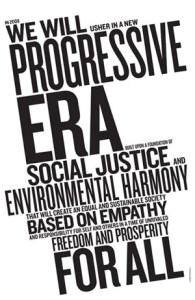
social-justice-progressive-majority-meaningless-waffle

Support Semi-Partisan Politics with a one-time or recurring donation:

Agree with this article? Violently disagree? Scroll down to leave a comment.

Follow Semi-Partisan Politics on TwitterFacebook and Medium.

Will The Race For The White House Be Decided By Shy Donald Trump Voters?

mother-jones-progressive-turnout-project-shy-trump-voter

Shy Tories helped the Conservative Party to an unexpected outright victory in the 2015 general election in Britain, while some say that “shy Brexiteers” helped to push the UK out of the European Union. Are shy Trump supporters now about to help elect Donald Trump president of the United States?

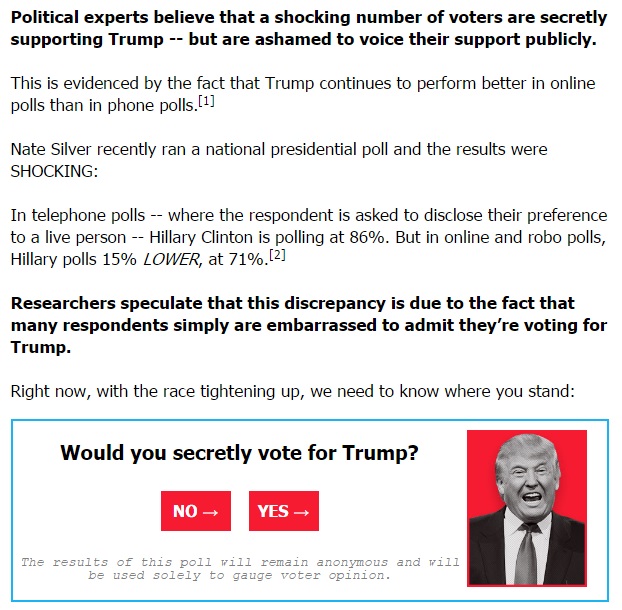
The progressive Mother Jones magazine has just sent its readers a panicked bulletin asking them whether or not they would “secretly vote for Trump”.

Given the left-wing readership of Mother Jones, it is a safe bet that very few people will respond in the affirmative, but the mere fact that Mother Jones and their partners the Progressive Turnout Project are asking the question at all tells us something very interesting: that American leftists and Democrats are terrified that the polls may be deceiving them and that their progressive dream might be undone in November by the “shy Trumpist” factor.

From the email (their emphasis is bold):

Political experts believe that a shocking number of voters are secretly supporting Trump — but are ashamed to voice their support publicly.

This is evidenced by the fact that Trump continues to perform better in online polls than in phone polls.

Nate Silver recently ran a national presidential poll and the results were SHOCKING:

In telephone polls — where the respondent is asked to disclose their preference to a live person — Hillary Clinton is polling at 86%. But in online and robo polls, Hillary polls 15% LOWER, at 71%.

Researchers speculate that this discrepancy is due to the fact that many respondents simply are embarrassed to admit they’re voting for Trump.

[..]

The truth is, the Trump campaign agrees this is happening.

They’re counting on a large number of ‘silent’ voters to come out in droves on Election Day and carry Donald Trump to victory.

We can’t let that happen.

The New York Times reported on the same phenomenon back in May:

There is also strong evidence that most traditional public opinion surveys inadvertently hide a segment of Trump’s supporters. Many voters are reluctant to admit to a live interviewer that they back a candidate who has adopted such divisive positions.

In matchups between Trump and Hillary Clinton, Trump does much better in polls conducted online, in which respondents click their answers on a computer screen, rather than in person-to-person landline and cellphone surveys.

An aggregation by RealClearPolitics of 10 recent telephone polls gives Clinton a nine-point lead over Trump. In contrast, the combined results for the YouGov and Morning Consult polls, which rely on online surveys, place Clinton’s lead at four points.

Why is this important? Because an online survey, whatever other flaws it might have, resembles an anonymous voting booth far more than what you tell a pollster does.

[..] In a detailed analysis of phone versus online polling in Republican primaries, Kyle A. Dropp, the executive director of polling and data science at Morning Consult, writes “Trump’s advantage in online polls compared with live telephone polling is eight or nine percentage points among likely voters”.

This difference, Dropp notes, is driven largely by more educated voters — those who would be most concerned with “social desirability.”

Concluding:

The simple fact that Trump has beaten the odds so far means that it is not beyond the realm of possibility that he could beat them again. If he does take the White House, much, if not all, of his margin of victory will come from voters too ashamed to acknowledge publicly how they intend to cast their vote.

But is this really likely to happen in America? Well, the “shy Tory” factor is certainly real and has been proven in election after election in Britain, with the Guardian recently lamenting:

“Well hung” was the headline on the Sun’s front page, while the Guardian ran with “It couldn’t be closer”. The polls were predicting Labour and the Conservatives were neck-and-neck, but they couldn’t have been more wrong.

All of the polls significantly underestimated the Tories, and they were strikingly consistent in how wrong they were. Populus put Labour one point ahead, BMG, Survation, YouGov and polling by the Conservative peer Lord Ashcroft all predicted a tie. Opinium predicted a one-point lead for the Tories, as did ComRes and Ipsos Mori.

So when the exit polls just after 10pm predicted 316 seats for the Tories – up nine seats from 2010 – and Labour a devastating 239 seats, with the Lib Dems obliterated to just 10 and the SNP winning all but one seat in Scotland, many could not believe it was true.

[..] The same excuses are being floated this time as were used in 1992: changing methods of polling, “shy Tories” who did not want to admit they were voting for John Major, and a very late swing of undecideds.

While during the EU referendum campaign, this blog weighed in on the “shy eurosceptic” phenomenon:

So what are we dealing with here? It’s the same factor which makes otherwise confident, extroverted people drop their voices to a hushed and conspiratorial whisper when discussing their conservative political leanings in an elite (or creative/artistic) workplace,or makes a school teacher think twice before openly contradicting the biased, anti-Tory ranting of their colleagues.

But it is more than simply avoiding hassle. For many people, not only the elites, it is also a case of seeking to avoid very tangible real-world consequences of being known to hold unfashionable opinions – the threat of public ridicule, professional censure or even job loss, simply for committing thought-crime.

Maybe nobody will care if you fail to join in the joking with your colleagues when they laugh about Nigel Farage or mock those knuckle-dragging Little Englanders who want to pull up the drawbridge on Fortress Britain. But maybe they will notice, and maybe it might lead to an awkward question: “Wait a minute, you can’t seriously support those racists, can you? You’re having a laugh, right?” Far easier to just go along with the crowd. Why risk antagonising the boss, or the people you sit next to every day? Why risk that upcoming promotion? Better just stay silent.

[..]  There are many social settings – mostly where the social, academic or artistic elites live and work – where expressing a eurosceptic opinion or declaring one’s support for Brexit is tantamount to reading aloud from Mein Kampf in the town square. But conversely, there are no equivalent places or scenarios where one might reasonably expect to be actively persecuted for expressing pro-EU sentiments.

Goodness knows just how many secretly anti-illegal-immigration, vaguely nationalist, protectionist authoritarians there are lurking in the enclaves of America’s coastal elites. But whether they are a handful or a small army, you can bet that they will be keeping quiet about their political preferences. Why invite public ridicule, social isolation and all of the other negative consequences of a political climate which has seen Hillary Clinton describe half of Donald Trump supporters as “deplorable” racists, and in which people like them are used as daily cannon fodder on channels like MSNBC?

It is certainly the case in Britain that many people simply dare not express their perfectly mainstream and legitimately held conservative opinions because of the toxic and hateful anti-Tory, anti-Brexit hysteria whipped up by the permanently outraged Left, who insist on seeing evil rather than mere political disagreement. And this culture is certainly no more harmonious or respectful in the United States. Therefore it follows quite reasonably that there may be a mass of voters, unimpressed with President Obama’s two terms of office and with deep concerns over Hillary Clinton, who find themselves in the unexpected position of preferring Donald Trump but are unable to confess their thoughtcrime to friends, family or pollsters.

And then again, maybe not. That’s the awkward thing about these “shy voter” phenomena – they seem so obvious the day after an election, but are almost impossible to pin down before polling day thanks to their tendency to lie to pollsters.

But if I was a Hillary Clinton-supporting progressive, I would not be taking any chances. And I would start asking myself whether the pleasurable short-term catharsis of denouncing all Donald Trump supporters as selfish, evil and ignorant is worth the risk of driving even more of his supporters underground, beyond the influence of both Democratic Party outreach and out of reliable communication with opinion pollsters.

Unfortunately, most American leftists don’t seem to have gotten the message yet. Here’s Jonathan Chait, making himself look smart at the expense of making things even worse:

Following the classic definition of a gaffe as a politician telling the truth, Hillary Clinton’s comment about Donald Trump’s supporters (“just to be grossly generalistic, you could put half of Trump’s supporters into what I call the ‘basket of deplorables.’ Right? The racist, sexist, homophobic, xenophobic, Islamophobic — you name it”) was the purest and most classic example. The national media has spent a year and a quarter documenting in exquisite, redundant detail the rabid, anti-intellectual nationalistic bigotry of Trump’s hard-core fanbase. But it has taken Hillary Clinton’s affirmation to transform this by-now-banal observation into a scandal.

[..] Clinton controversially described half of Trump’s supporters as “irredeemable.” Trump earlier this year framed the same idea in a more colorful and perhaps more damning way: “I could stand in the middle of Fifth Avenue and shoot somebody and I wouldn’t lose voters.” Both statements reflect the same underlying truth: Trump enjoys a hard-core support that lies beyond persuasion, utterly immune to even the starkest factual evidence. Clinton committed a gaffe because she acknowledged a reality that literally every other person in America, including Donald Trump himself, is permitted to speak aloud.

Keep on laughing, strutting and preening if you must, American liberals.

I just hope that today’s feeling of smug superiority does not warp into the numb disbelief of defeat when the half of the country that you so love to demonise ends up delivering Donald J Trump to the White House.


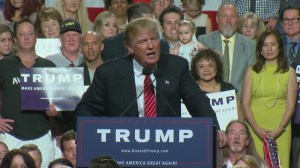
Donald Trump Rally

Support Semi-Partisan Politics with a one-time or recurring donation:

Agree with this article? Violently disagree? Scroll down to leave a comment.

Follow Semi-Partisan Politics on TwitterFacebook and Medium.

The Democrats Rub Illegal Immigration In The Faces Of Struggling Americans – No Wonder Many Support Donald Trump

The American Left’s determined intransigence and dishonesty on the issue of immigration pushes decent people into the arms of Donald Trump

Imagine that for some crazy reason, you just happen to believe in the strict upholding of law and order.

Suppose that this belief extends to the enforcement of federal immigration laws, and zero tolerance on those who seek to bypass, subvert or ignore the legal avenues for attaining permanent residency and citizenship of the United States.

Suppose that you’re a hard working, ordinary decent person who perhaps doesn’t have the time or inclination to ruminate on the ways in which a conspiracy of the two political parties has effectively encouraged plentiful illegal immigration for so long that the US economy is now dependent on the millions of illegal immigrants living in America.

Suppose that you occupy a relatively unskilled and low-paid position in the labour market, and have not seen your disposable income or living standards increase for years, or in some cases even decades.

Suppose that whenever you watch or read the news, both politicians and the media refuse to call the people who overstayed their visas or snuck into the country by their proper descriptor, “illegal immigrants”, preferring to term them “undocumented immigrants” as though they were regular Americans whose birth certificates, passports and other papers proving their right to residency had simply vanished in an unfortunate puff of smoke.

Suppose that every time you turn on the television you see a deliberate effort to change the language to speak of “undocumented” rather than “illegal” immigrants, while the media consistently portray people like you, those with legitimate personal and civic concerns, as being inherently “racist”.

Suppose you then see the Democratic Party not only consistently celebrate “undocumented” immigrants at their quadrennial national convention but actually invite many of them onto the stage to give speeches, and reward those speeches with thunderous standing ovations – while the Democratic presidential nominee described people like you as belonging to a “basket of deplorables”.

Suppose that while you and your family are held to account and in some cases persecuted by the criminal justice system for the smallest infraction, the hearts of politicians and the media seem brimming over with sympathy not for you but for those whose very presence on American soil violates US immigration law.

Suppose that you are a relatively low-information voter, but someone who is very aware of the persistent air of scandal surrounding Hillary Clinton and who sees in the media’s incredulity at Donald Trump something of the same hostility that you face every day simply for daring to believe that immigration should be legal and controlled.

Now: if you were this person – and there are millions of them, in every state of the Union – why the hell would you NOT vote for Donald Trump this November?

And wouldn’t all of those people in the political and media class clutching their pearls in horror at the thought of a Donald Trump presidency bear a significant share of the responsibility for pushing you toward that decision?


donald-trump-wall-mexican-border-illegal-immigration-undocumented-migrants

Support Semi-Partisan Politics with a one-time or recurring donation:

Agree with this article? Violently disagree? Scroll down to leave a comment.

Follow Semi-Partisan Politics on TwitterFacebook and Medium.

Lionel Shriver Makes A Bold Defence of Cultural Appropriation

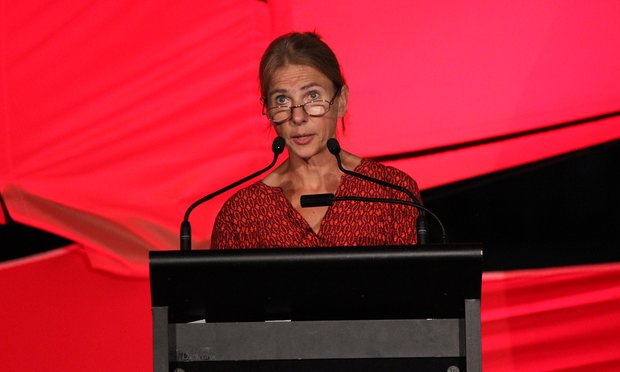
lionel-shriver-brisbane-writers-festival

The purpose of literature and fiction writing is not to serve the grand design of the social justice and identity politics movement – and Lionel Shriver should be commended for standing up for artistic freedom against the new age censors

At a recent speech given at the Brisbane Writers Festival, the author Lionel Shriver makes a passionate and compelling defence of the concept of “cultural appropriation”, standing up to the rabid social justice warriors who would seek to impose a new cultural apartheid and the return of “separate but equal” division between races, cultures, genders and social groups.

From Shriver’s speech, which begins by making reference to college campus scandals over the supposed “cultural appropriation” and “harm” caused by non-Mexican students wearing sombrero hats at tequila parties or Mexican-themed restaurants:

But what does this have to do with writing fiction? The moral of the sombrero scandals is clear: you’re not supposed to try on other people’s hats. Yet that’s what we’re paid to do, isn’t it? Step into other people’s shoes, and try on their hats.

In the latest ethos, which has spun well beyond college campuses in short order, any tradition, any experience, any costume, any way of doing and saying things, that is associated with a minority or disadvantaged group is ring-fenced: look-but-don’t-touch. Those who embrace a vast range of “identities” – ethnicities, nationalities, races, sexual and gender categories, classes of economic under-privilege and disability – are now encouraged to be possessive of their experience and to regard other peoples’ attempts to participate in their lives and traditions, either actively or imaginatively, as a form of theft.

Shriver’s barnstorming speech goes on to list many great works of literature which would be greatly diminished or simply not exist at all were their authors (like many writers today) bullied and pressured to avoid writing about cultural experiences and customs other than their own.

Yet were their authors honouring the new rules against helping yourself to what doesn’t belong to you, we would not have Malcolm Lowry’s Under the Volcano. We wouldn’t have most of Graham Greene’s novels, many of which are set in what for the author were foreign countries, and which therefore have Real Foreigners in them, who speak and act like foreigners, too.

In his masterwork English Passengers, Matthew Kneale would have restrained himself from including chapters written in an Aboriginal’s voice – though these are some of the richest, most compelling passages in that novel. If Dalton Trumbo had been scared off of describing being trapped in a body with no arms, legs, or face because he was not personally disabled – because he had not been through a World War I maiming himself and therefore had no right to “appropriate” the isolation of a paraplegic – we wouldn’t have the haunting 1938 classic, Johnny Got His Gun.

We wouldn’t have Maria McCann’s erotic masterpiece, As Meat Loves Salt – in which a straight woman writes about gay men in the English Civil War. Though the book is nonfiction, it’s worth noting that we also wouldn’t have 1961’s Black Like Me, for which John Howard Griffin committed the now unpardonable sin of “blackface.” Having his skin darkened – Michael Jackson in reverse – Griffin found out what it was like to live as a black man in the segregated American South. He’d be excoriated today, yet that book made a powerful social impact at the time.

(Shriver’s speech was too much for one delicate snowflake. Australian activist Yassmin Abdel-Magied, whose sheltered mind was unable to tolerate hearing of a worldview which didn’t put her own identity on a pedestal, decided to walk out during the speech and then pen a tear-stained, self-involved piece about her feewings for the Guardian, aggrandising her supposed victimhood).

But what exactly is Lionel Shriver’s beef with the modern idea that cultural appropriation is heresy? It seems that what angers her – quite rightly – is the idea that any group, marginalised or not, can be the sole custodians of their traditions, granting or withholding license to “borrow” from their culture like a movie studio scouring YouTube for pirated videos.

According to Shriver, nobody, least of all an artist, should have to approach anyone for “permission” to write from a certain perspective, include a certain character or touch on any cultural tradition:

The author of Who Owns Culture? Appropriation and Authenticity in American Law, Susan Scafidi, a law professor at Fordham University who for the record is white, defines cultural appropriation as “taking intellectual property, traditional knowledge, cultural expressions, or artifacts from someone else’s culture without permission. This can include unauthorised use of another culture’s dance, dress, music, language, folklore, cuisine, traditional medicine, religious symbols, etc.”

What strikes me about that definition is that “without permission” bit. However are we fiction writers to seek “permission” to use a character from another race or culture, or to employ the vernacular of a group to which we don’t belong? Do we set up a stand on the corner and approach passers-by with a clipboard, getting signatures that grant limited rights to employ an Indonesian character in Chapter Twelve, the way political volunteers get a candidate on the ballot?

While Shriver justifiably bristles at the consequences of weaponised identity politics, she does not use her speech to dwell on the reasons for the rise of this hyper self-conscious, self-censoring phenomenon. Fellow author Ian McEwan, on the other hand, is more than happy to point out the root causes of the identity politics resurgence, recently commenting in an interview:

“These children have grown up in an era of peace and plenty, and nothing much to worry about, so into that space comes this sort of resurgence that the campus politics is all about you, not about income inequality, nuclear weapons, climate change, all the other things you think students might address, the fate of your fellow humans, migrants drowning at sea. All of those things that might concern the young are lost to a wish for authority to bless them [..] rather than to challenge authority.”

To which this blog responded:

Doesn’t that just perfectly sum up the Cult of Social Justice and Identity Politics? A generation of students raised at a time of great material abundance, peace and prosperity arrive at university to find most of the great injustices of the past already slain by previous generations of campaigners. Bereft of purpose but still feeling the strong student urge to embrace a cause, they crank up their sensitivity settings to perceive any slight or inequity, however small or unintentional, to be evidence of the systematic oppression of one or more classes of prescribed victim groups.

McEwan’s last sentence is particularly profound – the idea that today’s young people no longer rail against authority in the way that student activists of old did, but rather make tear-stained appeals to authority figures to intercede on their behalf. This is the victimhood culture, clearly distinct from an honour culture (which would encourage the individual to stand up to minor sleights or “microaggressions” and confront the issue themselves) or a dignity culture (which would only sanction involving authorities in case of grave injury).

Later in her speech, Shriver hits out at the fad of shoehorning various “oppressed group” minorities into television shows in the name of making up some social justice quota, and the growing demand by some critics for the same affirmative action to take place in literature:

My most recent novel The Mandibles was taken to task by one reviewer for addressing an America that is “straight and white”. It happens that this is a multigenerational family saga – about a white family. I wasn’t instinctively inclined to insert a transvestite or bisexual, with issues that might distract from my central subject matter of apocalyptic economics. Yet the implication of this criticism is that we novelists need to plug in representatives of a variety of groups in our cast of characters, as if filling out the entering class of freshmen at a university with strict diversity requirements.

You do indeed see just this brand of tokenism in television. There was a point in the latter 1990s at which suddenly every sitcom and drama in sight had to have a gay or lesbian character or couple. That was good news as a voucher of the success of the gay rights movement, but it still grew a bit tiresome: look at us, our show is so hip, one of the characters is homosexual!

We’re now going through the same fashionable exercise in relation to the transgender characters in series like Transparent and Orange is the New Black.

Fine. But I still would like to reserve the right as a novelist to use only the characters that pertain to my story.

Besides: which is it to be? We have to tend our own gardens, and only write about ourselves or people just like us because we mustn’t pilfer others’ experience, or we have to people our cast like an I’d like to teach the world to sing Coca-Cola advert?

That last question is a good one – how on earth is a fiction author or television screenplay writer possibly to satisfy the competing demands to include more characters from diverse backgrounds yet avoid the unpardonable sin of presuming to write from their vantage point?

No doubt the social justice warriors would decree that fiction writing, so long a solitary pursuit, must now always be a collaborative effort, with a team of character writers standing by to offer their perspectives on a character’s true “voice” and authenticity. Or perhaps the process could be accomplished at the end of writing, by submitting draft novels to an Office of Social Justice Censorship where beady-eyed zealots who claim to speak on behalf of their entire social group go through the manuscript with a red pen, changing the author’s words and ideas to conform to some standard set in secret, behind closed doors.

You can see where the inexorable logic of these shrill demands ultimately leads: nowhere good. We either end up in a world where brilliant authors are too terrified of potential repercussions to ever pick up a pen in the first place, or one ends up with Soviet-style official “approved” art and literature, written to precise specifications in order to best glorify the Cult of Social Justice and Identity Politics.

As Shriver puts it:

Thus in the world of identity politics, fiction writers better be careful. If we do choose to import representatives of protected groups, special rules apply. If a character happens to be black, they have to be treated with kid gloves, and never be placed in scenes that, taken out of context, might seem disrespectful. But that’s no way to write. The burden is too great, the self-examination paralysing. The natural result of that kind of criticism in the Post is that next time I don’t use any black characters, lest they do or say anything that is short of perfectly admirable and lovely.

[..] Especially for writers from traditionally privileged demographics, the message seems to be that it’s a whole lot safer just to make all your characters from that same demographic, so you can be as hard on them as you care to be, and do with them what you like. Availing yourself of a diverse cast, you are not free; you have inadvertently invited a host of regulations upon your head, as if just having joined the EU. Use different races, ethnicities, and minority gender identities, and you are being watched.

Extra marks for the snide attack on the European Union – brilliant stuff.

As this blog has explained time and again, above all else social justice is not about fairness and equality but rather about power – specifically, the acquisition of power by the beady-eyed authoritarians who wield their weaponised victimhood and competitive tolerance as cudgels, granting them the power to determine what the rest of us can and cannot do or say. Television has already on the verge of falling to this long-running cultural siege, and the clear message coming from “progressive” reviewers in the literary community is that fiction is next.

Lionel Shriver has issued a timely warning to her fellow authors – let us hope that there is sufficient time and willpower to resist the final assault when it comes.


Lionel Shriver: how not to read - Do Something magazine

Safe Space Notice - 2

Top Image: Guardian, Daniel Seed

Support Semi-Partisan Politics with a one-time or recurring donation:

Agree with this article? Violently disagree? Scroll down to leave a comment.

Follow Semi-Partisan Politics on TwitterFacebook and Medium.