Every American Should Support Brexit

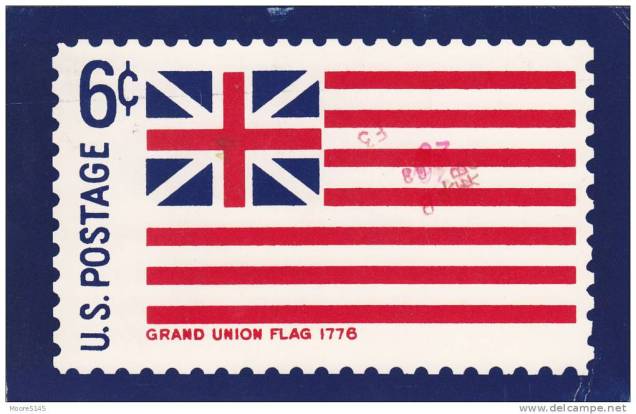
Grand Union Flag

Finally, the democratic case  for Brexit is explained to Americans

With many leading American voices so illogically hostile to Brexit, it is great that one of our own – Ben Kelly of The Sceptic Isle and the Leave Alliancehas seen his concise democratic argument for Brexit published in the New York Times.

Kelly patiently lays out the case for Brexit to an audience which has regrettably proved more likely to skip the democratic question entirely and wrongly view leaving the EU as an illogical, regressive act:

There are worrying levels of resentment in British society. People have little faith in their ability to bring about change through who they vote for and this breeds apathy and represents a grave threat to participatory democracy. And, no, not all of that can be blamed on the E.U., but we have now lost too many policy making powers and essential democratic safeguards. The E.U. maintain exclusive control of our trade policy, fishing and agricultural regulations, and is rapidly gaining power over British policies for foreign affairs, energy, environment, transport and telecommunications.

The E.U. is a supranational government with an executive body in the unelected European Commission, a legislature in the European Parliament and the Council of the E.U., and a powerful judiciary in the European Court of Justice. The “invisible hand” of its power operates through the husks of British political institutions: Our Ministers, MPs and councillors are constrained and must work within imposed parameters that are not conducive to new ideas and innovation. The E.U. hinders effective governance and disempowers and disconnects elected officials from the people who elected them.

When power is so far removed from the people, anger and disillusionment are inevitable. And democracies die when there is little connection between the electorate and those who rule them. Now, there is a pressing need to shift the balance of power back to the people and restore democratic accountability. It is the only hope for rebuilding faith in politics and quelling our current state of discontentment.

Restoring self-governance could inspire British society with a renewed sense of identity, vigor and pride. It means the construction of a new nation and a reversal of the degradation of our political culture. None of this can happen automatically and Brexit is not a silver bullet. But it unlocks the potential for change, and Britain should rise to the occasion.

It should not be necessary to explain these things to Americans, particularly those in the establishment most likely to want Britain to stay in the EU. These people, possessed of a solid understanding of their own nation’s history, should be our natural allies in wanting to free Britain from an increasingly powerful, antidemocratic and unrepresentative supranational government.

The rebellious American colonists because known for the phrase “no taxation without representation”. The EU has not yet – quite – reached the point of directly taxing its citizens, though the day may not be far off. But the phrase “no regulation without representation” applies very well to the Brexit cause. In an age of globalisation, when regulatory harmonisation is important to promote further economic growth, it is more important than ever that the people have an input into the process of making global regulations – particularly when that process has the power to wipe out entire industries at the stroke of a pen.

An independent nation state can wield its “right of reservation” as a last resort, exempting itself from new regulation which it deems particularly harmful to the national interest. A member state of the EU, like Britain, has no such power. The EU has exclusive competency on matters relating to trade, and we must swallow whatever the European Commission agrees on our behalf.

Those roles and institutions within the EU which are directly elected are nothing more than democratic fig leaves. The European Parliament is a toothless rubber-stamping institution which cannot propose new legislation or strike down old. And those who claim that the Council of Ministers or European Council allow national interests to be exerted forget that governing elites from the 28 member states often have far more in common with each other than they do with the ordinary people they represent, and will always face the tendency to do what is best for themselves and the European Union which they serve rather than what is best for the people who put them in office.

In every single way, the European Union as it currently stands should be offensive to the American national psyche. That it is widely popular among American opinion-formers reflects a failure on the part of Brexiteers to do a better job co-opting an important international ally. But more than that it represents a failure of the American elites, who having lost faith and confidence in their own country expect that we should do the same with ours.

 

USA Declaration of Independence Lying on Grungy Betsy Ross Flag

European Union - United Kingdom - Britain - Flags

Top Image: delcampe.net

Agree with this article? Violently disagree? Scroll down to leave a comment.

Follow Semi-Partisan Politics on TwitterFacebook and Medium.

American Conservatives For Brexit, Part 3

Jim DeMint - Brexit - European Union - EU Referendum

A bold warning against supranationalism

This blog has rarely found common cause with former Senator for South Carolina Jim DeMint, but his OpEd in CapX (written with Nile Gardiner) is a welcome expression of solidarity with the Brexit cause.

From the OpEd:

The contrast could not have been starker – between a message of genuine optimism on the Brexit side, and the language of gloom and doom emanating from the Remain camp. It was frankly sad to witness an intensely negative campaign by those who suggest that Britain will not benefit from being a free and independent nation.

It is unthinkable that Americans would ever subject themselves to the kind of suffocating supranationalism that exists within the EU, with nation states surrendering large amounts of their sovereignty to unelected bureaucrats in a distant capital, with their courts overruled by foreign judges. It is all the more disturbing therefore that the leader of the free world, the president of the United States, has chosen to warn our British friends against leaving the EU.

This very much echoes the sentiments of this blog – the United States branches of government would not for one second tolerate the kind of subjugation to a supranational entity and curtailments on sovereignty that are required of EU member states – therefore, Barack Obama’s intervention in the EU referendum debate was very much a case of “do as I say, not as I do”.

Moving on to security, they point out:

Ignore the childish scaremongering coming from the White House. If the British people decide to leave the EU, their national security will be enhanced, not least because Britain can retake full control of its own borders. And the NATO alliance would actually be strengthened, rather than weakened, if Britain left the EU. The European Commission’s drive to create a European Union Army would draw vital resources away from NATO, and lead to duplication of key military assets in Europe. It is NATO, not the EU, that has secured peace in Europe in the post-World War Two era.

Before concluding:

A British exit from the EU would be good for Britain, Europe, and the United States. A United Kingdom that is not shackled to a declining EU that is mired in a culture of big government, soaring public debt and welfare dependency, would be a better partner for the US. A resurgent, self-confident Britain that looks outward to the world instead of inward, that is free to shape its own destiny, decide its own laws, craft its own foreign and security policies, and negotiate its own trade deals, can only strengthen the Anglo-American Special Relationship. A Great Britain that has absolute control of its own borders will also be a stronger partner in the fight against ISIS and Islamist terrorism.

Our former Heritage Patron, Margaret Thatcher, loved the United States and cherished the bonds that tie our two great nations together. She condemned the European Project, the idea of a European superstate, as “perhaps the greatest folly of the modern era.” The Iron Lady was absolutely right about the dangers of ever-closer union and rampant supranationalism in Europe, and how it threatened both Britain and the transatlantic alliance. We owe a huge debt of gratitude to Lady Thatcher’s leadership on the world stage. Her warnings against a federal Europe have come true. Today, Great Britain has an opportunity to be a free country once again. If the British people seize the day and break free of the EU, this should be a cause for celebration and rejoicing on both sides of the Atlantic.

Jim DeMint and Nile Gardiner are quite right to warn about “rampant supranationalism”. A point which has rarely been made in the EU referendum debate is the fact that no other countries in the world have rushed to replicate the EU model. One might point to the African Union and its Pan-African Parliament, but the two institutions are hardly comparable – the second objective of the African Union is “to defend the sovereignty, territorial integrity and independence of its Member States”, a goal to which the EU most certainly does not subscribe, in theory or in practice.

Look elsewhere in the developed world, to Asia, Australia and the Americas, and there is no desire whatsoever to form a political union based on the supranational form of government, in which a new pan-national entity takes on more and more of the traditional roles of the nation state. This should tell us something – and yet the EU persists with the steady, stealthy implementation of its mid 20th century blueprint even as globalisation and the emerging global regulatory system makes it increasingly irrelevant, a clumsy middleman rather than an effective defence.

And at a time when too many voices from the United States – the one country which should truly understand the desire for independent self government – have been fearfully urging Britain to stay in the EU, it is good to hear some bold conservative voices supporting Brexit.


European Union - United Kingdom - Britain - Flags

Top Image: Washington Post

Agree with this article? Violently disagree? Scroll down to leave a comment.

Follow Semi-Partisan Politics on TwitterFacebook and Medium.

American Conservatives For Brexit, Part 2

Kumbaya - South Park - Brexit - European Union - EU Referendum

While we are on the subject of Americans arguing eloquently in favour of Brexit, here is Doug Bandow, Senior Fellow at the Cato Institute and former special assistant to President Reagan, writing in Forbes:

Some folks, generally more leftish in orientation, like being able to appeal to Europe to override the stodgy British parliament at home. But the majority of Britons are not so happy.

After all, there’s an inchoate sense of sovereignty and self-government. It doesn’t matter who people are. Most everyone prefers to control their own lives. The British don’t care if someone else, whether in Brussels or elsewhere, is theoretically more qualified to govern Britain. (Not likely, but that was the theory of British colonialism for others.) Most Britons want to do the job themselves. Yet the UK government figures about half of economically significant laws originate in EU legislation.

That’s a major transfer of authority and sovereignty to a body which suffers from a “democratic deficit.” The EU has a top-heavy but fragmented—and unelected—executive, with three different “presidents.” The European Parliament is elected, but only rarely do voters choose representatives based on European issues. People usually use their EP votes to punish or reward national parties based on national issues. Moreover, the Brussels elite, a gaggle of bureaucrats, politicians, journalists, academics, businessmen, and more, is determined to impose its views irrespective of the opinions of normal folks. Indeed, the Eurocrats routinely avoid public input and block votes on EU issues. So it’s not surprising that many Britons, as well as citizens of most other European countries, feel alienated from Brussels.

All fair criticism of the EU – my only correction would be that Bandow actually underestimates the number of Presidents of the European Union. Bandow says three, but the real count puts it at five.

In his piece, Bandow asks semi-rhetorically whether Americans should follow Britain’s lead and throw off the yoke of federal government from Washington D.C.:

The British will soon vote on leaving the European Union. There are many reasons people want to quit. Perhaps the most important is self-government. Britons are tired of being bossed around by nameless and faceless bureaucrats in Brussels. Americans should follow the British in reconsidering the wisdom of living under a centralized Leviathan in a distant capital, that is, Washington.

Indeed, the Brexit cause is one which should find sympathy among any people who currently chafe at their present aloof, unrepresentative governments. Obviously America is a single demos – having lived in the United States, I know just how strongly people “feel” American – and so it is right that government sits at that level. One assumes that Bandow is suggesting a renewed emphasis on federalism and states’ rights rather than mass secession from the United States.

Europe, of course, has no such demos – no matter how strongly the EU’s most ardent cheerleaders and apologists try to wish it into existence. In fact, any effort to impose a new identity where none exists before – especially when done at the expense of national identity – is likely to breed far more resistance and resentment than it will create unity. And those who deny the EU’s aspirations to statehood are frankly burying their heads in the sand – the evidence is abundant, and out in the open.

But what’s really good about this piece is that it touches on the fact that the EU is deliberately designed to remove awkward public opinion from the decision making process – that “the Brussels elite [..] is determined to impose its views irrespective of the opinions of normal folks”. And that, of course, is the entire point of supranational government. Aside from being the favoured mechanism for ratcheting the countries of Europe toward their “destiny” of common statehood, it also ensures that decisions are made so remotely, and by people so lacking in democratic legitimacy, that EU leaders are largely free to go about their business unscrutinised.

This is no way to run any kind of organisation, let alone a nascent country. Yet many, particularly those Stockholm Syndrome sufferers on the Left, persist in believing that the EU can be changed and transformed into a European socialist Utopia, if only leftists from across the continent join hands and sing Kumbaya loudly enough.

This is sheer folly. And it is good to see conservatives in America as well as Britain recognise it as such, and see the European Union for what it really is.


European Union - United Kingdom - Britain - Flags

Agree with this article? Violently disagree? Scroll down to leave a comment.

Follow Semi-Partisan Politics on TwitterFacebook and Medium.

American Conservatives For Brexit

Union Jack - Stars and Stripes - Britain and America - Special Relationship

Daniel Larison joins the ranks:

Personally, I am hoping that the Remain campaign loses. The EU is famously lacking in democratic accountability. If the only way to hold its institutions and leaders in check is by the threat of leaving, at some point one or more of its members has to make good on the threat to leave. Whatever the short-term economic disruption of withdrawing from the EU may be (and I assume there will be some), the case for leaving has always been a political one concerned with the ability of the governed to hold their government to account for what it does. British voters can’t fully do that right now as part of the EU. The Remain campaign has had to resort to constant fear-mongering because it cannot make a positive case for staying a part of a dysfunctional transnational organization for which almost no one feels any real loyalty or affection, and so it has to conjure up nightmare scenarios to frighten voters to their side.

Whatever the result is on June 23, the U.S. should aim to maintain good relations with the U.K. If Britain votes to leave, the U.S. should do what it can within reason to help make the transition easier, and we should do so in recognition that our relationship with the U.K. is a long, well-established, and close one that long predates the EU.

As fair and eloquent a case as you will hear. Though Larison’s expectation of some short-term economic disruption needn’t come true – particularly if we follow the Flexcit model and leave to an interim EFTA/EEA position, maintaining our access to the single market – he is right that the real argument is a democratic one. The crux of the matter is that British voters have no practical way of holding EU leaders to account that is not at least twenty steps removed, relying on other people doing other things. That is no democracy – despite the desperate attempts of some EU apologists to claim that the various elections to EU institutions make the EU a beacon of good governance.

Larison is right too that the United States should and will maintain good relations with Britain after Brexit. For while regained British independence from the EU may thwart the State Department’s dream of having just one telephone number to dial when they want to call Europe, in every important respect – military power, willingness to commit military forces, foreign direct investment, defence cooperation, security cooperation, academic and trade cooperation, cultural affinity – Britain is America’s closest and strongest ally, and in ways which have absolutely nothing to do with our membership of the European Union.

Remainers and EU apologists love to paint Britain as a puny and insignificant nation whose clout only comes about through our membership of international bodies (most of which have existed for little more than half a century, rather undermining the claim), but the special relationship between Britain and the United States is a partnership between two consequential countries which have and will continue to shape world events well into the future – at least if both countries can finally rediscover their national confidence.

And in this fight to make Britain a consequential player in the world again rather than a timid vassal of euro-parochialism, it is good to have the support of Daniel Larison and The American Conservative.


European Union - United Kingdom - Britain - Flags

Top Image: City AM

Agree with this article? Violently disagree? Scroll down to leave a comment.

Follow Semi-Partisan Politics on TwitterFacebook and Medium.

Nonexistent Shared Christian Values Are No Justification For The EU’s Existence

Francis Campbell - Reimagining Europe

The latest feeble Christian case for remaining in the EU: “Let’s forge a meaningful common European identity based on the fluffiest and least well defined parts of our faith!”

More hand-wringing waffle from the Reimagining Europe blog, this time from regular contributor and former British diplomat Francis Campbell:

Whatever the outcome of the UK referendum in June, there will be equally important questions for EU leaders in the years ahead. The process of Britain’s renegotiation has led many to consider their own national identity and how it fits within the identity of the European Union. With a rising tide of Euroscepticism in countries across the continent, the challenge for Europe’s leaders is to instil a sense of European values which enhance rather than threaten national and regional identities.

Right-o. The challenge apparently is not to question whether the decision to unite the countries of Europe under a single supra-national government was a smart idea in the first place. No, the challenge is simply to do a quick PR job, to “instil a sense of European values” and force the restive people of Europe to come to terms with this government that has been designed for them, without their input or their permission.

Campbell at no point questions the wisdom of the project to establish a supranational government of Europe in the first place, taking its existence and benefits as a given despite the current referendum offering a once-in-a-generation opportunity to question old assumptions and break out of stale ways of thinking.

But Campbell has no interest in doing any of this – he is concerned that the EU try to “build bridges” with its citizens, even though the EU project was largely created behind their backs and without their permission. Saying that the EU needs to build bridges with those it has the nerve to call its citizens is like saying that a robber should be polite and avoid leaving a mess while they ransack your house – when the real issue, of course, is that they have no business walking off with your DVD player in the first place.

We are then treated to more of the same woolly, vague and undefined hand-wringing ecumenism which sadly typifies too much of the church’s response to the EU referendum debate. Campbell writes:

In such a context the EU’s task of building bridges between citizens is a daunting one. But perhaps there is an opportunity in the current crisis for EU member states to identify common interests and shared values in among the obvious cultural differences across Europe.

One powerful shared value that is missing from the negotiation tables in Brussels is religion. Faith plays a huge part in the lives of many millions of EU citizens, yet it has been all but barred from the political arena. Whether they profess to have a faith or not, political leaders should look to religion for inspiration when forging the future identity of the EU.

Christianity is arguably something that is common to all European member states and a potential value or source of identity around which they could unite. But how do we reconcile that sense of shared identity and history with those of other faiths or none?

Catholicism, and indeed all major faiths, teaches us to believe in the intrinsic dignity of every human person. If we can look beyond our differences and guard our national interests less jealously, every EU citizen has shared values and a common identity and a commitment to live within and promote a shared pluralist space.

Okay, but how does that translate into the necessity for a powerful and activist supra-national government to sit above the nation states, claiming exclusive competency in a wide array of areas to speak and act on behalf of a group of people as diverse as Brits, Germans, Poles and Greeks?

The answer, of course, is that it doesn’t. Campbell’s background is in the Foreign Office – including a number of postings to the European Union – so he of all people should understand at least the basic history of how and why the EU came to be and took its present form. Is such a complex and inherently antidemocratic structure in any way necessary to express whatever limited sense of European-ness which may exist in our hearts and minds? Of course not, and Campbell knows it. The only reason you create an organisation with institutions mirroring those of a nation state and staffed with people who constantly agitate for more power and competencies is because you ultimately want the new organisation to be an independent actor on the world stage, replacing the nation states from which it was built.

Of course we all share a common humanity, that much is self-evident. But the sheer disingenuousness required to make the huge leap between all of us believing in the dignity of human life and all of us wanting or needing to be governed by the same common set of institutions in Brussels is simply staggering. And hardly Christian.

Trying to shoehorn Christianity in to fill the spiritual and democratic void at the heart of the European Union also brazenly overlooks the rapid growth of secularism, particularly in Western Europe. If Campbell is seriously suggesting that the EU base its social law on the values of the Roman Catholic Church, as would no doubt be popular in much of Poland, how does he think it will go down in France, Germany and Britain?

And if we attempt to base European values partly on other assertively growing faiths (i.e. Islam), what will then be the consequences for fundamental rights such as freedom of speech? And if this isn’t what Campbell means, then what exactly is his suggestion, than more hand-wringing, morally relativist waffle from the Christian Left?

Pete North hammers this point home in a recent blog post on European disunion:

We are persistently told that Eastern European countries are just chomping at the bit for Western liberalism and that is the justification for root and branch social reforms at the behest of the EU. Anyone who objects is clearly regressive in their eyes. Except the problem with EU foreign policy is that EU elites speak only to other political elites who tell them what they want to hear.

But as with the UK the metropolitan view is somewhat different to the provincial view which is seldom ever heard. It’s all very well demanding sweeping reforms but this rather forgets the lessons we learned in the UK. All economic and social reform has casualties and too much too soon creates resentment that lasts generations. That is why the Tories still can’t win seats in parts of Yorkshire and the North East.

Now apply that same revolutionary industrial reform to Poland and Ukraine while demanding social reforms that do not sit well with the catholic population. Attitudes are nearly thirty years behind in some regions. Try being an unmarried mum in rural Poland. Even today there are still objections in Ireland to reforms to abortion laws. That goes double for Eastern Europe.

So Francis Campbell’s bright idea to base our perpetually missing common European identity on Christianity or religion is clearly a dud. As the Anglican church has discovered, there is such wide and irreconcilable difference between its own traditionalist and progressive wings that some people find themselves unable to remain part of the same congregation or communion. And that’s just one branch of Christianity! How, then, is forming the kind of robust, multi-layered identity required to legitimise a powerful supranational government going to be possible merely by reeling off a few bland pronouncements about Christian “values” and the dignity of human life?

In short, this is exactly the kind of desperately small, unimaginative thinking which is responsible for so much of Britain’s current democratic malaise. When presented with an historic opportunity to look again at European and global systems of governance and regulation, all that Francis Campbell can do is propose minor tweaks to the status quo – tweaks which in his heart of hearts he must realise are empty words which will make no discernible impact in bridging the gap between an increasingly powerful, unloved European Union and the citizens of its member states.

And this is why Brexit must be more than an event – it must be just part of a larger process of democratic renewal and reform of our governance. There is precisely zero point in reclaiming powers and competencies from Brussels through Brexit if we are only to give them back to a government and Foreign Office staffed by rent-a-bureaucrats, who have the “vision” only to ploddingly execute the instructions placed in front of them, and will probably end up giving power away again to someone else in exchange for a few magic beans.

Francis Campbell, like too many other prominent Christian EU apologists, begins from the lazy and unsupported starting point that the European Union is inherently good, virtuous and necessary, without so much as examining its history or asking why similar structures have not developed in other part of the world. The brain then only truly engages when considering how the people might be better made to realise all of the wonderful good being done on their behalf, at which point we get lots of flowery language about shared Christian values but no intellectual meat on the bones. And the analysis is worthless anyway, because the initial assumptions were flawed from the start – the EU is not inherently good, virtuous or necessary.

So still we wait for that most elusive of things – a structured, intellectual Christian case for the European Union, and for Britain remaining in the EU. Many have stepped forward to try, but none (to my knowledge) have yet succeeded. Some have made themselves look quite silly in the process.

And time is running out.


Christianity - Europe - EU - Brexit

Top Image: Times Higher Education

Agree with this article? Violently disagree? Scroll down to leave a comment.

Follow Semi-Partisan Politics on TwitterFacebook and Medium.