Star Wars, Libertarian Style


Have you ever found yourself thinking that Star Wars could do with a lot less Jar Jar Binks and lightsaber duels, and a lot more marathon eighteen-hour Galactic Senate sessions featuring impassioned filibusters against the authorisation of mass surveillance?

Me too. Then you’ll love reason.com‘s Star Wars Libertarian special, which I now share with you in honour of the release of Star Wars Episode VII – The Force Awakens.

Just in time for the holidays, The Star Wars Libertarian Special features Senate filibusters, border patrol stops, eminent domain, a guest appearance by Edward Snowden, and rarely seen footage from Chewbacca’s galaxy-trotting documentary series about free-market economics.

That’s the stuff. My favourite line:

“The government has increased the cost of risk and so our supplier is increasing the cost of his services – it’s basic economics, Luke. We’re gonna do a little bit of lightsaber work and then I’m gonna have you read a LOT of Milton Friedman.”

More debate on the pressing question of whether Jedi knights are libertarian or socialist can be found here.

Libertarian Star Wars - Senator Revan Paul - Republican - Coruscant - 2

Agree with this article? Violently disagree? Scroll down to leave a comment.

Follow Semi-Partisan Politics on TwitterFacebook and Medium.

The Daily Smackdown: Toby Young’s Misguided Invitation To Dan Hodges

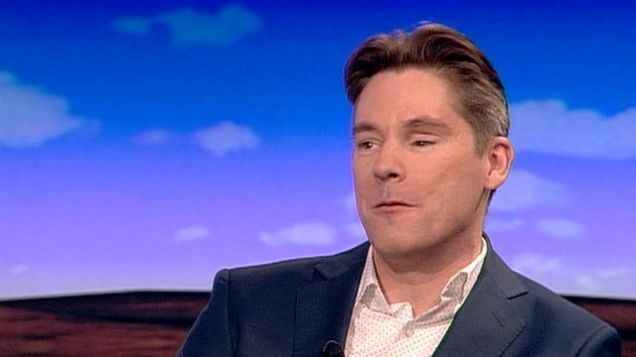
Dan Hodges - Labour Party - Defect to Conservative Party

Not so fast, Toby Young. Dan Hodges is an honourable man, but he has no place in the party of Margaret Thatcher

It wasn’t the first time and it probably will not be the last, so understandably you may have paid little attention when Dan Hodges quit the Labour Party this week in disgust at the leadership of Jeremy Corbyn and the behaviour of his supporters.

Hodges departed again this week, firing this parting shot:

I’m done. Yesterday I cancelled my direct debit to the Labour Party. “Why don’t you just sod off and join the Tories”, Jeremy Corbyn’s supporters regularly ask anyone who dares to challenge their rancid world view.

I won’t be joining the Tories. But I am sodding off.

Fair enough. Dan Hodges has legitimate, irreconcilable differences with Jeremy Corbyn – both his policies and the way in which he runs the party (though Hodges’ sudden sensitivity to supposed bullying from the Corbynites seems a little odd coming from someone who was only too happy to get scrappy in his past life as a political campaign manager).

But clearly Dan Hodges and Jeremy Corbyn have very different visions of what the Labour Party should be, and nobody should fault Hodges’ decision to quit. I made the conscious choice not to re-join the Conservative Party when I returned to Britain in 2011, out of disgust with the centrist course plotted by David Cameron and an unwillingness to associate myself with the record of the coalition government, and so I’m certainly not preaching any kind of “stand by your man” dogma.

And now, inevitably, the offers to Dan Hodges to come join the Conservative Party are coming rolling in. At first, these were mostly coming from mocking Corbynistas on social media, rejoicing that a turncoat “Red Tory” like Hodges had finally gone (again). But then the mocking from the far left was replaced by more earnest offers from the supposed political Right.

Foremost of these offers came from Toby Young, Hodges’ colleague at the Telegraph, who wrote an open letter attempting to woo the ex-Labour columnist into the Tory fold. This letter is well-meant, but utterly misguided and counterproductive, as we shall see.

Toby Young begins:

On all the biggest political issues facing our country – what to do about the Islamic State, tackling the deficit, the renewal of our independent nuclear deterrent, education reform – you and the other Labour moderates are far closer to the leadership of my party than to Labour’s. I think that’s even true of the NHS, given that the health budget has increased in real terms year-on-year since David Cameron became Prime Minister. The commitment to increase spending on the NHS even further in the Autumn Statement surpasses anything promised by your party. And, as I’m sure you know, the minimum wage is set to rise faster under this government than it would have done under Ed Miliband, assuming he’d stuck to Labour’s manifesto.

And it’s true – Dan Hodges does hold refreshingly realistic perspectives on tackling ISIS in Syria, the deficit and Trident. When it comes to fundamental issues of national security, as all of these are, people from the Left and Right are often united.

More worryingly though, when it comes to trampling civil liberties in pursuit of an unattainable degree of security, both he and Theresa May are on the same page. And if Dan Hodges actually believes that throwing more money at a fundamentally broken and outdated NHS model is a good thing, then there is great crossover potential there, too. I’m just not sure that this is a good thing, as Toby Young seems to believe.

Young continues:

Indeed, on all the most important aspects of Osborne’s economic policy, the Labour moderates are much more closely aligned with us than you are with John McDonnell, not least because it’s virtually indistinguishable from the policy set out by Alastair Darling. In this respect, as in so many others, the Prime Minister and his Chancellor are the heirs to Blair.

Toby Young clearly meant this to be a bright and positive pitch to Dan Hodges to jump ship. But by hammering home the similarities between George Osborne and Alastair Darling and their remarkably similar (in practice if not in rhetoric) approaches to deficit reduction, all he manages to do is reveal just what a weak and ineffectual supposedly conservative government we currently have – Blairites with a patrician Tory façade.

Young concludes:

If your only hope of improving the lot of the least well-off is to persuade the Conservative Party to be more compassionate, then shouldn’t you do exactly what you’ve been urging the leadership of your own party to do? Say to hell with ideological purity and strike a bargain?

[..] I also think that, in time, many people on my side will come to see the value of a Blairite faction within the Conservative Party. Some of us are already worried about the corrosive effect that a lack of serious opposition will have on the government and would welcome a proper challenge. If that’s not going to be provided by Labour, then it must come from within our own ranks. Those of us who style ourselves “modernisers” will regard you as natural allies. In my mind’s eye, I can already see Lord Finkelstein standing at the other end of the welcome matt, bottle of champagne in hand.

So come on over, Dan. You already have many friends in the Tory party,including the Prime Minister, and I’m sure you’d quickly make many more. I think we’d be lucky to have you.

Unfortunately, in his rash invitation to Dan Hodges, Toby Young is falling into the same trap as David Cameron’s woolly “One Nation” model. Sure, it may be possible for the Tories to eke out a couple more narrow election victories by becoming so blandly inoffensive and unrecognisable that a sufficient number of the most bovine voters grunt their approval. But these narrow victories, like David Cameron’s “miracle majority” of twelve, provide a mandate only for the dull, technocratic management of Britain’s public services. Essentially they elect a Comptroller of Public Services – someone to kick when the trains don’t run on time or NHS waiting times get too long – not a world leader.

Convincing majorities – margins of the sort that allow radical changes to the country like realigning foreign policy, rolling back the remaining vestiges of the post-war settlement and delivering a smaller, more effective state – don’t come from pretending to be sufficiently like the Labour Party that it tricks a few wavering voters into switching sides. They come from articulating a vision so clear, so exciting and so blazingly inspirational that people vote as enthusiastic citizens inspired by the message, not self-interested consumers voting based on fear or greed.

A Conservative Party that is tame and toothless enough to accommodate someone like Dan Hodges would by definition be of the former type, not the latter. The mere fact that Toby Young is able to make his offer with a straight face proves that there is not currently a cigarette paper’s worth of difference between Blairite Labour-in-exile and the Cameron Conservatives, a party which enthused the electorate with their vision so much that they are perpetually just six defections away from defeat in the House of Commons.

In 1968, over a decade before she became prime minister, Margaret Thatcher warned in a speech:

There are dangers in consensus; it could be an attempt to satisfy people holding no particular views about anything. It seems more important to have a philosophy and policy which because they are good appeal to sufficient people to secure a majority.

[..]

No great party can survive except on the basis of firm beliefs about what it wants to do. It is not enough to have reluctant support. We want people’s enthusiasm as well.

Many supposed conservatives and Tory party members seem to have forgotten that lesson – the essential truth which delivered three terms of a Thatcher premiership, saving this country from seemingly inevitable decline and irrelevancy. David Cameron and George Osborne, both old enough to reap the fruits of Thatcherism without having really understood why it was so necessary, seem never to have absorbed this lesson in the first place.

Announcing the defection of Dan Hodges to the Conservative Party – having David Cameron welcome him at the door of Number 10 Downing Street with a big bottle of champagne and a basket of pears – would be the ultimate triumph of One Nationism. It would complete the transformation of the Conservative Party, underway since Thatcher left office, from a party of some ideological coherence to a well-oiled and finely calibrated PR machine, excelling in being all things to all people. An intelligent but soulless hive mind of people who quite fancy being in power, and who are content to say anything or compromise on any conviction in order to keep it. Thus, David Cameron will go down in history as the twenty-first century version of Ted Heath.

I don’t think that this is good enough. A Conservative Party sufficiently bland and uncontroversial that it might appeal to Dan Hodges, even on his most jaded day, is not one which I could bring myself to vote for at the ballot box. It’s not good enough for me. But way more important than that, it’s not good enough for Britain. This country is crying out for real leadership, a renewed sense of national purpose, and the re-imagining of the state and its role in our lives. Monolithic institutions like the broken welfare state and “our NHS” (genuflect) – fraying anachronisms from the post-war consensus – need to be redesigned from the ground up, with their blind apologists and vested interests dragged kicking and screaming into the new century.

But if Dan Hodges is walking around with a Conservative Party membership card in his wallet by the time 2020 rolls around, it’s all over. None of this essential conservative reform will happen. Not because Hodges is in any way a bad person, but because he is Labour to his core – and a Conservative Party which provides a political home for him is quite simply no longer a conservative party at all. They will defeat Labour and win a third term, sure. But their voter coalition will be so broad and so lacking in common aspiration that they will be even more rudderless and scattershot in government than they are today.

I’m almost certain that I know who Toby Young would pick if he was forced to choose, but I’m going to make the ultimatum anyway, because I care deeply about the Conservative Party too, and I am deadly serious about this.

Toby Young: It’s Dan Hodges or me.
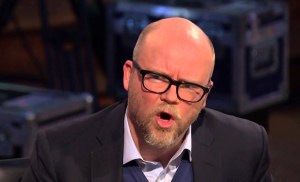
Toby Young - Dan Hodges - Defect to Conservative Party

Agree with this article? Violently disagree? Scroll down to leave a comment.

Follow Semi-Partisan Politics on TwitterFacebook and Medium.

The Daily Smackdown: Labour’s Pitch For Power Is A Child’s Temper Tantrum

Labour - Save Our NHS

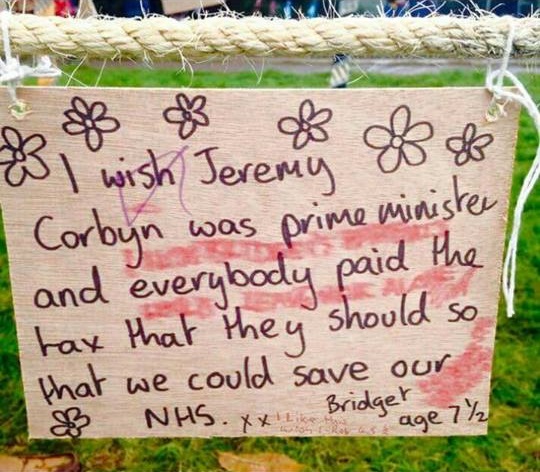
Thus far, Jeremy Corbyn’s elevator pitch for power would be more at home in the school playground than the adult political debate

When your core political argument and pitch to the electorate can be easily summed up in crayon by a seven year old girl, it’s time to develop a more robust vision for government.

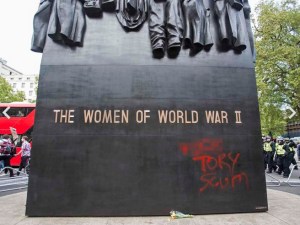
A first good step for Labour to take would be to stop fomenting or tacitly condoning behaviours like these, from activists and supposed supporters:

Shouting “Tory Scum” at opponents

Vandalising war memorials

Shrieking about nonexistent human rights abuses

Physically threatening MPs

Being insufferable online

Pretending that there will be no offsetting behavioural consequences to dramatic tax hikes

Stubbornly believing in the magic money tree

I’ve written before about how, in their incoherent rage at the supposed transgressions of the Evil Tories, the Left are in great danger of becoming the British left wing equivalent of the American Tea Party – morally certain, impervious to facts, intolerant of the slightest internal dissent and quick to anger when contradicted by outsiders.

Where the Tea Party blindly venerate the US constitution (though they read it selectively, and from a highly originalist perspective) and would see the federal government shrunk back to its nineteenth century bare bones, the Corbynite Left venerate “our NHS” (genuflect) and the other monolithic edifices of the welfare state stemming from the socialist post-war consensus.

Neither seem very comfortable living in the present. And the worst excesses of both would be more at home stapled to the wall of a primary school classroom than reported and printed as serious ideas in the pages of a national newspaper.

Tory Protests

Agree with this article? Violently disagree? Scroll down to leave a comment.

Follow Semi-Partisan Politics on TwitterFacebook and Medium.

Forget Migrant Benefits In The EU Debate; What About The S-Word?

Alan Johnson - Labour In for Britain

The EU debate is about so much more than relatively petty questions about migrant benefits and immigration. But few from the official “Leave” campaigns are willing to broaden the debate

It is rare for this blog to find itself in agreement with Labour grandee Alan Johnson, chairman of the “Labour In For Britain” campaign group.

But Johnson is absolutely correct in his criticism – expressed on the Andrew Marr show today – that the EU debate has been narrowed down to an insultingly simplistic degree.

LabourList reports:

Johnson, who is leading Labour’s campaign to stay in the EU, appeared on The Andrew Marr show this morning to make the case for Britain to stay in the EU. He pointed out that issues like climate change can only be solved by countries working together, and that the EU was an essential “political union”.

He slammed the Prime Minister for narrowing the debate, saying there has been a lot of focus on Cameron’s attempt to ban migrants who are in work from receiving benefits until they have been employed in the UK for four years. Cameron is thought to have abandoned these plans in favour of imposing new limits on benefit payments to out-of-work migrants instead of those people in jobs. Johnson said this focus had distracted from other important issues.

Forget the orchestrated shenanigans over David Cameron’s supposed tussle with other EU leaders over migrant benefits – this is a ridiculous sideshow obsessed over by a credulous media, as my Conservatives for Liberty colleague and editor Ben Kelly wearily points out.

But Alan Johnson’s broader criticism is devastatingly accurate. From the outset, particularly on the “Leave” side, the Westminster campaign has been incredibly myopic and unimaginative.

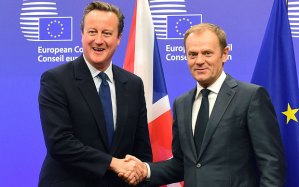
We should expect no better from the prime minister – David Cameron is an avowed europhile, has stated numerous times that his preference is for Britain to remain a member of the EU, and has been unable to force the words “campaign for Brexit” from his lips even as a remote hypothetical. And thus it is no surprise that Cameron went in to the renegotiation with no set demands (contrary to the media narrative) but simply with a begging letter to Donald Tusk pointing out areas for discussion.

And those areas do nothing to assuage the concerns of the thinking eurosceptic or Brexiteer. Because the real problem with our continued membership of the European Union is not immigration, welfare, fiscal policy, social policy or the euro. The real problem is the little-mentioned S-word: sovereignty. Because this one word encapsulates all of the many ways in which the EU infringes upon our democracy.

It’s not about Schengen, or the single market – Britain is already outside the former and a full member of the latter. That’s why when David Cameron comes back brandishing something called “associate membership” we should be immediately suspicious, because it will essentially be a formalisation of the status quo, with all of the existing drawbacks of Britain’s EU membership hardwired into a future new treaty, with a few extra problems sprinkled on top as a garnish.

The fundamental issue of sovereignty will go unanswered, because David Cameron is not even raising it as part of his sham renegotiation, and while the overly credulous may believe that a toothless and unenforceable exemption from “ever closer union” is some kind of great victory, it ignores the fact that our union with Europe is already far too close. The EU remains an explicitly political union (as Alan Johnson happily states in his Andrew Marr interview) and Britain remains firmly part of it.

Neither Leave.EU nor Vote Leave hammer the sovereignty aspect, having decided that scare stories about what the EU will do to “our NHS” (genuflect) and other public services will do more to win over the bovine masses. But sovereignty is the key.

Is Britain to be a real democracy, accountable to its own citizens once again? If so, then we need to recognise – and repeat endlessly – that national democracy and the European Union are fundamentally incompatible.

As the preamble to the Bertelsmann Stiftung report “A Fundamental Law of the European Union” (soon heading our way via the Five Presidents Report) explicitly states:

This proposal for a Fundamental Law of the European Union is a comprehensive revision of the Treaty of Lisbon (2007). Replacing the existing treaties, it takes a major step towards a federal union. It turns the European Commission into a democratic constitutional government, keeping to the method built by Jean Monnet in which the Commission drafts laws which are then enacted jointly by the Council, representing the states, and the European Parliament, representing the citizens. All the reforms proposed are aimed at strengthening the capacity of the EU to act.

It’s right there in black and white – a major step towards a federal union. The EU will drive a wedge between nation states and their citizens by enshrining and expanding the model whereby national governments sign off on laws and policies initiated by the EU Commission, while the people will have redress only through the European Parliament, thus (hope the federalists) gradually legitimising the Brussels and Strasbourg parliament.

But you’ll hear none of this from the major “Leave” campaigns, and certainly from nobody within the Conservative Party. The only real exception at present is the small but growing group of campaigners and bloggers coalescing around Dr. Richard North’s site eureferendum.com, who do a good job holding the media to account and pointing out lazy thinking and writing (sometimes including this blog) which unwittingly aids David Cameron’s agenda.

At least the Left and the “Remain” camps are able to appreciate that the EU referendum is a fundamental question of who we want to be as a country, and where we believe democracy and decision making should rightly sit. They have their particular vision – abhorrent to me, but clear and unambiguous – that the UK is a weak and ineffectual country incapable of robustly defending our own national interests, and that the fifth largest economy, formidable military power and cultural beacon that is the United Kingdom can only survive by dissolving our political identity into the European Union. And they will be repeating this message from now until referendum day.

The “Leave” campaigns have no similar clear vision. They believe that the referendum can be won by reducing the great questions of democracy and Britain’s place in the world to a tedious, nitpicking discussion over how many migrants can be kept out of Britain, or how much money saved by renegotiating the terms of our surrender. Alan Johnson’s view is utterly wrong, but at least he has the confidence to state his case.

When will the Leave campaigns appreciate that the referendum cannot be won if people believe that leaving the EU is a leap into the unknown, or when the only ones talking passionately about Britain’s place in the world are the europhiles?

When will the Leave campaigns stop their myopic obsession with issues like migrant benefits, an arbitrary issue picked by our devoutly pro-EU prime minister, which are only designed to distract our attention from the ultimate deal – associate membership – which will ultimately be presented?

And when will the Leave campaigns get over their overriding fear of the S-word?

David Cameron - Donald Tusk - EU Renegotiation - European Union - Brexit

Agree with this article? Violently disagree? Scroll down to leave a comment.

Follow Semi-Partisan Politics on TwitterFacebook and Medium.

The Daily Toast: Tony Blair On Labour’s Future In The Age of Corbyn

Tony Blair - Labour Leadership - Jeremy Corbyn - Annihilation

The Labour Left may dismiss him as a Red Tory war criminal, but Tony Blair raises some awkward questions about what Labour stands for in the Age of Corbyn

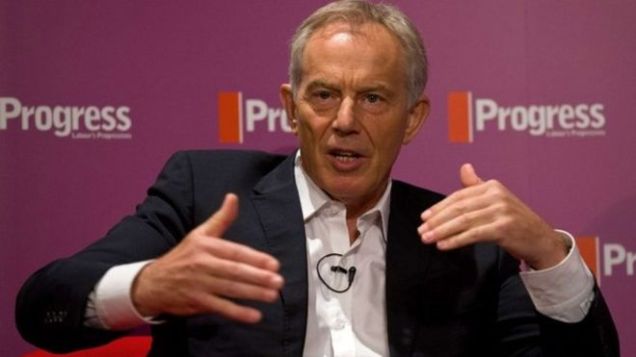
In the Christmas special edition of The Spectator, Tony Blair offers a typically self-aggrandising but (to the Corbynite Left) infuriatingly perceptive take on the challenges facing Labour, and why the emboldened hard Left are not equal to the task before them.

Defending New Labour’s record in government between 1997-2010, Tony Blair writes:

In a society in which fewer and fewer people thought of themselves as traditional working class, we needed to build a new coalition between the aspirant up and coming and the poorest and most disadvantaged. For the task of winning power, the emphasis on the values of community, society, family, compassion and social justice was highly effective.

But for the task of governing, we had to do more than proclaim our values, we had to have the courage and creativity to apply them anew to a changing world and make what counted what worked rather than defending interests or tradition.

That’s the rub: what does Labour stand for in a society where fewer and fewer people  think of themselves as being working class, or attach any real meaning or identity to that label? And specifically, what does the Corbynite Left of the party stand for in this new reality?

Blair points to an uncomfortable truth for Labour. Because few people, other than the Owen Jones romantic Left, still obsess about class. And though economic inequality is very much a real thing, many of us share common tastes in popular culture to an extent which was simply not the case in the 1920s or even the 1950s.

What does social class even mean when thousands of one-percenters listen to the same pop music and partake of traditionally working class interests such as football, and the technological revolution has given the masses the same access to entertainment, culture and travel destinations as the very wealthy? Does class mean anything at all in 2015, besides being a shorthand way to describe a person’s accent? Arguably not.

So what has replaced the issue of class in our public discourse? The answer, of course, is the new obsession with equality. Nebulous and never clearly defined, the Left harp on about equality without ever explaining whether they are referring to equality of opportunity or equality of outcome. But as a crude generalisation, one could say that centrist Labour strives (however badly) for equality of opportunity, while the Corbynite Left dream of a word of total, enforced equality of outcome.

What unites these two warring factions within Labour is the fact that neither side have the first clue about how to use public policy to translate their vision into reality. Centrist Labour is intellectually dead and hasn’t had an original idea since Tony Blair left office, but the rot became particularly bad during the Ed Miliband era. Miliband’s speeches were full of meaningless platitudes and waffle about creating a “fair” Britain, but shockingly free of specific policies or strategies to reshape the country accordingly.

And the emboldened Left are full of spittle-flecked condemnation of the Evil Tories, not to mention the endless, preening virtue-signalling which has become their hallmark. But they offer no solutions either, just a 24/7 Twitter stream of criticism of Tory policy. Want to know what the Corbynites want to do with taxes or welfare? Good luck finding out. Most of them don’t have a clue, and the few that do know won’t say because they know that their real vision for Britain would be hugely unpalatable to the general electorate.

The danger for Labour in failing to stand for an election-winning coalition of voters – as they did when they represented a cohesive working class in the twentieth century – is that others will define Labour to the electorate, and not in a flattering way.

Already, the Conservatives are pushing the message that Labour are the party of welfare, entitlement and anybody who is a net “taker” from society. And what can Labour possibly say to counter this claim, when they can always be found popping up on television to denounce spending cuts without announcing anything amounting to a cohesive plan of their own?

Blair closes his Spectator piece by warning:

Right now we’re in danger of not asking the right questions never mind failing to get the right answers. All of it is about applying values with an open mind; not boasting of our values as a way of avoiding the hard thinking the changing world insists upon.

Unfortunately, even the anti-Corbyn elements of the Labour Party seem utterly unable to grasp this fundamental truth. And too often, it seems that all Labour know how to do is hate the Tories and boast about their own values, rather than identifying solid policies to put them into practice.

Consider how the recent vote on military action in Syria descended into a mudslinging sideshow, with the Corbynite left accusing anyone who disagreed with their pacifist stance of being an Evil Tory warmonger. Or the way that the Labour Party rode to battle against the tax credit changes, the welfare cap and the NHS junior doctors pay dispute, enthusiastically taking up arms against the Conservatives without uttering a word about how they would address very real problems of concern to many British voters.

On these issues and more, Labour currently propose no solutions. While military intervention in Syria may well fail or lead to a worse outcome, no alternative has been clearly outlined – assuming that airy talk about negotiating with ISIS is not to be taken seriously. Ask ten Labour MPs (including the shadow cabinet) what the party proposes to do about welfare or the NHS and you are likely to get fifteen different answers.

In his article, Tony Blair repeatedly argues against focusing on ideology:

Infrastructure, housing, social exclusion – all these challenges require more modernising and less ideological thinking.

But this is misleading. Strong viable governments only come about when there is a coherency and consistency of ideology which informs the policies offered to the electorate. It’s no good just coming up with a basket of pragmatic policies – people rightly see this for what it is: electoral opportunism.

Labour need to pick an ideology, whether it is that of their leader, that of Tony Blair or that of the incoherent band of uncharismatic centrists who currently pass for party heavyweights. And then they need to show the public that real, tangible policies for government can flow through the party, shaped and informed by those ideals. Labour’s credibility is currently so low that opportunistic opposition to individual Conservative policies will deliver them nothing at the ballot box. An alternative platform for government is what’s needed.

And that takes us back to the opening question: who does Labour actually represent in the Age of Corbyn and his sulky centrist antagonists, when nearly everybody with an aspirational bone in their body is abandoning the party?

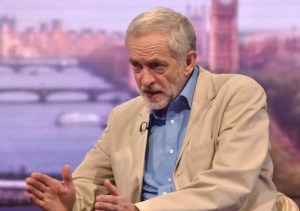
Jeremy Corbyn - Labour Party - Andrew Marr Show - BBC

Agree with this article? Violently disagree? Scroll down to leave a comment.

Follow Semi-Partisan Politics on TwitterFacebook and Medium.