A Semi-Partisan Pledge Drive

Political Blogging

This is a shakedown

I don’t do this often – maybe twice a year – but this is one of those times when I walk up and down the virtual tube carriage shaking my tin and requesting any spare change from readers who find some real value in this site, and have the means to help support it through a monetary donation or subscription, however small.

(Those who have already kindly donated this year are specifically requested NOT to do so again, and to instead consider supporting The Leave Alliance here if they feel so inclined – your generosity towards me is already very much appreciated. You know who you are.)

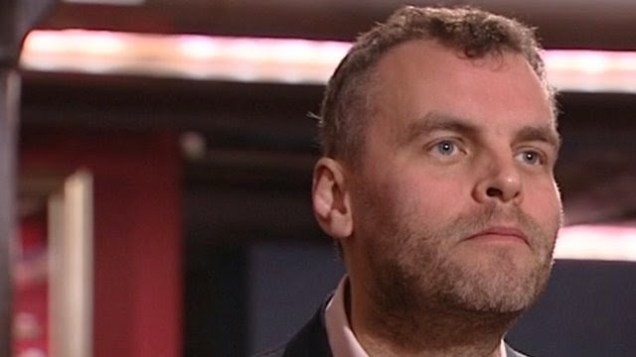
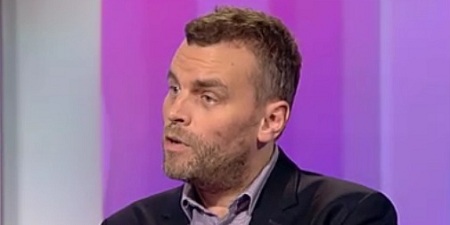
I am pleased to report that this blog is going from strength to strength (as hopefully you will have observed). New features have been trialled, some have inevitably fallen by the wayside and others have really taken off. Most notably, yours truly was invited to debate the infantilisation of today’s students on the BBC’s Daily Politics show earlier this year – not necessarily the topic or angle I most wanted for my debut, but a good opportunity nonetheless, and one which led to this brilliant caricature drawn by a viewer:

Samuel Hooper - Daily Politics - BBC - Caricature - Sketch - Cartoon - 2

The upshot is that with two back-to-back record-breaking months in March and April, pageviews and unique visitors for 2016 to date have already surpassed the totals for 2015. In other words, in the first third of this year more people have visited and read Semi-Partisan Politics than did so in the whole of 2015.

This has been achieved partly by a significant increase in blogging frequency – from several posts per week to several posts per day, on average. In many ways this is bowing to the inevitable. A political blog is in some ways like a television channel, and going quiet even for a day is the equivalent of dead air during prime time – if you stop, people will simply change the channel.

But this growth is also due to the loyalty and help of you, the readers. Increasingly I find that Semi-Partisan Politics is getting significant referrals through Twitter, Facebook, Reddit and various online bulletin boards – not to mention from the sidebar links of my blogging comrades of The Leave Alliance. Now that this site has a small but real readership, I am able to spend more time writing and less time trying to drum up an audience. A sincere thank you to all those who have shared links to this site, or taken the time to comment and enrich the debate here.

The other fairly significant change is an increase in shorter response-based pieces, particularly with the “Tales From The Safe Space” series. Here, the broader argument (in defence of free speech and academic freedom) is advanced in multiple posts, without the need to restate the case in full each time, and I have shared numerous examples of bad (and occasionally encouraging) things taking place on British and American university campuses with some pointed commentary, but without the full context you would get in a complete essay.

Syndication continues at Conservatives for Liberty and Guerilla Policy.

While I continue to play around with the format and focus of individual posts and series, this blog retains its commitment to the following ideals:


Brexit: freedom from the European Union

Democracy and national sovereignty

Constitutional reform and a federal UK

Separation of church and state

Healthcare reform, not NHS worship

Smaller, smarter government

Free speech, without restriction

Fighting the Cult of Identity Politics

Fighting timid centrism on the Right

Fighting empty virtue-signalling on the Left


Maintaining the high tempo of blogging required to grow this site means that besides the day job and family time, this blog is my life. Other interests are largely on hold in order to commit to writing as much as possible, a sacrifice I am happy to make because I believe the issues which I write about are important. The few occasions on which this blog has been picked up in the national media validate this assessment, I believe.

I would like to do more. My future reading list now spills onto two book shelves as I try to stay up to date with the most important issues I cover while also trying to remediate a desperately poor grounding in history and philosophy (thanks, state education).

Obviously the EU referendum is a priority at the moment – I am proud of my association with The Leave Alliance, the only group with not only a plan for achieving Brexit in a safe and non-disruptive way, but more importantly a genuinely positive vision for what a globally engaged and democratically renewed Britain should look like.

If you agree with these objectives and enjoy this blog’s coverage and commentary, please do consider using the PayPal tip jar to make a small contribution to my work:


One-off donations or small regular contributions are all greatly appreciated, and help me to continue my work here. Reader contributions partially supported last year’s live-blogging of the UKIP party conference which won acclaim in the national media, and I hope to repeat the exercise at more of the party conferences this season.

Many thanks to everyone for reading, sharing and commenting.

 

Political Blogging 2

Follow Semi-Partisan Politics on TwitterFacebook and Medium.

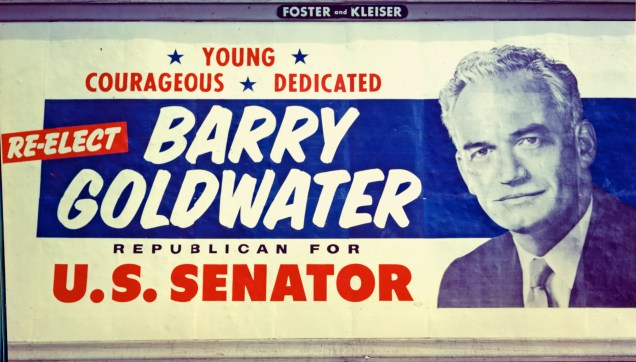
The Age Of Trump: As The Republican Party Goes To Its Armageddon

Barry Goldwater - Election Poster

To understand why the Republican Party are on course to lose their third consecutive presidential election, one must look much further back in time than the rise of Donald Trump

It gives no satisfaction to watch any storied political party hurl itself into oblivion – even the US Republican Party, which has frequently infuriated true conservatives with its sanctimonious and hypocritical habit of screeching about the dangers of encroaching socialism under Democratic administrations while themselves consistently cranking up the size and role of the state at every opportunity.

But while it now seems almost certain that the Republicans have thrown away any chance of reclaiming the White House, imploding in a foul-mouthed torrent of bluster and recrimination more worthy of Jerry Springer than a presidential primary campaign, it is worth looking back and asking how the GOP finds itself in this position, and exactly when the seeds of destruction were sown.

I have been reading widely on this, focusing less on the crowing and virtue-signalling Left, and far more on those thoughtful and introspective voices on the Right who are often appalled by the rise of Donald Trump in particular, but often sympathetic to the anti-establishment fervour which fuels his candidacy.

And if I have to pick just one excerpt from one piece to explain the predicament in which the Republican Party currently finds itself, I would encourage my readers to read “I was wrong about Donald Trump” by Daniel McCarthy over at The American Conservative.

In his piece, McCarthy concludes:

Trump succeeds because of more than outsize personality, of course. He attracts some support from everyone who thinks that Conservatism, Inc. and the GOP establishment are self-serving frauds—everyone who feels betrayed by the party and its ideological publicists. Working-class whites know that the Republican Party isn’t their party. Christian conservatives who in the past have supported Mike Huckabee and Ben Carson also know that the GOP won’t deliver for them. Moderates have been steadily alienated from the GOP by movement conservatives, yet hard-right immigration opponents feel marginalized by the party as well. Paleoconservatives and antiwar conservatives have been excommunicated on more than one occasion by the same establishment that’s now losing control to Trump. They can only applaud what Trump’s doing, even if Trump himself is no Pat Buchanan or Ron Paul.

Conservative Republicans™ somehow maneuvered themselves into a position of being too hardline for moderates and non-ideologues, but not hardline or ideological enough for the right. Trump, on the other hand, appeals both to the hard right and to voters whose economic interests would, in decades past, have classed them as moderates of the center-left—lunch-pail voters.

What’s even more remarkable is that movement conservatives, who have been given plenty of warning, ever since 2006, that their formula is exhausted, keep doing the same thing over and over again: they’ll dodge right, in a way that right-wingers find unsatisfactory but that moderates find appalling; then they’ll weave back to the center, in a way that doesn’t fool centrists and only angers the right. Immigration—which was another of George W. Bush’s stumbling blocks, lest we forget—has been the issue that symbolized movement-conservative Republicanism’s futility most poignantly. It’s not even clear that most GOP voters agree with Trump’s rhetorical hard-line on immigration—they just like it better than the two-faced talk of the average Republican politician.

Trump has a plethora of weaknesses, as general election polls amply demonstrate. But just look what he’s up against within the Republican Party: that’s why he’s winning.

I have yet to see the rise of Donald Trump explained as thoughtfully and succinctly as it is in the first three paragraphs quoted above. Sure, McCarthy’s piece does not tackle every aspect of the situation – whole books can and will be written about the causal factors of this huge anti-establishment backlash, which is far bigger than any one political party – but it does explain why the current GOP was so badly positioned to withstand a populist insurgency like Trump’s.

Much like the British Labour Party has become a fractious and increasingly unworkable coalition of idealistic left-wingers, pragmatic centrists and (let’s be frank) soulless political shapeshifters, and much as the historic splits in the Conservative Party are re-emerging following a vacillating 2016 Budget and the party leadership’s betrayal of the activist base on the coming EU referendum, so the Republican Party’s big tent of Reaganites, neo-cons, Evangelicals and social conservatives is collapsing – for those reasons outlined above by McCarthy.

Read the collected output of Rod Dreher too, and this piece by David Brooks, which looks to the future which could yet follow 2016’s rock bottom:

Trump is prompting what Thomas Kuhn, in his theory of scientific revolutions, called a model crisis.

According to Kuhn, intellectual progress is not steady and gradual. It’s marked by sudden paradigm shifts. There’s a period of normal science when everybody embraces a paradigm that seems to be working. Then there’s a period of model drift: As years go by, anomalies accumulate and the model begins to seem creaky and flawed.

Then there’s a model crisis, when the whole thing collapses. Attempts to patch up the model fail. Everybody is in anguish, but nobody knows what to do.

That’s where the Republican Party is right now. Everybody talks about being so depressed about Trump. But Republicans are passive and psychologically defeated. That’s because their conscious and unconscious mental frameworks have just stopped working. Trump has a monopoly on audacity, while everyone else is immobile.

[..] At that point the G.O.P. will enter what Kuhn called the revolution phase. During these moments you get a proliferation of competing approaches, a willingness to try anything. People ask different questions, speak a different language, congregate around a new paradigm that is incommensurate with the last.

That’s where the G.O.P. is heading. So this is a moment of anticipation. The great question is not, Should I vote for Hillary or sit out this campaign? The great question is, How do I prepare now for the post-Trump era?

As Brooks says (perhaps a little naively), this is not necessarily all bad news for conservatives. If we are honest, we have to admit that conservative policies in America and Britain are no longer perfectly calibrated to the challenges of the day as they were in Thatcher and Reagan’s time.

That is not to say that the Left are any better; Lord knows they aren’t. But it does mean we should acknowledge certain facts – like the fact that we still have a stubbornly large permanent underclass, and that for all the irreplaceable benefits of globalisation, there are still those who miss out – and seize the initiative by proposing radical conservative policy solutions to the great challenges of the new century.

In Britain, David Cameron’s Coke Zero Conservative government – or the Ted Heath tribute act, as this blog has taken to calling them – seem to think that One Nation Conservatism means stealing as many of Labour’s left-wing ideas as possible. And in America, Donald Trump’s brand of populist pseudo-conservatism doesn’t believe in One Nation at all, unapologetically carving the country up into winners and losers.

Neither is the correct approach. And as Cameronism and Trumpism run their respective courses, this blog will continue providing commentary and offering suggestions for an alternative conservatism, in Britain and America.


Postscript: This blog has decreased its focus on US politics in the past few years, primarily because I have been London based and fully occupied writing about British political issues. But Semi-Partisan Politics will begin to cover the American presidential election with a little more frequency going forward, partly because I have always remained a close follower of American politics – often more so than the household name journalists dispatched to the States by their newspapers and now portentously reporting back to us as self styled “experts”.

Having lived in America helps – particularly having lived in the American Midwest, not just the coastal enclaves of New York and Washington, D.C. familiar to most British journalists who write about America during election season. And the fact that I am married to a Hillary Clinton-supporting Hispanic Texan helps too. When I write about American politics, I know whereof I speak.

But I am also covering the presidential race because as a conservatarian with one foot firmly planted on either side of the Atlantic (and a heart divided equally between Britain and America), I believe that in my own small way I can bring a perspective to the left/right, authoritarian/libertarian debate that is often missed by those whose thinking and writing is rooted firmly in just one country’s specific conservative tradition.

To borrow an overwrought phrase from the dystopian world of Identity Politics, consider this my contribution to an “intersectional” perspective on conservatism.

They’ll absolutely hate me for that.


Donald Trump Hat - Make America Great Again

Agree with this article? Violently disagree? Scroll down to leave a comment.

Follow Semi-Partisan Politics on TwitterFacebook and Medium.

The Daily Toast: Douglas Murray On Putting Country Before Party

Tim Montgomerie - 2

The exodus begins…

Douglas Murray lends an eloquent voice of support to Tim Montgomerie and his brave decision to quit the Conservative Party as an act of protest against Cameronism:

In the wasteland of principles that is Westminster, Tim Montgomerie has always been an exception.  The area is filled with ambitious, bland careerists whose idea of taking a stand (as with most of the commentariat) consists of trying to locate two ‘extremes’ before comfortably wedging themselves equidistant between them.  But in resigning from a lifetime’s membership of the Conservative party, Tim Montgomerie has demonstrated that there is still room for principles in politics.

[..] But here is the bigger problem for [Montgomerie’s critics]. It may well be that they shouldn’t care about the founder of Conservative Home, and one of their party’s most loyal and thoughtful members, choosing to leave the party.  Just as they may for the time-being not mind taking all those leaflet-deliverers for granted while riding against their core wishes.  But one day they may wake up to discover that amid all the high-handed dismissals and principle-free careerism, there is nobody around left to watch their political backs.  What a day that will be.  And perhaps it will come sooner rather than later.

If anything is going to hasten this day of reckoning, it will be the coming EU referendum. The party grassroots are overwhelmingly at odds with the leadership on the key question of Brexit. The parliamentary Conservative Party is on course to split just as dramatically as Labour split over the vote for military action in Iraq back in 2003.

Then throw in a rancorous, ill-tempered EU referendum campaign – our country is debating an existential issue, and tempers will inevitably fray and then snap. Things will be said that are far worse than David Cameron’s prissy, coded jibes at the expense of Boris Johnson in Parliament today.

And in the midst of this intra-party warfare, Conservative MPs may come to realise – or recall – that there is far more that divides them than just the question of Brexit. Other ideological differences, suppressed in the name of the “greater good” of general election victory, will come bubbling back to the surface.

Some Tory MPs might even make the mistake of asking themselves what the Cameron/Osborne legacy will be – and then recoil in horror when they realise that they fought their way back to power only to blindly implement Tony Blair’s fourth term New Labour agenda.

And then will come the desperate casting around for a more authentic conservative vision, and a more credible leader to bring it about. And vindication for Tim Montgomerie.


Read my take on Tim Montgomerie’s resignation from the Conservative Party here, as part of the “What Conservative Government?” series.


Tim Montgomerie

Agree with this article? Violently disagree? Scroll down to leave a comment.

Follow Semi-Partisan Politics on TwitterFacebook and Medium.

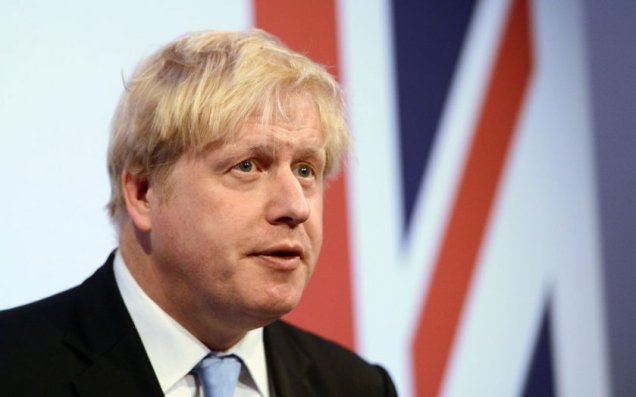
The Daily Toast: Iain Dale Is Right, Boris Johnson The EU Agnostic Is No Leader

Boris Johnson - EU referendum

Any politician who has not yet stated their position on Brexit is politically calculating, not genuinely agnostic, and forfeits the right to call themselves a leader

Iain Dale makes the short and convincing case that Boris Johnson is a man of absolutely no conviction on the most important issue of the day, and that consequently he should not be looked up to as a potential Conservative Party leader or prime minister.

Dale writes in Conservative Home:

Potential prime ministers need to be leaders, not followers. The fact that we won’t find out until today which side of the EU argument Boris Johnson will fall down on says a lot. We all know that he’s not a genuine Eurosceptic, so for him to continue to flirt with the Leave campaign tells us much about his political calculation.

I still think he will ally himself to the Prime Minister in the end, but let’s assume he doesn’t. Does anyone believe that such a move would be fired by genuine political conviction? Of course not.

In such circumstances, he will have calculated that if he becomes the de facto public face of the Leave campaign and that Britain then votes for Brexit, David Cameron would have no alternative but to resign – and that he himself would become party leader by acclamation.

Such a calculation may be right. But it would make Frank Underwood and Francis Urquhart look like amateurs. Some people may think that wouldn’t be a bad thing. I think it would stink.

Meanwhile, the Independent breathlessly “war-games” all of the possible outcomes, focusing on the most important thing in this entire EU referendum debate – the consequences for Boris Johnson’s precious career:

It’s decision time for Boris. Having spent months – if not years – teasing David Cameron (and the rest of us) as to whether he is an ‘outer’ or an ‘inner’ the time is fast approaching when the Mayor of London and possible future Tory leader (and Prime Minister) will have to make up his mind which side he is going to back in the EU Referendum.

Boris calls for Brexit – but the country says we want to stay.

This would be the worst of all worlds for Johnson’s burning ambition. He would have staked his reputation on a ‘leave’ vote and been rejected by the voters. He would be punished by Cameron and left to languish on the backbenches. His electoral mystique would be shattered and his chances of succeeding Cameron would disappear. Johnson knows this – and that is why he is so reluctant to take such a big risk and nail his colours to Brexit.

No, the time for Boris Johnson to make up his mind is not “fast approaching”. That time is now a rapidly-shrinking dot in the rear-view mirror.

Boris Johnson apparently aspires to lead the country. Real leaders (not that we have seen one in awhile) set out their vision and inspire, persuade, cajole or threaten their followers to march on toward their chosen destination. They do not wait to see which direction the majority of their flock split before sprinting to the front of the column and pretending to have been leading them all along. They do not skulk quietly at the back, grinning and flirting with both sides of an existential debate and hedging their bets until the last possible moment.

For a biographer and self-professed admirer of Winston Churchill, Boris Johnson is almost singularly lacking in any of the key qualities of our great wartime leader. Winston Churchill endured many years in the political wilderness due to the unpopularity of his political beliefs – beliefs which he expressed loudly and eloquently, whether they were right or wrong, wildly popular or deeply unfashionable. Churchill did not hedge his bets by making ambivalent noises about Nazi Germany’s re-armament in the 1930s – he railed against Hitler and strongly opposed the policy of appeasement, at a time when many in the country preferred to bury their heads in the sand and avoid facing reality.

Boris Johnson, by contrast, puts his own career first, second and third. And if he does have strong feelings one way or another about Britain’s membership of the EU, they are firmly subordinate to his concern for his own personal advancement. Yet he gets a free pass from the media on account of his bumbling persona and the fact that he is endlessly quotable, even when (as is nearly always the case) he is actually saying absolutely nothing of any importance or lasting value.

We have had leaders who care primarily about their public image and personal career advancement before. We have one now. Boris Johnson would just take this trend to its logical conclusion: the pursuit and holding of power as the first and only objective, with any core principle liable to be cast aside if doing so will help to shore up the incoherent centrist coalition of a support base – support which may be a mile wide but only an inch deep, as Tim Montgomerie warned on his recent departure from the Conservative Party.

Richard North says it best when it comes to the media’s obsession with Boris Johnson’s conspicuous fence-sitting:

Having to contend with this obsession, I have advanced, is like being a policeman attending a multiple car pile-up while a passer-by attempts to talk to him about their pet hamster.

If and when Boris Johnson finds it within himself to act like a leader, we should reconsider giving him the time of day. But so long as he continues to act in such a nakedly self-serving and principle-free way, the media should stop reporting on Boris’s dithering and start holding to account those people who actually have the courage to publicly declare their positions.


EU Democracy - Brexit

Agree with this article? Violently disagree? Scroll down to leave a comment.

Follow Semi-Partisan Politics on TwitterFacebook and Medium.

The Daily Toast: Peter Oborne, A Fellow Jeremy Corbyn Admirer

Peter Oborne is a journalist of uncommon principle; what he says should be taken seriously and treated with a measure of respect. But Peter Oborne has publicly stated his admiration for Jeremy Corbyn…

This blog has often felt like something of a voice in the conservative wilderness for not viewing Jeremy Corbyn as an unmitigated disaster for British politics.

One does not have to agree with Jeremy Corbyn’s sometimes loopy policies to admire the way his unexpected leadership of the Labour Party has shaken up a dull, lumpen, self-satisfied consensus among the Westminster elite, and put the fear of the voters back into a good many Members of Parliament who were more focused on the smooth progression of their own careers than the trifling concerns of the electorate.

That’s where this blog stands. I’m the first to criticise Jeremy Corbyn for his particularly crazy policies (like building a paper tiger nuclear deterrent with all the expensive submarines minus the all-important warheads) and his naive political operation (as embarrassingly revealed during the so-called Revenge Reshuffle). I’m also willing to give credit where credit is due, such as the holistic way Corbyn looked at education during the Labour leadership contest (and his proposed National Education Service).

What I don’t understand are conservatives who endlessly criticise Jeremy Corbyn because he doesn’t think or say all the same things as David Cameron or Tony Blair (and who could pick those two apart if blindfolded?)

Surely having two party leaders who think and say different things is the point of democracy. The fact that Britain has increasingly been afflicted with party leaders who say and think nearly identical things (once the rhetorical embellishment is stripped away) since Margaret Thatcher left office is the root of our current centrist malaise, and one of the primary reasons why a third of the electorate don’t show up to vote at general elections.

What’s the point in voting if the choice is between Prime Minister Bot A and Prime Minister Bot B, both of whom will automatically praise the NHS without looking more seriously at fixing healthcare, both of whom will tinker around the edges of welfare reform to get the Daily Mail off their backs but without doing anything substantive to fix our broken non-contributory system, both of whom are achingly politically correct at all times (“It’s Daesh, not ISIS! I can’t believe you called it Islamic State!“) and both of whom have so little faith in Britain’s ability to prosper as an independent, globally connected democracy that they strive (overtly or covertly) to keep us yoked to the European Union?

I’m a conservative libertarian. I have enough of a task on my hands trying to push the Conservative Party in a less authoritarian, more pro-liberty direction without worrying about what the Labour Party is doing every minute of the day. And I have enough confidence in my political worldview that I believe conservative principles will win the battle of ideas when promoted and implemented properly (hence my ongoing despair with the current Tories).

But many of my fellow conservatives, particularly those in the media, are in despair at the rise of Jeremy Corbyn and the return of real partisan politics. Why? Their professed concern that Britain have a “credible” opposition (meaning one almost identical to the governing party in all respects) stretches belief to breaking point and beyond. I can only think that their fear of Jeremy Corbyn reflects some personal doubt that their own political ideas and philosophies might not be superior after all – that Jeremy Corbyn might actually win people over in large numbers and have a shot at taking power.

I have no such fear. I believe that the principles of individual liberty and limited government beat discredited, statist dogma hands down, every day of the week. And I believe that the rise of Jeremy Corbyn might force conservatives to remember why they hold their views in the first place, and even refine and improve their own ideas through rigorous debate – if only they could get over their collective outrage that a socialist is in charge of the Labour Party.

In this spirit, I share the video of Owen Jones’ recent conversation with former Telegraph columnist Peter Oborne – see above. Oborne is an articulate writer, an unapologetic conservative and a thoughtful journalist of real integrity. That Peter Oborne also finds something to admire in Jeremy Corbyn (despite disagreeing with him politically) is helpful reassurance that I am not alone.

I don’t agree with everything that Oborne says in the video. But on the near-conspiracy of the political class and the media to undermine Corbyn (not to merely disagree with him but to portray his ideas as “unthinkable”) and on foreign policy (castigating our closeness with Saudi Arabia, an odious regime with whom we fawningly do business and lend our diplomatic legitimacy in exchange for oil and intelligence) he is spot on.

And I think that’s what makes Jeremy Corbyn’s detractors so angry. No man can be consistently wrong about everything all the time, and on rare occasions Jeremy Corbyn gets it conspicuously right – such as with his criticism of our closeness with the Saudi regime. People accustomed to either being in power or just one election away from power look at somebody who (whatever other baggage he may have) is unsullied by the continual act of compromise and ideological drift, and it makes them mad. It forces them to ask themselves how many of the compromises, reversals and deals from their own careers were strictly necessary, and how many resulted either from failures of courage or pursuing power for its own sake.

Sometimes, the haters were probably right to do what they did. Governing a diverse nation of 65 million people is not possible without the art of compromise, as Jeremy Corbyn would soon discover if the impossible happened and he became prime minister. But sometimes they were not. And the cumulative effect of all of these small compromises by Labour and the Conservatives over the years were two very slick but ideologically bankrupt political parties that looked and sounded nearly exactly the same on a whole host of issues. Issues (like the EU) which the political class had arrogantly deemed to be settled once and for all, though the voters had other ideas.

I understand this. I sense that Peter Oborne understands this. And if that means there are still only two non-Corbynites in Britain who don’t think that Jeremy Corbyn’s leadership of the Labour Party is an unmitigated disaster – well, at least I’m in good company.

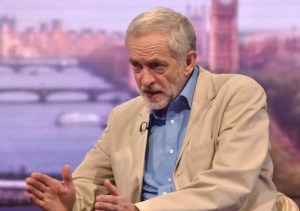
Jeremy Corbyn - Labour Party - Andrew Marr Show - BBC

Agree with this article? Violently disagree? Scroll down to leave a comment.

Follow Semi-Partisan Politics on TwitterFacebook and Medium.