Social Justice Is About Power And Control, But Not For The Benefit Of The Powerless

SJW white people dreadlocks social media

What happens when a white Social Justice Warrior encounters a mixed race person who fails to hold the “correct” opinions about cultural appropriation?

If you still need convincing that the “social justice” movement is in fact nothing to do with justice or equality and everything to do with wielding power over other people to control what they think, say and do, then let this picture be your guide.

Here we have a comment posted by a young Social Justice Warrior – an online activist who spends their time trying to police the public discourse and censor others – on the tumblr social network, in which the user Party Island (pronouns: they/them) confesses a dilemma.

You see, Party Island is very much against the phenomenon known as “cultural appropriation”, that timeless phenomenon where cultures, customs and fashions spread across different national or ethnic groups. While some Bad People might think that cultural appropriation is a good thing, responsible for everything from the pop music we hear to the fusion cuisines we eat, in fact cultural appropriation is a terrible tool of oppression in which arrogant white people claim credit for the cultural innovations of other marginalised groups, either for personal or commercial gain. Or so say the SJWs.

And Party Island was posting on the evils of white people wearing their hair in dreadlocks (a particularly contentious issue in the SJW community) when one of his mixed-race friends dared to utter the now-blasphemous assertion that people of any race or background should be able to wear their hair any way they damn well please, and that Party Island was massively overreacting.

As the complaint reads:

I’m at a loss. I posted about white people & black hair on Facebook and my old roommate, who is mixed race but white passing, is telling ME I’m overreacting and that “people should wear their hair how they want.” I don’t know how to approach this. I don’t want to talk over her because even if she’s white passing, she holds more authority over me in race related issues. I don’t know what to do.

The friend’s statement that “people should wear their hair how they want” is shocking to the ears of Party Island, who is used to playing the role of white saviour to the “oppressed” black masses by being a jumped-up, self-righteous little internet censor, persecuting anyone who fails to use the latest up-to-the-minute politically correct terminology and customs.

Now Party Island has been told to lay off, not by a fellow white person – their peer at the bottom of the inverted hierarchy of privilege – but by someone who is mixed race, and therefore occupying a more senior position in the pyramid. In Social Justice World, you see, power and legitimacy to speak on any issue derives from one’s place in the pyramid. On feminist issues, for example, being a woman (or any guy with a penis who decides to identify as a woman) gives one a certain right to speak about feminist issues, but being a black, disabled woman means you occupy an even higher position in the inverted pyramid and that your words, therefore, count for much more.

If a white person had told Party Island that they were overreacting by getting upset at other white people who “appropriate black culture” by wearing their hair in dreadlocks, Party Island could demand that they “check their privilege”, insist that they were being oppressive and send them off to educate themselves on issues of racial justice and cultural appropriation. But the friend is not white, they are mixed race. And this presents Party Island with a dilemma.

On the one hand, there is the strong instinct to “punish” the friend’s blasphemous statement that white people should be allowed to wear dreadlocks, because this is how these parasitical people gain power and influence over our discourse, culture and society in the first place – by meting out public shamings and other punishments to heretics in order to advance their own ideology. But on the other hand, Party Island knows that as a white person in the presence of a mixed race person (though “white passing”, they tell us, as mitigating evidence) their duty is to bow obsequiously and defer to whatever the mixed race person happens to say on the subject of race.

This creates an unresolvable logical error in the SJW brain of Party Island. They want to be a good foot soldier in the Social Justice Army and “re-educate” this blasphemer, but the blasphemer is of superior rank in the social justice hierarchy. It’s a bit like a zealous, well-trained infantry private discovering his captain breaking the army code of conduct. The desire to call out the crime and administer “punishment” is overwhelming, but the captain’s rank causes hesitancy and a failure of courage.

So what does Party Island do? Unable to confront their mixed race friend directly about their Evil Thoughtcrime and insufficient anger at the cultural appropriation of dreadlocks, this SJW flags his problem to the wider community in the hope that it will be seen by other properly-educated SJWs who occupy equal or greater rank in the hierarchy of victimhood, and who therefore have the power and legitimacy to correct this erroneous mixed race person. Ideally, in this warped world, a “black passing” black person who is also a transexual, disabled rape survivor will come passing by, notice the exchange and unload on Party Island’s poor mixed race friend with the full weight of their exalted position in the pyramid.

If all of this seems ludicrous and a million miles away from doing anything which might conceivably affect or help actual black people in America, you would be right. Because at its dark, festering core the Social Justice movement is not about delivering justice, equality or doing any other kind of social good. Social wrongs are merely the fuel which power the machine to perform its true purpose – controlling the language and the thinking of society in order to establish beady-eyed little zealots like Party Island as the indispensable clerisy who tell everyone else what to say and do.

Social Justice is, above everything else, about the acquisition and exercising of power. Victimhood is actively sought and eagerly weaponised by members of this Social Justice clerisy in their scramble for status amongst their peers and contemporaries. The legitimate problems and grievances of minority communities become irritating background noise, a distraction from what really matters – this finickity, juvenile, university campus parlour game in which casting oneself as the most vulnerable, oppressed but simultaneously tolerant person imaginable confers tremendous power, while the slightest slip (such as accidentally using the wrong word) can lead to immediate excommunication from the group.

That’s what is going on here.

That’s what “social justice” is really all about.

 

Bonita Tindle - Assault White Student for Cultural Appropriation - Identity Politics

Support Semi-Partisan Politics with a one-time or recurring donation:

Agree with this article? Violently disagree? Scroll down to leave a comment.

Follow Semi-Partisan Politics on TwitterFacebook and Medium.

The Cult Of Social Justice: Many Students Do Not Want To Be Coddled, But Universities Give Them No Choice

Would you rather your child went to a university which promotes rigorous debate and the search for truth, or a coddling daycare centre which seeks to shelter young adults from contradictory opinions and unpleasant facts while enthusiastically validating their every life choice?

In this short, entertaining lecture delivered to American high school seniors preparing for college, social psychologist Jonathan Haidt (and co-author of “The Coddling Of The American Mind“) switches between characters to portray two different university recruitment speakers, one representing Strengthen University and the other attempting to attract students to Coddle University.

Strengthen U. is described in these terms:

We are kind of a cult. We worship truth – this is our sacred value. We will throw anything overboard if it conflicts with this sacred value. In fact, the one act of sacrilege in our school is dishonesty.

Our motto actually comes more recently, from Thomas Jefferson: “For here we are not afraid to follow truth wherever it may lead, nor to tolerate any error so long as reason is left free to combat it.”

[..] So at Strengthen University, we offer hard classes. Everybody doesn’t get an A. You might even get some Ds, you might even fail a course. At Strengthen, we will not do anything to bolster your self esteem. We will teach you skills, we will give you opportunities to succeed, and if you do, you will feel very proud of yourself, you will deserve your self esteem. But we will not build it for you.

We will give you no safe spaces. We do not buy Play Doh and put it in safe spaces for students who feel “threatened”. We will never give you a trigger warning. When you are in a course, if the professor assigns a book we expect that you will not be destroyed by reading the book. If it has ideas you don’t like, we hope you’ll object.

At Strengthen, our sacred value is truth. And what that means is that we are very vigilant – that we never allow a climate in which our students feel they are walking on eggshells. If everybody is afraid of saying something, afraid that if they open their mouth and say what they think they’ll get pulled over by PC Principal [..] that is just death for free inquiry. So we will not allow that to happen.

So here’s the most dangerous thing you need to know about Strengthen University. Adults will not get involved in your relationships. Now think about this: what are you gonna do if somebody insults you? What are you gonna do if somebody uses a racial slur? What are you going to do if someone uses the N-word?

Now, for thousands of years – up until the 1990s – students dealt with this on their own. They might fight back, they might shame the person, they might talk to the person. Since the 1990s there have been speech codes that give adults authority to punish people who commit hate crimes or who use hate speech. What I’m telling you is that we are currently fighting the Department of Education on this, and we expect to win [..] and we expect that we will be legally allowed to stay out of your relationships. We expect you to handle it yourself.

While Coddle U. is pitched to the students in this way:

It’s a wonderful school, a very safe school, supportive school, I urge you to come. We were founded in 1965 based on the ideas of Herbert Marcuse, who was a German sociologist and political philosopher. He came to America – fleed the Nazis, did much of his work at Brandeis and many other schools.

At Coddle, our sacred value is Inclusion. We create a safe, welcoming space for all students. Any colour, any gender, any gender identity, whatever it is, we want to include you. Our sacrilege – the worst thing you can do at Coddle – is blame victims. We will not allow this, that is a violation of our sacred value. We don’t want anyone to feel excluded.

We have very good justification for this policy because the works of our founder, Dr. Marcuse. He wrote this wonderful essay in 1965, it was published in a book “A Critique of Pure Tolerance”, in which Marcuse explained why it is that things should not be tolerated if they impede “the chances of creating an existence without fear and misery”. Of course that’s our goal – don’t we all want the world to be free of fear and misery? So if certain kinds of actions and speech impede the creation of that world, why should we tolerate them?

[..] He goes on to describe what he calls “liberating tolerance”, which would mean intolerance against movements from the Right – because they are intolerant – and toleration of movements from the Left. We will make space for any movement from the Left, but we will not allow movements from the Right at Coddle University.

[..] We are based on a very simple psychology which is that people are fragile. People are so easily hurt. Anything that upsets you could trigger trauma, repressed trauma, unrepressed trauma, trauma that you somehow put up there in the closet and forgot to take – there’s trauma all over your mind and your memory. And we don’t want to trigger your trauma. That could damage you.

And this is especially true for members of the six protected classes [women, African Americans, Latinos, LGBTQ, differently abled, and Native Americans]. If you are a member of one of the six marginalised and oppressed groups you are especially vulnerable. You’ve been traumatised and oppressed your whole lives. Microaggression theory teaches us that when people repeatedly cut these little nicks, these little insults, these little exclusions, they don’t develop calluses, they bleed to death. And so we will not let you be cut while you are at Coddle. We will protect you. Now don’t try to do it yourself, that’s very dangerous. WE will protect YOU from aggression.

At Coddle University we offer access to therapists 24/7. Just dial 811 from any phone, or we have this new feature – just raise three fingers, go like this [he gestures] and we have sensors all around campus, go like this and a therapist will be airlifted right into you. We are a campus-wide safe space, there is no risk of exposure to non-progressive ideas. You will not find it in our curriculum, that would be triggering.

Watch the whole thing when you have a chance.

As amusing as this short video is, it is remarkable how little Jonathan Haidt had to exaggerate his pastiche of a modern liberal university campus. Save for the drones buzzing around, ready to winch fully-trained therapists down to soothe your emotional crisis at a moment’s notice, everything which Haidt talks about is already the norm on many campuses.

Non-progressive groups are banned or their speakers disinvited from campus.

The curriculum is mutilated in an attempt to replace the western canon with “marginalised voices” of dubious lasting value.

Those who do not go along with the progressive orthodoxy are subject to violence and intimidation.

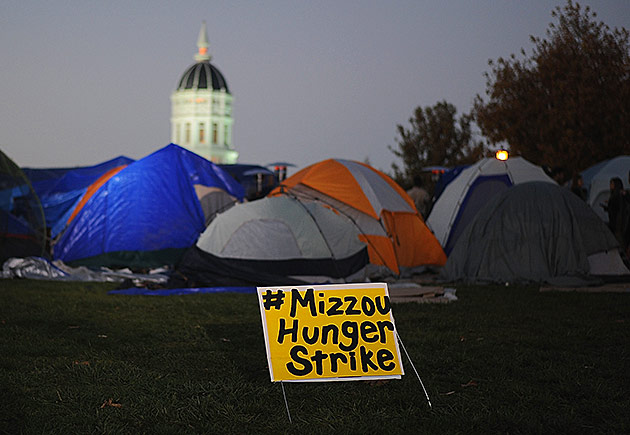
However, there are just a few encouraging signs that we might finally be approaching Peak SJW, that the sheer intolerance of academic freedom and debate shown by the Cult of Social Justice and Identity Politics is becoming untenable within an academic environment. At the University of Missouri, scene of campus protests, sit-ins and hunger strikes in sympathy with the Black Lives Matter movement, new student enrolment is significantly down and financial crisis beckons. Turns out, many parents have qualms about sending their kids off to shrill social justice indoctrination factories when they could be getting a rigorous education elsewhere.

Jonathan Haidt’s presentation distils the issue neatly, and asks a group of young school-leavers what kind of institution they think will best serve their future interests – the overbearing, 24/7 watchfulness of Coddle U or the resilience and antifragility-building environment of Strengthen U.

It is a question which needs to be put to more school leavers as they make their decisions over which universities to apply to. Though the Cult of Social Justice and Identity Politics is hard at work subverting secondary/high schools, for now it remains the case that most school leavers will not yet have been indoctrinated into the cult. There is a narrow, precious window to reach these young people to emphasise the importance of academic freedom, and Jonathan Haidt’s lecture should be required watching for all school-leavers.

In fact, combining thought-provoking talks like this with better information as to the state of academic freedom at different institutions (as with Spiked‘s Free Speech University Rankings) could help many students make better, more informed choices about which institution they choose to spend the next three or four years of their lives.

And while a pervasive hostility to conservative ideas and contempt for free speech may matter less to most students than a lively social scene and the prospect of cheap beer, those students who value academic freedom and robust debate should be given the information to vote with their feet.


Safe Space Notice - 2

Support Semi-Partisan Politics with a one-time or recurring donation:

Agree with this article? Violently disagree? Scroll down to leave a comment.

Follow Semi-Partisan Politics on TwitterFacebook and Medium.

Ian McEwan On Identity Politics

Ian McEwan

Only this immensely privileged generation of students can afford the luxury of being Social Justice Warriors

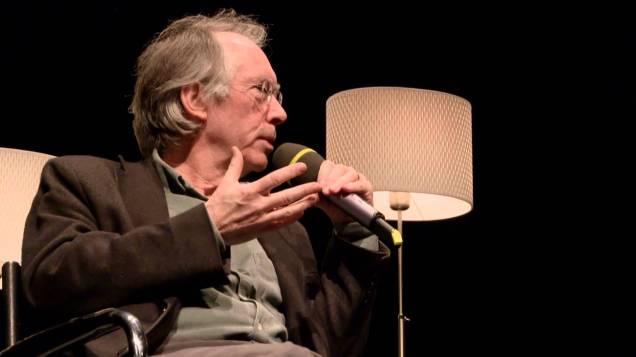
In the course of an interesting interview with the Guardian’s Decca Aitkenhead promoting his new novel “Nutshell”, author Ian McEwan digresses on the subject of identity politics.

From the feature article:

“Where I get a little critical of it is where selfhood becomes all of your politics, in a world in which we are more troubled than at any point I can remember in my adult life.”

Do identity politics look like decadent narcissism to him? “It feels like that, coming to the university aspect of it. These children have grown up in an era of peace and plenty, and nothing much to worry about, so into that space comes this sort of resurgence that the campus politics is all about you, not about income inequality, nuclear weapons, climate change, all the other things you think students might address, the fate of your fellow humans, migrants drowning at sea. All of those things that might concern the young are lost to a wish for authority to bless them,” he says, “rather than to challenge authority.”

My emphasis in bold.

Doesn’t that just perfectly sum up the Cult of Social Justice and Identity Politics? A generation of students raised at a time of great material abundance, peace and prosperity arrive at university to find most of the great injustices of the past already slain by previous generations of campaigners. Bereft of purpose but still feeling the strong student urge to embrace a cause, they crank up their sensitivity settings to perceive any slight or inequity, however small or unintentional, to be evidence of the systematic oppression of one or more classes of prescribed victim groups.

McEwan’s last sentence is particularly profound – the idea that today’s young people no longer rail against authority in the way that student activists of old did, but rather make tear-stained appeals to authority figures to intercede on their behalf. This is the victimhood culture, clearly distinct from an honour culture (which would encourage the individual to stand up to minor sleights or “microaggressions” and confront the issue themselves) or a dignity culture (which would only sanction involving authorities in case of grave injury).

In contrast with honour cultures and dignity cultures, victimhood culture encourages the individual to exaggerate their own vulnerability and the “harm” which other have inflicted in them through careless words or gestures, and to seek redress from external authority figures not as a last resort but as the first and default option.

Sadly, our generation is primed for this culture. We millennials have often been raised from birth to believe that we are unique, precious and perfect snowflakes worthy of praise and validation from dawn til dusk, that sticks and stones may break our bones but mere words can kill us stone dead, and that there is no greater goal in life than self-actualisation – living life according to our every passing whim, based on an “identity” we create for ourselves which is declared by Social Justice Warriors to be above any questioning, reproach or criticism.

In fact, I’m certain I made the very same point as Ian McEwan on this blog not long ago:

This is an attempted coup by an utterly coddled and spoiled generation of students who know almost nothing of hardship, deprivation or prejudice compared to their predecessors even just a few decades ago.

These tinpot student dictators arrive on campus at the age of eighteen to find most of the really hard battles already won for them – ironically, by genuinely brave radicals like Germaine Greer and Peter Tatchell. But these students must find some outlet for their youthful “idealism”, and so they latch on to the growing Politics of Identity, assimilating its intricacies and genuinely persuading themselves of its core message – that what matters is not the content of one’s character, but rather one’s arbitrary lived experience as a member of a defined and segregated subgroup.

And so rather than simply accepting that they have it rather good, even compared to their parents and grandparents, these student snowflakes go on the march. They find ever-smaller slights or “microaggressions” and protest them ever-more loudly and hysterically in an attempt to assert power over university administrations – many of which meekly submit without so much as putting up a fight.

Throw in the fact that their social hierarchy is based on a purist adherence to the Politics of Identity – with members gaining social currency for flaunting their own tolerant nature or identifying and persecuting anyone whose behaviour happens to violate one of the many invisible lines restricting our speech and behaviour – and you have a potent and deadly combination.

I have always been a fan of Ian McEwan‘s novels. Saturday was edgy, evocative and incredibly well researched, Solar was inventive and at times hilarious, On Chesil Beach made a four-hour flight from Cyprus to London so exquisitely awkward that I wanted to blow the emergency exit and jump out of the aircraft while The Children Act remains shamefully unread on my bookshelf, part of an ever-growing backlog.

But I also admire McEwan’s forthrightness and willingness to speak his mind rather than toe the establishment line on all social matters. McEwan recently caused a ripple of scandalised headlines when he questioned whether people should be free to choose their gender identity:

In a speech to the Royal Institution, the Booker prize-winning writer asked whether factors such as biology and social norms limited our ability to adopt a different gender.

“The self, like a consumer desirable, may be plucked from the shelves of a personal identity supermarket, a ready-to-wear little black number,” McEwan said. “For example, some men in full possession of a penis are now identifying as women and demanding entry to women-only colleges, and the right to change in women’s dressing rooms.”

In a Q&A after his speech, one woman asked McEwan, 67, to clarify what she called his offensive remarks, the Times reported. “Call me old-fashioned, but I tend to think of people with penises as men,” he said. “But I know they enter a difficult world when they become transsexuals and they tell us they are women, they become women, but it’s interesting when you hear the conflict between feminists now and people in this group.

“It’s quite a bitter conflict. Spaces are put aside, women are wanting to put spaces aside like colleges or changing rooms, and find from another side a radical discussion coming their way saying men who want to feel like it can come in there too. I think it’s really difficult. And I think there is sweeping through American [university] campuses a kind of strange sense of victimhood and a sense of purposeful identities that we can’t actually all of us agree with. Of course sex and race are different, but they also have a biological basis. It makes a difference whether you have an X or Y chromosome.”

Cue the kind of response one has come to expect when anybody dares to give voice to such thoughtcrime.

His new novel, Nutshell, is narrated from the perspective of a foetus still in the womb, and is likely to raise all kinds of hackles from staunch free right campaigners and militant free choice protesters alike.

But on the Cult of Social Justice and Identity Politics, McEwan hits the nail on the head. How different the university campus must seem to him now than it was when he was a student. One wonders whether McEwan would even be allowed to set foot on the campus of the University of East Anglia in Norwich, where he received his Masters in creative writing – the university has received a “red” rating in Spiked’s annual university free speech rankings.

Certainly McEwan, one of UEA’s most distinguished alumni, would never be welcome at the Students’ Union with its blanked restriction on “imagery or language which reinforces a gender binary”. Having expressed his own personal views on the subject of transgender issues, McEwan’s presence would clearly create an oppressive and highly unsafe space for the delicate flowers now following in his footsteps.

What’s really concerning is this: Ian McEwan is now something of a grandee in Britain’s cultural scene, yet even he was ultimately forced to apologise for airing his own personal views on transgenderism, effectively reversing his earlier statement under duress and confessing “biology is not always destiny” and that a person’s decision to change their gender must be “celebrated”.

If one of Britain’s most successful and respected authors cannot hold a contrary or agnostic position on hot-button social justice issues where conformity without exception is demanded and expected, what hope is there for new, up-and-coming artists or academics to question the new orthodoxy or admit to holding an unpopular opinion? Who will be rash enough to dynamite their own career before it has gotten off the ground  by admitting their heresy or reflecting it in their work?

And what future for the rich and vibrant British artistic and cultural scene when the Social Justice Warriors finally get their way and browbeat everybody in the land into thinking, saying and “celebrating” the same things?


Ian McEwan - Transgender comments

Bottom Image: Guardian

Support Semi-Partisan Politics with a one-time or recurring donation:

Agree with this article? Violently disagree? Scroll down to leave a comment.

Follow Semi-Partisan Politics on TwitterFacebook and Medium.

Tales From The Safe Space, Part 40 – The University Of Chicago Fights Back

University of Missouri - Mizzou Hunger Strike

Yes, some things – like academic freedom – are more important than the delicate feelings of new undergraduate students. Kudos to the University of Chicago for making their incoming freshman class aware of that hard fact up front.

In a refreshing contrast to the usual depressing tales of faculty capitulations to the whining, self-involved voices of the Cult of Social Justice and Identity Politics, the University of Chicago decided to make a bold stand for academic freedom.

From Heat Street:

The University of Chicago, one of America’s most prestigious and selective universities, is warning incoming students starting this fall not to expect safe spaces and a trigger-free existence during their four-year journey through academia.

In a letter sent to the class of 2020, university officials said one of the defining characteristics of the school was its unwavering commitment to freedom of inquiry and expression. Civility and mutual respect are vital to the campus culture, the letter states, but not at the expense of shielding students from unpopular opinions or ideas.

“Our commitment to academic freedom means that we do not support so-called “trigger warnings,” we do not cancel invited speakers because their topics might prove controversial, and we do not condone the creation of intellectual “safe spaces” where individuals can retreat from ideas and perspectives at odds with their own,” the letter states.

Expect the University of Chicago to be rewarded for their courage and integrity through greater application and enrolment numbers, as well as higher levels of achievement from the incoming undergraduate class as those delicate snowflakes too enraptured by their own vulnerability and completely unable to process dissenting opinions decide to study at other, more large-L liberal schools.

Already we have started to see a backlash against those institutions and university leaderships which are too quick to capitulate to petulant SJW demands to alter the curriculum, suppress free speech, disinvite conservative speakers and turn the campus from being a place of fearless debate to one of infantilising self-affirmation and victimhood.

The University of Missouri, roiled by campus protests last year in which marauding Social Justice Warriors forced the resignation of the university president for failing to treat black students like helpless victims, has seen its enrolment and profitability fall off a cliff. Good. If there is any justice, enrolment at Mizzou will dwindle until there is nothing left but tumbleweeds and the shrieking activists who drove out reason from a place of learning. And closer to home, the University of Oxford’s Oriel College had to frantically appease angry alumni donors who were ready to cancel their donations to the college in protest at Oriel’s limp capitulation to the Rhodes Must Fall movement.

In this very “Tales From The Safe Space” series, we have previously highlighted other examples of academic institutions standing up to their crybully students rather than rolling over and letting them seize control – the uncompromising example set by Dr. Everett Piper, president of Oklahoma Wesleyan University, is particularly encouraging.

As Dr. Piper memorably warned his students:

If you’re more interested in playing the “hater” card than you are in confessing your own hate; if you want to arrogantly lecture, rather than humbly learn; if you don’t want to feel guilt in your soul when you are guilty of sin; if you want to be enabled rather than confronted, there are many universities across the land (in Missouri and elsewhere) that will give you exactly what you want, but Oklahoma Wesleyan isn’t one of them.

At OKWU, we teach you to be selfless rather than self-centered. We are more interested in you practicing personal forgiveness than political revenge. We want you to model interpersonal reconciliation rather than foment personal conflict. We believe the content of your character is more important than the color of your skin. We don’t believe that you have been victimized every time you feel guilty and we don’t issue “trigger warnings” before altar calls.

Oklahoma Wesleyan is not a “safe place”, but rather, a place to learn: to learn that life isn’t about you, but about others; that the bad feeling you have while listening to a sermon is called guilt; that the way to address it is to repent of everything that’s wrong with you rather than blame others for everything that’s wrong with them. This is a place where you will quickly learn that you need to grow up.

And flatly reminded them:

This is not a day care. This is a university.

A long-overdue reminder for some students.

And so the University of Chicago’s stand against the SJWs did not happen in isolation; nor was it possible without a rigorous examination of the negative trends in campus life and the various ways in which academic freedom is under attack. And that is precisely what they did – back in 2014 the university commissioned a report on the state of freedom of expression at universities nationwide and reaffirming their own commitment to the timeless value of free speech over and above any passing social fashion.

From the report (my emphasis in bold):

Because the University is committed to free and open inquiry in all matters, it guarantees all members of the University community the broadest possible latitude to speak, write, listen, challenge, and learn. Except insofar as limitations on that freedom are necessary to the functioning of the University, the University of Chicago fully respects and supports the freedom of all members of the University community “to discuss any problem that presents itself.”

Of course, the ideas of different members of the University community will often and quite naturally conflict. But it is not the proper role of the University to attempt to shield individuals from ideas and opinions they find unwelcome, disagreeable, or even deeply offensive. Although the University greatly values civility, and although all members of the University community share in the responsibility for maintaining a climate of mutual respect, concerns about civility and mutual respect can never be used as a justification for closing off discussion of ideas, however offensive or disagreeable those ideas may be to some members of our community.

[..] In a word, the University’s fundamental commitment is to the principle that debate or deliberation may not be suppressed because the ideas put forth are thought by some or even by most members of the University community to be offensive, unwise, immoral, or wrong-headed. It is for the individual members of the University community, not for the University as an institution, to make those judgments for themselves, and to act on those judgments not by seeking to suppress speech, but by openly and vigorously contesting the ideas that they oppose. Indeed, fostering the ability of members of the University community to engage in such debate and deliberation in an effective and responsible manner is an essential part of the University’s educational mission.

And it is that last part which presents such a challenge to many of today’s students – young people today are not only arriving at university unable to tolerate let alone contest ideas which they oppose, they are outraged at the very suggestion that they should learn to cope in such a way.

And not entirely through their own fault, for mine is a snowflake generation raised to believe that we are special, unique, perfect and above any reproach which might damage our self-esteem. We are taught not that sticks and stones may break our bones but words will never hurt us, but rather that sticks and stones may break our bones but words can kills us stone dead.

From early childhood education on upward we are taught that hurting someone’s feelings is just as bad – if not worse – than physically assaulting them. And all the while we are told to present our tear-stained faces to the relevant authorities the moment that somebody upsets us, so that they can receive their just punishment. We are not taught self sufficiency, resilience and the power of reason, but rather are encouraged to exalt in our weaknesses and wear our fragility like a badge of honour.

Little wonder, then, that when my generation reach university and fall under the intoxicating presence of the Cult of Social Justice and Identity Politics (student protests always appearing edgy and cool, but this incarnation representing a dangerous shift in attitude and tactics) so many of us immediately buy in to the idea that our personal worldview and beliefs are never to be questioned.

The University of Chicago alone cannot do anything about the way that people in the English-speaking Western world raise their children or educate them at a young age. They cannot challenge the toxic rise of baby-centred parenting, where parents and adults contort themselves to conform to the whims and sensitivities of their historically pampered children rather than promoting respect, deference and anti-fragility. The University of Chicago is but one academic institution facing a tidal wave of consequences from years of bad parenting, educational and child-rearing trends in society.

But what the University of Chicago can do – what they did do, admirably – is boldly restate who and what they are as an organisation, and what they stand for as an institute of higher education. They can boldly restate their commitment to the timeless values of academic freedom, and the fostering of personal and intellectual growth through robust debate and the free exchange of views. They can tell their incoming freshmen that no matter how accustomed they are to getting gold stars simply for participating, or demanding positive affirmation of even their most questionable decisions, the days of coddling will end the moment they set foot on campus.

This is what the University of Chicago did. This is what every university in America, Britain and the entire English-speaking world needs to do now if they are to avoid regressing into nothing more than adult daycare centres where the Play-Doh and puppy videos are piled high while challenging books burn in a pyre outside the library.


Safe Space Notice - 2

Top Image: Sports Illustrated, Michael B. Thomas/Getty Images

Support Semi-Partisan Politics with a one-time or recurring donation:

Agree with this article? Violently disagree? Scroll down to leave a comment.

Follow Semi-Partisan Politics on TwitterFacebook and Medium.

Our Schools Are Hotbeds Of Anti-Democratic, Anti Free Speech Sentiment, Hostile To Conservative Students

EU Referendum - Brexit - Free Speech - Children - School - Education

British schools and universities represent an oppressive and highly unsafe space for young students who believe in free speech or hold pro-Brexit beliefs

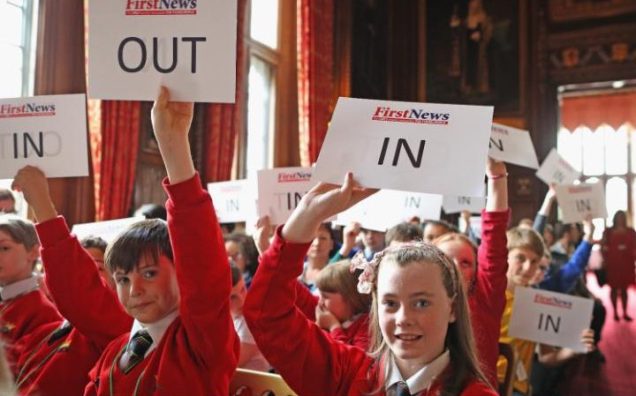
If you think that you have been made to feel uncomfortable for holding eurosceptic, pro-Brexit beliefs, spare a thought for those young Brexiteers trapped firmly behind enemy lines in the clutches of Britain’s left-wing educational establishment.

Tanya Kekic, a sixth-form student, writes in Spiked about the post-referendum climate endured by those who supported Brexit:

As they had scarcely met anyone supporting Brexit, they could not understand how this had happened. Their only explanation was that the electorate was misguided, brainwashed, uneducated and motivated only by their hatred of immigrants. They were not at all embarrassed by their disdain for ordinary people. In fact, teachers and pupils openly said that democracy is a sham, that we need ‘experts’ to make the big decisions and that idiot Leavers should not have been able to vote in the first place. I’ve not been around long, but I have never seen anything like it. I knew this kind of loathing of the ‘masses’ existed, but in the past it had been disguised.

The same low opinion of people is shown by my teachers’ and classmates’ rejection of freedom of speech on the grounds that, firstly, the public are too uneducated to hear dangerous views, and, secondly, the public are too weak and vulnerable to hear something that might offend them. Over the past year my freedom-loving friend and I have had ongoing debates at school about whether there should be a limit to freedom of expression. We have not yet found a teacher who believes in unfettered freedom of speech.

The most shocking encounters have been with our philosophy teacher. First of all, she declared that she completely disagrees with freedom of speech and the very idea of a free press. (I am not kidding.) Secondly, she became hysterical when we said that no religion, including Islam, should be above mockery or criticism (this was after we were shown a video ridiculing Christianity). She told us to ‘get out’ of the classroom, while whining that we can’t criticise the prophet Muhammad because it says not to in the Koran. We heard from another teacher that apparently we have ‘extreme’ views. (As far as I know, we haven’t yet been reported to Prevent.)

If believing in freedom and democracy makes you an extremist, we are really in trouble. Schools are encouraged to teach students about British values, such as tolerance and pluralism. But when they don’t know what these principles are, little wonder they fail to uphold them in practice. In particular, the idea of tolerance is very confused. We are not told to allow unpleasant views to be shared and then to challenge and criticise them; rather, we are told either to shut up and respect all beliefs, or to censor and shut them down. To understand why hypersensitive university students are cowering in Safe Spaces and banning ideas they disagree with, you only need to sit in on a Year Eight citizenship lesson.

This is concerning indeed, though not surprising. This blog has previously reported on the plaintive cries for help and/or of frustration from young conservatives, eurosceptics and civil libertarians who found themselves being ruthlessly persecuted at school, often with the full knowledge and participation of their own teachers. And clearly the EU referendum has taken that pre-existing hostile climate for free speech and injected it with steroids.

One marvels in particular at the philosophy teacher who “became hysterical” at the mere idea (not even the act) of criticising Islam, and who pre-emptively ejected Kekic and her friend from class as punishment for daring to suggest that all ideas should be open to debate and criticism. On might have thought that adherence to this view would be a prerequisite for anybody seeking to teach philosophy of all subjects, but apparently there are now schools employing philosophy teachers who actively oppose the idea of critiquing certain ideas and belief systems.

Where teachers lead, impressionable students will often follow. And the clear message being sent by the academic establishment – not only at the university level but at the school level too – is that the Cult of Social Justice and Identity Politics is firmly in charge now. Free speech is even less of an absolute right than it was before, woolly metro-leftism is firmly established as the only acceptable political worldview and ideas should no longer be judged on their own merit, but rather on the identity of their proponent and the position which they occupy in the Hierarchy of Privilege.

When I appeared on the BBC Daily Politics earlier this year to discuss the phenomenon of oversensitive students, I joked that something strange seems to happen in the minds of otherwise sensible young people the moment they first set foot on a university campus, making them suddenly obsessed with their racial and gender identities and utterly incapable of tolerating alternative viewpoints. But of course this facetiousness disguised an important truth, made clear by Kekic: the fact that we are raising our children to be this way from birth, through our therapeutic culture, worshipping of the self, encouraging of a state of constant personal fragility and a starkly authoritarian attitude toward any speech which even remotely contradicts certain established orthodoxies (Islam is above reproach, the EU is fundamentally good, etc.)

There are already whole industries – certainly in academia but elsewhere too – where holding conservative or eurosceptic beliefs amounts to social or professional suicide. The other day I attended a meeting of good people involved in various social enterprises and charities in the third sector. After I brought up the topic of the EU referendum in passing, the speaker proceeded to wax lyrical about just how awful Brexit is, never thinking for a moment that anybody in the room might possibly disagree with her. Though it was amusing, I also felt a pang of awkwardness and discomfort, knowing that I was surrounded by people who would be utterly repelled if I revealed my own true feelings about Brexit (I did anyway).

The point is that as a grown man and a political blogger well used to debate and disagreement, I still paused momentarily before airing a perfectly mainstream and acceptable opinion in front of people who strongly disagreed and who thought that those who supported Britain leaving the EU were stupid at best and malicious at worst. How, then, must those young people with conservative or eurosceptic beliefs feel, who have not yet developed so thick a skin? How are they to feel comfortable expressing their sincerely and legitimately held political views when finger-wagging teachers casually accuse them of “extremism” and conspire to silence them altogether?

There is a cancer in our schools and universities, metastasising throughout the entire educational establishment. It is a tumour which sucks the life out of free speech and academic freedom, and encourages dull, lumpen conformity invigilated by a watchful, censorious, politically correct Taliban.

We need to excise that tumour before it kills off independent thinking, freedom of speech and academic enquiry for good.


European Union - United Kingdom - Britain - Flags

Top Image: Telegraph

Support Semi-Partisan Politics with a one-time or recurring donation:

Agree with this article? Violently disagree? Scroll down to leave a comment.

Follow Semi-Partisan Politics on TwitterFacebook and Medium.