Who Is Truly Marginalized? – Part 2

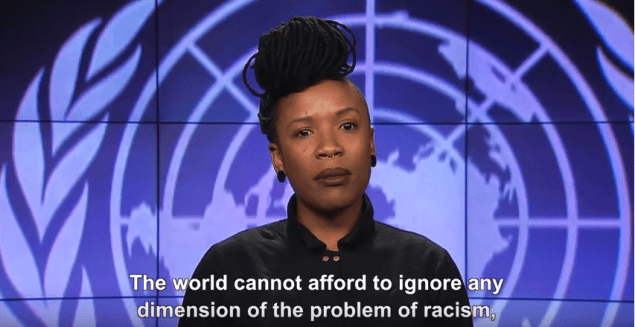
Tendayi Achiume - UN Special Rapporteur - Britain UK racism Brexit

Champions of intersectional identity politics in academia, culture and government have accrued near-hegemonic societal power for themselves by exploiting both the real and imagined oppression of certain groups on whose behalf they boldly presume to speak

Last month, I wrote a short reflection on who is and is not effectively marginalized in 21st century Western society, both societally and intellectually. Building on far more substantial contributions from Rod Dreher and Kevin Williamson, I concluded that while racism, sexism and LGBT discrimination remain very real and pressing challenges to be overcome, when it comes to setting the political and cultural agenda it is those who refuse to embrace, uphold and evangelise intersectional identity politics who are increasingly the most functionally marginalized.

To me, this seems self-evidently true. Try being a black conservative or libertarian politician in America, or a gay politician questioning of current gender theory in Britain and see how far you rise and how welcome you are in the Democratic or Labour parties, or the Op-Ed pages of prestige newspapers. In each case it will not be the color of your skin or your sexual preference which holds you back, stymies your career and invites social and professional ostracization from the most prestigious and influential networks; rather, it will be the “unacceptable” opinions you profess and the supposed harm you are doing to sweepingly designated victim classes.

Partly depending on how one defines being marginalized – and there are different perspectives here, one being the ability to speak up for one’s personal interests and meaningfully control one’s own destiny, the other being the ability to wield influence to shape wider society in one’s preferred direction – a powerful case can be made that race, gender and sexuality are now far less a determining factor than whether or not one possesses the education, social justice lexicon and properly conforming social viewpoints to avoid scrutiny and censure by other “gatekeepers”. In other words, we have returned to an almost class-based form of societal hierarchy where the new underclass do not necessarily work with their hands or sit on the dole queue but generally hold opinions and values now considered unfashionable or harmful, while the new upper class do not necessarily own mansions or penthouses but are uniformly fluent in the lore and language of intersectionality.

Note that this is very different to making the tedious, self-pitying Alt-Right claim that straight white Christian males are now a terribly downtrodden group while reverse discrimination-benefiting racial minorities or perpetually unsatisfied “feminazis” are on the ascendance and have the best of everything – far from it. In fact, a straight white male is still likely to do extraordinarily well, to the extent that he also holds a narrow range of opinions deemed acceptable by current elites, while a black lesbian woman who blasphemes against one of the identity politics movement’s main articles of faith is likely to find herself every bit as limited in opportunity and outcome as a straight white male who commits the same sin.

Thus we need to think about power in a more nuanced, multilayered way. There are differences in power between various individuals in society, resulting from numerous factors including (but certainly not limited to or even predominantly caused by) race, gender and sexuality. But there are also differences in power between various voices in the public square, and these differences depend even less on immutable personal characteristics and more on the particular political opinions which people hold and either choose to voice or suppress. The former may well often be overwhelmingly important to the individual, whose personal happiness or fulfilment is likely closely tied to getting through life unstymied by various forms of discrimination. But the other power differential – the ongoing interplay of voices in the public square, which slowly shapes society through rules, customs and laws – is far more consequential to us all. And it is here where the social justice left insult our intelligence by continually playing the overwhelmed underdog when in reality they enjoy every conceivable advantage and inch closer to victory with every passing day.

To this end, I was very heartened to read the latest blog post by Ben Cobley, a left-wing journalist who freely expresses qualms about the groupthink and illiberal authoritarianism now rampant on the Left. Cobley focuses on the work of UN “Special Rapporteur on contemporary forms of racism, racial discrimination, xenophobia and related intolerance” E. Tendayi Achiume, who recently made an official fact-finding trip to Britain in order to apply a remarkably presumptive “post hoc ergo propter hoc” analytical lens to the supposed impact of “Brexit” (which hasn’t yet taken place) on racial equality in the UK.

Referencing the UN Special Rapporteur’s report, Cobley writes:

For this interpretation, which is appearing in our public life daily and prominently, the life chances and well-being of non-white-skinned people, women, the ethnically non-British, Muslims and disabled people are determined by those identity markers, so that they appear as universal victims of society and of the identity groups which dominate it. This is direct causation she is talking about – that identity leads to either success or failure. She makes no qualification on it and makes an unequivocal judgement on the situation as unacceptable and also sometimes unlawful – so assuming a kind of absolute authority over it.

Achiume, who The Times described as a ‘Zambian-born, US-based academic’ and ‘a UN expert’ on its front page, added, “Austerity measures have been disproportionately detrimental to racial and ethnic minority communities. Unsurprisingly, austerity has had especially pronounced intersectional consequences, making women of colour the worst affected.”

Here we see the logic of this form of knowledge, attributing victimhood along the lines of identity categories – so, combining women and people ‘of colour’ as victims, we arrive at a maximum victimhood of ‘women of colour’. This type of knowledge, of ‘intersectionality’, will be familiar to anyone accustomed to the theories coming out of the social sciences (and wider humanities) departments of Western universities.

However the ability to make assertion in the public sphere – and to have it leading the news with the one making the assertion described as a ‘UN expert’ as in this case – is an indication of political power. The domination of academic discourse by this sort of universalising theory is a sign of political power. That someone propounding this theory gets appointed by the body that brings the world together to go and inspect countries and tell them what to do is a sign of political power.

Absolutely so. Such is the power wielded by devotees of intersectional identity politics within academia that reputations can be ruined, careers terminated and cringeworthily fawning apologies extracted by identity politics practitioners, not on the basis of an intellectual refutation of a contrary argument but by the mere assertion that merely having to hear such alternative opinions constitutes intolerable cruelty and harm.

Such is the power wielded by identity politics practitioners within British politics that a one-time party leader – Tim Farron of the risibly named Liberal Democrats – can be forced through media pressure to publicly deny what we all know to be his true beliefs on certain hot-button social issues, and ultimately to quit his post because of the incompatibility of private conscience with the totalitarian demand that he personally approve of alternative lifestyle choices rather than simply promising never to legislate against them.

The power to hand down a statement or opinion of any kind – from a UN report accusing Britain of becoming a land of racist oppression following the Brexit vote to a university professor redesigning a curriculum or writing a grievance-soaked Op-Ed – and receive unsceptical, unquestioning newspaper coverage or approving cable news commentary is immense indeed. They who control the universities, cultural outlets serving mass markets and the media outlets consumed by political elites can be reasonably said to control the basic narrative of society. Sure, dissenting voices are still permitted to appear (though less frequently in prestige outlets, and often with various disqualifying provisos attached) from time to time, but as a general rule they who control the narrative determine the future.

Those in opposition to the social justice and identity politics movements simply do not possess this media or cultural reach. Their arguments are not given the same weight by opinion-makers and their messages are not amplified to nearly the same extent by media gatekeepers. Bad individuals on this side of the societal divide remain intermittently capable of causing physical or emotional harm to others through their private actions, which is always reprehensible, but the conservative movement as a whole is firmly in retreat on a societal level. Even many of those most concerned about the rise to power of Donald Trump concede that this historical aberration is very much a “last gasp” from a segment of society they openly write off as unimportant and “deplorable”.

Cobley continues to explore:

[..] how this power works through relationships which have built up between what I am calling ‘the liberal-left’ [..] and these favoured groups via those who appear as their representatives – so feminists, Islamists and ethnic group activists for example. These relationships make up what I am calling ‘the system of diversity’ – a form of society grounded in these relationships of favouring and representing, linked to assumptions of identity group victimhood.

As I am seeing it, many of our major institutions, including major media organisations like the BBC, Sky NewsThe Times and especially The Guardian and Channel 4 are constantly being drawn towards the system of diversity and its ways of relating to the world – seeing fixed and ‘quasi-fixed’ identity as primary to what is going on in the world and primary to how they should address it.

And warns:

This agenda is increasingly working its way into our daily lives as rules and orders and social norms – to implement positive discrimination in the workplace, to attend training to correct our ‘unconscious bias’ and to report assertions that are not favourable to favoured group members to the police as ‘hate crime’.

The natural response in this situation is to give way, which is after all, fundamentally, a giving-way to power. We evade, we protect ourselves, while the winners go on producing their reports and setting the agenda and setting the rules that govern our lives.

It takes a strong person to resist all of these pressures to conform. Only the very brave, generally reckless or those with little to lose will readily voice dissent against the identity politics left’s stark design for society, which is why such dissent is concentrated among a handful of brave and exceptional academics or journalists, opportunistic politicians or disenfranchised and often under-occupied young men online.

Unfortunately, despite the ability to generate the occasional flashpoint of resistance, these groups count for little against the great mass of middle class opinion which is either actively supports the identity politics message saturating the culture or (perhaps more often) is too fearful of negative personal consequences to question or object to the present direction of travel.

And all the while opposing voices are silenced, careers ended and lives ruined for failing to move in fast-enough lockstep with evolving identity politics orthodoxy, those powerful figures doing the silencing, ending and ruining have the temerity to portray themselves as the underdogs in this culture war. We must not fall for their charade.


Update – 30 May 2018

Ben Cobley has a new book on this very subject coming out on 1st July, entitled “The Tribe: The Liberal Left And The System Of Diversity“. I will be getting a copy and encourage my interested readers to do the same, as it promises to delve into these issues in more depth and certainly with a more scholarly eye than I currently possess.


identity-politics-us-presidential-election-donald-trump-white-working-class

Support Semi-Partisan Politics with a one-time or recurring donation:

Agree with this article? Violently disagree? Scroll down to leave a comment.

Follow Semi-Partisan Politics on TwitterFacebook and Medium.

No, Jesus Would Not Demand Open Borders

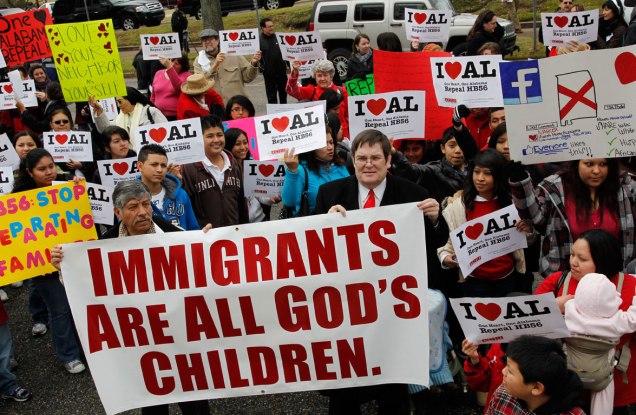
Immigrants are all Gods children - Christian immigration protest

Those who make a Christian case for open borders and uncontrolled mass immigration do not apply the same altruism they demand of society to their own personal lives, and neither would tearing down national borders improve the common good. Those who use their faith (or even more cynically, the faith of others) as a bludgeon to agitate for open borders do so based on a deliberately superficial reading of Christianity, in which Jesus is little more than an easy-going aging hippie, or a benevolent Santa Claus figure

The Windrush scandal – in which British permanent residents and citizens, either naturalised immigrants or descendants of immigrants, were wrongly targeted for deportation because of bureaucratic incompetence and the eagerness of a fawning, rootless government to appear tough on immigration – has pushed the issue of immigration back up the list of top voter priorities in the United Kingdom.

At times like this, it is customary for cynical and opportunistic voices on the Left to exploit developments in order to agitate for their broader goal of open borders (or at least something perilously close to open borders – few left wing politicians are now willing to publicly articulate any restriction on immigration or sanction for immigration law violations which they actually support). And so it was this time, with a parade of Labour and other left-wing politicians effectively making the preposterous case that bureaucratic callousness with regard to the affected Windrush immigrants means that the government has now morally forfeited the right to control the borders at all.

Unfortunately, these voices are often also joined by left-wing Christians who waste no time extrapolating from one appalling example of Big Government callousness to press entirely tangential arguments about a more permissive immigration system. The Church of England’s own Migration policy subsite rather deceptively makes mention only of asylum and refugee issues, utterly ignoring the dominant economic migrant subgroup. One can only assume that this is because the CofE knows as well as the rest of us that pretending that the great migration wave consists entirely of the former type and not the latter is more likely to generate sympathy and lead to pressure for looser immigration policy.

As the depth of the government’s failure and mismanagement with regard to Windrush immigrants became evident, social media was swiftly flooded with tweets and sentiments suggesting that any attempt by politicians or civic leaders to dissuade or expel illegal immigrants – people entirely unconnected with the Windrush scandal – from maintaining unlawful residence in the United Kingdom is prima facie evidence of a missing or defective conscience:


Even Martyn Eden, political editor of Premier Christianity magazine, equivocates:

Some will see this affair as reflecting an underlying racism in British culture. Given that the density of population in the UK is 268 people per square kilometre, second only to Holland in the EU, a case can be made for limiting immigration, but the Brexit campaign certainly showed evidence of a xenophobic hostility to foreigners.

Our duty to love our neighbours regardless of their racial and family backgrounds, following Jesus’ teaching and example, will shape how Christians understand and respond to this distressing and shameful episode in our national life.

This mirrors the vague, evasive wooliness and anti Brexit bigotry which swathes of the Church of England (including all the senior hierarchy) displayed so prominently during the 2016 EU referendum campaign and its aftermath (see here, here, here and here).

Recently, Pope Francis has made noises (in the form of an apostolic exhortation) deeply suggestive that he believes open borders to be “pro-life” and the correct starting point for any Christian view of immigration:

102. We often hear it said that, with respect to relativism and the flaws of our present world, the situation of migrants, for example, is a lesser issue. Some Catholics consider it a secondary issue compared to the “grave” bioethical questions. That a politician looking for votes might say such a thing is understandable, but not a Christian, for whom the only proper attitude is to stand in the shoes of those brothers and sisters of ours who risk their lives to offer a future to their children. Can we not realize that this is exactly what Jesus demands of us, when he tells us that in welcoming the stranger we welcome him (cf. Mt 25:35)? Saint Benedict did so readily, and though it might have “complicated” the life of his monks, he ordered that all guests who knocked at the monastery door be welcomed “like Christ”,[85] with a gesture of veneration;[86] the poor and pilgrims were to be met with “the greatest care and solicitude”.[87]

We see exactly the same climate in the United States, where the progressive wing of the Church is enthusiastically embracing the concept of “sanctuary cities” and taking an increasingly extreme position against any kind of immigration enforcement. The argument usually goes along the lines of that advanced here by Michael Clark in Sojourners:

I currently live in Houston, Texas, the nation’s fourth largest city and most diverse metropolitan area. We’re a city with no racial or ethnic majority, where nearly 1 in 4 people were born outside the U.S. We’re also home to 400,000 undocumented immigrants, earning us the label “sanctuary city” from some.

[..] but Houston’s status as a sanctuary city requires a response from everyday residents, nearly three quarters of whom claim to be Christians. Will Christians make a sanctuary in our city?

Before we put our defenses up (They’re here illegally! They’re taking our jobs! They need to come in the right way!), let us remember that our allegiance is not primarily to this nation. Jesus himself said, “My kingdom is not of this world” (John 18:36). Paul reminds us that “our citizenship is in heaven” (Philippians 3:20), and though we are to respect earthly authority (Romans 13:1), when push comes to shove, “we must obey God rather than men” (Acts 5:29).

Will we be a sanctuary in the tradition of the early church? Will we heed God’s commandment: “the stranger who resides with you shall be to you as the native among you, and you shall love him as yourself, for you were aliens in the land of Egypt” (Leviticus 19:34)?

Will Christ say to us, “I was hungry and you gave me something to eat, I was thirsty and you gave me something to drink, I was a stranger and you invited me in, I needed clothes and you clothed me, I was sick and you looked after me, I was in prison [or an immigration detention center] and you came to visit me”?

Let us remember his words, “Truly I tell you, whatever you did for one of the least of these brothers and sisters of mine, you did for me” (Matthew 25:40).

This is manipulative schmaltz of the worst kind. All of it. Anybody can harvest quotes from the Bible to build a case that Christian compassion involves rolling over and doing whatever a particular activist wants at that moment in time. But what we lack in this argument (and we see this over and over again in Christian arguments for mass immigration or open borders) is any acknowledgement that the immediate benefit to one new incoming migrant is not the only important consideration at stake.

When Jesus performed miracles there was no tradeoff, with one individual newly afflicted by the disease which Jesus cured in another, or the alleviated suffering of one person displaced onto somebody else. Nobody died because Lazarus was raised from the dead. Those who were healed at Gennesaret by touching Jesus’ cloak were not offset by a similar number who were struck down in their place. Uncontrolled mass immigration does not work like this. While there is a clear personal benefit to each marginal unskilled migrant  (and we are talking economic migrants here, remember, not refugees) allowed into a developed country, there are offsetting costs to be considered, too.

Sometimes these costs are tangible and quantifiable, such as the additional burden on infrastructure, services and the welfare state. Other times these costs are uncertain and appear only in the form of risk (such as risk to public order or national security). But the net effect is that the “good” done by letting in unlimited numbers of unskilled migrants from poor countries is offset by a commensurate cost. And this cost is no less important or worthy of consideration just because it is diffused across society as a whole rather than concentrated on one individual.

Rod Dreher makes a similar point in religious terms, rebutting the idea that Christian hospitality must be open-ended to the point of self-destruction:

This is why St. Benedict’s rule of hospitality is not open-ended. Monks will certainly welcome guests as if they were Christ, but that welcome does not imply that visitors have the right to stay in the monastery for as long as they like. What’s more, monks cannot welcome guests who, whether by their behavior or their sheer numbers, prevent a monastery from fulfilling its purpose. No stranger has a right to expect the monks to abandon their way of life to accommodate his desires. It’s simply dishonest and manipulative for the Pope to invoke St. Benedict’s example in this way. One likes to think that even Pope Francis would not expect a monastery to fling its gates open and house as many migrants as want to set up camp there, indefinitely.

We know that these negative costs of open borders will be incurred, and that they will be borne by society at large. So why is it more Christ-like to prioritise one over the other? Welcoming the stranger is absolutely the right thing to do when there are no offsetting costs to that act of charity, but what if welcoming the stranger causes a completely innocent third party to suffer harm? What we see, though, is many Christians prioritising the needs of the former over the latter. And in a way this is understandable – the benefit to the migrant is obvious, easy to measure and enjoyable to bestow, while the cost to society is diffuse, sometimes intangible and only detectable on the macro level, not at the individual level. Choosing the tangible and immediate over the intangible and time-delayed is a natural human instinct, albeit a harmful one in this instance.

So perhaps the real question we should be asking ourselves is this: does Jesus want us to think purely from with hearts, or does He also want us to engage our brains?

Viewed this way, the emotionally incontinent “Jesus would let in all the migrants” line of argument is becoming increasingly tiresome and threadbare. Maybe He would, and maybe not – perhaps instead He would work miracles to improve the broken and dysfunctional countries which feed mass migration in the first place, rather than feeding an urban leftist’s fetish for infinite diversity. Presuming that Jesus would opt for the immediate solution, the easy answer, the quick fix, grant the superficial human desire rather than the deeper human need, is to fundamentally misunderstand how Jesus’ ministry unfolded. Claiming that Jesus would advocate open borders is to subscribe to an incredibly two-dimensional, aging hippie version of Jesus, one which reduces the Son of God to little more than a genial Santa Claus figure.

If – as the Christian open borders activists insist when it comes to welcoming strangers – we sought to emulate Jesus’ dealings with and instructions to his contemporaries in our geopolitical dealings then the world would be a very different, and likely much darker place. Nazism and Soviet Communism were not defeated through pacifism, after all. And if we were to take Jesus’ instructions to his immediate disciples and contemporaries as granular instruction for twenty-first century life we would forever be forsaking all material goods, leaving our families to pursue nomadic and ascetic lives of service and chasing after muggers offering them the few personal effects they haven’t already stolen from us. I know of very few Christians who meet – or even seek to meet – this standard, not because they are selfish and evil but because it is generally understood by everyone (except the far Left) that a one-time charitable binge or government wealth expropriation exercise is not a sustainable long-term solution to poverty and want. Dropping everything and working for the immediate benefit of the person in front of us is not necessarily in the interest of millions of other deserving people beyond our vision. Sadly, our loaves and fish do not miraculously multiply; ultimately, we can only improve the common good by teaching the five thousand how to bake and fish for themselves.

It is also very telling that the “Jesus would let them all come in” brigade only seem to want to apply His teachings so far as they can be twisted to support open borders. The activists who go to protests chanting “no human being is illegal”, the often-wealthy coastal leftists who support unconditional amnesty for all and the establishment media who make a point of proudly failing to distinguish between legal and immigration, very few of them would open their New York or San Francisco homes to those cities’ many homeless, share their shiny new Tesla car to help a poor family do the school run every day or hand over their iPhone X to whomever demanded it. Yes, some profess a willingness to pay a higher marginal tax rate themselves in order to fund more plentiful public services, but that is about as far as it goes – keeping the needy firmly at arm’s length. Otherwise, their “generosity” actually consists of nothing more than calling for the government to tear down borders and disregard immigration law, and loudly screaming that anyone who expresses doubt about this reckless course of action is a racist.

But the costs of unskilled immigration (for the kind of mass immigration entailed by open borders would inevitably be of the unskilled kind) tend not to impact the wealthy enclaves where the cognitive, financial and social elites live, falling instead on far less privileged groups and communities. Many of those calling for open borders or more immigration in the name of Jesus also conveniently stand to get cheaper maids, gardeners and cleaners as a result, or live in neighbourhoods where the principle consequence of immigration is a wonderful explosion of diversity in art, culture and food. They are not the ones who typically rely on increasingly stretched public services, compete for low wage jobs or live in areas of higher crime or social tension. Nestled within gated communities or exclusive neighbourhoods, many will be insulated from the kind of widespread social unrest which the implementation of open borders would quickly deliver.

These activists are, in effect, disguising their naked self interest as generosity, benefiting economically and making themselves feel good and progressive while pushing nearly all of the negative externalities of mass immigration onto others. Jesus, let us remember, said nothing about giving away one’s neighbour’s possessions – the whole point is supposed to be one of personal devotion and sacrifice. The Jesus 4 Open Borders crowd, on the other hand, seek largely to give away something which is not theirs, promising to bear a cost which in actual fact they have every intention of palming off onto people further down the social ladder. How very Christian.

Ultimately, if the Jesus 4 Open Borders brigade are to maintain intellectual integrity while holding to their extremist stance they must concede that the policy they want, if retroactively applied decades or centuries ago, would mean that human development would be far less advanced today than is currently the case and that net human suffering might well be significantly higher. They must also concede that if the policy were implemented today, there will be an unknowable but significant opportunity cost in terms of curtailed future human progress and relief of suffering. They must admit that one or other or both of these seismic and overwhelmingly negative changes would be a price worth paying to achieve their particular conception of social justice.

Why? Because the nation state forms the bedrock of our current prosperity and the stability of the world order, and open borders are an all-out assault on the concept of the nation state. Humanity is not homogeneous – some cultures and value systems are objectively superior to others, and even in the case of immigration between broadly similar countries, human nature is such that too fast a rate of immigration creates political resentment and the potential for societal unrest. Implementing open borders in this age, when access to information is so widespread and fast modes of transport so ubiquitous, would immediately trigger a wave of migration from poor and dysfunctional countries that make the present global migration crisis look like a slow trickle.

While immigration activists love to tout the many economic benefits that immigration brings, and rightly so, they generally neglect to point out that there is often a (significant) time lag between the marginal new immigrant arriving and local housing and infrastructure expanding in proportion to service the increased population. In fact, unless deliberate steps are taken by local and national populations, that increase might never happen at all. Even in the best case where the marginal immigrant is a net fiscal contributor, this does not instantly make the freeway a fraction of an inch wider or add a few thousandths of a new bed to the local hospital. This necessary growth in service provision requires political direction and civic planning, and must often be commenced in advance, long before the tax revenue stream from the new immigrant comes online (thus requiring deficit spending in the interim).

Now imagine a situation where developed countries receive greatly inflated numbers of new immigrants who are not in a position to be immediate positive fiscal contributors due to language, cultural or educational barriers which may also hinder quick and easy assimilation into the host country’s culture. Not only do housing and infrastructure continue to lag behind demand, now social tensions are also likely to spike, leading to scenes which make recent anti-immigration protests look like a model of peaceful, reasoned civility. We may well be looking a riots. Martial law. Deepening social division, violence and even deaths.

This kind of environment is not one in which great prosperity is easily created. Unless open borders were implemented everywhere in a coordinated way there would likely be a brain drain of the most educated and productive native citizens (many of whom had likely cheered on open borders while possessing the ability to skip out of town the moment their Utopian fantasy turned into a nightmare) to other more sensible developed countries with functional immigration systems, leading to a self-perpetuating spiral of decline among those advanced Western countries (and it is always Western countries – activists are not demanding that Japan drop its exclusionary immigration practices) which decided to throw open their borders.

In short, one does not have to play the tape forward very far to realise that there are alarmingly few steps between implementing a policy decision which makes woke, “no human being is illegal”, Jesus 4 Open Borders activists feel warm and virtuous on the inside and a situation where everything that makes their country an attractive destination for mass immigration in the first place is utterly snuffed out. Open borders is the kind of rash, ill-considered “Jesus, take the wheel!” policy proposal which its most ardent advocates would never replicate in any other area of their lives.

But of course, none of this matters. Christian immigration activists can adopt the “good-hearted” open borders position at zero cost to themselves, knowing that fully open borders (and the chaos that would be unleashed) will never plausibly be implemented. Campaigning for open borders is an opportunity to appear compassionate without having to either dip one’s hand into one’s pocket or seriously risk the unravelling of one’s present, privileged existence. And rather than wrestling with the far more thorny questions of why so many countries remain so dysfunctional and deeply unattractive to their own citizens, and driving solutions to help those countries help themselves, many Christians can opt instead to abdicate the intellectual work and simply shroud themselves in moral outrage that evil Western governments don’t let anyone and everyone breeze into the country.

As John Zmirak writes in Quadrant Magazine:

When we inflict such radical changes on our society, we should ask ourselves whether we are being faithful stewards of the prosperous, free societies for which our ancestors struggled, fought and sometimes died. Perhaps instead we are squandering our inheritance, for the sake of that happy frisson we experience when we do or say something supporting “openness”, “tolerance”, and “social justice”. We are purchasing approval from our fellow upper-middle-class citizens, with social capital stolen from our children and grandchildren. We are feathering our own cosy nests, while making life even more wretched for our own nations’ native poor—whose ancestors did fight and die, alongside ours, for their descendants’ stakes in the nation. We are stealing the precious gifts of freedom and order from our least-advantaged fellow citizens—the blue-collar workers, the unemployed, the troubled war veterans—in order to salve our confused consciences, and feed our self-esteem.

In the case of mass migration, Christian outrage would be far better directed at the fact that all too often, the West ignores or downplays pressing questions relating to the root cause and does little to help solve the drivers of continued poverty and instability in much of the world, often actively contributing to the problem rather than helping, be it though haphazard military interventions or discriminatory trade policies. This criticism would be absolutely justified, though the solutions are nowhere near as simple as clamouring for open borders.

It may not fit quite so neatly on a protest placard, but I am personally inclined to believe that the more Christian thing is to wrestle with these difficult questions and to make intelligent national and personal self-sacrifice in targeted areas to improve the lot of poor and unstable countries, while pressing for an immigration system which is fair and non-discriminatory to applicants and seeking to find the optimal “sweet spot” where the benefits and costs of immigration, however defined (and it should be an expansive measure) break even.

I’m no theologian, but something tells me that a well-considered policy which diligently aims to deal with the root drivers of mass migration is both superior and more authentically Christian than a rash, emotion-driven and deeply harmful policy whose primary benefit is to make overwhelmingly privileged, first world activists feel better about themselves.


Update: A thoughtful and balanced Christian reflection on the proper response to mass migration, written by Luke Bretherton in 2014, can be read here.

Update 2: See also this very thoughtful piece by Stephen Kneale of the Building Jerusalem blog.

Update 3: This is an excellent reflection from Fr. Alexander Lucie-Smith, published late last year in the Catholic Herald, concluding:

When it comes to welcoming the stranger, the wise must look to the future, and ask what the long term effects will be. What happens to the stranger five, ten, or twenty years down the line? This is the real question. Does the stranger return home? Does the stranger assimilate? Does the stranger live as what the Bible calls a “sojourner”, a resident alien who is not assimilated? Is it a violation of their human rights to ask new arrivals to assimilate?

[..] my impression is not that the Catholic Church has not got a firm teaching on immigration, but rather that the Church has not yet worked out the implications of what welcoming the stranger means. “Welcoming the stranger” sounds like a good principle, but what does it mean in practice? It would be an excellent idea for the Universal Church to hold some sort of synod on this matter. Then the American and European bishops could hear from bishops whose countries have welcomed large numbers of refugees and migrants, such as Kenya, South Africa, and in particular, Jordan and Lebanon. The latter is an important case study, as the huge influx of Palestinians into the country after 1948 and 1967 is generally regarded as one of the contributing factors to the country’s destabilisation and descent into 17 years of savage civil war. Even today Jordan and Lebanon are under huge pressure thanks to the effects of the Syrian conflict.

As for border controls, annoying as they are for first world travellers as well, these have to stay. Every country needs to know who is coming in, who is going out, as this information is useful in the matter of governing the territory. For in immigration matters the greatest of virtues is prudence, which must work hand in hand with justice and charity.
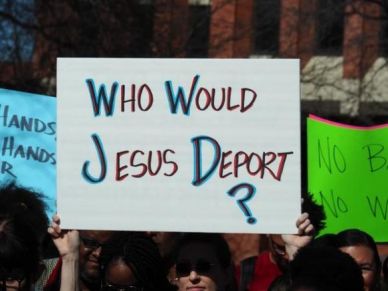
 

Who would Jesus deport - protest placard - Christian immigration debate - open borders

Support Semi-Partisan Politics with a one-time or recurring donation:

Agree with this article? Violently disagree? Scroll down to leave a comment.

Follow Semi-Partisan Politics on TwitterFacebook and Medium.

Who Is Truly Marginalized?

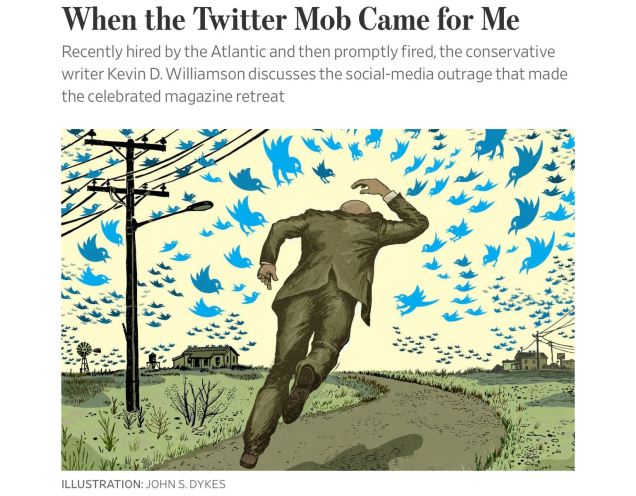
Kevin Williamson - The Atlantic - When the Twitter mob came for me

The marginalization of people and the marginalization of supposedly harmful ideas are very different phenomena, and the continued existence of the former neither requires nor excuses the latter

Rod Dreher has a great reflection on his blog today about who and what viewpoints in our present society are truly marginalised. Unsurprisingly, he is of the opinion that the side which bleats the loudest about its vulnerability and powerlessness is, more often than not, actually the one which is not only ascendant but effectively dominant, wielding both the power to destroy nonconformists and an increased willingness to deploy that power for social and political ends.

Dreher quotes a powerful passage from fellow writer Kevin D. Williamson, who made much news this month for being first hired and then swiftly fired from The Atlantic because of previously-expressed heterodox opinions. Williamson writes of a journalistic panel event he attended at South by Southwest on the subject of marginalized points of view:

Which brings us back to that event at South by Southwest, where the Atlantic was sponsoring a panel about marginalized points of view and diversity in journalism. The panelists, all Atlantic writers and editors, argued that the cultural and economic decks are stacked against feminists and advocates of minority interests. They made this argument under the prestigious, high-profile auspices of South by Southwest and their own magazine, hosted by a feminist group called the Female Quotient, which enjoys the patronage of Google, PepsiCo, AT&T, NBCUniversal, Facebook, UBS, JPMorgan Chase and Deloitte. We should all be so marginalized. If you want to know who actually has the power in our society and who is actually marginalized, ask which ideas get you sponsorships from Google and Pepsi and which get you fired.

My emphasis in bold above. Note Williamson’s correct observation that the “advocates of minority interests” increasingly see themselves as persecuted underdogs, not just the minority groups on whose behalf they claim to speak.

Dreher goes on to give another example provided by a reader, all the more serious because it impacts a private citizen who is simply attempting to go about their daily life (as opposed to making a living by expressing opinions in the public square like Kevin Williamson):

True. This past weekend, I heard from a reader who holds a management position in a Fortune 100 company. The reader is a Christian, and is struggling because the reader’s company has been pushing its employees, especially at that level, to get involved in their community as advocates for LGBT inclusion. The reader, who is closeted as a Christian inside the company, has stayed very quiet, but the reader’s bosses are starting to wonder why the reader isn’t signing on. The reader is dealing with a serious medical disability, and cannot afford to lose this job. Understandably, the reader is really starting to get anxious.

[..] This Christian reader is at the mercy of this woke corporation. But as a traditional Christian, this reader will always and everywhere be the Oppressor in the eyes of this company, even though people with the views of this reader are powerless within its culture.

Dreher’s conclusion:

Williamson is on to a truly remarkable thing about the way the power-holders in our society work: their ideology allows them to tell themselves that they are advocates for the oppressed, and stand in solidarity with the marginalized, etc. But it’s a sham.

I think it is important here to distinguish between those on the sharp end of lingering prejudice and discrimination to a greater or lesser degree – groups which certainly include ethnic minorities, non-heterosexuals and those who place themselves outside what is now called the “gender binary”, but also other far less favoured groups like white working class boys, people whom it is not fashionable to pity – and those who experience blowback either voluntarily expressing their own opinions on social issues in the public sphere (including journalists and public figures) or in the course of their daily lives (people of faith working for corporations, etc.)

In the case of the former, reasonable people still ought to be able to agree that historically disadvantaged minorities still have it worse on aggregate, despite often-tremendous strides of progress and occasionally even surpassing parity with the “privileged” majority. The aggregate experience of most minorities in countries like Britain and America is significantly better than would have been the case just two decades ago, but it would be churlish to deny that the legacy of past discrimination and its lingering remnants do not have a disproportionate effect on those who are not white, male and wealthy (though we can certainly quibble over the degree).

Where it gets far more interesting, though, is who wins the “marginalization contest” when it comes to publicly expressing viewpoints or living one’s values in modern society. And here, I think both Rod Dreher and Kevin Williamson are right that the situation is almost completely reversed. When it comes to which worldview and values dominate our society (from the political and corporate worlds down through academia, high and low culture) social progressivism is utterly ascendant. More than ascendant, in fact; it has won the battle of ideas and done so without grace or magnanimity towards those it vanquished along the way.

When somebody like former Google engineer James Damore can be summarily fired from his job for publishing a controversial but eminently reasoned and defensible memo on Google’s hiring policies, it is not the supposed “victims” of his memo who lack agency, power or a platform to defend themselves. When so many prestigious and supposedly trustworthy news sources can casually refer to Damore’s “anti-diversity screed” without critically reading it or placing it in proper context, how is Damore the all-powerful oppressor who must be purged from society for the protection of others?

And when writers like Kevin Williamson are hounded out of their jobs by baying Twitter mobs before they even get their feet under the desk, and not once contacted by any of the major news outlets who extensively covered the story in order to seek his comment and version of events, how is Williamson the snarling ideological hegemon with his jackboot on the neck of the innocent masses?

This all points to a contradiction at the heart of the debate over social justice and identity politics which is often overlooked in the glib media debate: those traditionally considered vulnerable and marginalised minorities often do continue to experience an unequal playing field and have just cause for complaint, even while the most extreme elements of progressivism (fully unrestricted abortion, open borders, the imposition of radical new gender theory) are now established orthodoxy nearly everywhere that it matters. Or to deploy a military analogy, while many foot soldiers and protectorates of their movement continue to be pinned down by sporadic enemy resistance on the ground, they are also secure in the knowledge that their side enjoys total air superiority and that ultimate victory is all but assured.

One then has to ask whether it is right that the progressive air campaign is allowed to dominate in such a fashion. Many would glibly answer “yes”, and perhaps suggest (not unreasonably) that the right of a minority individual to be physically safe and undiscriminated against in the affairs of life far outweighs the rights of the newspaper columnist or blogger to express their dissenting opinion on social issues. As a rhetorical device this argument is quite effective, but it is also a deceptive false dichotomy. While social justice advocates may claim that dissenting speech is the equivalent of physical or mental harm, this is nothing but cynical, censorious manoeuvring on their part. Kevin Williamson writing for The Atlantic no more made anybody unsafe than James Damore’s respectfully-worded memo. To the extent that harm of any kind is suffered, it is entirely through the self-imposed mental fragility of the identity politics movement, which often takes grown people and renders them screechy, adult-sized babies.

As Rod Dreher notes elsewhere:

It’s like everybody just wants to be offended, and so offended that they become emotionally disabled, because that’s how they know who they are. I am offended, therefore I am. Not too long ago, to admit to being undone by the least little thing would have been seen as a sign of weakness, of feeble character. The man or woman who was able to endure all kinds of insults and threats to their lives — think James Meredith and Ruby Bridges — without desisting from their path were real heroes.

Now? The therapeutic mindset has triumphed so thoroughly that the faintest flap of a butterfly’s wing will cause an emotional hurricane within anyone who feels the air quiver. It’s the way to achieve power.

Ultimately, we need to be able to acknowledge that while discrimination against minorities continues and is appalling, that the victim status does not extend to those fighting on their behalf. A woke Hollywood A-lister with the power to direct his legions of social media followers to hound and destroy the livelihood of a working class citizen who expresses less than politically correct views or attempts to live out traditional values in their own life is no brave underdog – he is a bully. A corporate CEO who cuts short a vacation and flies home to summarily fire a diligent employee for making a thoughtful contribution is not a good corporate citizen – she is a mini tyrant, seeking to control her worker’s thoughts and actions with the same impersonal intensity as the industrial revolution mill-owner of old.

Victimhood is not transferable from those who genuinely suffer disadvantage to those who ostentatiously advocate (or posture) on their behalf. The sympathy or compensatory advantages due to somebody who suffers the barbs of ongoing racism or discrimination must not be appropriated by those who make a profitable cottage industry of fighting for “equality”. Yet this is precisely what currently happens, even though these two wrongs in no way make a right.

Censoring or otherwise persecuting those who dissent from the slightest aspect of progressive orthodoxy is not a just punishment for past discrimination against minorities, particularly when those doling out the punishment are among the most successful and privileged people in society. Destroying innocent careers or purging heterodox or dissenting viewpoints from the public square must not become seen as a valid reparation for society’s past sins.

Diversity

Support Semi-Partisan Politics with a one-time or recurring donation:

Agree with this article? Violently disagree? Scroll down to leave a comment.

Follow Semi-Partisan Politics on TwitterFacebook and Medium.


Three Little SJWs From School

The Mikado poster

Nobody’s safe, for they care for none

I must admit that I have been waiting for this one. I knew that it was only a matter of time before the social justice censors came for The Mikado, that beloved Gilbert & Sullivan operetta set in a highly fictionalized version of Japan, and here we are.

(My other long-standing test for the final capitulation of our society to the Cult of Social Justice and Identity Politics is the inevitable future banning of George Gershwin’s sublime Piano Concerto in F, a work of jazz and blues rendered in classical form for orchestra, due to its “cultural appropriation” of musical forms pioneered by African Americans. I guarantee you that this will happen, and that picket lines will appear outside the Lincoln Center and Walt Disney Concert Hall much sooner than you think.)

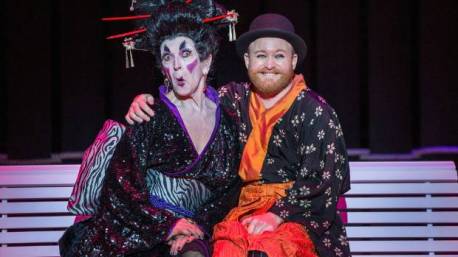
Back to the present day, though, and Fort Hays State University has become the latest epicenter of SJW protests after the FHSU Music and Theatre student organization dared to put on a production of Gilbert & Sullivan’s “The Mikado”.

Campus Reform reports:

Some students at Fort Hays State University (FHSU) in Kansas say a school-sponsored operetta production is not only “racist,” but also rife with “cultural appropriation.”

Naturally, the idea of an operetta based on late-nineteenth century stereotypes of Japanese culture and customs provided the perfect opportunity for various SJW saviour types to go charging to the defence of any innocent contemporary Japanese (or Japanese-American) people who may be offended. Never mind that the real target of W. S. Gilbert’s humour in The Mikado, as in so many of his works, is British bureaucracy and imperial custom. No; instead we must see only artistic cruelty and the helpless victimhood of a designated minority group.

One of the most damaging facets of the current craze for scouring old artistic treasures for reasons to hate and ostentatiously denounce them is the fact that everything interesting about the work in question must take a backseat to the confected outrage of the professionally offended. And sometimes the outrage obscures truly interesting detail, such as that noted by Caroline Crampton in the New Statesman:

Gilbert and Sullivan were first and foremost creating a satire, not a musical comedy. They were working at a time of wide-ranging, if implicit, censorship of the theatre, where easily affronted middle-class audiences would simply not turn up if a work had a whiff of scandal or immorality about it. Gilbert himself likened the challenge of being a late-19th-century dramatist to “doing a hornpipe in fetters”.

Like Shakespeare hundreds of years earlier, using a fictional version of Italy to host his comedies about the Elizabethan court, Gilbert and Sullivan used their “Japan” as a proxy to enable them to satirise the very middle-class audiences they courted. The Mikado’s central plot device that I find so frustrating – that flirting is a crime punishable by death – is a dig at the theat­rical censorship that would not allow any extramarital romance to be portrayed on the London stage.

Utterly ignorant of this nuance and context, a Fort Hays State student going by the name of Fatima took it upon herself to deface several of the posters advertising the event, attaching a semi-literate rebuttal in which she takes W.S. Gilbert to task for being insufficiently woke:

https://twitter.com/Fatima_015/status/981554461029076997


The student’s list of accusations against the production is long and rambling:

The Mikado is racist for many reasons so when I saw the Dr. Joseph Perniciaro picked this for the opera I was appalled. The Mikado is cultural appropriation, it is RACIST, it is “yellow face”, and it sure as hell shouldn’t be a production that still exists.

To begin, the opera is about Japanese People … *BUT* … it is being performed here at Fort Hays State University with an all NON-ASIAN CAST.

Quelle horreur – the student musical theater group failed to observe the unwritten rule that characters of a certain race can only be portrayed by actors of the same race. Presumably, Fatima the Outraged Student is also up in arms that Lin-Manuel Miranda’s hit musical Hamilton dares to use an all-minority cast to tell the story of the white male Alexander Hamilton’s rise and rivalry with fellow white male Aaron Burr. Except of course that we all know that Fatima would cheer this casting.

The charge sheet continues:

All this production is, is an exaggeration of Japanese stereotypes. The actors put on kimonos, black wigs, color their brows black, wear sandals, use fans and small umbrellas, *OH* – and also put white powder on their face. ‘Blackface’ is universally unacceptable, so why is it okay to do a ‘yellowface’ production? Well, NEWSFLASH, it’s not. If this production was about African American people, it WOULD NOT be cast with all white people.

Absolutely. My mother took me to a production of The Mikado at the English National Opera when I was a teenager and now when I think of modern Japan, I immediately picture severe-eyebrowed, black haired warrior men and porcelain-skinned, umbrella-twirling Geishas. The world’s third largest economy and historical imperial power has never had any opportunity whatsoever to export its true culture and neither have I, a citizen of the United Kingdom with two eyes, a (Japanese brand) television set and an internet connection ever had the opportunity to see real Japanese culture and creations for myself.

More:

The show was created by Gilbert and Sullivan (who are known for such racist productions) in the late 1800’s, and it reduced the Japanese culture to an item of curiosity, fetishizing them for a profit.

I think that the widespread Western fetishization of certain things Japanese began somewhat later than 1885 and with very little assistance from late Victorian operetta, but how thoughtful, how brave of this FHSU student to get outraged at the cultural misrepresentation of Japanese people who lived and died a century before she was born, and who undoubtedly practised meticulous open-minded tolerance at every opportunity in their own lives.

This production was not okay when it was created and it definitely isn’t ok today – like COME ON, it’s 2018. Not to mention that they had to cut the N-WORD out to make it more acceptable *(like that changed how racist it was)*.

Yes, this student actually wrote the phrase “like COME ON”.

On a semantic point, how can something be both a stereotype and cultural appropriation? At one point FHSU’s student censor claims that The Mikado is based on an inaccurate pastiche of Japanese culture and custom, and on the other she accuses Gilbert & Sullivan of cultural appropriation. But how can one culturally appropriate a stereotype? And if a stereotype is culturally appropriated, who is actually harmed? Surely not the Japanese people (either contemporary or those of 1885), since what appears on stage was not a true representation of their lives when it first appeared, and certainly bears no resemblance to life in the technologically advanced, urbanised Japan of today. If one were particularly sensitive and pedantic one could say that The Mikado is glib and insulting, but cultural appropriation is an inaccurate charge.

But on a broader level, I am intrigued about the other contradictions inherent in this charge against The Mikado. Japan is a rich, powerful and historically imperial nation, and has certainly not always been a childishly innocent or benevolent actor on the world stage. Modern-day Japanese cultural and commercial reach is strong, though curiously Japan itself does not have a reputation as a cultural melting-pot particularly welcoming to immigrants. Japanese people are among the most privileged in the world, and scarcely in need of defence by do-gooder social justice warriors, fighting on their behalf from American university campuses.

Would the FHSU students protesting The Mikado also be up in arms at a production lampooning the British, either historical or contemporary? Obviously not, because Britain has been placed squarely into the White Imperialist Aggressor box, and therefore made ineligible for sympathy or outrage when her citizens or culture are mocked, parodied or criticised. Yet Japanese imperial “crimes” in recent history are real. People alive today still bear witness to them. So what precisely is it which pardons and rehabilitates Japan in the eyes of SJWs but continues to damn countries such as Britain and America?

The answer can only be a resoundingly arrogant, America-centric view of the world – a quasi-imperial view, if you will, expounded by the identity politics Left. This worldview assumes firstly that the supposed experience of a Japanese individual is the same as a Japanese-American individual, that both are in need of defending against the risk of offence or emotional harm. and that it is the place of American university students who can barely string together a coherent paragraph to act as self-appointed guardians of their wellbeing. But the Japanese are certainly not a persecuted minority in their own country, and thus far the only publicised objections to The Mikado have come from outside Japan. It takes a peculiar kind of arrogance to think that the Japanese culture and people are so weak as to need the help of American campus SJWs.

The English National Opera regularly stages productions of The Mikado. One of the ENO’s corporate partners is the Japanese piano manufacturer Yamaha. If there were any organic upset or consternation at the continued staging of this operetta whatsoever then Yamaha, a Japanese corporation, conscious of its domestic reputation and eager to avoid being associated with a supposedly white supremacist event, might well consider ending its association with the opera company. They do not do so because there are probably only a handful of individuals on Earth who are genuinely upset at the existence of The Mikado, and of those souls an infintessimally small number would actually be Japanese, the rest comprising of deluded young Western campus activists with too much time on their hands and not enough legitimate causes to support.

In fact, a similar protest did apparently take place in 2014 when another musical theater group dared to put on a production of The Mikado in Providence, Rhode Island. The Taiwanese individual who launched that particular protest was at least willing to countenance possible acceptable productions of the work:

I am aware of a production that had Asian actors in the lead roles while wearing British costumes. There is also a film “The Mikado Project” by chil kong, that shows an Asian-American theatre company producing the opera. These are both great moves. I can support a production of this material that shows some consciousness of the present day, but not a straightforward, uncritical celebration of these 1800s racial stereotypes.

The decidedly non-Japanese student(s) who launched this latest protest at Fort Hays State University, on the other hand, think that only total censorship and banishment of the work down the memory hole will do, proving that each concession to the authoritarian, regressive Left only fuels and encourages even more draconian future demands.

There is no victory great enough to sate their appetites because ultimately this is not about protecting a beleaguered minority (I have yet to read of instances of Japanese people traumatised by Gilbert & Sullivan) but rather about the exercise of power by identity politics-soaked leftist activists.

We tolerate this illiberal, censorious nonsense at our peril. Allow the SJW brigade to take down The Mikado and it will be swiftly on to the next target.


The Mikado - racist - cultural appropriation - FHSU

Support Semi-Partisan Politics with a one-time or recurring donation:

Agree with this article? Violently disagree? Scroll down to leave a comment.

Follow Semi-Partisan Politics on TwitterFacebook and Medium.


Nancy Pelosi’s DACA ‘Filibuster’ And The Dishonest, Manipulative Illegal Immigration Debate

Nancy Pelosi illegal immigration filibuster - DACA - Dreamers - House of Representatives

When lawbreaking is openly celebrated and any efforts at immigration enforcement painted as racist by the Left, Democrats are stoking social division and political gridlock nearly as much as Donald Trump

From both Democrats and Trumpian Republicans, all we get is a stream of dishonesty on the subject of immigration.

Conservative anti-amnesty extremists live in a fantasy world where millions of people without legal status can be summarily removed from the United States without a seriously disruptive effect on both society and the economy, and where building an expensive and functionally questionable fortified border wall will prevent future illegal immigration when they know full well that even a hundred foot wall would do nothing to prevent visa overstays and other methods of subverting immigration law.

Meanwhile in the space of a decade, the bulk of the Democratic Party, cheered on by its most ideological activists, seems to have moved toward a de facto Open Borders position, refusing to countenance any additional immigration enforcement measures and regarding those already in existence as openly racist. Using Donald Trump’s often ignorant and xenophobic rhetoric as a cover, Democratic Party leaders have preposterously suggested that any effort to implement a skills-based immigration policy is by its very nature part of an immoral plan to “Make America White Again” (ironically failing to realise that their assumption that non-white people lack marketable skills is itself racist).

This is not the kind of political posturing from either side which is conducive to the kind of comprehensive deal on immigration reform which everybody knows is not only needed, but by far the most sensitive way to address an intractable situation in a way that allows both Left and Right to gain something that they desperately want.

But while much is made in the media of Donald Trump’s xenophobic boorishness and the lack of nuance to his border wall policy, virtually no scrutiny has been given to the Democrats’ new maximalist position – and certainly no Democratic politicians have been put on the spot by the media as to their actual stance on immigration enforcement (assuming they still believe in any such laws). Republicans are frequently put on the spot and made to squirm over their support (or lack of denunciation) of Donald Trump’s “leadership” on the issue, and rightly so. Meanwhile, senior Democratic politicians who for all intents and purposes have repudiated the need for any kind of immigration control are seemingly immune from the slightest scrutiny. The fact that the media take such a position without any self-awareness is itself evidence of their soft but deeply ingrained bias on the issue.

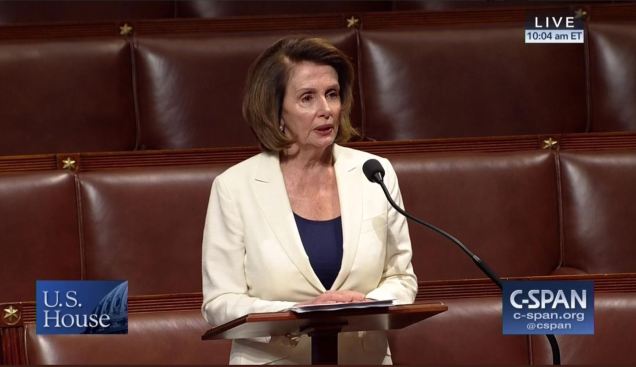
The latest example of left-wing intractability on the issue came yesterday evening when Democratic Minority Leader Nancy Pelosi staged an eight-hour filibuster-style speech in favour of unilaterally granting legal status to DACA recipients. From the New York Times’ misty-eyed account:

House Minority Leader Nancy Pelosi staged a record-breaking, eight-hour speech in hopes of pressuring Republicans to allow a vote on protecting “Dreamer” immigrants — and to demonstrate to increasingly angry progressives and Democratic activists that she has done all she could.

Wearing four-inch heels and forgoing any breaks, Pelosi, 77, spent much of the rare talkathon Wednesday reading personal letters from the young immigrants whose temporary protection from deportation is set to expire next month. The California Democrat quoted from the Bible and Pope Francis, as Democrats took turns sitting behind her in support. The Office of the House Historian said it was the longest continuous speech in the chamber on record.

Of course, this was immediately (and falsely) reported by much of the mainstream media as a stirring speech in defence of immigrants in general, as though there were some unprecedented new dystopian war being waged against people who correctly followed US immigration law. But so successful have leftist efforts to conflate all types of immigration (legal and illegal) as indistinguishable from one another that few people now raise an eyebrow at this continual, deliberate manipulation of language.

One surefire way to prevent bipartisan agreement on immigration reform is to inject more emotion into the fraught debate than already exists. And again, both parties are guilty of cynically and immorally attempting to manipulate the overly sentimental or credulous by personalising the debate rather than making it one about principles and processes. We saw this at work most shamefully during Donald Trump’s recent State of the Union speech, when Democrats saw fit to bring unlawful immigrants into the spectator gallery of the House chamber, rubbing the lawbreaking aspect in the face of conservatives, while Donald Trump invited bereaved family members of innocent people killed by illegal immigrants, as though to suggest that all such people represent a violent menace to society.

All that this blatant emotional manipulation can do is harden the positions of each respective activist base, eradicating any nuance and unnecessarily demonising the other side. Such behaviour is equally irresponsible coming from Republican or Democrat; both should know better. And it’s worth noting that the Democrats have form when it comes to this kind of manipulative behaviour, with “undocumented” immigrants having been featured prominently and cheered to the rafters at Hillary Clinton’s Democratic Party nominating convention in 2016.

But in yesterday’s speech Nancy Pelosi actually went further, not only making an emotional case for those Dreamers brought illegally to the United States as children – a plight with which many moderate, reasonable people can sympathise – but going further and praising the parents who brought their children to America and in doing so put them at risk of future deportation (or at best a childhood and adolescence spent in the shadows).

This crosses the line into open contempt for the rule of law. Many of these parents may have had the best of intentions in doing what they did, and nobody can deny that many American citizens and legal residents, finding themselves in similar circumstances, would likely do the same thing. But ultimately if the parents decide to take up residency in a country to which they have no legal right to remain, they can not be absolved of all blame if immigration law later catches up with their family. Yes, we should absolutely look to provide amnesty to those who have built productive, law-abiding lives in the United States, particularly those brought through no fault of their own as children, but we should also be able to acknowledge that the parents took a calculated and questionable risk in exposing their children to the very real possibility of traumatic future detention or deportation.

And yet Nancy Pelosi will not even make this slight rhetorical concession. Pressured by uncompromising “immigration” activists and her increasingly extremist base to hold the parents of Dreamers in the same high regard as the Dreamers themselves (or “the original Dreamers”, as Democratic leaders have taken to calling these parents) Pelosi instead offers nothing but fawning praise and endorsement of those who knowingly violated US immigration law. From her speech in the House:

“I say to their parents: Thank you for bringing these Dreamers to America. We’re in your debt for the courage it took, for you to take the risk, physically, politically, in every way, to do so.”

Pelosi made a similar point in a recent CNN televised town hall:

“Our Dreamers, they make America dream again, they’re so lovely and we frankly owe a debt to your parents for bringing you here to be such a brilliant part of our future”.

Astonishingly, there is absolutely no nuance to this praise from Nancy Pelosi. Yes, some or even many such parents may have legitimately qualified for refugee status and faced genuine danger and persecution in their home countries. But others simply moved for economic advantage and the promise of a better life – and normalising the flouting of immigration law in case of the latter is effectively an argument for open borders, a declaration that anyone able to set foot on American soil should have the right to permanently remain and ultimately enjoy the full blessings of citizenship.

This is not to attribute the current impasse exclusively to Democrats, who deserve only half of the blame for the present polarisation. But it is worth focusing on Democrat failings, as so much of the media seems determined to give the Left an entirely free pass on the issue, unquestioningly accepting the premise that unilateral amnesty should be offered with nothing demanded in return, and failing to interrogate left-wing politicians on what (if any) immigration enforcement measures they actually still support.

Neither is the Democratic Party’s commitment to the Dreamers proven beyond all doubt. Already they have rejected a deal which would have granted legal status to nearly two million DACA recipients (at significant political cost to the Republicans) because the deal also included measures to tighten future immigration enforcement. If the welfare of the Dreamers really is the top priority for Democratic leaders, why did they spurn an opportunity to secure their status?

Of course there can only be one answer to this question – because it is no longer enough for the Democrats to legalise everybody currently illegally present in the United States. They want to secure this prize while also doing nothing to make it harder for more people to illegally gain entry into the United States in the future, so that they can wheel out these same emotionally manipulative arguments in two decades’ time and cynically repeat the entire process. Having already mentally “banked” the legalisation of hundreds of thousands of illegal immigrants, the Democrats seemingly want to ensure an endless, uninterrupted stream of future arrivals. Certainly no prominent Democrat has spoken convincingly about the need for more robust border protection since the 2016 presidential election.

At a time when much of the focus is (rightly) on the often xenophobic and discomforting language emanating from the Oval Office, it is also worth reminding ourselves of just how far Democrats have shifted to the Left on the subject of illegal immigration in a very short space of time.

Twelve years ago, this is what then-Senator Barack Obama had to say on the subject:

“When I see Mexican flags waved at pro-immigration demonstrations, I sometimes feel a flush of patriotic resentment. When I’m forced to use a translator to communicate with the guy fixing my car, I feel a certain frustration.”

Yes, Obama went on in his book The Audacity of Hope to emphasise that Americans should not act negatively on such feelings, but rather look positively on illegal immigrants seeking to become American. But to even make such a statement today would see any Democrat hounded out of the party and summarily labelled a racist or (at best) an unwitting tool of white supremacy.

In his 2017 essay in the Atlantic, “How The Democrats Lost Their Way On Immigration“, Peter Beinart hammered home the same point about this radical shift:

In 2005, a left-leaning blogger wrote, “Illegal immigration wreaks havoc economically, socially, and culturally; makes a mockery of the rule of law; and is disgraceful just on basic fairness grounds alone.” In 2006, a liberal columnist wrote that “immigration reduces the wages of domestic workers who compete with immigrants” and that “the fiscal burden of low-wage immigrants is also pretty clear.” His conclusion: “We’ll need to reduce the inflow of low-skill immigrants.” That same year, a Democratic senator wrote, “When I see Mexican flags waved at proimmigration demonstrations, I sometimes feel a flush of patriotic resentment. When I’m forced to use a translator to communicate with the guy fixing my car, I feel a certain frustration.”

The blogger was Glenn Greenwald. The columnist was Paul Krugman. The senator was Barack Obama.

That is an extraordinary shift in the space of a decade, yet the Democrats are going into immigration negotiations with the Republican leadership as though the country is in lockstep with them in their leftward lurch toward de facto open borders when there is absolutely no evidence that this is the case. And while the Republicans (thanks to Donald Trump) doubtless win the prize for ugliest turn in rhetoric on the subject of immigration, the Democrats by far and away win the award for most radical policy shift in a short space of time. This is an incredibly significant fact which still attracts far too little media scrutiny.

Ultimately, this debate is characterised by exaggeration, character smears and base emotional manipulation of the worst kind – and the excesses of one side only encourage the other to behave even more outrageously and irresponsibly in pursuit of their own goals.

For many years there was an eminently practical and workable compromise almost within reach, based on compassion for those illegal immigrants who have built model lives in America but tempered with a resolve to improve border security, immigration enforcement and to reduce both the push and pull factors which drive future unlawful immigration. But thanks to extremists on both sides – frankly childish activists who demand nothing less than 100 percent of their wishlist from a deeply divided country – and spineless political leaders of both parties too afraid to stand up to those voices of unreason, instead we find ourselves in this dismal position.

It is easy to pin all of the blame on President Trump; he certainly makes a large and inviting target. But when it comes to immigration, Donald Trump does not have a monopoly on irrational, uncompromising behaviour. And a more honest media would do a better job of reporting as much.


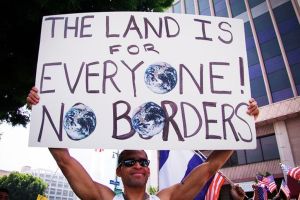
immigration-the-land-is-for-everyone-no-borders

Support Semi-Partisan Politics with a one-time or recurring donation:

Agree with this article? Violently disagree? Scroll down to leave a comment.

Follow Semi-Partisan Politics on TwitterFacebook and Medium.