A Semi-Partisan Pledge Drive

Tip jar

Time to pass around the tip jar…

As I write this, the Labour Party cheerleading blogs Left Foot Forward and LabourList are launching fundraising drives in an attempt to capitalise on what they see as Jeremy Corbyn’s “triumph” in the general election and the regaining of the political momentum.

The left wing hubris in the week since the general election has been off the charts, with more fatuous articles claiming that Britain now has a permanent “progressive majority” than one could possibly read without going mad from sheer incredulity. Worryingly, the demonisation of conservative ideas and Tory voters also seems to be picking up pace, with Labour MPs like Jon Trickett actively accusing everyday, garden variety conservatives of practising “hate”, an accusation we once reserved for real extremists on the far left and right.

Worse still, many of the more spineless and uninspired elements within the Conservative Party seem to have swallowed this narrative unquestioningly, and are agitating for even the most tentative efforts at fiscal responsibility to be abandoned and core conservative principles thrown overboard in favour of competing with Jeremy Corbyn to promise the British people endless free goodies with no responsibilities and no consequences – needless to say, a competition we can never win.

The British Left has gone insane, claiming victory in an election which parliamentary arithmetic clearly shows they lost. The Conservative Party under Theresa May is proving itself a useless keeper of the flame of conservatism and liberty, cranking up the size of the state, eroding civil liberties and taking their Brexit policy direct from the mouth of Nigel Farage. Worse still, the Right seems to have completely forgotten how to engage young people, ceding the youth vote almost entirely to the parties of the Left without even putting up a fight.

In short, there’s a lot going on and a lot to be fought over in the coming months and years. There are people to be held to account and ideas to be kept alive, particularly when the political party which should be the natural keeper of those ideas seems more inclined to accept Jeremy Corbyn’s hard-left framing of the political and economic debate.

I haven’t done a pledge drive on this blog thus far in 2017, mostly because my blogging output was significantly reduced in the early months of the year, and it didn’t seem fair to ask for donations while cranking out less of the product. However, you’ll notice that the pace of blogging has now picked up once again.

And so, the time has come… to ask regular readers who get value from this blog and from my writing to drop any spare change you may have into my virtual PayPal tip jar.



As always, I want to make absolutely clear that my regular contributors and generous occasional benefactors are specifically exempt from this request – you guys are already tapped out, and I would not dream of asking any more from you.

However, if you have recently discovered and enjoyed this blog, or perhaps been a long-time reader but didn’t realise that this blog is supported by generous reader donations, your support would be greatly appreciated.


You may have noticed some changes on the blog lately. On election day, June 8, we launched a new blog theme. Partially at Pete North’s suggestion, I made the change because the old theme was beginning to show its age and the grey text was difficult to read. Hopefully everyone will find the new theme more modern, streamlined and easy to navigate. However, if you have any issues then please do let me know.

I wrote last year about my hope that 2017 would be the year of the independent political blog. It is happening – slower than I would like, but unmistakably happening nonetheless. Many of the intelligent think pieces and best bits of commentary are now published on Medium, or on WordPress or Blogspot blogs, by people who would struggle to gain the attention of the BBC or the prestige media. And the ideas about Brexit pioneered by independent researchers like Dr. Richard North at eureferendum.com and championed by Pete North are now finally forcing their way into the mainstream conversation, albeit often in plagiarised and unattributed form.

The point is that we can influence the national conversation when we want to, particularly when independent writers and campaigners work together in a concerted effort. This is something that both the hard and soft Left have known for years – they have read their Saul Alinsky. We on the right, or elsewhere on the political spectrum, are still scurrying to catch up.

As Pete North rightly says in a recent piece, there is a political revolution underway in this country. While Brexit may not deliver any clear economic benefits in the short and medium term, the disruption that leaving the EU is causing to our political elite and frameworks for governance is ultimately a necessary thing. They are no longer fit for purpose. This had to happen eventually.

But with only a few honourable exceptions, most mainstream commentators and much of the media have not yet broken out of the old paradigm. Overwhelmingly pro-EU, overwhelmingly metro-leftist and secretly (or sometimes openly) incredulous and baffled by people who think differently, their deep-seated biases and preconceptions warp their reporting and colour their coverage all the time, in hundreds of small ways which add up to one enormous cumulative effect.

As I recently wrote, the fake news actually worth worrying about is not the obviously false and hysterical stories about Hillary Clinton being a demon or other such nonsense, but rather the soft bias of the mainstream media, because of the way that prestige news reflects and moulds the worldview of key decision-makers in this country. One weepy Guardian article about Brexit meaning the end of cooperation with Europe, sincerely believed by people with proximity to power, does more real-world damage than a thousand angry Facebook memes about the EUSSR precisely because the Guardian article is credulously swallowed by people who then make consequential decisions based on their prejudice.

Even if you still find value in the mainstream media (and I certainly do – for all the low grade nonsense there are still some diamonds in the rough, and somebody has to hire reporters to go out and be primary newsgatherers) I hope it is now clear that the BBC, the national newspapers, their online personas and internet giants like HuffPost and Buzzfeed are not enough on their own. We also need independent media to keep politicians and the media honest, or at least hold them to account for their failures and evasions.

Long story short: you need independent political writers, and we need you. Now more than ever.

Any donation you can make to this blog – large or small, one-off or recurring – will be most gratefully received, and will aid in the fight.

Thank you.

 

Political Blogging 2

Support Semi-Partisan Politics with a one-time or recurring donation:

Agree with this article? Violently disagree? Scroll down to leave a comment.

Follow Semi-Partisan Politics on TwitterFacebook and Medium.

George Orwell’s “1984” Will Receive A Public Reading In London – But Have We Forgotten The Message?

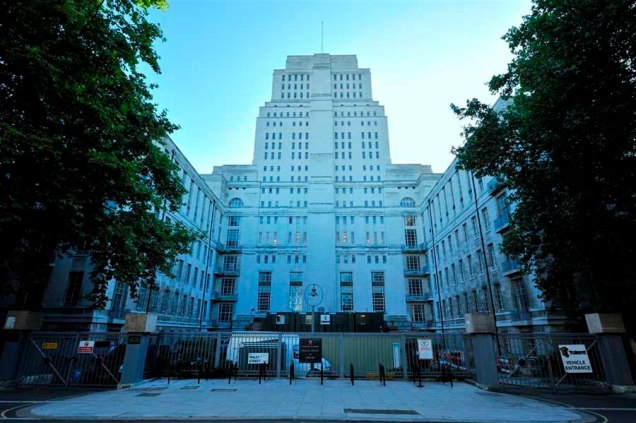
Senate House London - 3

On June 6, hundreds of people will gather at London’s Senate House as a parade of actors, politicians and other notables read George Orwell’s dystopian novel “Nineteen Eighty-Four” in its entirety. But how many of us actually understand Orwell’s message?

Besides a few posts on Twitter, I haven’t written anything about the heinous Manchester terrorist attack. What more is there to say? The locations change, as do the names and backgrounds of the victims, but the rote mourning processes, the denialism and the furious virtue-signalling always remains the same. Why jump into that toxic mêlée all over again?

But I did watch the BBC general election leaders’ debate on television earlier this week, when naturally the subject of terrorism and Britain’s proper response came up, and I was depressed as ever by the paucity of the “discussion” that took place.

Brendan O’Neill picked up on the section of the debate which also caught my attention, writing in Spiked:

Consider BBC TV’s General Election debate this week, which brought together leading figures from the main parties to talk about the problems facing Britain. There was an extraordinary moment during the debate. A member of the audience asked a question about security post-Manchester and the leaders talked about the need for better policing and intelligence and also for rethinking British foreign policy. It is possible, said Labour leader Jeremy Corbyn and SNP deputy leader Angus Robertson, that our meddling overseas has exacerbated the terror problem.

Then UKIP leader Paul Nuttall chimed in, and he said this: ‘Politicians need to have the courage to name [the problem]: it’s Islamist extremism.’ The reaction was swift and pretty scary. Nuttall was jeered at by the other panellists. ‘NO!’, one said. ‘Paul, Paul, Paul, Paul’, interjected Lib Dem leader Tim Farron. Nuttall has gone ‘straight for Muslims’, said a furious Robertson. Green leader Caroline Lucas said Nuttall was being ‘completely outrageous’ with this suggestion that ‘the violence in Manchester was somehow representative of Islam’.

Nuttall tried to explain himself. ‘Islamism, Islamism, Islamism’, he said over the din that his comments provoked. His point was that he had not said the word ‘Islam’. He hadn’t even used the phrase Islamic terrorism; he had said Islamist extremism. But his protests went unheard. The other leaders and some in the audience continued to shout over him and drown him out; to accuse him of being outrageous and prejudiced for using the phrase ‘Islamist extremism’.

This is an almost Orwellian level of linguistic denialism. For ‘Islamist’ is a perfectly legitimate and apt word for the terrorism that is impacting on cities in Western Europe. The Oxford dictionary’s definition of ‘Islamist’ is an ‘advocate or supporter of Islamic militancy or fundamentalism’. Is this not the right name for those in Paris, Brussels, Nice, Manchester and elsewhere who have carried out extreme acts of violence in the name of the Islamic State or radical Islamist ideology? To boo and demonise Nuttall for using the word ‘Islamist’ to describe those who blow themselves up in the name of ISIS is as nuts as it would be to boo and demonise someone for saying Oswald Moseley was a fascist: these are simply the correct words.

The response proved Nuttall’s point, which was that few politicians have the nerve even to say the word ‘Islamist’, even though it’s a political term in the actual dictionary. This live-TV pummelling of Nuttall for saying ‘Islamist’ really confirmed what the accusation of Islamophobia is all about today: it isn’t about protecting Muslims from genuine prejudice or abuse but rather has become a means for suppressing difficult political and moral questions about our society, its values and the divisions that exist either between communities or within them. That someone can be called ‘outrageous’ and anti-Muslim for using the phrase ‘Islamist extremism’ shows how deep and worrying our instinct to silence discussion about terrorism has become.

There isn’t much I would add to Brendan O’Neill’s warning, except for this: on 6 June, there will be a live public  reading of the entirety of George Orwell’s “Nineteen Eighty-Four”, given at London’s Senate House. There has of course been a significant spike in interest in reading 1984, driven predominantly by people who believe that Brexit and the rise of Donald Trump herald the end to what was apparently a Utopian liberal era, and the start of an unprecedentedly authoritarian dystopian future.

The new converts to George Orwell seem to believe either that the architects of these particular geopolitical events used 1984 as some kind of How To guide, or that they themselves might find some clues within the novel to aid their survival during the coming apocalypse.

But here’s the thing. I’ll wager all the money in my pocket that many of the people who show up to this public reading of 1984, or who watch the live stream, will be the same people who never really had much to say about civil liberties violations in the War on Terror (at least when Democratic presidents and Labour prime ministers were in charge), or about the extra-judicial killing of American citizens by drone strike under Barack Obama.

I’ll wager that many of them will have said nothing when their fellow citizens have been tried and imprisoned for singing songs, writing offensive signs, asking impertinent or stupid questions, posting “offensive” tweets or expressing conservative religious views in the town square.

But I’ll also wager that a fair number of them will have reported posts that they found “offensive” on social media in an attempt to get the offending statements removed and the posters banned. I’ll wager that many of the younger student types will have called for The Sun and The Daily Mail to be banned from their university campuses, and for their Students Unions to stop playing certain songs with “problematic” lyrics. I’ll wager that they were the first to demand that boxer Tyson Fury be banned from boxing for holding the wrong views on family values, and to call for attention-seeking ex-LBC radio host/troll Katie Hopkins to lose her job last week.

And I’ll wager that a good number of these 1984 listeners, fearless young defenders of society against creeping authoritarianism that they are, will have cheered along when Tim Farron, Angus Robertson, Caroline Lucas and the rest of the lefty nodding head brigade ripped into Paul Nuttall for the high crime of correctly identifying the deadly ideology which killed 22 young people at an Ariana Grande concert, maiming 116 more.

I’m sure their hearts just swelled with pride and warm affirmation as their left-wing political heroes put that nasty, evil brute Paul Nuttall in his place and shouted down his vile, dangerous hate speech. I bet they sincerely believed that doing so was a great victory for Hope over Hate, that this was how society should best respond to terror attacks. By furiously avoiding looking at the source, assigning the blame to unidentifiable random “evil”, singing some John Lennon and angrily vilifying anybody who dared to react in a different way (such as by looking to identify and name the real problem so that it might be tackled and reduced).

And hearts aglow with courage and moral righteousness, many of these same people will assemble at the foot of London’s Senate House on June 6 and fortify themselves by listening to George Orwell’s stern literary warning about the dangers of groupthink, thoughtcrime, Newspeak and censorship, utterly oblivious to the fact that they are actively serving as advance guard to the Ministry of Truth.


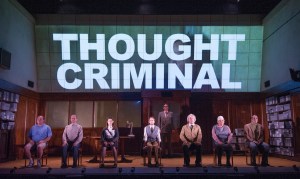
George Orwell - 1984 - Thought Criminal - Almeida Theatre

Support Semi-Partisan Politics with a one-time or recurring donation:

Agree with this article? Violently disagree? Scroll down to leave a comment.

Follow Semi-Partisan Politics on TwitterFacebook and Medium.

The SpAdocracy And Theresa May’s Flawed Manifesto Plans For Social Care

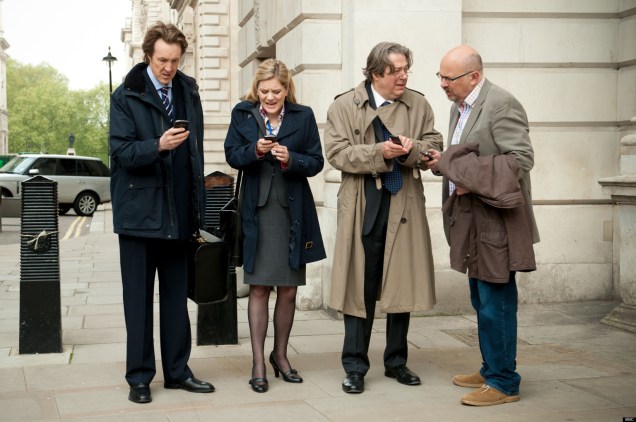
The Thick Of It

Social care funding and other important policy questions are too important to be decided solely by a couple of Bright Young Things and Special Advisers ensconced in Downing Street

The problem with Theresa May’s disastrous, miscalculated decision to shoehorn dramatic changes to the funding of social care into the Conservative (In Name Only) manifesto – and then perform a humiliating U-turn live on TV – is that it was cooked up by a couple of her closest, most trusted advisers and then foisted on the Conservative Party and the country with zero wider consultation.

The Guardian lifts the veil on the dysfunctional Court of Theresa May:

The manifesto for Mayism was stitched together on an upper floor of Conservative campaign headquarters over the past few weeks by a tight-knit team of the prime minister’s most trusted advisers.

While May has been out on the road giving stump speeches nearly every day, her policy team has been holed up in Matthew Parker Street in Westminster composing a document intended to redefine Conservatism, drawing a line under the elitism of the Cameron era and the individualism of Thatcher.

The document is pitched as representing May’s firmly held world view, but it also has the fingerprints of Nick Timothy and Fiona Hill, her two co-chiefs of staff, all over it.

The pair, who reigned supreme over May’s Home Office, have been the subject of complaints from MPs that they act like deputy prime ministers instead of Downing Street aides. Now the election campaign has started, they run the show at CCHQ with a tight grip.

Who needs cabinet ministers, think tanks, non-profit organisations, lobbyists, the general public or anybody else in the political ecosystem when you have two loyal SpAds ready and willing to deconstruct and rebuild core functions of the state quietly, in the shadows?

More:

MPs have complained privately over the past 10 months about the centralised nature of Downing Street, with May, Timothy and Hill sucking policy decisions away from Whitehall departments and other ministers. It comes as no surprise to them that May’s campaign focuses on her personal leadership qualities to the exclusion of other senior figures in the party, with the case for that focus bolstered by the prime minister’s strong poll ratings.

Cabinet ministers say they are not being sidelined, although the reality looks somewhat different. Of 15 campaign events for the press held by the Tories so far, all but one have been fronted by May herself, speaking of “strong and stable leadership” and the need for a mandate to carry through Brexit at every opportunity.

A few – including Boris Johnson, Michael Fallon, Amber Rudd and David Davis – have been used for some media interviews, but they are mainly kept away at constituency visits. By Wednesday, senior cabinet ministers such as Philip Hammond, Johnson and Rudd had seen the manifesto and approved its contents.

But its composition was very much a matter for May’s inner circle.

It is quite frightening to realise just how quickly harebrained, incomplete and otherwise controversial policies can find themselves shoehorned into a party manifesto (and then swiftly become law) if they are adopted and pushed by a well-connected member of the SpAd-ocracy.

In fact, prior to calling the general election the Conservatives had planned to hold at least a basic level of consultation on reforming social care, but some bright spark apparently decided that it would be far simpler to ram the changes through by including half-baked ideas as firm manifesto pledges, as the Telegraph reports:

Politicians who will deliver the Conservatives’ new care policy if they win re-election were left in the dark about their manifesto commitments, it can be revealed.

Senior Government sources have told The Sunday Telegraph they were left “completely surprised” by the wide-ranging package of reforms announced this week.

A series of social care policies were due to be put out to consultation this summer, including some of those adopted by the party in its manifesto.

However the changes would have been followed by months of consideration with less political risk if they were dropped or altered after industry feedback.

As I type, Theresa May is scrambling to defend her social care policy and her broader judgment in a television interview with Andrew Neil (the closest that the prime minister will condescend to participating in a debate) and frankly failing miserably, all of which could have been avoided if her core team behaved less arrogantly and if British political parties sought to formulate and enact legislation in a more open, inclusive way.

When President Barack Obama sought to overhaul the American healthcare system early in his first term, he didn’t slap a fully worked-out, prescriptive solution for single-payer healthcare on the table and demand that everybody get behind the main principles “or else”. While American conservatives rightly point out that the extensive consultation exercise was partly cosmetic and not nearly as welcoming of right wing input as it was portrayed, the fact remains that when American political leaders wanted to change something which impacted millions of people and a significant share of the US economy, there was a consultation (or at least the pretence of a consultation) before the first draft was issued. Sure, congressmen were expected to vote on the final bill having had only a few hours to read it, if they could even be bothered, but this was after every aspect of healthcare reform had been discussed in excruciating detail in committees, public town halls and in smoke-filled rooms with the special interests who (rightly or wrongly) have the power to make or break reforms.

This style of policymaking seems to be anathema to the British system. When David Cameron won re-election in 2015 based in no small part on the promise to hold an EU referendum, he cooked up his own list of demands for the European Union and marched off  to Brussels to negotiate them (and we all know how well that worked out). Cameron and his team presumed to know – without engaging in any special consultation, public or otherwise – exactly what changes the British people wanted to see in our relationship with the EU, without once bothering to actually ask our opinion. The only thing more laughable than David Cameron deciding on our behalf what issues to raise with Brussels was the fact that they still sent him away empty-handed and humiliated. This arrogant, presumptuous approach to government was, and nearly always will be, a recipe for failure.

Few people would disagree that the way we fund social care needs to be tweaked at the very least, if not wholesale reformed. But doing so is an enormously complex process, involving the intersecting demands and interests of numerous groups and political principles. There are the interests of homeowners, taxpayers, council and private care providers, current and future care recipients, all of which will be in competition with one another and must be balanced to maintain a functional system.

But whatever one’s view on the ideal model solution, the manifesto pledge as it stands – together with recent panicked talk of a potential “cap” on care payments, made after four days of relentlessly negative headlines – seems politically naive at best. It is a blunt policy solution, a sledgehammer to crack a nut, and the kind of half-baked idea that would have been kept firmly away from the media had there been any serious ministerial input to the drafting of the Tory manifesto.

Now, there is nothing wrong in principle with having a core team of advisers and ideological kindred spirits aiding a new prime minister as she seeks to put her stamp on the party and the country. Margaret Thatcher did just that when she came to power in 1979, bearing the ideas of the Institute of Economic Affairs and the Centre for Policy Studies. As Leader of the Opposition she had read the famous “Stepping Stones” report which diagnosed Britain’s ailments and proposed radical solutions to lift Britain out of near-terminal economic decline.

But the emergency circumstances in which Thatcher pushed through her reforms were far different to today’s more benign environment. When the country faces existential threat, as we did in the late 1970s, some justification can be made for strong and decisive leadership which doesn’t wait around seeking to hand-hold and achieve consensus before acting. And while some people with a flair for the dramatic might claim that Brexit represents a similar crisis, Brexit and the rise of populism is far more a crisis of political legitimacy than economic survival – and political legitimacy is undermined, not improved, by ramming through ill-considered reforms to the social care system.

Ultimately, the cause of good policymaking is never well served when a couple of “Bright Young Thing” Special Advisers – often with wide but shallow portfolios, and no democratic mandate of their own – decide to rewrite government policy and plan to reshape our national institutions on the back of a napkin. I’m sure that Nick Timothy and Fiona Hill, Theresa May’s collective brain trust, are extraordinarily bright and capable people – on paper, at least. But the accumulation of evidence increasingly suggests that they lack street smarts, let alone a decent political radar, which is rather strange given their respective biographies. Ted Sorensen they are not.

Hopefully Theresa May will learn from this debacle. She intends to lead the country – never mind the Conservative Party – in a direction that many people have reservations about, some of them quite justified. To succeed in office, she will need to draw on the best that the entire conservative movement has to offer, including those wings of the party that she continues to vilify (cough, libertarians).

And for somebody like Theresa May, a self-confessed pragmatist with no overarching vision for government of her own, that means widening the circle and taking some more advice before tearing up the social contract, crashing out of the single market without a transitional arrangement or implementing Ed Miliband’s 2015 Labour manifesto by the back door.


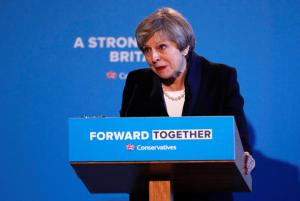
Theresa May - Conservative Party - General Election 2017 - Forward Together

Support Semi-Partisan Politics with a one-time or recurring donation:

Agree with this article? Violently disagree? Scroll down to leave a comment.

Follow Semi-Partisan Politics on TwitterFacebook and Medium.


Labour’s Cynical, Disingenuous National Debt Hysteria

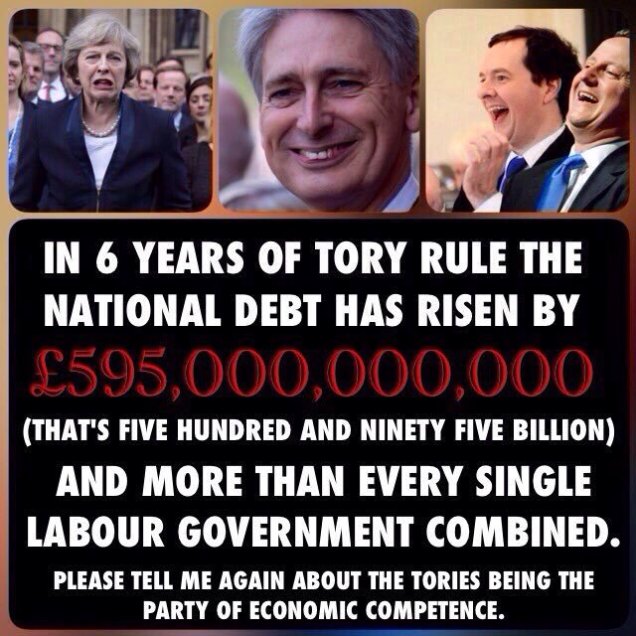
Labour Party attack ad Tories national debt

Pot, meet kettle

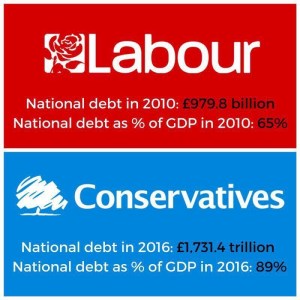
You’ve probably already seen them countless times over the course of this general election campaign – the smug, sanctimonious internet memes bandied about by Labour supporters and other left-wing activists excoriating the Conservatives for having presided over a massive increase in the national debt since taking office in coalition back in 2010.

And of course this is factually correct. The only thing missing from these outraged little infographics is an admission of what would have happened to the budget deficit and national debt under fiscally incontinent left-wing economic policies – and the answer, of course, is that the situation would be even worse.

Yet even “serious” publications have been pushing the same disingenuous message, with Alison McGovern recently writing a piece for the New Statesman, demanding “The Tories used the budget deficit to attack Labour – so why haven’t they fixed it yet?”:

Spot the pattern? Tory Chancellors who loudly proclaim the virtues of having a budget surplus, have, in the end, presided only ever over deficits.

But it gets worse. The deficit, as the gap between money coming into the Treasury and money spent, has to be paid for by borrowing. And quite rightly, the Tories’ deficit target was matched by a debt goal. Borrowing to invest in structural improvements to our economy is clearly the right thing to do. But that is very different from permanent borrowing to prop up day-to-day spending.

Yet the Tories have delayed their target on debt three times since 2010

Their original target was to have debt falling by 2015-16. Then in 2014 that was delayed until 2016-17. Then in 2015 the target was to keep it falling every year until 2020-1. Then in 2016 that was changed to be “falling by 2020-1”.

This “goal” looks like one that will always be swerved as the Tory mismanagement rolls on.

Author’s emphasis in bold. McGovern concludes:

The budget deficit was used repeatedly by Osborne as an attack on Labour’s record in office.

This has now been demonstrated to be ludicrous chutzpah. Laughable, if it were not so serious. Ironic, if it were not to have such lasting consequences for all of us.

It’s time we moved on from a debate about the Labour past, and looked at what the Tories are doing today. We should show the leadership the country badly needs, and take this fight on.

Yes, how rude of the homeowner not to instantly repair all of the damage caused by the arsonist.

The bare-faced gall of these people is astonishing. Heading into the Great Recession, the Labour Party under Tony Blair and Gordon Brown consistently ran budget deficits, despite the fact that the economy was growing and boom and bust had apparently been “abolished”. And so when the downturn hit, there was almost zero room for fiscal manoeuvre by the government. Sure, we printed lots of money and nationalised failing banks – didn’t the Left used to angrily call that “privatising the profits and nationalising the losses?” – but we were in no position to undertake the kind of stimulus spending that America unleashed and which Keynesian economics dictates is the correct way to deal with a recession.

The budget deficit naturally exploded and reached a peak just as the Conservative / Liberal Democrat coalition government came into office, reaching a peak of around £160 billion when Labour left office. This means that the national debt was being added to every year at the fastest rate in modern history. To their partial credit, the Conservatives have succeeded in at least reducing the budget deficit every year (thereby slowing the rate of increase in the national debt) though they have consistently relaxed and missed their own targets for doing so, with the budget deficit now not due to be eliminated until the year 2026. And so we now have the spectacle of  smarmy left-wing internet meme-sharers lambasting the Tories for having failed to eliminate the deficit and significantly lower the national debt.

Well, what would they have had the Evil Tories do? The Left squealed like self-entitled pigs when George Osborne made even modest efforts to trim the deficit, repeatedly relaxing the timetable by which he planned to return Britain to a budget surplus. Are the Left now saying that they would rather have had deeper budget cuts? Abolishing the Army, perhaps? Surely not reducing funding for Our Blessed NHS (genuflect)? Or perhaps they secretly intended to eliminate the budget deficit by dramatically hiking income tax and national insurance on all tax bands, in angry defiance of the Laffer Curve? But what when this only suppressed economic activity even further?

Let’s be clear – the Conservative Party, under chancellors George Osborne and Philip Hammond, has been depressingly unambitious when it comes to eliminating the budget deficit. The party of David Cameron and Theresa May has not been the party of fiscal responsibility, and their constant lying about “fixing the roof while the sun is shining” and “paying down Britain’s debts” when in fact they have done no such thing only makes matters worse.

But the only thing more ludicrous than a Conservative Party which struts around pretending to be the guardians of fiscal responsibility is a Labour Party which ran budget deficits in the good years, leaving Britain particularly vulnerable to the loss of tax revenue accompanying a recession, attacking the Tories for having failed to enact measures which they would never have enacted themselves, and which in fact they repeatedly criticised the Tories for even attempting to do. It is simply mind-boggling that the Labour Party dares to attack the Tories on the question of deficit reduction and the national debt when their “anti-austerity” policies would have increased the deficit even further and made the national debt even larger.

Blogger Paul Goldsmith has had enough:

I actually can’t take it anymore. It is economically illiterate and it is self-defeating and it has to stop. It is like someone lighting a fire, which is an inferno when the fire brigade arrives, and then the person who starts it runs around replacing the brigade’s water with oil, and fanning the flames, whilst screaming at the fire bridgade that they can’t believe the fire isn’t out. Yes, Labour’s repeated taunts about the national debt really are that preposterous. Self-defeating too, as it brings attention back onto how the fire got started in the first place.

And then launches into this glorious tirade:

So, having left a deficit of £160bn, and a national debt (cumulative deficits added together), of just under a trillion, Labour have noted that the debt is bigger. Well, duh! Were the Tories supposed to have eliminated the deficit in their first year in Government? Impossible. In fact, what the Tories chose to do is to cut spending, added to a few tax rises, and slowly eliminated that deficit. Very slowly, slower than they originally hoped. But at every turn, every cut, Labour opposed them. Every single one. So yes, every year a lot of deficit (decreasing every time) got added to the national debt, but that is because Labour left such a massive deficit.

Now, yes, they left that deficit mostly because of the action they took to save the banking system and to try and stimulate the economy to stave off depression during the financial crisis. A financial crisis that wasn’t caused by Labour.

But look at the seven years between 2001 and the start of the crisis in 2008. Those were times of economic growth. During times of economic growth that deficit should have been a surplus (tax revenue greater than government spending). But it wasn’t, as Tony Blair and Gordon Brown chose to spend and maintained a deficit of around £40 billion a year. This means there was no financial room to manoeuvre when the inevitable recession came. Of course, Brown had boasted that he might have abolished boom and bust, so may not have been ready for that recession. But when it came, a huge amount of public money was thrown at it, which meant the Conservatives inherited a massive deficit.

Here’s my point, every time Labour mention the addition to the debt under the Conservatives, the Conservatives can just point to what they were left with. Best summed up by the note left by the last Labour Chief Secretary to the Treasury, Liam Byrne, to the first Coalition replacement, David Laws: “I’m afraid there is no money.”

It’s funny. Transport these same leftists to the United States, where beloved Barack Obama ruled from 2009 to 2017 in the aftermath of the same global recession, and they would doubtless shriek with outrage at similarly cynical efforts recently made by the Republican Party to pin the blame for American budget deficits and increasing national debt squarely on the Democrats. They would rightly point out that President Obama inherited a mess, an economy in freefall and public spending jacked up artificially high by his fiscally incontinent predecessor George W. Bush. They would correctly point out that nobody can work economic miracles like making a large structural budget deficit and cumulative national debt disappear in an instant.

But the sanctimonious meme-sharers do not live in America where an admired left-wing president ruled for the past eight years. They live in Britain, where the callous, heartless Evil Tor-ees (they’re lower than vermin, don’t you know!) have been in charge since 2010, and so all of the leeway and understanding that they would demand for themselves is stubbornly withheld from the other side under identical conditions.

As is so often the case, Labour Party propaganda relies on voter ignorance and lack of medium or even short-term memory in order to make an impact. With these lowbrow memes and the highbrow articles which underpin them, Labour Party activists and sympathetic commentators are counting on the British people being too stupid to ask what Labour would have done differently to have achieved a budget surplus and reduced national debt given the same circumstances faced by the Tories.

That’s certainly one way to go about trying to win an election, but there is nothing to be proud of in this tawdry, disingenuous approach.


Labour Conservatives National Debt - General Election 2017

Support Semi-Partisan Politics with a one-time or recurring donation:

Agree with this article? Violently disagree? Scroll down to leave a comment.

Follow Semi-Partisan Politics on TwitterFacebook and Medium.

The O.J. Simpson Effect And Donald Trump’s Die-Hard Supporters

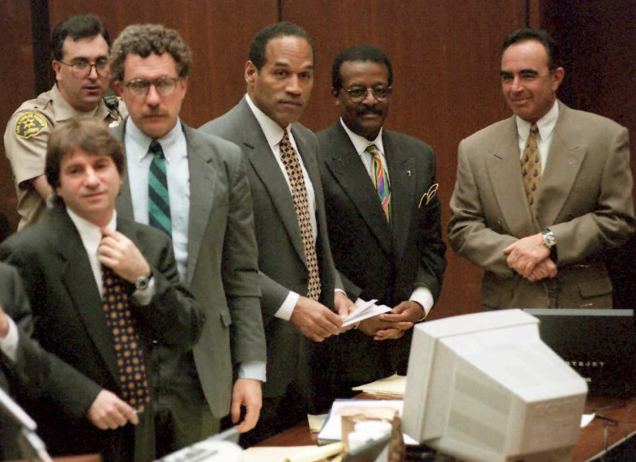
O.J. Simpson (C) and members of his defense team s

Examining the phenomenon of voters who will never reconsider their support for President Trump no matter what he does in office, Andrew Sullivan raises a valid comparison but misses the broader point

I broadly agree with Andrew Sullivan’s assessment of Donald Trump’s presidency thus far (i.e. that it has been a disaster characterised by one self-inflicted crisis after another), while Sullivan’s account of the last week also paints an accurate portrait of a man completely out of his depth:

The White House is barely functioning; legislation is completely stalled; next week’s trip abroad will have everyone watching from behind a couch; the FBI and CIA are reeling; there’s almost no one in the State Department; no presidential due diligence is applied to military actions; the president only reads memos when his name is mentioned in them; a not-too-smart and apparently mute 35-year-old son-in-law is supposed to solve every problem in the country and world; and the press secretary is hiding in the bushes. No one has any confidence that the president couldn’t throw us into a war or a constitutional crisis at a moment’s notice. Nothing this scary has happened in my lifetime.

Sullivan then goes on to ponder why it is that Trump’s devoted base shows no real sign of re-evaluating or revoking their support for the president, and comes up with an interesting analogy:

In some ways, I think the best analogy for Trump is O.J. Simpson. Even if we all know he’s guilty as sin, even if his own supporters see the flimflam behind the claptrap, even if the evidence is staring us in the face, he’ll never lose his core support. For 35 percent of the country, he’ll never be guiltier than the system he’s challenging. The best we can hope for is a Democratic House in 2018 and a grinding, grueling attempt to minimize the already enormous harm Trump has done in the meantime. We can pursue that outcome while hoping our cold civil war doesn’t get hot — because this is beginning to feel like the 1850s.

I was too young (and living in the wrong country) to really understand what was happening or the critical context during the trial of O.J. Simpson in 1995, but I have just finished re-watching the excellent FX television dramatisation “The People vs O.J. Simpson” and the longform ESPN documentary “O.J.: Made in America” – and it seems clear to me that Andrew Sullivan is missing the key lesson from the OJ trial as it pertains to public policy.

Sullivan picks up on the obvious point – that O.J. Simpson was clearly guilty, and that even many of those who proclaimed his innocence actually knew, in their heart of hearts, that the man committed the murders of Nicole Brown and Ron Goldman. So yes, if one wants to keep things superficial then we can join Sullivan in marvelling at the ability of foolish Trump supporters to similarly cast facts and reason aside, motivated by base emotion.

But the real lesson to be learned from the O.J. Simpson case is that no justice system (and by extension, no democracy) can function as it should when there is so much unresolved injustice – real or perceived – within the same system. The OJ murder case took place in the wake of the Rodney King beating and subsequent riots, which themselves took place after years of institutionalised racism within the Los Angeles Police Department. The decision to acquit O.J. Simpson was far more payback for countless previous cases of denied justice than a fair verdict based on the evidence presented at trial. Now, one can rail endlessly against the jury and their decision-making process, but it will do nothing to prevent similar unjust verdicts potentially being reached again in future.

This should be particularly worrying for all of us at the present time, with the Cult of Social Justice and Identity Politics in such ascendancy. With many on the political Left actively seeking to fracture society into competing special interest groups arranged into an intersectional hierarchy of victimhood – a phenomenon which has now escaped the university campus and is beginning to infect the corporate world and other institutions – there has perhaps never been a time when so many have had things so good yet felt so persecuted and oppressed despite their good fortune (just look at any college campus protest).

How will the justice system continue to function in the world of Social Justice, when advancing the interest of one’s own narrowly-defined identity group may increasingly trump the universal need for justice? When even science is forced to bend the knee to progressive gender theory (see Bill Nye the Science Guy’s promotion of Otherkin and forced orgies) what hope can there be for rationality in anything?

Andrew Sullivan is a conservative – or at least he still nominally “identifies” as a conservative. And one characteristic of conservatives is that we generally seek to engage with human beings and the world as they are, rather than as we would like them to be. Unlike the Utopian Left (who have repeatedly flirted with communism, furiously ignoring the fact that such a system inevitably results in tyrannical dictatorship), the Right tend to understand that government and economic policy must work with human nature, not against it. That’s why the Right embraces capitalism – because capitalism harnesses our natural desire for success and monetary reward (the profit motive), and feeds that desire into a system which – to the extent that it is allowed to do its job unimpeded – creates far more prosperity and material abundance for far more people than any other economic system known to man.

With a conservative’s acceptance of human nature, Sullivan should therefore understand that when any given group of people find themselves on the receiving end of perceived injustice for long enough, reason tends to go out the window to a certain degree and people become susceptible to more emotional rather than rational arguments. That’s largely why the O.J. Simpson jury voted to acquit, despite the overwhelming evidence indicating that he was guilty. That’s partly (but not exclusively) why African Americans vote Democrat in such overwhelming numbers, despite the fact that successive Democratic administrations and Congresses have delivered mixed results for them at best. And just to acknowledge that “my own side” are equally vulnerable to this aspect of human nature, it is also partly why a majority of Britons – those with less formal education and those lacking the skills required to prosper in today’s globalised economy – voted against the political elite in favour of Brexit.

You can rail against this human nature all you want – and Andrew Sullivan, having identified that the “O.J. Simpson Factor” is in play appears willing simply to do that – but if you actually want to achieve a different outcome then it is necessary to acknowledge this aspect of human nature and work with it, rather than against it. And in the case of Donald Trump, this will necessarily involve America’s elites actually having to to atone for their manifold failures, which are responsible for giving us President Trump in the first place.

Editor of The American Conservative, Robert Merry, sums it up perfectly:

When a man as uncouth and reckless as Trump becomes president by running against the nation’s elites, it’s a strong signal that the elites are the problem. We’re talking here about the elites of both parties. Think of those who gave the country Hillary Clinton as the Democratic presidential nominee—a woman who sought to avoid accountability as secretary of state by employing a private email server, contrary to propriety and good sense; who attached herself to a vast nonprofit “good works” institution that actually was a corrupt political machine designed to get the Clintons back into the White House while making them rich; who ran for president, and almost won, without addressing the fundamental problems of the nation and while denigrating large numbers of frustrated and beleaguered Americans as “deplorables.” The unseemliness in all this was out in plain sight for everyone to see, and yet Democratic elites blithely went about the task of awarding her the nomination, even to the point of employing underhanded techniques to thwart an upstart challenger who was connecting more effectively with Democratic voters.

At least Republican elites resisted the emergence of Trump for as long as they could. Some even attacked him vociferously. But, unlike in the Democratic Party, the Republican candidate who most effectively captured the underlying sentiment of GOP voters ended up with the nomination. The Republican elites had to give way. Why? Because Republican voters fundamentally favor vulgar, ill-mannered, tawdry politicians? No, because the elite-generated society of America had become so bad in their view that they turned to the man who most clamorously rebelled against it.

These two paragraphs alone do not really do Merry’s piece justice, and I encourage people to read the whole thing, together with Rod Dreher’s follow-up piece.

There seems to exist within the American political and media elite a belief that it will be possible to force Donald Trump from office, either through impeachment, 25th Amendment remedies or coerced resignation, and then simply resume governing in the style to which they are accustomed. This is ludicrous. Donald Trump’s supporters will not take the thwarting of their democratic choice lying down. Trump may be all but guaranteed to fail these people, even if he serves a full two terms as president, but for the Washington elite to effectively engineer a coup against Trump for mere incompetence (smoking gun evidence of direct Russian collusion is another matter, of course) would be to set the social fabric of America, already smouldering, on fire.

In order to put an end to civil unrest and prevent more miscarriages of justice like the O.J. Simpson verdict, the LAPD had to admit to some of their past failings and go through a fairly tortured process to ensure that bad practices and individuals were weeded out of the force. The Christopher Commission (formed in 1991 after the Rodney King beating, but whose effects had not fully taken hold by the time of the OJ murders) was a significant part of this process.

But right now, much of the American elite and political establishment believe that no similar process of atonement and change is necessary. They believe that because Trump is so bad, so unprecedented, that they can agitate for his removal and pick up running the country right where they left off without undergoing any kind of positive reform. And frankly, that notion is absurd.

If one wishes to ensure that the American people never again elect as president somebody with the character, temperament and personal history as Donald Trump, then one must tackle some of the root causes of Trump’s victory. And no, I don’t mean Russian hacking, though Russian influence may have played some as-yet unspecified part.

Rather, the political elite must finally show a degree of empathy for those people whose boats have been submerged rather than lifted by the rising tide of globalisation, and those who hold political, social and religious views which differ from progressive orthodoxy and suddenly find themselves ostracised and labelled “deplorable” as a result. But more than merely paying lip service to these issues, the Washington elite must devise tangible and realistic policies to help these struggling voter constituencies, and demonstrate a plausible commitment to following through with those policies. Only then – if the political elite are willing to take this harsh medicine – can some of the poison finally be drained from American politics.

But Andrew Sullivan doesn’t quite seem to have gotten to this point, still stuck in the phase of scratching his head wondering how Trump’s voter base can possibly be so stupid. This phase is unhelpful, and becomes actively damaging the longer it persists. Nobody behaves entirely rationally all the time, and the phenomenon is by no means restricted to Trump supporters – after all, there is no rationality to be found in that stubborn clique who persist in believing that Hillary Clinton was a wonderful presidential candidate, or those who feel that the European Union is an unquestionably beneficient organisation. We all have our blind spots.

But expecting the country to spurn Trump and accept a return to leadership by the same elites who have presided over such American carnage (yes) in forgotten and unloved parts of the country is to demand that those who have the least make all the accommodations and do all the sacrificing while those who tend to have more are asked to do nothing, give nothing and change nothing.

Donald Trump’s presidency is lurching toward failure, but thus far the dethroned American political elite have done nothing to rehabilitate their standing in the public’s eye; nor have most of them even acknowledged the need to do so.

OJ Simpson had a rock-solid core of support inside the jury room and outside the courtroom for a very clear, identifiable reason which had to be acknowledged and grudgingly tackled by the police and criminal justice system before the racial divide in Los Angeles could even begin to heal. The American political elite are deluding themselves if they believe that they can return to power, normality and stability without going through a similar reckoning of their own.


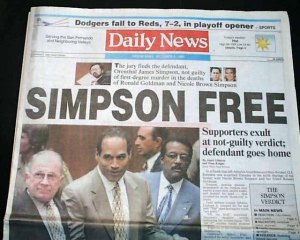
OJ Simpson verdict acquittal - Daily News headline

Support Semi-Partisan Politics with a one-time or recurring donation:

Agree with this article? Violently disagree? Scroll down to leave a comment.

Follow Semi-Partisan Politics on TwitterFacebook and Medium.