Does Oxbridge Discriminate?

Brideshead Revisited - Oxbridge - Social Class - Discrimination

Oxbridge has every incentive to admit more students from disadvantaged and minority backgrounds. If diversity has failed to improve then it is our fault as individuals, families, communities and voters for failing to provide elite universities with a bigger, better talent pool

Another day, another tedious story about Oxbridge being a terrible bastion of privilege and discrimination where the few working class students who manage to evade the perimeter and matriculate find themselves mocked mercilessly by Bullingdon toffs while students of darker complexion are forced to drink from separate water fountains.

The trigger for this year’s rehashing of the predictable dirge was a freedom of information request submitted by Labour MP David Lammy, who selectively requested and interpreted data to paint the bleakest possible picture of barriers to elite higher education in Britain.

The Guardian reports on the “shocking” findings, and then have the temerity to criticise the Oxford University press office for daring to defend themselves rather than meekly accepting criticism and submitting to corrective punishment:

Oxford and Cambridge have been accused of failing to engage in serious debate over their lack of diversity by the former education minister David Lammy, who first highlighted the issue with data obtained by freedom of information requests.

The Labour MP said the universities had been “trying to make journalists change their stories” rather than address how little progress they were making in recruiting talented students by race, social class and location in England and Wales.

His accusation came after sparking national controversy over data – first published in the Guardian – that showed that as many as 16 Oxbridge colleges failed to offer any places to black British applicants in 2015, the most recent figures under the FOI request.

Note that when leftists call for a “serious debate” on something, in actual fact they do not want a debate at all. What they want is for you to flop over submissively on the ground and agree to whatever Utopian socialist pipe dream they have in mind. Back in the real world, Oxford and Cambridge do little else these days other than engage in never-ending symposia about diversity. The reason that these debates don’t satisfy the Left is because they do not end with Britain’s elite universities sacrificing their brands and academic standards by further lowering their entrance requirements to attract less qualified applicants who happen to tick the right diversity checkboxes.

David Lammy huffs in the Guardian that “seven years have changed nothing at Oxbridge”, but this is totally untrue. Elite universities are falling over themselves to admit minority and working class students to improve their admissions statistics. They face immense political and even financial pressure to do so. Seven years have indeed changed Oxbridge, but only in the direction of being even more amenable to considering applications from underrepresented groups. What has not changed, though, are the stubborn social and environmental factors which continue to restrict the pool of minority applicants in which Oxbridge and other elite universities must fish.

Of course, Labour were quick to pile on with predictable, cookie-cutter criticism:

Angela Rayner, Labour’s shadow education secretary, said: “This is the latest damning evidence on the government’s failure to widen access to our most selective universities.

“The proportion of comprehensive school pupils getting in to top universities under the Tories is lower than when Labour left office, and this data shows that the problem is especially serious at Oxford and Cambridge.

“Ministers claim their system is working, but these figures show that it isn’t.”

Because any imbalance simply must be the fault of institutions, and ultimately the government who wield absolute power over everything and everyone. The idea that poverty, social stability, family structure, engaged parenting or personal responsibility might play a part in the under-representation of certain groups at Oxbridge is unthinkable. Heavens, no. Successive British governments have created a perfectly egalitarian society, and the only reason that the enrolment at Oxford University does not perfectly match the makeup of the general population is because evil admissions officers in Oxford colleges harbour a seething, visceral hatred of poor, brown kids.

Lammy goes on to complain:

During this period [2010-2015], an average of 378 black students per year got 3 A grades or better at A-levels. With this degree of disproportionately against black students, it is time to ask the question of whether there is systematic bias.

Really? Now is the time? I’m so glad, because this conversation is indeed long overdue. Nobody has once raised the issue until this watershed moment, courageously midwifed into existence by David Lammy. At long last we can finally ask why, a time when every other institute of higher education in the country have conspicuously prostrated themselves before the Cult of Social Justice and Identity Politics, Oxford and Cambridge continue to openly revel in institutional racism.

This is asinine.

Getting angry at Oxbridge for not admitting more ethnic minority and working class applicants is putting all the blame for societal, cultural and family problems at the foot of higher education. I am technically a BAME individual (oh, how I hate that stupid, infantilising acronym) from a poor, single-parent family, yet I was admitted to Cambridge University and neither experienced discrimination while there nor witnessed anybody else facing discrimination. On the contrary, there was a rigorous, fiercely intellectual atmosphere (aside from all the drinking and punting) which cared only about what you think, not what you look or sound like.

If anything, given the incentives and political pressure faced by universities today, I would not be surprised if many elite institutions already do more than they should to correct for social and government policy failures by accepting students from under-represented backgrounds that would not stand a chance if they were white and middle class. I know that if I was a university administrator and my performance appraisal, reputation or funding were at stake then I would be very tempted to selectively lower standards.

To properly address this issue we need to have “honest conversations” not about institutional discrimination but about family structure, culture, parenting, wealth and both primary and secondary education. We need to ruthlessly eliminate influences which tell certain impressionable youngsters that academic achievement is uncool, that being a useless parent is socially acceptable, and which peddle myths about Oxbridge based on hazy recollections of Brideshead Revisited.

We also need to stop the media hand-wringing. Hysteria about the lack of BAME people at Oxbridge only feeds a false narrative that minorities are unwelcome at Britain’s elite universities. It is very hard to increase representation when you simultaneously tell a certain group that they probably won’t get in to Oxbridge and will likely have a very bad time there if they do manage to beat the odds.

What we cannot do is expect our best universities, the engine of Britain’s innovation and research, to expend scarce time and resources bringing some candidates up to the basic level they need to be starting at. Some remedial classes are already offered to students who arrive at universities without the required study skills. It would be unfortunate if this reactive solution were to bed down at Oxbridge.

It is very convenient for politicians such as David Lammy to point to an evil, imaginary bogeyman which is responsible for a lack of diversity rather than admitting the more complex and intertwined failures which contribute to the problem. But as a “BAME” person (ugh) from a relatively disadvantaged background who was accepted into Oxbridge, the narrative being spun by the Left smacks of cynicism and a lack of serious thought.

To be clear, I’m not suggesting that discrimination does not exist at the margins, or in the form of so-called microaggressions. I’m sure that it does. But I do not believe that it is systemic, particularly given that Oxbridge faces so many incentives and coercions to increase diversity.

Rather than badgering our elite universities to fix upstream issues and single-handedly correct disparities in the opportunities available to different demographic groups, we need to call individuals, families, communities and (yes) government to account for their failings and shortcomings. We need to foster a universal culture of ambition and respect for academic achievement which transcends lines of gender, ethnicity, wealth, culture or social background. This probably means making a thousand small and often inconvenient changes to the way that we behave as individuals, parents, teachers, students and policymakers, which is much harder work than joining the David Lammy Chorus and blaming everything on discrimination.

But the easy solutions are rarely the correct ones, and when it comes to increasing minority representation at our elite universities we must do what is hard rather than what feels good.

Formal Hall - Fitzwilliam College Cambridge University

Support Semi-Partisan Politics with a one-time or recurring donation:

Agree with this article? Violently disagree? Scroll down to leave a comment.

Follow Semi-Partisan Politics on TwitterFacebook and Medium.

Leftist Open Borders Zealots Are The True Enemy Of Immigration Reform

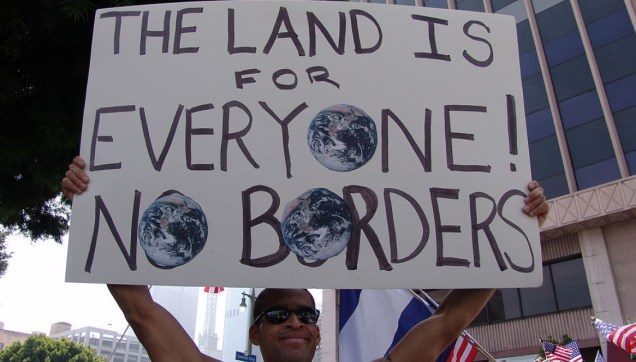
The Land Is For Everyone - No Borders protest

There can be no meaningful compromise on immigration with those on the Left who will settle for nothing less than open borders but lack the moral courage to say so in public

So the Trump administration has now released its proposal for agreeing to grant legal status to the young illegal immigrants brought to the United States by their parents known as the Dreamers, potential beneficiaries under the threatened Deferred Action for Childhood Arrivals (DACA) program.

The list of concessions requested of the Democrats in exchange for normalising the immigration status of nearly one million people includes approving the much talked-about border wall with Mexico, hiring more Customs & Border Patrol agents, cracking down on “chain migration”, toughening asylum laws and the denial of federal grants to so-called “sanctuary cities” which deliberately limit their cooperation with federal agencies on matters relating to immigration enforcement, even when the administrative burden of doing so is minimal.

Aside from the construction of the wall – a silly waste of money given that many illegal immigrants are visa overstayers and not border jumpers, construction would damage a number of conservation areas and require the compulsory purchase of huge tracts of private land while Mexico has no intention of paying for the thing despite rash promises made by President Trump – these proposals fall into a category which might reasonably be called “perfectly sensible measures to protect the border and immigration rules of a modern, sovereign nation state”.

Of course, the Left sees it entirely differently. The New York Times bleats with alarm:

While it is unclear whether Mr. Trump views the demands as absolute requirements or the beginning of a negotiation, the proposals, taken together, amount to a Christmas-in-October wish list for immigration hard-liners inside the White House. Immigration activists have long opposed many of the proposals as draconian or even racist.

The demands were developed by a half-dozen agencies and departments, officials said. But among the officials behind the demands are Stephen Miller, the president’s top policy adviser, and Attorney General Jeff Sessions, both of whom have long advocated extremely aggressive efforts to prevent illegal entry into the country and crack down on undocumented immigrants already here.

The demands represented a concerted effort to broaden the expected congressional debate about the Dreamers to one about overhauling the entire American immigration system — on terms that hard-line conservatives have been pursuing for decades.

In a letter to lawmakers, Mr. Trump said his demands would address “dangerous loopholes, outdated laws and easily exploited vulnerabilities” in the immigration system, asserting that they were “reforms that must be included” in any deal to address the Dreamers.

Democratic leaders in Congress reacted with alarm, saying the demands threaten to undermine the president’s own statements in which he had pledged to work across the aisle to protect the Dreamers through legislation.

The New York times is quick to define the range of views on immigration which can be described as “hard-line conservative”, but they are noticeably silent on what would constitute a hard-line leftist position on immigration reform.

One can only determine something to be hard-line conservative if one has a birds-eye view of the entire spectrum of opinion, so presumably the New York Times knows that the hard-line leftist position on immigration – the stance with which the Trump administration must negotiate – advocates fully open borders and immediate amnesty for almost anyone who manages to set foot on American soil and declare their intention to permanently remain there. Yet the Times never makes this clear to its readers, who know all about the Evil Conservative position but are not even encouraged to think specifically about what the “liberal” alternative should be.

This is entirely deliberate – the leftist worldview knows that its position on immigration, the nation state and other issues would presently be repellent to a majority of Americans if spoken out loud. Therefore, they try to circumvent public opinion and achieve their ends by riding a wave of whipped-up anger and misunderstanding of conservative positions rather than boldly and unambiguously setting out their own wish-list of demands. Thus they hope to push America toward an irreversible, de facto open borders situation without ever having to utter the words or suffer the political consequences. You might call this smart politics and an astute strategy. But it is also rank cowardice, and perpetuates a fraud on the American people.

The true extremism of the Left’s unspoken stance on immigration can be seen in their reaction to the Trump administration’s proposals. When the Trump administration first stirred outrage and condemnation by declaring his intention to end the DACA program, most Democrats and others on the Left immediately started posturing as brave defenders of vulnerable “undocumented” people, the Dreamers’ last line of defence against an evil, racist Republican attack. One would therefore think that given that the Dreamers are supposedly the top priority of the American Left, they would agree to any compromise on immigration which promised to enshrine the permanent legal status of these people.

But you would think wrong. In their response to the Trump administration, House minority leader Nancy Pelosi and Senate minority leader Chuck Schumer’s joint statement read as follows:

The Administration can’t be serious about compromise or helping the Dreamers if they begin with a list that is anathema to the Dreamers, to the immigrant community and to the vast majority of Americans.

We told the President at our meeting that we were open to reasonable border security measures alongside the DREAM Act, but this list goes so far beyond what is reasonable.  This proposal fails to represent any attempt at compromise.

The list includes the wall, which was explicitly ruled out of the negotiations.  If the President was serious about protecting the Dreamers, his staff has not made a good faith effort to do so.

The statement conveniently ignores the fact that the Trump proposal would give the Dreamers exactly what they wanted – a pathway to permanent residency in the United States, and freedom from gnawing, perpetual uncertainty over their futures. The Democrats’ issue is not that the proposal fails to “help the Dreamers”. Their issue is that they do not get any of the many other things on their leftist immigration wishlist along with the bargain.

But that doesn’t sound quite so noble in a statement. In fact, it sounds rather grasping and selfish. So from a PR perspective it is much better to prance around pretending that the proposal is some kind of grave insult or threat to the sympathetic Dreamers, when in fact the proposal would give the Dreamers exactly what they want but leave Chuck Schumer and Nancy Pelosi empty-handed when it comes to their desire to further erode national borders. The public are far more likely to support Dreamers who they have been told are being threatened than they are to come out in defence of the Utopian open-borders fantasies of leftist academics, politicians and donors.

And since when has a policy being “anathema” to non-citizens without the legal right to reside in the United States been considered sufficient cause to reject it out of hand? Will the Democrats cheerfully go to bat for me if I, a British citizen, decide to take offence at US fiscal or education policy? It hardly seems likely. Is it not enough that this immigration compromise (flawed though it may presently be because of the administration’s insistence on an ineffective wall) would ensure the legal status of Dreamers? Apparently not – because even though it would assuage their primary concern about the risk of deportation, increased border security is apparently anathema to Dreamers and the “immigrant community” for whom the Democrats arrogantly claim to speak.

Debate about the merits of the wall aside, the present impasse is being fuelled almost entirely by Democrats and those on the Left, insistent as they are on getting 100 percent of what they want, despite controlling neither the White House or either house of Congress. They claim to care about the Dreamers, but ultimately are willing to throw every last one of them under the bus by walking away from negotiations unless they are able to extract something further from the Republicans to aid in their push for fully open borders.

And if this accusation sounds harsh, let it be refuted in detail by the American Left. Let them publicly state even one restriction that they would be happy to keep or impose in the name of border security or immigration control, instead of prancing around and flaunting their boundless compassion. Even if Donald Trump and the Republicans were negotiating in a genuine spirit of compromise and good faith – which I will concede is unlikely, based on past behaviour – how can agreement possibly be reached with a side which denounces any attempt to enforce the border as “racist” and conspicuously fails to articulate its own preferred outcome?

After having seen conservatives criticised endlessly by the Left for supposedly using young illegal immigrants as political pawns, what is shocking here is that it is Democrats, not just Republicans, who appear willing to hold the fortunes of Dreamers hostage in attempt to get their way on immigration reform.

If the Democrats actually wanted to do the right thing by Dreamers instead of cynically using them as an emotional prop for their argument, they would hammer out a deal with Donald Trump which conceded to all of the administration’s demands with the exception of the wall, and come up with some compromise there involving the strengthening of fencing and electronic border surveillance. But they won’t. The Left would rather screw the Dreamers and hold out for 100 percent of what they want rather than agree to a compromise which enhances future immigration control in any way.

And this is the uncomfortable truth: For some on the Left, the Dreamers are not people to be sincerely sympathised with and helped toward legal status, but merely a convenient resource to be exploited in the service of achieving their ultimate goal of open borders.

This is not smart politics. And it certainly ain’t compassion for the “undocumented”, either.

Trump Immigration Ohio

Support Semi-Partisan Politics with a one-time or recurring donation:

Agree with this article? Violently disagree? Scroll down to leave a comment.

Follow Semi-Partisan Politics on TwitterFacebook and Medium.

Is There Hope For Conservatism In Generation Z?

Generation Z conservatism

Generation Z does not automatically share the same predilection for leftist identity politics as the Millennial generation which precedes them. But can conservatives do enough to appeal to this newest group of emerging voters?

Many conservatives, myself included, have been worrying a lot about how we can better resist the relentless encroachment of leftist identity politics and the regressive, illiberal social justice warriors at the movement’s vanguard. But what if we have now reached Peak SJW? What if the spell is wearing off and a new generation is emerging with less time for the pervasive victimhood culture spawned by the 1960s radicals and their fragile children? And if so, how can the Right appeal to this generation (or at least cease driving them toward the parties of the Left)?

These are the questions explored by Sam White over at Country Squire magazine, in a thought-provoking piece which explores how conservatives might find favour with (at least some) young people again.

Sam writes:

Corbynism has been painted as rebellious and anti-establishment, but underneath the endorsement from Stormzy and the party leader’s appearance at Glastonbury (not that Glastonbury is pushing any boundaries) it’s nothing of the sort. If the current Labour leadership’s schemes were ushered in, they’d lead to constraint and conformity. And the new establishment would be authoritarian to a degree that its youthful supporters had not felt before.

There wouldn’t be much of a celebratory mood in the air then, as it slowly became clear that all that rebelliousness was nothing more than a carefully-managed means to an end.

Conservatives should be highlighting all this, and at the same time pushing the message that a free market model provides the best possible mechanism by which for changes to occur organically. Crucially, that model is how we safeguard the capacity to change, but it isn’t a change in itself.

If the Conservative Party were to realign around its libertarian element, then it might achieve resonance among younger voters, particularly those who come after the Millennial Red Army. Generation Z are shaping up to be open to a conservative message, and will surely react against the postmodern nonsense bought into by Millennials. Conservatives must be ready to meet them.

And the message should be simple: that the right-wing will safeguard classical liberal values and ditch victimhood-fetishizing identity politics. And it ought also to be made clear that socialism represents the polar opposite of all this: it’s a half-fossilized ideology that would usher in micro-management, politically correct hectoring, and state imposition.

The idea of the Conservative Party realigning around its libertarian element seems ludicrous at first glance, considering how few genuinely small-government, pro-liberty MPs exist within the party (and the even smaller subset of those whose views are vaguely coherent and pragmatic rather than ideological fantasy).

But then one remembers how Jeremy Corbyn first captured his party and then vast swathes of the country with a hard left message that his opponents and nearly all the commentariat dismissed as being terminally unpopular, and suddenly it doesn’t seem quite so unrealistic. One also thinks of how devotees of Friedrich Hayek and Milton Friedman were able to establish a beachhead within a Conservative Party which still fully bought into the statist post-war consensus. And suddenly the idea of a radical shift in the Conservative Party seems feasible, if still unlikely.

Of course, such a shift would require somebody with vision and political courage – a conservative version of Jeremy Corbyn. And necessarily somebody without very much to lose, given the high probability of failure. Like him or not, Jeremy Corbyn possesses this conviction in spades, and even many people who are none too keen on 1970s socialism respond warmly to his candidness and the fact that he is unwilling to apologise for his beliefs. It is hard to see anybody within the current Conservative Cabinet playing a similar role on the Right. Indeed, all of the candidates most hotly tipped to succeed Theresa May are either grasping opportunists (Boris Johnson) or bland nonentities with no clearly articulable political philosophy of their own (Philip Hammond, Amber Rudd).

But even if the Tories were to search deep within their party and find a leader with moral and ideological backbone, could they make political traction with any group of voters by standing up to the identity politics Left? Sam White argues yes:

Conservatives needn’t pay regard to the social justice diktats which have taken over left-liberal discourse and muffled people’s rational capabilities. Simply by speaking directly and honestly, the politically correct narrative can be disrupted. And if that ruffles some left-wing feathers then all the better, let’s refuse to apologise and then offend them some more.

[..] The Conservative Party ought to be rejecting SJW new-leftism unequivocally. Why not just state it clearly? If you value the sovereignty of the individual, if you want the freedom to say what you like, create what you want, and make of yourself what you will, then steer well clear of collectivist movements.

A serious party would throw out badly defined hate crime regulations, reject the CPS’s garbage about policing what people say online, and get a grip on the police force so they stop tweeting photos of their trans-friendly, rainbow coloured cars.

There’s a gap in the market right now as common sense, libertarian ideals go under-represented, and there’s a Conservative Party that needs revitalising.

I don’t disagree with Sam in principle, but I do believe that the approach he advocates would require a degree of political courage and holding one’s nerve that I have not yet seen in any potential future leader, with the partial exception of Jacob Rees-Mogg (who disqualifies himself from serious consideration in several other ways and is therefore irrelevant).

We have seen time and again the ability of the social justice, identity politics Left to summon national outrage, to raise a mob, to hound people from their jobs and careers and even to incite violence when they sense a threat to their illiberal worldview. Even when it transpires that the target of their fury is innocent of the charges levelled against them, the damage is often done and no retraction or apology is forthcoming – see the inquisition against decent people like scientists Dr. Matt Taylor and Sir Tim Hunt.

We have seen, too, the unwillingness of senior politicians to take even the mildest stand against a leftist orthodoxy which demands 100 percent compliance on pain of excommunication from polite society. Even on his way out as Liberal Democrat leader, Tim Farron equivocated and resigned rather than stick to his guns and defend what were presumably his true, religiously-motivated feelings about gay marriage. And regardless of one’s feelings about gay marriage (this blog is supportive), how many conservatives will have watched these various witch hunts play out in the news and concluded that to speak out on other issues like climate change, the gender pay gap, affirmative action or radical gender theory means career suicide and likely social ostracisation as a bonus?

In short, it would take almost superhuman bravery to stand in the face of this potential hurricane. Even Jeremy Corbyn didn’t have to fear such public opprobrium for stating his political beliefs. When running for the Labour leadership, despite being on record as supportive of dictatorial leftist regimes and terrorist groups from the IRA to Hamas, Corbyn was still very welcome in polite society, and regarded at worst by most his critics as a harmless curiosity from the past. By contrast, if a conservative politician were to publicly question or doubt the “institutional racism” of swathes of British society, denounce affirmative action or even state that there are just two sexes and genders, the dinner party invitations and television interview requests would dry up instantaneously. To even state political opinions held by a plurality of people effectively makes one persona non grata in Westminster and other elite circles.

Therefore, given the hostile environment and lack of courage seen in our politics, we will likely have to look for salvation from outside, in the form of Generation Z. As Sam White correctly points out, this emerging generation – unscarred by the great recession, less coddled (so far) by helicopter parenting, more individualistic and sceptical of identity politics narratives preaching collective racial guilt – may yet react against the politics of their older siblings and illiberal, leftist parents.

And this is why it is more vital than ever that the Conservative Party stop bickering over which of three or four identikit centrists replace Theresa May, and instead articulate a positive conservative vision with concrete policies that actually inspire young people rather than continue to screw them over. In short, they need to do precisely the opposite of what they accomplished during their car crash of a party conference in Manchester.

The newly-minted young adults of today are still politically up for grabs. There is nothing written in stone which decrees that they must become the perpetual property of a moralising left-wing movement which combines 1970s statism with 21st century, self-obsessed identity politics. Many of these new voters can still be called to a higher, better and more conservative purpose if only somebody was there to show them that there is more to conservatism than droning on about the deficit, apologising for their principles, chasing after Labour and messing up Brexit.

Tick tock, fellow conservatives.


Conservative Party Logo - Torch Liberty - Tree

Support Semi-Partisan Politics with a one-time or recurring donation:

Agree with this article? Violently disagree? Scroll down to leave a comment.

Follow Semi-Partisan Politics on TwitterFacebook and Medium.

Carnage In Las Vegas, And Presidential Words Which Fail To Heal

Donald Trump delivered a poignant address to the nation following the Las Vegas shootings, diminished only by the knowledge that the words and sentiments spoken were so clearly not those of the president

Our thoughts and prayers must be most strongly this evening with the souls of the 59 people killed in cold blood by a gunman as they enjoyed a country music festival in Las Vegas, as well as the five hundred-plus who were injured and their relatives, the police officers who ran towards the gunfire and those medical staff now working hard to save lives still in peril. Even by American standards, the Mandalay Bay Casino shooting is an unspeakably shocking atrocity.

At times like these, we have often looked to elected officials, particularly the president, to explain the inexplicable, to make sense of that which has no reason, and to offer some words of consolation to a shocked nation. Towards the end of his presidency, after Aurora, Sandy Hook, Charleston and many more such senseless massacres, Barack Obama looked visibly jaded, attempting to come up with new words of comfort as each killer dispatched his quota of innocent men, women and children to the mortuary.

President Donald Trump’s initial response to the Las Vegas attack – on Twitter, naturally – was characteristically slightly off-tone, giving his “warmest condolences and sympathies to the victims and families” affected by the carnage:

“Warmest condolences” is an odd turn of phrase, the first word almost congratulatory before coming crashing back down to earth with the second. Fair or not, it adds to the sense of a man who knows the social conventions and behaviours expected of him but struggles to perform to specification because it doesn’t quite come naturally.

The televised presidential statement, on the other hand, was much better, almost poetic in places. Some of the words spoken were among the most humane that Trump has ever uttered in public:

Hundreds of our fellow citizens are now mourning the sudden loss of a loved one — a parent, a child, a brother or sister. We cannot fathom their pain. We cannot imagine their loss. To the families of the victims: We are praying for you and we are here for you, and we ask God to help see you through this very dark period.

There was also an effort to seek consolation in scripture and through the faith and religiosity which rightly remains important to many Americans:

Scripture teaches us, “The Lord is close to the brokenhearted and saves those who are crushed in spirit.” We seek comfort in those words, for we know that God lives in the hearts of those who grieve. To the wounded who are now recovering in hospitals, we are praying for your full and speedy recovery, and pledge to you our support from this day forward.

The conclusion was particularly moving in its simplicity:

Our unity cannot be shattered by evil. Our bonds cannot be broken by violence. And though we feel such great anger at the senseless murder of our fellow citizens, it is our love that defines us today — and always will, forever.

In times such as these, I know we are searching for some kind of meaning in the chaos, some kind of light in the darkness. The answers do not come easy. But we can take solace knowing that even the darkest space can be brightened by a single light, and even the most terrible despair can be illuminated by a single ray of hope.

Melania and I are praying for every American who has been hurt, wounded, or lost the ones they love so dearly in this terrible, terrible attack. We pray for the entire nation to find unity and peace. And we pray for the day when evil is banished, and the innocent are safe from hatred and from fear.

May God bless the souls of the lives that are lost. May God give us the grace of healing. And may God provide the grieving families with strength to carry on.

I have no desire to be churlish about the presidential statement, which in many ways ranked among the best remarks that Donald Trump has delivered since taking office. The president certainly expressed all of the right sentiments.

Yet the gulf between Trump au naturel and Trump on teleprompter is so vast as to be disconcerting. To witness Donald Trump extemporise and then to watch him perform at an important set-piece event is like watching two completely different people inhabiting the same body.

I assume that Stephen Miller was responsible for writing Donald Trump’s effective words today. He did well. It was not on the level of presidential statements such as Ronald Reagan’s in the aftermath of the Challenger space shuttle disaster but it was effective in its poignant brevity, though my perception may be slightly skewed given that so many of Trump’s previous public pronouncements have been so dire.

But while poignant and affecting, the words recited with all due solemnity into the television camera were clearly not the inner thoughts of the president who delivered them. Donald Trump’s mouth moved and said the right things, but never has it been more painfully apparent that when it matters most (whether it be setting out foreign policy or responding to a domestic crisis) he is the ventriloquist dummy president.

A good speechwriter can literally channel their boss, “talk” in their voice. My speechwriting hero Ted Sorensen (who worked closely with John F. Kennedy from his Senatorial career right through his presidency and is responsible for crafting some of Kennedy’s most famous speeches) is a prime example, as is former Ronald Reagan speechwriter Peggy Noonan. They can conjure magic, but their magic bears the unmistakable stamp of their principal’s own rhetorical style. They elevate the person for whom they write, they do not seek to recreate him or her from scratch or mould him in their own image.

As Ted Sorensen wrote in his book “Counsellor”, a memoir of his time serving in the Kennedy administration:

Whatever success I achieved as a speechwriter for Kennedy arose from knowing the man so well – from the years we spent working, traveling, and talking together, as close friends and collaborators who communicated constantly at a time when I regarded his election and stature as my principal professional goals. That success could not later be replicated with someone else with whom I did not have that same relationship.

It stretches credulity to imagine that Stephen Miller, for all his rhetorical talents, is best buddies with Donald J Trump or that they enjoy that closeness of working or social relationships to effectively be of one mind in the way that Kennedy and Sorensen worked so well.

A truly memorable speech captures something of the essence of the speaker, and therefore the speechwriter must know them well, at least in terms of their public and civic life. But this requires the speaker to have coherent values and policy aspirations which can serve as a lodestar to their thoughts for the speechwriter to follow, and Donald Trump has shown no signs of holding any such firm principles. He has no political Northern Star. This would suggest, as if we did not already know, that it was Miller talking, not Trump, when the president stood at the podium today.

The speechwriting ideal is that it should be impossible to tell where the politician’s own voice ends and where the speechwriter’s begins. Richard Nixon once said in an interview that a good speechwriter must be “an intellectual who can completely sublimate his style to another individual”. But we would have heard a very different speech today had Stephen Miller been rash enough to sublimate himself to Donald Trump.

“There’s a tendency among some hopeful souls to confuse the speeches written for Trump with the thoughts of the man himself” remarked a jaded but perceptive Australian journalist during the G20 meeting in July this year. The same point is equally applicable today, when there is such a painful disconnect between the words we hear and the face we see. It is painful because the poignant words of comfort are diminished, knowing as we do that the man who spoke them did not and could never have written them himself.

Perhaps we no longer value good speechwriting or want our leaders to have an aptitude for rhetoric. Maybe great oratory is passé. But I don’t think so. People still want inspiration and will grant a hearing to anybody who looks like they might provide it, whether it be Donald Trump’s shallow pledge to Make America Great Again or Jeremy Corbyn’s promise of a social democratic New Jerusalem in Britain.

People still want to tear down this wall. They want to be exhorted to fight evil on the beaches, in the fields and in the streets, and never surrender. They want to choose to go to the moon, and to touch the face of God. They want to believe that we shall overcome. We are human beings, and we want to be inspired.

Today, the West is led by people who preach fear and pessimism, largely because our leaders are fearful and pessimistic themselves. “Make America Great Again” sounds superficially positive, but is a cold and bleak credo at heart. The same goes for Theresa May’s ideologically lost Conservative government’s overworn pledge to deliver “a country that works for everyone” in Britain.

There is no real ambition any more because confidence in our values has not been nurtured, and slowly ebbed away. And this retrenchment, the fearful, introspective defensive crouch in which we find ourselves is echoed in our present political rhetoric. Kennedy’s exhortation has been reversed, and now we petulantly ask what the country will do for us rather than what we can do for the country (and our fellow citizens).

It will be tremendously hard to improve our politics without better political rhetoric to inspire people and call them to action, but better speechwriting and political rhetoric can only come about when there are policies and values which inspire and uplift. And on those increasingly rare occasions where we still encounter poetry in our civic life, it feels fake because it is so disconnected from the leaders delivering the speeches.

Donald Trump said all the right things today in his response to the heinous mass shooting in Las Vegas. Yet his address did not and could not achieve its full effect, because the words the president spoke and the mind which conjured them were so clearly someone else’s.


Microphones stand at the podium after U.S. Democratic presidential nominee Hillary Clinton's campaign chairman John Podesta addressed supporters at the election night rally in New York

Support Semi-Partisan Politics with a one-time or recurring donation:

Agree with this article? Violently disagree? Scroll down to leave a comment.

Follow Semi-Partisan Politics on TwitterFacebook and Medium.

Granting G4S And Serco The Power To Arrest Is Tory Madness

G4S HMP Oakwood

Granting private security firms the power to arrest people shows that this grasping, constitutionally illiterate Tory government does not understand what the state should and should not be outsourcing

The next step in the Tory Party’s slow suicide and abnegation of any remaining conservative principle: a leaked proposal to grant private security companies the power to arrest people, granting their employees the full suite of powers currently held by Civilian Enforcement Officers.

The Daily Mail reports on the latest thoughtless privatisation scheme to be cooked up by the government:

The proposals would allow, for the first time, staff from companies such as G4S to arrest members of the public for failing to pay fines imposed by the courts.

The plans would see HM Courts and Tribunals Service (HMCTS) privatising part of its compliance and enforcement operations in a deal worth £290million.

The measures were slipped out as a tender by the Ministry of Justice during the summer.

Under the proposals, the Government could transfer all services carried out by Civilian Enforcement Officers, who are civil servants employed by HMCTS, to the private sector.

This would include the arrest and detention of individuals who fail to pay off their debts and haul[ing] them to court.

The courts can already allow authorised agencies, including private firms, to send bailiffs to a person’s home to seize possessions to encourage them to pay debts.

But this would potentially be a sweeping expansion of the powers – covering so-called warrants of arrest, which are issued by JPs to compel an individual to attend court.

A separate justice-related proposal bubbled from the Left this week, published in the Daily Mirror, demanding the unification and centralisation all of the police forces in England, because that same creepy exercise in big government authoritarianism worked such wonders in Scotland under the SNP. But now the Tories have gone one better.

First re-opening the divisive fox hunting debate for no good reason on the eve of a general election, and now this. It’s like the Tories are actually trying to self-destruct by living up to every hysterical stereotype about conservatives ever levelled by the Left.

This is a Tory party that claims to be so concerned about fiscal responsibility that it is willing to outsource the arrest and detention of British citizens to poorly managed private companies with appalling records and an ability to screw up and commit fraud even under close oversight, all to save a paltry few million pounds, while shamefully failing to tackle the real drivers of the deficit such as welfare, healthcare and pensions.

Depriving somebody of their liberty – even only briefly, as a means to compel their attendance at court – is one of the most sacred and serious powers that we the people invest in the state. Arresting or imprisoning a citizen, depriving them of their liberty or (in extremis) compelling their draft into the armed forces are powers that could and should never be vested in private hands, outside direct control of local or national government which is directly accountable to the people. No exceptions, no excuses. This is the red line.

And it is a red line which David Lidington and the Ministry of Justice have just nonchalantly stepped on, whistling, hands in pockets, as though the Tories did not already have grave reputational issues and stand on the brink of giving power to hard Left Corbynite socialism.

The arrogance and incompetence that would motivate the Tories to even whisper this proposal are quite simply off the charts. It’s as though Theresa May’s government is effectively shouting to its critics “Fascist? Call us fascist, will ye? I’ll give ye some real fascism to worry about!”

If this proposal goes ahead, the Tory party and I are through. Not an extension of the current temporary breakup, but a permanent schism. I will work to get it cast from power and thrown into the electoral wilderness forever, and agitate for a new right-wing party take its place, one which is not stuffed full of grasping proto-fascists with pound signs in their eyes, one actually worthy of bearing the name “conservative”.


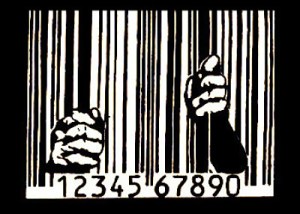
Private prison barcode

Support Semi-Partisan Politics with a one-time or recurring donation:

Agree with this article? Violently disagree? Scroll down to leave a comment.

Follow Semi-Partisan Politics on TwitterFacebook and Medium.