Citizenship And The Nation State Remain Relevant, Despite The Efforts Of Their Detractors

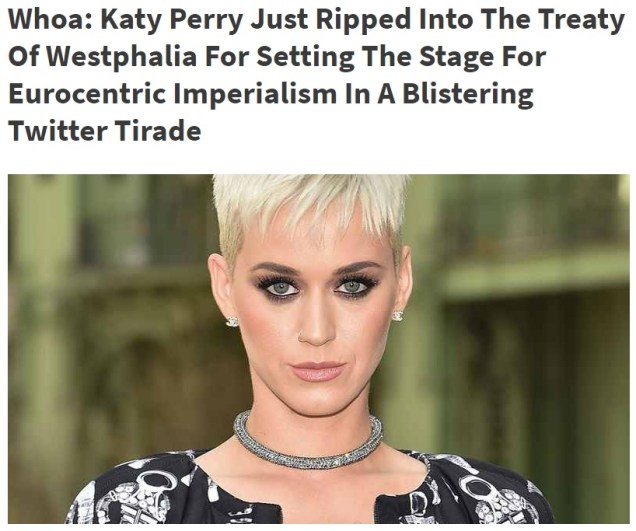
Katy Perry - Treaty of Westphalia - Nation States

There’s life in the humble nation state yet

As the backlash against Brexit grows ever stronger and the Cult of Social Justice and Identity Politics eats away at our national fabric from within, there are many legitimate reasons to fear for the future of patriotism, citizenship and even the nation state itself.

However, there are also a few reasons for optimism, and Rebecca Lowe Coulson sets some of them out in Conservative Home. But first she paraphrases the question that many people are now asking about the continued relevance of the concept of citizenship:

In an increasingly globalised world, however — in which the Westphalian order of nation states is regularly criticised as inward-looking — citizenship is repeatedly denounced as an outdated representation of division and exclusion. It hardly seems necessary to comment that such denouncements typically come from the privileged, within the most economically and politically secure nations. And that, like those Britons angered at the imminent loss of their EU citizenship after Brexit, few “global citizens” seem keen to give up the privileges of their current national citizenships.

Of course, what many of those citizenship-snubbers truly want (like most of the rest of us) is for their own privileges to be extended to those living in less secure places. It is undeniable that great global imbalances remain, even though living standards continue to rise across the world. But then, the question should not be whether the concept of citizenship precludes opportunities in the sense that being a member of one state can be highly preferable to being a member of another, but whether it is still the case that one’s rights and opportunities are best protected and afforded through membership of an individuated state. In a world in which secure states increasingly offer extensive rights to non-citizen inhabitants, aCitind less secure states need more substantial upheaval and help than an improved understanding of the intricacies of membership rules, is the concept of citizenship relevant?

Coulson Lowe then goes on to explain exactly why the concept of citizenship remains relevant, and will not be undermined despite the best efforts of those who see the nation state as an obstacle to be overcome rather than a crucial guarantor of rights:

We all remember how, in her 2016 Conservative Party conference speech, Theresa May said that “citizens of the world” were “citizens of nowhere”. The comment has become symbolic of an approach for which she has been widely criticised: an approach seen both as arrogant, and as attempting to appeal to those on the further right of her party.

At the time, I felt her tone mistaken, in that I would have preferred a use of language implying greater keenness to heal, or at least address pressing divisions within the country. General criticisms of the comment often overlook the argument May was setting out, however. The words came within a section about the “spirit of citizenship”, and read, in full: “But if you believe you’re a citizen of the world, you’re a citizen of nowhere. You don’t understand what the very word ‘citizen’ means”. Surely, it is that forgotten second sentence that is key, here. And that the point May was in the midst of making was about the importance of “respecting the bonds and obligations that make our society work”.

The state, and the society that exists within it, still matters profoundly to those people who aren’t happy with the countries they call home .. Official membership of such societies is conferred in different ways: from the automatic rights of familial lineage to the successful passing of a test. But the standard way of gaining the citizenship of a state is by being born and growing up in it. For those of us fortunate to count somewhere like Britain or Australia as that place, it can be easy to take for granted the relative privileges this affords us.

Yet most of us see that the uncertainties and risks of life make it expedient for us to live together in societies, and that, as social creatures, it is natural for us to want to do so, over and above that expediency. The advancements of the past centuries — in communication, travel, science, military capabilities, commerce, and on — have made it impractical for societies to remain limited to the family groups, villages, or cities they once were. The continuation of that advancement does not mean that our embrace of the nation state must also become outdated, however. For simple reasons of functionality — not to mention the more complex, such as those related to culture or national identity — it is hard to see how bigger blocs or idealist internationalist approaches could work.

This is what many on the Left fail (or are unwilling) to grasp. The Westphalian concept of statehood and sovereignty (combined with 19th century concepts of nationalism) survive the test of time because they work with the grain of human nature rather than against it. Rather than pretending against all available evidence that somebody from country A has as much in common with someone from country Z as their next door neighbour, the system of nation states is a tacit admission that the human instinct to be part of a social communities mean that harmony is best achieved when systems of government are aligned with societal boundaries. And indeed, when there is a mismatch between government and society, nation states have often split and reformed in response.

But the bigger blocs and non-state actors championed by the nation state’s detractors will not become a viable replacement in the foreseeable future, precisely because an entity’s democratic legitimacy and popular support are derived from having a demos which identifies as a cohesive whole and consents to being governed at that level.

The United States works as a country because US citizens see themselves as American first and foremost, and not Californian, Texan, Iowan, Alaskan or North Carolinian. The United Kingdom survived the 2014 Scottish Independence referendum because a majority of Scots (just about) considered themselves British as well as Scottish, if not more so.

Supranational blocs do not command this sense of loyalty or commonality among the people they nominally represent, as the European Union discovered with Brexit and will continue to discover as member states chafe against one-size-fits-all dictation from Brussels. Brexit occurred because the European Union’s drive for ever-closer union and a grander role on the world stage was plain for all to see, and the majority of voters who consider themselves more British than European wanted no part of it.

The “if you build it they will come” approach – where ideological zealots construct all the trappings of a supranational state in the hope or arrogant expectation that a common demos and sense of shared purpose will follow on automatically – has been proven to be nothing more than wishful thinking.

And this is a good thing, because as Rebecca Lowe Coulson correctly observes, supranational and non-state actors have generally proven themselves far less able to effect change than unilateral, bilateral or multilateral efforts by nation states with common purpose. The very nature of trying to shoehorn the competing national interests and priorities of multiple countries into a “common” foreign, fiscal or defence policy gives rise to resentment, suboptimal outcomes (such as stratospheric youth unemployment in Southern Europe) and inevitable net losers.

And yet the myth persists – amplified by bitter Remainers and much of the corrupted civil liberties lobby – that cooperation between countries is only possible under the umbrella of supranational government, and that these non-state actors are somehow a better guarantor of individual liberties than nation states themselves.

Take this hysterical email recently sent out by “civil liberties” organisation Liberty:

Yesterday we took another huge step towards our withdrawal from the European Union as the Government published the Repeal Bill.

If the Bill passes in its current state, people in the UK will lose rights after we leave the EU. It’s that simple and the stakes are that high.

The vote to leave the European Union was not a vote to abandon our human rights.

Yet the Repeal Bill includes worryingly broad powers for ministers to alter laws without parliamentary scrutiny and contains no guaranteed protections for human rights. Worse, it takes away the protections of the Charter of Fundamental Rights without ensuring that we will continue to protect all of those rights in the UK after Brexit.

Every single right we have now needs to stay on our statute books – from those contained in the EU Charter of Fundamental Rights, to equality protections we’ve gained from our membership.

Liberty – and other groups who are content for British citizens to have “rights” imposed on them from above rather than argue for and win them at a domestic level – see supranational organisations as a convenient bypass for national democracy. If the stupid British people are too dumb to vote for more employment protections and other government treats, this line of thinking goes, then advocacy groups who know better should just go over their heads to the EU. This is profoundly undemocratic, but more than that it only affirms the dangerous idea that our rights should be granted by government (at any level) rather than being innate and inalienable.

This is utterly wrong, as I explained back in 2015:

The new, emerging institutions which will replace them are being designed behind closed doors by small groups of mostly unelected people, as well as the most influential agents of all – wealthy corporations and their lobbyists. We have almost no idea, let alone influence, over what they are building together because instead of scrutinising them we spend our time arguing over the mansion tax or the NHS or high speed railways, which are mere distractions in the long run.

The liberties and freedoms we hold dear today can very easily slip away if we do not jealously guard them. By contrast, power is generally won back by the people from elites and powerful interests at a very heavy price – just consider Britain’s own history, or the American fight for independence from our Crown.

The yawning gap in the argument of those who would do away with the nation state is how they intend to preserve democracy in its absence (assuming they even care to do so). Even many of the EU’s loudest cheerleaders concede that the current institutions are profoundly undemocratic and unresponsive to popular priorities or concerns – this tends to be expressed through an exasperated “of course the EU needs reform!”, sandwiched between odes of love and loyalty to the very same entity, as we witnessed countless times during the EU referendum.

But what that reform actually looks like, nobody can say. Or at least, those few tangible visions for a future EU which do exist are so unmoored from reality as to be little more than idle curiosities – see former Greek finance minister Yanis Varoufakis’ DiEM25, which contends both that the European Union can be persuaded to undertake meaningful reforms (ha!), and that this reformed EU should then amplify left-wing priorities to the exclusion of all others (how very democratic).

If you want to do away with the concept of the nation state or actively agitate for its demise then I think you have a responsibility to state clearly and unambiguously what you would have in its place before pushing us all into the undiscovered country. Yet the assorted citizens of the world, so anguished by Brexit, refuse to come up with an answer – at least not one which they are willing to utter in public.

The European Union is not a static entity – it is an explicitly and unapologetically political project moving relentlessly (if erratically) toward the clear goal of ever-closer union. If this is not their preferred outcome for Britain and all other nation states (and few pro-EU types will admit that this is what they want) then it is incumbent on them to offer an alternative goal with a politically viable means of achieving it.

And until they do so, the assorted enemies of the nation state do not really deserve a hearing.
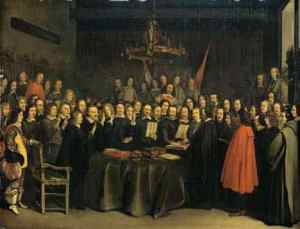
Treaty of Westphalia

Support Semi-Partisan Politics with a one-time or recurring donation:

Agree with this article? Violently disagree? Scroll down to leave a comment.

Follow Semi-Partisan Politics on TwitterFacebook and Medium.

Like, Why Can’t British Politicians Talk Fancy No More?

Great political speeches are only possible when there are great ideas to be expressed, and great leaders to express them

After watching the semi-famous video of former Labour minister Peter Shore arguing passionately against Britain’s membership of the EEC during a 1970s Oxford Union debate, Mark Wallace of Conservative Home has realised that the quality of contemporary British political oratory is perhaps not what it once was.

Wallace observes:

What’s striking is to try to list the modern speeches by Parliamentarians which have achieved the same quality. I’ve wracked my brains and, frankly, I can’t think of any. To be quite honest, while there are many excellent MPs in today’s House of Commons, I can’t think of a single one who speaks so well. Probably the most famous good speech of recent years was delivered by Hilary Benn, in the Syria debate – but watch it back, and you’ll see that while it was effective, it was done with notes and is still seen as exceptional rather than normal.

Depressingly, most of our Parliamentarians do not seem to prize public speaking. Indeed it’s a fairly regular occurrence to see some of them apparently struggling to convincingly read out loud from a bit of paper. Many are perfectly serviceable speakers, but compare modern performances to those from 40 or 50 years ago and it seems that today’s greats are not as great, the average is somewhat worse than it was, and the worst are now really quite dire.

Indeed. In actual fact, Hilary Benn’s speech on Syria wasn’t particularly good at all – it is memorable mostly because of the dramatic circumstances of its delivery during a period of unrest over Jeremy Corbyn’s leadership of the Labour Party, not the rhetorical exhortations of a man with all the charisma of a Quentin Blake illustration.

People also frequently praise the speeches of leftist politicians such as Mhairi Black (whose maiden speech in the House of Commons went drearily viral all over social media), but these speeches are also not particularly well-constructed or persuasive – they are simply very emotive, which makes them seem good in an age when feelings trump reason and reality TV has diminished our collective capacity to think.

Wallace continues:

Somewhere along the way, we ceased to value oratorical skill in our politicians. Perhaps it was the decline of the public meeting and the rise of soundbite-dominated TV campaigning that did it. Or maybe the decision not to teach school pupils how to debate left millions unduly intimidated by the idea of even trying to speak in front of an audience. There’s also a suspicion in some quarters that public speaking is somehow inherently elitist – a fallacy, given the many great orators who once arose, largely self-taught, from the union movement in particular, but a self-fulfilling belief, in that if you tell the majority of kids that only the rich and posh do speeches then you run the risk that they will believe you.

This is a clear loss to the character and effectiveness of our politics. How often do we hear people lament that politics is boring, that its main characters are bland, or that they don’t understand what it’s all about? It cannot have helped to have reduced the art and feeling in how we communicate about politics, and abandoned a means to compellingly communicate often complex concepts to mass audiences.

I am very glad that Mark Wallace and Conservative Home have woken up to the crisis in British political rhetoric. This blog has been lamenting the abysmal quality of British political speechwriting (and delivery) for years, not least here, here, here, here, here and here. Hopefully with the “bigger guns” of ConHome now trained on the problem we might force the discussion into the mainstream.

But good political rhetoric does not exist in a vacuum. Contra Mark Wallace and Peggy Noonan, the internet and social media are not a guaranteed friend of good political speechwriting, heralding a coming renaissance in speechifying. While it is true that some political YouTubers are able to gather massive numbers of followers with their witty or acerbic rants, I can’t think of any high profile social media activists who communicate in a genuinely persuasive way.

Case in point: if one looks at the likes of Owen Jones on the hard left or Paul Joseph Watson on the conspiratorial/alt-right (nobody outside the extremes has much of a following), these people are good only at preaching to the converted in order to generate clicks and likes. They will hardly ever cause somebody to reconsider their own deeply held convictions unless a process of personal political transition is already underway. This also applies to the likes of The Young Turks, Steven Crowder, Ben Shapiro and other voices in American politics, some of whom are good, but who tend not to do bipartisan outreach.

No, the art of British political speechwriting can only be revived if there is a simultaneous renaissance in British political thinking. And there are precious few signs of such a revival taking place any time soon. Right now both main parties are pretty much intellectually dead. The Labour centrists, utterly exhausted and discredited after the Blair/Brown years, are finished – and in their place is a holdover from the 1970s in the form of Jeremy Corbyn. Meanwhile, the soft and non-threatening quasi-conservatism of Cameron/Osborne gave way to the statist paternalism of Theresa May, another throwback to the 1970s which can hardly be considered progress.

Nowhere was this dearth of visionary thinking mirrored by equally uninspired rhetoric reflected more clearly than in the EU referendum campaign. This was a highly consequential, even existential political decision for the people of Britain, and yet rather than bold speeches and compelling narratives on either side we were offered little more than glib soundbites and canned catchphrases.

As I wrote at the time:

When the history of Britain’s 2016 EU referendum comes to be written, what will we remember? Of all the particularly dramatic moments in the campaign to date, none of them have been speeches. Sure, sometimes the fact of a speech has been newsworthy, such as when an unexpected establishment figure has been wheeled out to say that Brexit will usher in the apocalypse, but the content – the oratory itself – has rarely raised hairs or stiffened spines.

In fact, proving Eleanor Roosevelt’s famous assertion that great minds discuss ideas, average minds discuss events and small minds discuss people, the media has determinedly reported almost exclusively on the latter two. Of course that is always the temptation for journalists, but our politicians have hardly given the media much to work with on the ideas front, even if they were minded to cover them.

This is a depressing state of affairs. This most important debate should be bringing out the best in our politicians and our media. We should be witnessing a straight-up fight between advocates of the democratic, independent nation state and those who ardently believe in the euro-federalist dream, adjudicated by a press corps  beholden to neither side and always willing to challenge baseless assertions rather than merely provide a “fair and balanced” platform for two partisan idiots to yell at each other for an equal amount of time.

We will not see a revival in political speechmaking in this country until British politicians actually start having ideas and advocating policies worthy of grander rhetoric. So long as there remains in place a technocratic, managerialist consensus between centre-left and centre-right (which very much remains the case and has only been partially broken by Brexit), there will be no bold new ideas in British politics, and in turn there will be no speeches worth listening to.

When even the prime minister of our country sees her role as more of a glorified Comptroller of Public Services than a world leader representing a great and consequential nation, why would we expect her speeches to be any more memorable than the platform announcements at Waterloo station? And if the prime minister’s words are so utterly uninspiring and inconsequential then why bother listening to the words of those who are not even at her level, but merely vying to replace her in that diminished role?

Our current political debates are often petty and parochial, and so are the words we use to fight them. And those issues which might potentially generate bold ideas matched by bold words tend to be furiously ignored by political leaders – look at their refusal to properly confront the Islamist threat, or the staggeringly superficial debate about Brexit.

Great political rhetoric only occurs when there are great issues at stake and great minds willing and able to tackle them. Think of Franklin Delano Roosevelt’s “The only thing we have to fear is fear itself“, delivered as the American economy buckled under the Great Depression. John F. Kennedy’s “We choose to go to the moon” speech at Rice University, setting the United States the ambitious goal of landing a man on the moon and returning him safely to earth. Winston Churchill’s “We shall fight on the beaches“, given after Britain’s deliverance at Dunkirk. Ronald Reagan’s “Tear down this wall“, made at the Brandenburg Gate in Berlin (and ironically helping to usher in the post-Cold War world which for all its wonders also sucked much of the vitality from Western politics, together with our raison d’être).

And maybe part of the reason that there are no great contemporary British political speeches reflects our diminished status in the world, no longer a superpower or the pre-eminent actor in world affairs. Lofty words are easier to reach for when one reasonably expects that they might reshape the world. Perhaps this is why American political oratory has undergone a similar decline in the post-Reagan era, now that Pax Americana is drawing to an end and the uncertain new multipolar world emerges.

But one thing is certain: without conviction politics, there can be no speeches of great conviction. At best, a centrist or technocratic politician might be able to mimic the grandeur and cadences of famous speeches – as President Obama did so effectively, talking loftily of hope and change while a very different reality played out on the ground – but they will never truly achieve that perfect synergy of subject, argument and tone that is the hallmark of a great speech.

Why are there no great contemporary British political speeches? Well, try picturing one in your head, given the kind of issues we typically argue about and the politicians who represent us.

Imagine future historians studying the impact of rousing speeches about lowering corporation tax by a few percentage points or abolishing the so-called “bedroom tax”.

Imagine schoolchildren memorising the words to that famous speech opposing HS2 or supporting the renationalisation of Southern Rail.

Picture a crowd of thousands of people brought to its feet in genuine excitement by a pledge to reduce NHS waiting times by 15 percent in the next parliament, hire a few hundred more nurses or increase the minimum wage to an astronomic £8 an hour by the year 2020.

And there’s your answer.

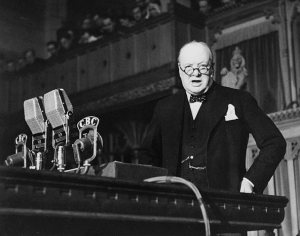
Winston Churchill speech to Canadian Parliament - 1941

Support Semi-Partisan Politics with a one-time or recurring donation:

Agree with this article? Violently disagree? Scroll down to leave a comment.

Follow Semi-Partisan Politics on TwitterFacebook and Medium.

The Left’s Self-Serving Hypocrisy On Immigration And Free Movement

Labour - controls on immigration mug - general election 2015

The Left’s extreme attachment to the principle of free movement of people speaks volumes about whose interests they really serve

This, by trade unionist and Blue Labour activist Paul Embery, really gets to the heart of the modern metro-Left’s extremist stance on immigration and free movement of people within the EU, so divorced from the fears, priorities and aspirations of the Labour Party’s traditional working class base:

“Access to the single market and freedom of movement are inextricably linked, and it would be wrong… to put the economy anything other than first,’ Diane Abbott told The Andrew Marr Show on Sunday.

Leaving aside that there is, in fact, no inextricable link between access to the single market and free movement (she may be confusing access with membership), what is most striking is that Abbott’s argument here – that everything must be subordinated to economic imperatives, that policies must ultimately be judged not by their impact on society or quality of life but according to whether they boost GDP or make someone somewhere a fast buck – is the very embodiment of market-obsessed Thatcherism.

Abbott isn’t a Thatcherite, of course. Anything but. She is, on virtually all things, on the side of the angels in a head-to-head with Thatcher. Yet it is weird how, when it comes to the subject of immigration, she and so many others on the Left are willing to suddenly embrace the philosophy of a woman they have spent their lives opposing.

When did it become the norm for the Left to put the demands of the market above what was right for wider society? To allow the dictates of the balance sheet to trump all? To know the cost of everything but the value of nothing?

When Thatcher closed the mines and destroyed whole communities, didn’t she do so because she wasn’t prepared to ‘put the economy anything other than first’?

We can argue until the cows come home about whether particular policies or strategies do indeed bring economic advantages. But, for the Left especially, that should never be the sole consideration – and certainly not when those policies or strategies give rise to profound consequences for society.

It is certainly very telling when the Left pivots from disparaging corporations and viewing business as evil (their standard M.O.) to fawning over multinational corporations and anxiously tending to the every care and concern of their CEOs.

I noted this point over two years ago:

Isn’t it funny how the voice of big business – usually the object of scorn and hatred from the left – suddenly becomes wise and sagacious when the short term interests of the large corporations happen to coincide with those of the Labour Party?

Labour have been hammering “the corporations” relentlessly since losing power in 2010, accusing them of immoral (if not illegal) behaviour for such transgressions such as not paying enough tax, not paying employees enough money, paying employees too much money and a host of other sins. In Labour’s eyes, the words of a bank executive were valued beneath junk bond status – until now, when suddenly they have become far-sighted and wise AAA-rated pronouncements, just because they have come out in support of Britain remaining in the EU.

(In fact, I wonder whether the Left’s eagerness to talk about the economics of immigration is actually a classic piece of misdirection designed to sway conservative or swing voters; that in actual fact, they don’t give a hoot about the economy but rather want to ensure maximum immigration levels for cultural and political reasons that they dare not speak out loud. Why else would Diane Abbott of all people, hardly the sort of person who you would picture fretting about a multinational corporation’s labour costs and investment decisions, be speaking about economics, well outside her comfort zone?)

Embery is quite correct, though – the Labour Party did indeed once value additional metrics beyond raw GDP when evaluating public policy. This formed a large basis of their objection to Thatcherism, bordering on hatred. (While this blog remains convinced that the Thatcher reforms were entirely necessary and hugely beneficial on the balance, it must be acknowledged that too little was done to ameliorate the harsh impact of deindustrialisation on many Northern, Welsh and Scottish communities – the Left actually has a valid critique here, and a reasonably strong moral point).

Yet large elements of the Left, driven mad by Brexit, now seem willing to squander any moral high ground they may once have held by openly contradicting their former principled critique of the Thatcher government. According to the new post-Brexit leftist playbook, Thatcher was completely correct to sacrifice close-knit industrial communities in order to save the overall British economy. The needs of the many outweigh the needs of the few, after all, and if a few livelihoods have to be crushed in order that the City of London continues to prosper then so be it. These are strange sentiments indeed to hear emanating from people who usually won’t shut up about how kind and compassionate they are.

It continually astonishes me that so many leftists – the type of urban, metro-left progressive who wear their political opinions like this season’s latest fashion and consider themselves to be super woke and compassionate – can be so callously disregarding and downright heartless when it comes to acknowledging legitimate concerns about immigration from an important segment of their collective movement.

And yet it should not be so surprising. Britain’s membership of the European Union, and free movement of people specifically, has greatly benefited this class of people – the young creative professionals working in the city and the Labour MPs who share the same outlook. These people have an extremely consumerist outlook on politics, always asking what their country or government can do for them rather than dwelling on their own responsibilities and obligations as citizens.

They are sworn adherents to the politics of Me Me Me. And a super-streamlined process for moving to another European country for work is to their great benefit, while the fact that many of the people for whom they claim to speak probably do not have glittering international careers in their future barely seems to register. This isn’t compassion – it is pure selfishness.

Embery goes on to make this very point:

How depressing it has been to witness so many on the Left fall into the trap of defending free movement almost unconditionally, presenting it as some kind of advancement for working people. One wonders whether they have ever stopped to ask themselves why the multinationals are so enthusiastic about it. In this case, they are guilty of defending a system which, in the quest for greater profits, commodifies humanity, uproots families and fragments communities. When that happens, the bonds of solidarity, mutuality and community are weakened, and instead we get loneliness, alienation and atomisation. ‘Migrants are not to blame,’ the free movement defenders will often retort. Well, of course they aren’t. But that was never the argument. It’s as meaningless as saying ‘The unemployed are not to blame’ as a response to opposition to unemployment.

A few other brave souls, such as Richard Johnson, have dared to tentatively make the same criticism of the Left:

People’s concerns about immigration haven’t been invented out of thin air. The real experience of immigration in Britain since the EU expanded into Central and Eastern Europe has been one of rapid change, over which people have felt little control. As Geoff Evans and Jon Mellon have shown, the salience of people’s concerns about immigration has closely tracked actual levels of net migration since 2004. Areas which saw the fastest increases in migrant populations were more likely to vote Leave. In areas where the migrant population increased by 200 percent or more between 2001 and 2014, there was a 94 percent chance of voting Leave.

[..] To oppose new controls on immigration is to speak for, at best, the 4 percent who want higher immigration and the 17 percent who are satisfied with current levels. It is not a 48 percent strategy; it is a 21 percent strategy. Too many in Labour seem to want the party to become the Lib Dems of c2005 – one which appeals to liberal, university-educated, cosmopolitans in big cities and university towns. It’s a fine strategy, but only if you want to win 60 seats in Parliament.

All too often, working class people only now exist in the eyes of the Labour Party to be used as convenient props when a political attack on conservatives needs to be made. The progressive left will happily get all weepy about the impact of gentrification and “social cleansing” on working class people, but then treat those same people like lepers if they dare to offer any political ideas or opinions of their own – especially those relating to Brexit and immigration. And almost nobody calls them out for this rank hypocrisy.

Thanks to Paul Embery for having the courage to do so. We may come from opposing sides of the political spectrum, but Embery clearly believes strongly in self-determination and the idea that British democracy should be accountable first and foremost to British people, not transnational elites or Labour’s progressive clerisy.


Labour 2015 General Election Mug Control Immigration - Immigration Policy

Support Semi-Partisan Politics with a one-time or recurring donation:

Agree with this article? Violently disagree? Scroll down to leave a comment.

Follow Semi-Partisan Politics on TwitterFacebook and Medium.

The Left’s New Cunning Plan: Pretend To Support Brexit, Then Sabotage It Later

Brexit Saboteur - Remain - Establishment

Someone needs to tell the pro-EU centrist establishment that plotting an establishment usurpation of democracy in public isn’t the smartest strategy

You have to admire the chutzpah of the establishment centre-left right now. Last week they publicly advanced their super clever idea for Remainers to pretend to make peace with Brexit in order to regain credibility with the public (but only in order to sneakily backstab the whole enterprise a few years down the line).

No, seriously:

An increasing number of Remainers are attracted to an alternative strategy. After a lengthy transition, they argue, voters should be offered a choice between a new EU trade deal and re-entry under Article 49 of the Lisbon Treaty. By the mid-2020s, Remainers calculate, the risks of Brexit will be clearer and the original referendum will be a distant memory. The proviso, they add, is that the EU would have to allow the UK re-entry on its existing membership terms (rather than ending its opt-outs from the euro and the border-free Schengen Area).

Rather than publicly proposing this plan, MPs are wisely keeping their counsel. As they know, those who hope to overturn the Brexit result must first be seen to respect it.

Interesting. So let me get this straight:

Step 1: Pretend to accept the EU referendum result.

Step 2: Work furiously behind the scenes to overturn it in a few years’ time.

Step 3: Keep the whole dastardly plot a secret, so that nobody finds — oh, too late.

And today we see another confession from the Left, this time that they plan on pretending to be on board with the outdated and embarrassing ideas of patriotism and pride in Britain – because their stupid, backward working class base insist on clinging on to those foolish notions. Again, this was done in public.

Alessio Colonnelli over at LabourList begins by stating exactly what he thinks of the backward and dangerous concept of patriotism:

Brexit is a bout of extreme patriotism; an angry Pamplona bull you can’t really grab by the horns. You run away from it, then hide and watch it thunder past. Overwhelmed by it all, gasping for air, the only question left is: how to make the best out of this situation?

This is a promising start – not merely suggesting that the patriotism felt by a majority of Brits is irrational or a hankering for lost empire (the familiar trope from Remainers), but that it resembles an angry charging bull.

Colonnelli continues:

Having lost millions of voters in northern England, Wales and Scotland in between 2010 and 2016, the red party has started doing “patriotism” a bit more. It would be very worrying if it were not so. It’s a card one has to play, given the circumstances. Make no mistake: Machiavelli would pat you on the back for doing that. Whatever it takes, so his lesson goes. Besides, it’s not as if a dash of mild jingoism was ever alien to Labour throughout its history – Hugh Gaitskell was never enamoured with Europe either, after all.

The thing about Machiavelli, though, is that he didn’t advocate that politicians announce their dastardly plans in public before executing them, or make it painfully obvious that they are only pretending to get along with the target of their deception. He assumed that geopolitical actors would have a sufficient baseline of intelligence that pointing this out wasn’t necessary.

Not so for Alessio Colonnelli though, who tells us exactly what he thinks about patriotism, declares that he sees it as a form of “mild jingoism” in which the metro-left should nonetheless pretend to partake for the sole purpose of tricking Brexiteers, and then titters to himself that he is somehow pulling one over on those of us who campaigned and voted for Brexit on the grounds of democracy, sovereignty and patriotism.

He continues:

Occasionally, as we all know, the centre of politics shifts, and momentarily weaker outfits are forced to follow the changes – the zeitgeist. It happens everywhere. In Britain, the centre has moved towards the right over the past seven years (with Ukip’s crucial help), and you would expect social democratic organisations to do something to counter this while playing along to the new tune for a bit and sneakily carving out a new space.

How brave. How principled, to pretend to agree with a current political trend that you find objectionable rather than standing up to it with courage and conviction. First I am astonished that Colonnelli believes that the political centre of gravity has shifted to the right lately, given the fact that Theresa May completely blew the general election, Jeremy Corbyn surpassed expectations and the public seem to be signalling that they are getting tired of this whole austerity thing. But presumably he is talking exclusively about Brexit, which in his two-dimensional mind he sees as being a right-wing phenomenon rather than a democratic one.

In all seriousness, though, there is an interesting contrast between the way that the Left is responding to populist setbacks on either side of the Atlantic. In Britain, we do see the stirrings of this attempt to reach out to Brexiteers and others for whom patriotism is not an embarrassment (the Somewheres, to use David Goodhart’s terminology) – even if it is only a transparent ruse designed to trick them.

This almost certainly would not be the choice of most of the Parliamentary Labour Party, who hold Brexiteers in barely disguised contempt and who wear their fawning, unconditional love for the EU like a badge of honour. But Labour’s centrist MPs are constrained in what they can do because Jeremy Corbyn, their leader, is a eurosceptic at heart and set the tone in the 2017 manifesto that Labour would support Brexit.

In the United States, however, the Democratic Party – despite having thrown away the White House, a minority in Congress and severely weakened in state government – shows no signs of being ready for a rapprochement with the voters that their standard bearer Hillary Clinton once called “deplorable” and “irredeemable”. If anything, the American Left seems increasingly determined to publicly double down on the divisive identity politics messaging which alienates middle America and saw the Democrats lose the Rust Belt (with the exception of a few brave voices in the wilderness, like Mark Lilla).

Two different approaches – on one hand an attempt to understand voters and meet them where they are (even if only as part of an elaborate and cynical deception), and on the other hand a perplexing decision to furiously lash out at the electorate and double down on the same old failed identity politics strategy.

Neither populist insurgency is going tremendously well right now – in Britain, the Conservative government seems determined to enact the most ruinous and disorderly version of Brexit possible, while in America Donald Trump is simply being Donald Trump. This might represent fertile territory for a left-wing party which actually knew what it was doing, a movement which wasn’t consumed by blind fury at being ignored by the electorate and cast unexpectedly from power.

The question is, when will the Left cease their temper tantrum, grow up, regain their senses and try being effective opposition again? Because surely it will happen eventually, and that will be a bad day for the populists.


Remainer paints EU flag on her face - European Union - Brexit

Support Semi-Partisan Politics with a one-time or recurring donation:

Agree with this article? Violently disagree? Scroll down to leave a comment.

Follow Semi-Partisan Politics on TwitterFacebook and Medium.

Centrists Cling To Their Failed Dogma Even As It Tears Their Countries Apart

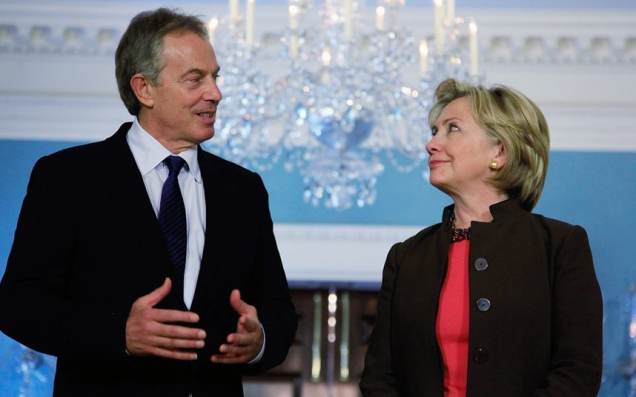
Tony Blair - Hillary Clinton - centrism

In a wide-ranging essay, Michael Lind argues that the elite managerial class have broken their compact with the working classes to the detriment of the country, thus explaining the populist backlashes witnessed in Britain and America

“The New Class War”, an essay in the American Affairs Journal by writer Michael Lind, perfectly captures the intersection between trade regulation, democracy and the interests of the managerial elites which is at the heart of the current debate over sovereignty – and which fuelled the Brexit vote in the UK and Donald Trump’s ascendancy to the presidency in America.

It is necessary to quote at some length from the section entitled “The Politics of Global Arbitrage“, in which Lind discusses the ways in which corporate behaviour has influenced the contours of our democracy:

Even as they have exploited opportunities for international labor and tax-and-subsidy arbitrage, firms in the post–Cold War era of globalization have promoted selective harmonization of laws and rules, when it has been in their interest to do so. In the second half of the twentieth century, successive rounds of negotiation under the auspices of the General Agreement on Tariffs and Trade (GATT) and, more recently, the World Trade Organization (WTO) effectively reduced most traditional tariff barriers. By 2016, when the WTO effectively terminated the failed Doha Development Round of global trade talks, the United States and other leading industrial nations had shifted the emphasis from removing barriers restricting the cross-border flow of goods to harmonizing laws and regulations through “multiregional trade pacts” like the North American Free Trade Agreement (NAFTA), the Trans-Pacific Partnership (TPP), and the Transatlantic Trade and Investment Partnership (TTIP), in the interests of transnational investors and corporations reliant on transnational supply chains.

The areas chosen for arbitrage and harmonization reflect the interests not of national working-class majorities but of the managerial elites that dominate western governments. Harmonizing labor standards or wages would undercut the labor arbitrage strategy, while transnational crackdowns on tax avoidance would thwart the strategy of tax arbitrage by transnational firms. Instead, the emphasis in harmonization policy has been on common industrial standards, the liberalization of financial systems, and intellectual property rights, including pharmaceutical patents. These kinds of harmonization benefit transnational firms, investors on Wall Street or in the City of London, and the holders of intellectual property rights in Silicon Valley and the pharmaceutical industry.

In many cases, this kind of regulatory harmonization makes sense—standardizing product safety measures, for example. But the new regulatory harmonization agreements produce a “democratic deficit” in two ways.

First, they remove whole areas of regulation from the realm of ordinary legislation, replacing it with “legislation by treaty.” Favorable laws and regulations that corporate lobbyists are unable to persuade national democratic legislatures to enact can be repackaged and hidden in harmonization agreements masked as “trade” treaties. These treaties, often thousands of pages long, tend to be drafted in secret by committees involving corporate lobbyists and may be ratified by legislatures without careful scrutiny.

Worse, most of these contemporary regulatory harmonization agreements include “investor-state dispute settlement” (ISDS) provisions that allow individual corporations to sue national governments that change the rules in their countries after the passage of the treaty in private tribunals, dominated by corporate lawyers, with no appeal mechanism. If Congress enacts a statute that adversely affects the interests of Acme Inc., then Acme has few options, other than paying lobbyists and making campaign donations. But if Congress ratifies a treaty, and later changes a provision by passing a new law, Acme can sue the federal government for financial damages. The United States has yet to lose a case to ISDS, but other countries have, and some believe that the prospect of corporate lawsuits has a chilling effect on new laws and regulations of which particular corporations disapprove.

None of this is to imply that the transnational managers of the West and littoral East Asia who control the new global oligopolies are more selfish or less public-spirited than the managers of national corporations during the Second Industrial Era. On the contrary, in personal terms, today’s managerial elite is for the most part less bigoted and often quite philanthropic. The point is simply that the American, German, and Japanese corporations of half a century ago were constrained by kinds of Galbraithian countervailing power and Burnhamite/Moscian juridical defenses that have crumbled. Thanks to globalization, itself a voluntary policy choice enabled but not required by new technology, today’s transnational firms have much more bargaining power in their dealings with workers and democratic nation-states.

My emphasis in bold.

This perfectly sums up a core part of the democratic case for leaving the European Union as it relates to trade, and is very much in line with the analysis and arguments advanced by Dr. Richard North of eureferendum.com and Pete North.

Lind is quite correct to acknowledge that regulatory harmonisation can be an enormous force for good. In fact, the trouble only really comes about when there is no option for a democratic nation state to “opt out” of a certain regulatory change or edict when its imposition would harm the national interest in some way. Obviously there would be consequences for such an action, such as the non-recognition of standards relating to the product or industry in question. But the opt-out is a vital tool which nation states must possess in order to wield sensibly and with restraint on those occasions when the compromise hashed out by 27 EU member states is unacceptable to the sole outvoted dissenting country.

This is what we mean by the outsourcing of sovereignty. Remainers and assorted pro-EU apologists love to make the glib assertion that EU member states retain ultimate sovereignty at all times because they are technically free to leave the EU, but this is an asinine assertion. Sovereignty should not be a choice between having to go along with every diktat from Brussels or deploying the nuclear option and leaving the European Union. Indeed, how can you call it sovereignty when the choice is between accepting papercut after papercut (grave though the cumulative wound may be) or else enduring the disruption of severing ourselves from the union? This isn’t sovereignty, it is blackmail. Thank goodness that Britain finally called the EU’s bluff.

This section is also instructive:

To obtain social peace and mobilize national populations during World War II, the United States and its allies like Britain brokered business-labor pacts and promised welfare benefits to veterans. In the ensuing Cold War, every major industrial democracy devised some kind of “settlement” or compromise among business and labor interests within the nation.

The postwar settlements were a combination of employer-specific welfare capitalism and universal or means-tested, social-democratic welfare states. In West Germany, welfare capitalism took the form of “codetermination,” or union membership on corporate boards. Japan, following intense labor conflict after 1945, developed a system of corporate paternalism and lifetime employment for many workers. Organized labor was weak in the postwar United States, but the “Treaty of Detroit” negotiated among automobile companies and unions was a successful example of informal business-labor corporatism. Low levels of legal and illegal immigration, and social pressure on married mothers to exit the work force to become homemakers, strengthened the bargaining power of mostly male workers by creating tight labor markets.

These corporatist systems of welfare capitalism made the welfare states of the period from the 1940s to the 1970s much smaller than they would have been otherwise. Wage compression brought about by unions in the welfare-capitalist system made it easier for payroll taxes to fund entitlements like public pensions, which in turn were smaller than they might have been because of the widespread existence of private employer pensions.

The post-1945 settlements in the West and Japan demonstrate countervailing power and juridical defense in action. The result was the golden age of capitalism from the 1940s to the 1970s, combining high growth with a more equal distribution of its rewards than has ever existed before or since.

But Lind sees the end of the Cold War as a turning point when the post-war settlements established in the West and Japan began to be fatally undermined:

Following the Cold War, the global business revolution shattered these social compacts. Through the empowerment of multinational corporations and the creation of transnational supply chains, managerial elites disempowered national labor and national governments and transferred political power from national legislatures to executive agencies, transnational bureaucracies, and treaty organizations.

Freed from older constraints, the managerial minorities of Western nations have predictably run amok, using their near-monopoly of power and influence in all sectors—private, public, and nonprofit—to enact policies that advantage their members to the detriment of their fellow citizens. Derided and disempowered, large elements of the native working classes in Western democracies have turned to charismatic tribunes of anti-system populism in electoral rebellions against the selfishness and arrogance of managerial elites.

I have to say that Lind’s essay has given me pause for thought. This blog has consistently championed the Thatcherite revolution which took Britain from being the sick man of 1970s Europe, seemingly in terminal decline, to a revived and confident global power by the 1990s. I did so while acknowledging the various failures of the Thatcher government to ameliorate the decline of heavy industry outside of the wealthy Southeast and its cost in terms of suffering and wasted human potential, but I nonetheless saw (and continue to see) Thatcherism as a necessary if painful tonic for the economically sick Britain of the 1970s.

Lind, however, sees things differently. From Lind’s perspective, the post World War II settlements established between labour and the managerial classes in various Western countries were responsible for the great boost in productivity and living standards, not an anchor on these metrics (as I have always viewed the post-war settlement in Britain, partially deconstructed by Thatcher). To be fair, Lind pinpoints the start of the unravelling to the end of the Cold War when Thatcher’s premiership was nearing an end, but since many of the tenets of Thatcherism continued through the Major and Blair governments into the 21st century once can reasonably infer a criticism of Thatcher’s policies, which merely took a decade to come to full fruition.

This is food for thought for an unabashed Thatcherite like me, and I need to do more reading to decide how much of Lind’s narrative holds water. The narrative arc he constructs is persuasively argued and passes the “common sense” test, but to my mind Britain’s experience stands as an exception to Lind’s rule. In our case, the post-war settlement we constructed (based on the recommendations of the Beveridge Report) grievously held us back as a country. We did not benefit from enlightened German-style corporate governance or Japanese-style jobs for life in the post-war years, but rather sank into decades of adversarial conflict between unions and (largely state-owned) employers, with government policy repeatedly favouring the interests of the producer over those of the consumer.

Now, this could be because British government policy was particularly misguided and the British managerial class particularly useless (an argument I have some sympathy with), but it seems more likely to me that Lind’s blanket assertion that countries prosper most when there is a powerful countervailing force to push back against the elite managerial class is not always correct – or at least is only one of several other key factors determining economic growth and increases in standard of living. I would posit that Thatcher’s Methodist upbringing probably provided a great moral anchor that prevented excessive self-serving policymaking, while today’s decadent and avowedly secular elites are perhaps more prone to corruption and in greater need of the countervailing force that Lind describes (hence the populist backlashes we have witnessed).

Lind then goes on to discuss how labour arbitrage and tax & subsidy arbitrage in our more globalised world have worked to undermine the nation state and empower the corporation – a line of reasoning which would certainly be familiar to anyone on the Left.

He concludes by looking ahead to the likely geopolitical situation in the year 2050, and considers what will be the best strategy for the West to maintain power and influence:

Great-power competition, even in the form of limited cold wars, is likely to reward nations whose economic model is based on developing productive technology and raising the incomes of domestic worker-consumers, rather than engaging in labor and tax arbitrage, regulatory harmonization, and other schemes that boost profits without increasing productivity. In cold wars and trade wars, even if no blood is shed by the contenders, countries and blocs with empowered and patriotic workers are likely to do better than rival nations crippled by immiserated workforces and selfish, nepotistic, oligarchic elites.

[..]

Managerial elites are bound to dominate the economy and society of every modern nation. But if they are not checked, they will overreach and produce a populist backlash in proportion to their excess. By a misguided policy of suppressing wages and thus throttling mass consumption, unchecked managerial elites may inadvertently cripple the technology-driven productivity growth responsible for their rise and accidentally cause the replacement of managerial society itself by a kind of high-tech rentier feudalism.

Managerial society works best when there are not only concessions to national working-class economic interests—the bribes to the “losers” of neoliberalism—but also genuine economic bargaining power and political power wielded by the many. Far from undermining managerial regimes, Burnham’s “juridical check” and Galbraith’s “countervailing power” make them more legitimate and sustainable.

In other words, the policies favoured by the current dispossessed centrists in Britain and America are not as smart and self-evidently beneficial as their advocates love to claim. Status quo globalisation, which increasingly seeks to leverage labour arbitrage, tax arbitrage and selective regulatory harmonisation to benefit the managerial class while doing little to raise productivity (not to mention leaving millions of people in dead-end jobs or the unemployment scrapheap) is not only selfish on the part of the managerial class, it is also injurious to the future prosperity and security of the country.

In fact, according to Lind, it turns out that having a patriotic population and workers with a commitment to the country they live in, together with some degree of bargaining power (preferably due to their possessing valuable skills rather than the threat of withholding their labour, as deployed in the 1970s), is perhaps a net positive after all, particularly in the long term.

Again: I don’t buy everything in Michael Lind’s essay. But he spins a plausible narrative and argues his case well. And if Lind is correct, how regrettable is it, then, that the populist backlashes on both sides of the Atlantic have been held in check partly through their own incompetence (Donald Trump in America and the Tory hard Brexiteers in the UK) and partly by the fact that the resurgent centrists have effectively ground the respective movements to a halt?

Bear in mind, if and when the centrists retake power, they intend to revert to pure business as usual. They have learned nothing from the comprehensive rejection they received from voters only a short time ago, and think that the world can revert to its previous happy state where they got everything that they wanted while anyone who dissented could go jump off a bridge.

I have long contended that such an overturning of these populist movements by the elite would be poisonous, even fatal, to our democracy. But if Lind is correct, it could also be fatal to the future economic prosperity and national security of our countries.


Globalisation

Support Semi-Partisan Politics with a one-time or recurring donation:

Agree with this article? Violently disagree? Scroll down to leave a comment.

Follow Semi-Partisan Politics on TwitterFacebook and Medium.