Banning The Burqa And Burkini Is Not The Correct Liberal Response To Conservative Islam

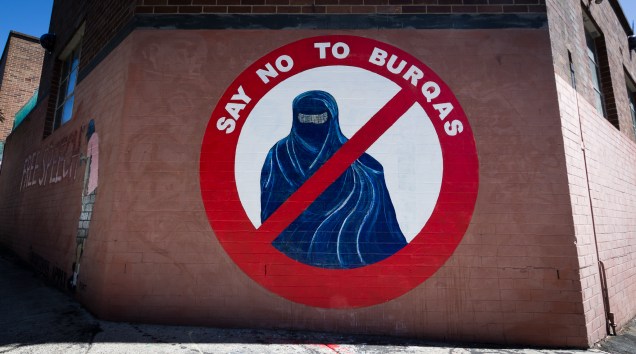
Free Speech - Say No To Burqas - Burkini - Mural

In a liberal democracy, government has no business dictating what clothing is or is not acceptable to wear – and banning the burqa or burkini only further delays the long-overdue day of reckoning between conservative Islam and modern Muslim women

France is now taking its official ban of the burqa one step further, as the mayor of Cannes announces a ban on burkini beachwear on the grounds that the concealing garment poses a security risk.

The New York Times reports:

The mayor of the French resort city of Cannes has barred women from bathing on public beaches in swimsuits that reveal too little skin.

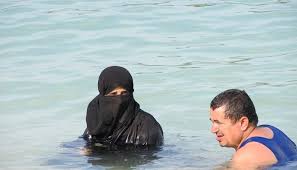
At issue are the full-body, head-covering garments worn in the water by some Muslim women, which have been nicknamed burkinis, an amalgam of burqa and bikini. The mayor’s ban has drawn protests from French Muslims who say it is discriminatory.

That the debate is occurring on the Riviera, the Mediterranean vacation area that has been on edge since the terrorist attack on a Bastille Day celebration in nearby Nice, has only added to the controversy.

Critics of the ban say it risks deepening rifts with France’s Muslims. It is the latest example of the long-running tensions between France’s forceful — some say inconsistent — commitment to secularism and the desire of many Muslims to express traditional values like modesty through their attire.

The mayor’s ordinance, which runs until Aug. 31, bars people from entering or swimming at the city’s public beaches in attire that is not “respectful of good morals and secularism” and that does not respect “rules of hygiene and security.” Offenders risk a fine of 38 euros, or about $42.

Why are burkinis against the rules? “Beach attire that ostentatiously displays a religious affiliation, while France and places of worship are the target of terrorist acts, is likely to create risks to public order,” the ordinance says.

If this were being done in a public place on the grounds of security, the mayor of Cannes would be in a much stronger position, and would gain this blog’s sympathy, particularly after the appalling terrorist truck attack in Nice on Bastille Day. There is a very logical and powerful argument to be made against the prohibition on wearing any overtly concealing clothing when entering public buildings such as town halls, courts, public schools, parks or beaches, just as motorcycle owners are asked to remove their helmets before entering a bank branch.

But the mayor of Cannes has taken this action with specific reference not to security, but in the name of  laïcité (the separation of church and state). We know this because French government officials have explicitly said so:

This costume [the burkini], Mr Lisnard [the mayor] declared, “ostentatiously displays religious affiliation”, could “disrupt public order”, and might even, in the words of one official, demonstrate “an allegiance to terrorist movements”.

Now secular government is broadly a very good thing, and societies become more free as they cast off the remaining vestiges of theocracy – one of the reasons that this blog is so keen to get rid of the Lords Spiritual and remove Britain from Iran’s company as the only countries where unelected theocrats sit in the legislature by right.

However, while citizens – even those of faith – should absolutely demand secularism from their government, it does not follow that the government can unjustly impose secularism on the people as they go about their lives. That would be a grave wrong, and the growing movement to ban the burqa represents an abuse of power by governments against their own citizens.

The Telegraph’s Juliet Samuel agrees:

Now it’s hard to muster much enthusiasm for the burkini. It harks back to an age, still dominant in much of the world, when a woman’s worth was measured by her modesty. It belongs to a belief system in which women cannot experience one of the joys of the natural world – feeling the wind and sea on her body. It suggests that the female form is shameful and provocative. But those who want to ban the burkini for these reasons are forgetting one of the most important values of a free society: we don’t all have to believe the same thing in order to live together.

Every day, thousands of Britons wake up and do things I think are crazy and wrong. They drink instant coffee, listen to Magic FM and wear Spandex. Some wear high heels or bowties. Others have plastic surgery, get tattoos, cheat on their spouses, drink too much, shout too much and vote Labour. They get their news from Facebook and watch hours of trashy TV. Many of them pray to a god, convert to Buddhism, believe in crystal healing or sing in Church on Sundays with their eyes closed and their arms in the air. I don’t do or understand any of these things. But I let them get on with it.

[..] Like a theocratic regime, the Cannes burkini ban forces some Muslim women to choose between their religious and their national identity and perniciously suggests that their choice of dress is a political statement, whether they mean it to be or not. It is unsurprising that the French should lead the way in this kind of thinking, because in France nothing is allowed until the law permits it, whereas in Britain, everything is allowed until the law forbids it. So, in the name of enforced secularism, France forbids covering the face in any public setting, whether it’s for religion or Hallowe’en, and bans religious symbols like hijabs (hair coverings) in state institutions such as schools. The burkini ban takes this illiberal trend even further by making it illegal to wear “ostentatious” religious symbols even when going about one’s own private business.

[..] A normal Muslim, who has grown up seeing a hijab as an unremarkable but important symbol of womanhood, finds herself forced to choose between respect for the law and her family’s everyday customs. Is this senseless, banal and brutal ban more likely to awaken a hidden feminist creed and a love of La République in her heart or to make her feel attacked and excluded from mainstream society?

Strong societies cannot permit parallel legal or political systems, such as Sharia courts or caliphates. But they can cope with differences in dress and customs. They should not allow obstructive religious clothing like face‑coverings to disrupt teaching or court hearings. But if a Muslim woman wants to wear a baggy wetsuit and go for a swim on a public beach, that does not make her a threat to Western society. The real enemies of freedom are not the burkini-wearers, but the politicians who want to ban them.

Amen to this. Samuel is quite right to fear the politicians over the burkini-wearers, even if we may disagree with their sartorial and religious motivations. Indeed, we should fear any further legitimisation of the idea that our rights derive from the state, who can suspend our freedoms at will in the name of “security”.

One of the most alarming things about this century has been the rejuvenation of authoritarianism, spurred on by the growing threat of Islamist terror. Whether it is manifested in airport security theatre, the banning of religious jewellery or other symbols from the workplace or the dystopian suppression of free speech in universities, public squares and social media, we have become markedly less free in sixteen years with precious little to show for it.

But more than all of that, if we are serious about tackling the skewed ideology and belief system which preaches that women must be modest to the point of having to bathe fully clothed, then a government ban is the absolute worst way to go.

Such a diktat of law effectively exonerates conservative Islam (or fundamentalists of other religions) from any responsibility to reform and recognise the equality of women, gay people and other minority groups. Ban the burqa (or burkini) and conservative Muslims may obey. But not only will they immediately be able to portray themselves as victims in the process, claiming persecution for their religious beliefs, they will be under no further internal pressure to reconsider and reform centuries-old religious diktats in the changed context of modern society.

If we want a world where the burqa is relegated to fringe extremists and museums, then the pressure must come primarily from Muslim women. Only when they demand their right to dress as they please and force the reluctant accommodation of religious authorities will they be able to win the parity of treatment which has been missing for so long.

The job of Western governments in all of this is not to interfere or seek to be a white knight, banning the burqa or burkini on the behalf of oppressed women. Government’s role is to make sure that Muslim women have full access to the legal system to sue for their equal treatment in court where it is being infringed, and to clamp down insidious efforts to set up parallel justice systems based on Sharia law or any other religious code instead of shamefully welcoming them in the name of “multiculturalism”.

We should be encouraging a more liberal form of Islam to prevail over the more oppressive and fundamentalist conservative wings. We need more Ahmadis and others like them, openly tolerant of other faiths and proudly patriotic. And when these groups of progressive Muslims are attacked we should stand shoulder to shoulder with them rather than shamefully currying favour with their persecutors in the name of “multiculturalism”.

But ultimately, this is an internal enlightenment which must take place within Islam. It is not the job of provincial mayors in France or government departments in Britain to “rescue” their female Muslim citizens from oppression; nor would any such rescue hold any legitimacy. Western society can take certain actions to encourage this revolution among its Muslim communities, but ultimately the heavy lifting must be done by Muslim women standing up to claim their own full rights as citizens.

Widespread bans on the burqa or burkini may make us feel good or even allow some of us to burnish our feminist credentials, but that is the only good that they will accomplish. And meanwhile, the long-overdue day of reckoning between modern Muslim women and the conservative wing of the Islamic faith will be deferred indefinitely, to everyone’s cost.
 

Burkini ban

Top Image: Impulse Today

Support Semi-Partisan Politics with a one-time or recurring donation:

Agree with this article? Violently disagree? Scroll down to leave a comment.

Follow Semi-Partisan Politics on TwitterFacebook and Medium.

Purge Tom Watson From The Labour Party, Not The Corbynites

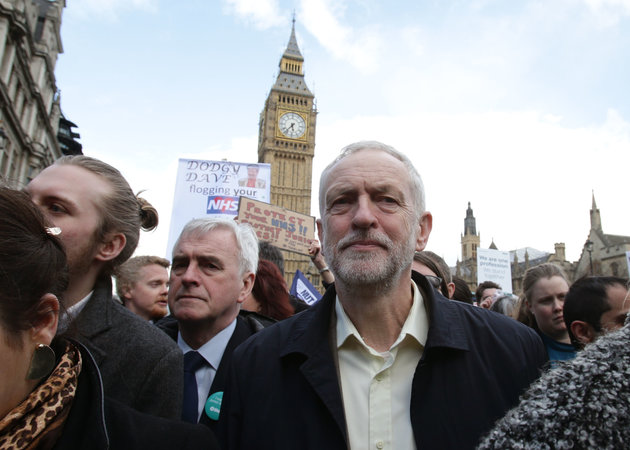
Tom Watson - Jeremy Corbyn

If there is to be a Labour Party purge, leave the Corbynites and centrists alone and purge disgusting people like deputy leader Tom Watson

Charles Moore is quite right to identify the real odious usurper within the top echelons of the Labour Party – deputy leader Tom Watson:

The majority opinion is that it is a disgrace that Jeremy Corbyn is the leader of the Labour Party. Actually, the real disgrace is that Tom Watson is its deputy leader.

It is a question of character, not of political views. Mr Watson is an inveterate plotter (see, for example, his almost successful political assassination plot against Tony Blair in 2006, to assist Gordon Brown). He is also the purveyor of utterly unsubstantiated malicious rumour.

Moore reviews Watson’s inglorious history:

In 2012, collaborating with the website Exaro, he used parliamentary privilege to allege “clear intelligence” of a “powerful paedophile network” in Parliament and Downing Street. He called on the Metropolitan Police to investigate, and later passed them “information”. This led to a series of operations by the police – Fairbank, Fernbridge, Midland – which looked credulously into allegations, some blatantly crazy, about child abuse, torture and even murder by leading figures in politics and society.

The investigations collapsed this year, but not before they had defamed the late Sir Edward Heath, ruined the last years of Lord Brittan, tormented the wife who then became his widow, and persecuted Field Marshal Lord Bramall (who is still, I am glad to say, robustly with us) and many more.

And then explains why the odious Tom Watson actively hinders the efforts of Labour’s suddenly reviled centrists to dislodge Jeremy Corbyn:

Now Mr Watson alleges that the Labour Party is being infiltrated by Trotskyists. “Some old hands [are] twisting young arms,” he says, making it sound like his favoured subject of child abuse. He may actually be right in this case. But the Corbyn team clearly finds it easy to say Mr Watson is “peddling baseless conspiracy theories”: he has done so before. It is utterly dismaying to see Labour led by the hopeless Mr Corbyn, unless you want a permanent Tory government (which I certainly don’t), but Labour moderates who oppose him do not seem to understand why they cannot gain the moral high ground. A big part of the answer is Mr Watson.

I’m actually with Owen Jones on this one – the idea that Trotskyist entrists are of any significance  in Labour’s influx of new members is ridiculous overstatement. Anyone who has ever been to a party conference or a political demonstration knows just how fringe these wizened far-leftists are, with their cheaply produced pamphlets and anachronistic slogans.

The fact that Tom Watson seeks to portray these people as having outsized influence is quite understandable, given his thuggish imperative to topple his leader and restore the rule of the centrists, but that does not make it true. In fact, it is a great slander on the hundreds of thousands of people who have flocked to the Labour Party, attracted by the fact that Jeremy Corbyn offers something other than the muddled centrism practised by Blair-Brown-Cameron-Miliband.

Tom Watson is exactly the kind of bruising, Chicago-style machine politician that we should be working to purge from our politics, not looking to as our salvation from Corbynism. He is the epitome of New Labour’s headline-led approach to governing – the fact that Watson’s first major act as an MP was to agitate for a ban on Gary Glitter albums shows a slavish desire to win the approval of The Sun and a brutal authoritarian streak which has been revealed numerous times since, not least in his Herculean efforts to take down Tony Blair in 2006, acting as Gordon Brown’s hired gun.

Is Jeremy Corbyn the great white hope of British politics? Of course not – his ideology and policy obsessions come pretty much unreformed from the 1970s, his foreign policy is alarmingly anti-American and he has any number of unpleasant friends and associations, at home and abroad. But at least he offers a gosh darn alternative to the centrist consensus.

Ambitious Conservatives in particular should appreciate that Corbyn’s efforts to shift the left hand border of Britain’s political Overton window makes it equally possible for a future radical Conservative leader (anyone? anyone?) to push the other boundary further to the right.

And for that potential alone, Jeremy Corbyn is worth 650 Tom Watsons.


Tom Watson - Labour Party - Deputy leader

Top Image: ITV

Bottom Image: International Business Times

Support Semi-Partisan Politics with a one-time or recurring donation:

Agree with this article? Violently disagree? Scroll down to leave a comment.

Follow Semi-Partisan Politics on TwitterFacebook and Medium.

Mandatory Reselection Of MPs Should Be The Norm For British Political Parties, Not A Scandalous And Controversial Idea

Jeremy Corbyn - Mandatory Reselection Labour MPs

MPs do not have a divine right to represent their constituencies forever once selected by their local party, Jeremy Corbyn is quite right to consider mandatory reselection for MPs and all political parties that profess to care about democracy should follow his lead

The Telegraph leads today with a breathless piece warning of Jeremy Corbyn’s intention to press for mandatory reselection of MPs whose constituencies are changed as a result of the coming boundary review, assuming he prevails in the Labour leadership contest.

Jeremy Corbyn’s allies are planning to end the parliamentary careers of dozens of critical Labour MPs by approving plans for mandatory reselection by the end of the year.

The Telegraph understands his supporters will use their increased majority on the party’s ruling body to clarify rules about which MPs can stand for election after the 2018 boundary review.

Rhea Wolfon, elected to the Labour’s National Executive Committee [NEC] this week, hinted at the move by saying the party must have a “conversation” about “mandatory reselection”.

However Andy Burnham, Labour’s new mayoral candidate for Greater Manchester, said it would “pull the rug from under our MPs” and fuel a “climate of distrust”.

While Politics Home reports that Steve Rotheram, Jeremy Corbyn’s PPS and now Labour’s candidate for the Liverpool city regional mayoralty, has also made approving noises about challenging the “divine right” of MPs to remain in their position come what may:

Steve Rotheram, who serves as Jeremy Corbyn’s parliamentary private secretary, said elected politicians should not think Westminster is the “repository of all the best ideas”.

It comes after Rhea Wolfson, a newly elected member of Labour’s ruling National Executive Committee, said the party should have a “conversation” on the mandatory reselection of MPs.

When asked whether he was in favour of such a proposal, Mr Rotheram said he was “attracted” to Tory MP Zac Goldsmith’s 2014 plan that would see misbehaving MPs face a by-election if 5% of constituents signed a “notice of intent to recall” and 20% then sign a “recall petition”.

He said he did not support Mr Goldsmith’s defeated amendment to the Recall of MPs Bill amid concerns about the exact motion he was putting before the House of Commons.

The MP for Liverpool Walton added: “But yes, I think that MPs should reflect what the membership who select them are putting them into parliament to do. We shouldn’t believe that we’re down here and that we’re the repository of all the best ideas.

“We really should be looking at what our members are telling us to do and I think that’s part of the role as a Member of Parliament.”

Cue shock, horror and clutching of pearls from the political establishment – Andy Burnham, himself about to jettison a Westminster career cul-de-sac in the hope of municipal glory in Manchester, says that it would be “pulling the rug” out from underneath MPs. Well, perhaps MPs need to have the rug pulled out from underneath them. Perhaps they need the rug to be yanked hard enough so that they either become genuinely responsive to the party activists who work to get them elected or quit the field of play altogether.

The great thing about democracy at its best is that it rewards those who show up when the times comes to choose. Old people reliably vote in large numbers, therefore government policy when it comes to housing, welfare spending and any number of other policy areas is generously skewed in their favour. If only young people could put their Pokemon Go games down for long enough to make it to a polling station, government policy might begin reflecting their concerns too. But they don’t, so it isn’t.

Unfortunately, the way MPs are currently selected by Britain’s main political parties takes this important aspect of democratic responsiveness and throws it out the window. Once an MP has been chosen as their party’s nominee, they have very little use for their own party activists. These dedicated and principled people are hardly likely to ever support a candidate from another party, and therefore an unscrupulous MP can abuse and betray them to their heart’s content knowing that they automatically qualify as their party’s parliamentary candidate the next time a general election rolls around.

And inevitably this can lead to a growing gulf between the political stance of a constituency party and the views espoused (and votes taken) by that constituency’s Member of Parliament. This is what we now see happening to the Labour Party, where depending on your view either the parliamentary party has shifted to the right or the membership has shifted dramatically to the left (in reality a bit of both) and no longer stand for the same principles.

The brutal truth right now is that many Labour MPs, including some quite prominent ones like former leadership contender Angela Eagle, are now irreconcilably out of step with their own local parties. Why, therefore, should they have the automatic, divine right to continue to represent local parties who despise them and wish to put forward someone for parliament who more closely reflects their own priorities and positions?

When viewed this way, Jeremy Corbyn’s proposal seems quite tame. In fact, this blog would go further – MPs should not only face mandatory reselection in the case of constituency boundary review (the specific circumstance currently under discussion) but every five years ahead of a general election. This would bring Britain into line with other countries like the United States, where Representatives and Senators do not have “jobs for life” and must compete in party primaries if they wish to run for their seat at the next election. Such a move would put the wind up an often self-entitled political class, forcing MPs to justify their worthiness of a place on the ballot at regular intervals and forcing many of the older, less useful bench warmers off into retirement.

No constituency should be lumbered with a doddering old MP who doesn’t care any more, or a sharp-elbowed go-getter who ignores their constituency as they focus on climbing the greasy pole. Mandatory reselection goes a long way to solving those problems.

The current system, by contrast, is an abomination – incumbent MPs, often initially selected to stand for parliament in their constituencies through dubious, opaque or even downright corrupt means are then largely free from scrutiny by their own party for the rest of their career. As soon as they enter parliament they are enveloped in the Westminster self-protective cloak which serves to insulate parliamentarians from the consequences of their behaviour and political decisions.

If you know that nothing you can do will ever get you fired – if there is no political betrayal (like, say, pretending to be a eurosceptic during selection and then turning around and supporting the Remain campaign) for which you will ever be held to account – then there is every incentive to lie about your real political beliefs and motivations during selection, and then behave in as abominable and self-serving a way as you please as soon as your are elected to the Commons.

The status quo needs to change, and whatever else one may think of Jeremy Corbyn (and however self-serving his motivations may be), he should be applauded for taking a stand for democracy and accountability and against the entrenched privilege of the political class.

If political parties are to be accountable to their supporters then there needs to be an established process for the base to hold their candidates to account for decisions taken in office. Mandatory reselection – together with a proper right of recall, empowering constituents to recall a failing or unpopular MP subject to a certain percentage of the local electorate signing a petition – is an important aspect of that process.

Under a properly democratic system, MPs should fear the wrath of their local constituency party and be closely responsive to their priorities and concerns. At present, too many MPs take their local party for granted as soon as their selection is assured, shunning the activists who knock on doors and deliver leaflets on their behalf in order to cravenly pander to the centre.

This needs to change. This can change. And Jeremy Corbyn should be commended for trying to do something about it.


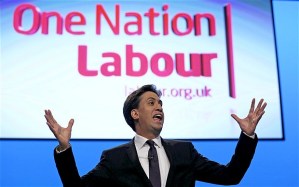
Ed Miliband Labour One Nation

Top Image: Huffington Post

Support Semi-Partisan Politics with a one-time or recurring donation:

Agree with this article? Violently disagree? Scroll down to leave a comment.

Follow Semi-Partisan Politics on TwitterFacebook and Medium.

This Weak Conservative Government Refuses To Get Tough With The Unions

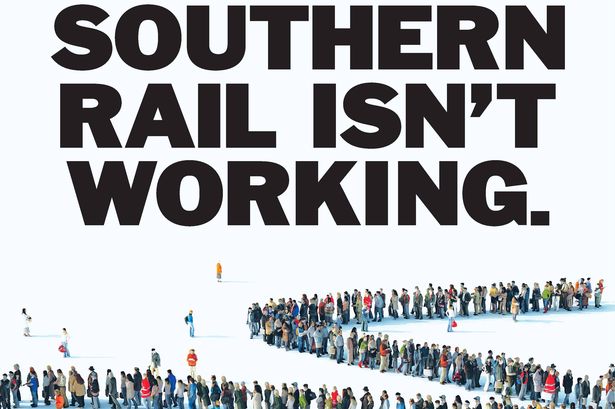
Southern Rail Isnt Working

When even staunch New Labour grandee and columnist John McTernan thinks the Tories are behaving like a weaker version of the Labour Party, British conservatism is in real trouble

As the RMT union’s strike on Southern Rail enters its third consecutive day, inconveniencing hundreds of thousands of commuters while a dithering Tory-lite government watches on, wringing its hands, former New Labour political adviser John McTernan uses his Telegraph column to tear into the Conservative Party.

McTernan writes:

We are in the middle of a five-day rail strike on Southern Rail. Commuters are being massively disrupted. And this is just the latest stage in a dispute in which the Luddite RMT union has made it clear that it is fully committed to fighting against the future.

What about the Government? Where are they in this dispute. It is a crystallisation if all their key themes: investment, modernisation, innovation and productivity. But they are silent.

Well not quite. What we have actually seen is the resignation of the then rail minister Claire Perry, who said:  “I am often ashamed to be the Rail Minister.” And so she should have been – just for her pathetic capitulation to the RMT. This, of course, is just what you would have expected from a Miliband government; but this is a Tory government, with a majority.

There is a famous scene in The West Wing episode about President Bartlet appointing a member of the Supreme Court. He meets Justice Joseph Crouch, whose retirement creates the vacancy, and is angrily addressed by Crouch: “I wanted to retire five years ago. Five years. But I waited for a Democrat. Instead I got you.” The Southern Rail dispute is just like that. Commuters in the Home Counties could be forgiven for thinking: “I waited 23 years for a majority Tory government. Instead I got you.” Where are the core Tory values? Where is the support for management’s right to manage?

This is utterly stunning criticism – shocking not only because it is self-evidently true (the Conservatives in government are a shadow of their glorious best under Margaret Thatcher) but because they are now so bad at governing in a conservative fashion that it has fallen to a former New Labour apparatchik to set them straight.

Why on earth has it fallen to a Labour Party grandee to inveigh against the more militant trades union? Where is the useless europhile Greg Clark, supposedly Secretary of State for Business, Energy and Industrial Strategy during this whole dispute? Where is Chris Grayling, Transport Secretary? Have they all taken lessons from their new boss in the art of disappearing and avoiding the media during scandals affecting their ministerial briefs?

This criticism is particularly damning:

Where are the core Tory values? Where is the support for management’s right to manage?

Where indeed. This blog has wondered the same thing, as the Tories in government behaved like centralising statists, presided over an unprecedented weakening of our national defence, dithered over the housing crisisfailed to get to grips with the nation’s finances, alienated principled conservatives, and as the leader of a supposedly eurosceptic party did all he could to cheat his way to victory for the Remain camp in the EU referendum. Where are the core Tory values?

A Thatcherite government would have stood boldly on the side of consumers over producers, and thus would have been unafraid to plant its flag squarely in the same corner as Southern Rail’s unfortunate commuters. And unlike the Cameron approach to industrial disputes (seemingly applying maximum pressure on businesses to capitulate to union demands, as seen with the London Tube strikes) a Thatcherite government would have recognised the offensive absurdity of the union demands and unashamedly sided against them.

Needless to say, we do not have a Thatcherite government – despite all of the ingredients being in place for another properly ideological right wing government to flourish. The left-wing opposition is hopelessly divided. The Conservatives are under new leadership for the first time in a decade. Boundary review looks set to help the Tories by correcting decades-old biases in favour of Labour, potentially gifting the Tories tens of additional seats. All of these factors stand ready and waiting to be exploited by a radical Conservative government which understands that it has a duty to do more than hold power for the sake of it.

And yet at every turn, the Tories triangulate and tack to the centre. They did so under coalition government (when they had a modicum of an excuse) and they continue to do so now, when they have none. Right now, there is effectively no opposition. A conservative government right now could make a fair stab at privatising pensions and the NHS, and still not be forced out of office so long as the Corbynite and centrist wings of the Labour Party continue their childish tussle for power. The political landscape is ripe for a radical conservative reduction and reshaping of the state, yet there is almost zero evidence that Theresa May’s government intends to attempt any such bold enterprise.

And for what? Will being a centrist clone of New Labour win the Tories any new fans? Of course not. The swivel-eyed Left have long ago convinced themselves that all Tories are “evil” and “vermin”, no matter what they actually do in government.

https://twitter.com/MomentumRugby/status/763072811627872256

We shall win no new fans by trying to adopt the cuddly persona of a young Tony Blair. We will never be liked. Therefore we should focus on being effective, without giving a second thought to winning over the admiration and votes of people who have been raised since birth to despise us. That’s what Margaret Thatcher taught us. And that is the lesson which we seem determined to cast aside in our feverish pursuit of the focus group’s favour.

John McTernan’s quote from The West Wing is very apt. Many conservatives have indeed been waiting for years – since Margaret Thatcher was forced from office, in fact – for another strong Tory leader; somebody committed to conservative, small government principles and willing to fight for them.

Conservatives waited thirteen long years of New Labour government only to get David Cameron. We then endured six years of Cameronism before being presented with the authoritarian Theresa May, foisted on the party in the confused wake of the EU referendum. And whatever electoral success Theresa May enjoys, she may well end up being every bit as much of an ideological disappointment as her predecessor.

But maybe this criticism is premature. Maybe the autumn Conservative Party conference will give birth to a conservative policy platform actually worth voting for. And to be fair to the new prime minister, even Margaret Thatcher bottled her first confrontation with the National Union of Mineworkers, staging a tactical retreat before coming back to finish the job in 1984-85.

But right now, British conservatives are in the ludicrous and humiliating position of being upbraided by a Labour Party grandee – someone from the party of Jeremy Corbyn and Owen Smith, for heaven’s sake – for being insufficiently dedicated to conservative principles.

And when it falls to Tony Blair’s right hand man to tell the Tories how to get tough with the unions, something is clearly rotten with the state of British conservatism.


David Cameron - Coke Zero Conservative - I Cant Believe Its Not Miliband

Support Semi-Partisan Politics with a one-time or recurring donation:

Agree with this article? Violently disagree? Scroll down to leave a comment.

Follow Semi-Partisan Politics on TwitterFacebook and Medium.

Police Should Spend Less Time Persecuting Citizens For Free Speech Offences And More Time Serving Communities

Rome Police - Old Age Loneliness - Questura di Roma

Our police forces should be knitting communities together and keeping them safe, not prancing around in military gear and threatening citizens who dare to express themselves on social media

A heartbreaking (or heartwarming, depending on your perspective) story from Rome forces us to ask stark questions of our own society, the way we treat our elderly compatriots and the proper community role of the police.

From the Evening Standard:

Kindly police officers came to the aid of an elderly Italian couple after neighbours called emergency services when they were heard crying in their apartment – because they were so lonely.

Officers rushed to the flat in the Appio area of Rome after nearby residents heard shouting and crying coming from inside, and found and 84-year-old Jole, and her 94-year-old husband Michele.

The couple said they had not been victims of crime, but were overcome by emotion after watching sad stories on the news.

The pair, who have been married for 70 years, said they had not had visitors for a long time and were very lonely.

While they waiting for an ambulance to arrive to check the couple over, the officers prepared a hot meal.

They then sat down to have a chat while the elderly couple ate the spaghetti with butter and parmesan they had prepared.

More:

The police force said on its Facebook page: “Especially when the city empties and the neighbors are away on holiday, sometimes loneliness dissolves into tears.

“It can happen, as this time, that someone screams so loud from despair that eventually, someone calls the State Police.

“There is not a crime. Jole and Michele are not victims of scams and no thief entered the house – there is no one to save.

“This time, for the boys, there is a more daunting task – two lonely souls who need reassuring.”

Meanwhile, what do our police spend their time doing?

Well, no day is complete without threatening members of the public. Greater Glasgow Police in particular love to ostentatiously warn people that they are lurking on Twitter and Facebook 24/7, ready to pounce the moment anybody posts something deemed the least bit capable of causing offence.

And London’s own wonderful Metropolitan Police also love nothing more than turning up on the doorstep of people who dare to tweet the “wrong” opinions and sentiments, hauling them away to the police station and delivering them to the hands of the criminal justice system.

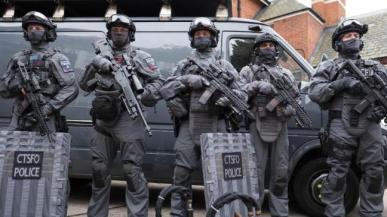
But never let it be said that the Met Police never leave their comfortable office desks. A new batch of them have recently acquired dystopian-looking, military grade combat uniforms and strutted their stuff before Britain’s news cameras in some kind of perverse authoritarian fashion parade. Ostensibly this new armed response unit is intended to keep us safer from Islamist terror attacks mentally ill people, though doubtless we will soon see the same militarised response to other, less violent incidents too. As is so often when it comes to the militarisation of the police, where America leads, Britain duly follows.

Counter Terrorist Armed Police - London

Meanwhile, communities go unpatrolled and some become no-go areas. Local police, either swamped with paperwork or too busy hounding innocent citizens for daring to exercise their right to free speech online, refuse to show up to cases of reported vandalism or burglary (though they mysteriously appear within minutes if a speech or thoughtcrime is reported by some beady-eyed public collaborator).

And to add insult to injury, we now live in a country where the idea of the police carting you away for something you write on Facebook seems perfectly normal, while the idea of the police coming to cook a meal for a lonely elderly couple is so rare that it makes the news headlines when it happens in another country.

Local Police and Crime Commissioners do not seem to have had much of an effect, though at this early stage it is difficult to be sure whether this is due to a lack of powers, regulatory capture by the police forces they are supposed to control or garden variety incompetence. And so here we are.

Is this the police force that we really want?

Is this the policing strategy that actually knits communities together, making them happier and safer?

Absolutely not. It would be very interesting to see a force-by-force breakdown of the number of police officers, civilian staff and other resources devoted to monitoring and curtailing the free speech rights and other civil liberties of Britons. And then immediately shutting down those statist, authoritarian programmes and diverting all of the freed resources to more worthy causes, like helping to tackle old age loneliness.

We’re not talking about police officers cooking roast dinners instead of catching criminals, but surely it should not be beyond the wit of man for police to act as an intermediary, perhaps connecting isolated elderly couples they come across in their work to suitable neighbours who could check in with them once in a while, or provide much needed regular social visits. The police already work with AgeUK to tackle scam criminals and improve home security. There is no reason why this collaboration could not be greatly extended.

At present, we have a police force of two extremes – small numbers of highly militarised officers, armed to the teeth with every counter-assault weapon one can possibly imagine, and a much larger force who seem unable to respond to garden variety crime in an acceptable way, and who are all too rarely visible on the streets.

If local, county and national government is serious about improving police-community relations, they could do far worse than by immediately ordering a halt to the nasty, frivolous and often arbitrary persecution of individuals on free speech and “hate crime” grounds and diverting those funds and resources to a much more worthy cause – helping to tackle the growing problem of old age loneliness in our society.


Postscript: You can donate to Age UK here.


Greater Glasgow Police - THINK - Social Media - Police State - Free Speech

Middle Image: BT

Support Semi-Partisan Politics with a one-time or recurring donation:

Agree with this article? Violently disagree? Scroll down to leave a comment.

Follow Semi-Partisan Politics on TwitterFacebook and Medium.