No, Donald Trump Did Not Call For Hillary Clinton’s Assassination (This Time…)

Donald Trump already provides ample evidence that he is temperamentally unsuitable to be US president without the biased, pro-Hillary American media putting words in his mouth

There is a particularly pernicious story making the rounds at the moment that Donald Trump supposedly called for the assassination of Hillary Clinton (again).

From the New York Times:

Donald J. Trump once again raised the specter of violence against Hillary Clinton, suggesting Friday that the Secret Service agents who guard her voluntarily disarm to “see what happens to her” without their protection.

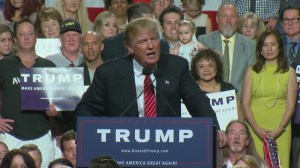
“I think that her bodyguards should drop all weapons,” Mr. Trump said at a rally in Miami, to loud applause. “I think they should disarm. Immediately.”

He went on: “Let’s see what happens to her. Take their guns away, O.K. It’ll be very dangerous.”

In justifying his remarks, Mr. Trump falsely claimed that Mrs. Clinton wants to “destroy your Second Amendment,” apparently a reference to her gun control policies.

[..] On Friday night, breaking from his prepared remarks and turning his gaze from the teleprompters, Mr. Trump looked straight into the crowd as he made the insinuation about Mrs. Clinton’s safety. He gestured emphatically with his hands as he spoke, at one time pointing to a member in the crowd to find agreement.

And the US Guardian:

In a sometimes bizarre 45-minute speech on Friday night, which opened with the unfurling of a new “Les Deplorables” battlefield flag backdrop, the Republican nominee went off-script to call for his opponent’s bodyguards to “disarm immediately” – adding, “Let’s see what happens to her.”

“Take their guns away!” Trump demanded to loud cheers during a section of the speech in which he said his rival wanted to “destroy your second amendment” and he accused Clinton of “arrogance and entitlement”.

In a statement, Clinton campaign manager Robby Mook denounced Trump’s comments: “Donald Trump, the Republican nominee for President, has a pattern of inciting people to violence. Whether this is done to provoke protesters at a rally or casually or even as a joke, it is an unacceptable quality in anyone seeking the job of Commander in Chief.”

“But we’ve seen again and again that no amount of failed resets can change who Donald Trump is.”

The call to leave the Democratic nominee protected by unarmed secret service agents, first made by Trump in May, raised eyebrows as a reversion to the undisciplined candidate of the primaries rather than the more scripted one of recent weeks. Trump also suggested in August that if Clinton was elected president, “the second amendment people” might be able to stop her from appointing judges. That statement was widely interpreted as a veiled assassination threat as well at the time.

The tone and inference of both of these articles are shockingly misleading.

The point that Donald Trump was making was that it is rather hypocritical of Hillary Clinton to advocate for stronger gun control laws which potentially limit the ability of the citizenry to defend itself when she herself is surrounded by the best trained and equipped armed guards in the world, and does not have to worry for her own safety. Trump was suggesting that were Clinton’s Secret Service protection revoked, forcing her to provide for her own personal security, she might not be so keen to limit the types of weapons available to private citizens.

Now, one can disagree with the premise of Trump’s point and poke all kinds of holes in the logic (though this blog considers the basic thrust of the argument to be quite sound), but by no stretch of the imagination does this amount to a snide assassination threat. It does not even amount to a charge of inciting his supporters to imagine the horrific scenario of an assassination. It is merely a reductio ad absurdum argument intended to make the point that well-protected senior members of the US government should perhaps refrain from dictating to ordinary Americans the manner in which they can defend themselves.

John Hinderaker of the Powerline blog makes the same point:

Trump obviously was making the point that he and countless others have made many times before: liberals like Hillary Clinton, who are protected 24/7 by armed guards, are deeply hypocritical when they try to disarm millions of Americans who don’t have taxpayer-funded protection and rely on their own firearms for self-defense. The point is a powerful one, which is why liberal reporters don’t want to acknowledge it. Instead, they absurdly pretend that Trump was hinting that Hillary should be assassinated.

This kind of thing fools no one. Millions of Americans are quietly fuming over the press’s overreach, going over the top, day after day, to defeat Donald Trump. The blowback is building, and will continue building until election day.

At one point, when I was opposing Trump during the GOP primaries, I said to the press: Stop attacking Trump! Liberal reporters often began with a valid point, but their hysterical hatred for Trump caused them to go too far, making arguments that were patently unfair and unsustainable. Therefore, the more they attacked Trump the more his support grew. The same thing is happening now: most Americans have a pretty good sense of fair play, and they know that Trump is being treated badly by the establishment–a group for whom most Americans have no great affection.

But the media, always on the lookout for the next Trumpian outrage, refused to see reality in these terms. Rather than reporting Trump’s rather simplistic but sound argument – one which was worthy of discussion and a response – many media outlets instead chose to claim, with no evidence, that Trump had done something far worse.

This blog has no problem calling out Donald Trump’s extreme and unacceptable language when he actually says something bad – the infamous “second amendment remedies” comment in August being of another order altogether. But on this occasion, Trump was not making an extremist or reckless point, though the media chose to report the two stories with the same level of outrage.

And it is this behaviour, right here, which erodes public trust in the mainstream media. It is tawdry, opportunistic media overreaches like this, so clearly betraying a seething partisan agenda, which drive decent but concerned citizens into the arms of the extremist fringe and the conspiracy theorists.

Sometimes, to watch the American media openly campaign for Hillary Clinton, one wonders if everybody else inhabits a slightly different universe. We all witnessed disturbing footage of Clinton’s lifeless body being dragged into the back of her waiting secret service van on the occasion of the 9/11 memorial in New York City, yet the chirpy presenter on MSNBC that afternoon casually announced that she merely “stumbled” a little – the definition of “stumbled” having been temporarily extended to include loss of motor control and even consciousness. What we see with our own eyes and what the media choose to report are increasingly two very different things.

And while Donald Trump has a treasure trove of past incendiary statements positively bulging with potential scandal, that is apparently not enough for the media – they must also twist Trump’s words and breathlessly and falsely report to the public that the Republican presidential nominee just called for the assassination of his rival.

You don’t need to admire or support Donald Trump to be outraged at the lazy, biased journalism on display here. This blog is certainly no Trump fan. But if someone does happen to support Trump then these unnecessary extra efforts by the media to demonise the candidate and his supporters will only harden their support and erode what little trust is left in the media.

Those perpetually outraged American liberals in the media, on the hunt for their next anti-Trump scandal, should bear in mind that hysterical and obviously-inflated charges will not have the effect of somehow “bringing Trump supporters to their senses”. On the contrary, it will simply drive Trump loyalists and even wavering voters to alternative, less scrupulous sources which echo rather than castigate their beliefs.

Lying to the American public and pretending that Donald Trump’s remarks were a de facto call for Hillary Clinton’s assassination will not cause a single person to flip from supporting Trump to supporting Clinton. But it will ensure that a number of readers wave goodbye to the New York Times and the Guardian, instead placing their trust in pro-Trump outlets like InfoWars or Mike Cernovich.

Now, is the catharsis of manufactured outrage and liberal media grandstanding really worth the potential risk of shoring up Trump’s base?
 

Donald Trump Rally

Support Semi-Partisan Politics with a one-time or recurring donation:

Agree with this article? Violently disagree? Scroll down to leave a comment.

Follow Semi-Partisan Politics on TwitterFacebook and Medium.

A Crisis Of Identity: When Global Elites Forget How To Be Patriotic

global-elite

The global, liberal elite are increasingly transcending any lingering commitment to patriotism and national identity, setting them on a collision course with the small-c conservative majority

Michael Lind has an unmissable essay in the National Review this week, entitled “The Open-Borders ‘Liberaltarianism’ of the New Urban Elite“, which manages to explain so much about the rise of Donald Trump and the growing inability of political elites in America and Britain to speak to whole swathes of the country they supposedly control.

The crux of Lind’s argument seems to be that the educated, liberal (to use American parlance) inhabitants of the large cities have increasingly taken on what were always fringe libertarian ideas about open borders and the irrelevance or undesirability of the nation state, leading them to pursue policies and espouse values which alienate the more suburban and rural population.

Key quote:

To date, the public conversation on both sides of the Atlantic has been dominated almost entirely by the elite inhabitants of Densitaria, interrupted only by occasional populist revolts such as the Trump phenomenon or the Brexit vote. In a relatively short period of time, a new elite ideology has emerged that contrasts the dynamic, multicultural, libertarian city-state with the allegedly anachronistic and immoral nation-state. This ascendant worldview unites the open-borders economics and cosmopolitan, utilitarian morality of old-fashioned libertarianism with an idealization of the largest cities and their denizens.

In the 1970s and 1980s, libertarians made all of the major arguments heard from globalists since the 1990s: Favoring citizens over foreign nationals is the equivalent of racism; national borders impeding the free flow of labor and goods are both immoral and inefficient; the goal of trade and immigration policy should not be the relative security or relative wealth of particular countries, but the absolute economic well-being of all human beings.

Until the 1990s, this was an eccentric minority perspective in the U.S. and other democracies, encountered only in small-circulation libertarian journals or in the work of the occasional unworldly academic theorist of cosmopolitan ethics. But in the 2000s, as affluent whites from the professional class and their Latino, immigrant, and black allies displaced working-class whites as the base of the Democratic party, the traditional labor-liberal opposition to low-wage immigration and offshoring of industry was replaced by a new open-borders progressivism distinguishable from traditional libertarianism only by its unworkable combination of support for unrestricted immigration with a generous national welfare state.

This certainly accounts for one of the main reasons behind the Labour Party’s civil war in Britain – from the Blair era onward, Labour has been entirely captured by the open-borders progressives and increasingly turned its back on its former working class voter base. Even under the current Labour leadership election, both candidates hold open borders convictions to their core, even if only Owen Smith is stupid enough to rant about overturning the EU referendum result in public.

It also accounts for the increasing public rage (among non-progressives) about immigration in America, where the Democrats are proud and unrepentant in their support for illegal immigration while the Republicans have talked a tough talk for decades yet done nothing, precisely because the Republican political elites benefit from the current immigration status quo as much as anyone. Enter Donald Trump to an arena where nobody else is even seriously talking about the impact of mass immigration on wages and cultural cohesion, and one cannot be surprised when his crude, simplistic solutions gain political traction.

More:

The combination of open-borders “liberaltarianism” and trendy urbanist hype might lead one to wonder whether leagues of dynamic city-states should replace moribund modern nation-states. Benjamin Barber has published a book titled If Mayors Ruled the World: Dysfunctional Nations, Rising Cities. Barber is one of the founders of the Global Parliament of Mayors, which, according to his website, can help “fill the void left by nation states who [sic] are increasingly dysfunctional.” The economist Paul Romer has proposed boosting Third World development by means of semi-autonomous “charter cities,” which to his critics look remarkably like Western colonial enclaves.

Not even Barber and Romer propose actual urban independence. While cities may teach one another best practices, there is not the slightest chance that leading American cities will secede from the United States, link up with other city-states around the world, and form a new, global version of the Hanseatic League or the Delian League.

We saw the same loose talk after the EU referendum vote, with many Londoners (most of whom have no conception of what the EU really is or how it works) furious at having part of their cosmopolitan identity ripped away from them (as they see it) suggesting that London should somehow secede from the rest of the “backward” United Kingdom and become its own independent city state.

Of course this would never actually happen, but it shows just how disconnected the metropolitan elites are becoming from the country as a whole, and the sheer contempt with which they regard other regions which dared to express their patriotism and belief in self-determination by voting for Brexit. It is also misplaced arrogance of the worst sort – the lights would go out and people would begin to starve in London within days were it not for the arterial links of people and goods from the supposedly terrible and backward rural and suburban regions.

And it is this continual feeling of disrespect, I think, which does so much to drive populist insurgencies like the rise of Donald Trump, and (if I am honest) even those populist causes that I actually agree with, like Brexit. People in the industrial and commuter heartlands, as well as rural folk, are getting increasingly sick of being told that they are too backward, too intolerant, too racist, that their own priorities and concerns do not matter and that they should be led in all regards by an urban elite who don’t even seem terribly attached to the country that gives them life and liberty, and who find the slightest display of national pride or patriotism almost painfully embarrassing.

I’m fortunate. I got into a good university and managed to embark on a career which has seen me work in numerous countries across three continents. But if this had not been the case – if, like many of my peers, an international business career was either never on the cards or simply not what I wanted to do – then I would probably be quite put out by people whose interest and commitment to any one country seems transitory at best telling me what I should think about immigration, global governance and democracy.

Now living in remain-voting West Hampstead, I am surrounded by the kind of people who are aghast at the Brexit vote and who consider it a calamity brought down upon the heads by the kind of ignorant, unwashed oiks whom they would never normally speak to unless they were fixing their car or serving them a burger. I can see how it must grate with Middle England, because it grates with me.

Lind goes on to touch on this point:

What appears to be a debate among globalists and nationalists, then, is really a debate about the structure of the 21st-century nation-state. There are real dangers associated with the coalescing elite ideology of post-national globalism or, to be precise, national-elite pseudo-globalism.

One danger is groupthink resulting from the attempt by the new globalists to equate even enlightened and civic nationalism with racism. When the economist Larry Summers, nobody’s idea of a pitchfork-waving populist, tentatively called for “responsible nationalism,” he was criticized by The Economist, whose open-borders libertarianism, once eccentric, has become near-orthodoxy among the trans-Atlantic elite.

And closes with this stark warning:

The most significant threat is the possibility that the abandonment of national patriotism by many elite citizens of the nation-state for make-believe cosmopolitanism will weaken national unity, to the benefit of sub-national racism, ethnocentrism, and regionalism. The loyalties that succeed national solidarity are likely to be narrower, not broader. If history is any guide, the victims of tribalism and illiberal populism are likely to include would-be citizens of the world who despise the nation-states that make possible not only their wealth but also their security.

Absolutely. This blog has been banging on for years about the continued importance of the nation state as the final guarantor of most of our most precious rights and freedoms. But the nation state is also, in the democratic age, a relatively harmless way of allowing people to feel and express a sense of belonging and community pride without tipping over into other, much darker expressions of identity.

Those weepy europhiles mourning Britain’s imminent departure from the EU because they consider themselves “European citizens” might want to pause and think through the consequences of further undermining the nation state, which is the primary aim of their beloved project. Because enlightened, one-world government is a few centuries away yet, and whatever crops up to replace the nation state that they so eagerly undermine will likely be unpleasant, even violent.

And while it may not be purely libertarian, this blog would much rather live in a world of moderate, familiar nationalist rivalry than descend into the known horrors of ethnic or religious sectarianism. We already see the early fruits of this blinkered commitment to “multiculturalism” in self-segregated and un-policed communities here in Britain among certain immigrant populations. We don’t need to extend those delights to the entire population.

What is the solution? Michael Lind does not offer one, and this blog does not see an easy fix either. But when global elites (Davos Man and the like) and the next tier down (those with international lives and careers) have more in common with each other than with those of other socio-economic groups and communities in their own countries, it is a recipe for political alienation and the eventual fracturing of our civic life.

To avoid disaster and a true crisis of democracy, our ruling elites in the political and commercial sphere must somehow learn to be patriotic again – for if the nation state has no champions it will go on being relentlessly undermined on all fronts. But right now there is little evidence that they are remotely interested in bridging the growing chasm between their own interests and those of the people they supposedly “serve”.

This leaves the field wide open for the likes of Donald Trump and UKIP 3.0 to make inroads with voters left cold by the other options available to them. And the time may soon come when the political elites sorely regret ceding this territory.


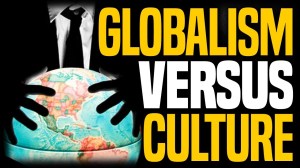
globalism-versus-culture

Bottom Image: Stefan Molyneux, Globalism versus Culture

Support Semi-Partisan Politics with a one-time or recurring donation:

Agree with this article? Violently disagree? Scroll down to leave a comment.

Follow Semi-Partisan Politics on TwitterFacebook and Medium.

Will The Race For The White House Be Decided By Shy Donald Trump Voters?

mother-jones-progressive-turnout-project-shy-trump-voter

Shy Tories helped the Conservative Party to an unexpected outright victory in the 2015 general election in Britain, while some say that “shy Brexiteers” helped to push the UK out of the European Union. Are shy Trump supporters now about to help elect Donald Trump president of the United States?

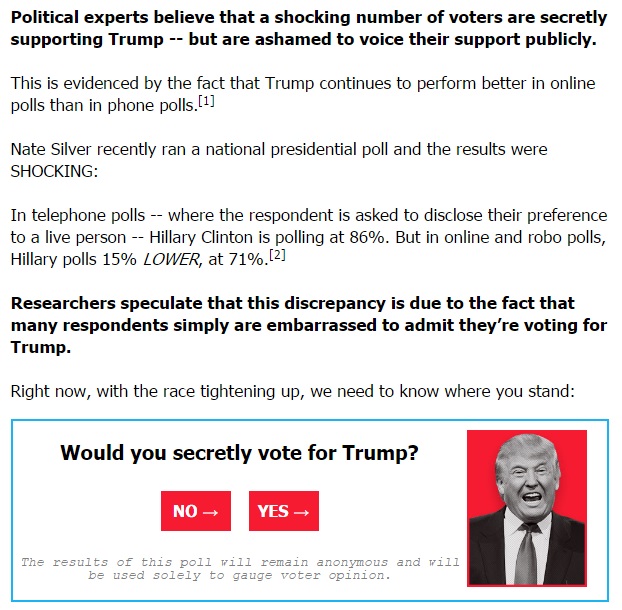
The progressive Mother Jones magazine has just sent its readers a panicked bulletin asking them whether or not they would “secretly vote for Trump”.

Given the left-wing readership of Mother Jones, it is a safe bet that very few people will respond in the affirmative, but the mere fact that Mother Jones and their partners the Progressive Turnout Project are asking the question at all tells us something very interesting: that American leftists and Democrats are terrified that the polls may be deceiving them and that their progressive dream might be undone in November by the “shy Trumpist” factor.

From the email (their emphasis is bold):

Political experts believe that a shocking number of voters are secretly supporting Trump — but are ashamed to voice their support publicly.

This is evidenced by the fact that Trump continues to perform better in online polls than in phone polls.

Nate Silver recently ran a national presidential poll and the results were SHOCKING:

In telephone polls — where the respondent is asked to disclose their preference to a live person — Hillary Clinton is polling at 86%. But in online and robo polls, Hillary polls 15% LOWER, at 71%.

Researchers speculate that this discrepancy is due to the fact that many respondents simply are embarrassed to admit they’re voting for Trump.

[..]

The truth is, the Trump campaign agrees this is happening.

They’re counting on a large number of ‘silent’ voters to come out in droves on Election Day and carry Donald Trump to victory.

We can’t let that happen.

The New York Times reported on the same phenomenon back in May:

There is also strong evidence that most traditional public opinion surveys inadvertently hide a segment of Trump’s supporters. Many voters are reluctant to admit to a live interviewer that they back a candidate who has adopted such divisive positions.

In matchups between Trump and Hillary Clinton, Trump does much better in polls conducted online, in which respondents click their answers on a computer screen, rather than in person-to-person landline and cellphone surveys.

An aggregation by RealClearPolitics of 10 recent telephone polls gives Clinton a nine-point lead over Trump. In contrast, the combined results for the YouGov and Morning Consult polls, which rely on online surveys, place Clinton’s lead at four points.

Why is this important? Because an online survey, whatever other flaws it might have, resembles an anonymous voting booth far more than what you tell a pollster does.

[..] In a detailed analysis of phone versus online polling in Republican primaries, Kyle A. Dropp, the executive director of polling and data science at Morning Consult, writes “Trump’s advantage in online polls compared with live telephone polling is eight or nine percentage points among likely voters”.

This difference, Dropp notes, is driven largely by more educated voters — those who would be most concerned with “social desirability.”

Concluding:

The simple fact that Trump has beaten the odds so far means that it is not beyond the realm of possibility that he could beat them again. If he does take the White House, much, if not all, of his margin of victory will come from voters too ashamed to acknowledge publicly how they intend to cast their vote.

But is this really likely to happen in America? Well, the “shy Tory” factor is certainly real and has been proven in election after election in Britain, with the Guardian recently lamenting:

“Well hung” was the headline on the Sun’s front page, while the Guardian ran with “It couldn’t be closer”. The polls were predicting Labour and the Conservatives were neck-and-neck, but they couldn’t have been more wrong.

All of the polls significantly underestimated the Tories, and they were strikingly consistent in how wrong they were. Populus put Labour one point ahead, BMG, Survation, YouGov and polling by the Conservative peer Lord Ashcroft all predicted a tie. Opinium predicted a one-point lead for the Tories, as did ComRes and Ipsos Mori.

So when the exit polls just after 10pm predicted 316 seats for the Tories – up nine seats from 2010 – and Labour a devastating 239 seats, with the Lib Dems obliterated to just 10 and the SNP winning all but one seat in Scotland, many could not believe it was true.

[..] The same excuses are being floated this time as were used in 1992: changing methods of polling, “shy Tories” who did not want to admit they were voting for John Major, and a very late swing of undecideds.

While during the EU referendum campaign, this blog weighed in on the “shy eurosceptic” phenomenon:

So what are we dealing with here? It’s the same factor which makes otherwise confident, extroverted people drop their voices to a hushed and conspiratorial whisper when discussing their conservative political leanings in an elite (or creative/artistic) workplace,or makes a school teacher think twice before openly contradicting the biased, anti-Tory ranting of their colleagues.

But it is more than simply avoiding hassle. For many people, not only the elites, it is also a case of seeking to avoid very tangible real-world consequences of being known to hold unfashionable opinions – the threat of public ridicule, professional censure or even job loss, simply for committing thought-crime.

Maybe nobody will care if you fail to join in the joking with your colleagues when they laugh about Nigel Farage or mock those knuckle-dragging Little Englanders who want to pull up the drawbridge on Fortress Britain. But maybe they will notice, and maybe it might lead to an awkward question: “Wait a minute, you can’t seriously support those racists, can you? You’re having a laugh, right?” Far easier to just go along with the crowd. Why risk antagonising the boss, or the people you sit next to every day? Why risk that upcoming promotion? Better just stay silent.

[..]  There are many social settings – mostly where the social, academic or artistic elites live and work – where expressing a eurosceptic opinion or declaring one’s support for Brexit is tantamount to reading aloud from Mein Kampf in the town square. But conversely, there are no equivalent places or scenarios where one might reasonably expect to be actively persecuted for expressing pro-EU sentiments.

Goodness knows just how many secretly anti-illegal-immigration, vaguely nationalist, protectionist authoritarians there are lurking in the enclaves of America’s coastal elites. But whether they are a handful or a small army, you can bet that they will be keeping quiet about their political preferences. Why invite public ridicule, social isolation and all of the other negative consequences of a political climate which has seen Hillary Clinton describe half of Donald Trump supporters as “deplorable” racists, and in which people like them are used as daily cannon fodder on channels like MSNBC?

It is certainly the case in Britain that many people simply dare not express their perfectly mainstream and legitimately held conservative opinions because of the toxic and hateful anti-Tory, anti-Brexit hysteria whipped up by the permanently outraged Left, who insist on seeing evil rather than mere political disagreement. And this culture is certainly no more harmonious or respectful in the United States. Therefore it follows quite reasonably that there may be a mass of voters, unimpressed with President Obama’s two terms of office and with deep concerns over Hillary Clinton, who find themselves in the unexpected position of preferring Donald Trump but are unable to confess their thoughtcrime to friends, family or pollsters.

And then again, maybe not. That’s the awkward thing about these “shy voter” phenomena – they seem so obvious the day after an election, but are almost impossible to pin down before polling day thanks to their tendency to lie to pollsters.

But if I was a Hillary Clinton-supporting progressive, I would not be taking any chances. And I would start asking myself whether the pleasurable short-term catharsis of denouncing all Donald Trump supporters as selfish, evil and ignorant is worth the risk of driving even more of his supporters underground, beyond the influence of both Democratic Party outreach and out of reliable communication with opinion pollsters.

Unfortunately, most American leftists don’t seem to have gotten the message yet. Here’s Jonathan Chait, making himself look smart at the expense of making things even worse:

Following the classic definition of a gaffe as a politician telling the truth, Hillary Clinton’s comment about Donald Trump’s supporters (“just to be grossly generalistic, you could put half of Trump’s supporters into what I call the ‘basket of deplorables.’ Right? The racist, sexist, homophobic, xenophobic, Islamophobic — you name it”) was the purest and most classic example. The national media has spent a year and a quarter documenting in exquisite, redundant detail the rabid, anti-intellectual nationalistic bigotry of Trump’s hard-core fanbase. But it has taken Hillary Clinton’s affirmation to transform this by-now-banal observation into a scandal.

[..] Clinton controversially described half of Trump’s supporters as “irredeemable.” Trump earlier this year framed the same idea in a more colorful and perhaps more damning way: “I could stand in the middle of Fifth Avenue and shoot somebody and I wouldn’t lose voters.” Both statements reflect the same underlying truth: Trump enjoys a hard-core support that lies beyond persuasion, utterly immune to even the starkest factual evidence. Clinton committed a gaffe because she acknowledged a reality that literally every other person in America, including Donald Trump himself, is permitted to speak aloud.

Keep on laughing, strutting and preening if you must, American liberals.

I just hope that today’s feeling of smug superiority does not warp into the numb disbelief of defeat when the half of the country that you so love to demonise ends up delivering Donald J Trump to the White House.


Donald Trump Rally

Support Semi-Partisan Politics with a one-time or recurring donation:

Agree with this article? Violently disagree? Scroll down to leave a comment.

Follow Semi-Partisan Politics on TwitterFacebook and Medium.

The Democrats Rub Illegal Immigration In The Faces Of Struggling Americans – No Wonder Many Support Donald Trump

The American Left’s determined intransigence and dishonesty on the issue of immigration pushes decent people into the arms of Donald Trump

Imagine that for some crazy reason, you just happen to believe in the strict upholding of law and order.

Suppose that this belief extends to the enforcement of federal immigration laws, and zero tolerance on those who seek to bypass, subvert or ignore the legal avenues for attaining permanent residency and citizenship of the United States.

Suppose that you’re a hard working, ordinary decent person who perhaps doesn’t have the time or inclination to ruminate on the ways in which a conspiracy of the two political parties has effectively encouraged plentiful illegal immigration for so long that the US economy is now dependent on the millions of illegal immigrants living in America.

Suppose that you occupy a relatively unskilled and low-paid position in the labour market, and have not seen your disposable income or living standards increase for years, or in some cases even decades.

Suppose that whenever you watch or read the news, both politicians and the media refuse to call the people who overstayed their visas or snuck into the country by their proper descriptor, “illegal immigrants”, preferring to term them “undocumented immigrants” as though they were regular Americans whose birth certificates, passports and other papers proving their right to residency had simply vanished in an unfortunate puff of smoke.

Suppose that every time you turn on the television you see a deliberate effort to change the language to speak of “undocumented” rather than “illegal” immigrants, while the media consistently portray people like you, those with legitimate personal and civic concerns, as being inherently “racist”.

Suppose you then see the Democratic Party not only consistently celebrate “undocumented” immigrants at their quadrennial national convention but actually invite many of them onto the stage to give speeches, and reward those speeches with thunderous standing ovations – while the Democratic presidential nominee described people like you as belonging to a “basket of deplorables”.

Suppose that while you and your family are held to account and in some cases persecuted by the criminal justice system for the smallest infraction, the hearts of politicians and the media seem brimming over with sympathy not for you but for those whose very presence on American soil violates US immigration law.

Suppose that you are a relatively low-information voter, but someone who is very aware of the persistent air of scandal surrounding Hillary Clinton and who sees in the media’s incredulity at Donald Trump something of the same hostility that you face every day simply for daring to believe that immigration should be legal and controlled.

Now: if you were this person – and there are millions of them, in every state of the Union – why the hell would you NOT vote for Donald Trump this November?

And wouldn’t all of those people in the political and media class clutching their pearls in horror at the thought of a Donald Trump presidency bear a significant share of the responsibility for pushing you toward that decision?


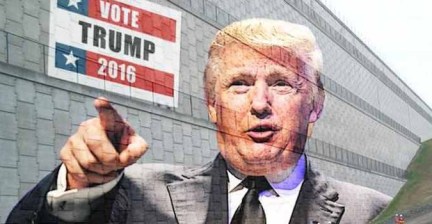
donald-trump-wall-mexican-border-illegal-immigration-undocumented-migrants

Support Semi-Partisan Politics with a one-time or recurring donation:

Agree with this article? Violently disagree? Scroll down to leave a comment.

Follow Semi-Partisan Politics on TwitterFacebook and Medium.

Lionel Shriver Makes A Bold Defence of Cultural Appropriation

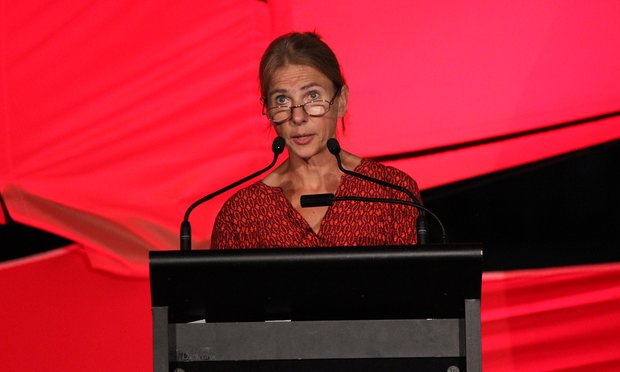
lionel-shriver-brisbane-writers-festival

The purpose of literature and fiction writing is not to serve the grand design of the social justice and identity politics movement – and Lionel Shriver should be commended for standing up for artistic freedom against the new age censors

At a recent speech given at the Brisbane Writers Festival, the author Lionel Shriver makes a passionate and compelling defence of the concept of “cultural appropriation”, standing up to the rabid social justice warriors who would seek to impose a new cultural apartheid and the return of “separate but equal” division between races, cultures, genders and social groups.

From Shriver’s speech, which begins by making reference to college campus scandals over the supposed “cultural appropriation” and “harm” caused by non-Mexican students wearing sombrero hats at tequila parties or Mexican-themed restaurants:

But what does this have to do with writing fiction? The moral of the sombrero scandals is clear: you’re not supposed to try on other people’s hats. Yet that’s what we’re paid to do, isn’t it? Step into other people’s shoes, and try on their hats.

In the latest ethos, which has spun well beyond college campuses in short order, any tradition, any experience, any costume, any way of doing and saying things, that is associated with a minority or disadvantaged group is ring-fenced: look-but-don’t-touch. Those who embrace a vast range of “identities” – ethnicities, nationalities, races, sexual and gender categories, classes of economic under-privilege and disability – are now encouraged to be possessive of their experience and to regard other peoples’ attempts to participate in their lives and traditions, either actively or imaginatively, as a form of theft.

Shriver’s barnstorming speech goes on to list many great works of literature which would be greatly diminished or simply not exist at all were their authors (like many writers today) bullied and pressured to avoid writing about cultural experiences and customs other than their own.

Yet were their authors honouring the new rules against helping yourself to what doesn’t belong to you, we would not have Malcolm Lowry’s Under the Volcano. We wouldn’t have most of Graham Greene’s novels, many of which are set in what for the author were foreign countries, and which therefore have Real Foreigners in them, who speak and act like foreigners, too.

In his masterwork English Passengers, Matthew Kneale would have restrained himself from including chapters written in an Aboriginal’s voice – though these are some of the richest, most compelling passages in that novel. If Dalton Trumbo had been scared off of describing being trapped in a body with no arms, legs, or face because he was not personally disabled – because he had not been through a World War I maiming himself and therefore had no right to “appropriate” the isolation of a paraplegic – we wouldn’t have the haunting 1938 classic, Johnny Got His Gun.

We wouldn’t have Maria McCann’s erotic masterpiece, As Meat Loves Salt – in which a straight woman writes about gay men in the English Civil War. Though the book is nonfiction, it’s worth noting that we also wouldn’t have 1961’s Black Like Me, for which John Howard Griffin committed the now unpardonable sin of “blackface.” Having his skin darkened – Michael Jackson in reverse – Griffin found out what it was like to live as a black man in the segregated American South. He’d be excoriated today, yet that book made a powerful social impact at the time.

(Shriver’s speech was too much for one delicate snowflake. Australian activist Yassmin Abdel-Magied, whose sheltered mind was unable to tolerate hearing of a worldview which didn’t put her own identity on a pedestal, decided to walk out during the speech and then pen a tear-stained, self-involved piece about her feewings for the Guardian, aggrandising her supposed victimhood).

But what exactly is Lionel Shriver’s beef with the modern idea that cultural appropriation is heresy? It seems that what angers her – quite rightly – is the idea that any group, marginalised or not, can be the sole custodians of their traditions, granting or withholding license to “borrow” from their culture like a movie studio scouring YouTube for pirated videos.

According to Shriver, nobody, least of all an artist, should have to approach anyone for “permission” to write from a certain perspective, include a certain character or touch on any cultural tradition:

The author of Who Owns Culture? Appropriation and Authenticity in American Law, Susan Scafidi, a law professor at Fordham University who for the record is white, defines cultural appropriation as “taking intellectual property, traditional knowledge, cultural expressions, or artifacts from someone else’s culture without permission. This can include unauthorised use of another culture’s dance, dress, music, language, folklore, cuisine, traditional medicine, religious symbols, etc.”

What strikes me about that definition is that “without permission” bit. However are we fiction writers to seek “permission” to use a character from another race or culture, or to employ the vernacular of a group to which we don’t belong? Do we set up a stand on the corner and approach passers-by with a clipboard, getting signatures that grant limited rights to employ an Indonesian character in Chapter Twelve, the way political volunteers get a candidate on the ballot?

While Shriver justifiably bristles at the consequences of weaponised identity politics, she does not use her speech to dwell on the reasons for the rise of this hyper self-conscious, self-censoring phenomenon. Fellow author Ian McEwan, on the other hand, is more than happy to point out the root causes of the identity politics resurgence, recently commenting in an interview:

“These children have grown up in an era of peace and plenty, and nothing much to worry about, so into that space comes this sort of resurgence that the campus politics is all about you, not about income inequality, nuclear weapons, climate change, all the other things you think students might address, the fate of your fellow humans, migrants drowning at sea. All of those things that might concern the young are lost to a wish for authority to bless them [..] rather than to challenge authority.”

To which this blog responded:

Doesn’t that just perfectly sum up the Cult of Social Justice and Identity Politics? A generation of students raised at a time of great material abundance, peace and prosperity arrive at university to find most of the great injustices of the past already slain by previous generations of campaigners. Bereft of purpose but still feeling the strong student urge to embrace a cause, they crank up their sensitivity settings to perceive any slight or inequity, however small or unintentional, to be evidence of the systematic oppression of one or more classes of prescribed victim groups.

McEwan’s last sentence is particularly profound – the idea that today’s young people no longer rail against authority in the way that student activists of old did, but rather make tear-stained appeals to authority figures to intercede on their behalf. This is the victimhood culture, clearly distinct from an honour culture (which would encourage the individual to stand up to minor sleights or “microaggressions” and confront the issue themselves) or a dignity culture (which would only sanction involving authorities in case of grave injury).

Later in her speech, Shriver hits out at the fad of shoehorning various “oppressed group” minorities into television shows in the name of making up some social justice quota, and the growing demand by some critics for the same affirmative action to take place in literature:

My most recent novel The Mandibles was taken to task by one reviewer for addressing an America that is “straight and white”. It happens that this is a multigenerational family saga – about a white family. I wasn’t instinctively inclined to insert a transvestite or bisexual, with issues that might distract from my central subject matter of apocalyptic economics. Yet the implication of this criticism is that we novelists need to plug in representatives of a variety of groups in our cast of characters, as if filling out the entering class of freshmen at a university with strict diversity requirements.

You do indeed see just this brand of tokenism in television. There was a point in the latter 1990s at which suddenly every sitcom and drama in sight had to have a gay or lesbian character or couple. That was good news as a voucher of the success of the gay rights movement, but it still grew a bit tiresome: look at us, our show is so hip, one of the characters is homosexual!

We’re now going through the same fashionable exercise in relation to the transgender characters in series like Transparent and Orange is the New Black.

Fine. But I still would like to reserve the right as a novelist to use only the characters that pertain to my story.

Besides: which is it to be? We have to tend our own gardens, and only write about ourselves or people just like us because we mustn’t pilfer others’ experience, or we have to people our cast like an I’d like to teach the world to sing Coca-Cola advert?

That last question is a good one – how on earth is a fiction author or television screenplay writer possibly to satisfy the competing demands to include more characters from diverse backgrounds yet avoid the unpardonable sin of presuming to write from their vantage point?

No doubt the social justice warriors would decree that fiction writing, so long a solitary pursuit, must now always be a collaborative effort, with a team of character writers standing by to offer their perspectives on a character’s true “voice” and authenticity. Or perhaps the process could be accomplished at the end of writing, by submitting draft novels to an Office of Social Justice Censorship where beady-eyed zealots who claim to speak on behalf of their entire social group go through the manuscript with a red pen, changing the author’s words and ideas to conform to some standard set in secret, behind closed doors.

You can see where the inexorable logic of these shrill demands ultimately leads: nowhere good. We either end up in a world where brilliant authors are too terrified of potential repercussions to ever pick up a pen in the first place, or one ends up with Soviet-style official “approved” art and literature, written to precise specifications in order to best glorify the Cult of Social Justice and Identity Politics.

As Shriver puts it:

Thus in the world of identity politics, fiction writers better be careful. If we do choose to import representatives of protected groups, special rules apply. If a character happens to be black, they have to be treated with kid gloves, and never be placed in scenes that, taken out of context, might seem disrespectful. But that’s no way to write. The burden is too great, the self-examination paralysing. The natural result of that kind of criticism in the Post is that next time I don’t use any black characters, lest they do or say anything that is short of perfectly admirable and lovely.

[..] Especially for writers from traditionally privileged demographics, the message seems to be that it’s a whole lot safer just to make all your characters from that same demographic, so you can be as hard on them as you care to be, and do with them what you like. Availing yourself of a diverse cast, you are not free; you have inadvertently invited a host of regulations upon your head, as if just having joined the EU. Use different races, ethnicities, and minority gender identities, and you are being watched.

Extra marks for the snide attack on the European Union – brilliant stuff.

As this blog has explained time and again, above all else social justice is not about fairness and equality but rather about power – specifically, the acquisition of power by the beady-eyed authoritarians who wield their weaponised victimhood and competitive tolerance as cudgels, granting them the power to determine what the rest of us can and cannot do or say. Television has already on the verge of falling to this long-running cultural siege, and the clear message coming from “progressive” reviewers in the literary community is that fiction is next.

Lionel Shriver has issued a timely warning to her fellow authors – let us hope that there is sufficient time and willpower to resist the final assault when it comes.


Lionel Shriver: how not to read - Do Something magazine

Safe Space Notice - 2

Top Image: Guardian, Daniel Seed

Support Semi-Partisan Politics with a one-time or recurring donation:

Agree with this article? Violently disagree? Scroll down to leave a comment.

Follow Semi-Partisan Politics on TwitterFacebook and Medium.