–
“Quiet City”, Aaron Copland (1941).
–

–
Follow Semi-Partisan Politics on Twitter, Facebook and Medium.
–
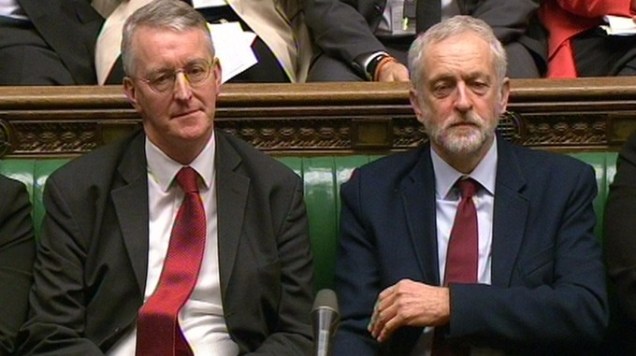
After pompously telling anyone who will listen that they cannot possibly work with Jeremy Corbyn, Labour’s centrist MPs are preparing to bend the knee and meekly return to Corbyn’s shadow cabinet once he is re-elected leader of the party
UPDATE: Read Part 2 here.
Labour’s tantrum-throwing centrist MPs, recognising their man Owen Smith’s imminent defeat by Jeremy Corbyn in the Labour leadership contest, are apparently now making frantic overtures to the Corbyn camp so that their treachery might be forgiven, allowing them to serve in the shadow cabinet once again.
The Telegraph reports:
Senior Labour politicians who quit the shadow cabinet in protest at Jeremy Corbyn’s leadership are drawing up plans for a truce that would see them return to his team if he is re-elected this month.
Mr Corbyn was rocked by dozens of resignations from his shadow government in the aftermath of the EU referendum, in a rebellion that triggered a leadership contest.
However, with polls suggesting that Mr Corbyn is on course to win next week’s leadership election easily, a number of former shadow ministers are preparing the ground to return to work with him.
They will demand a list of assurances from Mr Corbyn as a sign of his goodwill before pledging their support.
These include allowing them greater say in the running of the shadow cabinet, giving his support to a return to shadow cabinet elections, and dropping the threat that MPs who opposed his leadership will face de-selection.
And the FT:
Some senior Labour MPs who resigned from the shadow cabinet en masse in the early summer are braced to go back and serve under Mr Corbyn. One said: “I do not see what the other options are. At the end of the day, we have to fulfil our role, which is providing opposition to the Tory government.”
[..] One former frontbencher said that if Labour MPs did not fall back into line, it would continue to “feed the narrative” that Mr Corbyn was being undermined by “Blairite” enemies in the Parliamentary Labour party. “Quite a few of my colleagues feel the same way, although not everyone.”
[..] “There is a real determination among a number of us to make sure that we try to do the job that needs to be done: holding the Tories to account,” said one former frontbencher. “You can do that to some extent from the backbenches but you can do it much more effectively from the front benches . . . but the onus is now on Jeremy to unite the party.”
Translation: “Being out of the political spotlight and festering away on the backbenches is killing us and our career aspirations, so please can we come in from the cold?”
Well, well, well.
I suppose one has to admire the nerve of the centrists, daring to issue conditions for their return to the shadow cabinet having taken the reckless and self-serving decision to flounce out and destabilise their party at a time (in the aftermath of the Brexit vote) when stability was most required. Corbyn has thus far shown no qualms about filling the gaps in his shadow cabinet with D-listers and nobodies – what makes the likes of Chris Bryant, Lucy Powell or Angela Eagle think that Corbyn is desperately pining for their return?
But in another sense, this pitiful capitulation is not surprising. The Parliamentary Labour Party called Jeremy Corbyn’s bluff and lost, badly. There is ample blame to go around – some for the remaining “big beasts” of the party who were too cowardly and self-serving to put their names forward as leadership contenders, leaving it to unloved support acts like Angela Eagle and the contemptible Owen Smith; some for misbehaving shadow ministers like Hilary Benn who took the job and then rebelled and briefed against their leader at every opportunity; and last but not least, a portion of the blame rests with every single one of the 172 Labour MPs who opportunistically calculated that the confused aftermath of the EU referendum provided a great “fog of war” in which they could go full Brutus on Jeremy Corbyn’s Caesar and get away with it.
Well, it didn’t work. Nobody viable stepped forward, the party membership was enraged at the parliamentary party challenging their pick for leader less than a year into the job, and Owen Smith’s damp squib of a campaign lurched from one unforced error to the next. Apparently the odious man can now be found swanning around Britain portentously comparing himself to Saint Aneurin Bevan of Tredegar, founder of Our Blessed NHS (genuflect), hoping that Labour members will not take the time to google his past career as a pharmaceutical lobbyist and statements broadly supportive of privatisation.
So what should the centrists do? Well, if they had an ounce of genuine conviction and commitment to principle (ha) then they would part ways with a Labour Party which has “left them” (to paraphrase their unconvincing bid for sympathy) and set up shop as a new party of the centre-left. But they will not do so, partly for selfish reasons – they want to keep ownership of the party apparatus and assets – but also for the very practical reason that starting a new political party from scratch and making a success of it is almost impossible. Sure, 150+ defectors would be much better than the “gang of four” who helped to found the SDP back in 1981. But while their parliamentary contingent might initially be fairly large they would need to build up a party structure and grassroots campaigning organisation from scratch in a very short space of time, or face certain annihilation at the 2020 general election.
And so the unhappy bedfellows will likely limp on together, Corbynites and centrists openly despising one another but remaining stuck with each other thanks to the British political system. The centrists will continue to moan to any journalist who will listen, Dan Hodges will have more material for his Mail on Sunday column than he knows what to do with, the PLP will do everything they can to make Jeremy Corbyn’s life a living hell, and Corbyn’s team will do all they can to set the stage for a purge of the centrists, either at the upcoming constituency boundary review or when it comes time to choose candidates for the 2020 general election.
Besides, the centrists have some thinking to do before they can make a plausible bid to take back leadership of the Labour Party. First and foremost, they must decide on a shared position on Brexit, which will be close to impossible – the centrist MPs are salivating at the prospect of thwarting Britain’s exit from the European Union by any means possible, no matter how far-fetched. Their every instinct is to take up and amplify the great howl of anguish emanating from the metro-left at the prospect of being forcibly ripped away from a European Union which most of them barely understand but which is absolutely central to their identities as progressive, enlightened model citizens. Unfortunately, this involves waving a big fat middle finger to Labour’s working class supporters, particularly those in the north of England, who were some of the most enthusiastic voters for Brexit.
The result will likely be another fudge and evasion as regularly practised by the Labour Party. They will reaffirm their commitment to the European Union and their desire to overturn the result of the EU referendum or at least to hold a second or third referendum until they achieve the desired result, while uttering glib, platitudinous assurances that they understand people’s frustration with the EU and with immigration, and that they will work for some mystical reform at some point in the future. They will grab hold of the Magical EU Reform Unicorn as tight as they can, while repeating to themselves that in fact they simply need to work harder to educate people of the wonders of European political union and mass immigration.
The political ground has shifted underneath all of Britain’s political parties, and while none have yet truly come to terms with the new post-Brexit reality and the schism on the Left, it is the Labour centrist MPs who are in the strongest denial right now. This is mostly because original thinking is required, and few of their number are capable of the feat. Jeremy Corbyn offers (with one or two exceptions) a very traditional and anachronistic form of socialism, ossified since the late 1970s. To regain power, the centrists cannot simply repudiate Corbynism or match Tory centrism while blathering on about equality and fairness. They need to jack in the Blairite triangulation and reimagine the role of the big, activist state that they love in a way which makes sense in the new century. Most are unwilling to put in this work – they think they can cheat their way back to power using a playbook which is twenty years old.
It won’t work. And however limited Jeremy Corbyn’s appeal to the wider country may be, he will not be dislodged as party leader until somebody else comes along with a compelling, clearly identifiable programme for government of their own – something sufficiently distinct from Theresa May’s authoritarian Toryism that Labour Party members (a) agree with it, and (b) think the country might vote for it.
Owen “I’m Nye Bevan!” Smith is a pitiful joke, as was Angela “I am my own woman!” Eagle when she was also running for leader. When the centrists have done their homework, one of them – preferably one with name recognition and a sprinkling of gravitas – can step forward and present their shiny new plan for Labour, and maybe the party membership will listen.
But until that happens, this is Jeremy Corbyn’s party. And that is how it will remain.
UPDATE: Read Part 2 here.

–
Support Semi-Partisan Politics with a one-time or recurring donation:

–
Agree with this article? Violently disagree? Scroll down to leave a comment.
Follow Semi-Partisan Politics on Twitter, Facebook and Medium.

–
American conservatives only react so furiously when President Obama shows a little diplomatic humility and self-deprecation while abroad because it touches a raw nerve – they are consumed by worry about American decline, and project their anger onto minor, intangible issues like bowing protocol, Air Force One tarmac snubs and presidential behaviour which falls short of obnoxious boorishness on the world stage
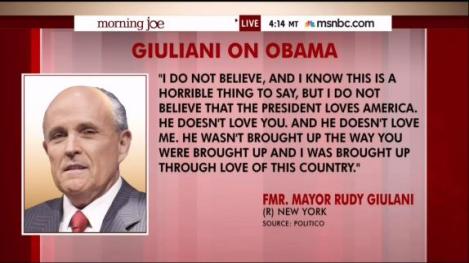
Many American conservatives have reacted with outrage to this video of President Obama addressing an audience during a recent trip to Laos, holding it up as yet more evidence that the president they so love to hate actually hates America himself.
Addressing a townhall-style meeting while in Laos, Obama is heard to say:
I believe that the United States is and can be a great force for good in the world. But because we are such a big country, we haven’t always had to know about other parts of the world. If you are in Laos, you need to know about Thailand and China and Cambodia because you’re a small country and they’re right next door, and you need to know who they are.
If you’re the United States sometimes you can feel lazy and think, you know, we’re so big we don’t have to really know anything about other people, and that’s part of what I’m trying to change, because this is actually the region that’s going to grow faster than any place else in the world. It has the youngest population and the economy is growing faster any place, and if we aren’t here interacting and learning from you and understanding the culture of the region, then we’ll be left behind, we’ll miss an opportunity, and I don’t want that to happen.
Cue lots of conservatives running around in a tizzy as though Obama had been propping up the bar at some Laotian tavern, regaling the regulars with an endless reel of hilarious anecdotes about how backward and stupid Americans are, while TV cameras recorded every shameful moment.
Here’s Ace of Spades, getting unnecessarily worked up:
It’s almost as if this pampered, do-nothing, unqualified malcontent actively hates America or something.
Someone out there there’s a Yourself in desperate need of a f*cking.
You gotta listen to this. It’s the International Version of his famous Bitter Clingers Song.
Look, this is silly. I know it is inexplicably popular in American conservative circles to rant and rage about how the Evil Muslim Marxist in the White House secretly – or not so secretly – hates America. And to be fair, President Obama hasn’t always done himself many favours in this regard, particularly with that unbearably condescending “bitter clingers” speech which genuinely made it seem that he holds a significant proportion of the country in something between pity and contempt.
But do these pro salt-of-the-earth conservatives think that the likes of Donald Trump or the Republican Party establishment “love America” so much that they are ever going to sit down and break bread with ordinary folk on a regular basis (apart from when seeking their vote)? Do they really think the man who eats his pizza with a knife and fork has any great love for the Common Man? Or that Newt Gingrich or Paul Ryan or Ben Carson spend their time away from Washington D.C. slumming it, eating at Waffle House and watching Nascar?
Besides, what point is Ace trying to make here – that when on foreign soil, the American president must always be belligerently boastful about the United States, even (or especially) to the point where it enrages his hosts? This is like that American exceptionalism argument all over again. It’s perfectly fine to consider America a truly exceptional nation – heck, I certainly do, and I’m not even a citizen yet – but in what possible way does it make good diplomatic sense to stomp around the world lecturing other nations about how inferior they are?
What do conservatives think that Obama should have said in Laos? That the United States of America, to the very last trailer park dweller, is full of the wisest and most sagacious citizens on the face of the earth? That every American, from the richest penthouse-dweller in New York to the poorest cabin owner in Appalachia, is a natural foreign policy expert? That the people of a nation where 54 per cent of citizens do not own a valid passport are nonetheless deeply knowledgeable about the world beyond their own borders?
Is there not some truth to the perfectly benign and logical statement that as a large and powerful country, there is much less incentive for average American citizens to concern themselves with world affairs until they threaten an imminent impact on the homeland? Might it not possibly be the case that the country whose top-rated cable news channel (Fox News) has a segment entitled “Around The World in 80 Seconds” – that’s seconds, not minutes, and typically seconds filled with lightweight fluff about bull-running festivals or cheese-rolling competitions – is more domestically focused than other, smaller and more interconnected countries?
Worrying that the president of the United States is not swaggering around boorishly enough on the world stage is actually evidence of a deeper malaise, a suggestion that those who criticise Obama so hysterically actually realise that America is in some ways a troubled country, and desperately want their leader to kick ass at every diplomatic summit as a way of papering over the cracks.
And that’s what this hissy fit from the American Right is really all about: the gnawing fear of American decline. In some ways this is a legitimate fear – no, America is not going anywhere just yet, despite the best efforts of enemies without and “reformers” within to undo all that is good about the United States. But we are certainly entering an indisputable period of relative American decline, as other countries develop and become wealthier, and new regional powers assert themselves. This is understandably concerning to many people, particularly those of the baby boomer who came of age at a time of unparalleled American power and prosperity, as well as those younger Americans who came of age (as I did) between the shadow of the Cold War receding and the incredible national shock that was 9/11.
It will be harder now for America to pursue her global interests unchallenged. American influence will be questioned and undermined by assertive regional powers and two-bit mischief-makers alike. America will have to become accustomed to harmless but superficially humiliating slights from jumped-up, distasteful regimes looking to impress their domestic audience by standing up to the United States, much as Britain had to endure a reduced standing on the world stage after the Second World War and loss of empire.
But America is not Britain, and her decline will be neither as swift nor as steep. America’s fundamentals remain broadly sound. The economy remains large and dynamic, while America’s military power and reach eclipses that of all other nations several times over. Financial and social problems, though pressing, are surmountable – or at least the damage can be contained for now. America will remain the sole superpower for the foreseeable future, and all those countries who American conservatives see posing a threat in their fevered dreams face internal and external challenges of their own.
And yet the gnawing fear persists, and leads otherwise sensible conservatives to say and demand very silly things in a desperate and unnecessary attempt to prove continued American national virility. But now is the time for smarter American diplomacy, not for the unsubtle sledgehammer approach. Of course America should take pride in the exceptionalism of her founding and history, but this should not translate into a boorish tendency to lecture other countries when leading by example can be far more effective.
That doesn’t mean the United States should stop calling out human rights abuses or democratic infringements in other countries – far from it. But conservatives should stop demanding that the US president, while standing at a lectern at a joint press conference next to a foreign head of state, opens his remarks by detailing all the many ways in which the United States is a far superior country. Is that really too much to ask?
After all, it is less than eight years since we last enjoyed the service of an American president brimming with natural swagger, and the foreign policy consequences were…mixed.
Do we really want to go down that road again?
–
Support Semi-Partisan Politics with a one-time or recurring donation:
–
Agree with this article? Violently disagree? Scroll down to leave a comment.
Follow Semi-Partisan Politics on Twitter, Facebook and Medium.

–
Black Lives Matter UK should be ashamed of their childish behaviour and wanton ‘cultural appropriation’ of an American struggle
I had a friend at Cambridge who – like many students – loved nothing more than a good protest. The reason behind any given demonstration and the people involved in it were largely immaterial to him; what mattered was the marching along and shouting and getting to feel brave and revolutionary while enjoying the added bonus of missing lectures.
On one occasion (quite possibly because I was high at the time of asking) he convinced me to accompany him on one of these jaunts, and so one morning we set off on a coach down the M11 and piled off in central London, collected placards and went to join the fray. Honestly, I forget what the protest was actually about – it may have been something to do with poverty, but it was certainly domestically focused. So I was rather surprised when my friend decided that we should merge with a particularly unwashed group of protesters and start shouting “victory to the intifada!”
At the time, the Second Intifada was warming up quite aggressively. As a young student, while having every sympathy with the plight of ordinary Palestinians, I tended to take the side of Israel, supporting a fellow democracy while reserving the right to criticise their excesses and missteps – pretty much the same position as I hold now, in fact. And since I had no desire to stomp around London cheering for the suicide bombing of innocent Israelis, I took leave of my friend and went to sojourn on the south bank instead – but not before making the observation that nearly everyone around me at the march was white, upper middle class (though some affected other carefully crafted personas) and about as far removed from being personally vested in the Israel-Palestine conflict as it was possible to be.
Why bring this up? Because the same tiresome event is now playing out all over again with the childish, irresponsible and petulant antics of Black Lives Matter UK, whose members give dreary new meaning to the term “a rebel without a cause”.
From the Telegraph:
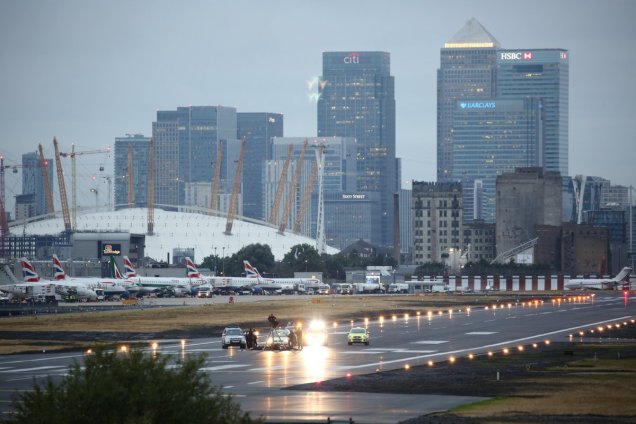
London City Airport was brought to a standstill today after a group of Black Lives Matter activists stormed the runway protesting against the UK’s ‘racist climate crisis’.
Police said nine protestors [sic] chained themselves to a tripod in the middle of a runway to ‘highlight the UK’s environmental impact on the lives of black people’.
The demonstration, which began at 5.40am and lasted around five hours, meant dozens of flights were cancelled while incoming planes were diverted to Gatwick and Southend airports.
The incident triggered safety concerns amid reports the demonstrators bypassed security by sailing a blow-up dingy [sic] across the Royal Docks.
Police arrived at the airport minutes after the demonstration began but it was several hours before any arrests were made. Scotland Yard said they had to wait for ‘specialist resources’ needed to unlock the protestors [sic].
“This is a crisis” reads the banner unfurled by Black Lives Matter UK at their edgy airport disruption attempts. And so it is. But in Britain it is certainly not a crisis of black killings by the police. It is a crisis of intellect, of character and of proportionality, all of which have been thrown out of the window by a bunch of primarily millennial young adults who look at the impassioned protests currently taking place in the United States and developed a severe, gnawing case of FOMO (fear of missing out).
This most coddled and privileged generation in history (particularly the middle class types who showed up to London City airport) cannot plausibly claim that black people in Britain are being frequently and systematically killed by the police, which is the genesis of the original Black Lives Matter movement in America. Most British police are unarmed for a start, and while there has been an historic problem with institutional racism and there remain isolated concerns, the problem is simply not as severe on this side of the Atlantic.
So what is an enthusiastic young protester to do? They can’t go to the trouble of invading an airport runway for a cause which barely registers as a problem in this country (though in terms of avoiding looking ridiculous, BLM UK may well have done marginally better to frame their protest as a “sympathy strike” to highlight the “plight” of black Americans). They need to find some reason for their theatrics.
And thus we get the rather bizarre statement that airports are fair game for Black Lives Matter UK because environmental pollution apparently disproportionally affects black people to such an extent that it constitutes an act of racism. That is seriously what this protest is about.
From BLM UK’s own Twitter account:
This is competitive victimhood at its most extreme. To call the claim that environmental pollution is a deliberate act of oppression aimed at black people “a bit exaggerated” does a disservice to a whole pantheon of overstatements, contortions and implausible stretches. The argument is simply ludicrous, a complete non sequitur.
And for those of us implacably opposed to the Cult of Social Justice and Identity Politics, the emergence of Black Lives Matter UK as a risible and unjustified presence on the British political scene has also provoked the delicious accusation by other SJWs that BLM UK’s white, middle-class eco-warriors are “culturally appropriating” a movement which is primarily about the treatment of African Americans by the police in the United States.
From the Huffington Post (naturally):
Black Lives Matter demonstrators have been accused of “appropriating someone else’s struggle” for their “embarrassing” protest at London’s City Airport today that affected thousands of passengers.
However, the response to the action has been largely negative, with people criticising its relevance, disputing claims the action would only impact the wealthy, and questioning why the group did not appear to have any black members at the protest.
One person described the protesters as “hipster-looking flower-crowners”.
[..] Joanne Marie was annoyed by claims that the action would only affect the well off.
She wrote: “I earn under £30k and I live in Newham. I use City Airport several times a year to fly home to Ireland to visit my sick and elderly parents. I pay around £100 return – slightly more than it costs to fly from Stansted on Ryanair. Should I not visit my parents to placate a bunch of self-righteous white people with placards who think they represent the BME community?
And that’s one of the inherent flaws in the whole social justice / politically correct movement. Because the “social currency” within this tribe of people is intimately connected with how much one is able to play the victim card and speak from a position of being “oppressed”, competitive victimhood is rife. In order to feel good about themselves, cult members must continually assert their own vulnerability at the hands of those with more “privilege”, while showing very public solidarity and deference to those higher in the hierarchy of oppression.
Thus we have seen young social justice warriors in Britain try to take down even progressive champions like Germaine Greer and Peter Tatchell for daring to stand up for the free speech of those who question the new orthodoxy on transgender theory.
Peter Tatchell – a tireless warrior against discrimination in all its forms – found himself in the crosshairs of some jumped-up young student union activist who saw the opportunity to aggrandise herself by publicly accusing him of heresy. Why? Because Fran Cowling, LGBT+ Officer of the National Union of Students, saw the opportunity to burnish her own Tolerance Credentials by shrieking that Peter Tatchell holds such intolerable and dangerous views that she could not possibly share a stage with him. Her goal: to make her peers think “Wow! Fran Cowling is so pure and virtuous that even Peter Tatchell, with all his many accomplishments, looks like dirt next to her”.
This kind of thing happens all the time. Just as perverse incentives lead politicians to over-promise and bankers to take undue risks, in the social justice community – already a demographic teeming with many of the most insufferable people in the country – the fact that victimhood equals social status is encouraging people to exalt in their vulnerability, exaggerate it wherever possible and see everything through the distorted lens of race, gender and sexuality.
And that is how, in a sick culture full of people who are encouraged to make exaggerated claims of victimhood – together their sanctimonious “allies” – it came to pass that London City Airport was shut down this week because of the past actions of allegedly trigger-happy cops in America.
Globalisation no longer simply means that the components in your iPhone come from all over the world – going forward we can expect to be picketed, lobbied, harassed, delayed and otherwise inconvenienced thanks to disputes which originated thousands of miles away in other countries – especially if those disputes have their roots in the toxic sludge of identity politics.
Welcome to the future.

–
Top Image: Guardian, Daniel Leal-Olivas/AFP/Getty Images
–
Support Semi-Partisan Politics with a one-time or recurring donation:
–
Agree with this article? Violently disagree? Scroll down to leave a comment.
Follow Semi-Partisan Politics on Twitter, Facebook and Medium.

–
A refreshing tirade against political centrism
Most regular readers will know that this blog has time for just about anyone on the political spectrum, save the out-and-proud centrists, those virtue-signalling, sanctimonious oiks who think that by eschewing strong opinions and continually fudging every issue they are somehow morally superior to us hot-headed partisan folk.
That’s why this blog has been a consistent supporter of Jeremy Corbyn’s leadership of the Labour Party. While I would never vote for him myself – and what’s with this trend of demanding that even the leaders of parties we would never vote for still agree with us on key issues? – far better that the Labour Party has at its head someone who stands for vaguely socialist principles than another rootless centrist in the mould of Tony Blair or David Cameron.
That’s one of many reasons why this blog campaigned tirelessly for Brexit and a vote to leave the European Union. Bland, woolly, resigned pro-Europeanism – the centrist belief that Britain is hopeless, the nation state is outdated and that security and prosperity can only come by surrendering sovereignty to an unaccountable supranational body – was the watchword among every single one of Britain’s main political parties, save UKIP. Brexit slapped that smug consensus off the face of Britain’s politicians, and their pampered cheeks will be smarting for years to come as a result.
All of this is an unnecessarily long way of labouring the point – again – that I really, really, don’t like centrists. I may have written about this already, once or twice before:
Bring up the subject of taxation, to pick a random example, and you’ll get a group of people who strongly feel that taxes should be cut in order to stimulate the economy and allow taxpayers to keep more of what they earn, and you’ll get another group of people who think that it’s morally obscene that some people are enjoying themselves, so we should make the tax code more punitively progressive to help bring about social ‘equality’. But you’ll also get a third group of rather bovine people who look up from Britain’s Strictly Come Bake-Off On Ice, wipe the pizza grease from their mouths and just say “what?”
At present, we tend to think of this last group of people as “centrists” or “swing voters”, simply because they do not quote direct from either the Labour or Conservative Party manifesto when asked to offer a political opinion. But are they really centrists? There’s a world of difference between someone who carefully studies the competing policies of different parties to arrive at a considered position half way between two extremes, and someone who mutters something about politicians being “all the same” before their eyes glaze back over.
[..] And can we also please disenthrall ourselves of the unsupported and misleading notion that these “centrist” voters will immediately startle like shy fauns if they encounter a strong political opinion once in awhile, when most of them probably could not run for the bus in the morning, let alone into the arms of another political party?
Which seems as good a time as any to revisit this Jonah Goldberg video taken from an interview with Glenn Reynolds, in which Goldberg is promoting his (then) new book, “The Tyranny of Cliches”.
Here is Goldberg on how centrists are overrated:
We all see the centre as this incredibly privileged and wonderful place, right? The mainstream media constantly talks about the centre as if it’s just the greatest place in the world, and centrists are somehow wiser and more noble than the rest of us — “Shh! David Gergen’s about to talk!” And it’s all nonsense.
First of all, the whole idea of the centre as being this privileged place is actually one of these enlightenment myths. There’s this whole slew of argumentation about how Galileo and Copernicus “dethroned mankind” by getting rid of geocentrism, that the theory of heliocentrism, that we revolve around the sun rather than the Earth being the centre of the world [sic] was an elevation or promotion for mankind, and in our arrogance we couldn’t handle it and the Catholic church beat up on it. And it’s not a real left-right thing, except in the regard that it explains how we understand the whole geographic political landscape.
The reason why the Catholic church and pretty much everybody else opposed geocentrism was one, they weren’t sure the science was right because it was a novel theory at the time, but two, because they considered it a promotion. In medieval understanding, in ancient Greek understanding, Jewish medieval understanding and Catholic, Thomas Aquinas understanding, the centre of the world, the centre of the universe is literally the asshole of the universe. The centre of the universe is considered the lowest and most disgusting and turgid place in the whole cosmos. In Dante’s Inferno, the lowest pit of hell is the centre of the universe. Maimonides talks about this, Aquinas talks about this and it is this myth of the modern mind that somehow geocentrism, getting rid of geocentrism somehow elevated mankind. It completely misunderstands where the medieval mind was, and we carry it forward to today.
There are a lot of huge arguments we have with the Left, or are between the Left and the Right. The Left says we have to build this bridge over a canyon, it’s a stimulus thing, it’s infrastructure, we need this bridge. The Right says are you frigging crazy? We can’t afford it, we don’t need the bridge, it’s a bridge to nowhere, it makes no sense, blah blah blah. That’s an honest argument – one side says let’s build the bridge, the other side says let’s not build the bridge. The friggin’ pinky-extending centrists parachute in and says no no, let there be peace among you. We’ll compromise – we’ll build half a bridge that goes halfway across the canyon.
It is these difference splitters who drive me absolutely batty, and we treat them as if they hold this privileged place when we don’t even understand that the centre is a geographic metaphor, it’s not an actual place in politics. All the serious ideas in politics have always come from where they were considered to be the extreme at one point or another.
Brexit and the reclaiming of our nation state democracy from the failing euro-federalist experiment in Brussels was considered a niche and even extremist idea for most of the past 40 years. And look at us now – with the only remaining resistance consisting of Owen Smith’s pitiful, petulant bleating and a few pathetic europhiles with the EU flag painted on their faces, Brexit is happening.
All the serious ideas in politics have once been described as extreme and unmentionable, says Jonah Goldberg. Darn straight.
And nobody has ever built a monument to a centrist.

–
Support Semi-Partisan Politics with a one-time or recurring donation:
–
Agree with this article? Violently disagree? Scroll down to leave a comment.
Follow Semi-Partisan Politics on Twitter, Facebook and Medium.


