German Politicians, Drunk On Power, Prepare A Fresh Assault On Free Speech

volker-kauder-free-speech-social-media-censorship

German social media users test their leaders’ patience by exercising awkward, unruly free speech at their own peril

German politicians, ever anxious to squash strident criticism of their unilateral and, uh, somewhat controversial decision to expand the population by nearly a million migrants and refugees in the space of a year, are rounding on social media companies to strike another blow on already-constrained freedom of speech in Europe.

From Deutsche Welle:

Volker Kauder, a member of German Chancellor Merkel’s CDU, has said Facebook should pay for failing to remove online hate comments. There has been a surge in xenophobic posts as refugees have arrived over the last year.

Speaking to German magazine “Der Spiegel,” Kauder said: “The time for roundtables is over. I’ve run out of patience.” He said if companies like Facebook, Google and Twitter failed to remove offensive comments within a week of them being posted, they should be penalized with a 50,000 euro ($54,490) fine.

Social media websites needed to rethink their strategy, he said. “Otherwise, I have another suggestion. Cigarette packs always carry a warning that smoking can be dangerous. Why don’t we ask these [social network] providers to carry a warning on their websites, saying: ‘Anyone who communicates here must expect insulting remarks,'” Kauder said.

Kauder also insisted that the justice ministry should demand that the companies submit the IP addresses of people who posted hate messages on social networks.

Because heaven forfend that politicians should have to explain their decisions and win support for their actions (or better yet, follow the will of the people in the first place once in awhile). Far better to simply make it increasingly difficult for people to register their boisterous dissent.

Note the language. Kauder has “run out of patience”, suggesting that free speech in Germany is something granted to citizens at the sufferance of their thin-skinned leaders rather than an inalienable right. And of course that is exactly how it is in Germany, and most of Europe (including Britain). If some jumped-up politician decides that the civil discourse has become too un-civil – or, let’s be realistic too critical of them – then it is perfectly legitimate for them to turn the screws on private companies to shut it down.

Note too the ludicrous “public health” defence creeping into politicians’ language. One interpretation of Kauder’s threat to slap a mandatory trigger warning on the home pages of social networks is that he thinks so little of the German people’s intelligence that he genuinely believes they might currently be unaware that websites where political issues are discussed may contain opinions with which they disagree. That is one interpretation. But the other one (and the correct one in my view) is that it is simply a way of trying to hurt private enterprise for not bending the knee and doing government’s bidding.

Stephen Fuchs of the German-American culture blog German Pulse shares the same suspicions:

Do I think Germany is out of line to expect a level of cooperation to remove highly offensive posts once reported? No, not entirely. Where I begin to disagree though comes when any government starts policing excessively to the point where our outlets for expression become restricted by a set of rules that make any level of opinion a bannable offense.

How long until Germany pushes Facebook to delete any negative comments or opinions about a certain political party or candidate?

Negative remarks about refugees are deemed hate speech in Germany, but what about the negative remarks about Merkel’s refugee policies? Should we expect Facebook or Twitter to delete those immediately as well?

Maybe the government would be better off addressing the real issues that lead to the divisiveness, instead of playing the “you hurt my feelings” game online.

This is why free speech needs to be an absolute and indivisible right. It is a fragile freedom, with the slightest infringement causing a crack which easily grows and fractures our entire right to self expression. And while some (like Fuchs) may find it distasteful, the battle for freedom of speech must be fought at the unpalatable margins. Only by defending the rights of the racist to spew their bile about Syrian refugees can we be confident of preserving the upstanding citizen’s right to criticise German immigration policy without fear or expectation of censorship.

And as German Pulse rightly points out, no one step, no new draconian crackdown on freedom of expression is ever enough – just as one new health warning on cigarettes sugary food is never enough for the public health police. Individuals and companies cede more of their rights and autonomy, and it only ever emboldens the state to demand yet more.

Demanding that social media companies submit the IP addresses of users who post “hateful messages”to the justice ministry suggests that the German government (or at least significant factions within the ruling Christian Democratic Union) aims to become much more proactive in their persecution of thought and speechcrime. Why dream of building a massive database of social media users who type unacceptable keywords or are reported for causing “offence” by their thin-skinned peers unless you plan on unleashing some kind of retribution on them in response?

This is yet another dark day for free speech in Europe, but perhaps there is an upside – Theresa May will be able to find so much common cause with Angela Merkel over their mutual contempt for basic civil liberties that their shared authoritarianism could yet grease the wheels of the upcoming Brexit negotiations.

 

facebook-censorship-free-speech

Top Image: Wikimedia Commons

Support Semi-Partisan Politics with a one-time or recurring donation:

Agree with this article? Violently disagree? Scroll down to leave a comment.

Follow Semi-Partisan Politics on TwitterFacebook and Medium.

Hacked Clinton Campaign Emails Reveal What The Political Class Really Think Of Ordinary Americans

podesta-clinton-emails-unaware-and-compliant-citizenry

Hacked emails from the Hillary Clinton campaign are unlikely to provide “smoking gun” evidence which might derail her candidacy, but they do paint a very depressing picture of exactly how the American political class view the people they supposedly serve

With each new release of hacked Clinton campaign emails released by Wikileaks, reporters have tended to swarm over the documents looking for a “smoking gun” of some kind – hard and fast evidence that Hillary Clinton may have engaged in illegal or clearly unethical acts. Such bombshell revelations are unlikely to emerge.

Why? Well, as Jonah Goldberg points out, we are dealing with an extraordinarily astute political operator here. Whether it is the work of the Clinton Foundation or her off-the-books correspondence as Secretary of State, shamefully kept on a bootleg server installed in her home, if Hillary Clinton wanted to commit any serious wrongdoing it would not have been committed to black and white in the first place, however well hidden and guarded.

Besides which, the definition of “smoking gun” has continuously evolved to ensure that Hillary Clinton remains on the safe side of it. Jonah Goldberg made this very point awhile ago:

But it’s really as if people don’t understand that a smoking gun is a very high evidentiary bar that most prosecutors — or journalists — never have to meet. Imagine a cop answers a call and comes to a bar where a guy named Jack Butler is caked in the blood of a dozen victims. One of the victims actually wrote, in his own blood, “Butler did it,” which was ironic because the victim was also a big fan of 1930s detective novels. A waitress who hid behind the juke box points at Butler and says, “He did it!” Butler himself says, “You got me.”

But the cop, going by the standards of Beltway clichés says, “Damn, there’s nothing I can do. I don’t see any smoke coming out of his gun.”

So quests to find smoking gun evidence in the hacked emails already released or those to come are likely to end in disappointment.

But far more interesting than any smoking gun evidence is the insight that these emails provide into the way that America’s ruling class thinks about the people. Typically, on election night, politicians and pundits alike pause hostilities to proclaim the beauty of democracy and laud the deep and abiding wisdom of the American people. You hear a hundred variations on this theme every election day as cable news anchors scramble to fill the unforgiving silence before the exit polls and results start to come in.

But the tone and content of these emails between Clinton staffers, discussing strategy and various ways to limit the damage from tawdry things that their candidate has done, reveals what the political elite really think of the people. And none more so than this email sent to John Podesta, chairman of the Hillary Clinton 2016 presidential campaign, by Bill Ivey, a longtime Clinton supporter and former Bill Clinton political appointee.

Some context: the two men are kicking back and forth ways that Hillary Clinton can cut through Donald Trump’s “entertainment” appeal to better get her message out to people who really don’t want to hear it.

Ivey writes to Podesta:

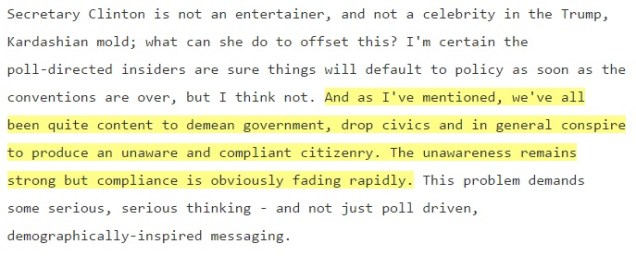
Well, we all thought the big problem for our US democracy was Citizens United/Koch Brothers big money in politics. Silly us; turns out that money isn’t all that important if you can conflate entertainment with the electoral process. Trump masters TV, TV so-called news picks up and repeats and repeats to death this opinionated blowhard and his hairbrained ideas, free-floating discontent attaches to a seeming strongman and we’re off and running. JFK, Jr would be delighted by all this as his “George” magazine saw celebrity politics coming. The magazine struggled as it was ahead of its time but now looks prescient. George, of course, played the development pretty lightly, basically for charm and gossip, like People, but what we are dealing with now is dead serious. How does this get handled in the general? Secretary Clinton is not an entertainer, and not a celebrity in the Trump, Kardashian mold; what can she do to offset this? I’m certain the poll-directed insiders are sure things will default to policy as soon as the conventions are over, but I think not. And as I’ve mentioned, we’ve all been quite content to demean government, drop civics and in general conspire to produce an unaware and compliant citizenry. The unawareness remains strong but compliance is obviously fading rapidly. This problem demands some serious, serious thinking – and not just poll driven, demographically-inspired messaging.

My emphasis in bold.

Now, it might not come as a surprise that senior politicians and their aides are complicit in deliberately trying to keep people ill-informed and docile. But in our more optimistic moments we might like to believe that this is merely an unfortunate side effect of politics rather than one of its central aims. Yet here we are, with two Clinton confidantes casually discussing that political operatives are fully aware and “quite content” to behave in this way.

What’s more, these people actively celebrate a docile and ignorant population, because when gerrymandered districts means that very few House and district races are actually competitive, it makes life easier for everyone if political parties can simply take for granted whole swathes of the population while focusing their efforts on a few narrowly defined demographics and swing states. In other words, it is to everyone’s advantage that Americans are neatly pigeonholed into ideological bubbles and prodded to action once every two years rather than becoming more thoughtful and genuinely engaged citizens. And these two Clinton operatives talk about this as though it is the most normal thing in the world.

Indeed, their only cause for alarm seems to be that while the ignorance remains strong, the people’s willingness to obey instructions is rapidly fading. And of course Clinton’s aides would be worried – their boss needed the underhand intervention of the Democratic National Committee simply to prevail over Bernie Sanders, an ornery old socialist, in her primary race. The Republican Party lost control of their uncompliant base completely, which is why they are now saddled with Donald Trump as their nominee rather than somebody who is, you know, an actual conservative.

But in neither case (for this is a problem of the political class in general, and not confined to one or other party) is there any sense of shame or introspection at having patronised and manipulated their party bases for so long that people rebelled in search of genuine authenticity. They don’t think they did anything wrong. They simply acknowledge that they now have a problem to solve, because the people’s “compliance is obviously fading rapidly”. They want to find a way to return their supporters to their rightful stupor as quickly as possible, so that they can go on governing as they see fit without having to respond to popular pressure to do things differently.

And in a way, that is more damning than any “smoking gun” email showing that Hillary Clinton broke the law or wielded inappropriate evidence ever could be. Because it shows that even when this election is over and one or other candidate fades to become a footnote in history, these parasitic  political operatives and bag carriers will still be there, waiting to serve their next master by keeping the population as dumb and compliant as possible.

And if that doesn’t depress you, you’re made of sterner stuff than I.


wikileaks-logo

Support Semi-Partisan Politics with a one-time or recurring donation:

Agree with this article? Violently disagree? Scroll down to leave a comment.

Follow Semi-Partisan Politics on TwitterFacebook and Medium.

Debating Political Diversity And The Importance Of ‘Brave Spaces’ At The University Of Miami

college-lecture-hall-safe-space

Whether “brave spaces” are any less infantilising than “safe spaces” is a matter for debate, but the University of Miami community’s recognition of the importance of a more politically diverse faculty and campus is an encouraging sign

The editorial board of the University of Miami student newspaper, the Miami Hurricane, takes a surprisingly bold stance on the problem of progressive ideological dominance on campus, and – encouragingly for a student publication – calls for greater ideological diversity rather than the fearful conformism demanded by many students.

From the Hurricane’s editorial:

UM leans to the left, as do most universities. A report published earlier in the campaign by The Tab documented that 60 percent of faculty donations were made to Hillary Clinton’s campaign; the other 40 percent was split between the other Republican candidates and Bernie Sanders.

In the classroom, professors can be very vocal about their political opinions, whether that’s a subtle joke woven into a lecture or an actual discussion of their political beliefs.

When professors deride or mock certain political views in their teaching, that only alienates students and undermines the purpose of an educational forum. Part of the reason that conservative students feel so disenfranchised from the media and academia may be because for most of their lives, the intellectual “authorities” in their lives have been liberal and taught in left-leaning ways.

At this point, I actually felt a little uneasy. While it is certainly true that the progressivism and intolerance of conservative ideas shown by many university professors is often off-putting to conservative students and academic peers, the idea of people being disenfranchised or excluded because of the words of other peers and authority figures skates awfully close to the wheedling complaints of Social Justice Warriors that criticism and free speech must be suspended for their own mental health.

This blog has warned before that it is only a matter of time before conservatives, persecuted for their beliefs by fellow students and university administrators alike, begin to use the same language of fragility and vulnerability used by the SJWs – and I think we are now starting to see that prediction come true. None of that detracts from the point made by the Hurricane’s editorial board, which remains valid. But as always, a creeping culture of victimhood is something to watch out for, and guard against.

Fortunately, the editorial soon improves:

Courses like The Election are great because they expose students to professors and guests from both sides of the aisle, which can help break down the barriers of bias.  It is much easier to dismiss the opinions of a peer, a social media troll, or a crazy uncle than it is to automatically dismiss the ideas of an authoritative figure who has a Ph.D. in the relevant discipline. Ideological diversity may also help students recognize the flaws in their own opinions and be more self-critical.

When conversations focus on sweeping platitudes rather than individual reasons, our personal networks suffer as well. Too many students have given up Facebook friends or real-life acquaintances over political differences. It’s easy to generalize a whole group of people just based on one or two beliefs that they voice, but these generalizations create many false assumptions, especially in this election when few people are completely behind their candidate.

Restrain from automatically assuming that another student is racist, sexist, elitist or corrupt due to a few of their demonstrated ideological beliefs. People have reasons for holding their beliefs, and if they’re willing to talk about it in a respectful way, then take the opportunity to respond with dialogue rather than a diatribe. Identity politics has made political opinions just as personal as ethnicity and religion, making it hard to separate feelings from ideas.

This is good. Most of us can at times be too quick to pigeonhole and condemn people based on a few assumptions and extrapolations about their political leanings, and the board’s point that many people are not strongly behind their candidate this time (either disappointed Bernie Sanders supporters reluctantly supporting Hillary Clinton or Republicans holding their nose while supporting Donald Trump) should warn us of the sweeping range of variety and nuance which is lost when we simply label people as Trump or Clinton supporters.

The editorial board is also quite right to observe that the rise of identity politics has made it much harder to separate feelings from ideas. A self-aggrandising worldview which places the individual at the centre of everything is an atrocious way to discuss ideas, as it makes rejection of an idea seem like a personal attack. That’s why weepy young students now talk about their identities being “invalidated” when people do not accept the new orthodoxies around sexuality and gender, as though they might simply vanish in a puff of smoke unless everyone on campus is forced to approve of everyone else’s life choices.

And then comes an unusual suggestion:

A healthier alternative for a “safe space” is a “brave space.” A “brave space” encourages people to freely explore different questions and issues – still trying to respect other people, but not restricted by the fear that certain ideas make others feel uncomfortable.

The goal of a diverse college campus is not to create comfortable spaces, but to be caught a little off guard by all of the different types of people and ideas that might not be found in East Portland or a small town in South Dakota. That’s okay. If we embrace that vision, we can create a more tolerant, educated and cooperative community.

Well, a brave space is certainly an improvement on a space where the First Amendment is suspended in order to prevent glass-jawed snowflakes from colliding with reality. The rejection of the notion that uncomfortable ideas should be avoided is, in these depressing times for free speech and academic freedom, a positive step forward.

But surely it would be better still to simply cease talking about “spaces” at all? The term is now ubiquitous – even news articles totally unrelated to the Social Justice agenda talk about the need for public bathrooms to have a “safe space” for parents to change their baby’s diapers. As opposed to what, an unsafe space like a gun range or a demolition site?

Why, when the term “a convenient place” would have sufficed a decade ago, must we now describe everything as a “safe space“? Welcome to my home; here’s a safe space for you to hang your coat, and over there is a safe space for you to sit and watch television. It’s puerile and infantilising.

Is the whole world really so riddled with danger that we need to mark out those places which are actually safe for human foot to tread? The journey from my dorm room to my Ivy League college classroom is fraught with many dangers, but at least the gender neutral restroom offers me a safe place to pee, the shuttle bus provides a safe space for me to ride across campus, the students’ union is a safe place for me to relax between classes and the lecture hall itself is a place where no idea that I deem central to my identity can ever be challenged.

Flippant, yes, but also an accurate transcription of how the contemporary student mind seems to work. And of course it is utterly offensive – there are people in benighted parts of the world where daily physical safety cannot be taken for granted and is routinely violated, yet here are some of the most privileged youths of any generation in history trembling in fear that they may encounter disapproval or mean comments while walking between buildings at their $40,000-a-year degree factory.

(As Malcolm Gladwell explains, this is a result of a shift in the way which we describe actions or behaviours which are undesirable. Whereas once we would have condemned sexism, racism or homophobia as simply being wrong, today we talk spuriously of the “harm” that these words and encounters visit upon us. And when every single human interaction is viewed as having the ability to physically or emotionally harm us, calls for network of safe spaces to act as stepping stones through the world inevitably follow).

Brave spaces are marginally better, perhaps, but it is depressing indeed that we now have to pat ourselves on the back and give ourselves a lollipop for being “brave” and subjecting ourselves to the mere possibility of hearing contradictory viewpoints or unpleasant ideas.

This used to simply be called “being an adult”. Is it really too much to ask that we return to that bygone age of resilience and maturity?


Safe Space Notice - 2

Top Image: Pixabay

Support Semi-Partisan Politics with a one-time or recurring donation:

Agree with this article? Violently disagree? Scroll down to leave a comment.

Follow Semi-Partisan Politics on TwitterFacebook and Medium.


Brexit Catastrophisation Watch, Part 4 – Project Fear Begins To Unravel

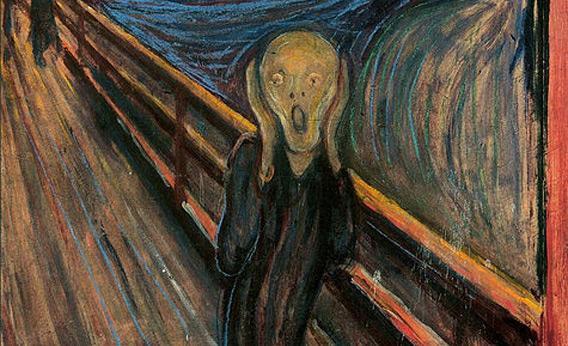
edvard-munch-the-scream

By arguing that the British people “didn’t vote for recession” as part of their advocacy for soft Brexit, Remainers inadvertently reveal that there is nothing intrinsically economically damaging about leaving the EU’s political union. Whoops.

With the post-EU referendum debate having moved on from the establishment’s sheer incomprehension of the result to an arbitrary and rather redundant battle over whether the British people voted for “hard” or “soft” Brexit (answer: read the bloody ballot paper), a curious chink in Remainer logic has been exposed.

Here is politics.co.uk’s Adam Bienkov, writing about the challenges facing Theresa May:

The first point to understand is that this is almost certainly the high water mark for her government. With Brexit negotiations not yet even underway, May is able to dismiss all questions about what exit from the EU will actually look like as being unpatriotic attempts to ignore the will of the British people.

As she told Corbyn repeatedly today: “Unlike the right honourable gentleman we think that we should deliver on what the people want.”

But while this approach may chime with the kind of attacks on ‘Remoaners’ we saw on the front page of today’s Daily Mail, it is a trick that can only be deployed for a limited amount of time. Yes the British people did vote to leave the EU, but they certainly did not vote to plunge the UK into a period of recession and international decline. And as the continuing collapse of sterling has shown this week, the sharks are already circling the UK economy. And pretty soon the prime minister is going to have to find a serviceable life raft.

My emphasis in bold.

Slavishly europhile politicians like Labour MP David Lammy are also now taking up the same “nobody voted for recession” refrain:

Funny. It’s almost as though Bienkov and Lammy are suggesting that leaving the EU needn’t necessarily mean “plung[ing] the UK into a period of recession and international decline”, and that Britain’s economic and diplomatic health is actually contingent on the kind of choices that Britain makes once we are free of the supranational political union.

Claiming that a mismanaged, uncontrolled or “hard” Brexit might cause serious economic harm is a perfectly respectable position. More than that, it is basic common sense. But that isn’t the argument that Remainers were making during the EU referendum campaign. No, they were claiming that any form of Brexit would be disastrous, that Britain leaving the European Union would be economically calamitous in and of itself, regardless of how Brexit unfolded or the model of our future trading relationship with the EU.

Here’s Adam Bienkov back in June, failing to draw that very distinction and blithely claiming that Brexit would automatically be damaging, no matter its ultimate shape or form:

Remain’s strongest arguments in this campaign are its warnings that Brexit would cause an economic shock that could cost jobs, increase prices and even push the UK into recession. These are warnings which have been endorsed by an overwhelming majority of economists, politicians, trade unions and international organisations.

One could chalk all of this up to normal political posturing were it not for the fact that Remainers are currently engaged in an insidious exercise to place themselves on the side of truth and reason while casting Brexiteers as bigoted and stupid enemies of truth and deniers of what should be indisputable facts.

Immediately prior to the EU referendum, Adam Bienkov fretted about “the growing disdain in the UK for the very concept of facts themselves”, as though voting for Brexit was somehow an irrational act of self harm:

But with the British public apparently so resistant to facts and the people whose job it is to deal in those facts so mistrusted, there does not seem to be overwhelming cause for optimism.

Even if Remain do somehow scrape a narrow win on Thursday, there should be little cause for joy on the left. Whatever the result next week, this referendum campaign should strike real terror into the hearts of all those on the progressive side of British politics.

If the UK does indeed vote for Brexit then it will open the door to a dark new political era. And it will do so at the same time as the left’s favourite weapons of facts, evidence and reason are less powerful than they have ever been before.

But of course this is a comforting leftist, pro-European lie. The British people did not suddenly become immune to facts. They simply cared about other, more important facts than the ones obsessed over by the Remain campaign – facts, hopes and fears which EU cheerleaders like Bienkov refused to even acknowledge.

Sudden geopolitical change inherently involves economic risk, and so Remainers gravitated toward the economic risk argument like flies to you-know-what, thinking that they could browbeat the public into voting Remain without ever having to do the thankless task of trying to make a positive case for the hated European Union. But it wasn’t enough, because even if Remainers were 100% right about the short to medium term economic risks of Brexit (and they certainly weren’t), the British people cared about other, more important facts.

The public cared about the continued self-governance of our nation and the self-determination of the British people. Even the lowest of low information voters could glance at the history of the EU, all of those furiously denied ratchets towards greater political integration, and see that much more was going on than the “friendship ‘n cooperation” tripe served by the Remain campaign.

The British people didn’t see why their country should remain part of an integrationist, 20th century euro-federalist experiment when every other advanced country in the world outside Europe manages just fine without a continental parliament, supreme court and unaccountable government. They didn’t see how a European Union made up of 28 countries could possibly fight Britain’s corner better than an elected government of the British people, by the British people and for the British people. And they were quite right to question all of these things.

But the leftists and the pro-Europeans had nothing to say to the British people about their legitimate concerns. Zip. Nada. Zilch. Tumbleweeds. They slobbered to stay in the European Union like rabid dogs, but they never gave a good reason why. Instead, they shouted louder and louder about the economic risk, wheeling out one politically compromised “expert” after another to warn us of the impending apocalypse, while pretending that arguments about democracy, sovereignty and national identity were silly, or somehow fringe concerns.

And having been so wrong about the facts which the people considered to be most important, now it also turns out that the key Remainer “fact” – that Brexit would inherently harm the economy, no matter its form – was a steaming pile of nonsense.

Adam Bienkov is free to go on making the argument that a “soft Brexit” in which the current single market access is maintained would be by far the best way to approach our secession from the EU. As it happens, this blog agrees with him – considering that Britain must rebuild atrophied political and diplomatic trade competencies from almost zero, and that the default secession period set out in Article 50 is nowhere near long enough to negotiate a comprehensive replacement, risking additional short term economic obstacles by forgoing the single market without a new framework in place seems ludicrous.

But in making a distinction between hard and soft Brexit, Bienkov is also effectively admitting that Brexit needn’t be economically harmful at all, if done the right way. And if that is now his position, as an advocate of soft Brexit, then he should do the decent thing and apologise to his readers for the thousands of words of pre-referendum doomsaying and post-referendum hysteria to fly from his keyboard.


European Union - United Kingdom - Britain - Flags

Support Semi-Partisan Politics with a one-time or recurring donation:

Agree with this article? Violently disagree? Scroll down to leave a comment.

Follow Semi-Partisan Politics on TwitterFacebook and Medium.

The Real Deplorables

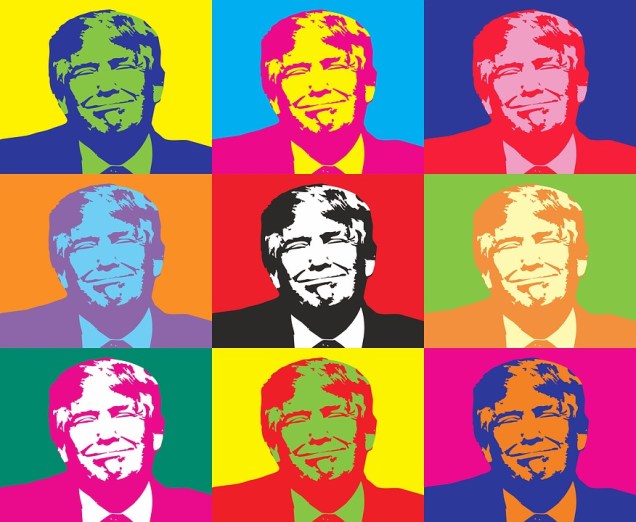
pop-art-donald-trump-2

We must not judge all Donald Trump supporters by the actions of his most obnoxious social media cheerleaders

With polls showing that Donald Trump would be cruising to likely victory in November’s presidential election if only men (with whom Trump leads in the polls) were allowed to cast a vote, a depressing new hashtag – #Repealthe19 – has started trending on Twitter, advocating for the repeal of the Nineteenth Amendment granting women’s suffrage.

Deplorable? Of course. But it is also likely the handiwork of a few bored Trump-supporting trolls, and hardly representative of the millions of women and men who choose to support Donald Trump’s candidacy. Yet this will not stop commentators on the Left, politically and emotionally invested in a Hillary Clinton victory, from portraying this juvenile and offensive stunt as being part of a broader Trumpist attack on women, and extrapolating the actions of a few immature idiots to smear the character and motivations of other, innocent Americans.

As it applies to Donald Trump’s own personal behaviour, such criticism is entirely justified – by bragging that his celebrity entitles him to “grab [women] by the pussy” Trump has further highlighted an especially unsavoury aspect of his character which we should all have already been aware, and not soon forget. But while criticism of the man himself is entirely valid and even essential, we must be careful to avoid falling into the comforting trap of assuming that the many people who support Donald Trump share the same retrograde views of the candidate and/or his troll army.

In the ongoing aftermath of Hillary Clinton’s recorded comments stating that “you could put half of Trump’s supporters into what I call the basket of deplorables“, journalist Michael Tracey warns political pundits against making the mistake of tarring all Trump supporters with the same brush.

Writing in The American Conservative, Tracey warns:

To broaden their horizons, such pundits might consider visiting some places in so-called “swing states” where Trump support is widespread, rather than just bloviating from behind their computer screens. Traversing these areas, one can’t help but bristle at Hillary’s “deplorables” theory as not only politically counterproductive, but seriously foul. She—like the pundits promoting her—has gotten the analysis totally inverted.

The real “deplorables” generally aren’t the people whom Hillary denounced as wholly “irredeemable,” or at whom economically secure commentators fulminate on a regular basis. More obviously “deplorable” are Hillary’s fellow financial, political, economic, and military elites who wrecked the economy, got us mired in endless unwinnable foreign wars, and erected a virtually impenetrable cultural barrier between everyday Americans trying to live fruitful lives and their pretentious, well-heeled superiors ensconced in select coastal enclaves. It is thanks to the actions ofthis “basket of deplorables” that we’re in the situation we’re in, where an oaf like Trump is perilously close to seizing the presidency.

At a recent Trump rally in Lancaster County, Pa., I was bemused to encounter a coterie of local Amish people who’d traveled there together by bus. Asked why they backed Trump, the overwhelming response was that Amish folks just wanted to preserve their traditional way of life (which they saw as under siege) and perceived Trump as enabling them to carry on with it. Some told me they supported Trump not because of some overweening disdain for their nation’s fellowmen, or immigrants, or even coastal liberals, but because they felt that the federal government was intruding on their ability to properly run their small farms.

More:

This also holds true in Lewiston, Maine, where Trump is favored to win the 2nd Congressional District and therefore at least one (potentially crucial) electoral vote. (Maine and Nebraska allocate their electoral votes by congressional district.) Lots of Franco-Americans populate this area, and many old-timers still speak French with a distinctive Central Mainer dialect. (Often it comes out when folks get inebriated at the bars in town.) When I visited recently, everyone basically had the same story: mills use to be the lifeblood of the local economy and by extension its civic institutions. Once the mills inexplicably shuttered, these workers lost their sense of location and community. Social-club memberships dwindled; parades and marches down the main thoroughfare became less of an attraction. There’s just not a hell of a lot going on nowadays, except Patriots games on TV, drinking, and drugs. Anybody with the means usually either bolts for relatively more prosperous Bangor to the north, or south to Boston and beyond.

Are the people who live in Lewiston really “deplorables”? Most of them like Trump, but they’re not the ones who crashed the economy or agitated to invade Iraq, as Hillary did.

Again: perhaps the true deplorables are the unaccountable elites whose decisions directly worsened life for millions of Americans. Oddly, you never hear Hillary running around to high-roller fundraisers condemning Goldman Sachs for their deplorable conduct; maybe that’s because they’ve directly given her and Bill hundreds of thousands of dollars for “speeches,” excerpts of which finally came out last Friday and are just as degenerate as you’d expect. (Goldman banned partners from giving money to Trump’s campaign, but handing over cash to Hillary is still perfectly fine.)

Tracey concludes:

Maybe the Amish of southeast Pennsylvania or the Franco-Americans of central Maine don’t use the correct Twitter hashtags or subscribe to Lena Dunham’s newsletter, but they’re still good people with normal ambitions for a happy, secure life. Screeching “deplorable!” at them is itself deplorable, especially because it lets the elites who bungled the country’s affairs off the hook.

This is my assessment too. There is a world of difference between some of Donald Trump’s most prolific (and obnoxious) social media supporters and the quiet men and women of middle America who see him as preferable to a President Hillary Clinton. You can argue (as this blog does) that these people are wrong, and that they are attaching their hopes and dreams to the wrong champion in supporting an egotistical authoritarian like Donald Trump. But they in no way, shape or form can they be described as “deplorable”.

Many of these people work hard, for stagnating pay which dooms them to falling living standards scarcely comprehended by the coastal journalists who scorn them. They raise families, attend church, give to charity, serve in the military. Sure, they might not be steeped in the latest fastidious trends of social justice or identity politics, but very few of them could be described as being full of hate.

Last Christmas, while we were back Stateside with my wife’s family in McAllen, Texas, I was perusing the shelves at Costco or Sam’s Club when I noticed Donald Trump’s new book “Crippled America: How To Make America Great Again” staring up at me from the bargain bin. Noticing me notice the book was a kindly-looking old man who wandered over, pointed at the volume in my hand and said, without a note of hesitation in his voice, “that man will save America”.

I had the briefest of conversations with him. Was this man an overt racist, sexist or homophobe? It certainly didn’t appear so, as far as I could tell. The baseball cap he was wearing suggested that he was a veteran, while his general appearance suggested that perhaps he was not brimming over with disposable income. And oh yes – like many people in that part of the country, he was Hispanic. Maybe that accounts for the strength of Clinton’s seething contempt toward members of her taken-for-granted minority constituencies who refuse to “see the light” and support her.

You can call this man deplorable if you will. Hillary Clinton has already preemptively labelled him so. Perhaps he is not quite “irredeemable“, though. Perhaps, like the African American protester she had thrown out of her rally the other day, by virtue of being a minority he might get away with merely being followed home and re-educated to better appreciate everything that Clinton is doing for him.

But the Hillary Clinton campaign and the American political elite in general are making a grave mistake if they assume that Donald Trump’s noisiest and most obnoxious cheerleaders on social media are representative of that beleaguered rump of Middle Americans who see him as their only route of escape from a status quo which has profoundly failed them.

Clinton has suggested that Trump supporters who repeat the “Make America Great Again” campaign slogan are somehow being unpatriotic for effectively suggesting that America is not already great. And if you are a typical Clinton supporter, perhaps your America is unquestionably great, delivering bountiful career opportunities and a consistently rising standard of living for you and everyone you know. But many others are less fortunate. In fact, the version of America which confronts many Trump supporters each and every day is significantly less “great” in nearly all of the ways which matter most to someone struggling to get by.

And these people deserve better than to be scorned and preemptively written off by the likely next president of the United States.


Donald Trump Protesters - St Louis

Top Image: Pixabay

Support Semi-Partisan Politics with a one-time or recurring donation:

Agree with this article? Violently disagree? Scroll down to leave a comment.

Follow Semi-Partisan Politics on TwitterFacebook and Medium.