Tales From The Safe Space, Part 52 – Gustavus Adolphus College, Illegal Immigration And A Failure Of Intellectual Curiosity

Illegal Immigration - White Supremacy - Gustavus Adolphus College - Poster

The Cult of Social Justice and Identity Politics takes a fierce, perverse pride in refusing to understand the arguments of anyone who holds alternative ideas

What genuine attempt at political dialogue begins with a deliberate effort to misunderstand and mischaracterise the opposing side, misrepresent their motives and impugn their morals?

The answer, of course, is none. No respectful or productive discussion is possible when one side deliberately poisons the well in such a manner. Yet this is exactly what the Diversity Leadership Council at Gustavus Adolphus College did when they posted a series of fake, deliberately racist anti-illegal immigration posters around campus to spur a discussion and supposedly “educate” people about racism.

Campus Reform reports:

The “Diversity Leadership Council” at Gustavus Adolphus College has admitted to posting racially offensive posters around campus after the school’s Bias Response Team received multiple reports on the matter.

The signs, which are now being labeled a social experiment, notified “all white Americans” to report “any and all illegal aliens to U.S. Immigration and Customs Enforcement” because “they are criminals.”

Provocatively declaring that “America is a white nation,” the flyers assert that it is the “civic duty” of white Americans to turn illegal immigrants in to law enforcement.

Because the only people who could possibly concerned about illegal immigration are white people, right? Nobody of any other skin tone or ethnicity could have a problem with turning a blind eye toward those who either illegally cross the border, overstay their legitimate visa or otherwise flout federal immigration law and then seek to use the length of their lawbreaking as an emotional cudgel to lobby for the normalisation of their status. Only racist white people.

Of course, as the predictable outrage crested and the Bias Response Team’s switchboard melted down under the sheer volume of calls from triggered students, it turned out that the whole thing was a fake. The Diversity Leadership Council coming forward with this smarmy statement:

At approximately 10 a.m. this morning, the Diversity Leadership Council (DLC), a student-run organization that represents 21 student groups on campus, posted signs in Beck and Olin Hall which attacked “Illegal Aliens” by suggesting that “they are criminals.” These posts were quickly torn down and shared with members of the campus community via the Facebook Group, Overheard at Gustavus.

It is the mission of the Diversity Leadership Council to formulate a collective voice when our organization recognizes the need to promote, preserve, and protect on-campus diversity. Thus, a subcommittee of the DLC, in collaboration with social justice theatre troupe I Am We Are, posted these signs and accompanying A-frames with bystander intervention tips in academic buildings on campus in an effort to help educate our peers and campus community about issues of bias, and the importance of being an active bystander.

We want to help put an end to bias-related incidents that happen on our campus, social media, and in our communities by forcing individuals to have dialogues about forms of hate and bias.

Social justice theatre troupe? Kill me now.

And so with a straight face, the Diversity Leadership Council of Gustavus Adolphus College told the student body and the wider public that their little stunt – portraying concern over illegal immigration as the exclusive preserve of white nationalists – was intended to foster “dialogue”.

The National Review’s redoubtable social justice beat reporter, Katherine Timpf, thunders:

Hey, kids? If you want to “help put an end to bias-related incidents that happen on our campus,” how about you address those incidents instead of distracting from them by making up a fake one? Seriously — just what is bringing awareness to a fake issue going to solve? It’s not going to help solve that issue, because — and sorry if I’m blowing your mind here — a problem has to actually exist in order for you to be able to solve it.

Now, I am not sure exactly what kinds of “bias-related incidents” are happening on that campus, but I do know that there being people on campus who felt so strongly that only white people should live in America that they were running around posting “AMERICA IS A WHITE NATION” flyers to help achieve that would be a serious one indeed. Presumably, this fake incident is on a completely different level from anything that is actually happening on that campus, which means that any “dialogues” related to it are on a completely different level, too. No doubt, these flyers must have left a lot of people feeling freaked out and threatened based on a false issue, all for the sake of having a discussion about something that didn’t even exist — and that’s about as disgusting as it gets.

Timpf’s objection is all well and good, but the real problem is not the fact that demented SJWs have now taken to crying “wolf” when starved of more legitimate opportunities for outrage (depressing though that is), but rather the fact that these campus leaders and activists are studying at university yet seemingly totally incapable of understanding the alternative arguments and perspectives which they so vociferously oppose.

One does not need to be a white nationalist to oppose illegal immigration. In fact, the vast majority of those who choose not to celebrate illegal immigration are perfectly welcoming and tolerant of immigrants, provided that they a) settle in America through the proper legal process, and b) assimilate into general society once they arrive. Are there racists and white nationalists as well? Of course there are. But while all white nationalists may object to illegal immigration, not all people who object to illegal immigration are white nationalists. Not even a plurality of them.

And yet rather than encouraging students to deeply understand an issue or argument from all sides, universities today seem to openly encourage an outcome-based approach to thinking about certain issues – for students to start at their desired endpoint (open borders and the normalisation of all current illegal immigrants) and then choose the facts (or Trumpian alternative facts) to back up that position.

I was always taught that in order to properly debate with somebody, let alone stand a chance of winning an argument against them, one must first seek to fully understand and be able to properly articulate the opposing argument, from the opponent’s perspective. Only armed with this knowledge can one properly analyse, refute and undermine the premises of their argument in order to comprehensively attack their conclusion.

By contrast, today’s campus activists – raised on the dogma of the Cult of Social Justice and Identity Politics – lack the capacity not only to understand opposing viewpoints in order to argue properly, they also seem unable even to assume the good faith of those who hold alternative views. They are so high on their own sense of self-righteousness that they lack the basic intellectual curiosity to seek to understand why somebody might disagree with their position. Hence objection to illegal immigration is described in the posters at Gustavus Adolphus College as being of concern only to white Americans who believe that “America is a white nation”.

But the truly depressing thing is that while the Social Justice Star Chamber of Gustavus Adolphus College may have gone slightly further than most in terms of fabricating fake racist posters to get outraged about “promote a discussion” about their pet topics, the simplicity of their thinking is mirrored across a vast portion of society and the media.

How harshly can one really criticise the social justice zealots at Gustavus Adolphus College when the American mainstream media is also in the business of deliberately conflating legal and illegal immigration so as to portray opposition to the latter as racist-inspired hostility to the former?

How strongly can one denounce the student activists when the leadership of the Democratic Party sees fit to welcome a succession of illegal immigrants onto the stage at their quadrennial party convention to soak up the admiring applause of party delegates?

What the Diversity Leadership Council did was bad, but in many ways it was no worse than similar insidious efforts made by politicians and the media to normalise illegal immigration and portray anybody with legitimate concerns as either heartless or a dangerous extremist. And at least it is clear – by virtue of their limited intelligence and rank amateurism – what the Gustavus Adolphus activists are up to with their tawdry little campaign. The bias of political officials and supposedly objective journalists is often far more subtle, and therefore harder to detect.

The same cannot be said of the mindless open borders stance of the Gustavo Adolphus activists, and the naked stupidity and bad faith currently on display at that Minnesota college.


Safe Space Notice - 2

Support Semi-Partisan Politics with a one-time or recurring donation:

Agree with this article? Violently disagree? Scroll down to leave a comment.

Follow Semi-Partisan Politics on TwitterFacebook and Medium.

What European Identity? Part 2 – Classical Music Edition

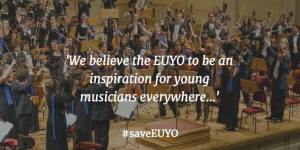
European Union Youth Orchestra

How can we possibly continue to enjoy Beethoven or watch touring European orchestras perform in evil, isolationist Brexit Britain?

Today’s Peak Guardian article is an account of an interview recently given by the legendary pianist/conductor Vladimir Ashkenazy to the Observer newspaper, in which Ashkenazy urges classical musicians to “keep up British links with Europe in the face of Brexit”.

A distilled summary of the Guardian’s breathless spin: Brexit gravely threatens Britain’s continued participation in the international arts and culture scene, but if enough brave musicians come together in a spirit of cooperation then it may be possible to ride out the gravest threat to Europe since World War 2 and the Cold War.

From the piece:

Vladimir Ashkenazy, one of the most revered figures in classical music, has called on musicians to strive to keep up British links with Europe in the face of Brexit. The great Russian conductor and pianist, who made his name as a soloist in the 1960s and 70s, spoke passionately to the Observer about his continued faith in European culture.

“Music will win in the end,” he said, speaking publicly on the subject for the first time. “After all, music is not just an exercise in making sounds. It is a reflection of our joint spiritual endeavours.”

Comparing Britain’s impending split with Europe to other political schisms of the 20th century, such as the rise of fascism and the cold war, Ashkenazy, 79, said he was optimistic that those who love making music together will find a way to keep connections going across the Channel. “I am sorry about it, and I know it will be difficult to get used to a totally different situation, but for musicians many things will remain the same, simply because we will work to find a way to make agreements for the sake of music,” he said.

Many British classical musicians expect Brexit to set up new travel barriers and present fresh difficulties for orchestras receiving EU funding. The potential threat to free travel for working musicians has already prompted the European Union Baroque Orchestra to announce a move to Belgium this summer. It has been based in Oxfordshire since 1985. Meanwhile, the well-regarded European Union Youth Orchestra (EUYO) is considering a move to the continent after 40 years in Britain.

Of course, this feeds nicely into the Guardian’s (and the entire British metro-Left’s) little conceit that by extricating ourselves from a dysfunctional and failing supranational political union we are also somehow hacking away at the cultural and historical ties which bind us to the continent, and so naturally they seize on the Ashkenazy interview as a perfect example of how enlightened artists can help to save Britain from the brutish and self-destructive decision made by the Evil 52%.

Now, Vladimir Ashkenazy is not particularly to blame for any of this. If you want somebody to play a Rachmaninov prelude in such a dazzling way that it makes your hair stand on end and brings a lump to your throat then Ashkenazy is your very man. If, however, you want somebody to give you a good overview of geopolitics and assess the relative failings and merits of the European Union, then you are probably better off turning to someone else. So the point is not that Ashkenazy is wrong (and even he is generous enough to admit that Brexit is slightly less evil than Soviet communism, which is very kind) – that much is entirely forgivable, given that he is operating far from his natural competencies.

No, the problem is the entirely predictable way that the Guardian picks up this narrative and unquestioningly burnishes and amplifies it without stopping even for a moment to consider the validity of the point being made. Where they could take a step back and actually seek to educate their readers about a whole bunch of issues touching on this story, instead they strut and pose and play to the gallery, feeding them the self-affirming story that they expect rather than the hard dose of reality that they might actually benefit from hearing.

The Guardian could have dwelled for a moment on exactly why cross-border co-operation in classical music is supposedly imperilled by Brexit (giving more concrete examples than the unspoken and unprovable suggestion that Britain would deliberately make it harder for talented musicians to tour or work here). But instead, they uncritically write about how musicians will bravely “find a way to keep connections going across the Channel” without stopping for a moment to consider the fact that British orchestras and ensembles tour numerous non-EU countries in the world without the protective shelter of political union, while many non-European ensembles somehow make it to the BBC Proms and give numerous other performances in Britain despite their musicians lacking EU passports.

But the ulterior motive soon becomes clear when the article bemoans the relocation of the European Union Baroque Orchestra and the European Union Youth Orchestra, two EU propaganda outlets funded by taxpayers to instil in us a sense of European identity which still stubbornly fails to materialise. In London, with so many preeminent ensembles already located here, did we ever really need these two explicitly political additions to our cultural scene? No, of course not – and the Guardian’s duplicitous attempts to upgrade these obscure ensembles to “major orchestra” status is straining the boundary of journalistic integrity. Their sole purpose was to indoctrinate the young and cause us to associate the European Union with benevolent funding of the arts rather than their tawdry, relentless attacks the nation state.

(The EU Baroque Orchestra has a slightly more successful legacy of seeding other baroque ensembles with past alumni, work which can continue in their new Belgian home.)

None of this is to deny the value of youth orchestras – I was a member of one myself for several years, and greatly enjoyed the opportunities for performance and collaboration that it afforded me – but the EU’s propaganda outlets are neither central to the British classical music scene nor an essential bridge to Europe. Take them away and nothing really changes.

Compare the EU’s musical propaganda outlets with a far more worthy exercise in cross-cultural bridge-building, Daniel Barenboim’s West–Eastern Divan Orchestra, and I know which I would rather preserve – the one which seeks to promote peace and cross-cultural understanding in the turbulent Middle East, not the one which uses European taxpayer funds to shore up a creaking, failing 1950s regional super-bloc.

The United States, by contrast, does not need to keep itself together by funnelling federal money into youth orchestras in a desperate attempt to inculcate a sense of American-ness. And while many pertinent criticisms can be made about funding of the arts in America, it must also be acknowledged that many of the finest ensembles and artistic companies in the world – the Metropolitan Opera, the New York and Los Angeles Philharmonics, the New York City Ballet, as well as the feeder schools, companies and institutions which mould the next generation of artists – are based in the United States and do not have to suckle at the teat of taxpayer funding in order to survive.

When government does not try to do everything, private initiative and private philanthropy are often able to step in to do the job far more successfully and lavishly. They need only be given the space to do so – but the EU has no interest in getting out of the way and allowing the arts to flourish on their own, because then the results would not bear the imprimatur of Brussels and thus would have zero propaganda value.

Is the threat posed by Brexit to the European Union Youth Orchestra a good reason to scrap the whole endeavour and remain part of the EU? Of course not.

Has the European Union Youth Orchestra done anything to meaningfully shift the sense of European identity among those who are not directly involved, or the misty-eyed eurocrats who profaned Beethoven’s Ninth Symphony by co-opting the final movement as their anthem? No.

Does Britain’s departure from an explicitly political union necessarily or inevitably mean that artistic links between the United Kingdom and the continent must be weakened? No – or at least, the Guardian have given us no good cause to believe that there is a danger.

(Incidentally, Vladimir Ashkenazy himself lives in Switzerland, which is also famously not a member of the European Union, and yet seems to be able to maintain a fruitful international career including many concerts and residencies in Britain).

The whole Guardian article hangs together only if one is content to take the most superficial view of Brexit, skating around on the thin ice of metro-left shibboleths about how international cooperation and peace only exist thanks to the benevolent hand of Brussels. To take the threats spun from the Ashkenazy interview seriously, one must actually drink the Remainer Kool-Aid and believe that Brexit means isolationism, and in all its forms – economic, social, cultural. To be that cretinous, one must be an unapologetic bubble dweller, proud and stubborn in one’s ignorance of the opposing side.

But then that’s the Guardian for you: a newspaper tailor-made for poseurs who believe (or at least want to signal to their friends) that they already know and understand the nuances of every issue, and that the One True Way just conveniently happens to lean in the same stridently left-wing, pro-EU direction as their pre-existing beliefs.

Among Guardian journalists and readers alike there is zero intellectual appetite to actually get under the hood of any issue and talk about the meaning of democracy and self-determination, whether state funding or private philanthropy does a better job of funding the arts or any other substantial question that is ripe for debate. They just want to take a glib headline and serve it up as red meat to their metro-left, superficially culturally literate peer group (see last year’s uncritical, months-long homage to the NHS).

And so what could have been a useful jumping-off point for a real discussion about the future of the fine arts, the best way to foster cross-border co-operation and whether existing mechanisms of funding are a) effective, and b) a good use of taxpayer funds instead becomes just another wobbly-lipped ode to the Brave Artists Resisting Evil Brexit.

The only result of this “journalism” is that everyone is left slightly more attached to their pre-existing bias, while the opportunity to enrich the public discourse is squandered in favour of yet more left-wing, pro-EU virtue-signalling and alarmist Brexit catastrophisation.

Mission accomplished once again, Guardian. Great job.


Save EUYO - European Union Youth Orchestra - Propaganda

Support Semi-Partisan Politics with a one-time or recurring donation:

Agree with this article? Violently disagree? Scroll down to leave a comment.

Follow Semi-Partisan Politics on TwitterFacebook and Medium.

What European Identity?

Remainer paints EU flag on her face - European Union - Brexit

No, watching an arthouse movie twice a year doesn’t count

Pete North puts into rather forceful words a sentiment which inchoately bubbles up within me every time I see a tearful Remainer painting the EU flag on their face and weeping into an eagerly waiting television camera about how the cruel, racist vote for Brexit has somehow ripped their “European identity” away from them.

North scoffs:

For all that cretinous bilge from remainers about us Brexiteers “stealing my European identity”, I say bollocks. You have no European identity. It is a figment of your imagination. You weren’t watching [a] French cop show on Netflix last night were you? You didn’t go and see a Spanish superhero film at the cinema last week. You know more about US politics than you do about the EU. Culturally, militarily and politically we are Anglospheric. That is a fact.

For all that we have seen remainers amphibious with grief, I say go and look at the traffic jams and the behaviour of drivers in Rome or go and watch the Spanish torture a bull to death and tell me that your culture is in any way reflected in Europeans. That’s when I tell you to fuck right off.

If I have to pick an empire to be allied with, I choose the USA every single time. The land of The Wire, South Park, Rick and Morty, the First Amendment. The country that never needed any persuading that Communism is the manifestation of evil on earth.

Say what you like about Donald Trump, but Donald Trump is not America. Trump is for four years or so. Moreover, Trump is a good sign. Yes, he’s a brash, oafish wrecker but he was elected on the back of a total rejection of American leftism. That which has aggressively moved to bury all moral norms and free speech along with it.

This is why Trump is weakening relations with the EU. Ultimately the diseased politically correct establishment in the USA is the consequence of a detached and corrupt liberal elite. In that respect the USA is in a more advanced state of decay than the EU – but we should view it as a warning. The soft left political consensus of the EU, with its deeply ingrained NGOcracy is that same disease. Brexit is not Trump. Brexit means we avert having one of our own.

I concur wholeheartedly.

Ask a Remainer what their favourite television show is, and they are far more likely to cite an American show than a European one.

Ask a Remainer what their favourite movie is, and they are far more likely to cite something from Hollywood than a worthy-but-subtitled movie from France, Spain or Italy.

Ask a Remainer who their favourite pop music artist is, and they are far more likely to cite an American artist than a European one.

Ask a Remainer to name a political hero or inspiration and I would wager that they are far more likely to reach for Abraham Lincoln, Franklin Delano Roosevelt, John F Kennedy or Barack Obama than Jacques Chirac, Gerhard Schröder, Silvio Berlusconi or Angela Merkel.

Ask a Remainer to cite a famous legal case or decision from a jurisdiction other than their own, and they are far more likely to name a famous case from the US Supreme Court – Brown v Board of Education, Roe v Wade – than a case from the European courts, or those of any member state.

For that matter, look at our legal system of Common Law, which influenced the formation of the American legal system (in the original colonies through to the federal system) and which is markedly different to the civil law traditions prevalent on the continent.

There are exceptions, of course. There are some areas where Europe does exert a stronger gravitational pull over us than North America or the wider Anglosphere. But besides geographic proximity, they are few and far between. Those who claim that we are somehow predominantly “European” in culture tend to either do so from a position of wishful thinking, wanting to position us closer to European social democratic tradition because they wish that our politics would move further in that direction, or from the blinkered perspective of their own narrow social circles.

None of this is to claim that British people lack an affinity for Europe, have nothing in common with other European countries or are in any way hostile to European culture. Many Brits do have deep and abiding links with the continent, myself included – I have a deep and abiding affinity with France and the French culture and people dating back to my teenage years, but I am clear in my mind that this is a relationship nurtured with a culture distinct from and different to my own, not a mere extension of my own culture.

And anybody who seriously surveys the full sweep of cultural connections – legal, governmental, artistic, musical, touristic, commercial – and tries to tell you that the British people have more in common with mainland Europe than with our friends in the Anglosphere (particularly the United States and Canada) is deliberately trying to deceive you, and deluding themselves in the process.


People hold banners during a demonstration against Britain's decision to leave the European Union, in central London

Support Semi-Partisan Politics with a one-time or recurring donation:

Agree with this article? Violently disagree? Scroll down to leave a comment.

Follow Semi-Partisan Politics on TwitterFacebook and Medium.

Separate But Equal, Part 1

Instituting a new series to examine disturbing cases of deliberate self-segregation of “marginalised” communities carried out in the name of social justice

Forget “the only gay in the village” – Manchester City Council is putting forward plans for a majority-LGBT housing community for people aged over 50. In this socially engineered ghetto, eligibility to live would depend not on one’s ability to afford the rent but one’s ability to satisfy the diversity checklist of a local government busybody.

Once again, the best intentions of the social justice community result in the most extreme and counterproductive of solutions.

From the Guardian’s report:

Manchester city council has announced plans to create the UK’s first retirement community aimed at lesbian, gay, bisexual and transgender people.

According to the local authority, the city is home to the country’s largest number of LGBT people outside of London and is due to see a rapid growth in the number of LGBT residents over 65 in the next two decades. More than 7,000 over-50s living in Manchester identify as LGBT.

A recent report by the Manchester-based LGBT Foundation, commissioned by the council, revealed that older LGBT people experience higher levels of loneliness and isolation.

Many were fearful of discrimination in existing accommodation and there was a desire for affordable LGBT-specific housing where people could be open about their identity in later life.

The extra care scheme – a targeted development for older people – will house a minimum of 51% LGBT residents, but heterosexual people will also be welcome to apply to live in the accommodation.

The housing will have specially trained staff based on site and pets will be welcome. As well as the LGBT Foundation, the project is being supported by Stonewall Housing and the Homes and Communities Agency.

As one sceptical interviewee in the BBC report wisely asks:

The issue we are going to come up against along the way is that we’ve fought for equality. Do we need a separate space?

Quite.

Of course, the gimlet-eyed do-gooder at Manchester City Council responds, patronisingly:

It’s not necessarily about ghettoising particular communities. It’s offering people who want it that opportunity to spend their time with people who they know will understand them.

Ah well, that’s fine then. If people want to withdraw from wider society into strongholds (weakholds?) where fragility is pandered to rather than resilience developed, of course it is the sacred and noble duty of local government to assist them in their folly at every turn. Who are the guardians of the public purse to question the latest social justice orthodoxy?

Some may say that this is a local decision for local communities, and ask what standing a writer from London possibly has to weigh in on a decision made by Manchester City Council? And I would be amendable to that argument if it were actually the people of Manchester on the hook for this experiment in social divisiveness. But of course they are not.

In overcentralised Britain, the dominant single source of local authority funds – 40% in the case of Manchester – are disbursed by central government after having been raised through general national taxation. And besides the obvious social folly inherent in creating fragile, unresilient and homogenous minority communities in the name of social justice, the fact that all British taxpayers are funding this folly makes it directly my concern, and that of everyone else.

If a private developer wants to create an ethnically, gender or sexuality-based homogeneous environment for private tenants or homebuyers then that is a separate discussion fraught with its own parallel legal questions about discrimination and equality. But in the case of a public initiative and social housing, the government has absolutely no business discriminating along these lines, setting quotas or engaging in any other form of naked social engineering.

We should not be unsympathetic to some of the stories of older LGBT people featured in the BBC News report – being ostracised by friends and family of one’s own generation after coming out must be incredibly hard, particularly in older age. But it should be for institutions of civil society to step in to address these real social problems, and we must get out of the habit of immediately pivoting to local and national government for a solution to each and every problem – especially where the mitigation involves the use of general taxpayer funds.

Heavy-handed governmental interventions such as this only serve to crowd out independent solutions from civil society, and reinforce the expectation that government must play an active, watchful part in nearly every area of our lives. And no matter how well-intentioned individual schemes may be, British taxpayers should not be left on the hook for implementing a social justice revolution in Manchester or anywhere else.


Separate is NOT equal - Stonewall - segregation - LGBT

Support Semi-Partisan Politics with a one-time or recurring donation:

Agree with this article? Violently disagree? Scroll down to leave a comment.

Follow Semi-Partisan Politics on TwitterFacebook and Medium.

Andrew Sullivan On The Importance Of Rediscovering Healthy Patriotism

donald-trump-make-america-great-again-patriotism-nationalism

To move beyond Trumpism, Democrats (and forward-thinking conservatives) must look to embrace a healthy and inclusive patriotism, and end their love affair with a cold form of globalism which undermines nation states, communities and livelihoods

Andrew Sullivan remains my blogging hero and inspiration, but I must confess that until very recently I have not greatly enjoyed his recent return to semi-regular online writing for New York Magazine. The thinking and prose is generally as fine as ever, but Sullivan’s excessive hysteria (not to say that real concern is unwarranted) in the face of Donald Trump’s election victory and the start of his presidency has been offputting, as has his continued slow drift away from conservatism and overly-enthusiastic embrace of Hillary Clinton during the 2016 election campaign.

That being said, last week’s Interesting Times column/diary is vintage Sullivan – beautifully poetic, well argued and undeniably valid.

Sullivan writes of globalisation and urbanisation’s losers, and in praise of patriotism:

I’ve always been unusually attached to places. It’s one reason I still call myself a conservative. Travel doesn’t attract me. I’ve now lived in the same loft in D.C. since I bought it, in 1991 (apart from an ill-fated year and a half in New York City); I’ve spent 20 consecutive summers in the same little town at the end of Cape Cod, and have no desire to go anyplace else. Even when I go home to England, I tend to spend around half my time near where I grew up.

I wouldn’t go so far as Malcolm Muggeridge, who famously said: “Travel, of course, narrows the mind.” (Don’t you love that “of course”?) But I would say that the reverse can also be true. Staying put allows you to really get to know a place deeply at different times and in different seasons, to capture, often serendipitously, a small detail you’d never seen before, or arrive at a street corner and suddenly remember that this was where you first met an old friend.

But staying home brings grief with it as well. Everything changes, and when your beloved tree at the end of the street is cut down, or a new Safeway replaces the corner baker, or, more fatally, the factory that used to be the linchpin of the place lies empty and crumbling, it stings and wounds and demoralizes. When I’ve visited my own hometown in England, so much is the same. And yet, on closer inspection, many of the once-vibrant shops are selling secondhand clothes, or given over to real estate offices. My old church has a broken window where the rain comes in. The services have dwindled to near nothing. Maybe it’s being away for so long, but it seems familiar and yet a little empty, as if something in it has somehow died, a continuity somehow lost.

And more and more, I suspect, the shifting winds of this merciless global economy and the impact of mass migration are bringing about similar changes all over the West. This beautiful but deeply sad story about how a provincial town in France has slowly died — as its young people flocked to cities, as its shops were supplanted by a supermarket, says a lot about the moment we are in: “Down another street is the last toy store, now closed, and around a corner is the last independent grocery store, also shuttered. Walk down the empty, narrow streets on some nights and the silence is so complete that you can hear your footsteps on the stones.” The town, Albi, is not alone.

In America, as Charles Murray has shown in his extraordinary book, Coming Apart, the young and the smart and the talented — the people who would once have formed the core of these small towns — have long since fled to distant colleges and cities. They don’t come back. They would once have been the police chief or the town librarian or the school principal. They once helped make the town a well-run place with a clear identity, where the same families and networks lived together, died together, belonged together. These connections have attenuated … as economics supplants culture, as efficiency erases the individuality of inefficient places, as Amazon rips the heart out of shopping districts, as the smartphone removes us from physical space, and as many more immigrants and their culture alter the feel of a place in ways that disorient those with memories and loyalties.

I don’t think we can understand the politics of this moment — Brexit, Trump, Le Pen — without noticing this abiding sense of loss. The middling city and small town are going the way of the middle class. Patterns of farming in rural America are being devastated. I loved this English farmer’s account of the changes he is seeing: “The future we have been sold doesn’t work. Applying the principles of the factory floor to the natural world just doesn’t work. Farming is more than a business. Food is more than a commodity. Land is more than a mineral resource.”

Jobs are vital not simply because of money — but because they give lives meaning, a meaning that now seems so remote people medicate themselves with opiates. People are grieving for a lost way of life. This is not racist or retrograde or even backward. It is, rather, deeply human. For it is in these places that a deeper identity forms, that Americanness, Britishness, la France profonde, endures. And what we’re seeing right now, across the developed world, is a bid to retain the meaning of a culture and a way of life in the headwinds of faceless, placeless economics.

And Sullivan’s conclusion:

Nationalism is one response. The answer to it is not globalism, which is as cold as it is remote, but patriotism, that love of country that does not require the loathing of other places or the scapegoating of minorities or a phobia of change, that confident identity that doesn’t seek to run away from the wider world but to engage it, while somehow staying recognizable across the generations. If the Democrats hope to come back, that patriotism is going to have to define them once again. But can they get past their racial and sexual and gender obsessions and reach for it?

This is the distilled question of our times.

The answer is not globalism – Sullivan is quite right. This does not mean a rejection of capitalism, globalisation and international free trade, on which our prosperity depends, but it does mean acknowledging that there are negative externalities to all of this aggregate economic progress. We accept that this is the case with the environment, and take measures to restrict environmental damage caused by economic activity, but until now governments have scarcely acknowledged the impact of globalisation on local communities, national identity and cohesiveness, let alone formulated meaningful ways to protect what we are unwilling to lose while still unleashing the best that globalisation has to offer.

This is a challenge – as I have repeatedly acknowledged on this blog – which falls hardest upon conservatives and small government advocates such as myself, who traditionally envisage a very limited role for the state in our lives. If corporations and cross-border economic activity create negative externalities as well as create wealth and material abundance, who if not the state will keep those externalities in check? Left-wing politicians can simply wave their hands and promise new economic programs to retrain workers or encourage labour mobility, inefficient or fruitless though they may ultimately prove to be. We on the Right have a more difficult job, relying as we prefer to do on individuals and the institutions of civil society.

And this is why Sullivan’s enthusiastic embrace of Hillary Clinton during the 2016 presidential campaign depressed me so. I also preferred Clinton to Trump because of the latter’s self-evident deficiencies in temperament, knowledge and ideological sincerity. But Sullivan was strongly for Clinton, and I found that fervour to be inexplicable. As Sullivan rightly notes in his latest column, the answer to nationalism is not more cold globalism. And yet that is precisely what Hillary Clinton and Democrats of her type offered. It is still all they offer – she who spoke openly of her desire for a borderless world where plane-hopping elites treated global megacities as their playground while the impoverished servant class were rooted to their dying towns.

Sullivan is quite right that patriotism – “that love of country that does not require the loathing of other places” – must be embraced again by all sides, not weaponised as a unique virtue by the Right or demonised as evidence of inherent racism by the Left. But right now we are moving away from that goal.

For as long as so many Republicans remain seemingly in lockstep with the Trump agenda, despite the president’s frequent deviations from conservative principle (let alone the normal standards of presidential decorum and basic decency), they effectively lend their tacit support to the administration’s more uncomfortably nationalist behaviour and rhetoric. And for so long as the Democrats and others on the Left choose to double down on their repellent formula of Maximal Globalism + Identity Politics, putting forward candidates like Hillary Clinton who are utterly incapable of speaking authentically to Middle America and the suffering working classes, their actions will continue to signal that they view rural and small town America as expendable so long as wealth and opportunity continue accruing to the urban, coastal elites.

For better or worse, the Republican Party seem to have made their choice. Though they may grumble about the ObamaCare repeal and replacement (or RyanCare, as some Trump loyalists insist on calling it) and some of the administration’s other ideas, it is hopeless to look to the GOP for an alternative to Trumpism so long as their man occupies the White House and they hold both houses of Congress.

That leaves it to the Democrats. The ideologically bankrupt, morally compromised Democrats, whose first response to a stunning repudiation by voters at the ballot box was to swiftly reconfirm all of the main architects of that defeat back into their gilded leadership positions, and who are too busy worshipping at the altar of identity politics to pay attention to the fears and aspirations of Trump’s America.

In short, embracing a healthy new sense of patriotism seems like a grand idea, and a necessary one – but Lord knows who in the American political and media class possesses the wisdom, foresight and bravery promote it.


US Flag - Fourth Of July Cake - Independence Day - Baking - Let Freedom Ring

Support Semi-Partisan Politics with a one-time or recurring donation:

Agree with this article? Violently disagree? Scroll down to leave a comment.

Follow Semi-Partisan Politics on TwitterFacebook and Medium.