You Wouldn’t Buy A Song Praising HMRC, So Stop Worshipping The NHS

NHS Choir - Harriet Nerva

Buying and praising the NHS Choir’s Christmas single is not “harmless fun”. In fact, anyone who truly believes in improving healthcare should see through this complacent, self-congratulatory piece of propaganda

It’s amazing how easy it is to be published in the Guardian, just so long as you hold the “correct” right-on, trendily left wing views, and have distinguished yourself with some suitably ostentatious act of public virtue-signalling.

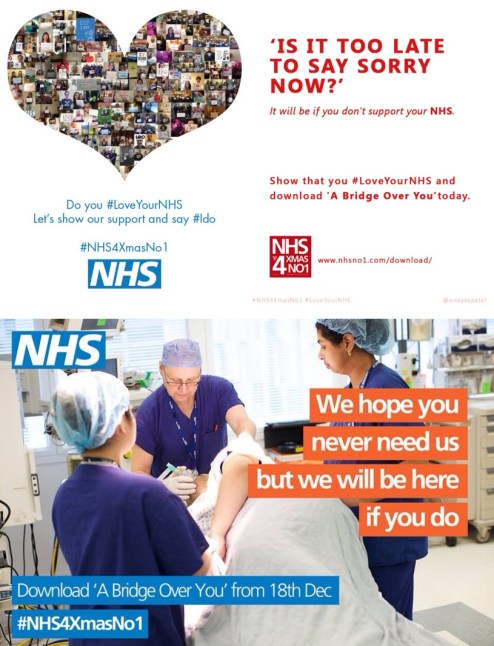
Enter Harriet Nerva, junior doctor and newly ordained High Priestess of the NHS. Nerva is one of the principal architects of that sappy piece of virtue-signalling NHS propaganda inflicted on the (sadly often-willing) British populace this winter – the “Bridge Over You” single which predictably made it to Christmas No. 1 in the charts.

I explained at the time why singing hymns to a powerful government monopoly was neither a morally virtuous nor a productive thing to do, and was met with a predictable chorus of criticism and accusations of being a Christmas Grinch. But the argument against this latest piece of NHS-worship needs to be restated and expanded, particularly in light of the failure of other commentators to utter a critical word, and also because of the nauseating victory lap currently being taken by the #NHS4XmasNo1 campaign chiefs.

In her self-aggrandising victory speech, published in the Guardian, Nerva begins by declaring:

As a junior doctor, I started a campaign that united the public, staff and patients in its demand for a free and properly funded healthcare service for all.

Already it starts to become clear that this is all about the Harriet Nerva Show first and foremost, long before any other consideration. The article continues:

Since becoming a junior doctor 18 months ago, I have felt immensely proud to work for the NHS. In particular, I’ve been humbled by how well we cared for one patient in their dying days, and felt privileged to have forged a relationship with this person in the last few weeks of their life.

Again, this is boastful and irrelevant. Nerva isn’t “humbled” by anything, she is proud of her accomplishment – and that’s fine, but not when it is wrapped in the pretence of promoting the NHS, or when the fact that she gave good care to a dying patient is misused as an argument for persevering with one very specific model of healthcare delivery.

Nerva concludes by inadvertently calling the song what it really is – a religious hymn:

This campaign has made it clear that the public, staff and patients are singing from the same hymn sheet. We are united in the belief that we should have a free and properly funded healthcare service available to all in our society, one that values and respects its staff and users. The choir have sung, the public have spoken, and now it’s time to listen.

Meanwhile, the Mirror reports approvingly:

Harriet told Mirror Online: “I didn’t have any links with the choir but what they have produced is a fantastic celebration of the NHS”.

“Seeing the video moved me to tears. The context of it is very powerful. I qualified 15 months ago and I love the NHS, I’m very proud of it. And I feel getting it to Number One would bring to the public’s eye the fantastic service it provides in very challenging times”.

But this reasoning is nonsense. Everyone in Britain already knows about the excellent and important work done by doctors and nurses, and the vast majority support the NHS. It’s hardly as though there is some massive popular revolt against our system of nationalised healthcare.

Most people seem content with our current system when they bother to think about it at all, and (left-wing scaremongering aside) no major politician from any party has serious plans to dismantle what currently exists, let alone end the principle of healthcare free at the point of use.

So, since there is no imminent threat to the NHS (it survived eighteen years of Tory government before 1997, and will do so again), what is this really all about? What really motivated a junior doctor to make us endure this turgid hymn to the NHS?

NHS Choir - Christmas Single - 3

By prancing around with her Twitter hashtags and handwritten signs, Harriet Nerva isn’t just saying that she shares our presumed love for the NHS or has a strong devotion to providing healthcare. What she is really saying is that she is a better person than you, because she A) works for the NHS, and B) organised a huge act of public NHS-worship.

“Think you’re a good person just because you like the NHS?”, Nerva is saying. “Well I’m ten times better than you, because I got the British people to collectively sing a hymn to the NHS on Christmas Day. I love the NHS so much that I made this extraordinarily extravagant public gesture. What did you do?”

And of course short of sacrificing ourselves on a huge pyre as a burnt offering to the NHS, there is nothing that we can do to better her accomplishment. Harriet Nerva wins.

But this is noisy, shallow virtue-signalling, and nothing more. I’m sorry if it sounds harsh or seems unpleasant to rain all over what first looks like a harmless act of charity, but the NHS Choir’s Christmas single is so much more than that. And so much worse. It is yet another part of the vast tapestry of reflexive NHS worship which smothers Britain, and prevents us from looking critically and dispassionately at one of the most important issues in our society.

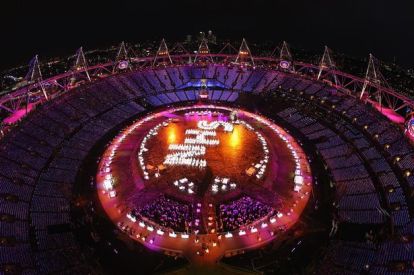
And we need to wake up, stop patting ourselves on the back for the accomplishments of previous generations, and recognise that singing hymns to an outdated healthcare delivery model from the 1940s is going to do nothing – nada, zilch – to ensure that Britons enjoy the best healthcare in the world in this century.

NHS Worship - London Olympic Games 1

It is therefore heartening to see a few other brave souls also now daring to stick their heads above the parapet and call the NHS Christmas single what it is – emotionally manipulative propaganda.

My Conservatives for Liberty colleague and Creative Director, Paul Nizinskyj, also picks up on the pseudo-religious undertones beneath this latest act of NHS-worship:

This was encouraged by a message on the music video, which urged people to “Show how much you #LoveYourNHS” by buying the single. Well, this is a concept I struggle with, because I have no love for a catastrophically flawed system of healthcare which seriously fails its patients, despite the best efforts of its frontline staff.

But that distinction – between the structure of the NHS and the people who work for it – is one we seem to struggle with in this country. So, instead of a conversation about why the NHS continues to fail the people who pay for it, we again exalted it as an infallible deity, this time in a kind of Christmas Day papal coronation.

One of the Left’s greatest successes has been to conflate “Our NHS” with “healthcare” in the minds of the British people, so that the two concepts effectively merge to become one and the same. This was a war of words, and the Left won a total victory – now, even those people who are naturally sceptical of government monopolies often speak of the two terms interchangeably, and carve out an illogical exception for the NHS when they extol the virtues of competition and privatisation.

But as Nizinskyj points out:

I’m certain dedicated health professionals would be dedicated and professional under whichever system of healthcare they were working, but the results of that hard work often depend on whether the system is working with them or against them. And, when it comes to the NHS, I’m afraid it’s working against them.

This is the point which continually eludes the NHS priests and their congregation of grateful but uncritical Britons. Yes, of course the doctors and nurses who saved your life / delivered your baby / cared for your dying relative did an amazing job. But that is a reflection on them, not on the system in which they operate.

Lives are saved, babies are delivered and dying relatives cared for in healthcare systems all over the world. Many of these other healthcare systems do the job very well, if not better, than the NHS. Many of these other healthcare systems are also free at the point of use. Very few of them are like the American system, which is always cynically held up as a bogeyman to scare British voters and shut down debate. And yet mysteriously, none of these other healthcare systems copy the NHS model.

Think about that for a moment. Every day, people are treated with love and dedication in hospitals and healthcare systems around the world, and in many cases receive comparable or better care without being stuck with a bill that they can’t afford. Yes, poor people actually receive medical care in other countries, not just Britain. And yet we are not able to even look at these other systems or ask ourselves the question whether the decision we made as a country in 1948 is still the best choice in 2016.

Why are we not able to do this? Why can we not look at best practice from around the world and strive to emulate and build on these ideas so that we have the very best healthcare in the world, rather than being satisfied with an ebbing and subsiding parity? Because of people like Harriet Nerva, and the closed-minded viewpoint of legions of others like her.

NHS Choir - Harriet Nerva - 2

There are two forces are at work here. First, there is the British public’s irrational, unshakeable devotion to “Our NHS”, about which a bad word can never be spoken. Sure, you can criticise waiting lists, falling standards or the inevitable winter crises, but politicians question the wisdom of sticking with the NHS model itself at great peril – and so none do.

And secondly, there is the growing phenomenon of online virtue-signalling, fuelled by social media, in which your political stances are worn and discarded like this year’s latest fashion, and where your stance on key social issues is taken to determine whether you are a “good” or “bad” person. Thus thousands of Twitter bios proudly proclaim that the account owner is a “lefty” or that “I voted for Corbyn”, while people looking for love (or something else) on dating sites like Tinder will often have “don’t bother if you are a Tory”, or other dismissive words to that effect, emblazoned on their profiles.

Take the British public’s “pre-existing condition” of an uncritically sentimental attachment to the NHS and add the social cachet and sense of identity which now comes from blaring one’s political views online and wearing political stances like a fashion statement, and this is what you get: people taking selfies of themselves holding up devotional banners praising the NHS, and even more people singing hymns in honour of Saint Aneurin Bevan’s sacramental gift to our nation.

It’s the easiest thing in the world to get swept up in the NHS love-fest. You are guaranteed to get smiles from strangers and likes on social media with every unthinking post and re-tweet of a “Love Your NHS” meme. You will suffer no negative consequences at all for declaring your blind loyalty to this one particular branch of government, and in fact will be praised for doing so. Just by clicking a few buttons and sharing a couple of posts on social media, 90% of the population will think you are magnificent.

But it is not magnificent. It’s self-aggrandising, counterproductive and wrong. It actively detracts from efforts to improve healthcare for Britons, and it stifles and prejudices a much needed public debate before it can even take place.

I’m sorry to be Scrooge this winter, but there’s no other way of saying this: if you bought the NHS Christmas single, you are part of the problem, not the solution.

Christmas number 1 race

Agree with this article? Violently disagree? Scroll down to leave a comment.

Follow Semi-Partisan Politics on TwitterFacebook and Medium.

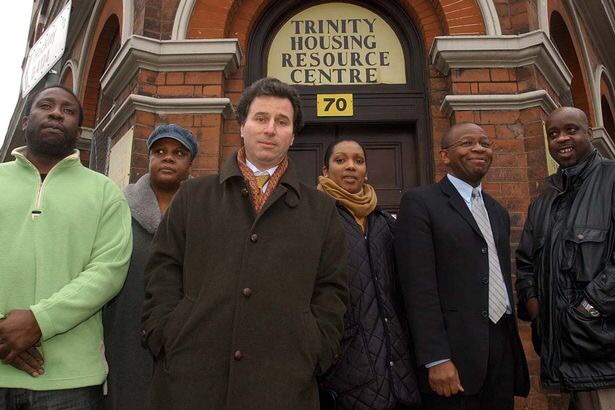
The Daily Smackdown: Darcus Howe’s Authoritarian Attack on Oliver Letwin


Nobody can call themselves a civil liberties campaigner while suggesting that unpleasant speech should be criminalised

It was only a matter of time before the frenzied condemnation, Tory-bashing and virtue-signalling which met the publication of a controversial Thatcher-era memo from Oliver Letwin and Hartley Booth turned into suggestions that law enforcement should get involved.

Step forward “civil liberties” campaigner Darcus Howe, who – seemingly forgetting what civil liberties are – decided to weigh in against Letwin.

The Guardian reports:

Civil liberties campaigner Darcus Howe has condemned remarks about black communities made in the 1980s by the prime minister’s policy chief after the Tottenham and Handsworth riots, describing the comments as “bordering on criminality”.

Oliver Letwin was forced to issue a statement apologising for any offence caused when a confidential memo from 1985 was released by the National Archives in which he blamed unrest on “bad moral attitudes”.

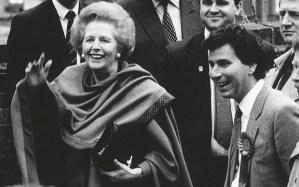
In a confidential joint paper, Letwin, who is now MP for West Dorset, and inner cities adviser (and later a Conservative MP) Hartley Booth, tell the then-prime minister, Margaret Thatcher, that “lower-class unemployed white people had lived for years in appalling slums without a breakdown of public order on anything like the present scale”.

The men warn Thatcher that setting up a £10m communities programme to tackle inner-city problems would do little more than “subsidise Rastafarian arts and crafts workshops” and that any help would only end up in the “disco and drug trade”.

“If a black man had said something quite like that he’d have been called into Scotland Yard and and he might be charged with incitement to riot. It is bordering on criminality,” said Howe, who was a prominent figure in black rights campaigns in the period the document was written.

Let’s be clear: Oliver Letwin’s words, and the sentiment behind them, were reprehensible. And yes, they were far from an isolated case, just as elements within the Metropolitan Police were once institutionally, unabashedly racist.

For all the necessary good that the Conservative government did to turn Britain around in the 1980s, we should not deny that some decidedly unsavoury elements – as typified by the arrogant, cloistered high Toryism displayed by the youthful Letwin – also rose to power on Margaret thatcher’s coattails. And yes, this included some high-handedly ignorant and unreconstructed ideas about race, as the Oliver Letwin memo reveals. On that much, there should be no argument.

But to draw such fresh outrage from a decades-old incident as some are now doing – or to make impetuous calls for Letwin to resign or even face criminal charges, as Darcus Howe is openly hinting – would achieve nothing, and change nothing about the past.

Oliver Letwin may be guilty of having held some unpleasant and ignorant views on race back in the 1980s, but there is no suggestion that he has at any time practiced discrimination on the basis of race, committed acts of violence or even said anything which might be considered a “hate crime”, even by Britain’s low standards of evidential proof.

Besides which, what is the statute of limitations on having once expressed some nasty – but at the time commonly held – political or social ideas when serving in public office? Are people to be permanently disbarred from public life for ever having said or thought the “wrong” thing? And are we so pathetically naive that we expect those politicians who pass our stringent tests to be anything other than those who are smart enough not to get caught, or to commit their deepest and darkest thoughts to paper in the first place?

The Left have a dangerous tendency to weaponise race and social issues, focusing so much on dealing out instant political death to anyone who treads on one of their verbal land mines that they fail to actually deliver the “social justice” they so ostentatiously seek.

And the hysteria surrounding Oliver Letwin’s 30 year old memo is just another example of seizing any opportunity to bash the “Tory scum” (how much more lenient would people be had, say, John McDonnell uttered a similar sentiment back in the early 1980s?) while failing to do any serious policy making of their own. After all, how much easier is it to cry “racism!” than it is to stand before the electorate with your own newly minted policies designed to deliver true equality of opportunity for all Britons?

But worst of all is the predictable irony of a so-called civil liberties campaigner making dark threats about criminalising speech. Any civil liberties campaigner worth their salt knows that the battle for free speech is won or lost at the margins – that the battle will be fought not over pleasant small talk about the weather, but over rude or intemperate speech which may be very offensive to some very vocal people.

Oliver Letwin expressed some truly unpleasant thoughts in his recently unearthed memo, and Darcus Howe is free to criticise him for it as much as he pleases. But if Darcus Howe or anyone else want to include threatening musings about “criminality” or being hauled in by Scotland Yard in their howls of outrage, they should take off the white hat of virtue first – and stop pretending to care about civil liberties.


2438120a

Agree with this article? Violently disagree? Scroll down to leave a comment.

Follow Semi-Partisan Politics on TwitterFacebook and Medium.

The NHS Choir’s Christmas Single Is Propaganda Worthy Of North Korea

If you buy the NHS Choir’s mediocre Christmas ditty you are part of the problem, not the solution

Imagine that a large, critical government department was gradually but incessantly becoming less and less fit for purpose.

Suppose that (say) HM Revenue & Customs suffered from major failures of management and leadership, an outdated structure, a confused remit and an ever-increasing list of responsibilities coupled with constantly changing priorities. What should be done?

Was your first thought the idea that a group of HMRC employees should get together and release a song with the hope of reaching the Christmas No. 1 slot in the charts? Did you think – in a moment of epiphany – that recording a Christmas song would in any way address the issues with that organisation, or that any public goodwill generated by the song would somehow make the various deep-rooted organisational problems and resource constraints melt away?

Probably not. You would most likely want to see some kind of hard-headed, evidence-based action plan to turn things around, not a cheesy song that pretended everything was great. But this “sing your problems away” approach is exactly what is happening today, not with HMRC but rather with the NHS. And now we are all being asked to allow ourselves to be swept up in the self-deception, mindlessly tweeting our support for an organisation – and model of healthcare delivery – which becomes more out of its depth and more inadequate to our needs with every passing day.

From the Metro:

The Lewisham and Greenwich NHS Choir are leading the in way in the race for the 2015 Christmas Number one, as the battle to secure the top spot heats up.

According to initial reports from the Official Charts Company, the choir’s track A Bridge Over You – a mash-up of Simon and Garfunkel’s Bridge Over Troubled Water and Coldplay’s Fix You – is currently ahead of rivals Justin Bieber and Louisa Johnson.

But with the track leading the way by just under 5,000 sales, it’s still looking likely to be a three way race for the top spot.

The NHS choir could also receive a boost following the release of the accompanying video earlier this week.

That video is the one shown at the top of this piece.

Of course, this whole stunt is really more of an opportunity for cheap virtue signalling of our enlightened, progressive credentials than a meaningful contribution to the healthcare debate, or even a sincere “thank you” to healthcare staff working over the Christmas period.

That much is evident from the flurry of self-promoting tweets gathering under the hashtag #NHS4XmasNo1:

But this piece of lazy, self-congratulatory, virtue-signalling NHS worship is nothing to be proud of and certainly not something which any engaged and informed citizen should support.

Why? A couple of reasons:

1. First of all, it’s a poor piece of music making. It’s a bad mashup, even by the low standards of most mashups. It takes one timeless classic (the Simon & Garfunkel) and one decent contemporary song (the Coldplay) and unimaginitively smooshes them together in a way which somehow manages to destroy or obfuscate the best of both pieces.

But of course, we can’t possibly acknowledge this fact, because:

2. Second, the video is emotionally manipulative twaddle, yet more unthinking pro-NHS propaganda of the kind that will ensure Britain’s healthcare system continues to lurch, unreformed, from crisis to crisis for another seventy years. And the fact that the propaganda is produced not by government diktat but by zealous citizens who believe they are working for the Greater Good only makes it all the more insidious.

“Aren’t NHS workers wonderful?”, the video asks us to ponder. Yes, I suppose so, but no more so than those who work for HM Revenue & Customs. Both perform a vital service, and both draw a government paycheque at cost to the taxpayer. And yet we all know that if George Osborne’s Treasury barbershop ensemble released an album of Christmas classics it would already be festering in bargain bins and languishing at the very bottom of the charts.

When it comes to “our NHS” (genuflect), on the other hand, we can’t stop proclaiming our love for it. And doing so very publicly, just so that everyone else can see what a good, progressive little person we are. But by lapping up these hymns to the NHS, we simply encourage people with sinister agendas to create even more of them in future.

Thus, over five tedious minutes of this particular pseudo-inspirational dirge, we are treated to scenes of saintly NHS workers helping wobbly old people stand up from chairs, therapists teaching amputees how to walk again, premature babies being nursed to health, and other everyday scenes of hospital life. Are these heartwarming scenes? Sure they are. Are they unique to the NHS? Hell no.

“What other organisation but the NHS could possibly do any these things?”, screams the message from the video. After all, we all know that old people, premature babies and the disabled are simply thrown into woodchipping machines and disposed of in other advanced countries without an NHS. Only in Britain with “our NHS” (genuflect) do people receive healthcare free at the point of use.

Except that none of that is true. Britain is not an island of enlightened compassion in a sea of cruelty and denied cancer treatments. And precisely zero countries are knocking on our front door and sending in their experts to learn about how we organise healthcare in this country so that they can replicate our system back at home. Shouldn’t that maybe tell us something, and cause us to take a pause from the incessant, self-satisfied boasting?

NHS - NHS4XmasNo1 - Worship - Guilt Tripping
Emotional blackmail / NHS propaganda


This isn’t an attack on NHS workers. It’s not even an attack on the Lewisham and Greenwich NHS Choir, even though their unremarkable song no more deserves to be Christmas No. 1 than will the next inevitable re-release of “Feed the World”.

This is an attack on our unthinking, embarrassing commitment to the NHS model, our apparent desire as a nation to worship what is in fact an immensely powerful government department, and the sanctimonious belief that by propelling this mediocre song to the top of the charts in time for Christmas we are making any positive contribution toward the future of British healthcare (beyond the admittedly welcome charitable donation).

We can sing songs about the NHS until we are blue in the face (and the number of songs is growing – how long until they coin an official anthem?), but it will do nothing to change the fact that a centralised model of state-funded and state-delivered healthcare designed in the post-war 1940s is highly unlikely to be the optimal solution in the year 2015.

Singing songs in praise of Aneurin Bevan’s rusting creation will do nothing to address the cold, hard truth that rising life expectancies and the continual developments of new, expensive treatments can only be tackled by an unreformed NHS if there are immediate, dramatic increases in personal taxation. For everyone, not just the Evil Bankers, of whom there are sadly not enough.

But sure, let’s make the NHS Choir song the number 1 Christmas single. Then let’s all sit back and smugly reflect on what right-on, progressive people we are for spurning Simon Cowell’s latest manufactured hit-by-numbers offering in favour of doctors and nurses who sing in their spare time. Let’s keep pretending that we alone, of all nations, stumbled upon the optimal way to deliver top quality healthcare to a growing, ageing population, back when we were still digging ourselves out of the rubble of World War 2.

It’s ironic. The NHS Choir is warbling away about “trying to fix” us this Christmas, when it is hagiographic stunts like this which mean we may never summon the political will required to fix (or replace) the NHS.

NHS Worship - London Olympic Games 1

Agree with this article? Violently disagree? Scroll down to leave a comment.

Follow Semi-Partisan Politics on TwitterFacebook and Medium.

Gay or Straight, The Robert Dyas Christmas TV Ad Is Cheap and Cynical


Don’t praise Robert Dyas for their awkward, virtue-signalling Christmas television commercial. Condemn them for exploiting the hard-won civil rights accomplishments of others for monetary gain

If any further proof was needed that tolerance and equal rights have morphed from being simply the right thing to do into just another opportunity for ostentatious virtue-signalling, you need look no further than the bizarre Christmas television commercial recently released by Robert Dyas.

In the ridiculous TV advert – a parody of a 2009 satirical video by Rhett and Link – various Robert Dyas staff members are shown confessing their sexuality before going on to plug completely unrelated products stocked by the retailer.

(The original video showed black and white employees explaining how the products in their furniture shop were suitable for both black and white customers).

From the Telegraph:

The minute-long film, described as “the weirdest Christmas advert ever”, shows men and women declaring whether they are straight, gay or bisexual while describing unrelated products in the store.

In the clip filmed in one of the chain’s branches, a member of staff introduced himself by saying: “Hi, my name’s Marcus, I work at Robert Dyas, and I’m gay.”

Before showing off a large inflatable yellow Minion toy, he adds: “I like going out with my friends and playing volleyball. I also like showing our gay and straight customers a funky range of our Christmas gifts.

[..] The confusing advert then comes to a close with a shot of staff members and customers standing at the shop’s counter, and announcing in unison: “Robert Dyas – where gays and straights can buy drills and much, much more”.

Like all clever television adverts, this was clearly designed to be controversial and to generate discussion which would expand Robert Dyas’ marketing reach well beyond the number of people who will ever see the commercial on television. And as with the creepy John Lewis “Moon Hitler” commercial, also released this year, much of the weirdness is intended to get people talking – so mission accomplished.

But in this case it is worth taking the bait, because the message of the Robert Dyas commercial is symptomatic of a wider trend sweeping Anglo-American society, whereby it is no longer enough to quietly practice the principles of tolerance and non-discrimination in one’s own life, but rather we are continually encouraged to make ostentatious public displays of conformity with the new enlightened PC dogma.

Of course people of any sexual orientation should be treated with respect and dignity at all times, including people either working for or shopping at large chain retailers. But since when did it become the job of hardware shops to start preaching about social issues? How does the spectacle of individual staff members inexplicably revealing their sexuality help to advance equal rights? And what of those customers of traditional (or bigoted, depending on your view) beliefs, who do not agree with the message? Are they worthy of no respect, or magnanimity in the face of now-inevitable ideological defeat?

The Robert Dyas affair is not dissimilar to a similar action taken by Starbucks in the United States following the shooting of unarmed black teenager Michael Brown in Ferguson, Missouri. Following that tragic death, Starbucks became possessed by the idea that they were going to make a meaningful contribution to race relations in America, and encouraged their baristas to “start a conversation about race” with customers while serving them in store.

In other words, Starbucks decided that it was no longer enough for private citizens to be non-racist themselves, and engage in whatever activism or campaigning on the issue that their hearts dictated in their roles as private citizens. Now, Starbucks – that beacon of moral enlightenment – would “help them along” by prompting them with guilt-tripping conversation openers about white privilege.

Quite how initiating a serious conversation about Ta-Nehisi Coates’ “The Case for Reparations” with a bleary-eyed morning commuter might meaningfully help the country was never fully explained. And no sooner was the proposal announced in a blaze of sanctimonious publicity than it was then quietly dropped in the face of public scepticism and mockery.

The Robert Dyas affair is much the same – an ostentatious display of “right on” progressivism from a corporate retailer, who rather than being lauded for their enlightened position on civil rights should be condemned for co-opting the still serious issue of discrimination against gay people and exploiting it in service of their viral Christmas marketing campaign.

Of course Robert Dyas has the right to say anything they like in their television commercials – that much is an issue of free speech which should be protected and defended at all times. But not every PC pronouncement is made for the “right” reasons, and we should be smart enough to see through the virtue signalling of the social justice warriors and the cynicism of the business interests, which are more about self aggrandisement or monetary gain than advancing important social issues.

Real social change – positive or negative – comes from the ballot box, the picket line, the popular culture, the academy and the hearts and minds of private citizens.

Real social change does not come from the marketing department of Robert Dyas or their advertising agency – though thanks to their cynical marketing they do stand to reap financial rewards from the hard-won accomplishments of others.

UPDATE – 14 December: As the sharp-eyed commentator below points out, the Robert Dyas video is a parody of a 2009 satirical internet commercial by Rhett and Link, which is very similar – except that gay and straight are replaced by black and white. Top of the piece is now updated to make this clear, though I don’t think this necessarily changes the validity of my argument. Robert Dyas still chose to make and release the parody, and their motivations were still likely to be as described, half viral quirkiness and half virtue signalling – only now we can add unoriginality to the list of faults.

Robert Dyas have yet to comment on the video.

Robert Dyas - Christmas TV Advert - Gay

Agree with this article? Violently disagree? Scroll down to leave a comment.

Follow Semi-Partisan Politics on TwitterFacebook and Medium.

The Daily Toast: Alex Massie Calls Out Britain’s Growing Illiberal Streak

Ban Donald Trump Petition

The pathetic petition to ban Donald Trump from entering Britain – for the high crime of being an idiot – reveals a festering illiberal sickness at the heart of our nation

Are we really that country? Are we really that petty, authoritarian, second rate destination that bans foreigners whom we accuse of endangering the “health and morals of the nation”?

Yes. Increasingly, regrettably, yes we are. Donald Trump will escape the travel ban which many on the virtue-signalling Left are desperate to impose by virtue of who he is, the fact that he has no plans to come here anyway, and the diplomatic impossibility of thus spurning a US presidential candidate, even an unlikely one. But others before him have not escaped Britain’s growing intolerance of intolerance.

Comedians such as Dieudonné M’bala M’bala have been banned from visiting Britain to perform their racist comedy routines. Bloggers like Pamela Geller have been banned from entering the UK because their pungent and unpleasant political views have been deemed to be “not conducive to the public good”.

So we are already that country, no matter whether or not Theresa May decides to put Donald Trump’s name on her little list. We are already that country which has lost so much faith in our British, Western and democratic values that we now see unpleasant or inflammatory speech as something which will harm our already-fragile society.

The wretched story even made it to Prime Minister’s Questions. The fevered ramblings of that reality TV star turned presidential candidate were actually raised by an MP in the House of Commons, and George Osborne (standing in for David Cameron) was asked to intervene to protect us from the Big Bad Man. Serious journalists debated whether or not a ban was appropriate, when they could have been writing about something, anything else.

There’s certainly nothing like a swaggering, ignorant Republican presidential candidate to bring out the angry, authoritarian cheerleader in Dan Hodges:

What we have just witnessed is not just another attention-seeking rant from a Republican hopeful who is trying to secure definition in a crowded primary field. What Trump has done is effectively call for a race war.

[..] One of the most popular TV shows in the US at the moment is an alternative history drama called The Man In The High Castle. It is set in a world in which the Allies lost the second world war, and America lives under a fascist dictatorship.

Donald Trump wants to be the man in the high castle. Ban him. Ban him now.

But this is far from an uncommon reaction. The Independent earnestly argued exactly the same point – that Donald Trump’s views were not simply factually incorrect and misguided views to be challenged and debated, but potentially “harmful” words of such power that their speaker must be forcibly kept at bay and prevented from corrupting the impressionable minds of the British public.

Fortunately, there are dissenters. This blog weighed in when the Donald Trump story first broke, making the case that the illiberal instincts of the outraged Left are just as harmful as the nonsense spouted by Trump.

And now Alex Massie has an excellent piece in CapX, taking square aim at the “fatheaded nincompoops” more interested in signalling their virtue and parading their ignorance of the free society than defeating the actual ideas espoused by Trump.

Massie writes, sarcastically:

If we ban something, you see, that something will disappear. Even better, by banning ugly speech we will be able to demonstrate our moral superiority. And, when push comes to shove, that’s what matters most. Smugness warms the soul like nothing else this winter and every place must be a “safe space”.

And so it is. Imprisoned by the dogmatic belief that all cultures and values are inherently equal, none superior to any other, all that some parts of the Left can now do is squeal with protest when anyone does anything to hurt someone else’s feelings.

Massie continues, making reference to the parallel “controversy” surrounding champion boxer Tyson Fury whose nomination for Sports Personality of the Year is causing hysteria because of his unreconstructed views on gender roles and sexuality:

Repeat after me: there is no right not to be offended. But if we must be outraged let us be more outraged by those who seek to stymy and prohibit speech than by those whose speech the censors would have us suppress.

I deplore Donald Trump and have little admiration for the cut of Tyson Fury’s jib but, damn it, I’ll defend their right to be objectionable – and even repellent – if the alternative is siding with those who instinctively react to disagreeable opinions by seeking to suppress them. These people pose a vastly greater threat to liberalism and public decency than the people they deplore themselves.

These arguments over Trump and Fury might seem trivial but they are minor manifestations of a much larger issue. Remember January? Remember “Charlie Hebdo”? Remember all the pious declarations of sympathy and support and solidarity? Remember how politicians discovered that free speech might actually be something worth defending? Remember “Je suis Charlie”?

[..] Trump and Fury do not, in themselves, matter very much. But the reaction to their speech does matter. It is always depressing to discover that there are vastly fewer liberals in this country than you might wish there to be. But that discovery should no longer surprise us.

One can hope that the growing number of signatories to the Ban Donald Trump petition are drawn entirely from the ranks of virtue-signalling left-wing keyboard warriors, and are thus entirely unrepresentative of the British people as a whole.

One can tenuously hope that some of those who say that they want to ban Donald Trump are simply registering their strong disagreement with his latest inflammatory comments, and that they don’t really mean it when they call for a person to be banned from entering this country on account of their political views

One can even hope that the angry petitioners are outnumbered by a greater silent majority of Britons who don’t see Britain’s current, shameful track record of banning controversial people from entering our country as a marvellous precedent which should be extended to Donald Trump, simply because he’s an exceedingly offensive ass.

One can hope.

But I’m not sure any more. Perhaps it’s entirely a function of following the daily news cycle too closely and attaching too much weight to the petty storms and crusades of social media. Perhaps Britain isn’t really becoming a more sanctimoniously self-satisfied and intolerant place, populated by beady-eyed, brittle-egoed adult babies whose first reaction to encountering dissenting or unpleasant opinions is to screech indignantly for the authorities to have them banned.

Perhaps.

But it’s hard to feel much hope after reading much of the Donald Trump coverage in Britain over the past couple of days.

Donald Trump Hat - Make America Great Again

From next week, I’ll be in Texas and Ireland to celebrate Christmas and the New Year respectively. Blog updates will continue, but at a reduced frequency until normal service resumes in January.

Many thanks to everyone for reading, sharing, commenting, debating and contributing.

Agree with this article? Violently disagree? Scroll down to leave a comment.

Follow Semi-Partisan Politics on TwitterFacebook and Medium.