The following lonely cry for solidarity and advice comes from a British student posting on a libertarian Facebook group, and gives a snapshot of the current climate of hostility facing conservative and libertarian students who refuse to buy in to the Identity Politics orthodoxy reigning on university campuses.
The student asks:
Any libertarians or even Tories here struggle with being shut down at uni? I’ve just handed in the most left wing essay I’ve ever written in order to get a good mark, I lost marks in a presentation for stating that the EU arrest warrant is unjust (because we signed up to it, so it’s voluntary according to the lecturer), a girl was literally shaking with rage when I said I will be voting to leave the EU and she had a lot of back up…but it gets to a point where it’s having a negative effect on my education and not sure how to tackle it. Should I just keep my views to myself and write left wing essays? Advice needed. I am treated like a fascist.
Such students increasingly face genuine hostility when they insist on being true to themselves and refuse to hide or disown their sincerely held political opinions, both from peers and even their own professors.
And particularly where students’ academic results are at stake, this real-world hostility stands in stark contrast to the largely imaginary hostility (microaggressions) dreamed up by the Identity Politics brigade as a pretext for demanding ever more restrictions on liberty, and ever more transfers of power to themselves from fawning, deferential university authorities.
–
Agree with this article? Violently disagree? Scroll down to leave a comment.
A role model for spineless university administrators everywhere
If rolling over and meekly submitting like a well trained dog is not the answer to the ideological coup underway in many of our universities – and it most assuredly is not – then what is the correct way for university administrators to respond to the encroachment of Identity Politics and its attendant chilling effects on freedom of thought and speech on campus?
But no response to student complaints has been so direct as that of Everett Piper, president of Oklahoma Wesleyan University, a Christian institution in the American heartland.
After attending a mandatory chapel service at university, in which the sermon was from the book of Corinthians and on the topic of love (of all seemingly benign subjects), a student approached Piper and complained that he felt invalidated and victimised for not having lived up to the Biblical standard in his own life. Because being set an aspirational standard of moral behaviour at a religious institution was, to the student’s mind, an intolerable criticism of his own “lived experience”.
Piper perhaps had a little more latitude in the frankness of his response than many other university administrators, being the president of an explicitly religious private institution rather than a public university in receipt of taxpayer money. But nonetheless, his electrifying response is worth reproducing in full, because it puts so many other academic leaders to shame.
From the Oklahoma Wesleyan University president’s blog:
This past week, I actually had a student come forward after a university chapel service and complain because he felt “victimized” by a sermon on the topic of 1 Corinthians 13. It appears this young scholar felt offended because a homily on love made him feel bad for not showing love. In his mind, the speaker was wrong for making him, and his peers, feel uncomfortable.
I’m not making this up. Our culture has actually taught our kids to be this self-absorbed and narcissistic. Any time their feelings are hurt, they are the victims. Anyone who dares challenge them and, thus, makes them “feel bad” about themselves, is a “hater,” a “bigot,” an “oppressor,” and a “victimizer.”
I have a message for this young man and all others who care to listen. That feeling of discomfort you have after listening to a sermon is called a conscience. An altar call is supposed to make you feel bad. It is supposed to make you feel guilty. The goal of many a good sermon is to get you to confess your sins—not coddle you in your selfishness. The primary objective of the Church and the Christian faith is your confession, not your self-actualization.
So here’s my advice:
If you want the chaplain to tell you you’re a victim rather than tell you that you need virtue, this may not be the university you’re looking for. If you want to complain about a sermon that makes you feel less than loving for not showing love, this might be the wrong place.
If you’re more interested in playing the “hater” card than you are in confessing your own hate; if you want to arrogantly lecture, rather than humbly learn; if you don’t want to feel guilt in your soul when you are guilty of sin; if you want to be enabled rather than confronted, there are many universities across the land (in Missouri and elsewhere) that will give you exactly what you want, but Oklahoma Wesleyan isn’t one of them.
At OKWU, we teach you to be selfless rather than self-centered. We are more interested in you practicing personal forgiveness than political revenge. We want you to model interpersonal reconciliation rather than foment personal conflict. We believe the content of your character is more important than the color of your skin. We don’t believe that you have been victimized every time you feel guilty and we don’t issue “trigger warnings” before altar calls.
Oklahoma Wesleyan is not a “safe place”, but rather, a place to learn: to learn that life isn’t about you, but about others; that the bad feeling you have while listening to a sermon is called guilt; that the way to address it is to repent of everything that’s wrong with you rather than blame others for everything that’s wrong with them. This is a place where you will quickly learn that you need to grow up.
This is not a day care. This is a university.
What astonishing, revolutionary words – the idea that university should not be first and foremost a place of “comfort and home“, but rather a place of academic enquiry and personal growth through challenge. How astonishing, too, that a Christian university leader might dare to suggest that campus life should not revolve around the arbitrary offence-taking of students, and indeed that things larger than the individual self – community, society, God’s creation – are equally important and deserving of attention.
Except that none of this should be astonishing at all. This should be the way that every university president or chancellor reacts when confronted with the self-obsessed complaints of a generation of students who by most measures are the most privileged in history, but who nonetheless want to wallow and talk endlessly about their “pain”.
Piper’s interview with The Daily Signal (see video above) is also instructional as to the root of the problem. Today’s snowflake students did not create themselves – they are a product of social and educational policies stretching back decades, and cannot be separated from the therapeutic yet authoritarian culture that has given us draconian hate speech laws, absurd political correctness and the elevation of Identity Politics.
We’ve taught lousy ideas for decades. Let’s just cut to the chase. The academy, the university, the College with a capital C has created this monster. We’ve taught narcissism and self absorption. We’ve taught self-actualisation rather than personal morality. We’ve told students generation after generation it doesn’t matter what you believe as long as it works for you. We’ve actually come to the point where we can say I can’t tolerate your intolerance and I hate you hateful people and I’m sure that nothing is sure and I know that nothing can be known and I’m absolutely confident that there are no absolutes.
It’s the self-refuting duplicity of the 60s and 70s and 80s coming home to roost in the current generation, so we’ve got faculty who have created this monster and celebrated it until it turned around and bit them and starts consuming them, and now they’re scared.
Could there be a more blisteringly accurate condemnation of the missteps which have led our colleges and universities to their current dystopian reality of trigger warnings, safe spaces and Identity Politics mob trials?
And could there be a greater demonstration of how to show true leadership of an academic institution – not by meekly surrendering to the brazen power play being executed by today’s youthful, misguided activists, but rather by placing free speech, academic enquiry and debate first and foremost in the life of a university?
It’s not physical intimidation if you shout “no violence!” while you are doing it
If it strikes you as strange that an intimidating mob of student activists should be attempting to disrupt and shut down a speaking event by shouting “No Violence!” over and over, while physically preventing people who wanted to peaceably attend the talk from entering the theatre, then congratulations – you must be innocent and unschooled in the ways of the New Intolerance on campus.
Those of us who have the misfortune of observing and cataloguing such incidents, however, know that this is now an entirely routine tactic on the part of student activists who claim that their right to live in an ideologically pure, self-reinforcing bubble trumps the rights of others to speak or hear dissenting opinions.
The demonstrators were upset conservative Ben Shapiro was slated to speak in the theater and they’d blocked the door leading into the venue.
As a journalist there not only to cover the protest, but also the speech, I made my way as far as I could toward the door. The entire lobby was choked with student protesters, but the closer I got to the door, the more intense things got.
People held signs touting various “diversity” slogans, and one or two rainbow flags waved above the crowd. Chants and shouts of “no hate speech” and “this is our school” peppered the moment.
Finally, I managed to squirm my way about 15 to 20 feet from the door. Then I could go no farther. Student protesters had filled the narrow entryway, and anytime someone would try to enter, they would throw up their hands, form a human wall-shield, and chant “no violence.”
I watched the intensity, the anger on the faces of students as they screamed and scowled at the Young Americans for Freedom representatives there trying to host the event. I watched as campus visitors tried to gain access and were physically blocked by protesters who looked all too willing to fight if it came down to it. The anger and vitriol was palpable.
Shouting and chanting “no violence!” while physically restricting the movement of people simply trying to go about their private business is now a commonplace tactic among student anti free speech zealots.
This behavior is a kind of safe-baiting: using intimidation or initiating physical aggression to violate someone’s rights, then acting like your target is making you unsafe.
“You are an unethical reporter,” a student says [..] “You do not respect our space.” Not 30 seconds later, the crowd starts to yell, “Push them all out,” and begins walking into the photographer. “You’re pushing me!” he yells. And even moments after vocally organizing themselves to push him, they won’t fess up to the nature of their behavior. “We’re walking forward,” they say, feigning innocence. Says one snarky student as the crowd forces him back, “I believe it’s my right to walk forward, isn’t it?” Then the photographer is gone, and only the person holding the video camera that recorded the whole ordeal remains. Ironically, he is a member of the press, too, which he mentions to one of the few protestors who is left behind.
By then, the mask has fallen.“Who wants to help me get this reporter out of here?” an unusually frank protestor yells. “I need some muscle over here!”
The woman calling for muscle? An assistant professor of mass media at the University of Missouri … who had previously asked the campus for help attracting media attention.
As always, the “safe space” is a one way street, and those enforcing the safe space are free to use any verbal or physical means necessary to arbitrarily enforce it.
But those involved genuinely do not see the irony. Rather than seeking to foster an atmosphere where everybody is welcome on campus, these student activists are only too happy to vilify and seek to banish those people with conservative, traditional, wacky, offensive or just plain weird ideas – anything which doesn’t fit the new progressive mold.
Where once student activists eagerly sought to assert and defend their right to free speech in furtherance of their social and civil rights objectives, today’s students are more likely to go running to the authorities asking for “heretical” speech – basically anything which goes against orthodox thinking – to be banned.
This is insulting to those who find themselves censored, and frightening to those who find themselves on the receiving end of summary mob justice from the Safe Space Enforcement Squads. But it does most damage to those who the activists ostensibly claim to be protecting.
It infantilises grown adults (nearly all students are at least eighteen years of age, old enough to pick up a rifle and fight and die for their country) and makes the condescending assumption that they are too fragile and helpless to withstand having their ideas challenged, their lifestyle choices questioned or (to use the currently fashionable terminology) their experiences, even their existences “invalidated”.
Oscar-winning movie “Spotlight” showed us how the journalists investigating sexual abuse by priests in the Boston Archdiocese learned that when priests were mysteriously marked as being on “sick leave” in church directories, this actually meant that they had been withdrawn from parish duties by the bishop, and quietly hidden away so as not to raise attention to paedophilia in the Church.
Similarly, if you run a Google or LexisNexis search for public events cancelled due to “safety concerns”, you can be reasonably certain that the events returned in the search results were effectively censored by detractors wielding the threat of violence. “Safety concerns” has become nothing more than a convenient code phrase used whenever free speech falls victim to the New Intolerance.
And yet we are supposed to believe that it is people like Ben Shapiro who threaten the safety of our university campuses.
Postscript: There’s a reason why this piece does not mention the subject of Ben Shapiro’s speech – because it doesn’t matter. So long as he was not engaging in criminal behaviour or actively inciting violence, having been invited he had every right to turn up and say whatever he damn well pleased. The fact that such an idea should be so shocking and alien to us now shows how deeply authoritarian and intolerant we have become as a society – and not only on university campuses.
–
Agree with this article? Violently disagree? Scroll down to leave a comment.
Just when you think the infantilisation of students and policing of normal human behaviour could not possibly get any more ridiculous, it does.
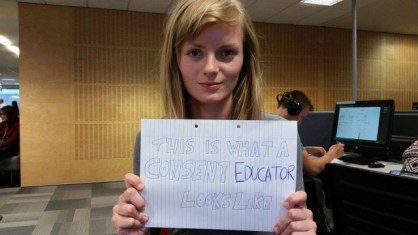
This time, the University of Southern California takes the spotlight for organising a “Consent Carnival” to dispense the usual patronising lessons to the already-converted.
Affirmative: We’re really excited to share this kiss with you and we’re letting you know!
Coherent: We’re present and able to recognize exactly what’s happening when we give this kiss to you.
Willing: We made the decision to give you this kiss ourselves, without pressure or manipulation from you or anybody else.
Ongoing: Should you come back for another kiss, check in to see if we’d still like to give you one.
Mutual: Sure, we offered you a kiss, but that doesn’t mean you have to accept it. Coming over to our table doesn’t forfeit your right to say no.
Note the particular absurdity of step four, “ongoing”. What, precisely, is the statute of limitations on an initial act of consent? If two kisses are one second apart, does the second kiss require a new act of consent? How about five seconds? Thirty seconds? One minute? Five minutes? Thirty minutes?
And for this ludicrous act of infantilising nonsense to mean anything, evidence of consent-checking needs to be written down or recorded in some way, should it become necessary to prove consent in the event of future dispute. So freshmen should probably all be given checklists to carry around with them in the event that they hook up with someone while at university.
Signatures should be mandatory – preferably witnessed and countersigned by a trusted third party. Sure, turning natural, healthy human relationships into risk-minimising contractual agreements may strip away any intimacy or spontaneity from our lives, but that’s the price we have to pay. To cleanse ourselves of our “rape culture”.
Better yet, since police forces across America are already considering equipping even more of their officers with body cameras, perhaps the US government should just order one for every citizen and make it a criminal offence to not wear it at all times. I’m sure they would get a great discount for ordering in bulk.
Surely that is the best way to deal with the endemic “rape culture” in our society and university campuses. After all, if we all receive mandatory training in how to deal with every possible scenario which may emerge in the course human relationships and surrender our privacy to constant on-body video surveillance (since good people have nothing to hide), then all of our problems will be solved.
Because without the consent classes and the checklists and the body cameras and the safe spaces, we will all revert to our primal, animalistic roots, and be a constant danger to anybody who strays too close to us.
Thank the Lord for the University of Southern California and their kissing booth, saving humanity one sanctimonious lecture at a time.
–
Agree with this article? Violently disagree? Scroll down to leave a comment.
Few politicians will dare to criticise today’s breed of authoritarian student activists – because odious and illiberal as their worldview undoubtedly is, both main political parties have something to gain from regulating our behaviour and speech
Yesterday, I went on the BBC Daily Politics to talk about the creeping tide of campus illiberalism and the tyranny of modern student activists who seek to turn their universities into fuzzy, unthreatening places where intellectual debate and reason are secondary to making people feel accepted and validated at all times.
The debate was framed around the question of whether Britain should consider raising the voting age, given the fact that so many student activists recoil from free speech and the boisterous exchange of ideas, preferring to cloister themselves in ideologically homogeneous “safe spaces” while viciously lashing out at anybody who dares to hold different ideas.
I had written a blog post back in November, following up on Glenn Reynolds’ (of Instapundit) column suggesting in the wake of the Yale and Mizzou controversies that if students could not tolerate hearing contradictory ideas, they had no business voting and participating in democracy. I think a lot of the points that Reynolds made were very strong, though I also agree with what he said when he walked back his statement the next week.
I was surprised to get the call from the BBC, but I thought it was worth accepting the invitation to push the broader message – not that we should go around banning groups of people from voting just because they wind us up, but that this insidious culture of identity, grievance and therapy, incubated in our universities and ignored for too long by the media, is going to have profound consequences for our society and our democracy as these people grow up and join the electorate.
The Daily Politics’ Soapbox feature is good for what it is, but when it comes to laying out a new and complex argument full of nuance and detail, there are obvious shortcomings. You get a two-minute video (which I filmed in Oxford, with particular thanks to the Oxford Union and its president) to make a brief pitch, but that pitch can only be around 200 words, the rest of the time being given to music and establishing shots. And then there is the live segment, broadcast after Prime Minister’s Questions, where you get to debate with Jo Coburn, Andrew Neil and the panel.
The video is shown at the top of this piece, and you can judge the results for yourself. I’m reasonably pleased with how it went, but also frustrated that we could only skim the surface of what is an important and fascinating issue – one with potentially profound consequences for education, free speech and democracy.
Notably, the two MPs on the panel that day – Ed Vaizey and Kate Green – didn’t want to delve into the real issue at all, choosing to get hung up on the specifics of the voting age element. Green in particular was in denial about there being any kind of problem, saying that she didn’t think it was a “new thing” and that “there have always been controversies in our universities”.
But Green then goes on to say “I think it is part of exploring boundaries and debating ideas and issues”.
No. This is precisely the problem. By high-handedly declaring that they speak for all students and elevating their personal feelings over any question of objectivity, truth or legitimate debate, these student activists – the New Age Censors – are specifically crushing the debate of ideas and issues, not just for themselves but for everyone so unfortunate as to be studying with them.
Kate Green tries to make the new academic dystopia of safe space rooms, trigger warnings on texts and campus speech codes something that is natural and commendable, part of exploring boundaries. But it is no such thing. At the time of the Yale controversy, the student (Jerelyn Luther) who had a full-on toddler’s meltdown over a harmless email about Halloween costumes raged:
“It is NOT about creating an intellectual space, it is not! Do you understand that? It’s about creating a home here! You are NOT doing that! You are going against that!”
So universities are not to be places of learning and intellectual debate any longer. Or if they are, this mission is very much secondary to the far more important task of making students feel comfortable and validated in whatever “identity” they happen to have assumed on that particular day.
This is what we are dealing with, and this is what neither Ed Vaizey or Kate Green wanted to grapple with. Of course, both have their reasons.
I was essentially describing a group of wobbly-lipped, permanently “vulnerable” perpetual victims who are in constant need of a strong authority presence to smite their enemies and protect them from emotional harm – in other words, I just described the current Labour Party’s ideal (if not yet typical) voter. No wonder Kate Green couldn’t bring herself to engage with the substance of my argument – to do so would be to alienate the very people whom Labour has been reaching out to since the Gordon Brown era.
And what could Ed Vaizey say in support of free speech and against its rapid erosion on university campuses across the country? His leader, David Cameron, flew to Paris after the Charlie Hebdo attacks and walked arm-in-arm with some of the world’s most brutal and repressive leaders in defence of “free speech”, while people continue to languish in British prisons, locked up simply for saying, singing or tweeting something that another person found “offensive”. The present Coke Zero Conservative government doesn’t look on these petty authoritarian students as a problem – it admires their attempts to ban speech and regulate freedom of expression.
I should be clear that not all students – not even most students – are like the petty little tyrants in the headlines today. Spiked’s Tom Slater makes this point forcefully:
If there’s one thing that really gets on my nerves, it’s the idea that students today are uniquely intolerant. The explosion of campus censorship in recent years has made bashing campus politicos a kind of commentariat pastime, with fortysomething columnists wheeling the little blue-haired pillocks out each week to give them a good kicking. But while the students’ union censors deserve everything they get, all too often campus censorship has been painted as a generational phenomenon – as if undergraduates appeared from the womb with a Safe Space policy in hand.
I quite agree. And my one regret is that there was no time in my fleeting moment on the Daily Politics to explore the context in which these little campus tyrants are growing up, and what has made them the way they are. As Tom Slater, Brendan O’Neill, myself and a few others have pointed out, many of those “fortysomething” columnists and academics now criticising the student activists are themselves guilty of supporting the hate speech laws and therapy culture which have taught the New Age Censors that “sticks and stones may break their bones, but words will kill them stone dead”.
That being said, I think it was still a useful opportunity to raise an important issue and maybe raise awareness among a wider group of people, many of whom haven’t set foot on a university campus in years and would be horrified to discover the kind of illiberal dystopia that they have become in the name of “tolerance” and “inclusivity”.
This fight will not be won in the television studios of Westminster or the columns of national newspapers. It is the brave students withstanding huge social pressures and even physical intimidation to take a stand for liberty and free speech on their own university campuses who must do the real fighting, as well as those professors and administrators with sufficient backbone to stand up to the shrill demands of the Safe Space Lobby.
But the rest of us should provide what air cover we can, as this blog has consistently done – and will continue to do going forward.
–
Agree with this article? Violently disagree? Scroll down to leave a comment.





 Semi-Partisan Politics