On Paternalism and Porn Filters

Liberal Democrat president Tim Farron has not been my favourite person since the Conservative/Liberal Democrat coalition government was formed in 2010. The grumpy noises emanating from the Liberal Democrat party hierarchy have all too often been agitations for more specifically left-wing policies rather than the promotion of liberal ones, and I have no truck with that. But yesterday, Mr. Farron won my agreement and earned my support.

The Daily Mail reports:

Liberal Democrats have triggered fury by vowing to overturn David Cameron’s plans for internet porn filters.

Child safety experts and MPs called the move ‘irresponsible’ and warned it would undermine attempts to protect children from hardcore pornography.

Lib Dem party president Tim Farron said the Government should enshrine the ‘digital rights of the citizen’ and halt requirement for ‘filters, lists or controls on legal material’.

Tim Farron correctly labels the government policy as “misconceived, ineffective and illiberal”. It is certainly misconceived – a majority Conservative government with a mandate to roll back the onerous size of the state has no place enacting laws that further chip away at the notion of personal responsibility. It has also been proved to be ineffective – a simple browser extension has already been released which simply bypasses the filter. And the illiberality of the policy speaks for itself.

Insidious yet inept.

The Independent quotes Farron in further detail, perfectly summing up the argument for the correct way to protect children from adult material in a liberal country:

“If the Prime Minister really wanted to protect children from inappropriate material, he’d ensure they had access to good sexual health and relationship education and give parents the help and support they need to talk to their children about this issue,” he said.

Absolutely. But the daddy-knows-best wing of the Tory party sadly sees things somewhat differently:

Party sources described the new Lib Dem approach as “disappointing”.

“Tim Farron clearly does not want to prioritise the safety of our children online or support our efforts to prevent anyone accidentally accessing illegal material,” they said.

Anyone could have seen this weak, manipulative counter-punch coming from a mile away. Anyone who believes in personal responsibility and empowering and trusting parents to act in the best interests of their children must, according to this worldview, be maniacally obsessed with pornography whilst simultaneously holding the safety of children in complete and utter contempt.

What complete and utter nonsense.

Quite.
Quite.

I invested my precious time and effort pounding the streets of my hometown campaigning for the Conservative Party in the last general election campaign in 2010, but it is policies such as this which make me roll my eyes and question whether it is worth my time and effort to do so again in 2015. The MP I campaigned with, Robert Halfon, has proven himself to be an excellent constituency MP for Harlow since that time, but the coalition government in which his party is the senior member has delivered letdown after letdown on issues of civil liberties and returning responsibility to the individual.

After thirteen years of Labour government I was desperately looking forward to a rollback of the paternalistic, controlling, pseudo-benevolent state that had grown inexorably during that time. Of course I anticipated some inevitable compromises resulting from the fact that the Conservatives had to take on the Liberal Democrats as junior partners in coalition, but I never expected to find myself cheerleading the Liberal Democrat stance over the Tory one on fundamental issues of privacy and civil liberties. And yet that is exactly where I find myself.

Of course children should be protected from harmful content on the television, the internet and other media. But that responsibility rightly rests with the parents, not the broadcasters, ISPs or the state. Every time the government steps in to protect us from any potential harms out there in the world, we are simply stifled by yet another layer of cotton wool, and given the implicit message that it’s okay to glide through life with no regard for the potential consequences of our actions. Many of us may do this at times anyway, and I certainly include myself in that criticism – but my point is that government should not be actively making the shirking of personal responsibility easier by taking on duties of care that used to sit with educated, compassionate and autonomous private citizens.

I would suggest that parents should not be leaving their children unattended to be raised by television and the internet. If parents choose to ignore all common sense and do so, and their child stumbles upon any inappropriate or distressing material as a result, rather than bleating in outrage to the government a personal reexamination of parenting abilities is required.

David Cameron might think that his government’s time is best spent peeping over our shoulders and tutting at the things we choose to watch online under the justification of “keeping our children safe”, but I can assure him that nearly four years of mystifying underperformance in No. 10 Downing Street quite clearly say otherwise.

From The Annals of Bad Lawmaking

Sometimes they can’t help themselves. Politicians latch on to a word or a concept that is (often rightly) repugnant to almost everyone, and then, with great fanfare, roll out a new law supposedly desired to prevent said thing, or at least to impose tougher penalties on those people who do the Bad Thing.

He's had another idea.
He’s had another idea.

The Bad Thing in this case is training to be a terrorist (or undertaking “terrorism training” as the Guardian reports), the penalty for which is due to increase from a current maximum sentence of 14 years to a life sentence under the new proposals.

The Telegraph, who broke the story, note:

The maximum sentence for a range of terrorist offences, including weapons training, will be increased, under plans being drawn up by security officials.

Current laws allow such offenders to be jailed for 14 years. The new regime will allow judges to impose life terms.

Significantly, that would also mean extremists would be subject to additional monitoring when they are eventually released.

And as with most tinkerings to existing laws in Britain, this one is so riddled with generalisations, non sequiturs and loopholes that there is more daylight than content in the proposals. As we have also come to expect, we see the additional empowering of the police and security services to monitor and meddle in a person’s life for evermore, long after they have completed their punishment and served their time. Here are a few of the more obvious flaws, off the top of my head:

1. In the marginal case, how do you tell the difference between someone who has gone to another country and undertaken weapons training of some kind with no real intent to cause carnage back home in Britain or elsewhere, and one who has attended a bona fide “terrorism training camp”? The last time I checked, there was no formal accreditation of terrorist training institutions against which MI6 can cross-check, or formal evidence of graduation given to successful students. Certainly, we can all picture in our minds the images of masked men with guns and suicide vests running through obstacle courses, but the reality is probably somewhat less clear-cut. Who will be the final arbiter of these too-close-to-call decisions?

2. How will anyone accused of this crime ever receive a fair trial? If it is alleged by the prosecution that they have attended a terrorist training camp, it is highly likely that the evidence required to convict them will be of a secret nature, which if made public would jeopardise the foreign intelligence that Britain is collecting. Scenarios such as these tend to lead to secret trials without juries, where the life and liberty of the accused is decided by a solitary judge behind closed doors, with no public scrutiny.

3. Someone who has acquired skills which could – and only could – be used to harm the general population has yet to really commit any offence against British society or soil. Yes, the fact that a person has gone to a “dangerous” country and spent time in the company of other people holding “extremist” views may greatly increase the probability that they plan to turn knowledge into action (and so, perhaps, warrant greater monitoring of their actions by the security services), but until they actually make concrete plans to do so, arresting and imprisoning them for any length of time sits far too squarely in the category of punishing thought-crime for my liking.

4. It is entirely possible (as has been proven multiple times) to inflict massive damage and loss of life in a terrorist act without ever actually having left Britain to receive training elsewhere. It may seem remarkable that British laws and public policy are still being drafted in 2014 which do not account for the reality of the internet, but here we have just such a case. What is the real difference between a person downloading instructions to make and place a bomb from a source on the internet, and going to another country to receive that same tuition face-to-face? Why does the government seek to punish one more than the other? And how do we distinguish between someone who idly (or accidentally) downloads instructions for making a bomb with no malicious intent, and one who intends to put the knowledge to immediate use?

Why, indeed, does the government seek to do any of the things that these new measures will allow it to do?

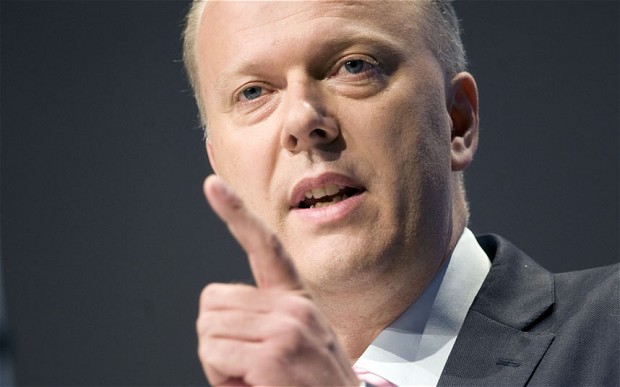
Very little of it truly has to do with improving public safety. That is done (rightly or wrongly) mostly behind the scenes, in terms of adequately funding the security services and giving them sufficient remit to do their work. What this is about is not protecting the public, but rather being seen to be doing something. Chris Grayling, the Justice Secretary, is able to look busy and important, and taking firm action at just the time when many of what the Telegraph describes as “radicals jailed after the September 11, 2001, attacks” are approaching the end of their custodial sentences.

That is not to dismiss the real problem facing the government, which the Telegraph rightly lays out:

Security sources estimate that more than 100 British nationals have fought in Syria, backing rebel groups linked to al-Qaeda.

British nationals are also said to be involved in extremist activity in countries including Somalia and Yemen.

These are thorny problems with grave implications if they are not properly met. And in some cases, changes to the laws and sentencing guidelines may well be valid. But the current package being put forward by the government, as outlined so far in the press, appears to be fundamentally unserious. Why is the focus on criminalising the acquisition of the knowledge of terrorism rather than its practice, as manifested either by helping terrorist groups in other countries or conspiring to commit terrorism at home in Britain? These offences would not only be much easier to recognise and prove in court, but also take us away from the path toward thought-crime down which legislation such as that proposed inevitably leads us.

Last-minute lawmaking on the fly. Draconian new powers that are justified using unassailably valid examples, but which could equally be applied to much less clear-cut cases. Government desperate to be seen to be taking bold, decisive action rather than calmly contemplating the best course of action.

This is becoming very familiar.

Britannia Contra Mundum

Not necessarily the end of the world.


Britain, according to Mary Riddell writing in The Telegraph, is the friendless pariah of Europe.

Riddell informs us that our economy is in the doldrums, our foreign policy is a shambles and we are actively alienating the very people who we need to come riding to our rescue:

…the issue of Britain’s global influence should preoccupy every parliamentarian.

Our current position is not hard to plot. Hiding under a duvet of doubt and debt, Britain – so recently the buccaneer of the world – has become insular to the point of agoraphobia. Recession and hardship at home have made the UK a nation of political navel-gazers. The cost-of-dying debate, over whether we could possibly justify the cost of our wars, has been superseded by a cost-of-living crisis: gas bills have supplanted gas masks.

According to this defeatist and self-flagellating line of argument, it is Britain, the weak country, which needs to curry favour with her European neighbours, and not the other way around. Apparently it has gotten so bad that as a nation we are now suffering from some kind of identity crisis:

But inward-looking politics are bolstering, rather than reducing, Britain’s identity crisis. With power ebbing away abroad and the spectre of Scottish independence at home, Britons are wondering: who are we?

This comes as news to me, and probably to many other people who feel comfortable in our national identity and don’t feel the need to vex themselves with recurring thoughts of national inferiority or separatism.

I seem to remember urging against this type of declinist, pessimistic, self-defeating talk only very recently in “Why Britannia Rules”, but my small backwater blog has clearly made no impact on the mood of feeling in the British commentariat. As I said then, when everyone was tearing their hair out and prophesying the end of Britain after Parliament voted against military action in Syria:

We are British. We are a great country. Our economy may still be in the toilet, and we may be governed at present by dilettantish non-entities in the mode of David Cameron, George Osborne and Nick Clegg, but these things shall pass. And when they do, Britain will still be a great country.

What I wrote was true then, and it is true now. But this is where Mary Riddell really loses the plot:

With dangers abroad and our economic destiny far from assured, it is imperative that Britain should re-establish its identity and global niche. The irony is that our best hope is the one that politicians hesitate to flaunt, and that many citizens revile. The EU remains the largest single economy in the world, has the second biggest defence budget after the US and boasts the diplomatic muscle recently used by its (previously maligned) foreign policy chief, Baroness Ashton, in helping to secure the recent Iranian nuclear pact.

In what precise way has Britain lost her identity? Did this happen while I was sleeping?

The EU may indeed remain the largest economy in the world, but it is not the “largest single economy”, as Riddell and anyone with the slightest knowledge of current divergent conditions in Greece and Germany knows all too well. Whether we swoon with delight over our membership of the European Union and ever-closer union with our continental neighbours or chafe at the smothering bureaucracy of the whole project and yearn to leave, we still trade with the EU. And contrary to the shrieks of some scaremongers, even if Britain were to leave the EU, this trade would cheerfully continue by necessity and mutual benefit. Some unscrupulous commentators phrase their warnings in such a way as to leave the impression that all of Britain’s trade with Europe would cease and disappear in a puff of smoke if we were to leave the EU, a ludicrous and obviously nonsensical notion.

And are we really going to start talking national defence as a reason to lash ourselves ever tighter to the mast of the European Union? The EU may have the second biggest defence budget after the US, but this is a meaningless fact when you consider the obvious fact that the member states of the EU do not act with one common military purpose. Indeed, of the EU member states it is really only Britain and France that possess any capability to project significant force without airlift or blue water navy support from the United States. Furthermore, Britain’s military actions in recent years have primarily taken place either through NATO or in concert with our chief ally, the United States. It is hardly as though we would be putting any much-loved and time-tested military partnership with the Europeans at risk by disengaging from the EU, as no such partnership exists.

We are then supposed to believe that Britain is in danger of severing  herself from some great source of “diplomatic muscle” as a result of our ambivalence about Europe. But I could well point out that weighing against Riddell’s one example of EU foreign policy success (Baroness Ashton’s help in securing the recent Iranian nuclear pact) are the many times when other powers have looked at the incoherence or tense nature of European joint foreign policy and either laughed at it, rudely dismissed it or used it as an opportunity to divide and conquer.

Then comes the obligatory “but of course there are a few small issues that need ironing out” remark in reference to the EU’s many flaws, together with the standard plea to refrain from throwing the baby out with the bath water:

While no one doubts that reforms are needed, EU membership makes us an influential part of the largest global trading bloc. As Douglas Alexander, the shadow foreign secretary, and Ian Kearns write in their new book, Influencing Tomorrow, the EU is “not just an instrument for amplifying our power, but also for promoting peace and security and defending democracy and human rights”.

I can only despairingly repeat (as though to a brick wall) the fact that Britain, as one of the world’s few truly indispensable nations, would remain strong and secure whether or not we are an “influential part of the largest global trading bloc”. Indeed, I would further argue that we are not, have not been and are unlikely to become as influential as we should be within an EU structure which gives veto power to countries which are relative minnows or which have strongly divergent interests to Britain’s, and that by freeing ourselves from the yoke of so much European regulation and counterproductive harmonisation attempts we would have the potential to soar higher and achieve even more. But Mary Riddell seems too afraid of the world and too doubtful of Britain’s enormous advantages and assets to ever acknowledge this possibility.

None of this is to say that the right answer is for Britain to leave the European Union under any and all circumstances. It is just to point out that there needn’t be such a bone-chilling fear of secession and the idea of Britain standing on her own two feet like so many other sovereign nations manage to do. It is partly this fear that colours and undermines our relationship with the EU, and makes the current raw deal that we get from our membership a self-fulfilling prophecy. If our European partners believe that we are desperate to remain a part of the club at any price, the price that they are certain to demand and extract from us in each and every nation will be that much higher.

So rather than running into the arms of the EU in a scrabble to find identity and protection, as Riddell advocates in her less-than-stirring peroration, we should actually embrace some of the insularity (if we must call it that) that so many of the commentariat class seem to scorn, at least in terms of our approach to the European Union.

In order to prosper, Britain must look inwards at ways to release our own inherent national dynamism and competitiveness, rather than outwards for reassurance and protection in a world which will surely offer neither.

Missing The Point On Immigration

They're a' comin...


James Kirkup, writing in The Telegraph, asks “How much would you pay to reduce immigration?”, in an article praising UKIP’s Nigel Farage for making the supposedly bold proclamation that he would rather be slightly less well-off in return for lower levels of immigration into the United Kingdom – in other words, that he is willing to pay out of his own pocket to reduce immigration.

[Farage] added: “If you said to me, would I like to see over the next ten years a further five million people come in to Britain and if that happened we’d all be slightly richer, I’d say, I’d rather we weren’t slightly richer, and I’d rather we had communities that were united and where young unemployed British people had a realistic chance of getting a job.

“I think the social side of this matters more than pure market economics.”

Kirkup, who considers this to be a “genuinely interesting” way for Farage to reframe the debate, phrases the quandry this way:

How much economic growth should we give up? How much of your fellow citizens’ prosperity, are you willing to sacrifice in order to cut the number of people entering Britain from abroad?

To be precise, how much — to the nearest £1, please — would you pay to reduce immigration?

Unfortunately, by accepting Farage’s premise that immigration is harmful in all spheres other than the economic – and the idea that immigration must automatically be a negative thing, a cause for concern or something to be ameliorated.

This is yet another argument where the two opposing sides seem to argue back and forth over an irrelevant distraction rather than the main issue. Why is it that immigration has, at times, led to divided communities and fractured society? Why must it be that immigration puts the young British unemployed at even more of a disadvantage? If only we could begin to address and turn around these key issues, surely the matter of net immigration into the UK would cease to be of almost any importance at all.

For example, we should re-examine how Britain can better to integrate and assimilate new immigrants into our society, avoiding the mistakes of countries such as France and learning from those such as the United States. How can we ensure the right balance between providing support and assistance to help new arrivals find their feet and integrate into society, and using “tough love” where necessary to ensure that the state is not enabling immigrant communities to isolate and refuse to become part of British society?

We should take a long, hard look at our education system and parenting culture and ask why it is that a young adult born and raised behind the iron curtain in an economic, political and social environment far less prosperous and nurturing than that of the UK is so often preferable, in the eyes of so many reputable and rational employers, to a British-born young jobseeker who has enjoyed all of these advantages.

And yes, we should look at the topics of welfare and the terms of our relationship with the European Union, and decide whether allowing brand new economic migrants to our shores to benefit from the welfare system that the rest of us have paid into over a longer period is really a cost that we are willing to continue to pay in order to maintain our EU membership in its current form.

None of this debate will happen as long as we accept the premise that economics aside, immigration is an inherently bad thing – to shrug our shoulders and go along with Nigel Farage’s line of reasoning, as James Kirkup and others do so willingly.

How much would people pay to have an informed debate about the real social, educational and economic issues around immigration? More than our politicians and media seem to realise.

Jim Murphy: Labour’s Saving Grace?


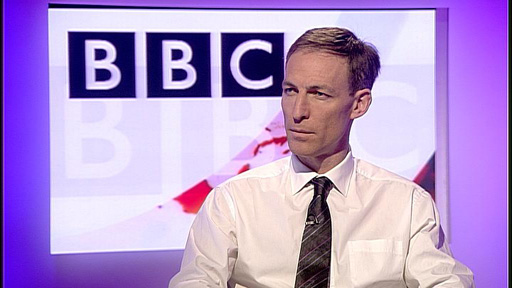
After a day enduring the speeches at the 2013 Labour Party Conference in Brighton, I am rapidly coming to the conclusion that Jim Murphy MP, the shadow Defence Secretary, is the sole saving grace in Ed Miliband’s weak shadow cabinet.

Aside from the much-heralded rollout of a redundant proposal to specifically criminalise attacking a member of the armed forces, his speech – delivered without notes or teleprompter – was the best thing of the day:


Murphy rightly calls out the current government for their mistakes in defence policy, and though Labour’s record in this area is hardly stellar, he manages to land some punches that will hurt the Tories and which should give them serious pause for reflection as to their own conservative priorities and supposed natural affinity with the armed forces.

In so doing, he also managed to tick off an impressive list of Labour policies and pledges, as yet unmatched by the Tories, which would naturally appeal to service members and their families.

Legal aid and entitlements for veterans.

In-service education for serving troops.

Codifying the armed forces bill of rights in the Labour Party rule book.

Denouncing the decision to make tens of thousands of experienced veterans redundant while expecting their roles to be backfilled by reservists in the TA.

Mocking the lamentable fact that Britain’s new aircraft carriers will enter service years before the jets capable of flying from them.

Rightly calling out the government for failing to address the disastrously bloated and inefficient defence procurement system.

In their zealousness (but not effectiveness) to reduce Britain’s budget deficit and roll back the size of the state, the Conservative/Liberal Democrat coalition government has undeniably weakened Britain’s armed forces and military readiness, and Jim Murphy did well to draw blood on all of these points.

It is still a bit rich for Labour to try to seize the mantle of being the party of the armed forces, but Jim Murphy is a talented and competent politician with an obvious affection for and affinity with the military. He may not have owned up to Labour’s own past failings in the defence sphere – no one in the shadow cabinet has managed to do that – but he is no dove, and he clearly has his eye on the future.

Based on his recent performance, Jim Murphy would be a solid pick for the Labour party leadership after Ed Miliband has finished leading them into electoral oblivion.

The Conservative party should watch and beware.