Yes, Terrorism Is A Price Worth Paying For Liberty

Civil Liberties Government Surveillance Terrorism


When determining how society should deal with people who have committed the most heinous crimes, one does not turn to the victims or their surviving family members for advice. And if one were to be so rash as to base Britain’s penal system on the vengeful feelings of grieving parents, spouses and children, there would be gruesome public executions every day in every town up and down the length of Britain, from Land’s End to John O’Groats.

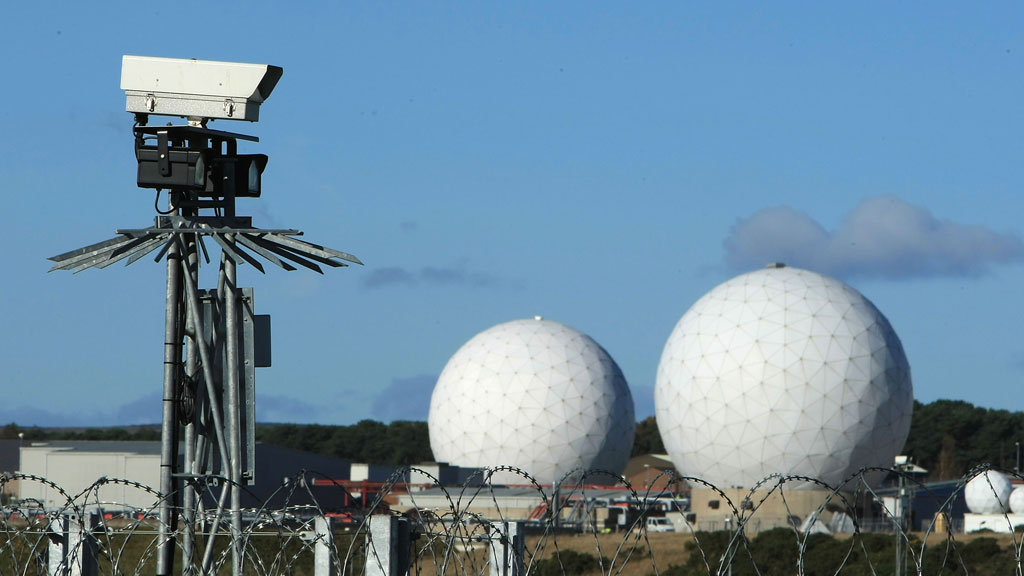
So while we may feel every sorrow in the world for those who have been the victim of dastardly terrorist attacks, why do we give such credence to terror victims when it comes to formulating our approach to national security and civil liberties? While human compassion dictates that we offer our utmost sympathy to those who have suffered, allowing ourselves to be manipulated into making sweeping and draconian decisions based on heart-wrenching personal testimony is no way to run a country – whether we are talking about the NHS or government snooping laws.

Those in the media who report on these subjects for a living should know this best of all. And yet large swathes of the British press have spent today tacitly attacking the campaigning groups who defend our civil liberties, simply because they refuse to display the grovelling, servile fearfulness that begs government to take as many of our freedoms as they want in return for the illusion of greater safety.

The Times print edition, in an article bearing the sub-headline “outcry over campaigners’ attack on state snooping”, reports:


Continue reading

Beware The Short-Termism Of Those Who Fail To Prioritise Defence Spending

HMS Queen Elizabeth


As Britain heads toward an incredibly hard-to-predict general election, nearly everything about our country seems up for discussion – everything except Britain’s declining level of military spending, our long-term national defence strategy and our commitment to the armed forces we are quick to call heroes but grudgingly slow to fund.

James Forsyth, writing in The Spectator, talks about the bear in the room:

You wouldn’t know from this election campaign, but Europe is in crisis. On its eastern border, the threat from Russia is as great as at any point since the end of the Cold War. Crimea has been annexed and large parts of eastern Ukraine are under control of Russian-backed forces. Russian aircraft have even been taunting the RAF in the English Channel. The Baltic states are increasingly fearful that they will be next to suffer from Vladimir Putin’s attempt to reassert Russian dominance on its doorstep.

On Europe’s southern border, Islamic State continues to cause death and destruction — the recent decapitations in Libya were filmed along the shore to make the point that the jihadis have reached the Mediterranean. More worrying, perhaps, is the number of Europeans fighting for it. Last weekend, Manuel Valls, the French Prime Minister, warned that the number of Europeans who will have taken up arms with Isis may treble to 10,000 by the end of this year. As these radicalised youths return home, the terrorist threat in Europe will rise exponentially.

But neither of these subjects features with any prominence in the election campaign. Isis and the Russian threat are deeply inconvenient truths that don’t fit into the party leaders’ scripts. The Tories’ six-point long-term economic plan doesn’t have room for foreign entanglements. Labour wants to talk about the National Health Service, not international security.

These are sobering words. There has been a worrying tendency of late in the Tory-friendly press to excuse David Cameron’s various failings and oversights – be it refusing to champion the conservative case in the televised leaders’ debates, or failing to ringfence defence spending during a period of global turmoil – in order to help push the Conservatives across the finish line on 7 May. It is good to see The Spectator taking a firmer stance on the issue of defence, at least.

Continue reading

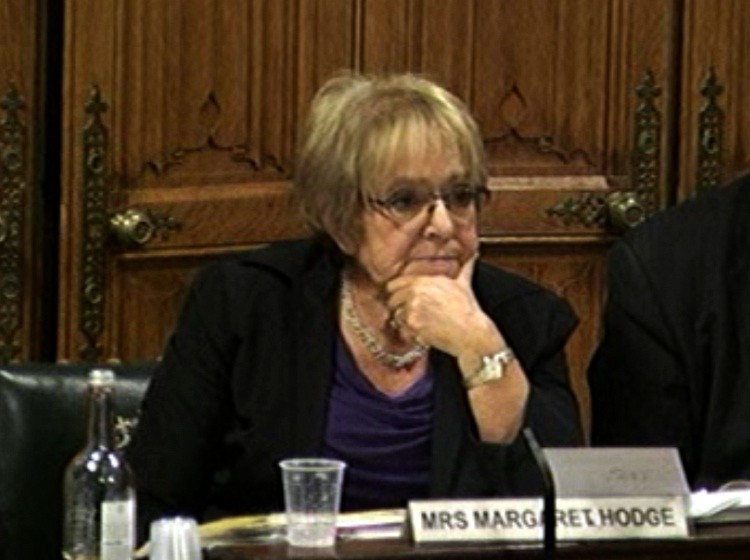
Westminster Needs More MPs To Act Like Margaret Hodge

Margaret Hodge Parliament Public Accounts Committee 1


After Margaret Hodge MP humiliated HSBC’s top brass in a Public Accounts Committee hearing, some politicians and commentators would rather close ranks in defence of the establishment than support those who hold the powerful to account.

By at least one count, Margaret Hodge‘s tenure as chair of Parliament’s Public Accounts Committee has been a complete failure.

Back in 2011, in a speech to the Institute for Government, the MP for Barking outlined her vision of how the committee should conduct its business as Britain entered the age of austerity under the Conservative-LibDem coalition government. Among her priorities at that time – a less confrontational approach to witnesses:

In her speech (approximately 10 minutes into the above video), Margaret Hodge said:

Continue reading

Constitutional Reform Is The Elephant In The Room This Election Season

Constitutional Reform British General Election 2015


Conservative Home is currently running an important series on the three urgent political issues which are being pointedly and shamefully ignored by the main political parties in the run-up to the 2015 general election. These are identified as the constitution, national defence and the truth about spending reductions.

On constitutional reform in particular, ConHome is quite right to call attention to the lurking threat:

Yes, there’s plenty of speculation about what might happen in a hung Parliament, and who might form coalitions or pacts with whom.  But there has been no big debate to date about how we should be governed – what an English-votes-for-English-laws Commons would look like; what the knock-on effects on Scotland might be; what would happen to the Lords in consequence; how much devolution there should be in England (and elsewhere); what would replace the ECHR (if anything) were Britain to leave it; where an EU referendum fits into this picture; whether the UK will survive at all.

Will the UK survive at all? A sobering question to ponder, and yet when faced with these unresolved questions of national character, purpose and even survival, too often our politicians focus on the minutiae of daily life as they seek to either prey on our fears or appeal to our wallets.

This blog makes no apology for having singled out the Labour Party and Ed Miliband as the worst culprits as they seek to reduce the 2015 general election to a petty contest about public services, when Britain’s greatness is so much more than the sum of local government services and “our NHS”, here on the occasion of the Labour Party leader’s most recent relaunch:

Continue reading

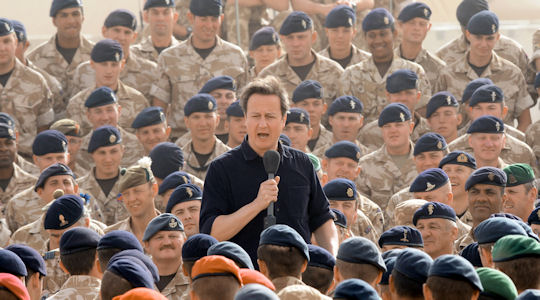
How Dare David Cameron Question The Patriotism Of Britain’s Military Chiefs?

British Prime Minister David Cameron (C)


Anything goes in the build-up to a British general election. And the British people have certainly come to take for granted the endless stream of personal attacks, exaggerated claims, obfuscations and outright lies emanating from the main parties as they vie for position.

But jaded as we are, one still has to admire the gall displayed by David Cameron – a privileged, cosseted man who has never served a day in uniform – when he takes it upon himself to publicly question the patriotism and motivation of Britain’s senior military officers.

The Prime Minister, in full electioneering and damage control mode, did exactly this when responding to the growing chorus of concerns from current and ex-service chiefs alarmed at the degradation of Britain’s military capability and the prioritisation of almost every other area of government spending at the expense of the Defence budget.

The Telegraph reports:

David Cameron appears to have questioned the motives of senior military figures criticising his failure to commit to spending 2 per cent of GDP of defence.

The Prime Minister slapped down retired generals who have attacked the Government over its cuts to the military budget.

Speaking to LBC Radio, Mr Cameron put the generals’ interventions down to them “having their own book to talk, sometimes quite literally a book to talk”.

This is a hit below the belt, even by the no-holds-barred standard of British political debate. But more than this, it is an intolerable insult to the honour and dedication of the men and women who serve in our Armed Forces. And all this coming from someone who has never served personally, but who has been the happy beneficiary of the peace dividend made possible in part by Britain’s military capabilities.

Continue reading