BBC Daily Politics: Shining A Spotlight On Student Illiberalism


Few politicians will dare to criticise today’s breed of authoritarian student activists – because odious and illiberal as their worldview undoubtedly is, both main political parties have something to gain from regulating our behaviour and speech

Yesterday, I went on the BBC Daily Politics to talk about the creeping tide of campus illiberalism and the tyranny of modern student activists who seek to turn their universities into fuzzy, unthreatening places where intellectual debate and reason are secondary to making people feel accepted and validated at all times.

The debate was framed around the question of whether Britain should consider raising the voting age, given the fact that so many student activists recoil from free speech and the boisterous exchange of ideas, preferring to cloister themselves in ideologically homogeneous “safe spaces” while viciously lashing out at anybody who dares to hold different ideas.

I had written a blog post back in November, following up on Glenn Reynolds’ (of Instapundit) column suggesting in the wake of the Yale and Mizzou controversies that if students could not tolerate hearing contradictory ideas, they had no business voting and participating in democracy. I think a lot of the points that Reynolds made were very strong, though I also agree with what he said when he walked back his statement the next week.

I was surprised to get the call from the BBC, but I thought it was worth accepting the invitation to push the broader message – not that we should go around banning groups of people from voting just because they wind us up, but that this insidious culture of identity, grievance and therapy, incubated in our universities and ignored for too long by the media, is going to have profound consequences for our society and our democracy as these people grow up and join the electorate.

The Daily Politics’ Soapbox feature is good for what it is, but when it comes to laying out a new and complex argument full of nuance and detail, there are obvious shortcomings. You get a two-minute video (which I filmed in Oxford, with particular thanks to the Oxford Union and its president) to make a brief pitch, but that pitch can only be around 200 words, the rest of the time being given to music and establishing shots. And then there is the live segment, broadcast after Prime Minister’s Questions, where you get to debate with Jo Coburn, Andrew Neil and the panel.

The video is shown at the top of this piece, and you can judge the results for yourself. I’m reasonably pleased with how it went, but also frustrated that we could only skim the surface of what is an important and fascinating issue – one with potentially profound consequences for education, free speech and democracy.

Notably, the two MPs on the panel that day – Ed Vaizey and Kate Green – didn’t want to delve into the real issue at all, choosing to get hung up on the specifics of the voting age element. Green in particular was in denial about there being any kind of problem, saying that she didn’t think it was a “new thing” and that “there have always been controversies in our universities”.

But Green then goes on to say “I think it is part of exploring boundaries and debating ideas and issues”.

No. This is precisely the problem. By high-handedly declaring that they speak for all students and elevating their personal feelings over any question of objectivity, truth or legitimate debate, these student activists – the New Age Censors – are specifically crushing the debate of ideas and issues, not just for themselves but for everyone so unfortunate as to be studying with them.

Kate Green tries to make the new academic dystopia of safe space rooms, trigger warnings on texts and campus speech codes something that is natural and commendable, part of exploring boundaries. But it is no such thing. At the time of the Yale controversy, the student (Jerelyn Luther) who had a full-on toddler’s meltdown over a harmless email about Halloween costumes raged:

“It is NOT about creating an intellectual space, it is not! Do you understand that? It’s about creating a home here! You are NOT doing that! You are going against that!”

So universities are not to be places of learning and intellectual debate any longer. Or if they are, this mission is very much secondary to the far more important task of making students feel comfortable and validated in whatever “identity” they happen to have assumed on that particular day.

This is what we are dealing with, and this is what neither Ed Vaizey or Kate Green wanted to grapple with. Of course, both have their reasons.

I was essentially describing a group of wobbly-lipped, permanently “vulnerable” perpetual victims who are in constant need of a strong authority presence to smite their enemies and protect them from emotional harm – in other words, I just described the current Labour Party’s ideal (if not yet typical) voter. No wonder Kate Green couldn’t bring herself to engage with the substance of my argument – to do so would be to alienate the very people whom Labour has been reaching out to since the Gordon Brown era.

And what could Ed Vaizey say in support of free speech and against its rapid erosion on university campuses across the country? His leader, David Cameron, flew to Paris after the Charlie Hebdo attacks and walked arm-in-arm with some of the world’s most brutal and repressive leaders in defence of “free speech”, while people continue to languish in British prisons, locked up simply for saying, singing or tweeting something that another person found “offensive”. The present Coke Zero Conservative government doesn’t look on these petty authoritarian students as a problem – it admires their attempts to ban speech and regulate freedom of expression.

I should be clear that not all students – not even most students – are like the petty little tyrants in the headlines today. Spiked’s Tom Slater makes this point forcefully:

If there’s one thing that really gets on my nerves, it’s the idea that students today are uniquely intolerant. The explosion of campus censorship in recent years has made bashing campus politicos a kind of commentariat pastime, with fortysomething columnists wheeling the little blue-haired pillocks out each week to give them a good kicking. But while the students’ union censors deserve everything they get, all too often campus censorship has been painted as a generational phenomenon – as if undergraduates appeared from the womb with a Safe Space policy in hand.

I quite agree. And my one regret is that there was no time in my fleeting moment on the Daily Politics to explore the context in which these little campus tyrants are growing up, and what has made them the way they are. As Tom Slater, Brendan O’Neill, myself and a few others have pointed out, many of those “fortysomething” columnists and academics now criticising the student activists are themselves guilty of supporting the hate speech laws and therapy culture which have taught the New Age Censors that “sticks and stones may break their bones, but words will kill them stone dead”.

That being said, I think it was still a useful opportunity to raise an important issue and maybe raise awareness among a wider group of people, many of whom haven’t set foot on a university campus in years and would be horrified to discover the kind of illiberal dystopia that they have become in the name of “tolerance” and “inclusivity”.

But as Spiked is now doing, we all should give particular praise and encouragement to those few students – like George Lawlor from the University of Warwick – who have been brave enough to stand against against these illiberal trends on campus.

This fight will not be won in the television studios of Westminster or the columns of national newspapers. It is the brave students withstanding huge social pressures and even physical intimidation to take a stand for liberty and free speech on their own university campuses who must do the real fighting, as well as those professors and administrators with sufficient backbone to stand up to the shrill demands of the Safe Space Lobby.

But the rest of us should provide what air cover we can, as this blog has consistently done – and will continue to do going forward.

Safe Space Nook

Agree with this article? Violently disagree? Scroll down to leave a comment.

Follow Semi-Partisan Politics on TwitterFacebook and Medium.

BBC Daily Politics: If Students Need Safe Spaces, They Have No Business Voting

BBC Daily Politics - Sam Hooper - Samuel Hooper - Semi Partisan Politics - semipartisansam

Today I will be a guest on the BBC’s flagship Daily Politics show, discussing the worrying and accelerating infantilisation of today’s university students and asking whether young people who need the protection of trigger warnings and safe spaces can possibly be trusted to responsibly exercise their democratic right to vote.

Last year, in response to a brilliantly provocative column by American law professor and political blogger Glenn Reynolds – in which he argued that today’s generation of coddled, micro-aggression fearing students have utterly failed to earn the right to vote – I went along for the ride, agreeing:

It is ironic that at the same time there is a push to lower the voting age in the UK – the Lords recently voted to allow sixteen and seventeen-year-olds to vote in the coming Brexit referendum – people only slightly older and now at university, who already have the vote, are busy regressing back into emotional childhood.

[..]  Given the increasing number of campus incidents of precious snowflake students demanding that the authorities curtail their liberties for their own “safety” – and the fact that increasing age is the last, best hope of gaining wisdom – the idea of raising the voting age does start to feel awfully tempting.

Response written, I then didn’t think much more of it. That is, until the other week when I was contacted by the BBC and asked whether I wanted to state the same case on their flagship political programme, the Daily Politics.

The context of the issue is known well enough, and I have blogged extensively about the worrying and absurd rise of calls to outlaw clapping and booing, tearful temper tantrums about dress codes, stifling ideas by labelling them ‘problematic’, the tedious insistence on “safe spaces” and mandatory sexual consent workshops, all of which are flourishing on British and American university campuses.

Now, do I really want to stomp around like a little authoritarian, summarily revoking the franchise from every group of people who happen to rile me up? Well, as readers of this blog already know, I would generally rather leave the screeching, sanctimonious authoritarianism to those who do it best – the student activists busy cocooning their young minds in an ideologically homogeneous bubble, and purging any dissenting viewpoints which threaten their “mental safety”.

But I couldn’t resist the opportunity to make the urgent case that if things continue on their current course – with children being raised to believe that “sticks and stones may break their bones, but words will kill them stone dead”, and growing up to become intolerant students intent on purging anybody who fails to fawn deferentially over their delicate sensibilities – then before long, none of us will possess the intellectual and social robustness required of an engaged citizenry. And none of us will make good voters.

I want to stop the rot before it gets that far. But doing so will require confronting some difficult truths. And among these truths are the fact that the world of academia (particularly in the US – but where America goes, Britain already follows) has become infected with a virus which produces legions of what can only be described as adult babies – people who are physically mature, but with the emotional and psychological resiliency of a toddler.

The extent of the rot was laid bare in Spiked’s 2016 university free speech rankings, which forensically detail the extent to which free speech is curtailed at every university campus and students union in the country.

To give just a few examples, at present there are 30 students union which have banned newspapers (no prizes for guessing which publications), 25 which have banned mainstream hit songs for being “offensive” and 20 which have banned clubs or societies. But they only take their cue from the universities themselves, nearly half of which enforce “No Platform” policies against controversial speakers and a fifth of which have already moved to import American-style “safe space” policy onto their campuses.

I’m due to debate with Conservative MP and Culture Minister Ed Vaizey, as well as Labour MP Kate Green. It will be very interesting to see whether I am able even to extract any acknowledgement that there is a problem which needs to be tackled. However, with the Conservative government leaning hard on universities to protect the fragile minds of their students by banning extremist speakers and Labour poised to benefit disproportionately from the authoritarian student vote, I’m not expecting a tremendously sympathetic hearing.

Watch this space!

Watch me debate on Wednesday’s edition of the Daily Politics, broadcast on BBC Two at 11:30 for the start of the programme (and PMQs), and at 12:20 onwards for my segment.

Alternatively, watch live or catch-up on BBC iPlayer.

Safe Space Cartoon - 1

Bottom image: Honey Badger Brigade

Support Semi-Partisan Politics and independent political writing:

Agree with this article? Violently disagree? Scroll down to leave a comment.

Follow Semi-Partisan Politics on TwitterFacebook and Medium.

Modern Safe Space Culture Will Never Produce Anyone Like David Bowie

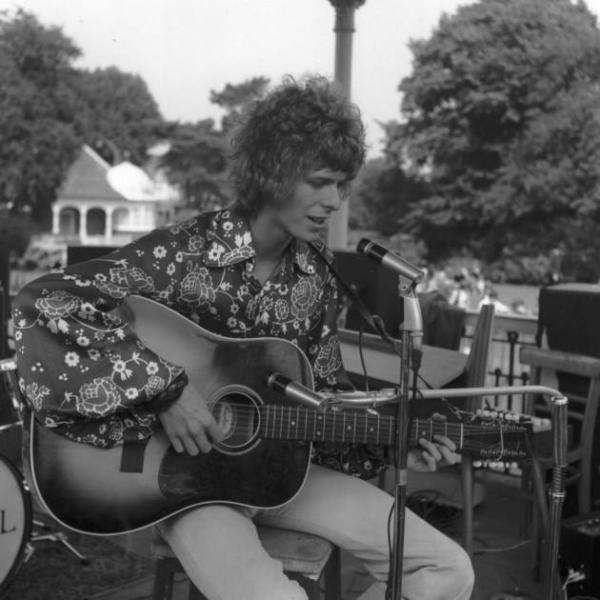
David Bowie - Beckenham Free Festival

Something more than David Bowie died this week

Why has David Bowie’s death affected so many people so deeply?

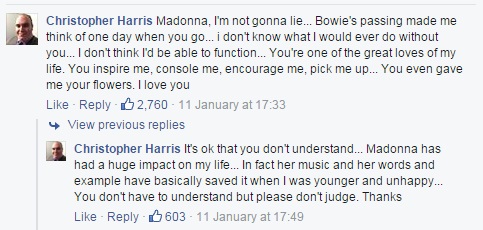
It goes much deeper than the pro-forma grief athleticism which the internet does so much to encourage. Yes, we can easily find examples of people going too far in their vicarious grief – often with extremely awkward effect:

David Bowie Death - Madonna Reaction - Facebook


But there is also something more than just anonymous people assuming a hysterical degree of mourning more appropriate for the passing of family members and close friends.

Neil Davenport attempts to draw out this undefined sense of loss in a piece in Spiked magazine entitled “Bowie and the shrinking sense of possibility”.

The piece begins by pointing out that while Bowie’s success was far from assured in the early years, it was made more likely by the greater sense of freedom and possibility which reigned in the early post-war decades, from the 1960s to the 1980s.

Davenport points out:

It’s worth remembering that Bowie slogged on the margins for ages, in two-bit bands, recording very minor songs, before finally finding his voice. Back then, British society created a kind of free space in which young people who were willing to take the unpredictable route of cultural experimentation could do so.

This should give some small measure of hope and a reminder to many of us toiling away in relative obscurity – be it in the arts or elsewhere – that success is rarely instant, and the lasting success we savour the most almost always requires a supreme degree of effort to be ploughed in to our endeavours before any results are seen.

But unfortunately, many aspects of our contemporary society conspire against encouraging this personal risk-taking and reinvention, as Davenport goes on to explain:

Today, in obsessively trying to ‘support’ and mollycoddle young people, society unwittingly robs them of the independence, resilience and drive that Bowie showed in his graft and in his shift from being a nobody to a zeitgeist-changing genius.

Where Bowie encapsulated a genuine sense of freedom and possibility, of total and frequent reinvention, today’s young people find themselves living in an era that discourages risk-taking, puts off adulthood, and erects official scaffolding around their lives. Young people have internalised a culture of anti-freedom.

We can see this in its most extreme form in the desire of some Western-born youths to join the death cult of ISIS, who seem to think that a repressive Caliphate which does all their thinking for them is a really great idea. We see it on university campuses, where student leaders make hectoring demands for Safe Spaces and ban controversial speakers, songs, newspapers or comedians. We see it with the daily emergence of yet another moronic petition calling for someone or something to be banned or punished for daring to ‘offend’ others. For all the celebrations of Bowie’s achievements, what he represented is actually in very short supply today. His death should serve as a reminder, or rather a wake-up call, of some of the backward social changes of the past 20 years.

Who would have thought that calls to outlaw clapping and booingtearful temper tantrums about dress codes, stifling ideas by labelling them ‘problematic’the insistence on safe spaces and mandatory sexual consent workshops for students would have such a repressive, suffocating effect on our society?

That’s not to say that there is no great new talent emerging seven decades after the birth of David Bowie – clearly there is. But time and again, we see the biggest acts and pop stars of today are more eager to ostentatiously embrace prevailing social values as an act of public virtue-signalling rather than court controversy by cutting across today’s strictly policed social norms.

Lady Gaga took no risk when she sang “I’m on the right track baby, I was born this way” – indeed it opened the door to stadiums full of even more lucrative fans. That’s not to say that she was wrong to do so; Lady Gaga’s advocacy of gay rights is laudable. But how often do you see an emerging pop star court real controversy or confound society’s expectations these days? You can blame some of this on commercialisation, sure, but not all of it. Something deeper is at work.

When emerging artists see ordinary people shamed and ostracised for saying the “wrong” thing or even just adopting the wrong tone on social media, how many will have the courage to incorporate anything truly daring or potentially “offensive” in their acts, or create spontaneously from the heart without first processing everything through the paranoid filter of societal acceptability?

No, trigger warnings and safe spaces are not directly to blame for the X Factor or One Direction. But all of these unsavoury phenomena – and the societal trends which create them – are indelibly linked.

Why, then, has this particular death hit many of us so hard? Perhaps because deep down, we realise that we have lost something more rare and precious even than David Bowie – the possibility of ever producing another like him.

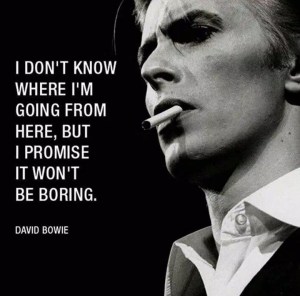
David Bowie Quote 1

Agree with this article? Violently disagree? Scroll down to leave a comment.

Follow Semi-Partisan Politics on TwitterFacebook and Medium.

One Year Later, Are We Still Charlie?

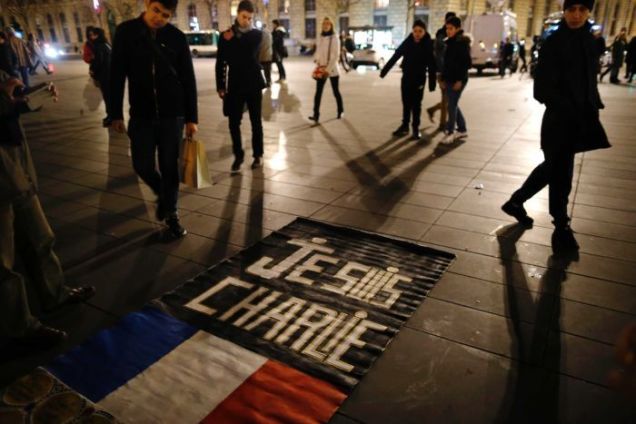
Paris - Charlie Hebdo Anniversary - Je Suis Charlie

As we pass the one year anniversary of the Charlie Hebdo attacks in Paris – the terrorist atrocity which prompted us to declare Je Suis Charlie in support of free speech – are we still Charlie, one year on? Were we ever?

This past week saw the first anniversary of the Charlie Hebdo attacks in Paris, a sickening assault on journalism and free speech, and the worst thing to happen to France until the Paris attacks of 13 November ensured that 2015 would end much as it started for Europe: in the shadow of Islamist terrorism.

At the time of the Charlie Hebdo shootings, many of us rallied to the cause of the small, satirical newspaper which found itself in the crosshairs of a primitive, totalitarian ideology, and we declared “Je Suis Charlie”.

It was a nice gesture, even if it wasn’t strictly true. Though David Cameron was eager to be seen marching arm-in-arm with other world leaders through the streets of Paris in support of free speech, those of us back in London knew that any British newspaper attempting to publish some of the satirical cartoons that Charlie Hebdo published would have been vilified, sued and shut down, and its editor would likely languishing in a British prison cell.

Things didn’t get much better as 2015 progressed, as Glenn Greenwald notes in his latest column for The Intercept:

It’s been almost one year since millions of people — led by the world’s most repressive tyrants — marched in Paris ostensibly in favor of free speech. Since then, the French government — which led the way trumpeting the vital importance of free speech in the wake of the Charlie Hebdo killings — has repeatedly prosecuted people for the political views they expressed, and otherwise exploited terrorism fears to crush civil liberties generally. It has done so with barely a peep of protest from most of those throughout the West who waved free speech flags in support of Charlie Hebdo cartoonists.

That’s because, as I argued at the time, many of these newfound free speech crusaders exploiting the Hebdo killings were not authentic, consistent believers in free speech. Instead, they invoke that principle only in the easiest and most self-serving instances: namely, defense of the ideas they support. But when people are punished for expressing ideas they hate, they are silent or supportive of that suppression: the very opposite of genuine free speech advocacy.

[..] In the weeks after the Free Speech march, dozens of people in France “were arrested for hate speech or other acts insulting religious faiths, or for cheering the men who carried out the attacks.” The government “ordered prosecutors around the country to crack down on hate speech, anti-Semitism and glorifying terrorism.” There were no marches in defense of their free speech rights.

Glenn Greenwald goes on to express his contempt for the fair-weather free speech advocates who are all to eager to shout their support for speech which offends people they happen to dislike, while simultaneously demanding that the authorities clamp down on speech which offends them or people with whom they sympathise.

Meanwhile, in Britain, the newly re-elected Conservative government was getting ready to “defend” free speech by expressing impatience with the fact that they did not have  more freedom to harass citizens acting in accordance with the law.

When David Cameron announced draconian new security measures, impatiently proclaiming “For too long, we have been a passively tolerant society, saying to our citizens ‘as long as you obey the law, we will leave you alone'”, this blog retorted:

These measures have the look and feel of a side which feels unable to win the argument in favour of British and western values through open debate, and so seeks to impose them by force of law instead.

A truly free and liberal society would not need to take such draconian steps as requiring “extremists” (never defined, and certainly not necessarily convicted) to submit advance copies of public remarks to the police for review and censoring, an astonishing proposal. But our society is becoming less and less free by the day, opting instead for security and a quiet life.

And at its depressing heart, this is what it comes down to – a desire for cloistered security above all else. On the economy, on foreign affairs and now on terrorism, our politicians have decided that we are too frightened and worn down by the dangers and threats of this world to face our challenges as a strong, independent nation.

But government has not been solely to blame. The desire to trade liberty for a chimerical sense of security has been coming from the bottom-up, with an increasing number of citizens – particularly those on the Left who ostentatiously proclaim their concern for issues of “social justice” – insisting that core liberties such as the right to free speech should be curtailed when they negatively infringe on the feelings of another person.

This corrosive new development has its roots in academia and the university environment, where a generation of liberal professors espousing political correctness as their religion are finally beginning to reap what they sowed – a new generation of coddled adult baby students who require trigger warnings, safe spaces and dawn-to-dusk parenting by their colleges just to make it through the day.

These New Age Censors and their petty authoritarianism are toxic to free speech, and their growing influence has already resulted in calls to outlaw clapping and booing, tearful temper tantrums about dress codes, stifling ideas by labelling them ‘problematic’, the insistence on safe spaces and mandatory sexual consent workshops.

As I recently explained, deep down this has nothing to do with “social justice”, but instead is all about gaining power by wrestling control over the language and laying verbal land mines with the intention of destroying opponents who – regardless of how they actually behave – happen simply to say the “wrong” thing:

That’s where the New Age Censors, the Stepford Students, the resurgent activist Left step in, always watching over your shoulder and always quick and eager to tell you when you have crossed one of the many invisible lines that they are busy drawing across our political and social discourse. Only the telling always seems to take the form of a social media lynching rather than a friendly pointer.

When the rules over precisely what can be said and how it must be phrased become so fiendishly complex that we are all liable to fall over them at some point, it grants enormous power to the gatekeepers, those swivel-eyed young activists at the forefront of modern identity politics. Not only do they get to write the rules, they and they alone get to sit in judgement as to whether those rules have been violated.

[..] Who knew that the petty tyrants of today would be cherubic-faced, smiley student activists, chanting mantras about keeping us safe as they imprison us in their closed-minded, ideological dystopia?

As far as 2015 Year In Reviews go, all of this makes for depressing reading. Indeed there are many reasons to be concerned for the future of free speech and civil liberties in general, particularly when many of our fellow citizens seem intent on destroying our freedoms from within.

And yet there have been some good news stories too, providing small glimmers of hope. One such case has been the exoneration of a Northern Irish pastor, James McConnell, who found himself on trial for sending “grossly offensive” communications following a sermon in which he described Islam as “a doctrine spawned in hell”.

This was a spiteful sting by the prosecution. McConnell’s sermon – in which the 78-year-old pastor said some highly unpleasant and inflammatory things about Islam – had been recorded and then later posted on the internet, allowing the authorities to accuse him of “causing a grossly offensive message to be sent by means of a public electronic communications network”.

Too often, such show trials have resulted in conviction and a prison sentence, which in this instance could have been six months. But in this case, Judge Liam McNally, threw the case out, saying “the courts need to be very careful not to criticise speech which, however contemptible, is no more than offensive”. If only this legal interpretation was more widely shared and disseminated throughout the English and Scottish legal systems, from the UK Supreme Court on downwards.

But the truly pleasing aspect of this case is the fact that one of the people who spoke outside the court in support of James McConnell was a Muslim academic, a senior research fellow in Islamic studies at the Westminster Institute named Muhammad al-Hussaini.

Taking a brave stance in support of speech which he himself must have found very distasteful, al-Hussaini nonetheless defended Pastor James McConnell’s right to say hateful things about the religion of Islam.

The Guardian reported at the time:

Speaking outside Belfast magistrates court to hundreds of McConnell’s supporters, Muhammad al-Hussaini, a senior research fellow in Islamic studies at the Westminster Institute, said he was in the city to back McConnell’s right to free speech.

Hussaini said: “This is possibly one of the most important things at our juncture in history; it could be the make or break for the continued survival of our planet actually.

“Against the flaming backdrop of torched Christian churches, bloody executions and massacres of faith minorities in the Middle East and elsewhere, it is therefore a matter of utmost concern that, in this country, we discharge our common duty steadfastly to defend the freedom of citizens to discuss, debate and critique religious ideas and beliefs – restricting only speech which incites to physical violence against others.

“Moreover, in a free and democratic society we enter into severe peril when we start to confuse what we perhaps ought or ought not to say, with what in law we are allowed to, or not allowed to say.”

At a time when freedom of speech is just as much under attack from safe space zealots and our own government as it is from radical Islamic terrorism, it is especially important that we stand in solidarity with those who defend free speech, and particularly those who have the moral courage to defend the speech that they personally hate.

In this regard, civil libertarians owe a debt of gratitude to Muhammad al-Hussaini and others like him. For in his defence of the rights of pastors – or anybody else – to say what they please, so long as they do not actively incite violence against another, this Muslim scholar is doing far more to defend the ancient British and enlightenment values of freedom and liberty than

In fact, one could quite easily say that al-Hussaini is more authentically British (in terms of extolling and living by the values which we supposedly hold dear) than our own government, the grunting anti-Muslim far-right and most of the academic safe space crowd put together.

This is the unusual situation in which we now find ourselves, with a British population and government cowed simultaneously by Islamic terrorism and by Islamophobia seriously discussing banning “hate preachers” like Donald Trump (of all people) from entering Britain, while it falls to a Muslim academic to stand up in defence of the free speech which the West supposedly holds so dear.

This landscape is not encouraging; few of us passed the Charlie Hebdo Test when those terrible shots rang out on 7 January 2015, and fewer still would do so now, based on their words and actions since that heinous attack.

But when a nation begins to forget its own values and once dearly-held principles, it is of some consolation on this first anniversary of the Charlie Hebdo shootings to see the flame of liberty being kept alive in some unexpected places, and by unexpected – but very welcome – custodians.

Freedom of Speech - Free Speech

Agree with this article? Violently disagree? Scroll down to leave a comment.

Follow Semi-Partisan Politics on TwitterFacebook and Medium.

Yoga Banned: Cultural Appropriation Zealots Are Creating A New Apartheid

Cultural Appropriation - Can I Wear A Bindi

Today’s virtue-signalling, totalitarian student activists will stop at nothing to let everyone know just how enlightened and considerate they think they are, and how backward and oppressive they consider the rest of us to be

If you haven’t heard the term “cultural appropriation” before, you can expect to hear it a lot over the next few years. And if you have the misfortune of living anywhere near a university campus, you may even hear it shouted in your face by a raucous student protester, high on their own self-importance.

In fact, even if you’re not committing the modern day sin of cultural appropriation right now, you are almost certainly guilty of doing it at some point over the past twenty-four hours. Go and do your penance now. I’ll wait.

Cultural appropriation is the latest verbal weapon used by virtue-signalling lefty student activists – snivelling Millennial egotists who arrived at university only to find the worst oppression and discrimination already vanquished by previous generations, and who are now desperately casting around for a new cause to justify their Chinese-manufactured Che Guevara t-shirts.

Let’s put it like this: are you a white person who likes rap music, or who (heaven forfend) listens to music by white rappers from Eminem to Iggy Azelea? Then you’re a white supremacist cultural appropriator. By appreciating or assimilating something from outside of your own ethnic community, you have plundered the culture of your downtrodden minority friends and neighbours, making light of their most sacred and noble traditions for your own carefree amusement. Didn’t realise that’s what you were doing? Doesn’t matter, you’re still guilty.

Or maybe you really fell in love with Thai cuisine when you were on that round-the-world trip, and now you love to cook Thai-inspired meals at home, with your non-Thai hands, in your non-Thai kitchen, for your non-Thai friends. That’s cultural appropriation too. Shame on you. If you are a white American you should subsist entirely on cheeseburgers, barbecue and other culturally appropriate fare. God help you if you’re a Cockney but not mad for jellied eels.

Stay away from that lasagne if you’re from Idaho or Utah – can’t you see how eating pasta belittles and marginalises Italian Americans? And as for ordering Kung Pao chicken from your favourite Chinese takeout, why don’t you just start reading aloud from Mein Kampf in the town square, you nasty little fascist? Clearly you have no feeling for the mental safety of Asian Americans, who might feel mocked and excluded by your thoughtless foodcrime.

You get the idea. Before doing anything, first get out your Hierarchy of Privilege and remind yourself exactly where you fit on the Spectrum of Oppression. White and male? Tough luck, you can sample only from those other white, male cultural pursuits. Black, disabled and of undefined gender and sexuality? Then the world is your oyster – at least in the surreal world of academia.

Cultural Appropriation - Fourth Wave Feminism.jpg


And now the Stepford Students are coming to take away your Yoga classes, because chances are you aren’t from India – and therefore you are guilty of the cultural appropriation of Indian culture.

From Brendan O’Neill’s weary report in The Spectator:

Just when you thought uptight, fun-dodging, thought-policing millennials couldn’t get any worse, they go and brand yoga as racist. Apparently, when white people bend themselves bonkers while humming or thinking happy-clappy thoughts, they’re not only being self-punishing saps: they are also ‘culturally appropriating’ a practice that has ‘roots in Indian culture’.

That’s according to student leaders at the University of Ottawa, who put pressure on a yoga teacher at the uni’s Centre for Students with Disabilities to call off her yoga classes. She was told ‘there are cultural issues of implication involved in the practice’. In these people’s minds, in which the Offence-Seeking Antenna is forever turned to High, a white person doing yoga is not that different to a white person donning blackface and singing ‘Mammy’.

O’Neill goes on to point out:

The PC rage against cultural appropriation is ultimately a demand for cultural segregation, for black people, white people, Latinos, gay people, women and every other racial, gender or sexual group to stick with their own culture and people and not allow themselves to be diluted by outsiders.

Gay men have been condemned by the National Union of Students for ‘appropriating black female culture’. Barmy NUS officials think it’s the height of racism for a gay guy to talk about having an ‘inner black woman’. The irony being that it’s hard to think of anything more racist, or at least racially divisive, than the ideology of cultural appropriation: its obsession with cultural purity echoes some of the darkest political movements of the twentieth century.

It’s easy to dismiss these incidents as merely a case of a few activists getting a bit too carried away, or going a bit too far. But incidents such as these are happening more  and more often, on both sides of the Atlantic.

Whether it is British students shutting down a debate about abortion and trying to get Germaine Greer banned from campus, or pampered Yale students insisting that the point of university is not to learn but rather to feel warm and snuggly, these stories are becoming more extreme, more frequent and ever more ludicrous to the uninitiated.

This is in large part because the authorities – university chancellors, society presidents and anyone else called upon to be an auxiliary parent to these toddlers-with-diplomas – too often reward this hysterical behaviour by apologising for offending the Stepford Students and giving in to every one of their tyrannical demands. Which then encourages the next crop of baby-faced tyrants to make even more outrageous demands in the name of creating a “safe space”.

With their accusations of “cultural appropriation” and unquestioning embrace of the politics of identity, these student activists are starting to create a New Apartheid – on their university campuses and in their hermetically sealed social circles of likeminded social justice warriors. Their overriding concern with protecting the “purity” of various minority cultures resembles nothing so much as the anti-miscegenation laws of the last century. And all of this they do without a hint of irony.

These students are nothing so much as High Priests of the Politics of Identity. Like other clergy before them, they derive their power from claiming the exclusive ability to speak on behalf of their secular god and telling the rest of us what we must believe and say. But in place of stoning or crucifixion being the penalty for blasphemy we now have new, modern shamings carried out on social media.

In a famous scene from Aaron Sorkin’s show The Newsroom, the lead character described the American Tea Party – with their intolerance of dissent and insistence on ideological purity – as being like an American Taliban. But I wonder if the real progressive Taliban can’t actually be found on our university campuses, in our student union bars and in the front row of your nearest anti-austerity rally, shouting “Tory Scum!” at terrified old ladies.

If we let these fragile young tyrants win, we will eventually all be ghettoised, forced to keep strictly to our own “communities” (community being defined strictly by racial or religious criteria) and only allowed to engage with other people in the controlled environment of “safe spaces“, where our speech and behaviour is micromanaged to ensure that we do not “trigger” anybody else with the problematic “microaggression” of our mere presence.

Yes, there is a dangerous radicalisation process taking place on our university campuses today. But deluded young radicals are not only rallying to the black flag of ISIS – we should also mark those who drink so deep from the well of Social Justice that they would make us all slaves to their cause.


Yoga - Cultural Appropriation

Top Image: Northmont Surge

Middle Image: 4th Wave Feminism

Agree with this article? Violently disagree? Scroll down to leave a comment.

Follow Semi-Partisan Politics on TwitterFacebook and Medium.