The Centre Must Not Hold

WTF is Centrism

Calls for the Tories to pursue and embrace the non-existent “radical centre” are a dangerous Siren song for conservatism at a time when the country needs conviction and clarity of purpose

We must know what a Tory government will have to achieve, before thinking about the way in which it must win office, because simply “winning a majority” on the wrong terms may not give it the authority it needs for success.

In normal times a majority is enough. The task of government is to steer a basically healthy socio-economic system past hazards which are primarily external, while ensuring that the system’s fabric is maintained and making improvements to it here and there.

But once the system itself starts to show signs of fatigue, instability, disintegration, then we start to talk of discontinuity. In discontinuity, solutions can only be found by breaking constraints which we had assumed were unbreakable. It is not enough to settle for policies which cannot save us, on the grounds that they are the only ones which are politically possible or administratively convenient.

– John Hoskyns and Norman Strauss, “Stepping Stones Report”, 1977

For over a week now I have not been able to bring myself to write anything new for this blog. Why? Because the patterns of failure in British politics are now tediously familiar beyond all endurance, as are the mistakes, missed opportunities and blunders routinely committed by politicians and thinkers who call themselves “conservative”.

Yes, the past week was a particularly torrid one for Theresa May’s shambolic government, but it did not teach us anything new. So more evidence emerged that Boris Johnson is totally unfit to be Foreign Secretary, the Tories no longer even seek to act like the party of Defence while the prime minister is utterly dependent on her questionable deputy Damian Green – these are not new revelations. They have been relentlessly, depressingly drummed into our consciousness over a matter of months and (in some cases) years.

Besides, even if Theresa May’s Cabinet were a precision-engineered Rolls Royce jet engine operating at maximum power and efficiency it would not matter – we would simply reach the same dismal destination somewhat faster than is currently the case. This is not an ambitious and visionary government let down by flawed execution and unfortunate scandal; it is a government which never had any real purpose to begin with.

Every two-bit conservative commentator is now saying what this blog has been screaming for years – that aimless, centrist government devoid of purpose is a dogma of the quiet past, inadequate to the stormy present; that we may as well not have bothered deposing New Labour in 2010 if we were only going to replace Gordon Brown with a bunch of slavish centre-left devotees wearing blue rosettes instead of red ones.

Well slow hand clap, guys. What do you want, a medal? Some of us have been making this point for years now, back when the well-paid and ubiquitous journalists and TV commentators were purring over David Cameron and Theresa May, predicting an uninterrupted decade of energetic, fruitful Tory rule even as their timidity and incompetence led us ever closer to the abyss.

Already there are a number of travelling quacks offering their own dubious potions and cures for the Tory malaise, most of which are vague at best or completely misguided at worst. A few thoughtful people have genuinely interesting ideas, but many seem to propose a further shift to the left, as though additional concessions to Corbynism will do anything other than validate Labour policies in the eyes of the electorate. Others suggest that “compassionate conservatism“, that hateful, self-sabotaging and worn-out phrase, is the magic solution. But most common are the tedious, meaningless calls for the Tories to recapture the “radical centre” of British politics.

The latest to take up this cry is Tory MP Johnny Mercer, who offers a fairly blistering (and by no means inaccurate) critique of past Conservative failures, taking Theresa May to task for her failures of leadership and the party as a whole to task for their ideological drift.

From the Telegraph:

“It smells of decline, and the people won’t have it” said Mr Mercer, MP for Plymouth Moor View, who bucked the national trend and increased his majority by five-fold at the last election.

“There becomes a cross-over point in seats like mine, it becomes about your personal integrity, about your credibility. You have to step back and question what your party is doing – of course.  Yes we are beginning to get there I fear”.

[..] He went on: “A Corbyn/McDonnell Government would fundamentally change Britain and what it means to be British. We would not be forgiven as a party for 20 years. We must remain, if nothing else at the moment, credible.”

[..] “We have a duty to the Nation to ensure the Cabinet is comprised of the best people in parliament, not the most famous names. Theresa May had to make a decision where she formed her cabinet: whether to select members to manage the fall-out from Brexit or select the best modernisers to bring about social change. She chose the former – I understand that, but now is the time for bold, outward facing leadership in my view.”

But then, just as you are expecting something radical or attention-worthy proposed as an alternative, Johnny Mercer merely proposes a further attempt to “grab the middle ground”.

This is so incredibly disheartening, coming from somebody whose profile and biography would potentially make him a very attractive future leadership candidate. Having diagnosed the problem, where is Mercer’s solution? More grasping for the centre?

People: THE CENTRE IS NOT A FIXED PLACE. It merely describes a point equidistant between two other, polarised positions on the political spectrum – usually the status quo, or today the groupthink of a pro-EU establishment who are becoming increasingly extreme in their contempt for democracy. The centre is not and cannot be a place from which to build effective policy because it is rooted in nothing but triangulation and brazen political calculation as opposed to any kind of firm conviction as to how society should be ordered, or the rights of the people and the role of government set out.

If the last few years in British politics have taught us anything, it is that the people respond surprisingly warmly to sincere politicians who hold clear convictions springing from a coherent and easily explainable worldview. People may not agree with Jeremy Corbyn, but even many of his detractors admire the fact that he has held and advocated for many of his ideas in good times and bad, back when they were on the discredited fringe and now, when they are being taken more seriously once again.

The Tories need a Jeremy Corbyn of their own, but instead they got Theresa May, who frittered away the Conservative majority because she stood for nothing. She is an authoritarian pseudo-traditionalist whose intellectual blood bank (in the form of Nick Timothy) has thankfully been exiled from government, but not replaced by anything better.

May’s risible pitch in the 2017 general election was strength and stability, but these are states of being, not a direction of travel. People jetting off in an aeroplane together would generally prefer less turbulence to a more bumpy flight, but more than anything they care about arriving at the correct destination. Jeremy Corbyn made his flight plan crystal clear to the British electorate. Theresa May didn’t even bother to produce one, preferring to pander to the Politics of Me Me Me.

You don’t win a convincing mandate to govern by chasing the centre. You win such a mandate by coming up with a clear plan of action flowing from a coherent and easily explainable view of the world, one which is so compelling that it makes sense to an election-winning majority of voters, thus causing the floating centre to shift in that direction.

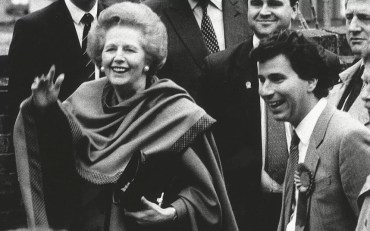
Margaret Thatcher’s government did not rescue Britain from a failing post-war consensus and 1970s national decline by cautiously seeking consensus and the same elusive centre ground fought over by the previous Heath, Wilson and Callaghan administrations. She made her mark on Britain by charting a new course, braving resistance rather than capitulating to it, and dragging the centre to the right so that after the Tories finally lost power, New Labour had neither the ability nor the desire to undo many of the changes she wrought.

That’s how you run a government worthy of the history books. The Tories should stop slavishly chasing the centre, and come up with a new blueprint for Britain – the new Stepping Stones Report which we so desperately need, updated for 2017 – which will shift the centre of British politics back in the direction of liberty underpinned by the autonomous nation state (or some compelling improvement on it).

Whatever differs from this, to the extent of the difference, is just noise.

Conservative Party Logo - Torch Liberty - Tree

Things fall apart the centre cannot hold - Yeats quote

Support Semi-Partisan Politics with a one-time or recurring donation:

Agree with this article? Violently disagree? Scroll down to leave a comment.

Follow Semi-Partisan Politics on TwitterFacebook and Medium.

The Battle For British Conservatism: Seeking The New Generation At CPS

Centre for Policy Studies - CPS - New Generation project launch event

When it comes to breathing new life into the intellectually moribund Conservative Party, virtually any contribution is to be welcomed. But in this case, choosing Amber Rudd as the figurehead for the Centre for Policy Studies ‘New Generation’ project does not inspire great hope

Ever since George Freeman MP pitched a few tents in a Berkshire field and invited a select band of people to gather and plan the salvation of the Tory Party, there has been a steady trickle of other initiatives and articles musing on the same problem. Most of these people are catastrophically late to the party, having conspicuously failed to raise any red flags during the Cameron years (unlike this blog) or even during the beginning of Theresa May’s administration, but better late than never.

And while it may now be too late to save this government and prevent at least a short-term spell in Opposition, at least a few more people are finally starting to ask themselves what it actually means to call oneself a conservative in the year 2017, and what the modern Conservative Party should consequently look like and stand for.

Latest to climb aboard the bandwagon is the Centre for Policy studies, who a few weeks ago hosted the launch of Sir Oliver Letwin MP’s book musing on the same topic. Now, the CPS (founded by Keith Joseph and Margaret Thatcher) is launching an initiative of their own, entitled “New Generation”.

From the press release:

If we are to save Britain from a Corbyn government, the case for the market needs to be made once again. Not with empty slogans, but by developing concrete, practical, aspirational policies that make voters’ lives better.

Our flagship “New Generation” project will give a platform to the 2015 and 2017 cohorts of MPs, and other fresh voices, to make that case: to set out the policies that can make Britain a nation of opportunity and enterprise.

One gets the strong sense that this new project will stand or fall depending on how many (if any) additional “fresh voices” are actually invited to participate, and who those people are.

Inviting the most recent two intakes of Tory MPs to help shape the argument is not an altogether bad idea – these groups have tended to be slightly more libertarian-ish than the statist interventionists of yore, though even these new MPs tended to favour remaining in the EU. But given the inescapable reality that political advancement for backbench MPs depends to a significant extent on being seen to support and defend current government policy it is asking too much to lay all the responsibility at the feet of relatively new, junior MPs.

As this blog has repeatedly argued, real change must come from outside the Parliamentary Conservative Party. We all know how CCHQ love to centralise absolutely everything so as to ensure the consistency of the uninspiring, unambitious brand of Toryism for which they are famous, but this time an exception must be made and outside counsel sought. And if the party will not engage with other small-C conservatives through choice then the party must be hijacked and dragged kicking and screaming in a new, better direction, just as Margaret Thatcher and her intellectual blood bank did for the Tories in the late 1970s.

In short, any project serious about conservative revival in Britain needs to have at least a reasonably healthy disdain for those people currently piloting the country through its centrist malaise. And who better to emphasise the need for fresh, radical and unapologetically conservative thinking than…Amber Rudd?

If you are scratching your head wondering why Amber Rudd of all people has been given the honour of inaugurating this new CPS project, you are not alone. As Home Secretary, Rudd seems to be quietly competent in the same manner as her predecessor, the prime minister – that is, she largely manages to avoid dropping the ball, causing scandal or attracting any real scrutiny of her authoritarian instincts. But she most certainly does not have any kind of reputation as an original thinker or bringer of disruptive innovation.

And why would she? Amber Rudd, after all, is on record as having gone into politics more out of boredom and desire to add another accomplishment to her CV than through any burning desire to change Britain. She is the ultimate May-ite Cabinet member – a technocratic administrator, not a visionary. And while Rudd should be rightly commended for representing the Conservative Party in this year’s general election television debate while Theresa May lacked the courage to do so, her vision of conservatism was very much a defensive one, suggesting that right-wing policies are more unfortunate necessities than a positive choice for voters.

Now it is entirely possible that Amber Rudd will admit to some of these failings and exhort the CPS’s New Generation project to learn from the mistakes and missed opportunities of the government in which she serves. But it seems highly unlikely – Rudd’s own leadership aspirations are well known (being prime minister is, after all, the ultimate boasting point for one’s LinkedIn profile) and she is raising money in donations hand over fist. It hardly then seems likely that the Home Secretary will inaugurate this new initiative to save the Tory Party from itself by admitting that she is squarely part of the problem.

But you never know – perhaps there will be a sliver of introspection. For my sins, I will be attending the launch event on Monday 13 November and will raise some of these points if and when the opportunity allows.


Conservative Party Logo - Torch Liberty - Tree

Support Semi-Partisan Politics with a one-time or recurring donation:

Agree with this article? Violently disagree? Scroll down to leave a comment.

Follow Semi-Partisan Politics on TwitterFacebook and Medium.


The Battle For British Conservatism: Oliver Letwin, Hearts And Minds

Oliver Letwin acknowledges the fundamental challenge facing the Conservative Party, but in this case the devil lies not in the details but rather in the still-elusive big picture

Well, here it is – the first crack in the dam, the first “what’s gone wrong with the Conservative Party and what can we do to fix it?” book to hit the shelves has just been  published by Sir Oliver Letwin MP. Entitled “Hearts and Minds: The Battle for the Conservative Party from Thatcher to the Present“, Letwin offers what will presumably be an insider’s take on when, where and how the Tories managed to lose their way.

(I have requested but not yet received a review copy – below are my reflections based on the book launch video recently uploaded to YouTube).

You can watch Letwin speak at the book launch, hosted by the Centre for Policy Studies, in the video above – and judge for yourself whether you think that Letwin is warm or cold when it comes to identifying the key issues and proposing a plausible way back for British conservatism.

I watched the video with fairly low expectations. Letwin is one of those Conservative politicians who traded for a long time on euroscepticism only to swing his support behind remaining in the EU for reasons which amount (as far as I can tell) to a failure of courage. He was devastated at the EU referendum result and tried to persuade David Cameron to remain in office in the immediate aftermath. And given that Cameron had glowing things to say about the book in his enthusiastic review, any account of past Conservative failures which pleases David Cameron (who presided over so many of them) must, to my mind, be pulling a fair few punches.

But I did not get that sense from Letwin’s speech. Admittedly Letwin kept it very high-level and deliberately eschewed talking about much of the content of the book. But he did echo themes which this blog has been shouting about for years when he said:

Between now and the middle of 2021 or so I think we have time on our hands, which we mustn’t misuse. And that actually means recapturing the intellectual initiative and not getting mired in administrative detail but going back to these fundamental principles and trying to show how they apply to the great issues of our age, in a modern medium and a way that feels relevant so that whoever is the leader as we go into that election – long after Theresa has taken us through Brexit – actually has something much better and bigger than just a set of policies dreamed up at the last moment for a manifesto. In the end, principles and ideas have to precede the practical policies and the selling of a message.

I agree with everything aside from the Tories having “time on [their] hands”. There is precious little time for a leisurely period of introspection on the part of people who generally speaking still will not admit to having done anything wrong (or at least admit only to tactical rather than ideological errors). The only thing which will likely save the Conservative Party in time for 2022 (barring another round of fratricidal blood-letting within the Labour Party) is if the Tories are taken over by a new force which is already at work re-establishing conservative principles and building policies from them while the dying husk of this present administration focuses on Brexit and tries not to drop the ball elsewhere.

Just as the Thatcherite insurgents took over the Conservative Party in the late 1970s, the Cameron clique captured the party in the mid 2000s and Jeremy Corbyn’s crew seized the Labour Party back from the centrists in 2015, any immediate Tory revival will only come about if a new group can get organised and push the old guard out of the way when Theresa May steps down or is deposed.

Letwin pretty much goes on to admit this, undermining his own initial optimism, when he says:

Of course I didn’t design things so I wouldn’t be in government now, I found myself rudely ejected from government, as I describe in the book. But actually, had I thought about these things more clearly I would have ejected myself because actually those poor people – my former colleagues, many of them great friends of mine – now find themselves imprisoned in the ghastly operation of trying to manage this country through Brexit, keep its finances in order, carry through all sorts of administrative actions which are very necessary but totally dull and fend off thousands of marauders and put out hundreds of forest fires, and therefore haven’t the remotest amount of time to think about these basic principles. That falls to the rest of us who are outside that machine and can actually do this thinking now, and that is our sort of duty.

The dreary job of managing the technocracy and steering the ship of state while being assailed from all sides is not conducive to bold, inspired policymaking, as Letwin acknowledges. That’s why radical, purposeful governments which command the kind of mandate required to push through their agenda rarely conjure themselves into existence while the party is still in power. This kind of introspection is usually prompted only by being in opposition with no expectation of returning to power unless something significant changes.

But on the positive side, because Theresa May is so singularly useless at picking out talent and surrounding herself with the brightest and best, several key conservative assets are currently languishing on the backbenches with nothing but time on their hands to work the issue – to commit to a real debate about what it means to be a conservative in 2017, and how to apply conservative solutions to 21st century challenges.

The likes of Kwasi Kwarteng, James Cleverly and George Freeman spring to mind, though there are doubtless some others. One does not necessarily have to agree with their every last public utterance or voting record, but these people at least look as though they may have some original ideas to contribute as well as personal career aspirations to advance. If Priti Patel could just get herself fired as International Development Secretary (a role in which her talents are wasted) then a potentially promising senior Tory would be freed up to join the revolution, too.

I shall read Letwin’s book with interest. The sense one got from the CPS book launch was of a group of rather self-satisfied veterans from Thatcher’s day, still dining out on the victories of an earlier era, who have not really had to formulate a new worldview or policy platform since the 1970s and are still unconvinced as to why they should do so now. Like ageing rock stars they go around belting out the old favourites to a dwindling band of nostalgic devotees while the rest of the world slowly moves on without them.

The accomplishments from the Thatcher years should be recognised and never diminished, but it is hard to imagine this Dad’s Army think tank saving the day for a second time, forty years later, without a significant injection of new blood (I don’t know enough about their newly appointed acting director Robert Colvile to know whether or not such a transfusion is likely).

And likewise, while Oliver Letwin’s book may well offer some diplomatically worded assessments of past Tory shortcomings, if he really does have the ideas needed to reinvigorate the Conservative Party one wonders why they were not flagged to Theresa May and Lynton Crosby before they ran one of the dreariest, most uninspiring general election campaigns in living memory.

Ever the optimist, though, I hope to be pleasantly surprised by what he has to say.


Oliver Letwin - Margaret Thatcher - Conservative Party

Oliver Letwin - Hearts and Minds

Support Semi-Partisan Politics with a one-time or recurring donation:

Agree with this article? Violently disagree? Scroll down to leave a comment.

Follow Semi-Partisan Politics on TwitterFacebook and Medium.


The Battle For British Conservatism: Book Progress Update

Atlantis Books shop Oia Santorini Greece

A tedious race against time

As I mentioned last month, I am in the slow, tortuous process of writing a book on the challenges and future of British conservatism, based partly on my writings on this blog and augmented where appropriate with new material.

It turns out that writing a book is quite hard. Who knew? And yet a whole host of verifiable idiots seem to effortlessly churn the things out one after another; but then I suppose many of them have collaborators, researchers or ghostwriters. By contrast, my humble little book (much like this blog) remains very much a side-hustle, and one which necessarily takes third place to work and another significant ongoing project (details TBC) for the time being.

Right now I have a 30-page outline in Google Documents which is being sporadically worked on as I slowly transform terse bullet points, links to my past articles and stream-of-consciousness paragraphs into the final text. I hope to self-publish on Amazon and iBooks (or whatever else those young whippersnappers use, with their loud music and Pac-Man video games) by early in the new year, closer to Christmas if things progress smoothly. Maybe I’ll tweet it out in a 5000-tweet thread or broadcast it on SnapChat, who knows?

I can’t help but notice, as I set to work, that much of the UK political media has finally woken up to the fact that there might be something ideologically dysfunctional within the Tory Party, hence the sudden proliferation of “OMG the Tories have lost their way!” articles in all the prestige media and main political websites. Well done guys, it only took four years for you to catch up (ten years if we count Peter Hitchens as the pace-setter, which we probably should).

Joking aside, this is somewhat frustrating as I know full well that ideas first expounded on this blog (which I know is sometimes read by mainstream UK political journalists even if they almost never deign to link to me or re-tweet my stuff) will soon be appearing in rival books which have the backing of actual publishers and real distribution networks. And in a few short months, a bunch of self-satisfied hacks who only a few months ago could still be found praising the dismal, centrist Tory party to the rafters will be smugly sitting in television studios pontificating on how they were the first to recognise that something was wrong in Toryland. “Where did the Tories go wrong?” will likely be early 2018’s version of “So, Brexit happened” in terms of topical political book sub-genres ravenously pounced upon by the Westminster elite.

Therefore I find myself in a bit of a race to market against these guys, not because I will be remotely competing with them for critical acclaim or market share (I’ll celebrate if I end up selling fifty of the darn things and anybody outside my social circle pays the blindest bit of attention) but purely because I want the personal and intellectual satisfaction of getting my long-held ideas and warnings in print before the prestige media elite saunter along to claim insights first published on this blog as personal, original revelations of their own. Obviously there is a quality/speed trade-off at work, and I don’t want to release any old rubbish prematurely. But I also really, really don’t want to see Fraser Nelson’s Comprehensive Explanation Of The Conservative Dilemma staring down at me from a shelf in Waterstone’s before I have gone on the record myself. That would be significantly sub-optimal.

So I continue to work away on this project in the background. You may have noticed a new series on the blog called “The Battle For British Conservatism” (first article here), some of which will undoubtedly feed into the book (and which will hopefully feature some more interesting guest contributions), but other blog updates may be slightly more sparse for awhile as my energies are diverted.

In the meantime, it would be tremendously helpful to me if readers not already signed up for email updates could do so by signing up right underneath the Facebook sidebar on the right (if you’re reading on a smartphone or tablet then it may be waaaay at the bottom of the page). I will be using the blog’s hitherto-untapped mailing list to keep everyone updated on the book and offer a discount for readers – not that it will cost more than a London pint anyway.

In the meantime, if anyone sees Owen Bennett, Isabel Hardman or Tim Stanley hunched over a MacBook in Starbucks writing something vaguely similar, please give me a heads-up so I can stock up on Red Bull and pull the required all-nighters to beat them to the finish line.

Cheers!

img_7050

Support Semi-Partisan Politics with a one-time or recurring donation:

Agree with this article? Violently disagree? Scroll down to leave a comment.

Follow Semi-Partisan Politics on TwitterFacebook and Medium.


The Battle For British Conservatism: Are The Tories The Enemy Within?

Theresa May - Downing Street - Conservative Party - Tories

What if the current Tory Party represents a dangerous, long-ascendant fifth column within British conservatism?

In a blistering attack on the party of Theresa May, Philip Hammond, David Cameron and George Osborne, Laura Perrins of The Conservative Woman declares that the Tories are now the “enemy within” and the single greatest threat to what remains of British conservatism.

Perrins’ dissatisfaction with the Conservative Party – like that of this blog and other malcontents of much longer pedigree such as Peter Hitchens – has clearly been building for some time, but finally reached boiling point when the Conservatives cooked up their  “presumed consent” scheme for organ donation, yet another policy which sounds fluffy and caring at first glance but which would effectively make one’s body the property of the state, merely on loan to you not from God or nature but from Her Majesty’s Government, to which it must be returned upon death unless one specifically requests an exemption.

Perrins thunders:

The last straw for me was the proposed ‘presumed consent’ organ donation scheme, more accurately described as the State organ appropriation scheme. This is small fry in the scheme of things but it sums up the whole rotten party. The concept that your body is yours, and remains yours and then under the control of your family after death, is so fundamental, so obvious, so visceral and so conservative that it should not need explaining.

Now Theresa May tells us that in fact your body belongs to the State, unless you have taken the time and trouble to tell the State otherwise. This is wrong in principle and in practice. I was on a radio show with a chap who was waiting for a kidney and he said that his surgeons told him there were not even the beds or doctors to take advantage of this scheme. So, the Conservatives are grabbing organs just, as usual, to look nice. See, neo-Statists.

I had a very similar reaction at the time, not because I am any less keen to see organ donation rates improve and waiting lists decrease, but because this way of going about it represents about as big a power grab by the state as it is possible to make:

https://twitter.com/SamHooper/status/915636056732655616

But this is just one of the many ways which the impostor party which bears the name “Conservative” has made a mockery of the principles they supposedly stand for, and Perrins goes on to recount the full litany at length.

Let’s face it, the Conservative party are neo-Statists and have done more damage to conservatism in this country than Labour ever could. The current leader of the party believes actual conservatism – small government, strong families and the free market – is nasty. She actually said this, yet we are all to go merrily along backing this wretched party no matter what, as we did in the last election – much to my regret.

This is the party that believes an energy gap is a good idea, and that continued government guarantee of tuition fees is sensible. The Tories are as ideologically wedded to the socialised health system that is the NHS as the Labour party is, all because they think they will look mean if they point out that in fact the Emperor has no clothes.

The Tories have interfered with the childcare market, causing the costs to rise year in, year out. They want more mothers in work, whether they want to be there or not. They lecture us on what to eat and drink; no detail of our life is beyond government note-taking. Now they have instructed GPs to ask what your sexuality is. This is Nanny turned Nurse Ratched.

The Conservatives love big government. There has been no reduction in quangos – they have quangos lobbying their own government, for goodness’ sake. They use the school system to try to solve every social problem: FGM, toothbrushing, sex education, pornography, drugs, healthy eating, on and on it goes. The national debt could hit £2trillion in the next ten years.

And so it goes on – Perrins inevitably touches on the march of the Cult of Social Justice and Identity Politics, noting that the Tories have bent over backwards at every turn to accommodate increasingly avant-garde and unproven leftist orthodoxies around gender and family life. And to each accusation there is little which can be said in defence.

Of course, there are exceptions, and I do not agree with all the charges laid by Perrins at the foot of the Conservative Party. I would certainly argue that some of the concessions to modernity made by the Tories are good and entirely necessary, particularly the opening up of the stabilising, enriching influence of civil marriage to same-sex couples. But even where one agrees with the thrust of Tory policymaking on social issues there can be little denying that the fears, objections and liberties of dissenting individuals and religious organisations have been trampled in the process.

So what to do, given that the present-day Tory Party is at best ambivalent and at worst hostile to many conservative values and priorities? Must we really shrug our shoulders, be grateful that we don’t have Prime Minister Jeremy Corbyn and put up with the dismal, directionless leadership we currently have?

Laura Perrins hints that maybe we do not have to put up with this Coke Zero Conservative government after all:

A Labour government would be grim, don’t get me wrong. But I wager that they won’t last long, they will split, and they will not get to do half the things they say they will do. They have already ditched the tuition fee promise and they are not even in power. In sum, they are not the long-term threat to this country.

I am inclined to agree. As I have written numerous times before, at present small-C conservatives have the worst of all worlds. We are nominally in power, yet virtually none of our values and priorities are being addressed by the government. We are continually assailed by the Left for supposedly being heartless, callous and cruel towards the generically “vulnerable”, yet the budget deficit persists, the national debt grows and the idea of real fiscal conservatism remains as remote as ever. We are accused of seeking to destroy the “beloved” socialist edifices of post-war Britain like the welfare state and Our Blessed NHS, yet Universal Credit rollout by 2022 is apparently the best we can do.

As I once wrote:

If I’m going to be accused of callously taking a jackhammer to the welfare state I at least want to see a little bit of rubble as my reward. But there is no rubble, only the stench of craven capitulation to the leftist forces of perpetual dependency.

So given the near-futile hope of meaningful conservative ideological renewal while in power, how much worse could a Corbyn premiership actually be? Here, I again agree with Perrins. While Jeremy Corbyn himself would probably love to take the country galloping off to a hard leftist destination, in practice he is constrained by the centrists within his party. And as we are all currently witnessing with the Brexit debate, establishment centrists have a way of grinding down objections and diluting any idealism in order to get the self-serving stability which they want for themselves.

While at present this centrist handbrake serves to stymie Brexit and torpedo any possibility of real small-government conservative reform, in the event of a Jeremy Corbyn premiership the same centrist blob would also serve as a drogue parachute, arresting any sudden leftist moves attempted by Labour and limiting the damage that such a government could inflict. Therefore, revoking all support for the current Tory government need not be calamitous. After all, when we already have a government which is willing to decimate the armed forces, firehose foreign aid at countries in a manner totally unaligned with our foreign policy goals, trample civil liberties and spend taxpayer money like a sailor on shore leave then how much worse could it possibly be?

What Perrins’ article does not do, however, is spend much time looking at what kind of party the Conservatives should become if only they can be retaken. And here there is a genuine tension, not between the kind of social conservatism presumably favourable to The Conservative Woman and craven submission to the identity politics cult, but between social conservatism and free markets.

This is a battle for the soul of British conservatism which has been suppressed for far too long. A new balance must be struck between social conservatism and free markets which addresses the key challenges of our time – globalisation, automation, migration, national identity, defending Western values and defeating Islamist terror – in a way which attracts and inspires voters. The Conservative Party’s current policy mix isn’t turning any heads, and is actively alienating most people under fifty years of age. Our sole saving grace is that Labour haven’t yet come up with a compelling solution either.

There remains an opportunity for conservatives to answer these critical questions and arrive at a new balancing of priorities which works for the country, though doing so while still in office is a tall order. But if we are to have any chance of success we must begin by acknowledging that the contemporary Conservative Party is not and has not been a friend of small-C conservatism for many years.


Conservative Party Logo - Torch Liberty - Tree

Support Semi-Partisan Politics with a one-time or recurring donation:

Agree with this article? Violently disagree? Scroll down to leave a comment.

Follow Semi-Partisan Politics on TwitterFacebook and Medium.