Jeremy Corbyn’s leadership campaign has demanded an apology from Owen Smith after the challenger apparently described his rival as a “lunatic”.
Corbyn’s team reacted with anger over claims that Smith, a shadow Cabinet minister until just weeks ago, used the term about his former boss at a rally in London last night.
The Labour leader, who has himself faced an onslaught of criticism overnight because of his controversial video on a “ram-packed” Virgin Train service, said Smith’s language had descended into “personal abuse”. This morning Smith issued a partial apology.
[..] “And what you won’t get from me, is some, you know, lunatic at the top of the Labour Party, you’ll have someone who tries to form a coherent narrative about what’s wrong with Britain,” it is claimed Smith said.
A spokesperson for the Jeremy for Labour campaign, today said: “Owen Smith has degraded this contest by descending into personal abuse. He should apologise to people suffering with mental illness, many of whom would have been dismayed and upset to to hear such offensive language used in public by a Labour politician.
“He should also withdraw his remark, and spend time with people suffering from mental health problems to develop some sensitivity in his use of language. This is simply not the language that someone standing to lead our party should use, and it injects an ugly tone into this contest that no Labour member wants to see.”
Smith’s intervention also prompted dismay from the Labour Campaign for Mental Health. In a statement posted on Facebook today the group said: “While we tend not to comment on the leadership contest, we were saddened to see that the term ‘lunatic’, a term with a long history of abuse toward those with mental illness, has been used in this contest as a term of derision against a colleague. We, as a party, should be fighting to end the stigma and support those in our community with mental health issues, and not use these cruel, oppressive names to insult opponents.”
One probably shouldn’t gloat at Owen Smith’s misfortune – but let’s indulge ourselves just this once. Because nothing restores the conservative soul more than watching preening, virtue-signalling Social Justice Warriors self detonate on the very same verbal land mines they themselves have laid across our political and cultural discourse.
Does anybody seriously think that people suffering with mental illness are in anguish today because of Smith’s remarks? Is anyone at this moment penning an angry letter declaring “On behalf of lunatics everywhere I am appalled by Owen Smith’s cavalier appropriation of the term ‘lunatic’ and his lazy attempts to describe the state of madness while making a political point”? Of course not.
And you have to hand it to the Corbyn campaign – they responded magnificently to Calamity Owen’s latest gaffe, immediately portraying their man as the virtuous Protector of the Mentally Ill, standing up to Smith’s supposed deliberate denigration of their suffering. Like Ronaldo on the receiving end of a light tackle, Corbyn played the victim brilliantly, immediately falling to the ground and flopping around (metaphorically speaking) as if stunned by Owen Smith’s sheer inhumanity, before donning the white robes of virtue and sanctimoniously “defending” mentally ill people from a supposed microaggression which none of them would have noticed in the first place were it not for Corbyn’s skillfully weaponised victimhood.
But don’t feel sorry for Owen Smith – he will have learned nothing from this latest escapade. Despite himself now having come under attack twice for violating PC / Social Justice dogma (the “smashing Theresa May back in her heels” remark, and now this) you can be sure that Smith will soon have reverted to type, clutching his pearls in mock horror and seeking to make political capital out of the garbled speech of some or other unfortunate Conservative MP. He knows no other way. None of them do.
Snarling, weaponised victimhood is literally all that the modern Left have going for them at present.
Jonathan Haidt discusses the madness which has taken hold of our colleges and universities
Social psychologist and author Jonathan Haidt has an excellent interview on The Rubin Report, talking about the takeover of universities in the English-speaking Western world by the Cult of Social Justice and Identity Politics.
The full 30 minute video is well worth a watch, but these selected observations in particular stand out.
On the cult-like nature of the new PC movement:
We love to identify something as a sacred object, like a rock or a tree. Traditional religions would make a person or a river, something as sacred. And then we circle around it, we worship it, we make sacrifices to it. And that’s the way religions have always worked.
Well, now that formal religions are fading out, we have these new moralistic religions. So – “fighting racism”. You know, very good cause. But when fighting racism becomes the centre of a religious cult, you get all these extreme policies. And this is what universities have been for several decades – they have been basically been cults devoted to fighting racism. Again, a good aim. But it has been warping research.
And as it applies to racism, so it applies to today’s transgender bathrooms furore in North Carolina and across the United States:
Everybody at university is totally in favour of gay rights, gay marriage, that’s been true for decades. And it’s the most amazing thing that American society just in that twenty years we go from like “no way, never!” to “wow, okay, I guess that’s the law of the land” and most people accept it. So twenty years, that’s amazing.
Okay, but now what’s weird is three years ago nobody knew a transgender person, nobody thought about it – it wasn’t on anybody’s radar. So to make it in three years from that to “You must do this!” – this, I think, is a bridge too far. And this, I think, Obama is going to be remembered for this, I think it’s gonna cause a lot of reaction, because the country was not ready for this and it’s not appropriate for the federal government – I can see why the supreme court would way in on marriage rights because marriage has to be coordinated among the states, I get that – bathrooms? The federal government, bathrooms? Did nobody read The Federalist Papers? Has nobody read the Constitution? This is nuts.
And once this battle has been won by the Social Justice Warriors, new demands will be made:
As certain elements of the social justice Left have been victorious on certain fronts, this is the newest battleground. And so this becomes an object of sort of sacredness and extreme devotion. So the way to understand all these moral movements is as a kind of a crusade that binds people together.
[..] A good moral and political movement needs a good clear enemy. So you must, you must believe that the other side is really strong and is adamant against you, and racism is everywhere, sexism is everywhere, transphobia is everywhere, homophobia is everywhere. So you need a good solid enemy. And even though universities are the most anti-racist, anti-sexist places in the country, but it’s an article of faith that they are institutionally racist, institutionally sexist.
So it’s an incoherent movement if you look at it from the outside, but psychologically it’s very standard sort of Manichean, Us versus Them religion.
And on victimhood culture, and the hierarchy of the oppressed:
What’s happening is kind of a moral movement on campus, where the sort of social justice Left – and you find this on every campus, you find a group, they’ll meet, they’ll often take gender studies courses and intersectionality stuff, all that stuff – so you’ll have a group which is very much in an Us versus Them mindset. And everybody on every side thinks they’re the victim, that’s what’s so interesting here.
[..] So there’s seven. So there’s the big three, which is where almost all the controversy, almost all the stuff on campus is about, so it’s African Americans, women and LGBTs. That’s what almost everything is on campus. Then there’s what you might call the little three – not that they’re small, just less prominent – and that is Latino, handicapped of any kind, and Native Americans. Those are the six that have been around for decades. Just in the last year it’s Muslims. So the Left – and this is very alarming to me, I’m Jewish, and suddenly to say, you know, Jews are oppressors, Jews are evil, so there’s a lot of sympathy on the Left.
Also fascinating is the breakdown by subject – the illiberal, regressive Left has utterly captured some sections of the university while others are holding out far better:
The illiberal Left is a small portion, and then the liberal left – because liberals traditionally believed in freedom, freedom of speech, freedom of thought – so the illiberal Left has everybody else scared. It’s the students overwhelmingly. Because the students – everyone is afraid of the students. Students are afraid of the students, professors are afraid of the students. So the illiberal Left make these demands, they march into the president’s office, they demand this and that, they accuse everybody of racism and sexism, and because everybody is on the Left and everybody is afraid of the students, nobody stands up.
So when the Christakis at Yale [see here for more on the Yale Halloween Costume Drama of 2015] so within three days there was a giant petition, five hundred Yale professors backing the students. Well, I had one of my research assistants find out what departments they’re all in, it was gender studies, film studies, English, it was that stuff. So the humanities, they’re totally onboard with this. The humanities are full of illiberal leftists.
Four weeks later, a small petition, forty names, mostly STEM – mostly scientists. So the natural scientists are still liberals, they believe in openness, they believe in debate. So that’s what you have to keep in mind. The problem comes out of the humanities, the social sciences are in the middle, and the question is where does the illiberal Left have such dominance that the professors are afraid to speak?
And finally, on the nascent fightback:
The methods that the students have demanded – more social justice training, more bias reporting systems, anonymous reporting systems, diversity training – these are going to make things so much worse.
And what I’m really encouraged by is this: outside the university, everyone thinks they’re crazy. And so the first university presidents who just caved in – so Peter Salovey at Yale, Christina Paxson at Brown, the first university presidents who were faced with a mob of angry students just said “woah, you’re right! We’re so racist! Brown is racist, Brown is racist, oh my god! Here’s fifty million dollars!”, Peter Salovey said. A hundred million dollars for diversity! So the first presidents did that.
What happens? The alumni are like, “what are you doing?! What are you doing to our – no. We’re not giving to you any more”. And Missouri, things are way down in Missouri, they’re in big trouble. The first presidents all caved in. But then they started hearing from alumni, they were laughing stocks, everyone was making fun of them, and so now we’re seeing some presidents willing to stand up because they know that if they cave in they are going to be made fun of forever and they care about their legacy.
The same situation has been observed in Britain, with leaders of Oriel College at Oxford University scrambling to backtrack on lavish concessions granted to angry “Rhodes Must Fall” students after being contacted by furious alumni and finding major pledged donations suddenly in calamitous jeopardy.
Haidt’s conclusion:
So I think we have turned a corner. Presidents aren’t just going to lie down and give in any more, that’s one. Alumni are mad as hell, they’re saying “we’re not giving if you do this because we believe in free speech and we don’t want to turn it into a left wing propaganda factory”. And I think we’re gonna see more students rising up, we’re not that yet. I mean, there are conservative groups on each campus but even they are often afraid to speak up. But I think next year we are going to see a lot more students standing up, alumni standing up, so I think the tide is turning.
I hope and pray that this is the case. But as Britain lags a couple of years behind the United States in the progression of the disease, it could well be that remission is similarly further away.
And:
So I think things are going to change when the younger – when the high school kids now, kids who are in high school now, when they join in laughing at these silly campus snowflakes, at students who are afraid to see a photograph or hear a word – so I think mockery and humour is actually the way that honour revolutions happen. So keep up the mockery and humour, I say, good work.
That certainly chimes with the message of this blog – see here and here.
Haidt himself admits to having been pushed from being first left-wing to centrist, and then again to a sometimes libertarian stance by these developments. And one suspects that Haidt is far from alone in this – that many people with absolutely no racist or homophobic tendencies are nonetheless being alienated by a social justice movement which preaches collective guilt and brings shrill charges of heresy against anybody who does not instantly conform 100% to the latest Newspeak.
This relates to the remarkable lack of magnanimity shown by the victors of the culture wars towards those whose only crime was not to be in the vanguard of change, loudly cheering from the front – something picked up onby Andrew Sullivan, among others.
But then Jonathan Haidt and Andrew Sullivan are just middle-aged white males, so what would they know about anything?
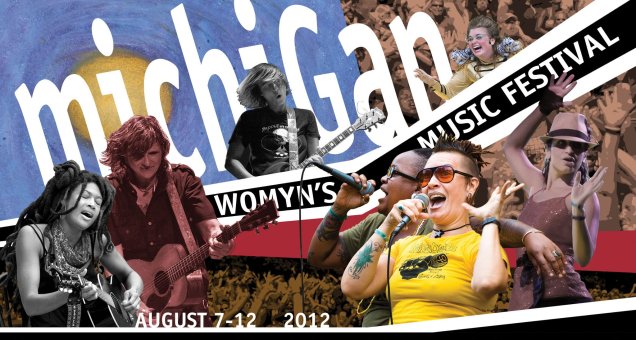
When you’re a woman, going to a festival brings a new set of problems, whether it’s batting off the advances of some limp chirpser in the healing field, or, worse, feeling unsafe in a space that has a serious and unaddressed problem of sexual assault. While some festivals have been attempting to tackle the issue with safety awareness campaigns, sometimes all you want to do is drink and dance in a space where those problems are less likely to occur.
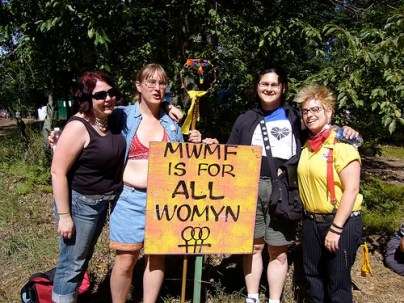
This year at Glastonbury, for the first time, there will be a venue for women only, which will be tucked away in the Shangri-La zone of the festival. The venue itself is ran by an organisation called The Sisterhood, who describe themselves as an “intersectional, queer, trans and disability-inclusive space open to all people who identify as women”. All staff working in the venue will also be those who identify as women, whether they are the acts who are performing, bar staff or security guards.
“The producers of The Sisterhood believe that women only spaces are necessary in a world that is still run by and designed to benefit mainly men,” the festival organisers explained. “Oppression against women continues in various manifestations around the world today, in different cultural contexts.”
“In the UK, the gender pay gap in the workplace, cuts to domestic violence services and sex worker rights are current talking points that highlight this issue. Sisterhood seeks to provide a secret space for women to connect, network, share their stories, have fun and learn the best way to support each other in our global struggle to end oppression against women and all marginalised people, whilst showcasing the best and boldest female talent in the UK and beyond.”
If you think this defence of sexual segregation at Britain’s most popular music festival sounds more like a spiteful two-fingers up at men in general rather a defensive act in response to a specific threat, you would be quite right – The Sisterhood spent more time ranting about the “oppression” of women around the world than fretting about any specific perils faced by women at Glastonbury.
The group dubbed this ‘the 1st ever women only venue’ on Twitter, though the rationale for the space seems less celebratory and pro-women, and frankly, more anti-male.
Still, ISIS would be thrilled with this segregationist nod to their hardline Islamist ideology. Or they would, if only music festivals weren’t themselves haram.
–
Agree with this article? Violently disagree? Scroll down to leave a comment.
The warped philosophy of social justice decrees that good parents are part of the problem, not the solution
For more evidence of the sickness at the heart of our universities, I present the professor from Warwick University – my alma mater – who thinks that parents who read to their children are gifting them with unfair privilege over other kids whose parents are too busy watching Britain’s Celebrity Animals Bake-Off On Ice to lavish their own children with similar attention.
[Professor Adam] Swift in particular has been conflicted for some time over the curious situation that arises when a parent wants to do the best for her child but in the process makes the playing field for others even more lopsided.
‘I got interested in this question because I was interested in equality of opportunity,’ he says.
‘I had done some work on social mobility and the evidence is overwhelmingly that the reason why children born to different families have very different chances in life is because of what happens in those families.’
Once he got thinking, Swift could see that the issue stretches well beyond the fact that some families can afford private schooling, nannies, tutors, and houses in good suburbs. Functional family interactions—from going to the cricket to reading bedtime stories—form a largely unseen but palpable fault line between families. The consequence is a gap in social mobility and equality that can last for generations.
Already this sounds ominous. And though Swift gets his mention of “equality of opportunity” in nice and early, the draconian means by which he wants to achieve this equality are quite something to behold:
‘What we realised we needed was a way of thinking about what it was we wanted to allow parents to do for their children, and what it was that we didn’t need to allow parents to do for their children, if allowing those activities would create unfairnesses for other people’s children’.
The test they devised was based on what they term ‘familial relationship goods’; those unique and identifiable things that arise within the family unit and contribute to the flourishing of family members.
For Swift, there’s one particular choice that fails the test.
‘Private schooling cannot be justified by appeal to these familial relationship goods,’ he says. ‘It’s just not the case that in order for a family to realise these intimate, loving, authoritative, affectionate, love-based relationships you need to be able to send your child to an elite private school.’
Note what Swift has done here. First of all, he posits a dystopian world where “we” have any right to “allow” parents to do certain things or raise their children in certain ways, the corollary to which is that these mystical external authority figures also have the power to prohibit parents from engaging in certain everyday activities.
But worse, he has made an arbitrary judgement with relationship to these “familial relationship goods”. You might think that it is up to individual parents and families to decide what is good for their young ones, or what is most needed to ensure that they thrive and become well-rounded, successful people. But you would be wrong. Because Adam Swift has a definitive list of all the things needed to create a well-behaved, social justice loving adult, and private schooling ain’t on the list.
And that’s when it gets really crazy:
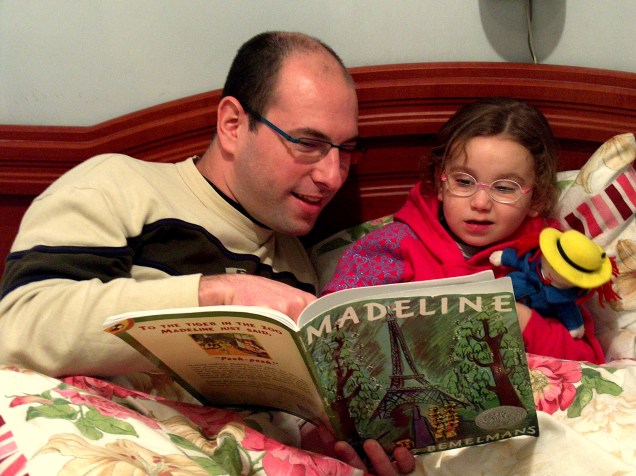
In contrast, reading stories at bedtime, argues Swift, gives rise to acceptable familial relationship goods, even though this also bestows advantage.
‘The evidence shows that the difference between those who get bedtime stories and those who don’t—the difference in their life chances—is bigger than the difference between those who get elite private schooling and those that don’t,’ he says.
This devilish twist of evidence surely leads to a further conclusion—that perhaps in the interests of levelling the playing field, bedtime stories should also be restricted. In Swift’s mind this is where the evaluation of familial relationship goods goes up a notch.
‘You have to allow parents to engage in bedtime stories activities, in fact we encourage them because those are the kinds of interactions between parents and children that do indeed foster and produce these [desired] familial relationship goods.’
How gracious of Swift, allowing parents to continue to read to their children at bedtime, even though the unfair privilege they bestow by doing so eats away at his enlightened, equality-loving soul.
Swift continues:
‘We could prevent elite private schooling without any real hit to healthy family relationships, whereas if we say that you can’t read bedtime stories to your kids because it’s not fair that some kids get them and others don’t, then that would be too big a hit at the core of family life.’
So should parents snuggling up for one last story before lights out be even a little concerned about the advantage they might be conferring?
‘I don’t think parents reading their children bedtime stories should constantly have in their minds the way that they are unfairly disadvantaging other people’s children, but I think they should have that thought occasionally,’ quips Swift.
So by all means continue to read to your children, if you must. But you should feel very guilty while you do so, and chastise yourself once little Timmy has fallen asleep, while meditating on the various ways he will grow up to oppress those unfortunate children whose parents did not read to them.
Which, of course, is the one thing missing from Adam Swift’s “analysis” – any thought or mention of the parents who do not read to their children. As with everything else in the victimhood-soaked world of social justice, where everything must be viewed through a lens of privilege and oppression, only those who work hard and do the right thing are subject to criticism. Those who do the wrong thing, by contrast, are continually excused and stripped of any agency for their own actions – a condescending behaviour which actually does more to dehumanise them than any “harm” they incur from the privileged.
In the entire segment, Swift has no words of reproach for those parents who do not read to their children at bedtime. He neither suggests that this might be through their own fault, or that they need to anything to rectify the situation. It is simply taken as a given that they will continue to be bad parents, helpless to modify their behaviour, and that the only thing society can do in response is to worsen the overall standard of parenting in order to prevent the worst parents from feeling bad or experiencing the consequences of their own actions.
And this, right here, is at the root of our society’s decay. We now simply accept and nod our heads while academics airily consider how best to bring everyone down to the same, lower level of attainment rather than striving to confer as many of the benefits currently enjoyed by the rich (or those with good parents) on all. The insidious Cult of Social Justice and Identity Politics has done its work well, because many of us now look at inequality and feel the instinct to tear the successful down (or at least actively thwart their rise) rather than building others up.
Fortunately, Adam Swift is not about to be given wide-ranging power over how people raise their children. But it is worth noting the type of outcomes which one might get when beady-eyed authoritarianism (where external authority figures “allow” graciously parents to do things) meets the warped Social Justice view of inequality.
For so long as these ideas remain abstract discussions between philosophers, there is limited real-world harm. But when more young people who have percolated in this environment all through university start entering the job market and getting themselves elected to local and national government, we will have a real problem on our hands.
In Britain, the Labour Party is already very hostile to the idea of private schools, while many in the Conservative Party are themselves quite paternalistic and keen for the state to regulate behaviour. And while neither party has not yet succeeded in shoehorning government fully into the parent-child relationship (except for Scotland, where the SNP is making a game attempt at taking over from parents), it may well be only a matter of time.
They are all students attending university in the most powerful and prosperous country on the face of the Earth.
An ocean of possibility stands before each and every single one of these young students, the likes of which can only be dreamed of by millions of children in war torn, impoverished or otherwise benighted parts of the world.
This is a cult.
These people are cultists.
This is what the Cult of Social Justice and Identity Politics hath wrought.
Postscript: To be fair, from the smirks of some of the students in the last video it does appear that they realise deep down that this is all a fraud, that none of them are “chained”, and that this huge collective tantrum from the most privileged generation in history is nothing but a massive insult toward previous generations who really did have to fight, win, and yes, even cast off their chains.









 Semi-Partisan Politics