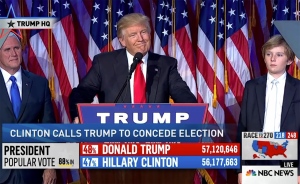
Television News Royalty Receive A Dressing-Down From Donald Trump

Apparently the first post-election meeting between president-elect Donald Trump and the great and the good of America’s television news media did not go entirely smoothly.

The New York Post reports:

Donald Trump scolded media big shots during an off-the-record Trump Tower sitdown on Monday, sources told The Post.

“It was like a f–ing firing squad,” one source said of the encounter.

“Trump started with [CNN chief] Jeff Zucker and said ‘I hate your network, everyone at CNN is a liar and you should be ashamed,’ ” the source said.

“The meeting was a total disaster. The TV execs and anchors went in there thinking they would be discussing the access they would get to the Trump administration, but instead they got a Trump-style dressing down,” the source added.

A second source confirmed the fireworks.

“The meeting took place in a big board room and there were about 30 or 40 people, including the big news anchors from all the networks,” the other source said.

“Trump kept saying, ‘We’re in a room of liars, the deceitful dishonest media who got it all wrong.’ He addressed everyone in the room calling the media dishonest, deceitful liars. He called out Jeff Zucker by name and said everyone at CNN was a liar, and CNN was [a] network of liars,” the source said.

“Trump didn’t say [NBC reporter] Katy Tur by name, but talked about an NBC female correspondent who got it wrong, then he referred to a horrible network correspondent who cried when Hillary lost who hosted a debate – which was Martha Raddatz who was also in the room.”

The stunned reporters tried to get a word in edgewise to discuss access to a Trump Administration.

Wait, and we’re supposed to feel sorry for them?

The pampered Washington television news aristocracy deserve absolutely no sympathy, and while I would much rather they received their dressing down from somebody more worthy of dispensing it than Donald Trump, I can only be glad that the shining ones from CNN and MSNBC were hauled over the coals and made to feel a little bad by somebody.

It was their greed, incompetence, fawning deference to power/celebrity and desperate search for ratings that brought us president-elect Trump in the first place. If CBS’s Les Moonves hadn’t slobbered at the thought of the ratings his network could get just from playing endless rambling footage from Trump rallies during the Republican primaries, if CNN hadn’t been so obsessed with their technical gizmos and determined to report on the presidential debates as though they were heavyweight boxing matches, if MSNBC wasn’t so blatantly in the pocket of the Clinton campaign, then we might not be in this position right now. But they did, and so here we are.

And consequently, Jeff Zucker, Wolf Blitzer, Martha Raddatz, George Stephanopoulos, everyone at CNN and MSNBC and most of the people at FOX (save Chris Wallace, who anchored by far the best of the three presidential debates) fully deserved to receive the hairdryer treatment from somebody (as in being yelled at and belittled, not having their ridiculous TV news hairdos volumized even further).

We need a media that will stand up to power and celebrity and ask difficult questions rather than allowing candidates to trot out rehearsed soundbites, not a bunch of slavish court reporters who instantly switched from curtseying around House Clinton to making an unseemly pilgrimage to Trump Tower to ingratiate themselves with their new overlord.

Like many people, I am gravely concerned about Donald Trump’s attitude toward the media (both in terms of press freedom and the access which his administration is willing to give journalists), but one still has to smile at the likes of Wolf Blitzer being sent packing from Trump Tower with a flea in their ear.

Apparently it is the turn of the print media tomorrow. As a group, they didn’t fall asleep on the job quite as badly as the television guys, but many of them deserve a roasting too. This should be fun to watch.


pop-art-donald-trump

Support Semi-Partisan Politics with a one-time or recurring donation:

Agree with this article? Violently disagree? Scroll down to leave a comment.

Follow Semi-Partisan Politics on TwitterFacebook and Medium.

Donald Trump Victory Reaction: Nicholas Kristof Compares Surviving President Trump To Suffering From Mental Illness

donald-trump-election-victory-protest-your-vote-was-a-hate-crime-banner

No, processing Donald Trump’s election victory is not like recovering from addiction

One of the more painful aspects of Donald Trump’s shock election victory, for me, has been having to watch journalists and commentators whom I have previously respected gradually lose all sense of perspective and become almost offensively hysterical in their overwrought catastrophisation of the election result.

This blog was also very much against a Trump victory, but much of the mainstream media commentary seems to have descended into a nationwide, mutually-reinforcing panic attack, like a group of young kids watching a scary movie at a sleepover and then seizing on every nighttime creak or rustle to convince one another that they are being haunted by the monster from the television.

Godwin’s Law is now being proved with such regularity – by supposedly serious journalists writing above the line, and not just the online commentators beneath it – that cataloguing individual instances of Donald Trump victory catastrophisation has become pointless.

And we are not just talking about the more sensationalist, web-based outlets here. One expects little better from the Huffington Post, Buzzfeed or the likes of Everyday Feminism. But now even the New York Times has fallen victim to the great national hysteria – star columnist Nicholas Kristof can presently be found comparing the forthcoming suffering of American leftists under the incoming Trump administration to the pain of people suffering from addiction and mental illness.

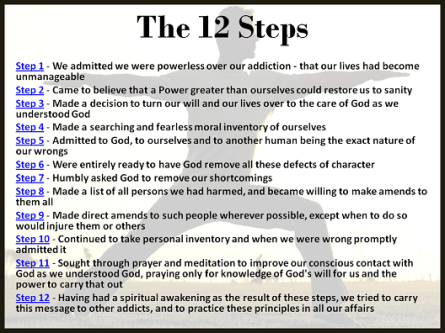
I’m not joking – Kristof has just published a column in which he outlines his own patented “twelve-step program” for coming to terms with a Donald Trump presidency.

Kristof begins:

Traumatized by the election results, many Americans are asking: What now? Here are steps that any of us can take that can make a difference at the margins. Onward!

Traumatised? Really? Isn’t that a word that might be better reserved for veterans who watched their friends killed in action or had their own limbs blown off by IEDs, or the victims of sexual assault and other violent crime? Do we really want to extend that term to encompass the tears and frustration of Hillary Clinton supporters as Donald Trump made a mockery of the opinion polls and won a four-year term as US president?

Some highlights from the Kristof 12-steps:

2. I WILL try to do small things in my own life, recognizing that they are inadequate but at least a start: I will sign up on the Council on American-Islamic Relations website, volunteering to fight Islamophobia. I’ll call a local mosque to offer support, or join an interfaith event. I will sign up for an “accompany my neighbor” list if one exists for my area, to be an escort for anyone who is now in fear.

Because in the blink of an eye and before Trump has even taken office, America has become such a seethingly dangerous place that minorities can no longer walk the streets unaccompanied? Has Nicholas Kristof given absolutely zero thought to how this alarmist, apocalyptic language might be contributing (or indeed be the largest contributor) to the fear which he describes?

3. I WILL avoid demonizing people who don’t agree with me about this election, recognizing that it’s as wrong to stereotype Trump supporters as anybody else. I will avoid Hitler metaphors, recognizing that they stop conversations and rarely persuade. I’ll remind myself that no side has a monopoly on truth and that many Trump supporters are good people who want the best for the country. The left already has gotten into trouble for condescending to working-class people, and insulting all Trump supporters as racists simply magnifies that problem.

Credit where it’s due. Kristof manages something close to magnanimity here, but his call for fellow progressives upset at the election to avoid demonising Donald Trump supporters would be all the more convincing if it didn’t come in the middle of a hysterical article comparing a Trump presidency to living with serious mental illness.

More:

5. I WILL support groups like the Southern Poverty Law Center that fight hate groups, and back the center’s petition calling on Donald Trump to disavow bigotry. Depending on my interests, I’ll support an immigration rights group, the A.C.L.U. or Planned Parenthood. And I’ll subscribe to a newspaper as one way of resisting efforts to squelch the news media or preside over a post-fact landscape — and also to encourage journalists to be watchdogs, not lap dogs.

That would be the same Southern Poverty Law Center which has utterly capitulated to ideological leftist Islamism-deniers, and which has the nerve to place tireless fighters against extremism such as Maajid Nawaz and Ayaan Hirsi Ali on a list of supposed anti-Muslim bigots, in a desperate bid to placate and appeal to goodness knows who.

The ACLU of course does some vital work defending civil liberties, but it too has started to crumble under pressure from the Cult of Social Justice and Identity Politics, and is now just as zealous about protecting non-existent positive “human rights” as defending genuine civil liberties and Constitutional protections. One can still make an argument for joining the ACLU in an attempt to change it from within (it is less far gone than, say, the UK’s Liberty) but somehow I don’t think that this is what Kristof has in mind.

More:

7. I WON’T let it slide if a friend makes degrading comments about a minority or women. Even if it’s over Thanksgiving dinner, I’ll push back and say something like: “Come on! You really think that?!” Similarly, I may not be able to prevent a sexual predator from reaching the White House, but at events I attend, I may be able to prevent a sexual predator from assaulting a drunken partygoer.

8. I WILL resist dwelling in an echo chamber. I will follow smart people on Twitter or Facebook with whom I disagree. I will also try to enlarge my social circle to include people with different views, recognizing that diversity is a wonderful thing — and that if I know only Clinton supporters, then I don’t have a clue about America.

Again, credit where credit is due. We should all have the courage to take a stand where we see overt racism or sexism occurring in front of us. Confronting these bad ideas and exposing them to the unforgiving light of public ridicule is one of the best means of defeating them. But Kristof has clearly attended one “rape culture” seminar too many, and would have us all patrol every party we attend with a pocket breathalyser, pouncing on amorous couples to ensure that no alcohol has been consumed and that the appropriate consent forms have been signed.

It is also laudable that Kristof encourages people to look beyond their own ideological echo chamber and acknowledge the legitimacy and fundamental decency of those Americans who hold sincere political differences. However, one gets the feeling that this “step” might be the stumbling block for many leftists, just as some recovering addicts pause when confronted with Steps 8 and 9 (making amends to those they have harmed). It does not come naturally to many people to expand their social circles to incorporate those with different viewpoints and values – indeed, many people assiduously prune their social circles to achieve the precise opposite in the quest for ideological homogeneity.

More:

11. I WILL take on sexism and misogyny, which in forms like domestic violence, sexual assault and sex trafficking affect women and girls across the country. Even today, Republicans and Democrats should be able to work together to get funding for women’s shelters or to prosecute pimps.

Even today? What is that supposed to mean? That however bad Donald Trump and Republicans may be, with the right outreach it may just still be possible to convince these heartless conservatives that sex slavery, rape and domestic violence are bad things? Well, I should hope so. This wouldn’t even need saying, were it not for the fact that many people who read Kristof’s column have been fed a steady diet of propaganda suggesting that Donald Trump is about to make his own unreconstructed attitude towards women compulsory for all men in the country.

And finally:

12. I WILL not lose hope. I will keep reminding myself that politics zigs and zags, and that I can do more than shout in the wind. I can fight for my values even between elections, and even at the micro level I can mitigate the damage to my neighbors and attempt to heal a social fabric that has been rent.

“A social fabric that has been rent” – a nicely passive way of describing the division in America, as though the Kristof-reading American Left had absolutely nothing to do with the rending of America’s social fabric.

Look: the offensive thing here is not necessarily the content of Kristof’s article or the sentiments he expresses. As I have acknowledged, many of the points are actually very laudable calls for all of us to be better, more engaged citizens – something that this blog heartily approves of, and has long called for. What is really offensive is the fact that Kristof felt it in any way appropriate to compare the disappointment of losing an election with the torment of addiction, that he packaged this collection of decent advice and condescension in the guise of a 12-step program.

Imagine for a moment that Nicholas Kristof had written an article encouraging disappointed Clinton supporters to view the next four years as a painful course of chemotherapy. Imagine the outrage which would rightly be prompted by comparing the pain of electoral defeat with the ravages of cancer. But when it comes to addiction and mental health, apparently everything is fair game. It is perfectly acceptable for wealthy, pampered Manhattanites to compare their suffering to that of people suffering from mental illness.

Or imagine that the positions were reversed and a right-wing columnist had compared the suffering of conservatives under a Clinton administration to people trying to recover from addiction. Again, that columnist would immediately be hauled over the coals by the perpetually outraged Left.

This is another one of those occasions where the decadent metro-left grants itself a waiver from the outrage and opprobrium it would rain down on anybody of more conservative persuasion who dared to do the same thing. It’s fine for Nicholas Kristof to talk about processing a Democratic electoral defeat as though it is in any way similar to working through mental health issues, because he does it for the Greater Good of the leftist cause, but heaven forfend that anybody else speak too casually about a “traditionally marginalised group”.

Do these people have any conception of how hysterical and arrogant they sound?

Go back to Step 3 and do it right this time. Because this is NOT how America will knit back together after the election. Nicholas Kristof should be heartily ashamed of himself.


twelve-12-steps-addiction

donald-trump-presidential-election-victory-speech

Support Semi-Partisan Politics with a one-time or recurring donation:

Agree with this article? Violently disagree? Scroll down to leave a comment.

Follow Semi-Partisan Politics on TwitterFacebook and Medium.

The Myth Of Post-Factual Politics

post-factual-post-truth-democracy

The term “post-truth politics” is starting to become an emotional comfort blanket for those people unwilling to examine the reason for legitimate electoral failure

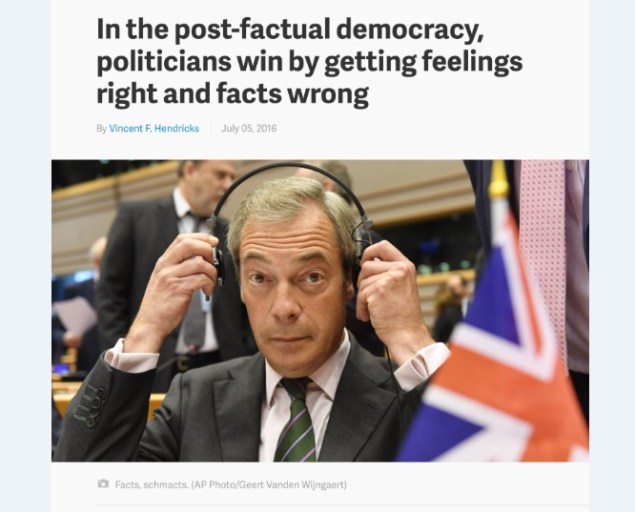
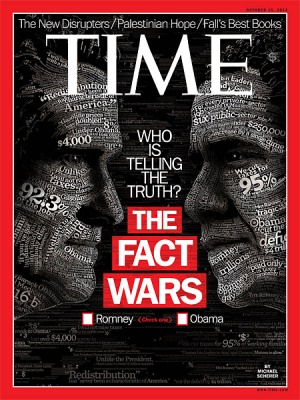
In these interesting times, a lot is being made of the idea that we live in a supposedly “post-truth” or “post-factual” society, where political debates take place and elections are swung not on the basis of evidence and rationality but rather on the basis of bluster and superstition.

Even those of us who supported either Brexit or the election of Donald Trump (this blog was strongly in favour of the former but against the latter) should acknowledge that there is a degree of truth to this criticism of the modern media landscape. As this Buzzfeed article makes clear, when there is a whole industry comprised of people producing inflammatory, fake pro-Trump news articles to earn ad revenue from the clicks of credulous partisans eager to have their existing biases confirmed, something is clearly awry.

But it is also true that dismissing electoral losses as the result of dumb people being duped in a lamentably post-factual world – just as some Trump supporters prepared for defeat by insisting that losing to Hillary Clinton could only be the result of a shadowy conspiracy – is an emotional comfort blanket too easily seized by people who don’t want to do the hard work of understanding why their own ideas were rejected by the public.

I recently attended the debate marking the launch of the 2017 Orwell Prize in London, where the panel – including Polly Toynbee and the excellent Christopher Snowdon – debated the role of the media and of “experts” in the recent EU referendum. Snowdon gives an excellent summary of his own remarks here, and concluded his speech:

Lying may be more morally objectionable, but bullshit is more common and it is just as damaging to public understanding of the world we live in. My argument is not that we are living in a truthful age. On the contrary, there is bullshit everywhere but deliberate political lies make up a very small portion of it – and that portion is not growing.

As long as people have an appetite for having their biases confirmed, newspapers will continue printing bullshit. As long as people think they can get away with it, they’re going to mislead the public. I don’t think we live in the post-truth era because I don’t think there was ever an era of truth. We are still in the pre-truth era and probably always will be.

As the other panellists – Toynbee most forcefully, of course – lamented the way in which the Evil Murdoch Press had supposedly manipulated its uniquely gullible readership with lies and disinformation while Evil politicians like Michael Gove encouraged people to ignore the pro-Remain advice of self-described “experts”, thus causing Brexit, I felt the need to take a stand. So at the appropriate time I seized the microphone and pointed out that wheeling out expert after expert to repeat the establishment line that Brexit would ruin the British economy (as though none of these experts didn’t let their personal biases and preferences colour their opinions) made all other aspects of the decision secondary considerations.

Sky News and the BBC had an endless parade of self-described experts talking about the theoretical economic consequences of Brexit, yet hardly any time was given to experts on governance, democracy, history or constitutional matters. At some point a decision was made that this debate would be All About Economics, and nothing else. One can dispute the dismal predictions of the Remain campaign’s economic “experts” – this blog certainly did – but at least we discussed economics. There was barely a proper discussion about democracy or the constitutional implications of staying or leaving the EU.

This was unfortunately taken by the debate’s moderator to mean that “feelings matter too”, which is not what I was saying at all. My point was that qualitative facts are every bit as important as quantitative ones, and often even more so. I would have expected more sympathy for my viewpoint – among the trendy-lefty, pro-Corbyn crowd at the event were countless people who clearly spend much of their time railing against free markets and capitalism, yet who seem to unquestioningly believe that the slightest potential threat to future GDP growth would make seceding from the European Union in pursuit of democratic renewal a calamitous idea.

When it comes to British membership of the EU, the Remain campaign’s Project Fear spoke only about numbers (and skewed ones at that), with only the occasional bit of fluff about “friendship ‘n cooperation” thrown in as a rhetorical garnish. My point was that in voting for Brexit, it is not that the British people disregarded the numeric facts entirely, but rather that they cared more about other, qualitative facts. Facts to which the Remain campaign never sought to acknowledge, let alone tackle.

The facts vs emotion reduction which met my contribution to the Orwell debate and which now colours nearly all of the media coverage of our supposedly “post-truth society” is therefore a bit too simplistic. There are quantitative facts but there are also qualitative facts – truths which are not based on emotion or hunch or prejudice, but which nonetheless cannot be added up in an Excel spreadsheet, slapped on an infographic and shared on social media.

I voted for Brexit because I believe that the EU actively harms and undermines the democracies of its member states, by deliberate design. I marshalled many facts to back up this position during the campaign – from primary and secondary historical sources, the stated positions of current EU leaders and various other proofs. Just because they are not quantifiable and I could not declare (for example) that leaving the EU will make Britain 11.2% more democratic and give the people 8.4% more control over the decision makers does not make the facts on which I argued my case untrue. And reducing those qualitative facts about democratic control, accountability and the known history and trajectory of the EU as mere “emotion” unfairly diminishes those facts.

When Brexiteers present quotes from EU “founding fathers” speaking of their vision for a federal Europe and tie them to quotes and draft bills from contemporary EU politicians pushing towards the same goals, these are facts. They are not quantifiable, but they are solid facts, much more than mere emotion. And they deserved to be considered and engaged with, yet by and large they were not during the campaign.

Modern politics has become excessively numbers driven. But when the Overton Window is so narrow, the range of policy options so constrained and politics largely reduced to the technocratic management of our public services then that probably becomes inevitable. And we must counter this trend by giving more of a focus to narratives and general principles again. That will lead to greater political engagement.

At present there is far too much self-satisfied criticism of “post-factual politics” in which defeated pro-EU supporters express alarm that people supposedly ignored the only facts available to them and made irrational decisions against their own self interest, and this is not so. There were other, unquantifiable facts which moved people to vote for Brexit. And these pivotal criteria deserve to be acknowledged as legitimate facts, not dismissed as mere emotions.

It is easy and comforting to believe that one’s own side thinks and acts according to reason, logic and evidence while one’s opponents are moved by base emotion, superstition or prejudice. But the divide is very rarely so clear.

And if the “post-truth politics” crowd do not soon realise this and practice some humility, that emotional comfort blanket could all too quickly become a funeral shroud when they next face the electorate.


time-magazine-the-fact-wars

Support Semi-Partisan Politics with a one-time or recurring donation:

Agree with this article? Violently disagree? Scroll down to leave a comment.

Follow Semi-Partisan Politics on TwitterFacebook and Medium.

Donald Trump Victory Reaction: Clutching At Normality In The Age of Trump

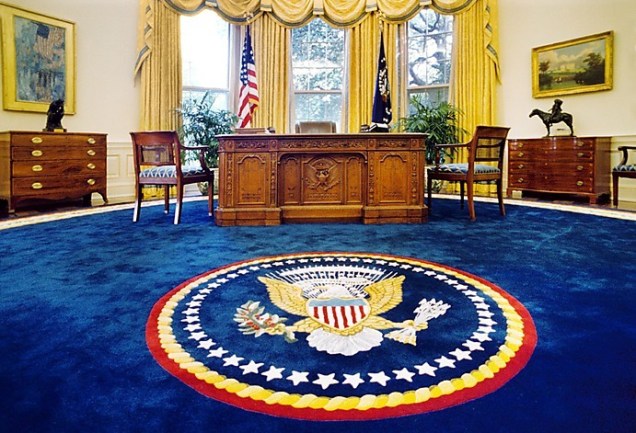
white-house-oval-office-carpet

Using positive reinforcement to steer Donald Trump in a better direction might just work, but only if we stop the blanket hysteria

It is fair to say that the New York Times – which, it always pleases me to remember, not so long ago showed such fawning deference to executive power that they forced their journalists to warp the English language, describing the same actions as “torture” when committed by swarthy foreigners but merely “enhanced interrogation” when conducted by Our Boys – has not taken well to the election of Donald Trump as 45th president of the United States.

But the preface to today’s Opinion Report from the Times, written by David Leonhardt, strikes the right tone and gives some sound advice:

If you opposed Donald Trump’s candidacy, it’s easy to be angry about almost everything he now says or does. When he does something outrageous — like appoint a promoter of racism to a top job — it confirms your fears. And when he does something reasonable — like say he wants to improve the lives of all Americans — it feels hypocritical.

Yet I would still urge people to welcome any step he takes toward democratic normalcy, including those that feel hypocritical.

Trump ran a campaign that was opposed in important respects to American democratic values — and he won. The question that now confronts us is whether our values will change or whether Trump will begin to change.

One of the main reasons that President Obama and Hillary Clinton have reacted to his victory as positively as they have is their desire to move the country back toward democratic normalcy. It’s the right instinct.

I think this is good advice. The endless catastrophisation of Donald Trump’s victory – extending well beyond those areas where we have good reason to fear a Trump presidency toward those where there are no suggestions he intends to make backward steps – is now in danger of doing real harm, not only to the reputations of some of Trump’s most hysterical critics (those who railed against Trump for not committing to accept the election result, and are themselves now refusing to accept the election result) but more importantly to Americans’ faith in their own democracy and electoral system.

During the press pool at their first White House meeting, one could sense the look on Donald Trump’s face that the realisation of what he has wrought is now finally starting to hit. The man who probably didn’t seriously believe he would be in this position, either on the day he announced his candidacy or the day before the election, is rapidly coming to terms with the vast amount of institutional and bureaucratic machinery which he must master, and which will inevitably constrain whatever plans made during the campaign he was serious about enacting.

The mere fact that President Obama spent 90 rather than 15 minutes in that initial meeting walking Donald Trump through the basics (oh to have been a fly on the wall during that American Government 101 session) and plans to hold many more such remedial governance classes with an apparently grateful Trump suggests that the president-elect is finally beginning to accept that there are many things he does not know, and many areas where his administration will need to be guided by the advice and precedent left by history.

And as a reader of this blog pointed out, Americans (and the world) have thrown themselves into a panic before about incoming Republican administrations – with similar accusations of naivety, ignorance and incompetence – only to later have to grudgingly concede that the resulting presidencies were quite good, even historic.

Now, to be clear: I have no such expectations of Donald Trump, who is a tiny fraction of the man that Ronald Reagan was, and certainly nowhere near as faithful a friend to conservatism or the cause of liberty. Real, visceral concern about Trump’s presidency is entirely warranted, especially where it can be eloquently articulated (as opposed to inchoate paranoia) and particularly where its expression closes off doors to some of the more obviously dangerous Trumpian flights of fancy. And of course public protest has an important place in expression opposition to the Trump agenda. But let’s spare the sackcloth and ashes, particularly those of us with public platforms either large or small.

If the goal (for everybody) is to survive the next four years intact and to make Donald Trump’s presidency a successful one for America in spite of the man himself, then we need to ask whether mass hysteria, Trump catastrophisation and total implacable opposition to everything the new administration tries to do is really the best approach, or whether it might be better to provide affirmation and support where Trump does something right combined with forceful dissent and opposition where he or his team stray from an acceptable path, in the hope of teaching the new president some boundaries.

It is quite clear to this blog which is the better option. Keep screaming that everything Trump now does is tantamount to fascism will be like crying “wolf!”, causing the president-elect himself to block out the just criticism along with the superficial, and his supporters to harden in their support for him. We saw just how well that approach worked during the election campaign. Let’s not now make the same mistake during the transition and on into the new administration.

Where Trump does the right thing – even if it means walking back on previous, extreme campaign positions – it wouldn’t hurt to try giving credit where credit is due, at least for a trial period. If we know anything of Donald Trump’s character, it is that while he will take any publicity, good or bad, he much prefers people to think well of him.

And while the Democratic Party and intra-GOP opposition take their time to get organised, Donald Trump’s desire to be admired and respected may turn out to be a very useful constraining factor on his behaviour on office.

Those of us with real concerns about Donald Trump’s presidency should not throw away that potentially vital lever of control in our haste to criticise absolutely everything about the incoming president.


donald-trump-presidential-election-victory-speech-2

Support Semi-Partisan Politics with a one-time or recurring donation:

Agree with this article? Violently disagree? Scroll down to leave a comment.

Follow Semi-Partisan Politics on TwitterFacebook and Medium.

Identity Politics Gave Us President Trump; More Identity Politics Will Not Make Things Better

identity-politics-us-presidential-election-donald-trump-white-working-class

Identity politics cultists created Donald Trump, President-Elect Edition, and from much of their subsequent complaining they haven’t learned a single thing from their mistake

Blogger and polemicist Phil Hendren is in unsparing mood as he takes the identity politics Left to task for their role in provoking the alleged “whitelash” which confounded the opinion polls and made Donald Trump president-elect of the United States last Tuesday.

Hendren’s critique is worth quoting at length, as he writes:

Of course, the political earthquakes have been followed in each case with a sentimental reaction that is both odd and downright scarier than the actual earthquake. This has been coupled with a lack of self-awareness by the losing side.

Be it Brexit or Trump we’ve seen knee-jerk reactions that ponder upon whether democracy is such a great idea after all. Amazingly we have idiots screaming about fascism whilst simultaneously suggesting that something be done about the pesky plebs that voted one way or the other.

They moan about bigotry whilst suggesting that the franchise be removed from certain people who are not suitably intelligent or are too old to be trusted with a vote - call me old-fashioned but that is bigotry right there.

You listen to analysts who say they are “just reporting the data” that tell you Trump scored well with “white males without a college degree”. Has there ever been a more obvious coded dog whistle for “stupid white trash”?

The same thing happened in Britain after the Brexit vote. People started arguing that it was those with less education that voted Leave, the implication being that the stupid unenlightened were to blame.

It astounds me that, as the hand-wringing goes on, there persists, even in defeat, a complete and total contempt for some part of the electorate by the chattering class and the elite.

Don’t they get it? Do they really not see that it is precisely that attitude toward the great unwashed that has caused them to lose? Don’t they also realise that they’re witnessing the ultimate end game of their own orthodoxies?

For the past 20 years, the dominant orthodoxy in the West has revolved around the politics of Identity. We’ve been constantly reminded that humanity should be pigeonholed into groups based on race, gender, sexuality or the Other.

The elephant in the room of this orthodoxy has been the marginalisation of the considered dominant social identity, be it so-called ‘cis-gender’ (essentially a pejorative for someone who’s gender identity is in line with their biology) ; heterosexuals; or good old whitey - aka ‘the oppressor’.

Is it any wonder that these groups have reacted by taking on the clothes of Identity Politics themselves? Anyone that claims to be shocked or disgusted by this development is, to put it as bluntly as I can, a fucking idiot.

If you constantly dehumanise people by making them the sum of arbitrary labels, and then you push the view that each of these groups is structurally disadvantaged by the oppressor then you inevitably structurally disadvantage the oppressor who begins to feel, rightly or wrongly, oppressed.

It isn’t fucking rocket science.

The vote for Brexit and the vote for Trump do not represent some sort of uprising of white supremacy, or the normalisation of misogyny and racism. They represent the inevitable consequence of this misanthropic orthodoxy that has infected the chattering class, the Academy and the elites.

Did I vote for Brexit? No, I was a reluctant (and regretful) Remainer. Would I have voted for Trump? Hell no. He’s an illiberal social authoritarian that supports ridiculous left wing protectionism, but I get why people did.

Until the elite and chattering “enlightened” class begin to realise that they’ve created this. That they are to blame for it, these political earthquakes will keep on coming.

My emphasis in bold.

As an anti-Trump conservative watching the reaction to Trump’s election with amazement and concern, I am absolutely stunned by the lack of introspection and self-awareness displayed by much of the Left.

As this blog has already noted, Donald Trump supporters propelled their man to the White House largely by following the proven playbook of the leftist Social Justice Warriors, and they were able to do so because of the pervasive victimhood culture which has been nurtured and aggravated in America by a succession of cynical politicians and activists.

As Hendren rightly notes, if you atomise society into “separate but equal” identity groups based on race, gender or sexuality, you inevitably spark an arms race of perceived oppression and claims of vulnerability which far exceed the actual real oppression which may still exist. Grievance group is pitched against grievance group in the battle of public sympathy, with only one constant – that “cisgender” white men are always portrayed at the top of the Hierarchy of Oppression, always cast as the villains – whether they live in a New York condominium with gold-plated elevators or an Appalachian trailer park on the outskirts of a town being ravaged by crystal meth and heroin addiction.

I’ve warned about this before, in the context of the oppressive climate faced by young conservatives on college campuses, pointing out that it will not be long before those with conservative views tire of being bullied, censored and portrayed as “hateful” by the social justice mob which the tacit consent of spineless university administrators, and begin to use the same language of vulnerability and victimhood to elicit public sympathy for their own plight. Conservatives see other “identity groups” taking this approach and winning their battles to silence criticism and elevate themselves to a privileged, untouchable position on campus, and already we signs of some harried conservatives adopting the same approach.

So it is outside the university campus too, in wider society. Many millions of decent, non-racist and non-sexist people, often (but not exclusively) white, have been told increasingly stridently that questioning open borders or very recent new norms around gender identity and sexuality is tantamount to “hate” – that they are, in fact, bigots. Leftist identity politics cultists have increasingly deployed the nuclear option accusations of racism, sexism and homophobia against anybody who displays the slightest hesitation in embracing their worldview, leaving no way to distinguish and flag genuinely racist, sexist or homophobic opinions or actions when they occur.

And now we face the worst-case scenario, a white working class which sees other minority groups claiming vulnerability and oppression to demand sympathy and claim perks, and which has decided to think of itself as an oppressed minority group too. A very large, very powerful minority group, as it turns out.

We even get an eerily prescient prophecy that this will come to pass in a 2008 essay by Mark Schmitt in Prospect Magazine, written six months prior to the election of Barack Obama in his battle against John McCain.

Schmitt suggests:

That leaves Republicans with a single alternative, one that’s embodied in the slogan of McCain’s first general-election advertisement: “The American President Americans Are Waiting For.” It’s the politics of identity–not necessarily racial or ethnic identity but identity as an American. The blog FiveThirtyEight.com, which has been gathering all sorts of data relevant to the Electoral College vote, recently noted a fascinating demographic fact: About 7 percent of people refuse to answer the Census questions about ethnic origin and instead write in “American.” Those defiant Americans are overwhelmingly found in the states and counties that turned away from the Democratic Party in 2000 and 2004–the Appalachian belt running from West Virginia through Kentucky, Tennessee, and southern Ohio–which are also the counties where Barack Obama has done worst in the primaries.

David Frum calls explicitly for this brand of identity politics, declaring that while the Republican Party’s issue positions have evolved over the years, “there is one thing that has never changed: Republicans have always been the party of American democratic nationhood,” whereas Democrats “attract those who felt themselves in some way marginal to the American experience: … intellectuals, Catholics, Jews, blacks, feminists, gays–people who identify with the ‘pluribus’ in the nation’s motto, ‘e pluribus unum.'” In case it’s not clear, in Frum’s Latin, “pluribus” means “parasites,” and he tells us helpfully, “As the nation weakens, Democrats grow stronger.”

In Frum’s book, this ugly bit of identity politics is carefully nestled within thousands of words about policy. And this is how the code is supposed to work. The GOP’s attack on “liberals” was always an attack on people not quite like “Americans”–secular, cosmopolitan, educated, egalitarian.

[..]

Traditionally, the phrase “identity politics” has referred to the Democratic coalition’s caucuses, interest groups, and competitive claims of wrongs to be righted and rights to be granted. Identity politics on the left, according to this very conventional wisdom, opened the door to an alternative politics of national identity on the right. And yet in 2008, the Democratic presidential nomination battle between an African American and a woman has not exacerbated left identity politics but brought it to a peaceful close. Obama is not Jesse Jackson; Hillary Clinton is not former Rep. Pat Schroeder. He chose to campaign on national reconciliation, she on bread-and-butter economics and her expertise on military affairs. Whereas McCain–a man whose known positions on the war and on the economy are deeply unpopular, whose other positions are endlessly shifting, whose party and ideology are rejected–is recast entirely in terms of his biography, his honor, his character, his American-ness.

This year the Republican argument is reduced to its barest essence: Americans versus “pluribus,” unprotected by the politeness of issues or safer symbolism. Hence McCain’s slogan, the politics of the flag pin, the e-mails charging that Obama doesn’t salute the flag, and the attempt to associate him with the anti-American politics of 1968, when he was 7 years old. This, then, may be the ultimate high-stakes gamble for the party of confident risk-takers: Accept that everything else–ideas, competence, governance–is gone, and instead of trying to reconstruct it, as the books recommend, bet everything on the bare essentials of Republican identity politics, “The American President Americans Are Waiting For.”

“The American President Americans Are Waiting For”. “Make America Great Again”. Schmitt wasn’t too far off in his prediction of the winning message, albeit eight years later than originally planned.

Read the whole article if you have time – the foreshadowing is quite spooky.

This is in significant part why Donald Trump will be taking the presidential oath of office on 20th January 2017 – because the American Left succeeded in shattering American society into a fractured group of warring special interests and victim groups, claiming nearly all of them for its own side but leaving the largest – the white working class – to the Trump-led Republicans.

And still they don’t see it. Still they rail against the ignorant, inbred hicks with their backward, racist ways. Still they treat the plurality of Americans who voted for Donald Trump as stupid, unwitting enablers of fascism (at best) or actively hateful “deplorables” at worst, unaware that every further such comment only serves to prove to the white working class that they are indeed under attack, and that they were right to band together and vote based partly (even largely) on the solidarity of identity.

At some point, somebody fairly prominent on the American Left is going to have to wake up, reach this conclusion and then have the courage to stick their head above the parapet and urge their fellow travellers to stop their destructive course of action. With their hysterical anti-Trump rhetoric, the American Left not only obscure Donald Trump’s many real and tangible flaws, they actively feed the monster which they fear the most.

Now that the populist Right are catching up with the new rules of the game, playing the identity politics card is turning into something approaching Mutual Assured Destruction. Sure, you can do it, but pandering to the politics of identity is now all but guaranteed to provoke an equal and opposite reaction from those being singled out as oppressors. And whoever wins on any given day, the country is left more divided, more bitter and less able to knit back together with goodwill when it comes time to govern.

The American Left needs to step back from this madness. Now.


white-trash

Support Semi-Partisan Politics with a one-time or recurring donation:

Agree with this article? Violently disagree? Scroll down to leave a comment.

Follow Semi-Partisan Politics on TwitterFacebook and Medium.