The BBC reports that French president Francois Hollande has been accused by a French magazine of having an affair with a 41-year-old actress, Julie Gayet. The article reveals:
The magazine’s print edition came out on Friday and shows pictures it claims support the rumours that the 59-year-old president routinely spends the night with Ms Gayet at a flat not far from the Elysee Palace.
The pictures show the pair arriving separately. Mr Hollande, wearing a helmet, is on a motorbike driven by a chauffeur.
The magazine claims the president’s bodyguard arrives the following morning to deliver croissants.
I like the detail of the morning croissants. Even if one is sneaking out of the Elysee Palace late at night to get some action, one still needs a decent continental breakfast so as to appear statesmanlike again the next morning.
Just as with the fictional American President Grant in the US drama “Scandal”, skulking around the capital city in the dark with limited protection, exposing oneself (and the secure, uninterupted governance of one’s nation) to any risk of kidnapping, physical harm, blackmailing or worse in the pursuit of a booty call, is probably not behaviour that voters would wish to see in a serving head of state. Transgressions which take place before taking office, honestly explained, atoned for and forgiven by the electorate, are one thing. Actively committing further such acts whilst in office is another matter entirely.
The BBC article reports that though Hollande is making noises about potential legal action against the magazine Closer, he does not deny the specific allegations of the affair.
Although, if ever proven true, this would represent a severe lapse in acceptable personal standards of behaviour, and of presidential decorum on the part of Hollande, the solitary refreshing fact (if that term may be used) in the sordid allegation is that Francois Hollande does not continually preach to his people about the sanctity of traditional marriage in the way that some politicians in the UK, but particularly America, insist on doing.
In contrast to the likes of Newt Gingrich or Rudy Giuliani, both adulterers with serial failed marriages to their names, the French president does not devote his every waking hour to fretting about the potential impact of allowing gay people to wed on the institution of holy matrimony.
And for not adding his voice to the hypocritical cacophony of self-righteous moral preaching, we still owe Francois Hollande our thanks.
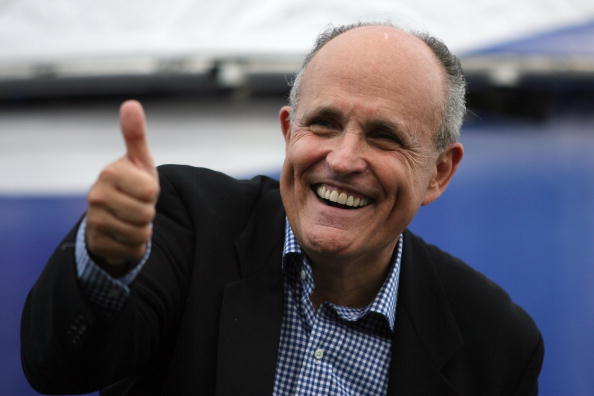
You don’t want to know why Rudy Giuliani is smiling.
Riddell informs us that our economy is in the doldrums, our foreign policy is a shambles and we are actively alienating the very people who we need to come riding to our rescue:
…the issue of Britain’s global influence should preoccupy every parliamentarian.
Our current position is not hard to plot. Hiding under a duvet of doubt and debt, Britain – so recently the buccaneer of the world – has become insular to the point of agoraphobia. Recession and hardship at home have made the UK a nation of political navel-gazers. The cost-of-dying debate, over whether we could possibly justify the cost of our wars, has been superseded by a cost-of-living crisis: gas bills have supplanted gas masks.
According to this defeatist and self-flagellating line of argument, it is Britain, the weak country, which needs to curry favour with her European neighbours, and not the other way around. Apparently it has gotten so bad that as a nation we are now suffering from some kind of identity crisis:
But inward-looking politics are bolstering, rather than reducing, Britain’s identity crisis. With power ebbing away abroad and the spectre of Scottish independence at home, Britons are wondering: who are we?
This comes as news to me, and probably to many other people who feel comfortable in our national identity and don’t feel the need to vex themselves with recurring thoughts of national inferiority or separatism.
I seem to remember urging against this type of declinist, pessimistic, self-defeating talk only very recently in “Why Britannia Rules”, but my small backwater blog has clearly made no impact on the mood of feeling in the British commentariat. As I said then, when everyone was tearing their hair out and prophesying the end of Britain after Parliament voted against military action in Syria:
We are British. We are a great country. Our economy may still be in the toilet, and we may be governed at present by dilettantish non-entities in the mode of David Cameron, George Osborne and Nick Clegg, but these things shall pass. And when they do, Britain will still be a great country.
What I wrote was true then, and it is true now. But this is where Mary Riddell really loses the plot:
With dangers abroad and our economic destiny far from assured, it is imperative that Britain should re-establish its identity and global niche. The irony is that our best hope is the one that politicians hesitate to flaunt, and that many citizens revile. The EU remains the largest single economy in the world, has the second biggest defence budget after the US and boasts the diplomatic muscle recently used by its (previously maligned) foreign policy chief, Baroness Ashton, in helping to secure the recent Iranian nuclear pact.
In what precise way has Britain lost her identity? Did this happen while I was sleeping?
The EU may indeed remain the largest economy in the world, but it is not the “largest single economy”, as Riddell and anyone with the slightest knowledge of current divergent conditions in Greece and Germany knows all too well. Whether we swoon with delight over our membership of the European Union and ever-closer union with our continental neighbours or chafe at the smothering bureaucracy of the whole project and yearn to leave, we still trade with the EU. And contrary to the shrieks of some scaremongers, even if Britain were to leave the EU, this trade would cheerfully continue by necessity and mutual benefit. Some unscrupulous commentators phrase their warnings in such a way as to leave the impression that all of Britain’s trade with Europe would cease and disappear in a puff of smoke if we were to leave the EU, a ludicrous and obviously nonsensical notion.
And are we really going to start talking national defence as a reason to lash ourselves ever tighter to the mast of the European Union? The EU may have the second biggest defence budget after the US, but this is a meaningless fact when you consider the obvious fact that the member states of the EU do not act with one common military purpose. Indeed, of the EU member states it is really only Britain and France that possess any capability to project significant force without airlift or blue water navy support from the United States. Furthermore, Britain’s military actions in recent years have primarily taken place either through NATO or in concert with our chief ally, the United States. It is hardly as though we would be putting any much-loved and time-tested military partnership with the Europeans at risk by disengaging from the EU, as no such partnership exists.
We are then supposed to believe that Britain is in danger of severing herself from some great source of “diplomatic muscle” as a result of our ambivalence about Europe. But I could well point out that weighing against Riddell’s one example of EU foreign policy success (Baroness Ashton’s help in securing the recent Iranian nuclear pact) are the many times when other powers have looked at the incoherence or tense nature of European joint foreign policy and either laughed at it, rudely dismissed it or used it as an opportunity to divide and conquer.
Then comes the obligatory “but of course there are a few small issues that need ironing out” remark in reference to the EU’s many flaws, together with the standard plea to refrain from throwing the baby out with the bath water:
While no one doubts that reforms are needed, EU membership makes us an influential part of the largest global trading bloc. As Douglas Alexander, the shadow foreign secretary, and Ian Kearns write in their new book, Influencing Tomorrow, the EU is “not just an instrument for amplifying our power, but also for promoting peace and security and defending democracy and human rights”.
I can only despairingly repeat (as though to a brick wall) the fact that Britain, as one of the world’s few truly indispensable nations, would remain strong and secure whether or not we are an “influential part of the largest global trading bloc”. Indeed, I would further argue that we are not, have not been and are unlikely to become as influential as we should be within an EU structure which gives veto power to countries which are relative minnows or which have strongly divergent interests to Britain’s, and that by freeing ourselves from the yoke of so much European regulation and counterproductive harmonisation attempts we would have the potential to soar higher and achieve even more. But Mary Riddell seems too afraid of the world and too doubtful of Britain’s enormous advantages and assets to ever acknowledge this possibility.
None of this is to say that the right answer is for Britain to leave the European Union under any and all circumstances. It is just to point out that there needn’t be such a bone-chilling fear of secession and the idea of Britain standing on her own two feet like so many other sovereign nations manage to do. It is partly this fear that colours and undermines our relationship with the EU, and makes the current raw deal that we get from our membership a self-fulfilling prophecy. If our European partners believe that we are desperate to remain a part of the club at any price, the price that they are certain to demand and extract from us in each and every nation will be that much higher.
So rather than running into the arms of the EU in a scrabble to find identity and protection, as Riddell advocates in her less-than-stirring peroration, we should actually embrace some of the insularity (if we must call it that) that so many of the commentariat class seem to scorn, at least in terms of our approach to the European Union.
In order to prosper, Britain must look inwards at ways to release our own inherent national dynamism and competitiveness, rather than outwards for reassurance and protection in a world which will surely offer neither.
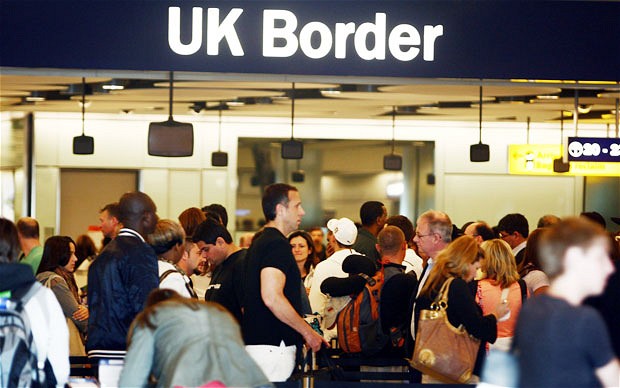
James Kirkup, writing in The Telegraph, asks “How much would you pay to reduce immigration?”, in an article praising UKIP’s Nigel Farage for making the supposedly bold proclamation that he would rather be slightly less well-off in return for lower levels of immigration into the United Kingdom – in other words, that he is willing to pay out of his own pocket to reduce immigration.
[Farage] added: “If you said to me, would I like to see over the next ten years a further five million people come in to Britain and if that happened we’d all be slightly richer, I’d say, I’d rather we weren’t slightly richer, and I’d rather we had communities that were united and where young unemployed British people had a realistic chance of getting a job.
“I think the social side of this matters more than pure market economics.”
Kirkup, who considers this to be a “genuinely interesting” way for Farage to reframe the debate, phrases the quandry this way:
How much economic growth should we give up? How much of your fellow citizens’ prosperity, are you willing to sacrifice in order to cut the number of people entering Britain from abroad?
To be precise, how much — to the nearest £1, please — would you pay to reduce immigration?
Unfortunately, by accepting Farage’s premise that immigration is harmful in all spheres other than the economic – and the idea that immigration must automatically be a negative thing, a cause for concern or something to be ameliorated.
This is yet another argument where the two opposing sides seem to argue back and forth over an irrelevant distraction rather than the main issue. Why is it that immigration has, at times, led to divided communities and fractured society? Why must it be that immigration puts the young British unemployed at even more of a disadvantage? If only we could begin to address and turn around these key issues, surely the matter of net immigration into the UK would cease to be of almost any importance at all.
For example, we should re-examine how Britain can better to integrate and assimilate new immigrants into our society, avoiding the mistakes of countries such as France and learning from those such as the United States. How can we ensure the right balance between providing support and assistance to help new arrivals find their feet and integrate into society, and using “tough love” where necessary to ensure that the state is not enabling immigrant communities to isolate and refuse to become part of British society?
We should take a long, hard look at our education system and parenting culture and ask why it is that a young adult born and raised behind the iron curtain in an economic, political and social environment far less prosperous and nurturing than that of the UK is so often preferable, in the eyes of so many reputable and rational employers, to a British-born young jobseeker who has enjoyed all of these advantages.
And yes, we should look at the topics of welfare and the terms of our relationship with the European Union, and decide whether allowing brand new economic migrants to our shores to benefit from the welfare system that the rest of us have paid into over a longer period is really a cost that we are willing to continue to pay in order to maintain our EU membership in its current form.
None of this debate will happen as long as we accept the premise that economics aside, immigration is an inherently bad thing – to shrug our shoulders and go along with Nigel Farage’s line of reasoning, as James Kirkup and others do so willingly.
How much would people pay to have an informed debate about the real social, educational and economic issues around immigration? More than our politicians and media seem to realise.
The Guardian trails a new Labour proposal for “debt-free degrees” for up to 50,000 students per year, an idea which may well end up in the Labour party’s 2015 general election manifesto. The Guardian’s political editor, cheerleading the idea, claims that this scheme will “tailor university education more closely to the needs of business and young people”. Of course, it doesn’t take long for the enquiring mind to begin picking holes in the concept.
From the top:
Under the scheme, people in employment will be able to study for a degree relevant to their existing and future work, with the costs being paid jointly by government and their employers. The degrees would carry no fees and the in-work students would receive a wage or training allowance from their employer during their period of study.
There is a world of difference between a short course designed to brush up an employee’s computing skills, or even a slightly longer and more involved course in a field such as project management, and the rigorous demands of a university degree. Whilst an employer may see the immediate short-medium term benefit in paying for their staff to undertake the former on company time, it would be a generous boss indeed who would take the dual hit of lost working time and course fees to fund a whole degree.
The costings for the proposal are worked out with the astonishing level of detail and realism that we have all come to expect from Labour under Ed Miliband’s leadership:
Denham, who will outline the plans in a lecture to the Royal Society of Arts on 16 January, says the government’s financial contribution will be found by redirecting money currently spent on writing off unpayable student debt from fees and maintenance loans, and on student grants.
I have read this sentence through several times, and if it makes any more sense to a reader than it does to me, I would love to have the translation in plain English. You don’t “spend money” writing off debts from unrepayable student loans. And if John Denham, the policy’s champion, is suggesting that the £3bn shortfall between expected and actual repayments on student loans over the course of the next parliament can be easily resolved by tracking down students who have moved abroad and shaking them down for money, or by waving a magic wand and making graduates suddenly earn income above the £21,000 threshold so as to become eligible to make repayments, then I will take this as just another sad sign that Her Majesty’s Loyal Opposition has no grip on economic reality or the way that public finances work. Whenever we are told that the money for some policy “will be found by redirecting money currently spent on…”, I take it as seriously as I would if Denham told me that he would fund his policy through “efficiency savings”.
There is then, of course, the question of the nature and value of these new degrees, were they to be taught in the classroom. If, as the Guardian claims, they are to be closely “tailor[ed] … more closely to the needs of business”, the degrees are likely to be highly specialised, with much less transferability to other fields of work than more generalist degrees. Indeed, any sensible employer acting in their own interests would be almost certain to demand this – if you are going to pay for someone to get a degree, it is in your interests as an employer to make sure that that degree will be of maximum use to the employee whilst they are working for you, and as little use to them as possible when they come to take that degree and use it elsewhere – so as to act as a deterrent to leaving.
But seeing only the positives, Denham imagines that business will embrace the idea of paying for their employees’ qualifications:
Denham says the proposals will prove attractive to many businesses as they will save money on recruitment and retention, having trained handpicked staff. They will also save on in-house training costs. Employers and students will also be able to shape the courses to ensure they are relevant.
But apparently under the precursor to this policy, employers were expected to contribute £3000 towards tuition costs, and would also be expected to pay a wage or training allowance to their employees as they studied “intensively over two years” or longer. I find it hard to imagine that any savings on recruitment, retention or in-house training will be sufficient to make incurring these expenses an attractive option.
The Guardian further joins the Labour Party in proclaiming that the new policy proposal is in direct response to demand from industry and the private sector, as the article continues:
The ideas are likely to be welcomed by business groups. Last July the CBI said both universities and businesses needed to be more imaginative in the way they provided high-quality education that was relevant to the country’s economic needs, and affordable for young people.
The accompanying link in the Guardian article in support of this assertion does not work, which is probably no accident. Although the CBI and others are right to acknowledge that the standard A-levels and three-year degree route is not sufficient to meet the recruitment needs of the British economy in 2014, this is a long way from a plaintive call for the kind of policy that John Denham wants to enact, and it is sneaky in the extreme for the Guardian to shoehorn in this unrelated quote from the CBI’s policy director:
Katja Hall, CBI policy director, said: “The UK needs to vastly increase the stock of workers with higher-level skills to drive long-term growth and stop us falling behind our competitors. We need to tackle the perception that the A-levels and three-year degree model is the only route to a good career.
Acknowledgement of this simple fact by the CBI is a good and obvious thing. Of course rewarding and well-paid careers can be achieved through many routes, and alternatives to the standard path should always be sought and encouraged where they could be of greater benefit to people. But to take this broad and nonspecific statement made by the CBI last year and try to bend it in support of a specific (and particularly ill-thought out Labour policy) is manipulative and disingenuous.
It does not bring me great joy to pick apart a policy supposedly intended to address a real problem – a significant and growing skills gap between the demands of industry and the abilities of those entering the workforce. But this proposal appears completely unworkable to me. In order to get business to embrace it in any large number, it seems to me that the the conditions would have to be so onerous – in terms of the narrowness of the degree (more akin to a vocational qualification) and the period of time to which the employee is beholden to work for the employer following graduation – that no student in their right mind would sign up. And if Labour do get into government in 2015 and enact the policy in a way that is remotely appealing to potential students, the cost to the employer would be such that very few firms (aside from those wishing to curry special favour with the government in order to achieve other ends) would be likely to subscribe.
If anyone finds my thinking to be flawed, or can argue that this Labour proposal is anything other than an empty, unworkable vessel designed to launch the phrase “debt-free degree” into the public consciousness ahead of the next election, I would be very keen to hear from you.
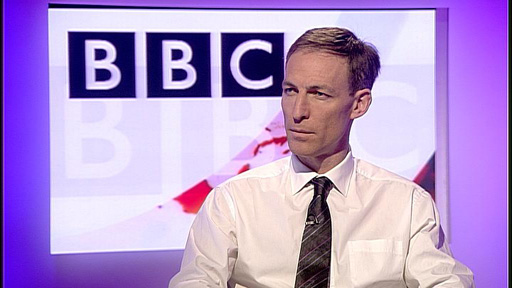
After a day enduring the speeches at the 2013 Labour Party Conference in Brighton, I am rapidly coming to the conclusion that Jim Murphy MP, the shadow Defence Secretary, is the sole saving grace in Ed Miliband’s weak shadow cabinet.
Aside from the much-heralded rollout of a redundant proposal to specifically criminalise attacking a member of the armed forces, his speech – delivered without notes or teleprompter – was the best thing of the day:
Murphy rightly calls out the current government for their mistakes in defence policy, and though Labour’s record in this area is hardly stellar, he manages to land some punches that will hurt the Tories and which should give them serious pause for reflection as to their own conservative priorities and supposed natural affinity with the armed forces.
In so doing, he also managed to tick off an impressive list of Labour policies and pledges, as yet unmatched by the Tories, which would naturally appeal to service members and their families.
Legal aid and entitlements for veterans.
In-service education for serving troops.
Codifying the armed forces bill of rights in the Labour Party rule book.
Denouncing the decision to make tens of thousands of experienced veterans redundant while expecting their roles to be backfilled by reservists in the TA.
Mocking the lamentable fact that Britain’s new aircraft carriers will enter service years before the jets capable of flying from them.
Rightly calling out the government for failing to address the disastrously bloated and inefficient defence procurement system.
In their zealousness (but not effectiveness) to reduce Britain’s budget deficit and roll back the size of the state, the Conservative/Liberal Democrat coalition government has undeniably weakened Britain’s armed forces and military readiness, and Jim Murphy did well to draw blood on all of these points.
It is still a bit rich for Labour to try to seize the mantle of being the party of the armed forces, but Jim Murphy is a talented and competent politician with an obvious affection for and affinity with the military. He may not have owned up to Labour’s own past failings in the defence sphere – no one in the shadow cabinet has managed to do that – but he is no dove, and he clearly has his eye on the future.
Based on his recent performance, Jim Murphy would be a solid pick for the Labour party leadership after Ed Miliband has finished leading them into electoral oblivion.





 Semi-Partisan Politics