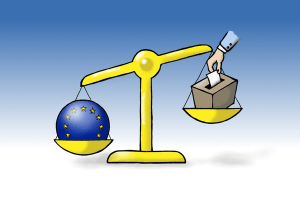
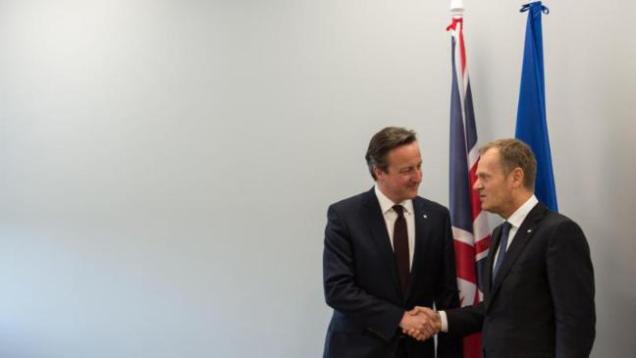
Left Wing Eurosceptics – An Endangered Species Flirting With Extinction

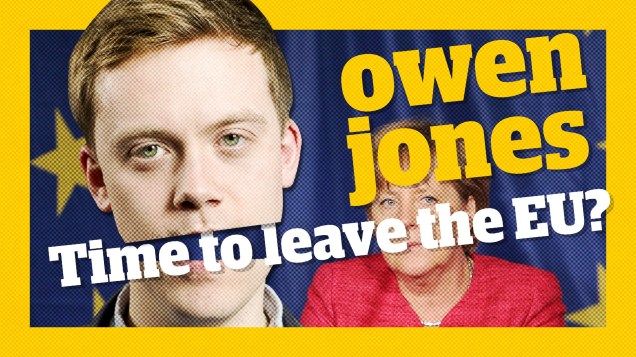
Owen Jones - The left must now campaign to leave the EU - Brexit

Many left-wing Remain supporters have no great love for the European Union, but nonetheless want Britain to remain subservient to Brussels as a means of inflicting left-wing policies on a reluctant Britain. And they call themselves champions of democracy!


“We must be clear about this: it does mean, if this is the idea, the end of Britain as an independent European state. I make no apology for repeating it. It means the end of a thousand years of history. You may say ‘Let it end’ but, my goodness, it is a decision that needs a little care and thought.”

– Hugh Gaitskell, speech to 1962 Labour Party Conference


Pete North, in a justifiably bitter tirade aimed at that group of British left-wingers who persist in stubbornly supporting the EU and campaigning for Remain against their better instincts, writes:

I don’t think I can win over leftists to the Brexit cause. They keep saying “If we leave the EU, the Tories might do stuff I don’t like” – which roughly translates as “I don’t want to live in a democracy where the government responds to the views and wishes of the public”. It also translates as “I am happy to deprive others of the right to choose because my politics are superior”. There’s not really much I can say to that. Traditionally, people like that are wearing uniforms and we shoot them rather than engage in polite discourse. What worries me is that if these people get their way, eventually they will be wearing uniforms and we will have to shoot at them.

Absolutely.

If you ever wanted proof of the British Left’s paper-thin commitment to democracy, you need only compare these two paragraphs from Owen Jones – one written when he was flirting with euroscepticism last year as the Greek euro crisis was at its peak, and the other shortly after David Cameron declared victory in his “renegotiation”.

First, Jones in Grexit mode:

Even outside the eurozone, our democracy is threatened. The Transatlantic Trade Investment Partnership (TTIP), typically negotiated by the EU in secret with corporate interests, threatens a race to the-bottom in environmental and other standards. Even more ominously, it would give large corporations the ability to sue elected governments to try to stop them introducing policies that supposedly hit their profit margins, whatever their democratic mandate. It would clear the way to not only expand the privatisation of our NHS, but make it irreversible too. Royal Mail may have been privatised by the Tories, but it was the EU that began the process by enforcing the liberalisation of the natural monopoly of postal services. Want to nationalise the railways? That means you have to not only overcome European commission rail directive 91/440/EEC, but potentially the proposed Fourth Railway Package too.

Other treaties and directives enforce free market policies based on privatisation and marketisation of our public services and utilities. David Cameron is now proposing a renegotiation that will strip away many of the remaining “good bits” of the EU, particularly opting out of employment protection rules. Yet he depends on the left to campaign for and support his new package, which will be to stay in an increasingly pro-corporate EU shorn of pro-worker trappings. Can we honestly endorse that?

And here he is last month, falling into line with the Remain crowd:

Last July, I suggested that the left should at least consider Brexit, not least because Cameron believed left-leaning voters were in the bag for an “in” vote, giving him little incentive to preserve the progressive elements of the EU. My view is now to stay in, but unite with those across the continent – like the former Greek finance minister Yanis Varoufakis’s new movement – who want a democratic EU run in the interests of working people.

[..] People like me can say: like you, I was sceptical. I’m no pro-EU ideologue, but a genuine floating voter. I understand your concerns. But I’ve come to the conclusion that we must remain in the EU, as a first step to the reform it so desperately needs.

In other words: democracy is a great and noble thing to be defended when it is delivering good old fashioned left-wing policies and high-taxing, high-spending governments. But when the people look like they might be about to vote for anything centrist or right-wing, the Left disown democracy at lightning speed, and embrace any and every procedural or bureaucratic obstacle which might thwart the people’s wishes.

Owen Jones is a smart cookie. He knows the true nature and purpose of the European Union, just as he knows that any “reform” or democratising of the EU is impossible because it would go against the very purpose of the organisation (the creation of a supranational and unaccountable layer of government above the nation state, freeing European leaders to make decisions and implement policies that their own electorates would never otherwise permit).

So when Owen Jones “saw the light” and came out in support of the Remain campaign, it wasn’t because he had suddenly found reason to hope that the EU can actually be reformed. No, it was purely and simply because cold hard political calculus told him that while the European Union may be a “neoliberal” dystopia for lefties, an independent Britain with conservative government would be far worse.

Jones changed his tune because he realises that a conservative government in an independent Britain might – shock horror – implement conservative policies desired by the voters, and the Left would have no means of undemocratically preventing it.

As a strategic piece of hard-headed and pragmatic realpolitik, you can’t fault the vanishing armies of left-wing euroscepticism for their tactical retreat. But as self-styled morally virtuous warriors for social justice and democracy, their hypocritical stance on Brexit stinks to high heaven.


Brexit - EU Flag

Agree with this article? Violently disagree? Scroll down to leave a comment.

Follow Semi-Partisan Politics on TwitterFacebook and Medium.

Brexit: How Much Democracy Would You Sacrifice To Reduce Uncertainty?

Brexit - European Union - Democracy - Uncertainty - 3

How much democracy would you give away in the hope of greater short term stability?

Our glorious leader has taken to the pages of the Sunday Telegraph today to offer his standard stump speech, talking down Britain’s prospects as an independent country.

Focusing exclusively on the (mostly) short term costs of Brexit whilst determinedly overlooking the costs of remaining in a relentlessly integrating political union, David Cameron warns:

A year ago, the Conservative election manifesto contained a clear commitment: security at every stage of your life. Britain is doing well. Our economy is growing; unemployment is falling to record lows.

We need to be absolutely sure, if we are to put all that at risk, that the future would be better for our country outside the EU than it is today.

There is no doubt in my mind that the only certainty of exit is uncertainty; that leaving Europe is fraught with risk. Risk to our economy, because the dislocation could put pressure on the pound, on interest rates and on growth. Risk to our cooperation on crime and security matters. And risk to our reputation as a strong country at the heart of the world’s most important institutions.

And in other utterly astounding and headline-worthy news, a group of finance ministers from the world’s leading economies released a statement yesterday, sombrely declaring that Britain leaving the European Union would represent an economic shock.

Or as the Telegraph tells it:

The global economy will suffer “a shock” if Britain votes to leave the European Union, the world’s 20 leading nations have warned.

In a joint statement, finance ministers from the G20 group of major economies unanimously agreed that the risk of “Brexit” posed dangers for international stability.

George Osborne, who is attending the meeting of central bankers and ministers in China, said the danger of a Leave vote on June 23 would represent one of the gravest threats of 2016.

In what will be seen as a coded attack on Boris Johnson, who is campaigning to leave, he added that the leaving the EU would not be “some amusing adventure” but a serious threat to Britain and the world.

Well, that’s it then. Quest for democracy and self-governance cancelled. Call off the referendum and put away all those naive thoughts of Brexit, because the world financial markets don’t like the idea very much, and what’s best for an American hedge fund manager automatically trumps your right to self determination.

Why, oh why do those awful eurosceptics and Brexiteers persist with their alarming and selfish calls for an end to undemocratic, unaccountable, supra-national government? Can’t they see that they are creating economic uncertainty? Won’t somebody please think of the children?

This, by the way, is the same George Osborne who insisted that “we rule nothing out” when it came to possibly campaigning for Britain to leave the EU, until the conclusion of the so-called renegotiation. This opens up the hilarious thesis that while the Chancellor of the Exchequer believes that Brexit would be unspeakably traumatic for Britain and for the world economy, he was nonetheless prepared to recommend that we quit the EU and flirt with so-called disaster, had Britain not secured that precious reminder that we are already under no obligation to adopt the euro (one of our renegotiation “victories”).

If George Osborne is so desperate to warn us that Brexit would not be an amusing adventure, why was he willing to publicly countenance Britain leaving the EU in the event that he and David Cameron failed to win their puny basket of concessions from Brussels? If Britain leaving the EU would inevitably be such a disruptive and traumatic event, why did they insist that nothing was off the table if they didn’t get what they wanted?

But put all of that to one side. The more fundamental question we have to ask ourselves is whether we are happy for every key decision about our civic life to be determined purely by economic forecasts. And not necessarily detailed or well researched forecasts at that, but rather by unverifiable assertions about fickle market sentiment – which inevitably prioritises the short term over the long term, and which can put a price on risk but not on democracy.

A man walks past various currency signs outside a brokerage in Tokyo
The EU apologists in the Remain camp will throw their hands up in mock horror at this statement, but it is true: some things – like democracy – are more important than money.

In fact, you can tell a lot by observing the times when EU apologists and left-wingers earnestly listen to the voice of big business and the far more frequent occasions when they demonise the “greedy” corporate world. To point out the naked confirmation bias at play here is hardly necessary.

As this blog commented some time ago, when HSBC was making dark murmurings about potentially upping sticks and leaving Britain in the event of Brexit:

Isn’t it funny how the voice of big business – usually the object of scorn and hatred from the left – suddenly becomes wise and sagacious when the short term interests of the large corporations happen to coincide with those of the Labour Party?

Labour have been hammering “the corporations” relentlessly since losing power in 2010, accusing them of immoral (if not illegal) behaviour for such transgressions such as not paying enough tax, not paying employees enough money, paying employees too much money and a host of other sins. In Labour’s eyes, the words of a bank executive were valued beneath junk bond status – until now, when suddenly they have become far-sighted and wise AAA-rated pronouncements, just because they have come out in support of Britain remaining in the EU.

The ability of the British people to determine their own future does not appear as a line item on any company’s balance sheet or P&L account, so of course large corporations – as represented by the minority of FTSE 100 chief executives who recently signed a letter arguing against Brexit – do not care whether the people in their home country live in a functional democracy.

Most businesses are just as happy to make money from operating in oppressive autocracies as it is in free democratic countries; nobody is investing in China out of admiration for that dictatorship’s record on human rights. And indeed it is not the job of corporations to make such value judgements, or to safeguard the constitutional frameworks that hold this or any other country together.

That job falls to our politicians, people who should be able to distinguish corporate self interest from the national interest. And who should be able to distinguish between serious macroeconomic upheavals based on a fundamentally worsening economic outlook and short-term macroeconomic shocks based on spooked markets and jittery investors.

Of course Brexit might cause shock waves and be disruptive in the short term. One of the largest and most influential countries in the world would be leaving the most prominent supra-national political union in the world, and it would be concerning if such an event took place without causing a ripple of attention. But potential economic uncertainty is not the point, and neither is it a sufficient reason to fearfully remain in the EU in perpetuity while overlooking the profound and irredeemably anti-democratic nature of the club.

In fact, one can go further and argue that it is the tremulous fear of uncertainty – and our apparent preference for technocratic risk-minimisation at every turn and in every aspect of our lives – which has sucked the ideological contrast out of our contemporary politics and done so much to encourage voter apathy.

Pete North picks up on this point in an excellent blog post, in which he argues that a little uncertainty might actually be a very welcome development:

This is why the EU sucks. We can have any government of any stripe so long as it performs within a set of predefined parameters and does as it is told. How very dull. In dispensing with democracy we have dispensed with politics and in place of politics we have civic administration where everything is merely about the allocation of resources. Where’s the big idea?

We have heard from every politician the same vague promises about returning power to the people and restoring localism, but we’ve heard it from ardent europhiles who do not see the inherent contradiction in their empty words.

By excluding the people from decision making we have killed off social innovation and enterprise, we have beaten the life out of our education system and where our health system works it is more through luck and the application of cash than actual managerial skill. It is little wonder that business looks overseas for skilled individuals in that our schools are micromanaged to the point of insanity, beating the vitality out of teachers so that children are neither engaged nor educated.

Put simply, there is no longer any uncertainty in politics. The corporates have got their own way. They keep saying if we leave the EU, it will cause uncertainty but that’s actually exactly what we need. We do need some uncertainty that causes to re-engage in politics and to learn more about civic participation and steer decision making. We need some political risk taking so that we can innovate. It might mean a lot improves and it might mean some things break down. But wouldn’t that be more tolerable than the interminable beigeness of modern, post-democracy Britain?

And ultimately, it comes down to that one question: what price does the Remain camp put on democracy?

If the EU is frustrating and imperfect (as all but the most starry-eyed europhiles concede) but leaving would simply be too great a risk, where then is the tipping point? At what point do the negative consequences of gradually but relentlessly losing control over the decisions which affect our lives outweigh a brief wobble in the FTSE 100 or a few sleepless nights for central bankers? And if we have not already reached this tipping point, those who argue for us to stay in the EU have a moral responsibility to tell us where they do draw the line.

Europhiles, particularly those on the political Left, love to portray themselves as progressive and enlightened warriors, fighting for freedom and security for the little guy. Well, here is a blazing example of them doing exactly the opposite in real life.

Given the choice in this referendum to stand up for the right of the poorest and most disadvantaged citizen to exert some limited measure of control over their government by campaigning for Brexit and repatriating sovereignty from Brussels, instead the EU apologists would condemn us to yet more political union with Europe. And all because to do otherwise would go against the wishes of finance ministers, central bankers and certain chief executives. Way to fight for the average citizen!

Risk and uncertainty are not dirty words. And while our prime minister seems to believe that we are a nation of frightened children who are terrified of making important decisions and who instinctively run away from the slightest risk, I choose to hope that there are still enough of us who realise that the EU’s anti-democratic status quo is not the best option for Britain’s future, that David Cameron’s sham renegotiation has done nothing to change that basic calculus, and that a brighter and more democratic future could await us if we dare to ignore the many vested interests and take bold action.

David Cameron went to the country at the general election last year offering a Big Government, nanny state “plan for every stage of your life”. He now asks us to trust that the future he has carefully planned out for us – one of sheltered irrelevance, tucked away in an anachronistic 1950s regional political union – is the best that modern Britain can hope for.

This referendum provides the opportunity for British citizens to show that we hold our country in much higher regard than does our own prime minister – and to help consign David Cameron, together with our EU membership, to the dustbin of political history.


EU Democracy - Brexit

Agree with this article? Violently disagree? Scroll down to leave a comment.

Follow Semi-Partisan Politics on TwitterFacebook and Medium.

Cameron’s EU Deal: An Establishment Stitch-up, But The Fight Goes On

David Cameron - Donald Tusk - 3

What cause for hope?

I have refrained thus far from commenting on the outcome of David Cameron’s pitiful re-upholstering of the status quo when it comes to our membership of the European Union.

Suffice it to say – for now – that it does not feel tremendously good to live in a country where the prime minister is actively engaged in manoeuvres to hoodwink, short-change and circumvent the people he is supposed to represent.

Oh, of course Tony Blair or Gordon Brown would have done the same thing, fudging the debate, spinning non-existent concessions into giant victories and generally taking us for fools. But history gave David Cameron the torch of liberty to stub out, and so most of my anger remains directed at the man who prances around falsely calling himself a conservative.

But more than any one single betrayal, what is most disheartening for Brexiteers is the constant drip-drip of defections, compromises and unfriendly fire coming from within the supposedly eurosceptic segment of the Westminster elite. I never thought for a moment that David Cameron was anything other than a fully paid-up europhile and an eager servant of Brussels; his treachery stings my sense of honour and democratic sensibilities, but it was in no way surprising. I had factored the government and the media unfairly tilting the scales from the start – their antics do not wound.

What does hurt are the smaller, incessant letdowns inflicted on our side since David Cameron won his unexpected majority last May and offered the referendum through gritted teeth. What hurts are all of the members of the Conservative eurosceptic aristocracy – people like Theresa May, Boris Johnson, Michael Gove, some (though not all) of whom I once respected – whose professed commitment to British sovereignty and self-determination has mysteriously gone AWOL now that eurosceptic words must be matched with deeds.

What hurts are the other high-profile eurosceptics – including some, like Nigel Farage, without whose courage and tenacity we would not be having this referendum in the first place – who it turns out had barely given a thought to how Brexit might actually happen, how it should best take place and what a post-Brexit Britain might look like in one, two, five, ten and twenty years’ time. And what hurts is when these unexpectedly ignorant people spread false platitudes and easily-debunked talking points among their large online followings.

Our only hope is that the majority of Britons have not yet fully tuned in to the debate. While we in the bubble and the Twittersphere feel every ebb and flow of online sentiment, there are many, many more who have not been paying attention and whose first main newsflash of the year will have consisted of David Cameron receiving an all-round roasting for failing to stand his ground in his negotiations with the EU. This may yet work in our favour.

This leads me to perhaps the most simultaneously cathartic and infuriating article yet written about David Cameron’s underwhelming “new deal” with the EU, by Allister Heath in the Telegraph.

Heath begins well enough:

It is at times like these that even people of a conservative disposition begin to rage against our establishment. We are all used to stitch-ups from the political class, but the closing of ranks around the European question is breathtaking in its scope and scale.

In five months’ time, we will be asked to make a historic decision about who governs us, and how; the outcome could be of far greater importance than most general elections. The Prime Minister’s renegotiation has failed to nudge the dial by even one millimetre, and it’s likely that at least 40 per cent of the public, more than voted Tory in May, will end up backing Brexit. It’s therefore still conceivable, just, that a majority will vote to leave, sending shockwaves around the world. And yet these people – millions and millions of them, and by all accounts a majority of Tory voters – have been almost completely abandoned by an establishment which now refuses to represent their views.

How can that be right? And how can it be good for our political institutions for such a large proportion of the electorate to feel ignored or even despised by those supposedly elected to represent them?

Indeed. It is bitterly ironic that at a time when Britain’s left wing finally have in Jeremy Corbyn a leader who (regardless of his electoral viability) makes them excited to get out of bed in the morning, conservatives are landed with an arrogant centrist who believes in nothing and quite probably laughs at their expense every time he disappoints them by tacking further to the supposed middle. And this betrayal is evident nowhere more so than on the subject of Europe, where the Tory leadership only rediscovered their respect for eurosceptics when the rise of UKIP in 2014/2015 raised the prospect of mass defections.

It was not good when a near-unanimous political consensus refused to talk about immigration and reflect the genuine concerns and fears of the British people – and this craven refusal to have an honest discussion with the British people led in no small part to the rise of UKIP. Nobody really says it, but it is not good when there is a cross-party consensus in favour of preserving the NHS in aspic rather than asking anew how best to deliver healthcare in the twenty-first century. That kind of lazy self-satisfaction leads us to crow about the fact that Britain is the best place in the world to die, while failing to question why we are not the best country if you actually want to recover from illness or injury. And it is not good when a stultifying political consensus conspires to keep Britain inside the European Union at any expense.

Heath goes on to make the not unreasonable point that the British establishment’s relative pragmatism might in fact handle Brexit rather well, ensuring that Britain remained open and tolerant where a similar seismic event taking place in (say) France could have far worse ramifications:

The establishment is wrong about the EU, but it’s not wrong about everything. Its interests and beliefs, by and large, are pro-globalisation, supportive of property rights and of the rule of law; its power and determination has helped ensure that we have stuck with these broad principles regardless of who has been in power. By the standards even of much of the developed world, it is astonishingly uncorrupt. Its instincts are far superior to those of many other ruling elites: the French equivalent, for example, is far more detached from reality, immeasurably more statist and doesn’t really grasp market economics.

If Britain were to vote to leave the EU, our establishment would make sure that we remained an island of economic liberalism, at least relatively speaking, and a safe haven for capital and talent; by contrast, France would embrace hard-Left economics and protectionism were it to leave.

Brexit is thus far less risky than its opponents would have us believe. We would remain fully engaged in trade and the international economy, even if treaties would change. Our elite’s power, its ability to absorb political change and its adaptability would ensure that it soon turned a Leave vote to its advantage, just as it always makes the most of all periods of intense change.

Again, no real argument here. Self-serving as all elites are by definition, the British establishment is far less insular than many others.

But here is where Heath loses (and infuriates) me. Having condemned the arrogant behaviour of David Cameron and his rootless Conservative Party, and railed against the establishment stitch-up currently in progress, Heath concludes:

As soon as we were to vote Leave, the establishment would go into overdrive to regain control of the changed reality. A new deal with the EU would be cobbled together; we would be given some sort of associate membership, a much looser relationship that allowed the EU to pretend to the outside world that it wasn’t disintegrating. The electorate would buy it in a second referendum: having showed who is really in charge, its anger would have been satiated. The EU would have no choice: its negotiating position is far weaker than we generally realise.

In the same way that the House of Lords is still full of barons, even though most of the aristocrats have left, or that the Church of England remains our established church, despite having become largely irrelevant, our relationship with the EU would have changed radically yet everything would still look the same when it came to trade or travel. Some hardcore Eurosceptics would be angry, but it would be a very British compromise. If we vote to leave, against the wishes of the establishment, we can surely count on it to pick up the pieces and help make the new order work.

Having displayed such seemingly strong eurosceptic credentials throughout the piece, why does Heath then pivot to making a plug for “associate membership” to be formally agreed in a second referendum? Why reintroduce these two half-baked ideas from the past into the present discourse? Have we not comprehensively proven that associate membership of the EU is a misleading scam?

Where Allister Heath is absolutely correct, though, is when he describes the way in which senior figures from the establishment are “closing ranks” on the question of Europe, and when he highlights the sheer duplicity of those politicians who built comfortable little careers on the back of their professed euroscepticism only to embrace party conformity when it matters most.

I don’t see it ending well. And I think that David Cameron and the Conservative Party could come to regret the betrayal of their more eurosceptic party base even more than Nick Clegg must have regretted his famous pledge not to raise university tuition fees.

What David Cameron & co fail to realise is that the reason people “bang on” about Europe is because it is absolutely central now to our governance and what’s left of our democracy. An awful lot rides on the outcome of this EU referendum, and will have potentially profound consequences for how Britain and the world trade and co-operate in future. If we find this subject fascinating, it does not make us cranks and obsessives, as we are often sneeringly dismissed – rather, it makes us informed and conscientious citizens.

Pete North concurs:

If by now you don’t have a quietly burning loathing of the media, the political class and the polite society that rules the roost then you’re just not paying attention. If the fact that every corrupt corporate, every subsidy sucker, rent-seeker and grant chaser is now shilling for Brussels doesn’t offend you, then nothing will. Quite simply you are happy to be taken for a fool and used as a cash cow. So too are you content to be managed like cattle rather than considered as a sentient, participating citizen with hopes, dreams and ambitions.

If by now you are not seeing through the veneer of corporate and state propaganda like a pair of x-ray glasses from They Live then there is absolutely no hope for you at all. If by now you think the EU is a democracy and it responds to the wishes of the people of Europe then you’re on another planet. If you think these MEPs and policy wonks are in it for anybody but themselves, feathering their own nests, stroking their own egos and building their own delusional little empires, then you are quite, quite mad.

Conservative eurosceptics have a long memory, and will not soon forget this betrayal by David Cameron. Assuming that the combined forces of David Cameron’s bully pulpit, extensive Brussels funding of the Remain camp and the failure of Brexit supporters (thus far) to read and assimilate the only Brexit plan which stands up to rigorous scrutiny, Cameron remains on course to triumph in the referendum. But spurned local Conservative associations and individual party members will extract a heavy price.

Tory activists may either defect en masse to a reconstituted UKIP or simply stay home on polling day. And who could blame them, considering the way in which they have been treated by David Cameron? Not only could the Conservative Party end up splitting amid partisan rancour (caused by europhile Tory ministers and MPs being given license to campaign freely while those supporting Brexit are sorely constrained), a diminished Tory party could see a left-wing coalition of Labour and assorted socialist chums slip past them and back into power.

But right now, it still feels as though a piece of the puzzle is missing. Cameron’s “deal” appears far too weak, and my mind cannot help but speculate that there will be some long-ago decided but as-yet unannounced additional rabbit pulled from the hat to sweeten the deal, assuming that David Cameron is able to win unanimous support at the coming EU summit later this month.

The Brexit Door is of the same view:

So the deal has been announced and the press and other media outlets have had their first run at the news. It hasn’t been the overwhelmingly positive response that maybe Mr Tusk and Mr Cameron had been looking for.

That leads me to believe that there must be a rabbit somewhere, waiting to be pulled from the hat. Because it’s either that, or Cameron is going to ride roughshod over the Electoral Commission’s advice about the shape and timing of the process for both designation and the campaign itself and go for June 23. His primary motive would be to give the Leave campaign as little time as possible from designation to vote – because he knows that the fight for the ‘Leave’ designation is incredibly important and has been so far taking up a lot of our energies.

One thing is becoming clear to me – the pathway to victory in this referendum is terrifyingly narrow. And it will be won or lost depending on whether Brexiteers can leverage the fact that nearly everybody in the British political establishment has come out in support of staying in the European Union.

Yes, having a proper plan and strategy for Brexit is important. Flexcit is important. But with nearly every authoritative voice in Britain about to begin earnestly intoning the many benefits of Brussels, our most potent weapon may be the British people’s strong sense of fair play, and their likely discomfort at seeing the Leave campaign being outspent, outmanoeuvred, outgunned and shouted down. We have been weak and ineffectual enough thus far – so we may as well ham it up for the cameras and work to build the narrative that this referendum is in fact The Establishment vs The People.

We must turn our current weakness – and it is a great weakness indeed – into our strength. That is the only prospect for victory that I can see right now. That is the only light at the end of the tunnel.

Europe - EU Flag - Brexit - Eurosceptic - Fading Flag

Agree with this article? Violently disagree? Scroll down to leave a comment.

Follow Semi-Partisan Politics on TwitterFacebook and Medium.

The Conscience-Free Conservatives

David Cameron - Conservative Party - Coke Zero Conservatives

What self-respecting conservative could now bring themselves to support David Cameron’s triangulating, authoritarian, soul-sappingly unambitious Tory party?

Has the time finally come for small-c conservatives to admit that they have been utterly betrayed by Cameronism, and salvage what dignity we have left by deserting David Cameron’s ideology-free Conservative Party?

Pete North argues the case convincingly in an important blog post deserving of wide coverage, in which he excoriates the modern Tory Party for its rootless, centrist managerialism:

If your values are remotely conservative, look around you. We have not seen a reduction in the size of the state. Sure, the registered number of state employees has gone down but that’s because so many functions have been farmed out instead of closed down or truly privatised. Let me remind you that outsourcing is not privatisation – and given the ineptitude of government procurement it’s not going to save you any money either.

Moreover, the so called party of defence has wasted vast sums of money on big ticket toys, most of which barely work and vastly reduce our capability. This is the party that left us without a maritime patrol aircraft and made a pigs ear of procurement.

We have seen back-tracks on free schools and education reforms, u-turns all over the shop, and whatever you might think of welfare, you don’t have to be a foaming leftist to see that it is failing those most in need. Moreover, what is it in your estimation thinks Britain is showing its mettle going grovelling to 27 other states for permission to make a marginal tweak to welfare and immigration policy?

No, the Conservative party is just a continuation of politics-free managerialism, beset by the usual nannying authoritarianism, big spend, high waste massive government and has baulked at any principled reform in the spirit of Mrs Thatcher. At best we can say that Cameron’s conservatives are marginally less dreadful than Miliband’s Labour party would have been.

I must admit that I find myself coming to the same conclusion – I now look at the party of David Cameron and George Osborne and find it utterly indistinguishable from the party of Tony Blair. Neither believe in truly shrinking the state – in fact, both see electoral advantages in keeping it bloated. Neither believe in empowering the individual over the government. And certainly neither believe in the importance of defending the nation state against antidemocratic supranational entities like the European Union.

I haven’t been a member of the Conservative Party since I left Britain for Chicago back in 2010, but when I came back there was little prospect of me rejoining the party for which I campaigned so enthusiastically that year. At the dog end of Gordon Brown’s reign of terror, a fresh Conservative agenda seemed just what the country needed. But after having somehow failed to win that election outright and entering into coalition with the Liberal Democrats, by 2012 it was very clear that in David Cameron we had found ourselves not a new Margaret Thatcher but rather a reanimated Ted Heath.

Of course, you wouldn’t know it from reading the left-wing press or the Left’s loudest voices on social media, all of whom are convinced that David Cameron’s utterly bland, uninteresting government are on an ideological crusade to drown government in the bathtub, trample human rights and sell off Our Blessed NHS to their corporate crony friends.

This would be the same Evil Tory government which has maintained international development spending at 0.7 per cent of GDP while slashing Defence to the bone, which only half rolled back Gordon Brown’s spiteful and unproductive increase in the top rate of income tax, and which ran for re-election on a manifesto pledging a paternalistic, nanny state “plan for every stage of your life”.

But it is on the question of the European Union and Brexit where the Conservative Party are now betraying their principles and their base most grievously, as Pete North points out:

Put simply, if you want to leave the EU, you have already made up your mind that change has to happen and in this there is no room for sentimentality for the brands that used to represent what we believe. Cameron’s empty shell of a party is in no better shape than Labour and if your loyalty to to a brand matters more then you are part of the problem. And that goes double for Ukippers.

If you are a conservative, Cameron is not on your side. He takes you for stupid with phantom vetoes and bogus reforms. This is a man who is lying to us all and treating us with contempt. In the final analysis it’s up to you to decide what it is you really want. If you do want to leave the EU, don’t come bitching to me for pointing out that the Tory Vote Leave operation is catastrophic. Break ranks and take it up with them.

This is absolutely right. The Tory leadership has been indulged and given the benefit of far too many doubts, and the time has come for small-c conservatives to call the bluff of every single sitting Tory MP who has ever uttered a eurosceptic sentiment – and to rain down shame and unrelenting pressure on those whose commitment was false.

Candidate after Conservative candidate won selection by their local association by prancing around as though they were the World’s Biggest Eurosceptic. But now we know that in too many cases, it was all an act. Handed an unexpected majority, a weak opposition and the lucrative prospect of uninterrupted career advancement, too many of the new generation of Conservative MPs are more interested in securing Tory hegemony in government than actually accomplishing any of the things that one might reasonably expect a conservative legislator to do in office.

Hence the sanctimonious, preachy letter signed by 74 of the new Conservative intake, lecturing their older colleagues on the importance of “party unity” and not doing anything to sow divisions during the referendum campaign. But of course, this advice only applies to eurosceptic MPs – europhiles eager to spout David Cameron’s pro-EU lines are unleashed to say and do as they please in their effort to keep Britain inside the EU. It is only the Brexiteers who are muzzled.

One might ordinarily feel sympathy for these older eurosceptic Conservative MPs, being lectured on the importance of putting the party first and not “banging on about Europe” by the new upstart generation of careerists. But then you look at what veteran eurosceptic Tory MPs are actually saying and doing, and any potential sympathy melts away, to be replaced by sheer incredulity that the people who spent twenty years posing as strong critics of Brussels have apparently given no thought at all to how Britain might best leave the European Union.

This could have been the finest hour of politicians like John Redwood, Michael Gove, Daniel Hannan, David Campbell Bannerman and Mark Pritchard. But instead they have either chosen personal loyalty to David Cameron over trifling questions about British democracy and self-determination by campaigning with the Remain side, or they are firing out contradictory statements and half-baked mechanisms for Brexit which are implausible at best, and outright reckless at worst.

And this failure to live up to their rhetoric is not on some trivial issue or arcane policy area, where political horse-trading is to be expected; it is on the single most defining, central question to face the United Kingdom in a generation. On this acid test of conservative principle, nearly all of the “big beast” eurosceptics within the Conservative Party have been found wanting. As few as five (generally second-tier) Tory ministers could end up campaigning for Brexit.

So what possible reason for the failure of the Conservative Party – given the fact that the long awaited referendum could be very imminent – to express anything other than murmurs of approval for David Cameron’s transparent act of political theatre masquerading as a “renegotiation”?

These are the only plausible motivations which come to mind:

1. Despite what Conservative candidates and MPs said when they sought selection and ran for election, they secretly believe in the EU project and want Britain to remain a part of it

2. They lack faith in Britain’s ability to survive or prosper outside the European Union, and this pessimism overrides whatever euroscepticism they have

3. They simply don’t care one way or another

4. They do want to see Britain leave the EU, but they would much rather see their own careers blossom under David Cameron’s patronage than risk isolation by campaigning against the prime minister

None of these possibilities is appealing. And none makes me eager to sprint to my polling station in 2020 to reward them with five more years.

The Conservative candidate in my own constituency of Hampstead and Kilburn (north west London) was a jabbering fool who thought that the EU was simply magnificent, the bedroom tax was actually a tax, and that Britain should unilaterally disarm and get rid of Trident because the United States would do our dirty work for us should the need ever arise. I didn’t vote for him and he didn’t win, because why would the liberal voters of Hampstead vote for a Tory who walks and talks like a Labour candidate when they could just vote for the real thing instead?

But although this breed of Conservative did not manage to win Hampstead & Kilburn in 2015, it is clear that many others did succeed in forming part of the new intake, while a similar number of longer-serving Tory MPs holding the same wishy-washy views entered the parliamentary party in previous elections.

It may sound harsh, but they are all wasting time – ours and theirs. Now is not a time for vacillating centrists and Red Tory / Blue Labour moderates. Now is not a time for fastidious, parsimonious obsession with our public services to the exclusion of all else, or a prime minister who aspires to be a lowly Comptroller of Public Services rather than a world leader. There are still far too many people trapped in welfare dependency or minimum wage drudgery for us to consider pulling up the drawbridge on radical conservative reform.

Steady-as-she-goes Blairism has now reigned for nineteen years, first under the auspices of New Labour and latterly through the coalition years and on into David Cameron’s majority Coke Zero Conservative government. And it is a dull, authoritarian, uninspiring philosophy for government, worthy of a country which has given up on playing any role in shaping human destiny going forward, preferring to jealously obsess over our public services and what’s in it for me, me, me.

I believe that Britain is better than that, and that we still have much to offer the world – particularly if we can now seize this last, best chance to break free of the European Union and rediscover what it means to be an independent, globally engaged, sovereign country once again.

And if achieving this dream means that David Cameron and the Conservative Party in its current form must be circumvented, undermined, sabotaged, attacked and sent to their Armageddon, then so be it. We will have lost nothing.
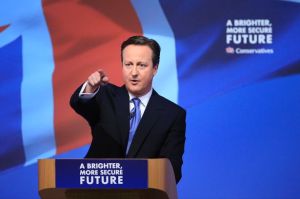
 

David Cameron - What Do The Conservatives Tories Stand For In The Age Of Jeremy Corbyn

NOTE:

I encourage you to read the entirety of Pete’s article, and to follow his blog. The analysis of the coming EU referendum and Brexit process to be found there is far superior to anything you will find in the mainstream media, and if there was any justice Pete would have the kind of platform and following usually only obtained by the C-student nepotism beneficiaries who seem to win many of the coveted gigs writing for prestige publications.

Reading Pete’s blog in particular can be a good reminder of the optimism behind the Brexit movement, and it is essential when we fight this campaign that we do not sound like dreary bores, cranks or obsessives focussing on the negatives of Brussels. For however dreary and stultifying the European Union may be, we are at our best when we present our compelling vision of a modern, forward-looking, globalised Britain which seeks to embrace the world rather than shutting ourselves off in a protectionist, mid-century regional trading bloc.

Agree with this article? Violently disagree? Scroll down to leave a comment.

Follow Semi-Partisan Politics on TwitterFacebook and Medium.

The “In” Campaign Reveal Their Best Argument: Cheap International Calls

European Union - Mobile Phone Roaming Charges - 2

It’s official: the leader of the “In” campaign declares that cheap mobile phone calls from the continent are the best reason for Britain to remain a member of the EU

Five months ago, when columnist Mary Riddell revealed that her love of the European Union is based on the fact that open borders allow her to motorbike around eastern Europe with ease, I wrote:

We see this emphasis on narrow self-interest in other areas too, such as the EU’s plan to ban mobile phone operators from charging exorbitant roaming fees for making calls from other member states, as though the ability of predominantly middle class holidaymakers and business travellers to call and text more cheaply somehow makes up for the erosion of our democracy and national sovereignty.

[..] The Left’s anguish over the prospect of British secession from the European Union has nothing to do with any overriding concern about Britain’s future, or the plight of the unemployed or the working poor. No, it’s simply a collective howl of outrage from a cosseted and sheltered middle class clerisy, terrified at the prospect of losing out on a raft of perks which disproportionately benefit themselves at the expense of everyone else.

Little did I know then that the “Remain” campaign would be so intellectually bankrupt, so totally lacking in good ideas or a positive argument for greater European integration, that the cheap gimmick of cheap international phone calls would be raised up as their openly stated chief benefit of staying in the EU.

As if their “youth spokesperson” June Sarpong had not embarrassed the pro-EU side enough with her ambivalent, paint-by-numbers endorsement in the pages of the Telegraph this week, the chairman of Britain Stronger in Europe – nepotism beneficiary Will Straw – has been working his magic in The Mirror:

Here are eight ways that the British economy and British families are stronger in Europe.

1. Cheaper mobile fees

The cost of using your mobile abroad dropped by 73p for every pound between 2005 and 2011 thanks to an agreement on roaming charges .

And they will be scrapped entirely by June 2017 after the EU forced companies to give a fairer deal.

Unimpeded bike rides and cheap mobile phone calls. This, apparently, is the best that the pro-EU side can muster as both sides fire their opening shots of the Brexit referendum. This, together with the gradual re-emergence of left-wing euroscepticism as a noteworthy force in British politics, give me hope that the eurosceptics may yet carry the day.

Brexit campaigner Pete North does an excellent job of pouring cold water on the europhiles’ claim that the EU is nothing more than a beneficent provider of cheap international roaming charges:

[..] with the advent of smartphones and wifi which is free to use, while it’s a marginal benefit to have no roaming charges, I don’t see why this comes to the top of their list of reasons to stay in the EU. It certainly benefits the eurocrats on large salaries jetting off to Brussels and Strasbourg once a month, but I really couldn’t give a tinkers damn.

But then the fact this comes to the top of their list actually tells you something more fundamental about Will Straw and the Remain campaign. I remember well the campaign mounted by the europhiles to get us to join the ill fated euro currency. They pulled the same trick then saying that it would save us all the inconvenience of having to change money when we go on holiday. The message here is that you are an ignorant pleb incapable of understanding the larger ramifications of surrendering our currency and will vote for it on the basis of convenience when we take our package vacations to Spanish seaside resorts. As patronising as it is, is actually shows these misanthropes really do hold us in contempt. Do they really think we’re going to base our vote on whether we can make a cheap phone call?

I’m with Pete. Is this really the best that the pro-EU side can do?

Do Will Straw and the shambolic “Remain” campaign really think that the British people are so stupid that their votes can be bought with the cheap bauble of low cost mobile phone calls? And worse still, if they really mean what they say, are they really willing to barter away British sovereignty – our right to national self determination – over such trinkets as these?

At best, this is an argument for continued European and international competition, and of the importance of removing barriers to trade and competition. But why do we need a European Parliament – a legislature being the quintessential expression of a nation state – to successfully co-operate to bring about cheaper phone calls? Why do we need European Courts which can overrule our own UK Supreme Court on any matter in order to liberalise energy markets?

Is Will Straw really so dense that he cannot see the ulterior motive at play? Does he honestly not see that the warm, fluffy waffle about international co-operation is just a smokescreen for the deliberate construction of a European superstate with all of the functions and institutions of a nation state?

Of course not. Will Straw knows exactly what the EU is now, and what it is very likely to become in ten, twenty, thirty years’ time. But he also knows that the British people would never vote for this vision of Europe – of Britain as nothing more than a small star on the EU’s flag. So Will Straw has to lie about it. He has to pretend that the political union currently in the process of devouring twenty-eight sovereign countries is a happy, friendly creature which does nothing but bring low-cost flights and cheap mobile phone calls.

That’s what the “In” campaign think of the British people and their capacity to grasp what is at stake in this referendum.

Take what you want from that lesson.

European Union - Mobile Phone Roaming Charges

Agree with this article? Violently disagree? Scroll down to leave a comment.

Follow Semi-Partisan Politics on TwitterFacebook and Medium.