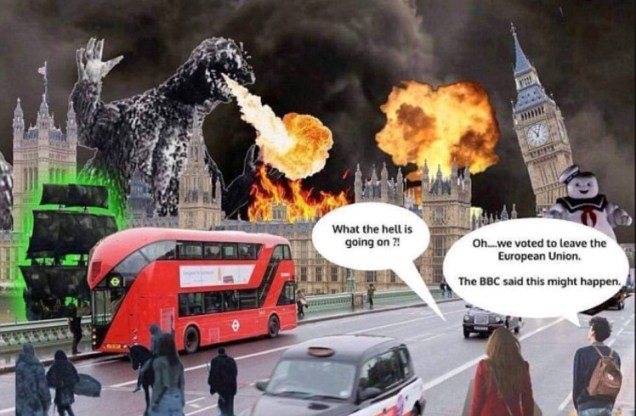
Waiting For The Brexit Apocalypse

Brexit - EU Referendum - European Union - Apocalypse

I told you so!

This piece by satirical news site NewsThump accurately sums up the attitude of many disappointed pro-EU Remain supporters, consumed with bitterness at their defeat:

A Remain supporter has confirmed that he would feel much happier for Brexit to be a massive failure and proven right than for Britain to become successful in a post-EU world.

“Well, obviously, I’d like to live in a successful country,” said Simon Williams, a Remain supporter who works in ‘media’.

“But not at the expense of me being proved wrong. That’s unthinkable.

“These are clearly very uncertain times,” he continued while sipping a frappe-mocha-latte-coo-coo-ca-chino.

“So I think it’s important that I, along with all remain supporters, maintain a constant state of gloom and pessimism, and meet any signs of optimism by saying something like ‘well, it’s early days, you wait until the country just falls into a big hole in the ground and everyone dies screaming, then you’ll be sorry’.

“Because otherwise it might mean that Brexit won’t be a disaster, and who wants to live in a world where people like me can possibly be wrong about anything.”

In a sense, it is inevitable that a hard core of bitter Remainers are actively willing political isolation and economic ruin on their own country. When someone’s concept of patriotism and their belief in the capabilities of modern Britain lead them to conclude that sheltering in a failing, anachronistic supranational union is our only shot at maintaining global relevance, it is somehow unsurprising to catch them in the act of rooting for our national failure.

Unsurprising, but disappointing all the same.

European Union - United Kingdom - Britain - Flags

Top Image: Metro

Support Semi-Partisan Politics with a one-time or recurring donation:

Agree with this article? Violently disagree? Scroll down to leave a comment.

Follow Semi-Partisan Politics on TwitterFacebook and Medium.

How Should A Patriot Act In The Age Of Donald Trump?

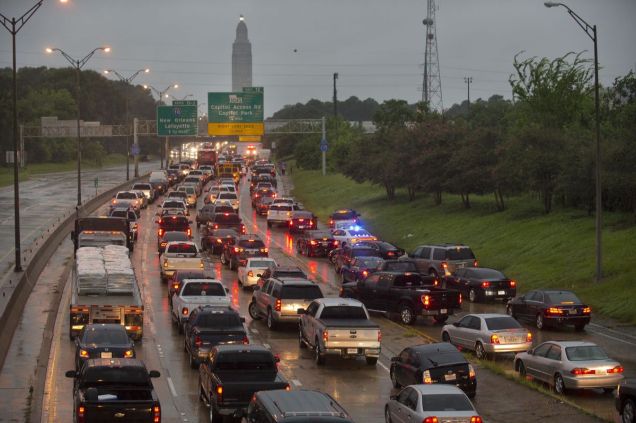
Louisiana Flooding - Baton Rouge

Make politics petty and unpleasant enough, and soon all that will be left are the pettiest and most unpleasant of people

Rod Dreher offers this meditation on patriotism, viewed through the dual lens of the US presidential election and the catastrophic flooding currently affecting his home state of Louisiana:

Checking just now, I see that Trump has put out seven tweets in a row this morning, whining about how mean the news media is to him. Not a single word about Katrina.2 here in Louisiana. To be fair, Hillary Clinton hasn’t said anything about it either, but her Twitter feed is managed by campaign drones. Trump does his twitter feed himself. I kid you not, as I sat at the stop light at the corner of Airline and Old Hammond Highway, waiting to turn, I looked over at the spot where those three law enforcement officers where shot dead last month, and I thought about all the poor, desperate people I had just seen at the shelter, and all the good men and women of Louisiana spending their Sunday morning doing whatever they can to help their neighbor, and I thought Donald Trump can go to hell.

Honestly, with so much suffering in this country now — acutely here, right now, in Louisiana, but people are hurting all over (seen the news from Milwaukee today?) — all that fathead can do is gripe about how mean the news media are to him. It’s disgusting. I have not been a #NeverTrump conservative, and don’t really care to be part of that crowd now, even though I cannot imagine voting for Hillary Clinton either. I believe Trump has brought up some important issues that the GOP didn’t care to address. But as of today, I wouldn’t vote for Trump if you put a gun to my head. The vanity and the pettiness of that jackass beggars belief. If he had any sense, he would be on a plane down here trying to help, or at least showing real concern, instead of sitting there with his smartphone, bleating like a baby.

You don’t need to know what I think of Hillary. If you are a conservative, it’s exactly what you think too. But it makes me really angry that this is what the conservative party has to offer America in the fall of 2016: this ridiculous clown. And we have him in part because none of the GOP regulars could make the sale to primary voters.

Till now, I’ve been laughing sardonically at the two repulsive figures American voters have to choose from this November, wondering how it ever could have come to this. This morning, I’m mad about it and disgusted beyond belief.

It’s true. Donald Trump has indeed devoted a number of tweets today to moaning about supposedly biased press coverage of his campaign (while utterly ignoring the fact that he would still be making reality TV were it not for the American news media’s fawning coverage of his every move).

Here he is, moaning about how “unfair” the media are being to him, now that they are actually taking time to fact-check his statements and examine his voluminous past public statements and business dealings:

Donald Trump twitter - media coverage

As Dreher acknowledges, Hillary Clinton has not taken the time to comment on the flooding on her Twitter feed either. One thinks back to Hurricane Sandy, falling in the middle of the 2012 presidential election, and marvels at the contrast – though of course we all know that events matter more when they happen to the coasts. But even from an entirely cynical and tactical political perspective, a half competent Republican Party presidential candidate would have taken care to show the people of the affected state (and the nation) that he sees their suffering, and cares about it.

But then the Republican Party does not have a half competent presidential candidate – they have Donald Trump, a man vastly more interested in nursing his petty grievances and rivalries on Twitter than “appearing presidential”, let alone actually being presidential and caring a damn about the suffering of his compatriots.

Dreher is correct too that the GOP is in this ludicrous position “in part because none of the GOP regulars could make the sale to primary voters”. But it is more than that. There is a reason why none of the mainstream Republican candidates were able to find any traction with primary voters – namely the disconnect between their stale old dogmas (ranting about lower taxes, ObamaCare and calling President Obama an un-American threat to national security) and the very real economic pain and political alienation felt by many of their core voters.

Barack Obama may occupy the White House, but Republicans have controlled Congress entirely since 2014. This is a Tea Party Congress, yet Republicans have pointedly failed to deliver the libertarian paradise they promised, mostly because they are every bit as addicted to Big Government as the Democrats. And when you make yourself indistinguishable from the opposition in terms of political outcomes while stoking public hysteria about a Kenyan socialist terrorist trying to destroy America from within, it is little wonder that people scorned the continuity of Jeb Bush or Marco Rubio in favour of Donald Trump’s alternative Republican offering.

Dreher is right too to acknowledge that “Trump has brought up some important issues that the GOP didn’t care to address”. The obvious example is immigration. The duplicity of the Democrats and the American Left in general is staggering: deliberately re-engineering the language to draw no distinction between legal and illegal immigrants, referring to illegal immigrants as being merely “undocumented” – anything the Left can do to excuse and even ennoble lawbreaking is being done.

Some American cities sanctimoniously call themselves “sanctuary cities” – places where honest American citizens who happen to work for the federal government enforcing immigration law are unwelcome while lawbreakers are welcomed with open arms. And too much of the mainstream media is happy to follow along in this subversion of law and language, particularly in the conflation of legal and illegal immigration.

The Republicans are little better, talking a tough talk while being perfectly content to fight the issue to an acrimonious stalemate preserving the status quo. After all, their paymasters are the last people who want to see an end to plentiful cheap labour. Republicans also shame themselves by pretending to their supporters that the millions of illegal immigrants currently living and working in America can be quickly and easily deported with no adverse impact on the local and national economy.

The right thing to do would be for one party to propose a form of one-time amnesty (perhaps allowing those currently living in America illegally to be granted a pathway to official permanent residency while withholding citizenship in recognition of their lawbreaking) while also pledging to get tough on all future lawbreaking, including enhancements to border security and a “one strike and you’re out” rule on visa overstayers and other violators. This would meld the compassion of the Democrat approach with the commitment to law of the Republicans. It would also force more of America’s immigration back through legal routes, forcing the country to have a political debate about how many legal immigrants they wish to allow in every year, and of what skill type.

But neither party will adopt this position. Both choose to childishly demand everything that they want handed to them on a stick, while the reasonable and pragmatic option sails past unheeded. Meanwhile, both Democrats and Republicans get to strut and preen in front of their respective voter bases, acting as though they are the sole custodians of compassion / defenders of the rule of law while making a complete mockery of American hospitality, compassion and the rule of law.

This is why Donald Trump is now a major party presidential candidate – because on issue after issue (immigration is but one example) both parties have chosen to play to their respective supporters, shoring up the base by playing on their fears, rather than daring to lead, educate and step outside of their comfort zone. The Republicans could have prevented the Trump takeover by being the bigger person and making a bold proposition on immigration or trade or any of the other issues where they have been holed beneath the waterline by Trump. But they didn’t. Like a petulant six year old, they wanted to have their cake and eat it – to go on chanting angry mantras about immigration while doing nothing to fix it, and then winning votes based on public anger. And then Trump came along and offered an alternative (if equally bogus solution), and the mainstream Republicans were left with nothing.

And so the Republicans deserve Donald Trump, just like the Democrats deserve Hillary Clinton. But it does not automatically follow that the American people deserve either of them. They deserve a better choice, as this blog has consistently argued. And I think this is what prompts Rod Dreher’s instinct to withdraw from engagement with America’s toxified national politics:

What is my country? Today, to me, it feels like Louisiana. Washington is very far away. Baton Rouge is right here. Nothing against America, you understand, but this hot, wet, miserable piece of ground is where my heart is. I feel that this morning in a way I never quite have. Maybe if I had been here during [Hurricane] Katrina and seen it with my own eyes, I would have come to this realization earlier. But I didn’t. Nevertheless, I’m glad that I did.

The only politics that really matter to me is the politics of this community — that is, the politics of being a good neighbor. Look, I know that politics as statecraft matter. I’m talking about what matters to me. I’d rather be there with the people from the churches and the community, we who are in dry houses today, helping those who have nothing. If that’s the Benedict Option, then I choose it. Donald Trump and Hillary Clinton have nothing to say to me that I care to hear. For me, this is here and this is now. Hillary, Trump and the rest of them are people from TV Land.

This is an important point: what happens when the Donald Trump freak show finally succeeds in driving the remaining good, temperate people out of politics?

The Washington Post published a long piece this weekend exploring the views of millennial voters toward the presidential election. The short version: naked contempt for both parties and candidates, unlike the strong preference for Barack Obama in 2008/2012. They could soon be a generation lost to political apathy for the next few electoral cycles.

Rod Dreher speaks of Hillary Clinton and Donald Trump as though they are alien, disconnected people from “TV Land”, with their own feuds and motivations which are utterly alien to the majority of the country. He’s not wrong. And I think the temptation will be strong, as this tawdry election campaign drags on, for normal people with political inclinations to focus their efforts either on single issues or at the local level rather than on national politics, which has rarely been more hyper-partisan and dysfunctional.

Make politics petty and unpleasant enough, and soon all that will be left are the pettiest and most unpleasant of people. If honourable people feel that they cannot make a positive contribution at the national level without getting sucked into the swirling vortex of email scandals, conspiracy theories and vacuous Twitter feuds then America will soon be led by the people who thrive in that atmosphere.

What an utterly depressing, eminently avoidable state of affairs.


Donald Trump Hillary Clinton Presidential Election 2016

Top Image: The Advocate

Support Semi-Partisan Politics with a one-time or recurring donation:

Agree with this article? Violently disagree? Scroll down to leave a comment.

Follow Semi-Partisan Politics on TwitterFacebook and Medium.

As Hillary Clinton Accepts The Democratic Nomination, Donald Trump Leads The GOP To Its Armageddon

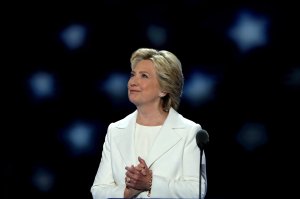
As Hillary Clinton accepts the Democratic Party’s nomination for president of the United States, the Republican Party stares oblivion in the face

It wasn’t the best acceptance speech at a Democratic Party national convention by a long shot, but Hillary Clinton’s historic speech got the job done.

Personally, I thought that it started off quite well before getting bogged down into the kind of grinding, laboured pedantry that is often the hallmark of a Hillary Clinton speech. One could almost hear Clinton’s brain checking off the various points she felt obligated to touch on (i.e. absolutely everything) as the speech ground onwards. But the moment Clinton accepted the nomination itself was effective:

And yes, love trumps hate.

That’s the country we’re fighting for. That’s the future we’re working toward.

And so it is with humility, determination, and boundless confidence in America’s promise that I accept your nomination for President of the United States!

And one did feel that slight sense of history in the making that we last felt when a much younger-looking Barack Obama accepted the Democratic Party nomination eight years ago.

This section was powerful too, inasmuch as it sought to make a virtue of the way that Hillary Clinton grinds away behind the scenes, seeking to make incremental progress (an approach which clearly frustrates the millions of Democrats who preferred Senator Bernie Sanders as their nominee):

I remember meeting a young girl in a wheelchair on the small back porch of her house.

She told me how badly she wanted to go to school — it just didn’t seem possible.

And I couldn’t stop thinking of my mother and what she went through as a child.

It became clear to me that simply caring is not enough.

To drive real progress, you have to change both hearts and laws.

You need both understanding and action.

So we gathered facts. We built a coalition. And our work helped convince Congress to ensure access to education for all students with disabilities.

This blog hasn’t done a night-by-night analysis of the Democratic Convention as we did for the Republican Convention in Cleveland last week, but I have been watching closely – both the speeches, the mood of the hall and how it has all gone down in the American media. And right now, I think that the Republican Party should be feeling complete and utter stomach-churning, sweat-inducing dread. For all of the GOP’s political sins are about to catch up with them, and Republicans will be forced to pay for them in a hefty lump.

The Democratic convention was everything that the Republican convention was not, but normally is. Usually, one can expect the GOP to successfully co-opt and monopolise the flag, the military, the constitution and the founding fathers. But not this time. With Donald Trump as their standard bearer, de facto party leader and the ugly face of American conservatism (as far as most people are concerned), the Republicans have utterly ceded patriotic centre ground. Reagan’s “morning in America” has been replace by a darker, dystopian “midnight in America” in Republican rhetoric – a fact noted by Hillary Clinton in her speech. The sunny optimism and the shining city on a hill have been utterly banished, replaced by something insular, nativist, distrustful, selfish and wantonly cruel.

The Republicans used to be the Party of the Constitution (in rhetoric, if not always in practice). But one was hard stretched to hear any substantive mention of freedom, individual liberty and smaller government in Cleveland last week.

The Republicans used to be the Party of the Military. But now they are led by a thin-skinned, authoritarian, egotistical demagogue who has openly bragged that he intends to order the military to commit unconstitutional acts including torture, placing them in an impossible position. And so this week in Philadelphia, the retired four-star generals and distinguished veterans were on stage supporting Hillary Clinton over Donald Trump.

The Republicans used to be the Party of God, happy warriors for social conservatism. Now they are led by a twice-divorced adulterer who openly objectifies and belittles women, while the Democrats are led by a woman who (despite her many faults, and those of her husband) has kept her marriage together through thick and thin.

But more than anything else, the Republicans used to be a party of unabashed optimism and patriotism, always seeing the potential and the best in America and seeking to build on that progress in order to open the promise of America to more and more people. Now, they are led by a wannabe strongman who sees only the flaws in America, grotesquely exaggerating and distorting those faults for electoral gain while promising blunt and unsophisticated remedies without acknowledging the disruption and negative consequences of ripping up trade agreements and erecting protectionist and physical barriers against perceived threats. And now the Democrats are the ones with the positive, upbeat message.

Or as Clinton put it in her speech:

Our country’s motto is e pluribus unum: out of many, we are one.

Will we stay true to that motto?

Well, we heard Donald Trump’s answer last week at his convention.

He wants to divide us – from the rest of the world, and from each other.

He’s betting that the perils of today’s world will blind us to its unlimited promise.

He’s taken the Republican Party a long way, from “Morning in America” to “Midnight in America.”

He wants us to fear the future and fear each other.

Well, a great Democratic President, Franklin Delano Roosevelt, came up with the perfect rebuke to Trump more than eighty years ago, during a much more perilous time.

“The only thing we have to fear is fear itself.”

In nearly every category where the Republican Party once dominated the political landscape, they are now in retreat. Donald Trump clearly believes that the level of unregistered pain and dissatisfaction in the country is great enough that he can be swept to power purely on the back of an anti-establishment backlash. But my word, it’s an awfully big gamble to cheerfully abandon the constitution, the military, patriotism and fiscal conservatism and assume that this will bring in sufficient new voters, and that the party’s existing voters – who sincerely believe in those things – will stick around even as the Democrats aggressively pitch for their support.

That is not to say that a Trump victory is impossible – far from it. But look at the type of things which would have to happen to make President Trump a reality – more Islamist terror attacks on American soil, driving scared voters toward Trump’s authoritarian appeal, or a further deterioration of the fraught relationship between America’s police forces and the black communities they serve. Trump benefits from this chaos and division, but none of the policies he has offered would make America tangibly safer. You can be assured that Hillary Clinton will be pushing that message through the fall into the general election.

If things remain as they are; if there are no further large extraneous shocks to the economy, to politics or to national security (admittedly a big “if” when Islamist terror attacks in Europe seem to be running at one per week) then Republicans should be very worried indeed. In their embrace of Donald Trump – a man who could never have become their leader had congressional Republicans acted in a more responsible manner throughout the Obama presidency – they have utterly jettisoned their commitment to the constitution, to individual liberty and to small-c conservatism. They have lost the support of this blog and millions of other thinking conservatives, all in the hope of riding a populist wave to the White House, based on promises which they know are largely undeliverable.

And while Hillary Clinton is undoubtedly a flawed candidate offering a continuation of America’s current trajectory, in a binary choice between the status quo and the void, she has effectively positioned herself as the de facto choice for anybody who is serious about protecting the American republic from unpredictable and often irrational constitutional, economic and political vandalism by Donald Trump.

The Republican Party should be afraid. And chastened. And if the day finally comes when the fever breaks and they realise just what eight years of hysterical opposition to President Obama followed by the nomination of Donald Trump hath wrought, they will face an almighty uphill climb to earn back the respect of small-c, constitutional conservatives.


Hillary Clinton - DNC - Democratic National Convention - Acceptance Speech - 3

Hillary Clinton - DNC - Democratic National Convention - Acceptance Speech - 4

Bottom Images: Popsugar, Vox

Support Semi-Partisan Politics with a one-time or recurring donation:

Agree with this article? Violently disagree? Scroll down to leave a comment.

Follow Semi-Partisan Politics on TwitterFacebook and Medium.

Peak Guardian: Mocking The British Public For Holding Street Parties To Mark The Queen’s 90th Birthday

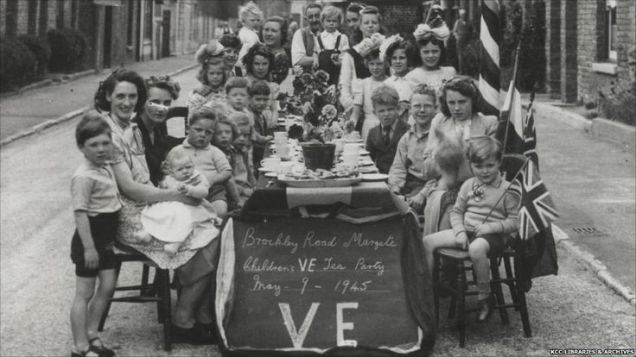
VE Day Street Party
Sickening, apparently

The Guardian’s lonely struggle against all of the things which unite us as a community and country finds a new source of virtue-signalling outrage

Today’s dose of Peak Guardian comes courtesy of Dawn Foster, who finds herself consumed with bitterness and resentment that many people will voluntarily choose to celebrate the Queen’s birthday this weekend – and in some cases commit the unforgivable crime of holding a street party to mark the occasion.

In a bitter tirade against the great British street party, nearly rivalling the sneering tone of the Guardian’s art critic Jonathan Jones (who castigated the Tower of London poppy exhibition as a tacky “UKIP-style” memorial to the fallen of the First World War), Foster seethes:

Friends of mine who live in areas where street parties are in the works have, without exception, reported that the people responsible are the perennially furious residents who spend most of their lives in a rage about parking. Shifting their attention from the contentious temporary ownership of asphalt, they have decided the neighbourhood needs to commemorate the birthday of a 90-year-old woman none of the residents have met.

The party will follow the usual template: tea, cupcakes, flags upon flags upon flags, wartime slogans and songs, and the performance of a very specific type of Englishness – the Englishness of Fry and Laurie rather than This Is England. One harks back to the empire while the other attempts social realism.

This kind of middle-class nationalism, rooted in a confected history of postwar austerity, has been resurgent in the years since the last royal wedding. The ubiquity of the Keep Calm and Carry On poster is the most obvious symbol. As the writer Owen Hatherley puts it, the cultish signifier points to the “enduring pretension of an extremely rich (if shoddy and dilapidated) country, the sadomasochistic Toryism imposed by the coalition government of 2010–15, and its presentation of austerity in a manner so brutal and moralistic that it almost seemed to luxuriate in its own parsimony”.

Nationalism now has two faces: that of the far right, signified by a certain sort of caricature of a football supporter and England flags, and now the middle-class right, posh enough to wear chinos while raising a glass to “her maj” in front of a Union Jack. The two aren’t entirely separate: the former is openly racist, the latter a frequent apologist for the British empire.

Can these perennially sour people never just take something at face value? Must the good-natured efforts of ordinary people to try to reconnect with that lost sense of community spirit embodied in the VE Day and Jubilee street party celebrations be so carelessly dismissed by sneering Guardian journalists as a corrosive form of middle class oppression?

Foster continues:

But this isn’t harmless. All the warm Pimms and cupcakes with corgi icing feed into a narrative that says the empire was a force for good, and its destruction is to be mourned. When people refer to the “blitz spirit” and say we should heed lessons from how Britain used to be, they usually mean two things: when it comes to austerity, suck it up; and Britain was better when it more resembled a monoculture.

It’s possible to be a good neighbour without indulging in these performative pastiches of community. Speaking to people on your street should be an everyday occurrence, not prompted only by an unreciprocated love for the unelected Queen. Enforced pageantry with nationalistic undertones and a forelock-tugging subservience towards someone who has succeeded in surviving nine decades mainly because she is fantastically wealthy is enough to make many people lock their doors, close the curtains and pretend they’ve fled for the weekend.

Foster uses the word “nationalism” in her piece, but we all know that it is garden variety patriotism in her cross-hairs. And apparently, in Foster’s alternate universe, only two kinds of patriots exist – the middle class ones that she deplores, and working class “far right” football supporters whom she fears and openly slanders as racist.

People wonder why the Labour Party lost the 2015 election, and still fails to gain significant traction despite facing a rootless Conservative government. Well, this is why. Because whole swathes of the Left have been captured by what Brendan O’Neill described as the middle class clerisy, who openly loathe the working classes and treat their interests, hopes, fears and dreams with derision. And the voters are perceptive – they can tell when they are being mocked or looked down on.

The British Left is presently dominated by people who think that Britain is a weak, insignificant and unremarkable place, a country whose past flaws overshadow any positive legacy or current contribution which we might give the world. Ask them to participate in an event praising their country and the middle class clerisy will chuckle nervously and exchange knowing glances with one another. The words stick in their throats.

In Dawn Foster’s mind, it is simply inconceivable that a working class person might be moved to celebrate the birthday of the person who (besides our families) has been the one constant in all of our lives. She simply cannot fathom why anyone other than upper middle class chino wearers or heavily tattooed EDL types might want to mark the Queen’s birthday. But that says far more about Foster than it does about those who will be celebrating this weekend.

This isn’t just the Guardian being insufferable, there is a real issue here. What will be left to bind us to our history, to our ancestors, if the Left continue to insist on heaping scorn on so harmless a thing as the humble street party? And what will bind us contemporary Britons to each other when the Left sees no value in inculcating a healthy sense of patriotism and a common national identity?

Religion and the Church of England no longer play the central role in our national life that they once did. Many in the Guardian are happy about that. But what new societal glue will replace it? We don’t yet know. This matters immensely when it comes to assimilating new immigrants in the kind of numbers that Britain has experienced in recent years, or when we need disaffected Muslim youths to grasp on to a positive shared vision of Britain rather than steal away to join ISIS (in mental allegiance, if not always in body). If we insist on tearing down the customs and rituals which define our culture because hectoring moralisers like Dawn Foster have decided that they are passé, what is left to bind us together?

The “blitz spirit” which Foster decries is something of which Britons should remain proud. And the fact that Foster chooses to compare the “austerity” of today (basically slightly less spending growth than the previous Labour government envisaged before 2010) to the mortal danger of the Blitz only goes to show just how hysterical the British Left have become in their anti-Tory fervour.

But more than that, the blitz spirit shames the Left because it reveals how the pursuit of left-wing policies has, in some ways, changed our country for the worse. An overly expansive welfare state, ratcheted upward in the decades since the Second World War and only partially restrained by Thatcher, has left us dependent on government rather than one another. This is good, to a degree – welfare should certainly not depend on arbitrary charity. But such is the scope of today’s hyperactive state (David Cameron won the 2015 general election on a creepy manifesto “plan for every stage of your life”) that the need for neighbours, communities and even families is being steadily undermined.

Similarly, the previous Labour government’s encouraging of record inward migration and obsession with the virtues of multiculturalism has led to an increasingly atomised and segregated society, preventing the melting pot from working and in some cases now actively feeding extremist and terrorist behaviour.

Amid all of this change, the quintessential British street party stands as testament to a time when no matter what other identities and affiliations a person may have held, one was expected (and agreed without a second thought) to be British first and foremost – a time when our national identity was a source of pride to people of all political viewpoints, not an embarrassment to the Left or an exclusive toy of the far Right.

Fast forward to 2016 and any event, celebration or ritual which calls to mind Britain’s history, heritage and achievements is immediately suspicious to swathes of the modern Left because it encourages pride where the middle class clerisy feel there should only be shame and embarrassment. Any event which suggests that we should look to our families or communities rather than government for friendship, advice, recreation, health and solidarity will be ruthlessly attacked, just as Dawn Foster quietly seethes when neighbours get together of their own volition in a civic act of positive patriotism.

This blog has long argued that the British Left will not taste power again until they learn to love (or at least accept) the country for what it is, until they cease being so openly contemptuous or downright hostile toward the smallest act of public patriotism. Remarkably, they seem to have gone backwards in six years, and are now even further away from this objective than they were in 2010.

One year since their second general election defeat and the critical lesson has clearly still not been learned. The vast majority of the Labour Party are actively advocating for a Remain vote in the EU referendum, in a campaign noted for its pessimistic, miserabilist view of Britain and unconcealed contempt for those (including many working class people) who yearn for Brexit. Meanwhile, the house journals of the middle class Left continue to pump out their unambitious, defeatist view of Britain, and are not above scoring blatant own goals – like tearing into the British public for daring to celebrate the Queen’s birthday.

How can the Left ever hope to lead this country again when they so clearly disdain it in every way?


Queens 90th birthday celebration

Agree with this article? Violently disagree? Scroll down to leave a comment.

Follow Semi-Partisan Politics on TwitterFacebook and Medium.

Okay, Let’s Talk About Patriotism

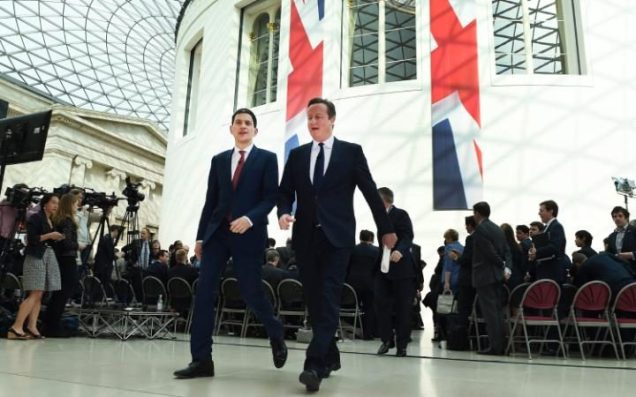
David Cameron - David Miliband - British Museum - EU Referendum - Brexit - European Union - Patriotism

David Cameron thinks that Britain owes its limited greatness to the coiffured prancing of One Direction. This is a man who doesn’t know how to begin thinking like a patriot because he doesn’t appreciate the first thing about what makes Britain truly great

David Cameron spent much of his 20-minute grilling in last night’s damp squib of a television “debate” with Nigel Farage waffling on in the vaguest possible terms about patriotism.

Specifically, the prime minister wheeled out almost the identical meaningless phrases that he always uses when he finds himself scrambling to recover his footing – like when he failed to win an outright parliamentary majority in 2010, and when faced with worrying poll numbers in the 2014 Scottish independence referendum.

He then advanced the rather surprising argument that the way in which we might best show our patriotism and love of country is to vote for its continued subsummation into that giant self-help group for countries who have lost their mojo known as the European Union.

The Daily Mail summarises Cameron’s basic pitch:

The Prime Minister acknowledged that sometimes the EU “can drive me mad, it is a bureaucracy, it is frustrating” but “walking away, quitting, would reduce our national influence, would reduce our economy, would reduce our say in the world and as a result would damage our country”.

He told the audience: “You hear a lot of talk about patriotism in this referendum. As far as I’m concerned I love this country with a passion, I think we are an amazing country and I say if you love your country then you don’t damage its economy, you don’t restrict opportunities for young people, you don’t actually isolate your country and reduce its influence in the world.”

Warning that Brexit could lead to Scotland separating from the UK he said: “You don’t strengthen your country by leading to its break-up. So I’m deeply patriotic, but I think this is a case for a bigger, greater Britain inside a European Union.”

Urging voters to think of the next generation he said: “I hope that when people go to vote on June 23 they think about their children and grandchildren, they think about the jobs and the opportunities they want for them, the sort of country we want to build together and they vote to say ‘we don’t want the little England of Nigel Farage’, we want to be Great Britain and we are great if we stay in these organisations and fight for the values we believe in.”

He added: “Leaving is quitting and I don’t think Britain, I don’t think we are quitters, I think we are fighters. We fight in these organisations for what we think is right.”

This blog’s response to being labelled a “quitter” for wanting to leave the European Union is here.

Meanwhile, Tony Edwards of The Brexit Door blog picks up on the cognitive dissonance which must necessarily be involved in thinking that fearfully remaining in a stultifying regional political union rather than engaging with the world in the same way as every other advanced country on the planet outside of Europe is somehow the “patriotic” thing to do.

Edwards writes:

The Prime Minister is losing the debate on the EU – and so yesterday (7th June) he missed the funeral of Cecil Parkinson to attend a hurriedly arranged press conference in the run up to his appearance with Nigel Farage on ITV.

It’s not the first time we have heard this rather fatuous appeal to patriotism, this form of words first appeared late last week, but it is the polling that has driven this level of rather empty rhetoric. If you leave the EU, he says, you are a “Quitter” who doesn’t “love the UK”.

This was always the inevitable end for this campaign, this descent into pure nonsense. The trigger for the press conference was no doubt a mixture of things – the polling across the weekend, the Newsnight programme on Monday, and the recent articles in the Telegraph by both Allister Heath and Ambrose Evans Pritchard which have been very optimistic on the EEA/EFTA route out of the EU. This has been allied with the reporting of the BBC that civil servants are already planning for Brexit via this route, something that the Prime Minister has often denied, but we have heard talk of since the beginning of the year.

While there is an honourable and intellectually coherent case made for staying in the European Union and deepening our commitment to join the EU in its ultimate journey toward common statehood, this is not a debate which is ever heard in Britain. Most of our politicians, recognising that publicly suggesting that Britain join France and Germany on their long-established path to common statehood would go down like a bucket of cold sick, are unsurprisingly reticent to talk about the EU in these terms.

And so in Britain those who wish us to Remain in the EU argue from a purely fear-based economic perspective, which makes the sudden attempt to portray this as the “patriotic” choice sound especially contrived false, as Tony points out:

On the pro EU side, there is an honourable argument to be made for travel towards a single European state. On the mainland, this is a debate that actually breaks into the open. Many on the continent wish for an EU that is totally federal, and challenges the USA as the world’s leading business superpower. Some wish it to have a similar military strength, and others wish to see the elevation of large block political entities as a step towards a ‘Star Trek’ ideal of a single world government. All of these are laudable aims, but they have never been expressed in the UK debate by those who wish to remain in the EU. The argument here is always about trade, economics and migration – the short term issues.

And Tony’s brilliant conclusion:

Democracy has hardly had a word uttered about it in this debate. The EU is the beginning of the end of the rather short democratic experiment in Western Europe. For most of us, full suffrage is just less than a century old – the first truly democratic election general election in the UK was in 1929, an election which returned Ramsey MacDonald to power as the first Labour PM of a functioning Labour government. By 1961, our politicians were already looking to remove the power of the people by exporting it to the newly formed EEC, fully aware that its design was for a technocratic Europe rather than a democratic one.

So the experiment in the UK lasted no more than 32 years before politicians tried to unravel it. That is something that bears serious thought. Do we prise democracy above all else, or do we simply want a life in which the big questions are not asked of us as a people, so we are left untroubled by them?

That is the real issue at stake in this referendum, and judging by many of the responses I have seen, especially from younger people, there is a lack of willingness to engage with the deeper issues, something mirrored by the political class which plays only to the gallery.

Precisely so. The deeper question facing us is do we even want to be informed and engaged citizens any more? Are we willing to educate ourselves as to the issues, participate in our democracy and bear our share of responsibility for the resulting triumphs, disasters and (more usually) bland stalemates? Or are we happier being passive consumers of goods and public services, occasionally bleating our outrage when we don’t get what we want but otherwise content for others to do the dull work of running the country (or continent) while we devote ourselves to watching re-runs of Britain’s Animals Got Strictly Come Bake-Off On Ice?

Citizens or consumers? That is the deeper choice facing us in this EU referendum debate. Are we willing to put in the work which comes with being the former in exchange for the reward of greater control over our lives, or are we willing to wave away the responsibility in the hope that doing so keeps mortgage rates and the price of Chinese flat-screen TVs that little bit lower?

So how would a patriot act? I think it is now clear which side represents the strivers and which side the quitters. In any case, one can normally take a good cue from the words and deeds of those currently in power, and David Cameron sets a shining example for us all.

The lesson for would-be patriots, therefore, is this: speak and behave in the polar opposite manner to David “don’t be a quitter” Cameron and you won’t go far wrong.


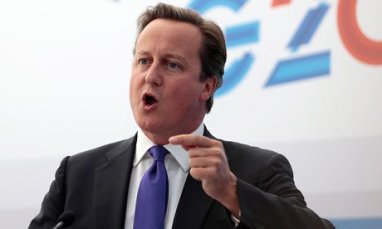
David Cameron – a prime minister whose esteem and ambition for his own country is so pathetically small that when given an open-goal to sell Britain’s evident greatness to the world he fell back on delivering a weak impression of Hugh Grant in the film “Love Actually”:


David Cameron Patriotism

European Union - United Kingdom - Britain - Flags

Top Image: Telegraph

Bottom Image: Guardian

Agree with this article? Violently disagree? Scroll down to leave a comment.

Follow Semi-Partisan Politics on TwitterFacebook and Medium.