Where Is The Passion For Or Against Brexit From Our Elected Representatives?

When it comes to voting and speaking their conscience on Brexit, British MPs should do as former American congressman Anthony Weiner said…but perhaps not as he did

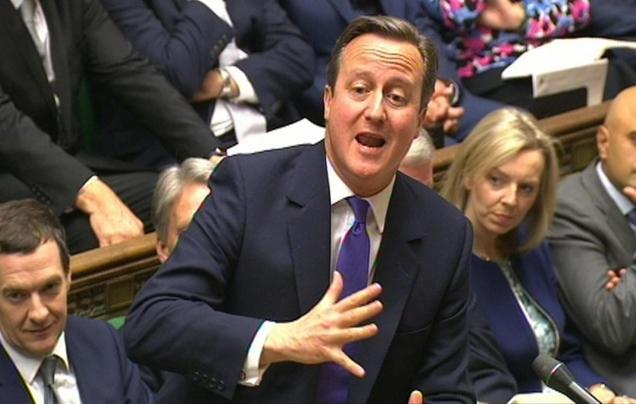
When the British parliament gets rowdy, it tends to be the braying backbench donkeys at Prime Minister’s Questions making the noise, usually in response to some tenuously witty put-down from David Cameron.

What you see far less in parliament are individual politicians getting angry or visibly passionate about particular issues (Mhairi Black’s vastly overrated maiden speech notwithstanding). Perhaps this is partly because of our British reserve – though this is a comity which notably does not seem to extend to social media.

The parliamentary debate following the announcement of David Cameron’s pitiful renegotiation deal with the European Union was a case in point, and the following drip-drip of MPs and ministers once considered to be dependable eurosceptics dutifully lining up behind the prime minister was especially depressing.

Even when solid arguments were made for or against Britain’s continued EU membership, much of the debate was conducted in that dry, technocratic and risk-averse style which does so much to turn people away from politics.

Thus the media expended many more column inches writing about whether David Cameron felt “betrayed” by Michael Gove’s decision to support Brexit, and what kind of punishment Boris Johnson might expect for doing the same. In the near complete absence of really passionate and full-throated arguments on either side (except in the thriving Brexit blogosphere), the Westminster media focused on the court drama and palace intrigue rather than the policy.

It needn’t be so. It is possible to show passion and wear one’s heart on one’s sleeve in a political debate, and doing so (provided that it is genuine) can actually foster greater trust between the people and politicians who are actually perceived as standing for something.

Former New York representative Anthony Weiner resigned from Congress in disgrace, but during his time in Washington he built just such a reputation as a firebrand, with floor speeches which frequently went viral and broadened the reach and appeal of politics.

One such speech – in which Rep. Weiner excoriated Republicans for hiding behind procedural rules as cover for voting against providing healthcare to 9/11 first responders – is particularly applicable to the Brexit debate as it is now being conducted in Westminster:

You vote yes if you believe yes. You vote in favour of something if you believe it’s the right thing. If you believe it’s the wrong thing, you vote no.

You would think that this would be stating the obvious, but apparently not, judging by the number of committed europhile MPs who are quick to reel off all the things they hate about the EU rather than make a full-throated defence of Brussels, and the eurosceptic turncoats who have suddenly come up with implausible-sounding pressing reasons why now is not the right time for Brexit.

Am I the only one who would like to see a bit more genuine passion (as opposed to the creepy “passion” of Ed Miliband, or David Cameron pretending to be “bloody lively”) in our politics, rather than the same old consensual blandness?

Of course, for fiery debates like this to take place in the House of Commons, certain stultifying rules would need to be relaxed (though PMQs and the reaction to SNP MPs clapping shows just how arbitrary the enforcement of these rules already is).

But more than that, to have Anthony Weiner style passion in our politics, and the Brexit debate in particular, we would need more of our elected representatives to do the following:

1. Dare to make the honest, non-technocratic or fearmongering case for or against Brexit (with the europhiles ceasing to deny their desire and preference for European political union), and

2. Place their sincerely held beliefs over and above thoughts of career advancement.

But partly because the legislature and the executive are intertwined in the British political system, career-minded MPs are not currently incentivised to build a reputation as passionate and independent-minded firebrand legislators, as to do so would immediately mark them out as “troublemakers” to be passed over for promotion.

There is, at present, no attractive or lucrative career path in Westminster politics that does not lead inexorably away from legislating and toward joining the government, and the warping effect that this has on our lawmaking process cannot be overstated.

Yet another reason for comprehensive constitutional reform in Britain, to separate the executive from the legislature so that both are better able to do their jobs.
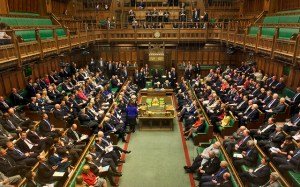
 

Parliament - House of Commons - Debate

Agree with this article? Violently disagree? Scroll down to leave a comment.

Follow Semi-Partisan Politics on TwitterFacebook and Medium.

David Cameron Is At His Arrogant Worst When He “Wins” PMQs

David Cameron - PMQs - Prime Ministers Questions

Since he has proved himself incapable of cleansing the Tories of their unfair reputation as the “nasty party”, what exactly is the point of David Cameron?

The media is abuzz today with talk of David Cameron’s withering put-down of Jeremy Corbyn at Prime Minister’s Questions.

The Spectator breathlessly reports that “Cameron delivers a knockout blow to a struggling Corbyn“:

This could have been a tricky PMQs for David Cameron. Instead, it will be remembered for Cameron ventriloquising his mother and telling Corbyn ‘put on a proper suit, do up your tie and sing the national anthem’.

What gave this jibe its potency, is that it sums up what a lot of voters think of the Labour leader. It was not quite as Flashmanesque as it sounds. For it came in response to a Labour front bench heckle asking what Cameron’s mother would say about cuts in Oxfordshire.

Even before Cameron floored Corbyn with that line, the Labour leader was struggling. He chose to go on the NHS and the junior doctors’ strike. But even on this subject, he couldn’t make any headway. Worryingly for Labour. Corbyn’s PMQs performances are—if anything—getting worse. You can tell that Cameron is now just cruising through the Labour leader’s questions.

Responding to a heckle from the Labour benches about his mother, Mary Cameron (who signed a petition opposing local public service cuts), the prime minister let loose with all of the pent-up frustration he feels at Jeremy Corbyn’s refusal to play the traditional role of Generic PMQs Sparring Partner.

Here’s Cameron’s quote in full:

“I’ll ask my mother. Oh I think I know what my mother would say, I think she’d look across the dispatch box and she’d say put on a proper suit, do up your tie and sing the national anthem.”

If this is what “winning” Prime Minister’s Questions now looks like, then both the tone and content of our political debate – even by the low standards set by Parliament – is in far worse a state than even I have been lamenting.

And Tim Montgomerie’s decision to leave the Conservative Party is vindicated, as David Cameron’s latest flash of temper reminds us that under his leadership, the Tories are not interested in enacting radical conservative reform in the model of Thatcher, but rather seek to wield power just for the sake of it, while ridiculing everybody else from their lofty perch. Why else refuse the opportunity to respond directly to criticism and defend his record in favour of delivering smarmy, schoolboy jaunts directed at the Leader of the Opposition?

People who defend David Cameron’s rootless, opportunistic leadership of the Conservative Party love to claim that by steering such a centrist, New Labour-friendly course, the prime minister is in some way helping to “de-toxify” the Tory brand.

The clear implication of this is that we should shut up and accept the fact that there is almost nothing conservative about this Conservative government, because bland centrism and the failure to advance conservative principles is the price we have to pay whilst conservatism’s reputation is cleansed of the “stain” of Thatcherism. And to be fair, with so little else to recommend Cameron’s government other than the fact  it is not Ed Miliband’s government, they have a point. Detoxification is all that the Tories have going for them at the moment.

Except they don’t even have that. We live in a political climate where anti-Tory activists will daub “Tory Scum” on war memorials, spit at innocent people attending the Conservative Party conference and indulge in all manner of overblown rhetoric about the heartless Evil Tories coming to take away your human rights and cast your disabled relatives out onto the streets to die of exposure. If the past few years are supposed to have been an exercise in image rehabilitation for the Tories, they have been the most abject failure and waste of political capital.

Yet David Cameron is supposed to be our Great White Hope, the man who delivers Conservative majority governments at general elections by running away from any policy or principle which might be seen as “nasty” or right wing.

It is all the more surprising, then, that Cameron consistently chooses to be so nasty and unnecessarily aggressive at PMQs – not just putting his points across or counter-attacking forcefully, as PMQs requires, but actively relishing in delivering the most personal put-down or remark possible. Less Tony Blair’s devastating but above-the-belt “weak, weak, weak” jibe at John Major’s expense, and more “you’re too poor to buy nice clothes”.

Seriously, how did David Cameron think that his “proper suit” comment would play once it seeped beyond the Westminster and media echo chamber and into the public consciousness? Sure, it won a big laugh and sustained mockery of Corbyn in the House of Commons chamber, but replayed on television it just looks like a cheap and nasty stunt from a man who would rather resort to personal insults than answer a straightforward question.

People sitting at home – those few who actually pay any attention to the outcome of Prime Minister’s Questions, at any rate – will not have seen a clever and likeable prime minister slapping down an angry, extremist left-winger. They will have seen a haughty, self-important Old Etonian standing at the dispatch box and making cutting personal remarks about the sartorial choices of a slightly befuddled but harmless-looking professor type.

Even when David Cameron “wins” Prime Minister’s Questions (as he did today) he loses, because he is fundamentally incapable of winning his exchanges with the Leader of the Opposition without morphing into the most ridiculous caricature of a snobbish public school boy imaginable in order to do it.

And hey presto, Labour’s work is done for them – smoking gun evidence that the Tories are a party of arrogant toffs, and that if they had their way then politics would only be for impeccably dressed people from establishment families, wearing Savile Row suits and speaking the Queen’s English. And all Jeremy Corbyn had to do in order compound this perception in the public consciousness was wince through David Cameron’s latest smarmy insult.

Remind me: what was David Cameron’s essential winning quality, again?


Jeremy Corbyn - PMQs

Agree with this article? Violently disagree? Scroll down to leave a comment.

Follow Semi-Partisan Politics on TwitterFacebook and Medium.

David Cameron’s Abominable Plan To Neuter The House of Lords

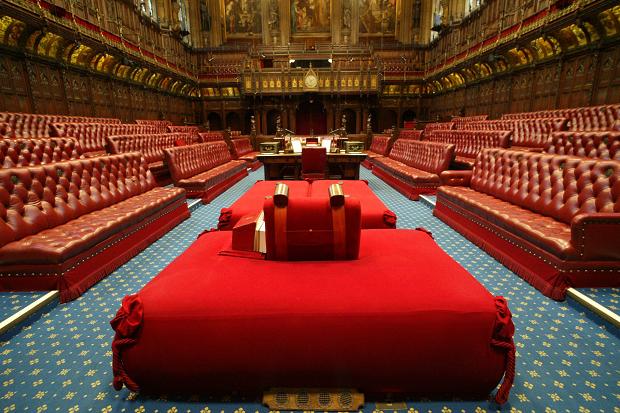
House of Lords reform - chamber

Britain’s unwritten constitution is not David Cameron’s plaything, or a convenient omission to be taken advantage of by opportunistic politicians who want to sidestep proper scrutiny

What do do when the British system of democracy fails to ensure a smooth and easy ride for each and every government bill or personal initiative of the prime minister?

Why, simply change the rules of the game, and meddle with the constitution so the only answer that anyone can give is an enthusiastic “yes!”.

This is essentially what David Cameron is now proposing to do, with some of the most nakedly autocratic changes to our legislature in recent memory.

The FT reports:

David Cameron has been secretly drawing up a plan to bypass an increasingly hostile anti-Tory majority in the House of Lords, which is threatening to wreak havoc with his legislative plans.

The UK prime minister will use the recent bust-up with the Lords on tax-credit reform as a chance to neuter the powers of the upper house.

Lord Strathclyde, the Tory grandee charged by Mr Cameron with reviewing the role of peers, is set to propose this month that the Lords should lose its veto over delegated or “secondary” legislation, such as the measure implementing tax-credit cuts.

Once that veto is removed, Mr Cameron is expected to step up his government’s increasing use of delegated legislation — also known as statutory instruments — to ram contentious measures through the upper house.

A typically arrogant move, as befits our current prime minister. But the worst comes in the form of this sneering, boastful threat from an unnamed senior Tory:

“If the House of Commons insisted, that would be it,” said one senior Tory.

“The House of Lords has to tread carefully,” he added. “If they don’t accept this proposal, we could stop them having any say at all on secondary legislation. That’s a big bazooka.”

In other words, the upper chamber of our national legislature should exist only to serve as an ermine-clad rubber stamp to the will of the prime minister. Sure, Cameron is happy to let the Lords poke around and pontificate on minor legislation of no real importance, just to give the appearance of a well-functioning and accountable system. But when it comes to the big ticket items involving finance, foreign or military affairs, the House of Lords should remain about as weak and toothless as its average, septuagenarian member.

In their outrage at being thwarted on tax credits and defied with regard to the voting age in the EU referendum, the government appears to have forgotten that scrutinising hasty legislation, thinking independently of the House of Commons and checking the “elected dictatorship” of the executive is exactly what an upper legislative chamber is supposed to do. If the composition of the upper house exactly mirrored that of the lower house, and voted in exactly the same way, there would be no point to its existence. This friction and tension between the two institutions forms one of the key checks and balances in our democracy – it is not something to be casually tossed aside whenever the government of the day finds its preferred pathway blocked.

There’s a dangerous chicken and egg dynamic at play when it comes to the House of Lords. The fact that the Lords are not democratically elected effectively gives cover to authoritarian governments who want to impose their will on the country unchecked. “None of these people were elected, while we just won the last general election”, governments can say. “Therefore we should be allowed to overrule or bypass the Lords in order to do the will of the people”.

But this also creates a powerful incentive to delay attempts to make the Lords more democratic, because to do so would add legitimacy to the body and make it much harder to steamroller ill-considered legislation past reasonable scrutiny and on to the statute books. The last attempt at positive House of Lords reform stalled early on during the coalition government of 2010-2015, after the Liberal Democrat initiative was blocked by a group of recalcitrant Tory MPs, and there will certainly be no further attempt now that the Conservatives govern alone.

It is certainly hard to argue that today’s House of Lords – made up of unelected grandees, failed MPs, influential party donors and the intolerable Lords Spiritual – should have the right to delay or veto government legislation. The current system is by definition undemocratic. But shamefully, David Cameron’s answer is not to make the House of Lords a powerful and democratically legitimate upper chamber, as he should, but rather to use the current state of the Lords as a convenient argument to help his government avoid much-needed scrutiny.

As this blog has been arguing for three years now, Britain urgently needs a full constitutional convention so that the weighty questions of how we govern ourselves and where power resides can be tackled, resolved and formalised in a document.

Equality for the four home nations in terms of devolved power. A fresh look at pushing power down to the lowest possible level, preferably the individual. Empowering cities, counties and regions (building on George Osborne’s Northern Powerhouse, but going much further). More elected mayors. Term limits for politicians and ministers. A pre-determined order of prime ministerial succession, so that the leader of our country is not chosen behind closed doors in the event that the unthinkable happens. House of Lords reform. House of Commons reform. Electronic voting in parliament to save vast amounts of valuable time. Perhaps splitting the executive from the legislature, so that MPs can concentrate on their jobs without being distracted by attempts to climb the greasy pole. All of these ideas and more should be on the table, with a view to fixing ancient democratic deficits while preserving all of the best of that which makes Britain great.

But what we have at the moment is piecemeal constitutional reform on demand – not with a view to promoting democracy or ensuring a well governed country, but simply in order to solve whatever problem happens to be confronting the government of the day. This is no way for politicians to govern, and it is no way to run a modern nation state.

Unfortunately, issues of governance and constitutional reform rarely bring people out onto the streets in protest, despite being of far more long term consequence to us all than relatively trifling matters like NHS junior doctors pay, HS2 or tax credits. But all concerned citizens should fight David Cameron’s latest lazy attempt at constitutional reform on the fly with every weapon at their disposal.

First we must stop the damage already being done. But that is not enough. It is not enough to stop David Cameron’s government from inflicting further vandalism on Britain’s constitution. The time has come to take a more holistic view of these matters, instead of the myopic, short-termist approach which thinks only in terms of immediate political advantage.

Serving MPs and ministers are obviously the last people who can be expected to give fair and impartial input to these decisions, though there is obviously a wealth of experience and knowledge held by current parliamentarians which must absolutely be harnessed. So we need to go directly to the people, however much the elites may recoil at the thought.

No more piecemeal reform. Britain doesn’t need any more opportunistic constitutional tricks. There may be little appetite for it – particularly when other current issues seem to loom larger, and when any discussion about who we are as a country provokes more awkward silences than expressions of patriotism – but we need real reform, through a full constitutional convention of the United Kingdom.

The longer we wait to drag Britain’s patchwork constitutional settlement half way to meeting the people, the less democratic – and more ungovernable – our country will become.

House of Lords reform 2

Agree with this article? Violently disagree? Scroll down to leave a comment.

Follow Semi-Partisan Politics on TwitterFacebook and Medium.

Budget And Autumn Statement Theatre Is No Way To Run Modern Britain

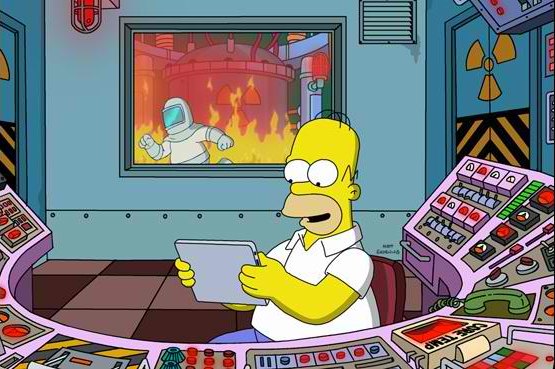
Homer Simpson - George Osborne - Budget - Annual Statement

The way British governments set budgets and tweak spending plans is a recipe for bad, short-termist decision making

Forget tax credits for a moment. Forget Right-To-Buy, stamp duty, beer duty and the tampon tax. MPs may still be debating George Osborne’s 2015 Autumn Statement, but step back for a moment and look at the broader picture.

Twice a year – once in the annual Budget and once in the Autumn Statement – the Chancellor of the Exchequer gets to his feet and delivers a refreshed set of economic policies in a big, set piece speech where he is essentially forced to favour tomorrow’s headlines over optimal long or even medium term decision making.

Nationally significant policies from every government ministry live or die by the concessions that their ministers are able to wrangle from a Chancellor who is forced by political reality to be more concerned with tomorrow’s Daily Mail headline than the state of our public finances in a year’s time.

Spending decisions are made based on economic forecasts which are sunnier than a warm day on Venus. Questionable political decisions are defended to the hilt, because to question them in light of new data would be to commit the gravest of self-inflicted political wounds, the U-turn. The government of the day rolls out a “smoke and mirrors” act worthy of David Blaine, and all to glam up the fact that they have slightly re-arranged the deckchairs on the Titanic.

And for what? To draw the public in to the political process? To high-mindedly arbitrate complex questions of economic policy? To astutely position Britain  vis-à-vis our global competitors, ensuring that our tax code, infrastructure and labour market are the most attractive in the world?

No. We do it just so that the government of the day – or a nimble opposition (remember those?) – can score political points. And, of course, because it is traditional.

Some traditions – like MPs not clapping in the Commons chamber – are antiquated and affected, but do little real damage. Others – like MPs having to leave the Commons chamber through a specific door in order to vote, rather than availing themselves of fast electronic voting technology – are an irritant, a brake on the smooth running of our legislature.

But some traditions belong in another category – things that do real, actual harm, not just to the running of our Parliament but to the political outcomes which we then have to live with every day. Some traditions actively harm our democracy.

I would submit that the Budget and Autumn State set-piece theatre events fall into this latter category. Politically astute chancellors (like George Osborne on a good day) may relish them because they provide an unparalleled opportunity to draw red lines and create traps for the opposition. The Westminster media may like the status quo, because if nothing else, these events can be moments of real political drama.

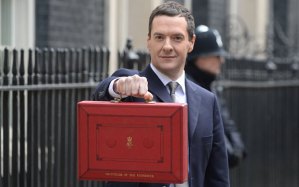
George Osborne - Chancellor of the Exchequer - Budget

But besides savvy chancellors and the established media, it is hard to tell who else benefits from the current system other than the cause of Big Government.

Having two occasions each year when an already-powerful chancellor like George Osborne in an already-centralised country like the United Kingdom gets to play with nearly all of the controls and levers which influence our economy – as though he were Homer Simpson at the controls of Springfield Nuclear Plant – only encourages meddling and tweaking of things that should properly be left to local government and individuals.

When you have direct, ultimate control over which families deserve help buying a house, which people should keep or lose their benefits or how much a person pays in sin taxes for their guilty pleasure, the temptation to use those powers is irresistible. And because of the ratchet effect, it is the easiest thing in the world to give away new perks to favoured interest groups, but nearly impossible to ever claw them back without being exposed to political attack. Even under this nominally conservative government, budgets and autumn statements have often been a one-way ticket to bigger government – or at least more activist state.

No system is perfect. One needs only look across the Atlantic ocean at the United States, with their unseemly debt ceiling fights and government shutdowns (oh, to have one here) to realise that you do not need a Westminster parliamentary-style system to sow budget chaos. But the flaws in our current system are obvious, and have been staring us in the face for years – yet nobody has proposed the slightest alteration, choosing instead to cheer when their side “wins” and whine when the other side is in power and sets a budget with which we disagree.

People did not elect a Conservative government only to have George Osborne sit at the control console of their lives, Homer Simpson-like, flicking switches and adjusting dials here and there in order to manipulate our mood so that we vote Tory again in 2020. If conservatism still means anything, it should mean a healthy scepticism of the state and its power to influence or police human behaviour.

Surely at some point our desire for smaller government and a smarter state has to outweigh our devotion to the dusty tradition of a man standing on the doorstep of his house, waving a red box around.

Autumn Statement - George Osborne - Conservative Government - Man at Control Panel

Agree with this article? Violently disagree? Scroll down to leave a comment.

Follow Semi-Partisan Politics on TwitterFacebook and Medium.

PMQs In The Jeremy Corbyn Era

Jeremy Corbyn - PMQs - 3

Jeremy Corbyn’s first outing in Prime Minister’s Questions was not the humiliating car crash predicted by some of his opponents – in fact, there were promising glimpses of what a refreshed PMQs could yet become

There was a quiet dignity to the way that Jeremy Corbyn, newly-elected leader of the Labour Party, got to his feet as Leader of the Opposition and asked his first question of David Cameron.

To the extent that optics matter, Jeremy Corbyn looked smart, in a friendly old professor sort of way – watching Corbyn, it almost feels as though there must be a bag of fuzzy unwrapped Werther’s Original sweets hidden somewhere in his jacket pocket. And for a man who has never held a front-bench role before taking on this most high profile one, Corbyn did not sound the slightest bit nervous. In fact, his voice seemed deeper and more resonant than it has at times on the campaign trail.

But enough of the fluff – it’s the substance that counts, not the presentation. And on this front too, Corbyn acquitted himself perfectly well for a first outing at PMQs. In fact, he rose to the occasion, following through on a pledge to use his time to ask questions submitted by members of the public.

This could easily have been gimmicky and awkward, an act of political spin straight out of The Thick Of It. But in fact it was actually quite moving, in a strange way – those of us who watched PMQs today saw the voices of the people brought into Parliament’s highest profile set-piece event, the type of direct advocacy normally reserved for backbenchers at sparsely-attended debates.

Continue reading