–
Political tribalism is usually discussed as a pathology afflicting low-information voters and preying upon the working class, but since the EU referendum we have seen many leading pro-EU figures from the political, journalistic and academic elites – people who often make a great show of their education and superior capacity for reason – throw themselves into the culture war with alarming zeal
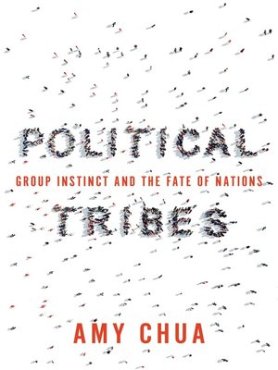
I have just finished reading the new book “Political Tribes: Group Instinct and the Fate of Nations” by Yale Law professor and author Amy Chua, and what a timely book it is.
Professor Chua uses examples of tribal group manifestations in various other contexts, from Vietnam and Afghanistan to Venezuela, to explain the fundamental human dynamics so often missed by Western countries who have stubbornly viewed geopolitics only through their preferred lenses, often at tremendous cost. But she then goes further, taking these lessons and applying them to the partisan polarisation currently gripping America with the embrace of modern identity politics on the Left and Donald Trump’s reactionary populism on much of the Right.
Chua explains:
When groups feel threatened, they retreat into tribalism. They close ranks and become more insular, more defensive, more punitive, more us-versus-them.
We certainly see this happening today, with many people in the upper economic echelons or who occupy high-status professional jobs, particularly those from the centre of big cities, feeling that their way of life, their entire worldview, is under sudden and sustained assault because the status quo they preferred and personally benefited from has suddenly been overturned.
We in the United Kingdom need to understand that Brexit is now much more than the geopolitical and economic question of whether or not Britain should leave the European Union; Brexit has now become the main proxy for a hundred other divisions and skirmishes in a super-heated culture war being waged by the people who run the country (or who are at least used to having their worldview championed and ideas implemented by those who run the country) and those who feel that the country is being run without their interests in mind at all.
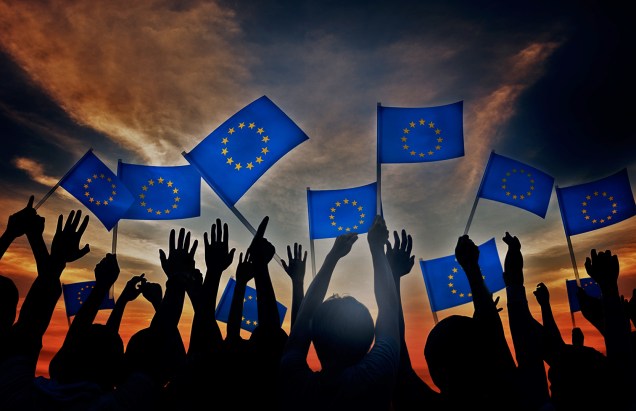
When many Remainers think of the European Union they no longer think of the specific institutions and governance frameworks of Brussels (to the extent that they ever did), and even the various supposed exclusive perks of membership are not always foremost in their minds. Rather, the EU has become such a synonym for the values of peace, progressivism, tolerance and cooperation to the extent that many prominent Remainers genuinely fail to understand how anybody could hold those values in high esteem while also supporting Brexit – an enormously consequential intellectual failure. And conversely, many of the more dogmatic Brexiteers see only Machiavellian plotting and elitist self-interest in establishment support for the European Union, making little allowance for the personal and institutional concern which naturally accompanies such a seismic political change as Brexit.
As Chua notes:
Of course, one group’s claims to feeling threatened and voiceless are often met by another group’s derision because it discounts their own feelings of persecution – but such is political tribalism.
Both sides in this debate feel that they are under attack and have everything to lose. Too often, Remainers think that Brexit by its very nature and however it is implemented will inevitably make Britain a meaner, more insular and less tolerant place more hostile to their own interests, failing to even acknowledge the many glaring issues with the EU and valid reasons for wanting to leave. Those in traditionally Remain-supporting demographics and professions may feel that everything from the diverse character of their home cities to their very livelihoods are at stake, while those in strongly Brexit-supporting regions and demographics wonder just how much more they are supposed to sacrifice so that others can continue to live a lifestyle and receive perks and benefits which they themselves are increasingly unlikely to share.
I wrote last year about the “Two Brexits” – the technocratic, largely economic and regulatory matter of legally seceding from the European Union on one hand, and the much wider cultural and constitutional argument on the other. But now it seems that while the former will inevitably still determine the outcome of the Brexit negotiations and Britain’s future relationship with the EU, the latter will shape the wider political discourse for years to come, and is already doing so.
But while the media (itself largely composed of people who are instinctively pro-EU, just as few American political journalists could plausibly claim to truly empathise with Trumpland) is more than happy to pathologise working-class pro-Brexit sentiment, too rarely is the gaze turned back at the demographics who cheer loudest for the EU. Too rarely do we examine their motivations or behaviours. Yet if Brexit was driven partly by tribal politics which energised anti-establishment sentiments among certain demographics, so too the anti-Brexit backlash is being fuelled by a surging new tribal politics of the elite.
This is both fascinating and scary; scary because the capacity of well-connected elites – people with access to power and used to getting their way suddenly finding themselves denied for the first time – to exact vengeance or engage in democratic obstructionism vastly outweighs the ability of most Brexit voters to defend their hard-won achievement.
After the shock referendum result, one might have expected the pro-EU establishment to gradually work through the five stages of grief – denial, anger, bargaining, depression and acceptance. But much of the elite never made it past anger; indeed, many of the most prominent Remainers are still stuck firmly in denial, believing that they have an almost sacred duty to overrule the electorate when they make so colossal a “mistake” as voting to leave the EU.
As the process of secession grinds onward, many such Remainers are becoming increasingly desperate, and this desperation manifests in increasingly erratic, extreme and bizarre behaviour. Rather than viewing Britain’s departure from the EU as an economic or geopolitical setback to be mitigated, instead they see the outcome as representing an existential threat to their “tribe”.
When examining the way that Brexit has warped the thinking and behaviour of many of those fundamentally opposed to leaving the EU, it is instructive to use representative examples. Here we shall examine four specific cases: young pro-EU activists, academics, journalists and politicians.
Brexit And The Youth Vote
Nobody represents the post-referendum pro-EU “youthquake” – or at least the mainstream media’s determination to see and portray the uniform attitude of young people towards Brexit – better than Madeleina Kay, also known as “EU Supergirl”. Kay describes herself as an “artist, writer, musician and social activist from Sheffield”, but the vast bulk of her activism began after the EU referendum and focuses on stopping Brexit.
Kay started out by drawing whimsical cartoons portraying Theresa May and Brexit-supporting politicians as evil, and post-Brexit Britain as some kind of disaster-ravaged, flaming dystopia. She then augmented this artwork by recording protest songs, basically naive little ditties and love songs to the European Union, with titles such as “All I Want for Christmas is EU” and “Stand Up For Them”, a song which treats the plight of EU migrants in the UK as a festering humanitarian outrage akin to genocide:
Stand up for them and you stand up for us
Complacent disapproval just isn’t enough
Actions not words, my friends, deeds not thoughts
This is a fight you will regret not having foughtBecause this is the outrage of our times
And this is the time to make it known!
If our values are hijacked by extremes
We will lose much more than just our hopes and dreamsI see people who have given and cared
Let’s treat them with the love they themselves have shared
And show them the respect that they deserve
Appreciation from the country they have served
But Madeleina Kay really hit the big time when she invented and debuted her alter ego, “EU Supergirl”. Inhabiting this character involves donning a superwoman outfit and cape emblazoned with the EU flag, and turning up at various events with her long-suffering dog (also flag-bedecked) to sing protest songs and rub shoulders with various celebrity Remainers including Bob Geldoff and Eddie Izzard.
Having won an EU blogging contest, Kay found herself invited to Brussels to meet the great and the good of the various European Union institutions, after which she invited herself to a joint press conference on the status of the Brexit negotiations being given by Brexit Secretary David Davis and his EU counterpart Michel Barnier. Perhaps because the event followed so soon after the UK’s Conservative Party Conference at which a heckler invaded the stage while prime minister Theresa May was giving her keynote speech, the EU’s security team suspected that a similar stunt was imminent and escorted Madeleina Kay from the auditorium amid a glare of camera flashes. This notoriety then earned Kay vast amounts of coverage in the online and print media, as well as several quite lengthy television appearances on the BBC.
In all of this, Kay is being held up by the media to represent the “voice of youth”, an oppressed generation who are having their country taken from them and their future stolen from them by selfish, bigoted and reactionary older generations. Never mind that 25 percent of young people voted to leave the European Union – they don’t feature at all in the narrative; newspapers like the Guardian will never never devote endless column inches to understanding their motivations and principles.
This is highly unfortunate because while there are many lucid and compelling arguments for remaining in the European Union that young people could potentially hold, the voices elevated to national prominence tend to be highly simplistic with very little evidence of understanding of the European Union and its workings.
This is because to many young people, supporting the European Union is less a rational, historical or evidence-based decision and more a necessary cultural stance to be adopted in order to be part of the “in” group. Over the years, the European Union has done a majestic job of associating itself with the values of peace, progressivism, openness and tolerance, to the extent that supporting the EU has become useful political shorthand for associating oneself with those ideals. Taking the time to learn how the EU’s protectionist trade policies severely harm African countries or how through its behaviour the EU has repeatedly proved itself antithetical to any serious idea of democracy or self-determination takes effort and a willingness to step outside the bubble of bias confirmation. By contrast, staying popular with one’s friends is as easy as rocking up to a protest, painting the EU flag on one’s face or burbling inanities on Twitter about how the EU alone prevented war in Europe.
But even more narrow than that, the young voices making themselves heard in the media are disproportionately middle or upper-middle class. Madeleina Kay was able to drop out of university and return to live with her parents when she felt the calling to become a full-time anti-Brexit activist. And time and again, the young people called upon by the media to speak for their generation fall into this category, if not by upbringing then at least by the fact that they now attend university, bastions of pro-EU groupthink.
Never once have I seen a working class kid from my hometown of Harlow, Essex or anywhere similar called upon to give their thoughts on Brexit. Why? Because they would quite likely offer a stinging rebuke to the European Union and express support for Brexit in one mode or another. University-educated young people are most likely to take advantage of various “perks” associated with the EU such as freedom of movement, and are also most likely to perceive opportunities to work or travel abroad to be gravely limited by Brexit. Working class young people are to some degree less likely to avail themselves of these opportunities, and so weighed their consideration of Britain’s EU membership quite differently.
The media seemed to acknowledge that the EU referendum divided Britain along lines of class and education, at least when it suited their narrative that Brexit was powered by stupid older low-information voters with broad accents and unskilled labour jobs, but this narrative also (wrongly) carved out an exception for working class young people, whose voices have been entirely erased from the national conversation simply because they fail to support the notion that British youth is united in opposing Brexit. Rather than giving any platform to dissenting voices, the voices of university-educated or university-attending young people possessing only the most childishly naive conception of what the EU is and how it works have been elevated above all others.
This is about tribalism, pure and simple. The middle class pro-EU youth define themselves in opposition to older voters – Daily Mail readers with their supposedly retrograde and often racist beliefs, and their selfish vote to reconstruct the imperial British empire rather than joining in the European Union’s worthy and entirely innocent post-national experiment. And this narrative is gratefully seized upon by a media class which broadly agrees with their perspective and is therefore only too ready to accept it as representative of the entire youth demographic.
Brexit And The Ivory Tower
One expects little of politicians, but until the EU referendum it was still just about possible for an objective person to respect the world of academia and those who work within it when they made forays into the political debate. No longer.
Throughout the EU referendum, the term “expert” was abused and appropriated to the point of absolute meaningless by various academics who sought to use their credentials and narrow fields of specific expertise to discredit and warn against a decision so broad and multifaceted as rethinking Britain’s relationship with the European Union.
This was most egregious when economists or those professing expertise in economics and trade matters made bleak and often highly-specific forecasts of the economic ruination which would settle upon Britain not just when we left the European Union but as soon as we voted to do so. This was unhelpful for a number of reasons – firstly because these short term predictions of doom (capital flight, a brain drain, the relocation of large multinational corporations, the need for an “emergency budget” involving drastic cuts to public services imposed by the government) have not taken place, rendering the medium and long-term prognostications equally untrustworthy in the public eye, but secondly because Brexit is not and was never primarily an economic proposition.
Brexit is vast and contains multitudes, but as immediate post-referendum polling clearly showed, it was primarily a vote to repatriate powers and decision-making ability from Brussels, areas of national sovereignty which a majority of voters believed should never have been given away in the first place. Despite the efforts of many Remainers to spin the illusion that Britain only voted to leave the EU because voters were deceived by gaudy and false monetary promises, the Lord Ashcroft poll clearly shows that the primary motivating factor was a desire for a return to the “principle that decisions about the UK should be taken in the UK”.
Yet time and again, academics who appeared on our television screens parading their credentials and expertise acted as though proving that leaving the EU would either cause economic harm or reduce the prospects of future economic growth alone would be sufficient to destroy the case for Brexit. This is not entirely their fault – the media also did an abysmal job of moderating the national debate, failing to pin down both campaigns on the democratic case for Brexit and allowing the discussion to disappear down a rabbit-hole of competing economic claims. But it was highly disingenuous to imply that a strike or cautionary note against Brexit in one sphere automatically invalidates the entire proposition.
A YouGov poll taken in July 2017 showed that a majority of Leave voters believed that even significant economic damage would be a “price worth paying” to secure independence from the EU. One can agree or disagree with the principle being expressed here, but this fact alone shows that the economic case was insufficient to persuade people to vote to remain in the EU. That so many prominent academics failed to appreciate this, or apparently to view the question of Britain’s EU membership in any terms beyond their own area of expertise, speaks very poorly of their intellectual honesty.
Worse still is the fact that rather than face up to these limitations, much of the academic community instead retreated into the comfort blanket of convincing themselves that Brexit came about because of “fake news” and a “post-factual” political climate. The idea that voters might reject rather suspect economic predictions in favour of non-quantifiable facts and narratives never seemed to occur to many of the brightest minds in British academia – or if it did, they certainly made no effort to address the qualitative arguments of Brexit supporters.
As I wrote in 2016:
The facts vs emotion reduction which now colours nearly all of the media coverage of our supposedly “post-truth society” is therefore a bit too simplistic. There are quantitative facts but there are also qualitative facts – truths which are not based on emotion or hunch or prejudice, but which nonetheless cannot be added up in an Excel spreadsheet, slapped on an infographic and shared on social media.
I voted for Brexit because I believe that the EU actively harms and undermines the democracies of its member states, by deliberate design. I marshalled many facts to back up this position during the campaign – from primary and secondary historical sources, the stated positions of current EU leaders and various other proofs. Just because they are not quantifiable and I could not declare (for example) that leaving the EU will make Britain 11.2% more democratic and give the people 8.4% more control over the decision makers does not make the facts on which I argued my case untrue. And reducing those qualitative facts about democratic control, accountability and the known history and trajectory of the EU as mere “emotion” unfairly diminishes those facts.
[..] At present there is far too much self-satisfied criticism of “post-factual politics” in which defeated pro-EU supporters express alarm that people supposedly ignored the only facts available to them and made irrational decisions against their own self interest, and this is not so. There were other, unquantifiable facts which moved people to vote for Brexit. And these pivotal criteria deserve to be acknowledged as legitimate facts, not dismissed as mere emotions.
It is easy and comforting to believe that one’s own side thinks and acts according to reason, logic and evidence while one’s opponents are moved by base emotion, superstition or prejudice. But the divide is very rarely so clear.
How and why did UK academia drop the ball to such an extent, both with their conceptualisation of the EU question and their approach to influencing the debate? Again, the root cause lies in the deep tribalism within the educational sector.
A 2016 survey showed that 9 out of 10 professional and support staff supported remaining in the European Union. There are a number of reasons driving this extreme bias, including the general leftward tilt of those in academia (leftism often though not exclusively being associated with support for the EU), the fact that the EU “funds” various university academic and research initiatives (the fact that this money is simply UK taxpayer money laundered through Brussels apparently eluding our nation’s brightest minds) and a general Utopian belief that the arc of history inevitably bends toward some kind of new post-national accommodation, the EU being the apotheosis of such aims.
As Paul A. Taylor, Senior Lecturer in Communications Theory from the University of Leeds, notes in The Conversation:
Anti-Brexit academics no longer appear able to differentiate between their own personal investment in the EU and the progressive social values they also claim to uphold.
Thus for reasons involving a shared worldview and perceived professional interest in the EU project rolling along unchecked (combined with a strong and often furiously denied groupthink effect), the opportunity for dissenting thought regarding Brexit within academia is vanishingly slim, just as it is in the arts world. But as with other cases of tribal behaviour, this sense of shared values and being under assault by outside “others” often leads to extreme responses from those within the academic tribe.
The most severe case of post-Brexit derangement in the academic world has to be that of philosopher, author and public intellectual Anthony Clifford Grayling. A decade ago, AC Grayling could be found debating on stage with Christopher Hitchens and other respected thinkers and commentators. Since the EU referendum, however, Grayling’s Twitter feed has been an hysterical, overwrought, 20-month tantrum insisting that Brexit is not merely a strategic geopolitical mistake but an evil and corrupt act which threatens the future of democracy itself (quite how Grayling squares this assertion with the fact that Brexit only came about because the people were permitted a democratic choice regarding Britain’s future EU membership for the first time in four decades is unclear, particularly since he pre-emptively blocked me on Twitter despite there never having been any interaction between the two of us).
Choice excerpts from AC Grayling’s increasingly vicious and conspiratorial Twitter tirade against Brexit include:
And:
Just this week, Grayling penned a piece for Prospect Magazine titled “Don’t trust the UK” in which he encouraged other governments, institutions, firms and individuals to avoid any association with his own country:
The EU referendum has exposed deep-lying problems in society, especially English society, relating to xenophobia, introversion, a prevailing sense of historical unreality, a dangerously distorting popular media, and a poor general level of understanding among Britons of Europe and the world.
Our fellow Europeans who have lived, worked, raised families and paid their taxes in the UK for decades have been shocked to find how fragile is the welcome they thought they had, and how selfishly disregarded their contribution to the UK’s economy, culture, health service and education system has proved to be.
If one is to be rigorously honest about today’s UK, one would not advise anyone to come and live or study here, or trade with us. In short, we should be put into purdah until we have sorted ourselves out.
Grayling goes on to encourage readers to watch YouTube videos showing footage from Britain in 1945, 1970 and today, and to look at the growth of British GDP since our accession to the EEC as “proof” that the EU has been the fount of all good things over the past four decades. While making this tenuous argument, Grayling manages to completely overlook the fact that Britain’s economic decline continued well past our 1973 EEC accession with the roots of recovery far more closely coinciding with the 1979 accession of the Conservative Thatcher government, a considerable feat of omission. Disingenuously asserting causation while providing no evidence and actively overlooking other more likely triggers in this way is a total abrogation of the academic approach, one which AC Grayling would be ashamed to make were it not in the service of his tribal beliefs.
The article is full of non sequiturs and baseless assertions which would make an undergraduate blush were they to survive proofreading and make it into submitted coursework, but that is nothing compared to the rabid conspiracy theorising in which AC Grayling now indulges:

To be clear, this is AC Grayling insinuating that the UK government actively plotted to distract from negative headlines about Brexit by provoking the sinking of a Royal Navy frigate with the attendant loss of human life and an inevitable state of war with China.
Most objective viewers will likely concede that the government’s approach to Brexit has been deeply flawed, characterised by a lack of strategic direction and political awareness. I myself have regularly criticised Theresa May’s Conservative government for their timidy, lack of vision and perpetual damage-control mode of governance. But never in a million years would I suggest to 50,000 Twitter followers that the British government was orchestrating a military conflict with China to distract from negative headlines at home.
This is the extent to which political tribalism causes the afflicted to view everything through the lens of their own pet issues and interpret any event, however benign or unconnected, as a direct attack on their own interests. These are the depths of crazed stupidity to which public intellectuals can sink when their tribal loyalty outweighs their commitment to reason (or regard for their own reputations).
Brexit And The Commentariat
The only comparable case I can think of a public intellectual going off the ideological deep end in this manner is the strange unravelling of American author and political commentator Dinesh D’Souza. Like AC Grayling, only a decade ago D’Souza – while always a staunch advocate of fiscal and social conservatism – could be found debating the likes of Christopher Hitchens and engaging in thoughtful, eloquent Christian apologetics which were intelligently structured and often a pleasure to listen to.
In the Age of Trump, however, Dinesh D’Souza has undergone a complete transformation from conservative stalwart to Trumpian demagogue. He can now be found making the case that the US Democratic Party and the American Left are the true heirs to Hitler, while selling books and DVDs to people who stock up on freeze-dried food rations, survival gear and ammunition in anticipation of a coup by the New World Order.
Why the transformation of both AC Grayling and Dinesh D’Souza from intelligent thinkers with admittedly forthright but reasoned views to paranoid conspiracy theorists convinced that there is a plot against Britain/America? Again, it has everything to do with tribes.
In the United States, as Donald Trump seized control of the Republican Party and dragged the GOP ever further away from their nominal commitment to small government conservatism, those in the conservative punditocracy had a choice: get with the new programme or risk falling permanently out of favour if the changes wrought by President Trump took hold. While some conservative pundits (such as Ben Shapiro) attempt to walk a tightrope, praising Trump when he enacts good policy and openly criticising him for his moral and managerial failures, most felt compelled to “pick a side”.
Picking a side meant choosing a tribe, or at least embracing an existing, previously unacknowledged tribal affiliation – either supporting Donald Trump’s populist campaign to Make America Great Again or throwing one’s lot in with the conservative “Never Trumpers”. Both tribes commit the same sin of furiously blinkered partisanship, in which any failures can be excused or denied, all successes exaggerated and all previous values or policy positions jettisoned without regard to principle or consistency.
Thus we see Republican politicians who spent the entire Obama presidency publicly rending their garments about the national debt now cheering for a president whose tax cuts have blown the annual budget deficit wide open, and Evangelical Christian leaders who fret about declining moral values delude themselves into thinking – and publicly insisting – that their new ally in the White House is a man of faith. Simultaneously, many conservative Never Trumpers have taken to blindly criticising every act of the Trump administration, even those policies which they once enthusiastically supported, because in order to “properly” oppose Trump one can never concede that any of his policies or decisions have merit.
In Britain, the most depressing example of subordinating sincere values for the dogmas of one’s chosen tribe is the strange case of Ian Dunt, a left-wing opinion journalist whose principles once led him to denounce the antidemocratic nature of the European Union and openly advocate for Brexit, but whose overriding need to be accepted by his tribe of London-dwelling metro-leftists forced him to not merely switch sides but become one of the most vocal denouncers of the euroscepticism he once espoused.
While Ian Dunt relishes his prominent role among Remainers and studiously ignores his glaring political reversal, the Guido Fawkes blog is less forgiving, writing in December 2016:
Dunt is the go-to Remainer for political TV producers and he has even written a book lobbying MPs to obstruct a proper Brexit. It’s a very clever career move, considering he was until recently a vocal Brexiteer…
As recently as February this year, Dunt wrote: “I despise the EU”. In May this year he bemoaned the “Faceless EU officials running the country”. In 2014 Dunt wrote: “The idea any left winger could support the EU is a constant source of bafflement for me”. And in 2013 he publicly stated his desire to leave the EU, predicting he and his fellow Leavers would lose a referendum.
How does Dunt explain this most audacious of u-turns, an apparently avowed Brexiteer becoming the darling of the Remain cause? You have to salute him for ruthlessly exploiting the dearth of talent on the Remain side and forging a lucrative, high-profile studio talking head role.
And indeed, by the time he penned this outraged column for pro-EU agitprop outlet The New European shortly after the EU referendum, Ian Dunt’s transformation had already been complete for some time:
The oddest thing about Brexit is how utterly un-British it is. The vaguely antagonistic attitude towards the continent is familiar enough, of course, as is the barely-concealed sense of national superiority. But the emotional, even borderline hysterical, manner of debate is not.
We saw left-wing celebrity commentator Owen Jones similarly brought to heel in the run-up to the EU referendum. Jones became increasingly disillusioned with and sceptical about the European Union after witnessing the supranational bloc’s treatment of member state Greece during the Euro crisis, culminating in his open support for Brexit in the summer of 2015:
Look at how the EU has operated. It has driven elected governments – however unsavoury, like Silvio Berlusconi’s – from office. Ireland and Portugal were also blackmailed. The 2011 treaty effectively banned Keynesian economics in the eurozone.
But even outside the eurozone, our democracy is threatened. The Transatlantic Trade Investment Partnership (TTIP), typically negotiated by the EU in secret with corporate interests, threatens a race to the-bottom in environmental and other standards. Even more ominously, it would give large corporations the ability to sue elected governments to try to stop them introducing policies that supposedly hit their profit margins, whatever their democratic mandate.
Fast-forward to the 2016 referendum and beyond, and such anti-EU views are now held as heresy among the tribe to which Owen Jones belongs, from which he craves approval and on which he depends for continued relevance. Has Owen Jones genuinely changed his mind about the EU? It seems fantastically unlikely that he now supports the EU’s antidemocratic tendencies. No, all that has changed is Owen Jones’ political courage and willingness to stand against the orthodoxy of his left-wing tribe.
And so today, Owen Jones writes stuff like this:
If only Brexit would go away. It sucks the political oxygen away from the issues we should all be discussing: like low wages, insecure jobs and the housing crisis. It is a rallying cry for a noxious alliance of anti-immigrant demagogues and regulation-stripping free marketeers. The bigotry, xenophobia and racism stirred up by the official leave campaigns injected an ugliness into British politics which never dissipated, and left hate crimes surging. And, frankly, Brexit is just mind-numbingly, painfully, excruciatingly dull. So yes, if there was a big red button to make it all just go away, I’d enthusiastically push it.
One can respect 180-degree changes when they are accompanied by thoughtful self-examinations and critiques explaining the reason for the reversal. I myself was an ardent euro-federalist and supporter of the European Union in my student days before learning more and changing my mind in subsequent years, and I have written about my change of heart at length. In fact, some of the most persuasive politicians and commentators tend to be those who once held diametrically opposite opinions, precisely because they know the old arguments inside-out, can deconstruct their shortcomings and reveal their flaws.
The likes of Ian Dunt make no mention of their Damascene conversions, however. They are ashamed of them and would like to forget that they ever held the opinions which they now repudiate. Ian Dunt has not and will never write a lucid think piece explaining his rapid conversion from arch-eurosceptic to Chief Brexit Mourner because there was no authentic process of persuasion underpinning his change of heart. Dunt does not believe that his earlier critiques of (and contempt for) the European Union were wrong; it’s just that they are now highly inconvenient given his need to remain in good standing with a tribe he is loathe to leave and which holds unambiguous opposition to Brexit to be a non-negotiable membership requirement.
In fact, I am inclined to believe that Ian Dunt does now hold his new, permanently outraged and catastrophising stance on Brexit with real sincerity. Such is the power of tribalism that the only way one can live with oneself having betrayed one’s own values and intellect is often to adopt one’s new stance as personal truth. Just as compulsive or practised liars are often plausible precisely because they convince themselves of their own falsehoods, so the likes of Ian Dunt are only able to rail against the self-harming “stupidity” of Brexit because they suppress all memory of the part of themselves which once proudly supported what they now denounce.
People engaged in healthy, spirited political discourse normally appreciate and embrace those who have changed their minds on a key issue – converts to one’s own side are seen as a good thing, the journey they have taken held as more important than their previous, “incorrect” views. But this is not the case when political discourse becomes tribal to its current toxic degree. At such times, it is not enough to hold your tribe’s approved positions today; one must also have held them a year ago, two years ago, a decade ago, or risk being seen as a dangerous (even evil) heretic. That is why the likes of Ian Dunt have to take such a strong stance against Brexit. Only by screaming their new faith loudly and continually can they hope to drown out the inconvenient fact of their prior heresy.
Thus political tribalism infects journalism and political commentary in two ways – first by forcing people into stark, binary opposition on fundamental issues, even when adopting those extreme stances conflicts with their current values or previously espoused views, and secondly by chilling the political discourse and making it impossible for people to express nuance or explain their changing thoughts on an issue without fear of being excommunicated from one’s social, professional and political circles.
Brexit And The Corridors Of Power
Perhaps the most galling spectacle in the run-up to the EU referendum was the sight of numerous Conservative MPs and government ministers who had built their careers on a foundation of avowed euroscepticism (and often only won selection as a candidate after professing dislike of the Brussels to their local constituency associations) meekly fall in line with prime minister David Cameron’s campaign to remain in the EU.
The most stunning case was that of former Conservative leader William Hague, whose tenure as party leader saw the Tories take a significantly more eurosceptic tack at a time when Tony Blair’s Labour government were gung-ho for deeper integration. A respected thinker and eloquent speaker, Hague would have been a real asset to the broader Leave campaign had he maintained the courage of his convictions when it counted. But of course he did the precise opposite, penning a lengthy Op-Ed for the Telegraph in which he explained in weasel words why Britain should vote to remain in the EU:
Whatever the shortcomings of the European “project” it is manifestly not in our interests for either it or the United Kingdom to fall apart. Such will be the challenges to the western world in the coming years, from a turbulent Middle East and a volatile world economy, that the dismembering of our own country by nationalists or the breaking up of Europe into uncontrolled rivalry would make many dangers more threatening still.
[..] To end up destroying the United Kingdom and gravely weakening the European Union would not be a very clever day’s work. So, even as a long-standing critic of so much of that struggling organisation, I am unlikely in 2016 to vote to leave it.
“Unlikely”. Note how such was Hague’s shame at betraying his espoused principles in so brazen a manner that he couldn’t bring himself to write a more definitive conclusion. And all this after having excoriated the EU for its many shortcomings only a few paragraphs prior:
Close acquaintance with central bodies of the European Union does nothing to create enthusiasm for them. The Commission itself, generally the best-performing of the EU institutions, could benefit from the spending cuts and rigour to which most national governments have been subjected. The European Court of Justice has pushed the boundaries of treaties and is capable of imposing burdens on businesses which suggest a detachment from reality.
As to the European Parliament, it does not remotely provide democratic accountability for the simple reason that most voters across Europe do not take elections to it seriously and are not usually aware of the identity of their MEPs. It is not possible to be accountable and anonymous at the same time.
William Hague is an intelligent man and knew full well that the “concessions” secured from the EU by David Cameron in his pitiful attempt to renegotiate Britain’s membership terms were not worth the non-existent paper they were printed on, but such was his commitment to his true political tribe that the self-evident truth was simply ignored.
Former Business Secretary Sajid Javid gave an equally tortured rationale for supporting the Remain campaign despite having built his name and career on staunch euroscepticism:
It’s clear now that the United Kingdom should never have joined the European Union. In many ways, it’s a failing project, an overblown bureaucracy in need of wide-ranging and urgent reform.
Had we never taken the fateful decision to sign up, the UK would still, of course, be a successful country with a strong economy. We would be an independent trading nation like the US, Japan, or Canada. Over the years, we would have developed trade agreements with the EU and with others, all without surrendering control over immigration or our economic independence.
[..] If this year’s referendum were a vote on whether to join in the first place, I wouldn’t hesitate to stand up and say Britain would be better off staying out. But the question we’re faced with is not about what we should have done 43 years ago. It’s about what we should do now, in 2016.
That’s why, with a heavy heart and no enthusiasm, I shall be voting for the UK to remain a member of the European Union.
In the case of Sajid Javid I must admit that at one point my own tribal instincts got the better of me, and I responded to an olive branch later extended by Javid to the eurosceptics he betrayed with a (hopefully) uncharacteristically vicious response of my own:
Let me say on behalf of all eurosceptics (I’m sure they won’t mind my presumption in this case) – Sajid Javid can take his Brussels bashing and shove it where the sun don’t shine.
The British people have no further need of oleaginous politicians who make eurosceptic noises in pursuit of cheap applause, but who then side time and again with the political establishment to preserve the anti-democratic status quo, with Britain kept as a vassal state of a relentlessly integrating European political union.
Are we supposed to feel comforted and mollified that Sajid Javid has now promised that on 24 June, the day after his own efforts contribute toward a “Remain” vote in the EU referendum, he will once again join our ranks and stand up to criticise the democratic subversion underway in Brussels? Because that would be like a soldier who, on being rotated away from the front lines at the end of his tour of duty, promises his comrades that he will see them again soon, as soon as he is done fighting a stint for the enemy during his R&R break.
My harsh conclusion:
One thing is clear: every last one of those calculating Conservative MPs who made the fateful decision to sit out the fight to extricate Britain from the European Union must be pitilessly cleaved from the eurosceptic herd and never permitted to rejoin it.
They should be made to wear their latent europhilia as a badge of shame and dishonour for the remainder of their sorry political lives.
Yes, I am certainly not immune from political tribalism myself at times.
We see the same tribal effect at work in the United States with regard to Republican Party positions on immigration. Many a conservative Representative or Senator owe their positions to having taken firm, uncompromising and sometimes even extreme positions on immigration, to the point of advocating mass deportations. Such promises rolled off their tongues as they courted a voter base which held similar views, and when their party was stuck firmly in opposition without possibility of enacting the controversial reforms they championed.
Fast-forward to 2018, with a (nominal) Republican in the White House and control of both houses of Congress, and these immigration hardliners should have encountered no problem enacting the draconian reforms they long advocated – or at least ought to have put up a proper fight for them. But of course, in reality we saw just the opposite, with many elected conservatives balking at policies they once claimed to support – building a wall, enacting mass deportations, defunding sanctuary cities and revoking the protected status given by President Obama to young illegal immigrants known as “Dreamers”. This was then promptly (and with some justification) portrayed as a great betrayal by an activist base who took these politicians at their word.
Why? Because while these conservative politicians were more than happy to bash illegal (or even legal) immigration in order to win support from their base, those are not the views of the “tribe” to which they really belong. Their real tribe of course consists of the Republican Party’s corporatist donors and those who benefit economically from continued illegal immigration, together with a Washington elite which is slowly catching up with Europe in its adoption of a laissez-faire, post-national worldview in which borders are increasingly irrelevant.
As Amy Chua notes at the beginning of “Political Tribes”:
Domestically [..] elites in the United States have either not cared about or been remarkably oblivious to the group identities that matter most to large segments of ordinary Americans, including people they are supposedly trying to help”.
In the case of the Republican Party, many of their leaders have actually often paid lip service to these identities and pretended to care about issues of importance to their base – consider George W. Bush’s courting of the Evangelical vote and the Tea Party’s ostentatious fiscal conservatism – but it has mostly been an act. This alone is one of the key reasons for the Trump ascendancy, to the initial horror of most congressional Republicans: the belief by an increasingly betrayed voter base that Donald Trump’s presidency would result in deeds, not words.
Many people – politicians, journalists, academics, even private citizens – often feign to be part of one tribe, but crunch time reveals where their loyalties really lie. In the case of Republican politicians, many were more than happy to court the vote of a base concerned with illegal immigration, but when put on the spot and given a chance to deliver for that particular tribe, instead they balked and kicked the can down the road in order to avoid doing economic damage to (and incurring social pushback from) their real tribe.
Focusing on the elites of which most American politicians are a part, Chua notes:
American elites often like to think of themselves as the exact opposite of tribal, as “citizens of the world” who celebrate universal humanity and embrace global, cosmopolitan values. But what these elites don’t see is how tribal their cosmopolitanism is. For well-educated, well-traveled Americans, cosmopolitanism is its own highly exclusionary clan, with clear out-group members and bogeymen – in this case, the flag-waving bumpkins.
Who can deny that this paragraph could just as easily be describing the centrist political establishment of Labour, the Liberal Democrats or the europhile contingent within the Conservative Party?
In the case of British Conservative MPs, many were happy to give speeches inveighing against Brussels and the antidemocratic European Union when it won them votes, but refused to follow through on those words when the interests of their real tribe asserted themselves.
Chua is quite correct when she writes:
There is nothing more tribal than elite disdain for the provincial, the plebian, the patriotic.
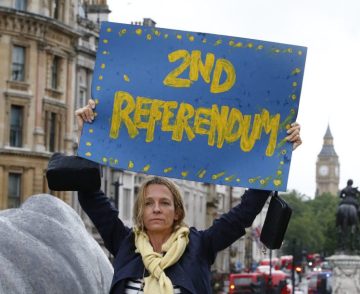
Yet today we find ourselves in a worrying situation where many political leaders in both the United Kingdom and the United States are effectively at war with the citizens they nominally represent, looking upon a democratically made decision with astonished contempt and seeking to undermine or reverse it through any means necessary, from the dubious (holding another referendum in an attempt to get the “correct” answer on the second attempt) to the downright authoritarian (simply ignoring the result of what is now eagerly labelled by Remainers a purely “advisory” referendum).
Conclusion — When Two Tribes Go To War
Amy Chua ends her book “Political Tribes” on a hopeful note, writing of the various green shoots of comity and mutual tolerance taking root in a polarised and increasingly Disunited States of America – and to be sure, she offers some compelling examples of individuals organising at the community level to provide forums for Americans to come together as fellow citizens rather than Democrats or Republicans, Trump supporters or members of the #Resistance first and foremost.
At present, I see little such hope for a similar rapprochement in British politics, particularly as far as Brexit is concerned. Partly this is due to the fact that Brexit is more final and harder to overturn once implemented than the usual policy decisions implemented by a US presidential administration. But it is also because the outreach which Chua notes is rooted in a unique sense of civic-mindedness in which American citizenship is used as the “glue” which helps to mend a previously fractured society.
There can and will be no such movement in Britain because the whole idea of the European Union is post-national, with many of the most vociferous anti-Brexit campaigners explicitly repudiating or denigrating their British identity in order to claim the mantle of being European first and foremost. Even more than arguments about immigration or taxation or economic policy, one’s stance on Brexit and the European Union is bound up in one’s conception of self and group identity, and if one group explicitly rejects the only glue which might hold us together then on what other fundamental common ground can we possibly unite?
As Amy Chua observes of the United States:
The Left believes that right-wing tribalism – bigotry, racism – is tearing the country apart. The Right believes that left-wing tribalism – identity politics, political correctness – is tearing the country apart. They are both right.
This, too, could just as easily describe the current state of affairs in Britain:
Today, no group in America feels comfortably dominant. Every group feels attacked, pitted against other groups not just for jobs and spoils but for the right to define the nation’s identity. In these conditions, democracy devolves into zero-sum group competition – pure political tribalism.
While Chua rightly emphasises the importance of face-to-face contact in breaking down barriers to understanding and acceptance, again this proves difficult with Brexit, given that regions and professions are often so polarised. My home for much of the past ten years has been the North London neighbourhood of West Hampstead, one of the most heavily Remain-voting enclaves of the United Kingdom during the EU referendum and a place where EU flags hang from windows and above shop fronts to this day. There are too few people like me for most Remain-supporting inhabitants to meet and get to know in order to overcome the enormous gulf of empathy which exists between the two sides, just as there are too few people like me among the young professional and artistic/creative classes to be effective ambassadors to those redoubts of Remain sentiment.
In the longer term, though, this may well become less of a concern. Brexit will be implemented, however haphazardly, and the absence of provable counterfactuals will make it increasingly difficult for the EU’s loudest cheerleaders to make a compelling case that Britain would have been better off remaining in or rejoining the bloc. This explains so much of the hysteria and vitriol currently emanating from the likes of AC Grayling and other anti-Brexit leaders; deep down they know that Brexit will either be stopped before it takes place, or will go ahead with their objections increasingly drowned out.
There may also be hope in the fact that so much hostility to Brexit is rooted in political tribalism rather than deep knowledge of or affection for the European Union itself. While the true believers like AC Grayling will likely never “cease from mental fight” in their battle to return Britain to the grand projet, there are many others like Ian Dunt and Owen Jones who only maintain their anti-Brexit stance under duress, as the necessary price of membership to their chosen tribe.
As the years go by post-Brexit and new political issues come to the fore, the “social cost” of departing from pro-EU orthodoxy will steadily diminish, allowing those unwilling EU cheerleaders to drift away, leaving a vastly diminished rump of cranks and true believers. And just as the issue fades in importance for Britain’s “thought leaders”, so too the groupthink will fade for many lower-information voters who currently uncritically lift their pro-EU stance from the pages of the Guardian just as some Brexit supporters took theirs from the Daily Mail or Daily Express. In short, a decade or two’s time may well see those still advocating for Britain rejoining the European Union (assuming that it still exists in current form) become the “fruitcakes, loonies” and closet federalists on the fringes of British politics.
But this is some way off yet, and at present such is the viscerally tribal imperative among key demographics to oppose Brexit (and so great the power and prominence of those who do so) that the issue will continue to divide and toxify our politics for a long time to come, at least until we can find it in ourselves to follow Amy Chua’s closing stricture:
If we’re to come together as a nation, we all need to elevate ourselves. We need to find a way to talk to each other if we’re to have any chance of bridging divides. We need to allow ourselves to see our tribal adversaries as fellow Americans, engaged in a common enterprise.
–
Support Semi-Partisan Politics with a one-time or recurring donation:

–
Agree with this article? Violently disagree? Scroll down to leave a comment.
Follow Semi-Partisan Politics on Twitter, Facebook and Medium.







 Semi-Partisan Politics