I don’t do this often – maybe twice a year – but this is one of those times when I walk up and down the virtual tube carriage shaking my tin and requesting any spare change from readers who find some real value in this site, and have the means to help support it through a monetary donation or subscription, however small.
(Those who have already kindly donated this year are specifically requested NOT to do so again, and to instead consider supporting The Leave Alliance here if they feel so inclined – your generosity towards me is already very much appreciated. You know who you are.)
I am pleased to report that this blog is going from strength to strength (as hopefully you will have observed). New features have been trialled, some have inevitably fallen by the wayside and others have really taken off. Most notably, yours truly was invited to debate the infantilisation of today’s students on the BBC’s Daily Politics show earlier this year – not necessarily the topic or angle I most wanted for my debut, but a good opportunity nonetheless, and one which led to this brilliant caricature drawn by a viewer:
The upshot is that with two back-to-back record-breaking months in March and April, pageviews and unique visitors for 2016 to date have already surpassed the totals for 2015. In other words, in the first third of this year more people have visited and read Semi-Partisan Politics than did so in the whole of 2015.
This has been achieved partly by a significant increase in blogging frequency – from several posts per week to several posts per day, on average. In many ways this is bowing to the inevitable. A political blog is in some ways like a television channel, and going quiet even for a day is the equivalent of dead air during prime time – if you stop, people will simply change the channel.
But this growth is also due to the loyalty and help of you, the readers. Increasingly I find that Semi-Partisan Politics is getting significant referrals through Twitter, Facebook, Reddit and various online bulletin boards – not to mention from the sidebar links of my blogging comrades of The Leave Alliance. Now that this site has a small but real readership, I am able to spend more time writing and less time trying to drum up an audience. A sincere thank you to all those who have shared links to this site, or taken the time to comment and enrich the debate here.
The other fairly significant change is an increase in shorter response-based pieces, particularly with the “Tales From The Safe Space” series. Here, the broader argument (in defence of free speech and academic freedom) is advanced in multiple posts, without the need to restate the case in full each time, and I have shared numerous examples of bad (and occasionally encouraging) things taking place on British and American university campuses with some pointed commentary, but without the full context you would get in a complete essay.
While I continue to play around with the format and focus of individual posts and series, this blog retains its commitment to the following ideals:
Brexit: freedom from the European Union
Democracy and national sovereignty
Constitutional reform and a federal UK
Separation of church and state
Healthcare reform, not NHS worship
Smaller, smarter government
Free speech, without restriction
Fighting the Cult of Identity Politics
Fighting timid centrism on the Right
Fighting empty virtue-signalling on the Left
Maintaining the high tempo of blogging required to grow this site means that besides the day job and family time, this blog is my life. Other interests are largely on hold in order to commit to writing as much as possible, a sacrifice I am happy to make because I believe the issues which I write about are important. The few occasions on which this blog has been picked up in the national media validate this assessment, I believe.
I would like to do more. My future reading list now spills onto two book shelves as I try to stay up to date with the most important issues I cover while also trying to remediate a desperately poor grounding in history and philosophy (thanks, state education).
Obviously the EU referendum is a priority at the moment – I am proud of my association with The Leave Alliance, the only group with not only a plan for achieving Brexit in a safe and non-disruptive way, but more importantly a genuinely positive vision for what a globally engaged and democratically renewed Britain should look like.
If you agree with these objectives and enjoy this blog’s coverage and commentary, please do consider using the PayPal tip jar to make a small contribution to my work:
There is no longer an Edward Murrow or Walter Cronkite to stand up to Donald Trump
Could mainstream television, radio, print and internet journalism outlets have done more to prevent the rise of Donald Trump? And should they have done more?
Actually, many people are alarmed [by the rise of Trump], but it is difficult to know that by observing media coverage, where little journalistic alarm over Trump is expressed. That’s because the rules of large media outlets — venerating faux objectivity over truth along with every other civic value — prohibit the sounding of any alarms. Under this framework of corporate journalism, to denounce Trump, or even to sound alarms about the dark forces he’s exploiting and unleashing, would not constitute journalism. To the contrary, such behavior is regarded as a violation of journalism. Such denunciations are scorned as opinion, activism, and bias: all the values that large media-owning corporations have posited as the antithesis of journalism in order to defang and neuter it as an adversarial force.
[..] This abdication of the journalistic duty inevitably engendered by corporate “neutrality” rules is not new. We saw it repeatedly during the Bush years, when most large media outlets suppressed journalistic criticism of things like torture and grotesque war crimes carried out by the U.S. as part of the war on terror, and even changed their language by adopting government euphemisms to obscure what was being done. Outlets such as the New York Times, the Washington Post, and NPR refused to use the word “torture” to describe techniques long universally recognized as such — which were always called torture by those same media outlets when used by countries adversarial to the U.S. — because to do so would evince “bias,” lack “neutrality,” and “take sides” in the torture debate.
Contrary to what U.S. media corporations have succeeded in convincing people, these journalistic neutrality rules are not remotely traditional. They are newly invented concepts that coincided with the acquisition of the nation’s most important media outlets by large, controversy-averse corporations for which “media” was just one of many businesses.
I’m not so sure.
While Greenwald is absolutely right to chastise mainstream media outlets for clinging desperately to an “appearance of objectivity at all costs” dogma which routinely sees them humiliate themselves by speaking and writing about the utterly ridiculous as though it were merely an equal and opposing side to an argument, the idea that prestige nightly news anchors could have killed Trump’s candidacy in the crib either by initially declaring it ridiculous and mocking it, or by waging an Edward Murrow or Walter Cronkite crusade against him, seems to be wishful thinking.
It’s wrong because it underestimates the anti-establishment surge now underway in America (and in Britain too, as we saw with the rise of UKIP and the SNP). Suppose that mainstream news outlets like the New York Times, NBC, NPR and others had come out strongly to argue that Donald Trump’s ideas were outside the Overton window of “acceptable” political thought in America, and that he should henceforth be ignored by the media regardless of how many people were attending his rallies or how high he climbed in the opinion polls. What difference would it have made?
Political journalism is scorned by the public as much as Washington politics itself, and often for quite valid reasons – the incestuous, back-scratching relationship between the two is often entirely self serving and actively prevents the holding of government to proper account. Trump’s candidacy is fuelled in significant part by the opposition of those opinion columnists and TV talking heads who have come out to criticise him. If they were joined by everyone else, including news anchors and print journalists whose material does not appear in the opinion section of their television shows or newspapers, it is hard to see it doing anything other than confirming the suspicion of Trump fans that the “establishment” is out to get them, thus driving his poll ratings even higher.
This is important. Trump is riding high partly because of a small group of “let it burn” conservatives who believe that Washington is so corrupt that an authoritarian outsider beholden to no one is as good a choice as any to sweep out the garbage, but mostly because Trump supporters feel ignored and patronised by almost everybody else. And frankly, the opposition to Trump in the media has not helped, tending toward hand-wringing “ooh, isn’t he evil” editorials and one-sided accounts of violence at his campaign rallies rather than granular deconstructions of his policy proposals (such as his policies exist). Increasing the frequency and volume of the existing anti-Trump media coverage will not fix the problem, because it does little to tackle the sentiments and ideas which drive his support.
But more to the point, if we are to set arbitrary limits on our political discourse, beyond which any candidate promoting “unacceptable” ideas is rounded on by the corporate media as it is currently comprised, who gets to set the limits? Who gets to decide which ideas are okay to debate, and which are traps which will bring the entire media establishment crashing down on the person who dares to raise them?
There is almost nothing as infuriating as watching high profile journalists discuss an issue where one side obviously has the moral and intellectual high ground in terms that suggest that it is a finely balanced debate – witness the debates on torture, climate change, Brexit (UK secession from the European Union) and more. But even worse than this would be a collusion between media outlets to freeze out certain ideas or candidates from being mentioned altogether because they are “evil” or contradict prevailing orthodoxies.
I’m sure that this is not what Greenwald has in mind. As a consistent advocate of free speech, I’m sure that he would prefer a brash and lively media landscape of much more fractured ownership, in which a multitude of independent news outlets are free to carry out the kind of unabashedly partisan campaigning journalism that Greenwald (and to some extent this blog) advocates. Greenwald would likely be fine if some outlets produced coverage very supportive of Trump, so long as other outlets were equally free to oppose him.
But we do not have such a media landscape right now, and moving in this direction would be a process taking years, not months – certainly too long of a timescale to have any impact on the rise of Donald Trump. The difficult truth is that given the hysterical, rabble-rousing behaviour of the Republican Party over the course of the Obama presidency – in which they chose hyperbolic, apocalyptic scaremongering over principled opposition to bigger government – there was nothing that could have prevented the monster they created from coming to life, breaking free of its chains and devouring them, as Trump is now doing.
It may feel good to imagine an American media landscape filled with luminaries like Edward Morrow and Walter Cronkite, journalists who would have taken one look at Donald Trump back when he launched his presidential bid, and masterfully snuffed it out in the course of one withering nightly news broadcast or newspaper column. But that is not the world we live in. Any attempt by major media outlets to scrutinise or inveigh against Trump in these anti-establishment times would only have fuelled his campaign even more than his many critics already have.
Far more deserving of blame are the Republican Party establishment, who shamelessly and hypocritically rode the anti-establishment, anti-Obama tiger for seven years before finally it turned on them. And also at fault is an entire remote and self-serving political establishment which in many ways thoroughly deserves the kicking it is now receiving – just not by Donald Trump, the opportunistic and undeserving current beneficiary.
Would it be a cathartic experience to witness more mainstream media types casting objectivity aside and coming out against Trump? Quite possibly. But would it have done anything to stop his rise? Let’s not kid ourselves.
Earlier, the Senator asked, “Upon what meat does this, our Caesar, feed?” Had he looked three lines earlier in Shakespeare’s Caesar, he would have found this line, which is not altogether inappropriate: “The fault, dear Brutus, is not in our stars, but in ourselves.”
No one familiar with the history of this country can deny that congressional committees are useful. It is necessary to investigate before legislating, but the line between investigating and persecuting is a very fine one and the junior Senator from Wisconsin has stepped over it repeatedly. His primary achievement has been in confusing the public mind, as between the internal and the external threats of Communism. We must not confuse dissent with disloyalty. We must remember always that accusation is not proof and that conviction depends upon evidence and due process of law. We will not walk in fear, one of another. We will not be driven by fear into an age of unreason, if we dig deep in our history and our doctrine, and remember that we are not descended from fearful men — not from men who feared to write, to speak, to associate and to defend causes that were, for the moment, unpopular.
This is no time for men who oppose Senator McCarthy’s methods to keep silent, or for those who approve. We can deny our heritage and our history, but we cannot escape responsibility for the result. There is no way for a citizen of a republic to abdicate his responsibilities. As a nation we have come into our full inheritance at a tender age. We proclaim ourselves, as indeed we are, the defenders of freedom, wherever it continues to exist in the world, but we cannot defend freedom abroad by deserting it at home.
The actions of the junior Senator from Wisconsin have caused alarm and dismay amongst our allies abroad, and given considerable comfort to our enemies. And whose fault is that? Not really his. He didn’t create this situation of fear; he merely exploited it — and rather successfully. Cassius was right. “The fault, dear Brutus, is not in our stars, but in ourselves.”
Good night, and good luck.
–
Agree with this article? Violently disagree? Scroll down to leave a comment.
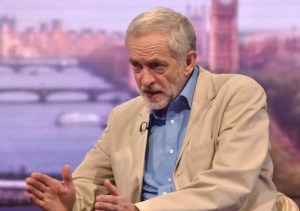
Peter Oborne is a journalist of uncommon principle; what he says should be taken seriously and treated with a measure of respect. But Peter Oborne has publicly stated his admiration for Jeremy Corbyn…
This blog has often felt like something of a voice in the conservative wilderness for not viewing Jeremy Corbyn as an unmitigated disaster for British politics.
One does not have to agree with Jeremy Corbyn’s sometimes loopy policies to admire the way his unexpected leadership of the Labour Party has shaken up a dull, lumpen, self-satisfied consensus among the Westminster elite, and put the fear of the voters back into a good many Members of Parliament who were more focused on the smooth progression of their own careers than the trifling concerns of the electorate.
Surely having two party leaders who think and say different things is the point of democracy. The fact that Britain has increasingly been afflicted with party leaders who say and think nearly identical things (once the rhetorical embellishment is stripped away) since Margaret Thatcher left office is the root of our current centrist malaise, and one of the primary reasons why a third of the electorate don’t show up to vote at general elections.
What’s the point in voting if the choice is between Prime Minister Bot A and Prime Minister Bot B, both of whom will automatically praise the NHS without looking more seriously at fixing healthcare, both of whom will tinker around the edges of welfare reform to get the Daily Mail off their backs but without doing anything substantive to fix our broken non-contributory system, both of whom are achingly politically correct at all times (“It’s Daesh, not ISIS! I can’t believe you called it Islamic State!“) and both of whom have so little faith in Britain’s ability to prosper as an independent, globally connected democracy that they strive (overtly or covertly) to keep us yoked to the European Union?
I’m a conservative libertarian. I have enough of a task on my hands trying to push the Conservative Party in a less authoritarian, more pro-liberty direction without worrying about what the Labour Party is doing every minute of the day. And I have enough confidence in my political worldview that I believe conservative principles will win the battle of ideas when promoted and implemented properly (hence my ongoing despair with the current Tories).
But many of my fellow conservatives, particularly those in the media, are in despair at the rise of Jeremy Corbyn and the return of real partisan politics. Why? Their professed concern that Britain have a “credible” opposition (meaning one almost identical to the governing party in all respects) stretches belief to breaking point and beyond. I can only think that their fear of Jeremy Corbyn reflects some personal doubt that their own political ideas and philosophies might not be superior after all – that Jeremy Corbyn might actually win people over in large numbers and have a shot at taking power.
I have no such fear. I believe that the principles of individual liberty and limited government beat discredited, statist dogma hands down, every day of the week. And I believe that the rise of Jeremy Corbyn might force conservatives to remember why they hold their views in the first place, and even refine and improve their own ideas through rigorous debate – if only they could get over their collective outrage that a socialist is in charge of the Labour Party.
I don’t agree with everything that Oborne says in the video. But on the near-conspiracy of the political class and the media to undermine Corbyn (not to merely disagree with him but to portray his ideas as “unthinkable”) and on foreign policy (castigating our closeness with Saudi Arabia, an odious regime with whom we fawningly do business and lend our diplomatic legitimacy in exchange for oil and intelligence) he is spot on.
And I think that’s what makes Jeremy Corbyn’s detractors so angry. No man can be consistently wrong about everything all the time, and on rare occasions Jeremy Corbyn gets it conspicuously right – such as with his criticism of our closeness with the Saudi regime. People accustomed to either being in power or just one election away from power look at somebody who (whatever other baggage he may have) is unsullied by the continual act of compromise and ideological drift, and it makes them mad. It forces them to ask themselves how many of the compromises, reversals and deals from their own careers were strictly necessary, and how many resulted either from failures of courage or pursuing power for its own sake.
Sometimes, the haters were probably right to do what they did. Governing a diverse nation of 65 million people is not possible without the art of compromise, as Jeremy Corbyn would soon discover if the impossible happened and he became prime minister. But sometimes they were not. And the cumulative effect of all of these small compromises by Labour and the Conservatives over the years were two very slick but ideologically bankrupt political parties that looked and sounded nearly exactly the same on a whole host of issues. Issues (like the EU) which the political class had arrogantly deemed to be settled once and for all, though the voters had other ideas.
I understand this. I sense that Peter Oborne understands this. And if that means there are still only two non-Corbynites in Britain who don’t think that Jeremy Corbyn’s leadership of the Labour Party is an unmitigated disaster – well, at least I’m in good company.
–
Agree with this article? Violently disagree? Scroll down to leave a comment.
The media’s fixation with personality politics and the petty ups and downs of individual political careers distracts us from the only thing that matters when it comes to the EU referendum – the future of our democracy
The Times’ Red Box briefing email today leads with more sneering commentary about the supposed shortcomings of the broader anti-EU, pro-democracy Leave campaign:
Maybe it’s a stunt to show how difficult it is to work together for the greater good, thus undermining a key argument for staying in the European Union.
Or maybe the campaigns to leave the EU are a total bloody shambles.
While Remain was pumping out letters to ten million homes yesterday, the Outers were out to get each other. Again.
The briefing continues:
The infighting is also causing another problem: who would want to join this rabble?
Lord Lawson, the former chancellor, has suggested that a senior cabinet minister will eventually lead the Out campaign, though refused at the weekend to say who that might be.
There are suggestions that Chris Grayling and Theresa Villiers are not high profile enough, and the likes of Michael Gove will fall in line and support the PM.
Which leaves Iain Duncan Smith, a former Tory leader who remains popular in some parts of the party and has long argued against staying in the EU.
Yet he too has history with Cummings, who was his director of strategy during his ill-fated leadership before quitting and later declaring: ” Mr Duncan Smith is incompetent, would be a worse prime minister than Tony Blair, and must be replaced.”
Because of course that is the most important question in this whole debate – whose reputation and political prospects will be most enhanced or damaged by the stance they take on the future of British political governance.
What ambitious, self-respecting politician would want to associate their glittering career with the grubby and laughable concepts of national sovereignty and democracy? Which of the petty, superficial personalities who pass for statesmen today will win a coveted promotion, and which will find their career progression halted because they pick the wrong horse in this race? The sheer superficiality of the media’s EU referendum debate coverage absolutely beggars belief.
Is there currently a lot of unseemly (to outward appearances) infighting among the eurosceptic, pro-Brexit crowd? Yes. But a lot of this is necessary fighting. Though our first instinct may be to separate the squabbling factions with cries of “can’t we all just get along?”, in actual fact this fighting serves an important purpose.
Many people and organisations who purportedly oppose the European Union are actually either ambivalent about leaving, or busy spewing out contradictory and uninformed messages which will ultimately harm the Leave campaign and provide the Remain side with plentiful campaign fodder. This harms the Brexit cause, and so must be confronted and dealt with if the Leave campaign is to win the referendum.
None of these things are possible, nor even desirable. And pretending that they are achievable reflects badly on the entire Brexit movement. And so while it may appear unseemly to outsiders and the half-interested media, it is essential that eurosceptics have these essential debates now, while relatively few people are watching, so that we go into the campaign with the message that carries the greatest chance of success.
[..] it is impossible for everyone to agree and therefore impossible to have one unifiedLeave campaign. The Remain campaign is entirely based on disseminating fear, uncertainty and doubt amongst the populace and propagating myths about Brexit. Thus, as a movement Remain is easy to unify; Europhiles are unified in their duplicity, unjust smugness, their lack of faith in democracy and their inability to stop clinging to an archaic ideology and an ideal that is redundant and bad for Britain.
The debate over leaving the EU is more nuanced and therefore necessarily divided; this makes the europhiles positively gleeful because they see it as an advantage. It isn’t. Those of us who want to leave the EU are now involved in a great competition, a battle of ideas, over how exactly we achieve Brexit both in terms of convincing the public, winning the referendum, and the plan for what we should do with our independence.
Remember, this referendum is the europhiles’ to lose. They have the government on their side, nearly the entire political establishment, the European Union itself and the lion’s share of the funding. They also have the most powerful advantage of all – the incorrect perception, fuelled by the media, that this referendum is a contest between staying in the EU as it is now (the “safe” status quo), and taking some deathly plunge into the unknown. Both of these axioms are utterlywrong, but they are widely believed and toxic to the Brexit cause.
At this point, it is for the pro-EU campaigners to explain why a humble organisation that supposedly only wants to promote free trade and co-operation requires a parliament, a judiciary, a flag and an anthem in order to accomplish these basic tasks. It is most certainly not for me to continually explain why the person pointing a gun in our face and demanding that we hand over our cash is in fact a mugger, and not a kind-hearted charity collector.
But it is hard to promote any kind of message about democracy, governance or anything else when all of the oxygen in the debate is sucked up and wasted on breathless speculation about whose careers will be helped or hindered by their eventual stance on the Brexit question.
I know it is hard for the legacy media to remain focused on issues rather than personalities for any length of time, but given the gravity of this particular debate – and its profound, far-reaching consequences for how the British people will be governed in ten, twenty, thirty years’ time – it would be nice to see more than the usual token effort.
The current gossipy, high school style fixation with personality politics and the petty ups and downs of individual reputations and political careers is more toxic than all of the Remain campaign’s lies, distortions and evasions put together. For it distracts us from the only thing that matters in this referendum: democracy, and whether we surrender it out of fear, or stand and fight for it.
–
Agree with this article? Violently disagree? Scroll down to leave a comment.
Why isn’t there more good journalism out there? Gawker paints a depressing picture for those of us who toil away in the often thankless business of writing.
Many writers believe that our brilliant writing will naturally create its own audience. The moving power of our words, the clarity and meaning of our reporting, the brilliance of our wit, the counterintuitive nature of our insights, the elegance with which we sum up the world’s problems; these things, we imagine, will leave the universe no choice but to conjure up an audience for us each day.
Time and experience have long since disabused me of any such idea. Fortunately, writing about politics and public policy – if immensely frustrating at times – is also its own form of reward.
Nolan concludes:
Maybe there is a talented young writer out there with a dream of starting the very best, smartest magazine or website that has ever existed, and building it into their very own historic legacy. I am here to tell you that it will not work. The business of media has very little, if anything, to do with quality journalism. If you aspire to be a Writer of Legitimately Good Things, the best you can hope for is to get the prestige spot that is paid for by the garbage. To hope for a prestige spot that is not paid for by garbage, or by a lone rich wacko, or by a new advertising technology, but instead by the mass audience that will flock to your brilliance is to ask for too much. If you are able to get a job writing good stuff, you are one of the lucky ones in the big Exercycle of Mindless Entertainment that is “the media.”
Now, political writing certainly shouldn’t be an easy career option. After all, it takes a certain arrogance to expect to be remunerated for sitting at a keyboard ranting about the state of the world and pontificating on the “obvious” solutions to society’s ills, particularly when there are people out there doing real work like serving in the armed forces, providing healthcare, creating world-class art, working out how to get to Mars or producing amazing, unthought-of new consumer products.
There are certainly times when my own efforts at political writing seem depressingly far from the high ideal set out by George Orwell, and much closer to the ranting of the pub bore or the slick keyword focus of the SEO marketer – though having done this (with varying levels of commitment) for four years now, I hope that I am somewhat better than when I started out.
Earlier this week I was at a talk given by Dan Hodges about his general election book “One Minute To Ten”, and got chatting to a senior journalist from the Sunday Times. I put to him that while political blogging may have been ripe with promise ten years ago, the format seems to have dried up today, and readers left with the choice between established legacy media outlets or the latest viral clickbait funnelled through social media.
He didn’t disagree, and hammered home the fact that many readers currently have almost zero loyalty to any specific news outlet, and instead get their news according to what happens to be trending on social media or appear in their (often bias-reinforcing) news feeds. This trend is reflected in the traffic stats for Semi-Partisan Politics. A sizeable minority of traffic now comes through Facebook in particular, and there is always the temptation to devote time and effort to promoting pieces on Facebook to get more eyeballs on the latest piece, even if it brings in few potential long-term readers with whom one can develop a relationship.
The one positive trend at present is the growing and thriving community of Brexit bloggers and campaigners coalescing around eureferendum.com and the work of Dr. Richard North to promote Flexcit – by far the best (and only) properly thought-through plan for how Britain might best leave the European Union and re-emerge as a globally engaged, prosperous sovereign democracy.
If only the same collegial, rigorous and dedicated spirit could be found elsewhere in the political blogosphere as exists among many of my fellow Brexiteers (see links in the sidebar on the right), journalism in this country – particularly citizen journalism and the concept of the campaigning blog – might not be in quite such a parlous state.
Regardless: whatever the people at Gawker say, Semi-Partisan Politics will continue to grow and flourish as we enter 2016, and will campaign – loudly and unapologetically – for the following goals and ideals:
Brexit: freedom from the European Union
Democracy and national sovereignty
Constitutional reform and a federal UK
Separation of church and state
Healthcare reform, not NHS worship
Smaller, smarter government
Free speech, without restriction
Fighting timid centrism on the Right
Fighting empty virtue-signalling on the Left
If you agree with these objectives and enjoy this blog’s coverage of UK politics and current affairs, please do consider using the PayPal tip jar to make a small regular contribution or a one-time donation:
Any reader donations will 1) be a personal ego boost to myself, 2) help me to do more original reporting, like the successful live blog of last year’s UKIP annual conference, and 3) help me promote this site and the work of other like-minded writers – particularly in the crucial effort to win a “Leave” vote in the coming Brexit referendum – so that we can actually make a difference.
Small donations from individual contributors are not only greatly appreciated by me, but also help to preserve independent journalism and commentary in general – so that nobody has to rely exclusively on the BBC, the Guardian or the Telegraph to understand what’s going on in our country and around the world.
But it’s not all about the money. What matters even more than that (for me) is spreading the word and sharing the message – and these days, like it or not, that means social media. So if you read something you like here, don’t just sit on it. Share it on Twitter or Reddit. Email it to a friend. Be that person on Facebook who posts provocative political articles on their timeline.
2016 is already off to a good start – pageviews and comments are at their highest ever, and an appearance on a certain major national political TV show (to be announced soon) is in the works. Onwards and upwards!
Many thanks to all my readers for your continued generous support.









 Semi-Partisan Politics