Don’t Blame Anti-Establishment Politicians For Vile Online Abuse

Internet Troll - Cyber Online Abuse

Taking offence in the behaviour of a politician’s online supporters says a lot more about your view of that particular politician than the uniquely “hateful” nature of their fans

What do Jeremy Corbyn, Nicola Sturgeon, Bernie Sanders, Donald Trump and Nigel Farage all have in common?

Nothing to do with their political views, obviously – you would be hard pressed to imagine four more different politicians, both in terms of style and substance. But they do share something more fundamental in common: the fact that their supporters are uniquely derided as being angry and intemperate, even sexist or racist trolls, especially when compared to the supporters of their more established rivals.

How many times have you heard a wounded, thin-skinned Westminster media type complain in hurt tones that they have received “vile online abuse” from crusading Ukippers or SNP-supporting Cybernats? And this is nearly always followed by the accusatory observation that the journalist or media star in question has never been so insulted or abused by supporters of the other mainstream parties or candidates.

You have likely seen or read this lament numerous times in one form or another. Typically, they will conclude – either explicitly or by inference – that there must be something uniquely awful and unacceptable about that particular party or candidate’s views, something which either attracts a disproportionate number of crazy people, or else makes otherwise good people behave in reprehensible ways.

Here’s the Telegraph’s James Kirkup raising an eyebrow after receiving a less than loving and nurturing response from online UKIP supporters, in a piece rather preciously titled “Why are UKIP supporters so rude and horrible?”:

A brief glance through the comments sections of the Telegraph website will show this is not an isolated incident; hostile and personal remarks are a common feature of online discussion about Ukip-related stories and columns. My email inbox tells a similar story.

I’m not alone here. There is nothing unique or special about me, no individual quality that attracts such strong feelings. All of my colleagues who cover Ukip and Mr Farage regularly receive such vitriol, and several of them get it in much larger volumes than me.

[..] I’m increasingly convinced that Ukippers are one of the political groups whose members are disproportionately likely to go in for online bile. (Scottish Nationalists are another; I haven’t had the pleasure of their electronic company for a while, but in a previous job I got to know the “cybernats” fairly well.)

Kirkup’s piece is actually fairly generous – he goes on to praise Ukippers for their passion and commitment, although it comes across in a rather condescending way.

But there is no such generosity in this farewell to the Labour Party from Barbara Ellen, who took her leave after finding herself unable to cope with the fact that her preferred centrist wing of the party finds itself temporarily out of favour for the first time in decades.

Smarting from the “howling gales” of disagreement she encountered, Ellen raged:

Still the Corbynista circus refuses to leave town, with one troubling result being that the term “moderate” is starting to look tarnished and devalued – deemed too centrist, restrained, temperate, cautious. Never mind that this describes most of Britain – or that this culture of moderate-baiting is hounding people like myself (lifelong Labour voters) out of the party. Like many in the great disenchanted Labour diaspora of 2015, I don’t feel remotely “Tory lite”, but nor do I feel that there is a place for me in this brutal and monochrome, but also silly and over-simplistic, “with us or against us” regime.

And maybe there’s a faint hope that by leaving, by voting with your feet, you’ll finally quietly reasonably (moderately!) make your voice heard. It’s a sad scary moment when “moderate” starts feeling like a insult. I’d have thought that moderates were the bricks and cement of any political party – without them, the extremes become unmoored, sucked into howling gales of their own making. The leftier-than-thou can taunt the departing “boring”, “gutless”, “Tory lite” moderates all they like. In the end, we were necessary and we’ll be missed.

The media’s hysteria about boisterous and sometimes deeply unpleasant online political discourse reached its peak with their coverage of the Jeremy Corbyn campaign, with endless finger-wagging remarks about how the actions of a few anonymous knuckle-dragging trolls supposedly make a mockery of Corbyn’s “New Politics”.

Here’s the Spectator’s Sebastian Payne rending his garments in anguish at the fact that some unhinged Corbyn fans happen to say some very unpleasant things online:

It was meant to be about open debate and discussion, consensus through dialogue. But so far, Jeremy Corbyn’s leadership of the Labour party and the arrival of the so-called New Politics has resulted in division and a lot of abuse and bad feeling. In light of last night’s vote on Syria airstrikes, Twitter and Facebook have been exploding with extraordinary levels of comments and abuse that no one, MPs or otherwise, should be subjected to.

For example, hard-left groups such as Lefty Unity, have been using Twitter to stir up agitation against the MPs they disagree with.

The article goes on to cite a tweet listing the names of Labour MPs who voted for military action in Syria, and calling for party members to deselect them. Remarkably, Payne presents this as some terrible affront to civilised behaviour rather than precisely what should happen in a democracy: MPs making decisions in public, and the public judging MPs based on those decisions. The horror!

Unfortunately, our default reaction is increasingly not just to sit back and mock the individual trolls (justified), but to then also make the lazy assumption that the internet trolls somehow speak for the wider movement or supporter base (much less justified). Everyone enjoys seeing an ignorant verbal abuser put back in their box, but we are being intellectually lazy if we then go on to believe that people like the anonymous idiot silenced by JK Rowling are representative of general UKIP or SNP opinion.

Cybernat - Online Abuse - Trolling

Exactly the same phenomenon can now be seen in the United States, where supporters and media cheerleaders of Democratic establishment favourite Hillary Clinton are lightning-quick to accuse their opponents of sexism, and to refer disparagingly to supporters of socialist rival Bernie Sanders – alas, a white male – as the “Bernie Bros”.

Glenn Greenwald does a superb job of debunking the myth that Bernie Sanders supporters are uniquely sexist or misogynistic among political supporters over at The Intercept, writing:

Hillary Clinton is the establishment candidate. Therefore, she has far more supporters with loud, influential media platforms than her insurgent, socialist challenger. Therefore, the people with the loudest media platforms experience lots of anger and abuse from Sanders supporters and none from Clinton supporters; why would devoted media cheerleaders of the Clinton campaign experience abuse from Clinton supporters? They wouldn’t, and they don’t. Therefore, venerating their self-centered experience as some generalized trend, they announce that Sanders supporters are uniquely abusive: because that’s what they, as die-hard Clinton media supporters, personally experience. This “Bernie Bro” narrative says a great deal about which candidate is supported by the most established journalists and says nothing unique about the character of the Sanders campaign or his supporters.

And the same blindingly obvious truth hits closer to home with the media’s reaction to – and coverage of – Jeremy Corbyn’s campaign for the Labour leadership:

This exact media theme was constantly used against Corbyn: that his supporters were uniquely abusive, vitriolic, and misogynistic. That’s because the British media almost unanimously hated Corbyn and monomaniacally devoted themselves to his defeat: So of course they never experienced abuse from supporters of his opponents but only from supporters of Corbyn. And from that personal experience, they also claimed that Corbyn supporters were uniquely misbehaved, and then turned it into such a media narrative that the Corbyn campaign finally was forced to ask for better behavior from his supporters.

Time and again we see establishment candidates and their fans in the media reaching for the smelling salts and clamouring to tell us how insulted and distressed they are, simply because something they said or wrote happened to tap into the coarsing vein of popular anger against a political establishment which grows remoter and more self-serving by the day. But we should recognise this for what it is – a cheap attempt to shut down the debate by rendering certain political ideas unthinkable or unsayable.

It is very much in the interests of centrists within Labour and the Conservative Party that people should fear policies with a genuine ideological twist to them, be they from the Right or the Left. When their entire pitch to the electorate consists of fatuous promises to be the most competent managers of our public services, as thought Britain were nothing more than a rainy island of hospitals and job centres, anything which attempts to inject some inspiration, ambition or bold thinking into our political debate is to be greatly feared, and thwarted at all costs.

Hence the continual efforts to portray Jeremy Corbyn’s left-wingery, something which would have been considered perfectly normal in 1986, as beyond the pale of acceptable thought in 2016.

Hence the sneering, virtue-signalling attacks on Ukippers, who have been shamefully portrayed by the media as a bunch of grunting, uneducated, economically “left behind” losers who wrap themselves in the Union flag because they are somehow more scared of change than a “normal” person.

Hence the apocalyptic predictions of those opposing Scottish independence, warning that Scotland would become some kind of tartan-clad North Korea if they went their own way.

Now, this blog believes that Jeremy Corbyn’s left wing policies are utterly wrong for Britain, that UKIP does have a certain unsavoury element within it, and that Scottish independence and the breakup of the United Kingdom would be a tragedy. But I don’t for a moment assume that the virtue of these ideas can be judged in any way by the behaviour of their most crude and sociopathic advocates. And nor do I attempt to suppress the expression of those ideas by linking overheated rhetoric on social media to any one particular idea, candidate or party.

All of which makes you wonder: If the establishment are so self-evidently right, if the centrist parties and politicians do indeed have a monopoly on Good and Pragmatic Ideas, and if anybody who proposes the slightest departure from the status quo is a juvenile dreamer or a tub-thumping populist, why not let the arguments speak for themselves?

If the establishment have the facts so overwhelmingly on their side, why do they not limit themselves to patiently explaining why Bernie Sanders, Jeremy Corbyn, Donald Trump and Nigel Farage are wrong on the issues? And at a time when political engagement is falling and faith in democracy ebbing, are the Corbyn critics and Farage haters really saying that they would rather people were disengaged than back a radical candidate?

This blog would argue that there is a certain nobility in all of the populist insurgencies currently roiling the political landscape in Britain and America. Whether one agrees with them or not (and there is often much to vehemently disagree with), they are at least attempting to drag us out of a stale and timid political consensus which has delivered prosperity for many but also failed too many of our fellow citizens.

Or as this blog remarked last year:

It is very easy to sit smugly on the sidelines, throwing the occasional rock and taunting those who risk hostility, ridicule and contempt as they struggle to find a way to make our politics relevant to the people. Anyone can be a stone-thrower. But it’s another thing entirely to roll up your sleeves, join the fray, pick a side or – if none of the available options appeal – propose new political solutions of your own.

Ukippers and Jeremy Corbyn supporters have often been steadfast in their political views for years, and as a result have languished in the political wilderness while those willing to bend, flatter and shapeshift their way toward focus group approval have been richly rewarded with power and success.

The “Bernie Bro” phenomenon in the United States and the centrist Labour hysterics about the antics of a few offensive people are nothing but a choreographed backlash from the establishment, whipped up by people who are happy to hijack issues like feminism and use them for their own short-term political advantage, or do anything else to disguise the yawning chasm where sincerely held convictions and beliefs should reside.

So, when you see a bunch of prominent, well-connected people feigning horror at the way in which people with whom they disagree are comporting themselves on the internet, your first thought should not be to dismiss the idea or candidate whom the obnoxious trolls support, but rather to question the real motives of the people weeping and rending their garments because they have been spoken to rudely on social media.

It may turn out that the trolls are still wrong, as well as being obnoxious and offensive. But many times, it will likely transpire that the people making the most fuss about the way that a particular candidate or party’s supporters are behaving also happen to have the most to lose in the event that those ideas gain a wider following. And their sudden desire for comity and a more respectful public discourse is cynical at best.

So what do Jeremy Corbyn, Nicola Sturgeon, Bernie Sanders, Donald Trump and Nigel Farage all have in common?

They are all flawed.

They are all willing to say things which make them wildly unpopular with large swathes of people.

Without their boldness and tenacity, few of us would still be discussing their top issues and obsessions – be it genuine socialist politics, Scottish independence, immigration or the coming EU referendum – and our politics would be left to the stale old two-party duopoly.

And none of these politicians, whatever their flaws, deserve to be judged by the online behaviour of their most angry, antisocial supporters.

Bernie Sanders - Refutes Bernie Bros

Top image: “#GamerGate is the future of troll politics”, Techcrunch.com

Agree with this article? Violently disagree? Scroll down to leave a comment.

Follow Semi-Partisan Politics on TwitterFacebook and Medium.

Dreams Of The Rainbow Coalition

bbc-challengers-debate-leaders-debate-general-election-2015-nigel-farage-stands-alone

Left-wing collusion to lock the Conservatives out of power will not work, and would massively backfire were it even attempted

Remember Nicola Sturgeon’s dream of a rainbow coalition of left-wing political parties putting their differences aside and coming together to lock the Evil Tories out of government and usher in a new era of endless abundance for all, courtesy of the Magic Money Tree?

It hasn’t gone away. That insufferable, sanctimonious, morally superior dream has still not died. Here’s Brian Barder, writing in LabourList as though it were still May 6, 2015:

If the Tories, under a new leader enjoying a honeymoon, are to be dethroned, and if Labour alone can’t dethrone them, it’s simple logic that the job can be done only by an alliance of the progressive parties, led by Labour as the biggest of them. Such a multi-party association can take several forms: a loose alliance supporting a minority Labour government, or a slightly more formal ‘confidence and supply’ understanding with the other progressive parties, or a formal coalition of some or even all of them, each represented in a government of the broad left.

Similarly, the policies of a broad progressive alliance to replace the Tories in office can be agreed before an election (or even after it, as in 2010) in a detailed agreed document, or there can be a more general understanding in support of a progressive programme whose core elements all the progressive parties agree to support, or the other parties can be free to decide ad hoc which policies of a minority Labour government they will support as they go along.

This is all a response to the dawning realisation that whatever his arguable virtues (and this blog has been a cautious fan), Jeremy Corbyn is not currently positioning himself to sweep Labour back to power in 2020.

To his credit, Brian Barder is not panicking, and is instead trying to come up with a pragmatic way for the Left to make an impact without relying on overly sunny predictions about getting rid of Jeremy Corbyn any time soon. That much is good. But Barder’s solution and call for a left-wing coalition is no less silly than the calls for the Parliamentary Labour Party to split from the national party, pick their own leader and form a self-serving Westminster caucus without a local or national support base.

“So what if Labour can no longer enthuse enough people to march to their polling station to vote the party back into government”, goes this line of thinking. “There are enough other people out there vaguely like us that if we all band together in a cynical and self-serving coalition, we will be able to deny the British people the government that the electoral system should have produced and do the job ourselves, even though individually we are about as popular as a swarm of Brazilian mosquitoes”.

In other words, it’s complete nonsense. The general election we had just nine months ago proves that there is no great and silent left-wing majority in Britain. If there were, Labour would not have been decimated throughout south-east England, and the Greens and Liberal Democrats would have won enough seats between them to make ganging together to force Ed Miliband on a reluctant Britain politically viable. But they were decimated, and Ed Miliband is now making tedious speeches from the back benches.

Yet the denial is strong. In even proposing such a left-wing collaboration, Brian Barder reveals that he clearly spends his time percolating in the same confirmation bias-reinforcing ideological echo chambers as many others on the Labour left, and has mistaken a Twitter timeline full of David Cameron pig jokes and anti-Tory human rights hysteria for a representative sampling of the British public.

Or as blog said on 8 May, immediately after the election, which still holds true now:

Until the exit poll came in, it was simply inconceivable to many on the left that there could be any result other than a rainbow coalition of Britain’s left wing parties, coming together to lock the Evil Tories out of Downing Street and immediately get to work cancelling austerity and providing everyone with material abundance through the generosity of the magic money tree.

It is simply unthinkable to the like of Barder that the people of Britain might actually reject left-wing dogma and prefer David Cameron’s eminently pragmatic, reassuringly non-ideological form of watered down conservatism. Clearly the British people need saving from an Evil Tory government that they did not want, and therefore any electoral machination to achieve this end would be justified.

Except that it wouldn’t. The quietly patriotic, un-ostentatiously self-sufficient real majority in this country already believe that they are the victims of an establishment stitch-up when it comes to issues like Europe and immigration, where there was (rightly) perceived to be a false consensus among political parties, shutting down an important debate and denying millions of people the opportunity to have their voices heard and listened to.

How much worse, then, would the public’s reaction be if the next election sees an arrogant multi-party coalition of left-wing losers band together to lock the largest party out of power? How much rage would such a presumptive move cause?

Yet Barder (and others) are deadly serious in their daydreaming for a rainbow coalition of left-wing parties:

The first cautious step is for a group of the Labour leadership representing all its main strands of opinion to start private and non-committal talks with the leaders of the other progressive parties, to explore their attitudes to some form of possible progressive alliance. If these produce a positive response, the next step should be meetings to identify common policy ground which all concerned could agree to support.

We are not yet one year into the first term of the first all-Conservative government in eighteen years, and already fantasy plans are being drawn up for furtive meetings leading to grand summits between Jeremy Corbyn, Angus Robertson, Caroline Lucas and whoever now leads the Liberal Democrats.

The seductive dream of a united left-wing coalition against the Tories simply will not die. But that says far more about the Left’s unhinged and hysterical response to David Cameron’s bland, centrist government – and its relentless seizing of the middle ground – than it does about the possibility of such an odious coalition delivering a Labour prime minister in 2020.


Labour Party - General Election 2015 - Ed Miliband Resignation

Agree with this article? Violently disagree? Scroll down to leave a comment.

Follow Semi-Partisan Politics on TwitterFacebook and Medium.

The Daily Toast: Peter Oborne, A Fellow Jeremy Corbyn Admirer

Peter Oborne is a journalist of uncommon principle; what he says should be taken seriously and treated with a measure of respect. But Peter Oborne has publicly stated his admiration for Jeremy Corbyn…

This blog has often felt like something of a voice in the conservative wilderness for not viewing Jeremy Corbyn as an unmitigated disaster for British politics.

One does not have to agree with Jeremy Corbyn’s sometimes loopy policies to admire the way his unexpected leadership of the Labour Party has shaken up a dull, lumpen, self-satisfied consensus among the Westminster elite, and put the fear of the voters back into a good many Members of Parliament who were more focused on the smooth progression of their own careers than the trifling concerns of the electorate.

That’s where this blog stands. I’m the first to criticise Jeremy Corbyn for his particularly crazy policies (like building a paper tiger nuclear deterrent with all the expensive submarines minus the all-important warheads) and his naive political operation (as embarrassingly revealed during the so-called Revenge Reshuffle). I’m also willing to give credit where credit is due, such as the holistic way Corbyn looked at education during the Labour leadership contest (and his proposed National Education Service).

What I don’t understand are conservatives who endlessly criticise Jeremy Corbyn because he doesn’t think or say all the same things as David Cameron or Tony Blair (and who could pick those two apart if blindfolded?)

Surely having two party leaders who think and say different things is the point of democracy. The fact that Britain has increasingly been afflicted with party leaders who say and think nearly identical things (once the rhetorical embellishment is stripped away) since Margaret Thatcher left office is the root of our current centrist malaise, and one of the primary reasons why a third of the electorate don’t show up to vote at general elections.

What’s the point in voting if the choice is between Prime Minister Bot A and Prime Minister Bot B, both of whom will automatically praise the NHS without looking more seriously at fixing healthcare, both of whom will tinker around the edges of welfare reform to get the Daily Mail off their backs but without doing anything substantive to fix our broken non-contributory system, both of whom are achingly politically correct at all times (“It’s Daesh, not ISIS! I can’t believe you called it Islamic State!“) and both of whom have so little faith in Britain’s ability to prosper as an independent, globally connected democracy that they strive (overtly or covertly) to keep us yoked to the European Union?

I’m a conservative libertarian. I have enough of a task on my hands trying to push the Conservative Party in a less authoritarian, more pro-liberty direction without worrying about what the Labour Party is doing every minute of the day. And I have enough confidence in my political worldview that I believe conservative principles will win the battle of ideas when promoted and implemented properly (hence my ongoing despair with the current Tories).

But many of my fellow conservatives, particularly those in the media, are in despair at the rise of Jeremy Corbyn and the return of real partisan politics. Why? Their professed concern that Britain have a “credible” opposition (meaning one almost identical to the governing party in all respects) stretches belief to breaking point and beyond. I can only think that their fear of Jeremy Corbyn reflects some personal doubt that their own political ideas and philosophies might not be superior after all – that Jeremy Corbyn might actually win people over in large numbers and have a shot at taking power.

I have no such fear. I believe that the principles of individual liberty and limited government beat discredited, statist dogma hands down, every day of the week. And I believe that the rise of Jeremy Corbyn might force conservatives to remember why they hold their views in the first place, and even refine and improve their own ideas through rigorous debate – if only they could get over their collective outrage that a socialist is in charge of the Labour Party.

In this spirit, I share the video of Owen Jones’ recent conversation with former Telegraph columnist Peter Oborne – see above. Oborne is an articulate writer, an unapologetic conservative and a thoughtful journalist of real integrity. That Peter Oborne also finds something to admire in Jeremy Corbyn (despite disagreeing with him politically) is helpful reassurance that I am not alone.

I don’t agree with everything that Oborne says in the video. But on the near-conspiracy of the political class and the media to undermine Corbyn (not to merely disagree with him but to portray his ideas as “unthinkable”) and on foreign policy (castigating our closeness with Saudi Arabia, an odious regime with whom we fawningly do business and lend our diplomatic legitimacy in exchange for oil and intelligence) he is spot on.

And I think that’s what makes Jeremy Corbyn’s detractors so angry. No man can be consistently wrong about everything all the time, and on rare occasions Jeremy Corbyn gets it conspicuously right – such as with his criticism of our closeness with the Saudi regime. People accustomed to either being in power or just one election away from power look at somebody who (whatever other baggage he may have) is unsullied by the continual act of compromise and ideological drift, and it makes them mad. It forces them to ask themselves how many of the compromises, reversals and deals from their own careers were strictly necessary, and how many resulted either from failures of courage or pursuing power for its own sake.

Sometimes, the haters were probably right to do what they did. Governing a diverse nation of 65 million people is not possible without the art of compromise, as Jeremy Corbyn would soon discover if the impossible happened and he became prime minister. But sometimes they were not. And the cumulative effect of all of these small compromises by Labour and the Conservatives over the years were two very slick but ideologically bankrupt political parties that looked and sounded nearly exactly the same on a whole host of issues. Issues (like the EU) which the political class had arrogantly deemed to be settled once and for all, though the voters had other ideas.

I understand this. I sense that Peter Oborne understands this. And if that means there are still only two non-Corbynites in Britain who don’t think that Jeremy Corbyn’s leadership of the Labour Party is an unmitigated disaster – well, at least I’m in good company.

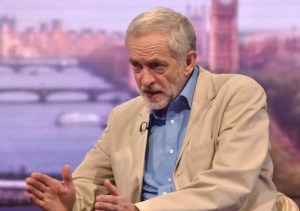
Jeremy Corbyn - Labour Party - Andrew Marr Show - BBC

Agree with this article? Violently disagree? Scroll down to leave a comment.

Follow Semi-Partisan Politics on TwitterFacebook and Medium.


Jeremy Corbyn’s Yellow Submarine Policy

Trident Nuclear Submarine - Faslane Naval Base

Jeremy Corbyn’s yellow submarine proposal is nothing but a white elephant, with all the cost and none of the benefits of nuclear deterrence

Spare a thought for those in peril on the Labour Party’s Trident renewal commission. As they seek to square their leader’s avowed nuclear disarmament stance with the parliamentary party’s broad support for Trident renewal, they are being forced to consider – and publicly discuss – ever more ridiculous potential compromises.

Jeremy Corbyn’s latest proposal is particularly bad, and would involve spending billions of pounds designing and building the next generation Trident submarines, but – crucially – not arming them with any new weapons.

The Guardian reports:

Jeremy Corbyn has suggested the UK could have Trident submarines without nuclear weapons, a move that would mean disarmament while protecting defence jobs in Scotland and Cumbria.

The Labour leader raised the idea on the BBC’s Andrew Marr Show as a possible compromise between his opposition to nuclear weapons and the position of the trade unions, which want to protect the jobs of workers who will build replacement Trident submarines.

In an interview over the weekend, the Labour leader argued it was not a binary decision on whether to replace Trident submarines, suggesting a possible compromise. Pressed on the Marr Show as to what this meant for Trident, Corbyn said: “They don’t have to have nuclear warheads on them.”

[..] Asked again whether he was suggesting that new submarines could be built to be used without nuclear warheads, Corbyn said: “There are options there. The paper that Emily Thornberry has put forward is very interesting and deserves study of it. I hope there will be a serious and mature response.” He also stressed that he would want to maintain employment for people in the defence industry, who would be involved in building Trident submarines, as a “first priority”.

Thornberry told the BBC’s Sunday Politics: “The way that it works is that the Japanese have got a capability to build a nuclear bomb…[but] you can then put them on to, or you can use them, in various delivery forms. So that’s a possibility, that is an option.” She said she would not speculate on what the review would recommend but she added that Corbyn “said there’s a number of options, and I said the Japanese already have this as the way that they use theirs”.

This is ludicrous.

Nuclear-powered submarines capable of carrying and launching Trident nuclear warheads are very expensive, as you would expect from high-tech stealth technology designed to last for a generation. Their only value is the fact that they provide a near-undetectable, continuous at-sea presence, so that any would-be aggressor knows that whatever attack they may launch at Britain, a retaliatory response always remains possible.

Investing in a new generation of nuclear submarines but failing to simultaneously build a new generation of missiles and warheads to deliver them would be like… well, it would be like commissioning two new aircraft carriers which will come into service without any aircraft capable of launching from them.

But at least this ludicrous defensive gap of the Conservative government’s making is only temporary. The aircraft to complement the Queen Elizabeth class carriers will follow the commissioning of the ships, albeit an embarrassing couple of years late.

Not so the Trident missiles to supply the next generation of submarines. Under Jeremy Corbyn’s proposal, Britain’s four (or three? Two?) new Vanguard replacement submarines will dart around under the ocean carrying no weapons and providing no deterrence of any kind. In fact, they may not launch at all, since Jeremy Corbyn probably sees little value in keeping a Navy. So in theory, Britain could end up spending over £20 billion designing and building four new ICBM-carrying submarines, only to sit back and watch them grow cobwebs in dry dock.

Jeremy Corbyn would counter – and indeed his ministerial colleague Emily Thornberry has already pointed out – that Britain would retain the ability to produce nuclear weapons under Labour’s latest plan. But this is extraordinarily misleading. By their nature, the kind of potential nuclear crises that Trident protects us from every day are impossible to anticipate and come about suddenly or with no warning. And in such cases, having the ability to one day rebuild a nuclear deterrent capability is very far indeed from having a system already live and operational.

In cases of nuclear blackmail or brinkmanship, it is not enough to say to our enemy “just you wait 12 months while we build our own nuclear weapon to destroy you, then you’ll be sorry!”. When you need the credible threat of nuclear weapons, you need it now, not after a lengthy lead time during which our design and construction facilities would be vulnerable to sabotage from within or attack from without. But this is precisely what Jeremy Corbyn proposes.

This is socialist pacifism at its most absurd. When people criticise Corbynite policies, their defenders retort that we misrepresent them by taking their publicly expressed ideas to illogical extremes. But in this case, Jeremy Corbyn himself has stated that the illogical extreme is his preferred option.

Jeremy Corbyn’s Britain would be a country which builds things not to use them or gain any utility from them at all (in this case the valuable insurance policy of nuclear deterrence), but rather just to give the people with a vested interest in their construction something to do. In this perverse worldview, keeping union chiefs happy and workers employed is a worthy national objective, but guaranteeing Britain’s national security and promoting our interests by ensuring that we are taken seriously as a military power is of no importance.

But never let it be said that the Corbynites don’t do compromise. Jeremy Corbyn may find the idea of nuclear weapons – or any military spending at all, really – to be morally repugnant and utterly indefensible, but because the trades union like the jobs which come from submarine construction and maintenance, he is willing to tolerate Britain’s continued construction of the things – just so long as we don’t ever use them.

What next? Why not have the armed forces spend all their time rolling massive boulders up hills in the Peak District, sending them tumbling down and pushing them back up again, in order to give the military something to do which doesn’t involve handling weapons? Why not extend the same principle to the British people at large, and pay everyone currently on JSA thirty grand a year to do the same?

A nation of people industriously labouring away to build complex, expensive machines whose purpose they fail to understand, and which they neither appreciate nor value. Just so that people have something to do besides watching Jeremy Kyle on daytime TV.

Welcome to Corbynland.

Unarmed Trident missile fired from HMS Vigilant

Agree with this article? Violently disagree? Scroll down to leave a comment.

Follow Semi-Partisan Politics on TwitterFacebook and Medium.

Keep On Shuffling, Jeremy

Jeremy Corbyn - Shadow Cabinet - Revenge Reshuffle

Jeremy Corbyn’s shadow cabinet reshuffle has not succeeded in purging those uncourageous moderates who pledge allegiance to their leader’s face but talk mutinously behind his back

After four long days, Jeremy Corbyn’s so-called “revenge reshuffle” is finally complete, the whole exercise resembling nothing so much as a tedious game of musical chairs played by a group of largely forgettable and unexceptional B and C-list politicians.

However, perhaps Jeremy Corbyn should not call an end to his shuffling just yet, given the fact that some notably less-than-loyal courtiers inexplicably remain in their posts.

In his latest column, devoted to examining deputy leader Tom Watson’s balancing act and divided loyalties, Dan Hodges writes:

Watson sees it as his mission to keep the Labour Party together. But everyone knows that is mission impossible. Labour is heading for all-out civil war, and there is nothing Tom Watson or anyone else can do to stop it.

“Tom’s going to have to make a choice soon”, one shadow cabinet minister told me. “Is he part of the solution to Corbynism, or is he part of the problem?”

To the mind of this Labour MP, serving in Jeremy Corbyn’s shadow cabinet, Corbynism is “part of the problem”. Imagine for a moment what outrage there would have been if, just months into Ed Miliband’s disastrous tenure as Labour leader, a shadow cabinet member had said that Milibandism was part of the problem and something to be undermined from within.

Imagine what everyone would be saying about the rank cowardice of that shadow cabinet minister, who disagreed with everything that their leader believes in but who lacked the courage to forsake their position and say so publicly.

Jeremy Corbyn’s reshuffle has only just been completed, and already a shadow cabinet minister has given this juicy morsel of a quote to Dan Hodges. Truly, the Labour Party seems to have a death wish, preferring to go down in a blaze of whining, sanctimonious victimhood rather than tough out a few dry years in the political wilderness.

Yes, of course both sides are at fault, although I would side with the Corbyn team’s bumbling ineptitude over the calculating self-interest of the moderates-in-exile every time. But one thing is certain: it will be impossible to keep the Labour Party together so long as shadow cabinet members are making such toxic briefings against their own leader immediately after having been re-confirmed in their own jobs.

Here we are again, confronted with yet another anonymous Labour “heavyweight” with the duplicity to profess loyalty to Jeremy Corbyn’s face and then run straight to sympathetic journalists the very same day with tear-jerking stories about how the Labour leader hurt their pwecious feewings.

Will they muster the courage to say to Jeremy Corbyn’s face what they so gladly regale to the Telegraph? Of course not. Because for them it is not about principle, or honour, or doing what is best for the Labour Party – despite their earnest protestations the the contrary.

If his detractors truly believe Jeremy Corbyn to be as terrible as they continually tell Dan Hodges he is, they have a moral duty – over and above any consideration for their own careers – to rise up and depose him immediately, just as those people who call the present government “evil” should be launching an insurrection on the streets of London rather than posting preening, overwrought status updates on Facebook.

But just as those angry keyboard warriors who accuse the Evil Tories of supposed human rights abuses will astonishingly not be found storming the gates of Downing Street in morally justified insurrection, neither will Jeremy Corbyn’s shadow cabinet detractors be spotted collecting signatures of fellow MPs in a serious attempt to oust their despised leader. No, instead they will be found moping into a pint glass at a dark Westminster drinking hole, spilling their sorry guts to Dan Hodges. What bravery. What principle. What courageous heroism is this?

I would understand the incessant carping and undermining of Jeremy Corbyn from within the Labour Party if there were some other great and noble faction vying for supremacy and influence – if some other, unfairly marginalised figure within Labour had a cunning plan to offer the electorate something different and reinvent the party for the twenty-first century. But there quite evidently is no such group or individual waiting in the wings with a burning vision for Britain.

On the contrary, instead of a King Across The Water waiting to reclaim their rightful throne, there is only the same ragtag assortment of fading New Labour machine politicians and grasping, telegenic SpAdocrats who so repulsed the voters last time round that it led to the election of Jeremy Corbyn in the first place.

This is why I balk at those malcontents within Labour who simply cannot stop themselves running to the media with salacious court gossip and bitter invective about their leader, seeking to undermine Jeremy Corbyn’s leadership at every turn. What is their bright alternative? What radical new platform will win back Scotland, inspire Middle England or turf out an uninspiring but power-hungry Conservative Party whose grasping, centrist tentacles are well on their way to establish a hegemonic lock on the levers of power for the next decade?

Exactly. The malcontents have nothing. Tumbleweeds.

Is Jeremy Corbyn going to win the 2020 general election and become the next prime minister of the United Kingdom? Almost certainly not. But guess what? Neither will Andy Burnham, Yvette Cooper, Chuka Umunna, Dan Jarvis, Stella Creasy, Gloria De Piero, Luciana Berger, Hillary Benn, the Eagle sisters or Lisa Nandy. Neither the Labour front bench nor their back benches are brimming over with immediately obvious future prime minister material.

With the Labour Party already at such a low ebb, is a few years of Jeremy Corbyn’s red-blooded socialism really likely to do more damage than an Ed Miliband Mark II? Hardly. So in the absence of anything – anything at all – resembling a more appealing prospect, why not spend the next eighteen months trying something new and letting the Corbynites have a turn?

But the malcontents just can’t do it. They might not have the first inkling of what they want instead of Corbyn – let alone what the voters might want. All the plotting moderates know for sure is that they have been suddenly and unexpectedly turfed out of power and influence within the Labour Party. And it is just eating them up inside.

There is no violin small enough to play in mournful solidarity with these hapless centrists – Labour MPs whose only fixed and immovable belief was the desire to wield power and influence, shamelessly trading on the storied name of their party while peddling the same soul-sapping centrist consensus as nearly everyone else in Westminster.

May their richly deserved time in the wilderness be long and harsh.

May they suffer and roar together.

Jeremy Corbyn - Cabinet reshuffle

Agree with this article? Violently disagree? Scroll down to leave a comment.

Follow Semi-Partisan Politics on TwitterFacebook and Medium.