This Is The NHS

Save Our NHS

British healthcare reform should be the subject of forensic journalistic analysis and urgent debate, but all we have are saccharine, uncritical devotionals to the NHS

If you were the CEO of a company whose costs were relentlessly increasing and competitors gaining ground with every passing quarter, what would you do?

Would you waste valuable time looking back wistfully on the glory days, when every product launch was an unparalleled success and new customers were queueing around the block? Or would you take a hard-headed, dispassionate look at what was necessary – redundancies, divestments, acquisitions, innovations – to reshape and refocus the firm to prosper in the new, harsher environment?

Any executive worth their salt would do the latter. Corporate graveyards are littered with the bones of executives and companies who chose to dwell on a romanticised, sentimental vision of the past rather than face the difficult future.

Sadly, when it comes to the NHS we adopt the former, toxic mindset. Rather than thinking dispassionately about how best to deliver healthcare to an advanced nation of 65 million ageing, fattening citizens, we prefer to think of the glory days of socialised healthcare while utterly neglecting the future. We prefer to smugly bask in what we consider the wisdom and compassion of the post-war generation who created the NHS rather than ask ourselves whether what worked in 1948 will still work seventy years later in 2018, let alone by its centenary in 2048.

There is more than enough blame to go around for this depressing state of affairs. The NHS-Industrial Complex, that vast and interconnected web of (sometimes but not always well-meaning) special interests is certainly at fault. So too are glib and cowardly politicians, who would rather fire up a crowd (and win re-election) by making empty promises to Save Our NHS rather than grapple with the difficult (and politically toxic) detail. And we ourselves are to blame, for continually rewarding this short-termist and opportunistic behaviour in others.

But today’s entry in the Healthcare Hall of Shame is the Guardian newspaper, whose natural left-wing political leanings have prompted one of the worst cases of journalistic NHS hagiography in recent years. This time the Guardian have outdone themselves with their new ongoing series, This Is The NHS.

Visit the This Is The NHS mini-site and you will be confronted with three main types of story:

  1. Personal “the NHS saved my life” accounts from grateful patients
  2. Sympathetic “behind-the-scenes” profiles of staff, hospitals and departments
  3. Hectoring nanny-state demands from the public health lobby

Some of these stories are very moving, dealing as they do with illness, loss or periods of great hardship and vulnerability in the lives of their subjects. But none of them come close to explaining why taxpayer-funded, government-provided healthcare is the best possible solution for Britain. Both of these maxims – taxpayer funded, government provided – may still be optimal. Maybe. But is it not worth doing any kind of comparative analysis to be sure?

And when the physical expression of our healthcare policy is one of the five largest human bureaucracies in the history of the world, is it really not worth checking that we are on the right track, that a government-run National Health Service still makes sense?

Apparently not. Emotion and stubborn attachment triumph over reason, and we are supposed to suspend our critical faculties and clap along to each positive story about the NHS without questioning what treatment (if any) in each scenario is unique to the NHS and would not have been given to an equivalent patient in, say, Canada or France.

I take this extremely personally. Like most people, I have had occasion to use various NHS services throughout my life, sometimes – such as when I came down with appendicitis – at times of physical pain and imminent danger to my wellbeing. Naturally I was very grateful for the excellent, professional service that I received.

But I deeply resent my natural feelings of gratitude – and those of countless other people, many of them featured in the Guardian’s This Is the NHS series – being taken and deliberately twisted into a cynical piece of emotionally manipulative propaganda by journalists and special interests with a strong (and shamefully undeclared) desire to maintain one very specific model of healthcare funding and provision. That is simply not right.

The Guardian would hate this analogy, but with their navel-gazing, introspective examination of the status quo when it comes to British healthcare, they are exhibiting the same lazy superiority complex shown by US conservatives when ObamaCare was being debated. Like American conservatives, the Guardian (and nearly the entire British Left) stubbornly believe that their respective systems are the envy of the world, and insist on saying so loudly and repeatedly while failing to provide any proof whatsoever to back up their assertions.

As the ObamaCare debate raged in America, countless Republican politicians and Tea Party activists could be found ranting about President Obama’s evil socialist plan to destroy the “greatest healthcare system in the world”. And today, as David Cameron’s Conservative government rearranges the deckchairs in an attempt to look purposeful when it comes to healthcare, foaming-at-the-mouth left-wing activists shriek to anyone who will listen about the Evil Tories and their dastardly plan to sell off the NHS to their rich friends while leaving the sick and elderly to die on the streets.

Of course, both claims are ridiculous hyperbole. The Affordable Care Act (ObamaCare) was a relatively timid, incremental and (thus far) underwhelming attempt to expand the existing system of private healthcare coverage to more Americans. And whatever privatisation schemes the Tories may have cooked up to date are a drop in the ocean in terms of the total volume of services delivered by the NHS, and do nothing to change the twin fundamentals of taxpayer-funded care, free at the point of use.

So given the fact that nothing remotely shocking or remarkable is currently happening in terms of British healthcare policy, why publish the This Is The NHS series in the first place? The Guardian portentously explains:

Our aspiration is to examine a broad range of issues, from the strains on A&E to standards of care for the elderly, the multi-layered issues surrounding mental health, chronic disease, the high cost of drugs and the impact of alcohol. And exciting treatments using new sciences and cutting-edge technology. We want to understand the dilemmas over prioritisation, over-prescribing and the cost of drugs. And the fiendishly complicated way the service is managed and run. We want to address the question: do we have the NHS we need? The aim is to do this through diaries, fly-on-the-wall reporting, interviews, films and explanation.

We have asked a large sample of our readers what they want from this project. The most engaging focus, ahead of anything else was … hope. “I’d like to see both sides of the story, as all we hear about is the failings or pay issues,” one reader said. “What about those patients who have been cared for amazingly, staff who are brilliant at their job and enjoy it?” Another urged that amid all the perceived problems: “The successes of the NHS need to be celebrated.”

In other words, the Guardian is seeking to satisfy the desire of its left-wing readership to hear stories confirming how wonderful the NHS is. Sure, there will be a few token negative experiences thrown in to give the appearance of objectivity (though anecdotally, I have noticed far more positive than negative stories thus far). But there will under no circumstances be any challenge to the fundamental assumption that the NHS model is Good and Virtuous, and not to be questioned under any circumstances.

Imagine if the Guardian set out to create a similar month-long deep-dive series examining the workings of the Ministry of Defence and Britain’s armed forces. The Guardian’s journalists and commentators would have a field day forensically examining and questioning every element of spending, every organisational aspect and every core function. They would see it as their journalistic duty to take a root-and-branch view of the whole organisation, to muse about the very meaning of defence and national security in the modern age, and question whether the existing deeply historical structures are equal to our current and future challenges. And they would actually be right to do so, even though they and this blog would come to very different conclusions.

But when it comes to the NHS, nothing and nobody is allowed to challenge the dusty 1940s dogmas upon which the British healthcare system is built. Everything is up for debate – so long as the answer involves pumping more money into the same, fundamentally unreformed system.

This is stubborn childishness in the extreme. An infantilised British public (particularly the metropolitan left-wing segment who comprise the Guardian’s readership) demand stories which make us feel better about Our Beloved NHS, and which reassure us that the NHS is doing lots of great things despite the endless succession of negative headlines. And the Guardian responds with a spectacularly uncritical, depressingly uncurious series of devotionals to the decaying status quo.

I’ve said it many times before, but it still bears repeating: our blind, unquestioning devotion to the NHS is quite literally killing us. And thus far, the Guardian’s “This Is the NHS” series – which could have been the catalyst for a serious discussion – is just another smug monument to our national sickness/religion.
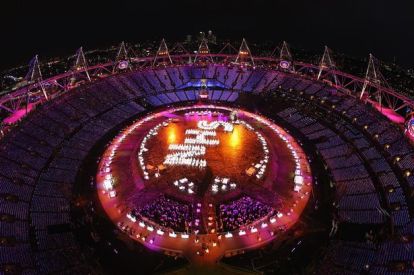
NHS Worship - London Olympic Games 1

Agree with this article? Violently disagree? Scroll down to leave a comment.

Follow Semi-Partisan Politics on TwitterFacebook and Medium.

Who Is To Blame For The NHS Junior Doctors’ Strike? Look In The Mirror

NHS Junior Doctors Contract Strike

By reflexively worshipping the NHS, vilifying people who don’t and rewarding politicians who tell us only what we want to hear, the junior doctors’ strike – and everything else wrong with the health service – is our fault, and ours alone

Who is to blame for the NHS junior doctors’ strike?

Is it heartless Jeremy Hunt, that doctor-hating, treatment-denying Conservative villain at the Department of Health? Is it the Evil Tories in general, with their single-minded obsession (mysteriously never realised despite all their accumulated years in power) with privatising and destroying Our Precious NHS? And if not them, who could it be? The capitalists? The bankers? Katie Hopkins?

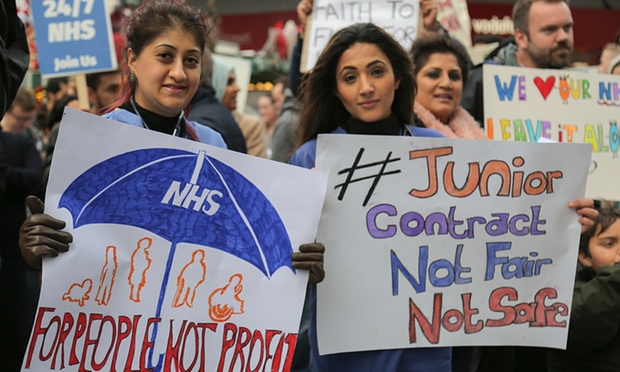
Surely anyone and everyone is to blame, apart from ourselves.We love Our NHS. We are good people who believe that healthcare free at the point of use is one of the fundamental rights of citizenship. We stick up for the NHS at every turn, demanding that politicians pay obsequious lip service to the organisation every time they run for office. We’ll happily slap the NHS logo on our Facebook profile picture, paint it on our faces, wear it on a badge, lapel pin or t-shirt. You name it, we’ll do it to virtue-signal the love we have for Our NHS.

And that, right there, is the problem. Not Jeremy Hunt, not the Evil Tories, not Katie Hopkins. Us.

We don’t want elected officials who take a hard, uncompromising look at changes in medical treatments, life expectancies, the public finances and best practice from overseas to continually assess whether the NHS – that uniquely British solution to healthcare coverage – is still fit for purpose in the twenty-first century, and what changes may be beneficial or necessary.

We don’t want elected officials who tell us that difficult decisions might have to be made – that providing the latest treatments to an ageing, fattening population will cost all of us more in taxes, require radical overhaul of the NHS model, or both. We want our politicians to find the money to provide a world-class health service without disrupting other areas of public spending, or the fatness of our own wallets.

And we certainly don’t want elected officials who do anything to upset the NHS-Industrial Complex – that vast network of people, organisations and vested interests who are first to squeal and protest (always in the name of “public safety”) when their own livelihoods or ways of working are threatened. Like children listening to a trusted school teacher, we innocently take the words of such people as gospel.

Of course, this situation is quite unsustainable. And when any one element of this vast human bureaucracy reaches breaking point – whether that is manifested in industrial action, hospital death scandals or longer waiting lists – we will look for anyone to blame and attack for the fact that these problems have gone unaddressed. Anyone other than ourselves.

The Economist reaches the same conclusion in a very welcome “plague on all their houses” review of the context behind the first junior doctors’ strike:

[..] there is a more serious way in which the public is to blame for the sickness of the health service. The electorate that notionally adores “our NHS” and propels a saccharine song by health workers to the top of the Christmas charts shows remarkably little willingness to pay more in tax towards what remains a relatively cheap system. Without extra money and facing ever wider and wrinklier patients, the NHS must tighten its belt by £30 billion ($43 billion), or about one-fifth, by 2020. It is in this context that Mr Hunt is trying to expand services to evenings and weekends. Pity the well meaning health secretary, pity the hardworking doctors—and blame the sentimental but hypocritical British public.

The famous maxim says that people get the politicians and leaders that they deserve. Well, the same can be said for healthcare, too. We refuse to look difficult truths in the eye, preferring to ignore them in the risible hope that a healthcare system built in 1948 can still be fit for purpose in 2016, if only we pump a bit more money into it. And a bit more. And a bit more again.

We deserve the NHS we currently have, with its air of permanent crisis, in all its faded glory. It is the sum total of all our misplaced pride, boastfulness, smugness, ignorance, fear of change, intellectual laziness and lack of vision.

We have become self-entitled public service consumers rather than thinking citizens, demanding easy answers and instant results from our elected leaders, while rewarding all of the wrong behaviours when it comes to healthcare policymaking.

We have become the kind of intellectually dull society that will happily produce a cheesy Christmas hymn to the NHS and then propel it to Number 1 in the charts, but prefers to sit and vegetate in front of Britain’s Strictly Come Bake-off On Ice rather than question whether the organisation we were just singing about is fundamentally fit for purpose.

On this rare occasion, the Economist’s editorial line is quite correct. When it comes to the failings and shortcomings of the NHS, the government, the health secretary of the day and individual NHS staff are comparatively blameless.

It is we, the British people, who are most at fault for singing worshipful hymns of praise to a healthcare system we will neither properly fund, nor meaningfully reform.

NHS Choir - Harriet Nerva - 2

Agree with this article? Violently disagree? Scroll down to leave a comment.

Follow Semi-Partisan Politics on TwitterFacebook and Medium.

You Wouldn’t Buy A Song Praising HMRC, So Stop Worshipping The NHS

NHS Choir - Harriet Nerva

Buying and praising the NHS Choir’s Christmas single is not “harmless fun”. In fact, anyone who truly believes in improving healthcare should see through this complacent, self-congratulatory piece of propaganda

It’s amazing how easy it is to be published in the Guardian, just so long as you hold the “correct” right-on, trendily left wing views, and have distinguished yourself with some suitably ostentatious act of public virtue-signalling.

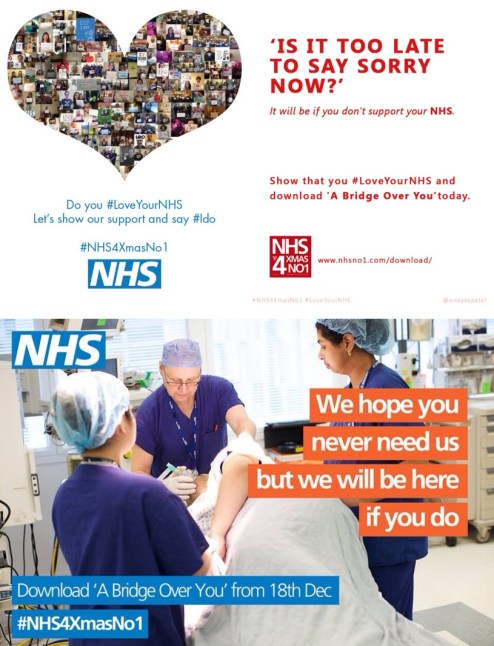
Enter Harriet Nerva, junior doctor and newly ordained High Priestess of the NHS. Nerva is one of the principal architects of that sappy piece of virtue-signalling NHS propaganda inflicted on the (sadly often-willing) British populace this winter – the “Bridge Over You” single which predictably made it to Christmas No. 1 in the charts.

I explained at the time why singing hymns to a powerful government monopoly was neither a morally virtuous nor a productive thing to do, and was met with a predictable chorus of criticism and accusations of being a Christmas Grinch. But the argument against this latest piece of NHS-worship needs to be restated and expanded, particularly in light of the failure of other commentators to utter a critical word, and also because of the nauseating victory lap currently being taken by the #NHS4XmasNo1 campaign chiefs.

In her self-aggrandising victory speech, published in the Guardian, Nerva begins by declaring:

As a junior doctor, I started a campaign that united the public, staff and patients in its demand for a free and properly funded healthcare service for all.

Already it starts to become clear that this is all about the Harriet Nerva Show first and foremost, long before any other consideration. The article continues:

Since becoming a junior doctor 18 months ago, I have felt immensely proud to work for the NHS. In particular, I’ve been humbled by how well we cared for one patient in their dying days, and felt privileged to have forged a relationship with this person in the last few weeks of their life.

Again, this is boastful and irrelevant. Nerva isn’t “humbled” by anything, she is proud of her accomplishment – and that’s fine, but not when it is wrapped in the pretence of promoting the NHS, or when the fact that she gave good care to a dying patient is misused as an argument for persevering with one very specific model of healthcare delivery.

Nerva concludes by inadvertently calling the song what it really is – a religious hymn:

This campaign has made it clear that the public, staff and patients are singing from the same hymn sheet. We are united in the belief that we should have a free and properly funded healthcare service available to all in our society, one that values and respects its staff and users. The choir have sung, the public have spoken, and now it’s time to listen.

Meanwhile, the Mirror reports approvingly:

Harriet told Mirror Online: “I didn’t have any links with the choir but what they have produced is a fantastic celebration of the NHS”.

“Seeing the video moved me to tears. The context of it is very powerful. I qualified 15 months ago and I love the NHS, I’m very proud of it. And I feel getting it to Number One would bring to the public’s eye the fantastic service it provides in very challenging times”.

But this reasoning is nonsense. Everyone in Britain already knows about the excellent and important work done by doctors and nurses, and the vast majority support the NHS. It’s hardly as though there is some massive popular revolt against our system of nationalised healthcare.

Most people seem content with our current system when they bother to think about it at all, and (left-wing scaremongering aside) no major politician from any party has serious plans to dismantle what currently exists, let alone end the principle of healthcare free at the point of use.

So, since there is no imminent threat to the NHS (it survived eighteen years of Tory government before 1997, and will do so again), what is this really all about? What really motivated a junior doctor to make us endure this turgid hymn to the NHS?

NHS Choir - Christmas Single - 3

By prancing around with her Twitter hashtags and handwritten signs, Harriet Nerva isn’t just saying that she shares our presumed love for the NHS or has a strong devotion to providing healthcare. What she is really saying is that she is a better person than you, because she A) works for the NHS, and B) organised a huge act of public NHS-worship.

“Think you’re a good person just because you like the NHS?”, Nerva is saying. “Well I’m ten times better than you, because I got the British people to collectively sing a hymn to the NHS on Christmas Day. I love the NHS so much that I made this extraordinarily extravagant public gesture. What did you do?”

And of course short of sacrificing ourselves on a huge pyre as a burnt offering to the NHS, there is nothing that we can do to better her accomplishment. Harriet Nerva wins.

But this is noisy, shallow virtue-signalling, and nothing more. I’m sorry if it sounds harsh or seems unpleasant to rain all over what first looks like a harmless act of charity, but the NHS Choir’s Christmas single is so much more than that. And so much worse. It is yet another part of the vast tapestry of reflexive NHS worship which smothers Britain, and prevents us from looking critically and dispassionately at one of the most important issues in our society.

And we need to wake up, stop patting ourselves on the back for the accomplishments of previous generations, and recognise that singing hymns to an outdated healthcare delivery model from the 1940s is going to do nothing – nada, zilch – to ensure that Britons enjoy the best healthcare in the world in this century.

NHS Worship - London Olympic Games 1

It is therefore heartening to see a few other brave souls also now daring to stick their heads above the parapet and call the NHS Christmas single what it is – emotionally manipulative propaganda.

My Conservatives for Liberty colleague and Creative Director, Paul Nizinskyj, also picks up on the pseudo-religious undertones beneath this latest act of NHS-worship:

This was encouraged by a message on the music video, which urged people to “Show how much you #LoveYourNHS” by buying the single. Well, this is a concept I struggle with, because I have no love for a catastrophically flawed system of healthcare which seriously fails its patients, despite the best efforts of its frontline staff.

But that distinction – between the structure of the NHS and the people who work for it – is one we seem to struggle with in this country. So, instead of a conversation about why the NHS continues to fail the people who pay for it, we again exalted it as an infallible deity, this time in a kind of Christmas Day papal coronation.

One of the Left’s greatest successes has been to conflate “Our NHS” with “healthcare” in the minds of the British people, so that the two concepts effectively merge to become one and the same. This was a war of words, and the Left won a total victory – now, even those people who are naturally sceptical of government monopolies often speak of the two terms interchangeably, and carve out an illogical exception for the NHS when they extol the virtues of competition and privatisation.

But as Nizinskyj points out:

I’m certain dedicated health professionals would be dedicated and professional under whichever system of healthcare they were working, but the results of that hard work often depend on whether the system is working with them or against them. And, when it comes to the NHS, I’m afraid it’s working against them.

This is the point which continually eludes the NHS priests and their congregation of grateful but uncritical Britons. Yes, of course the doctors and nurses who saved your life / delivered your baby / cared for your dying relative did an amazing job. But that is a reflection on them, not on the system in which they operate.

Lives are saved, babies are delivered and dying relatives cared for in healthcare systems all over the world. Many of these other healthcare systems do the job very well, if not better, than the NHS. Many of these other healthcare systems are also free at the point of use. Very few of them are like the American system, which is always cynically held up as a bogeyman to scare British voters and shut down debate. And yet mysteriously, none of these other healthcare systems copy the NHS model.

Think about that for a moment. Every day, people are treated with love and dedication in hospitals and healthcare systems around the world, and in many cases receive comparable or better care without being stuck with a bill that they can’t afford. Yes, poor people actually receive medical care in other countries, not just Britain. And yet we are not able to even look at these other systems or ask ourselves the question whether the decision we made as a country in 1948 is still the best choice in 2016.

Why are we not able to do this? Why can we not look at best practice from around the world and strive to emulate and build on these ideas so that we have the very best healthcare in the world, rather than being satisfied with an ebbing and subsiding parity? Because of people like Harriet Nerva, and the closed-minded viewpoint of legions of others like her.

NHS Choir - Harriet Nerva - 2

There are two forces are at work here. First, there is the British public’s irrational, unshakeable devotion to “Our NHS”, about which a bad word can never be spoken. Sure, you can criticise waiting lists, falling standards or the inevitable winter crises, but politicians question the wisdom of sticking with the NHS model itself at great peril – and so none do.

And secondly, there is the growing phenomenon of online virtue-signalling, fuelled by social media, in which your political stances are worn and discarded like this year’s latest fashion, and where your stance on key social issues is taken to determine whether you are a “good” or “bad” person. Thus thousands of Twitter bios proudly proclaim that the account owner is a “lefty” or that “I voted for Corbyn”, while people looking for love (or something else) on dating sites like Tinder will often have “don’t bother if you are a Tory”, or other dismissive words to that effect, emblazoned on their profiles.

Take the British public’s “pre-existing condition” of an uncritically sentimental attachment to the NHS and add the social cachet and sense of identity which now comes from blaring one’s political views online and wearing political stances like a fashion statement, and this is what you get: people taking selfies of themselves holding up devotional banners praising the NHS, and even more people singing hymns in honour of Saint Aneurin Bevan’s sacramental gift to our nation.

It’s the easiest thing in the world to get swept up in the NHS love-fest. You are guaranteed to get smiles from strangers and likes on social media with every unthinking post and re-tweet of a “Love Your NHS” meme. You will suffer no negative consequences at all for declaring your blind loyalty to this one particular branch of government, and in fact will be praised for doing so. Just by clicking a few buttons and sharing a couple of posts on social media, 90% of the population will think you are magnificent.

But it is not magnificent. It’s self-aggrandising, counterproductive and wrong. It actively detracts from efforts to improve healthcare for Britons, and it stifles and prejudices a much needed public debate before it can even take place.

I’m sorry to be Scrooge this winter, but there’s no other way of saying this: if you bought the NHS Christmas single, you are part of the problem, not the solution.

Christmas number 1 race

Agree with this article? Violently disagree? Scroll down to leave a comment.

Follow Semi-Partisan Politics on TwitterFacebook and Medium.

The NHS Choir’s Christmas Single Is Propaganda Worthy Of North Korea

If you buy the NHS Choir’s mediocre Christmas ditty you are part of the problem, not the solution

Imagine that a large, critical government department was gradually but incessantly becoming less and less fit for purpose.

Suppose that (say) HM Revenue & Customs suffered from major failures of management and leadership, an outdated structure, a confused remit and an ever-increasing list of responsibilities coupled with constantly changing priorities. What should be done?

Was your first thought the idea that a group of HMRC employees should get together and release a song with the hope of reaching the Christmas No. 1 slot in the charts? Did you think – in a moment of epiphany – that recording a Christmas song would in any way address the issues with that organisation, or that any public goodwill generated by the song would somehow make the various deep-rooted organisational problems and resource constraints melt away?

Probably not. You would most likely want to see some kind of hard-headed, evidence-based action plan to turn things around, not a cheesy song that pretended everything was great. But this “sing your problems away” approach is exactly what is happening today, not with HMRC but rather with the NHS. And now we are all being asked to allow ourselves to be swept up in the self-deception, mindlessly tweeting our support for an organisation – and model of healthcare delivery – which becomes more out of its depth and more inadequate to our needs with every passing day.

From the Metro:

The Lewisham and Greenwich NHS Choir are leading the in way in the race for the 2015 Christmas Number one, as the battle to secure the top spot heats up.

According to initial reports from the Official Charts Company, the choir’s track A Bridge Over You – a mash-up of Simon and Garfunkel’s Bridge Over Troubled Water and Coldplay’s Fix You – is currently ahead of rivals Justin Bieber and Louisa Johnson.

But with the track leading the way by just under 5,000 sales, it’s still looking likely to be a three way race for the top spot.

The NHS choir could also receive a boost following the release of the accompanying video earlier this week.

That video is the one shown at the top of this piece.

Of course, this whole stunt is really more of an opportunity for cheap virtue signalling of our enlightened, progressive credentials than a meaningful contribution to the healthcare debate, or even a sincere “thank you” to healthcare staff working over the Christmas period.

That much is evident from the flurry of self-promoting tweets gathering under the hashtag #NHS4XmasNo1:

But this piece of lazy, self-congratulatory, virtue-signalling NHS worship is nothing to be proud of and certainly not something which any engaged and informed citizen should support.

Why? A couple of reasons:

1. First of all, it’s a poor piece of music making. It’s a bad mashup, even by the low standards of most mashups. It takes one timeless classic (the Simon & Garfunkel) and one decent contemporary song (the Coldplay) and unimaginitively smooshes them together in a way which somehow manages to destroy or obfuscate the best of both pieces.

But of course, we can’t possibly acknowledge this fact, because:

2. Second, the video is emotionally manipulative twaddle, yet more unthinking pro-NHS propaganda of the kind that will ensure Britain’s healthcare system continues to lurch, unreformed, from crisis to crisis for another seventy years. And the fact that the propaganda is produced not by government diktat but by zealous citizens who believe they are working for the Greater Good only makes it all the more insidious.

“Aren’t NHS workers wonderful?”, the video asks us to ponder. Yes, I suppose so, but no more so than those who work for HM Revenue & Customs. Both perform a vital service, and both draw a government paycheque at cost to the taxpayer. And yet we all know that if George Osborne’s Treasury barbershop ensemble released an album of Christmas classics it would already be festering in bargain bins and languishing at the very bottom of the charts.

When it comes to “our NHS” (genuflect), on the other hand, we can’t stop proclaiming our love for it. And doing so very publicly, just so that everyone else can see what a good, progressive little person we are. But by lapping up these hymns to the NHS, we simply encourage people with sinister agendas to create even more of them in future.

Thus, over five tedious minutes of this particular pseudo-inspirational dirge, we are treated to scenes of saintly NHS workers helping wobbly old people stand up from chairs, therapists teaching amputees how to walk again, premature babies being nursed to health, and other everyday scenes of hospital life. Are these heartwarming scenes? Sure they are. Are they unique to the NHS? Hell no.

“What other organisation but the NHS could possibly do any these things?”, screams the message from the video. After all, we all know that old people, premature babies and the disabled are simply thrown into woodchipping machines and disposed of in other advanced countries without an NHS. Only in Britain with “our NHS” (genuflect) do people receive healthcare free at the point of use.

Except that none of that is true. Britain is not an island of enlightened compassion in a sea of cruelty and denied cancer treatments. And precisely zero countries are knocking on our front door and sending in their experts to learn about how we organise healthcare in this country so that they can replicate our system back at home. Shouldn’t that maybe tell us something, and cause us to take a pause from the incessant, self-satisfied boasting?

NHS - NHS4XmasNo1 - Worship - Guilt Tripping
Emotional blackmail / NHS propaganda


This isn’t an attack on NHS workers. It’s not even an attack on the Lewisham and Greenwich NHS Choir, even though their unremarkable song no more deserves to be Christmas No. 1 than will the next inevitable re-release of “Feed the World”.

This is an attack on our unthinking, embarrassing commitment to the NHS model, our apparent desire as a nation to worship what is in fact an immensely powerful government department, and the sanctimonious belief that by propelling this mediocre song to the top of the charts in time for Christmas we are making any positive contribution toward the future of British healthcare (beyond the admittedly welcome charitable donation).

We can sing songs about the NHS until we are blue in the face (and the number of songs is growing – how long until they coin an official anthem?), but it will do nothing to change the fact that a centralised model of state-funded and state-delivered healthcare designed in the post-war 1940s is highly unlikely to be the optimal solution in the year 2015.

Singing songs in praise of Aneurin Bevan’s rusting creation will do nothing to address the cold, hard truth that rising life expectancies and the continual developments of new, expensive treatments can only be tackled by an unreformed NHS if there are immediate, dramatic increases in personal taxation. For everyone, not just the Evil Bankers, of whom there are sadly not enough.

But sure, let’s make the NHS Choir song the number 1 Christmas single. Then let’s all sit back and smugly reflect on what right-on, progressive people we are for spurning Simon Cowell’s latest manufactured hit-by-numbers offering in favour of doctors and nurses who sing in their spare time. Let’s keep pretending that we alone, of all nations, stumbled upon the optimal way to deliver top quality healthcare to a growing, ageing population, back when we were still digging ourselves out of the rubble of World War 2.

It’s ironic. The NHS Choir is warbling away about “trying to fix” us this Christmas, when it is hagiographic stunts like this which mean we may never summon the political will required to fix (or replace) the NHS.

NHS Worship - London Olympic Games 1

Agree with this article? Violently disagree? Scroll down to leave a comment.

Follow Semi-Partisan Politics on TwitterFacebook and Medium.

Imagine Britain Without The NHS

NHS Worship - London Olympic Games 1

It’s easy if you try

Imagine a Britain without the NHS.

A Britain where the state did not directly employ or contract nearly every doctor and nurse in the entire country.

A Britain where the government did not decide which cutting edge treatments would be offered to the public, and which ones were simply too expensive.

A Britain where citizens were not reliant on the state for the physical delivery of nearly all their healthcare needs.

A Britain where healthcare was unconstrained by politically influenced national targets.

A Britain where angry, jealous talk of “postcode lotteries” did not act as a brake on excellence or a requirement for dull, uniform mediocrity.

A Britain where every hospital superbug or missed A&E waiting target did not automatically become the prime minister’s overriding personal concern, freeing them up to actually be a world leader.

A Britain where we are able to have a rational, level-headed discussion about healthcare, and what kind of system would achieve the best outcomes for the most people at an acceptable cost.

A Britain where we understood that healthcare need not be a choice between the NHS and the infamous US system.

A Britain where we were able to take inspiration from the best aspects of different healthcare systems around the world in reforming our own.

A Britain where criticism of the NHS was not treated like blasphemy, with the offenders shamed on social media and their political careers curtailed.

A Britain where we gave nearly as much respect, honour and resources to our armed forces and veterans as we do to the NHS.

A Britain where we did not reflexively worship a giant, mid-century bureaucracy as our secular national religion.

A Britain which thought enough of itself to realise that there is far more that marks us out as a powerful, great and indispensable nation than our anachronistic 1940s healthcare system.

A Britain where lean, efficient public services existed to serve the people, rather than we the people existing only to serve our insatiable, rapacious public services.

A Britain where saying “the NHS served us ably for many decades after the war, but now it is time to look again at how we provide healthcare to our fellow citizens” was not a shocking, unacceptable statement.

Imagine a Britain where the link between politics and healthcare was broken and the NHS monopoly split up, meaning that things like the coming national strike of junior doctors could never happen.

Just imagine what could happen – all that we could accomplish – if only we were able to have a calm, rational conversation about healthcare in modern Britain.


National Health Service - NHS Leaflet - 1948

Further reading:

Our deadly obsession with the NHS

A Haidtian take on ‘NHS worship’

Worshipping the NHS costs lives

Britain’s cult-like worshop of the NHS must end

To save the NHS, let’s stop worshipping it like a god

Support Semi-Partisan Politics with a one-time or recurring donation:

Agree with this article? Violently disagree? Scroll down to leave a comment.

Follow Semi-Partisan Politics on TwitterFacebook and Medium.