Why Alan Sugar’s Intervention In The EU Referendum Debate Matters

Alan Sugar - Amstrad Emailer

In the year 2000, when the internet was taking off and PCs and laptops were becoming more widely affordable, celebrity businessman Alan Sugar bet the house on his Amstrad Emailer device – an embarrassing, uneconomical and altogether pointless hybrid between a landline telephone and 1990s-era AOL. It didn’t go well. And now, in 2016, Britain’s facetious answer to Steve Jobs has something important to tell us about Brexit

People who host The Apprentice seem determine to shoehorn their way into our political discourse this year. First Donald Trump defeated fifteen human watercolour paintings to become the presumptive Republican Party nominee for US president, and now Trump’s British not-quite-equal, Alan Sugar, has parachuted into the middle of the raging EU referendum debate.

And Sugar certainly has Donald Trump’s ability to execute a 180 degree U-turn while vehemently denying that he has ever changed his position. Only six months ago, Lord Sugar could be found excoriating Brussels and ranting about how much the EU constrained his business. Fast-forward to today, however, and Lord Sugar 2.0 – newly appointed government enterprise tsar – is telling anyone who will listen that Britain leaving the EU is crazy and unimaginable.

From the Daily Mail:

Lord Sugar has urged voters not to be ‘daft’ by backing Brexit as he joined a host of high profile business figures who came out in favour of staying in the EU.

The businessman and Apprentice boss has produced a video making his pitch for Britain to stay in the EU.

He tells viewers they ‘could not be listening to a bigger gambler than me’ but says leaving the EU is a ‘gamble we can’t afford to take’.

Describing himself as an ‘East End chap’ who had built a business empire from scratch, he blasts the ‘daft ideas and duff proposals’ put forward by Brexit campaigners and said it would be a ‘massive mistake’ to quit the EU.

Lord Sugar, who was appointed as the Government’s enterprise tsar last week, says in the video: ‘Having lived in this country for 69 years, a country which I love, I just don’t want to see a massive mistake being made by the younger generation or, indeed, any of the generations who just simply do not understand the ramifications of leaving the European Union.’

Donald Trump would famously take any position, campaign for any cause, support any politician, donate to any political party so long as it won him access to people in power – that’s how a big Hillary Clinton supporter who was once on the liberal side of all the culture wars is now the presumptive GOP nominee. And it seems that Alan Sugar is an opportunistic sell-sword in the same vein.

But in many ways, there could be no more appropriate intervention on behalf of the Remain campaign than that now bestowed by Alan Sugar, the brains behind the Amstrad Emailer, that revolutionary and futuristic communications device. In fact, the comparisons between Sugar’s perennially unpopular “super telephone” and the European Union are quite striking.

Both the European Union and the Amstrad Emailer are anachronistic inventions, hopelessly outdated even before they saw the light of day (the EU as it is currently known came into force with the Maastricht Treaty of 1992, when globalisation was really beginning to take off and the idea of large, homogeneous regional trading blocs was already showing its age).

Like the Amstrad Emailer, the European Union takes something generally agreeable (tariff and barrier-free trade) and packages it in a fearsomely complicated design with a dozen unwanted embellishments such as all the additional trappings of a European state.

Like the Amstrad Emailer, persisting with a fundamentally flawed product in the form of the European Union reveals much about the stubbornness and contempt for democracy (the market, in Sugar’s case) held by the “founding fathers” and today’s leaders of the EU.

Like the Amstrad Emailer, nobody today would ever create the European Union as it currently exists. We only persist with it because forty years of steadily deepening political integration makes leaving a complex process and a daunting one for many – not to mention huge resistance from the establishment who like the status quo, which gives European leaders power with no accountability, and British politicians the trappings and rituals of office without the pesky responsibility.

So yes, we should welcome Lord Sugar’s intervention in the debate because the brains behind the Amstrad Emailer has inadvertently revealed an uncomfortable truth: engaging with today’s globalised, interconnected, multilateral world through the filtered lens of the EU is like trying to broadcast and receive in High Definition using one of Alan Sugar’s duff products.

For example: Norway, outside the European Union but maintaining access to the single market through EEA membership, does not delegate its voice in trade negotiations to a single EU position (itself an awkward compromise between the priorities of 28 squabbling countries).

Pete North gives a telling example of why this matters:

Not only is Norway an independent member of Codex, it even hosts the all-important Fish and Fisheries Products Committee. Thus, it is the lead nation globally in an area of significant economic importance to itself. When it comes to trade in fish and fishery product, Norway is able to guide, if not control, the agenda on standards and other matters. The EU then reacts, turning the Codex standards into Community law, which then applies to EEA countries, including Norway. But it is Norway, not the EU, which calls the shots.

Britain, meanwhile, sometimes even has to endure the indignity of seeing our own vote (on international bodies where we retain a seat) used against us by the European Commission, which controls that vote because the EU claims exclusive competency in matters relating to trade.

This is what remaining in the EU means – forsaking all of the benefits which could come from taking an active, fully-engaged position in all of the global bodies which pass down rules and standards to the European Union, and instead choosing to hide behind the EU’s skirts and accept an endless succession of fudged compromises because we lacked the confidence and skill to play the fuller role in world trade which is available to us.

Like the Amstrad Emailer, the European Union is the basic and highly predictable option, the kind of gift you might buy your grandparents (except nobody ever did) because you think that they would be overwhelmed trying to learn how to use a full PC. And now, while they could be buying things on Amazon, talking to the grandkids on Skype, blogging, editing holiday pictures in Photoshop or even setting up an online business, instead they are doomed to forever make low-quality, grainy video calls to one or other of the remaining six people in the country to own one of Alan Sugar’s devices.

That’s us. That is Britain, for so long as we remain in the European Union. A little old granny whose relatives didn’t think that she would be able to handle the complexity of a decent laptop, pecking out typo-strewn missives to the world on a rickety plastic keyboard and a monochrome screen while the richness and variety of the internet completely passes her by.

Why on earth would we vote Remain when we could vote to Leave the European Union and properly re-engage with the world as the influential, powerful and capable nation that we are? Why, when the brand new MacBook of Brexit sits wrapped with a bow on the table next to us, are we still fearfully clinging to our trusty, familiar Amstrad Emailer?


Postscript: This article in The Register provides a hilarious summary of the Emailer’s fortunes as the Next Big Thing in technology:

Since March 2000, he has tried tirelessly, and unsuccessfully, to sell the concept to everyone from journalists to politicians to the City – all have turned the device down.

Termed “the most important mass market electronic product since he kick-started Britain’s personal computer market 15 years ago” by some idiot on the Mail on Sunday, the emailer emerged in a blaze of glory at the same venue as the cheap PCs that made Amstrad a household name 20 years ago.

It cost £79.99 and still does and within a week we concluded it was far too expensive. With even low usage, it would put £150 per month on your quarterly phone bill. The public agreed with our analysis and no one bought the thing.

But the more it has failed to take off, the more fanatical Sir Sugar has got about it. He vehemently denied technical problems in August that year, then when the subsidiary set up to deal with the emailer, Amserve, put up a £2.3 million loss, he took up most of the company’s financial report explaining why the device was so wonderful.

The next set of results in February were even worse. Profit down 82 per cent from £8.2 million to £1.51 million. Again Sir Sugar waxed lyrical about how wonderful the emailer was – sales continued to be “encouraging”. This time Amserve took a £3.9 million loss.

He managed to persuade the then home secretary Jack Straw to back it up. Mr Straw said it was the perfect example of how technology could be used to “improve the flow of information and intelligence in a bid to decrease crime” at a Neighbourhood Watch photo opportunity. It made no difference to sales.

The IT correspondent for The Independent then incurred Sir Sugar’s wrath when he wrote, one year on from the launch, that the emailer had been a failure. Sir Sugar sent an email to all emailer owners, ranting about the piece and providing the journalist’s email address. Unfortunately it backfired because many of the received emails concerned the terrible problems they were having with the device.

As does this classic spoof article in The Daily Mash.

 

Amstrad Emailer

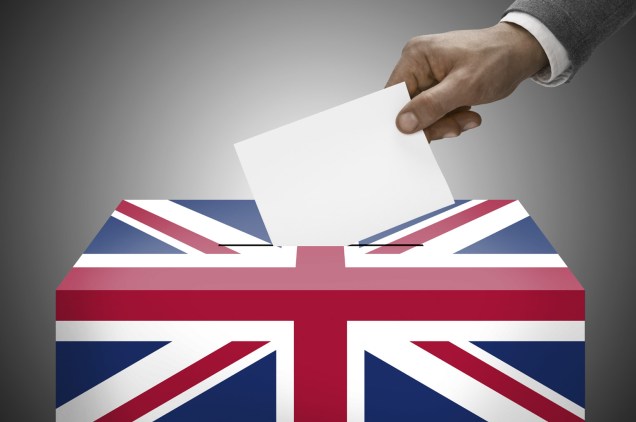
European Union - United Kingdom - Britain - Flags

Agree with this article? Violently disagree? Scroll down to leave a comment.

Follow Semi-Partisan Politics on TwitterFacebook and Medium.

The Liberal Case For ‘Leave’

EU Referendum - Brexit - Democracy

The European Union is an obsolete and rusting vessel – a dreadnought in an age of guided missile destroyers – holed beneath the waterline by the forces of globalisation

If you have not already done so, be sure to read Roland Smith’s excellent new article for the Adam Smith Institute, “The Liberal Case for Leave“.

Smith, a newly-minted Fellow of the ASI, begins with an excellent summary of the context in which Britain joined the EU in the first place – which also has the effect of showing what a vastly different country we are now than we were at the nadir of our post-war, pre-Thatcher decline:

Let’s bypass the line that says the UK electorate were sold the then EEC on a false premise. Instead let’s look at the circumstances in Britain around the time we joined the EEC and then agreed to stay as a result of the 1975 referendum.

Back then Britain was a country beset by nagging economic problems that were coming to a head: The constant stop/go policies of the post-war period that seemed to only inch us forward while the likes of Germany and Japan seemed to leap ahead; strikes; power cuts; rations even; union power; consensus politics; corporatism; and the 3-day week. Opinion favouring free markets was out on the political fringes.

On a longer view, Britain was a country in decline. Since World War II and particularly since the Suez crisis of 1956, Britain’s empire and its confidence had declined as it grappled with a new post-imperial future. The USA and the Soviet Union were the two blocs that now mattered in the world, each having their own large economic trading zone (the USA itself and Comecon).

Indeed, large and protected blocs seemed to be the future and the EEC was apparently forging a third bloc and third way between these two giants, albeit aligned to the USA.

Then there were the walls.

The most visible walls were the Berlin Wall and the Iron Curtain separating the Soviet Union from the West but there were also significant tariff “walls” between blocs, countries and trading areas. These walls not only demarcated different geographic areas, they reinforced the separateness of those areas, limited trade, and ultimately put a limit on economic progress. The tariff walls in particular defined economic blocs but also made the case for them, creating an impulse for relatively like-minded countries to club together to at least forge a level of economic freedom among themselves.

Smith rightly summarises the prevailing attitude of the time:

Being “for Europe” symbolically represented a future, outward-looking, cosmopolitan and internationalist mindset. It confirmed that you were part of the new jetset or had aspirations in that direction. It was about “getting on”.

Smith goes on to note that Britain joined the EEC just at the time when all of the old certainties which underpinned it began to show the first signs of corrosion – the decline and fall of the Soviet Union bringing an end to the necessity of regional super-blocs, and the decade of negotiations which led to the creation of the World Trade Organisation in 1995.

With the beginning of significant reductions in global tariffs and even the emergence of many new nations, the European Union – a protectionist customs union with explicit and long held aspirations for statehood – was already falling behind the times, as Smith describes:

Unseen and barely discussed in the 1990s, globalisation was beginning to eat into the logic of a political European Union at the very point it was striding towards statehood with a single euro currency.

Looking back, the EU was (and is) an old ideology in a hurry.

The event that was somewhat more attuned to freer globalised trading was the fanfare around the launch of the single market in 1992, except for the fact that it was and is tied to the EU’s political integrationist ambitions. But now, even the European single market is being rapidly eclipsed by the march of globalisation. A large and growing body of single market law is now made at global level and handed down to the EU which in turn hands it down to the member states.

The automotive industry’s standards are defined by the World Forum for the Harmonisation of Vehicle Regulations (known as WP.29) under ‘UNECE’ – a United Nations body. Food standards are defined by the ‘Codex Alimentarius’ established by the UN and the World Health Organisation. Modern labour regulations are defined by the ILO – the International Labour Organisation. Maritime regulations are defined by the International Maritime Organisation. Many energy-related regulations can be traced back to the global Kyoto accord on climate change and other international agreements.

Read the whole article. Roland Smith covers an extraordinary amount of ground in his essay, including more sense on immigration policy than you will ever hear from the official Leave and Remain campaigns.

While the EU’s furtive aspirations for statehood are misguided and abhorrent, many of the ways in which the European Union has developed were born not out of particular malice toward the sovereignty of its member states but merely as the result of being perpetually stuck in an increasingly irrelevant post-war mindset. Unlike many rent-a-copy diatribes against the EU, Smith captures this nuance well.

If we are to succeed against the odds in securing Brexit in this EU referendum, it will not be the alarmist cries about impending dictatorship or the abolition of the NHS which secure victory.

Reasonable, moderately engaged people – those with vague eurosceptic thoughts but who are minded to vote Remain because of the Fear, Uncertainty and Doubt kicked up by the government that those with vested interests in keeping things as they are – are most likely to be persuaded to Vote Leave if they are told that the EU is not necessarily the Great Satan, but rather a hopelessly outdated mid-century anachronism thrashing around and drowning in the sea of globalisation.

Given the choice, people will quickly vote with their feet when it comes to safely evacuating a foundering ship. Which is why the Remain camp are doing their utmost to portray the EU as a faithful and seaworthy vessel, albeit one in need of a lick of paint here and there.

This important article by Roland Smith – as well as outlining a bright and positive liberal vision for Brexit – also sounds a timely warning that RMS European Union has essentially been holed below the waterline by the iceberg of globalisation and is already steadily taking on water, regardless of the course it now chooses to steer.

And the fact that the lights still burn and the band plays cheerily on as the water laps ever higher around the deck is no reason for Britain to foresake the waiting lifeboat on offer.


European Union - United Kingdom - Britain - Flags

Agree with this article? Violently disagree? Scroll down to leave a comment.

Follow Semi-Partisan Politics on TwitterFacebook and Medium.

Douglas Carswell Warns Against The Allure Of Protectionism

Container Ship - Cargo - Trade - Protectionism

Douglas Carswell makes the short and eloquent case against protectionism:

The prosperity we take for granted today couldn’t have happened without free markets and free trade. That doesn’t stop people – even presidential candidates – saying we’d be better off starting trade wars, and only buying goods made at home. But the fact remains: protectionism is the route to poverty.

Globalisation gets a bad press. When manufacturing moves from Britain or the US to China and India, it looks like we’re losing out. But the result is that we get our clothes, shoes, computers, phones, and televisions much more cheaply. And lower prices don’t just make us better off. They also increase demand, and create jobs.

As Adam Smith and David Ricardo realised 200 years ago, prosperity comes from specialisation. If each of us tried to be self-sufficient, we would all be living in prehistoric penury. Instead, we specialise in what we’re best at, and exchange the product of our work for what we need.

The same applies to countries. Today, Britain’s comparative advantage is in services. Other countries are best at heavy industry or agriculture. By specialising in services, we get more and better manufactured goods and agricultural produce than we would if we diverted our resources into making them ourselves.

Protectionism might seem like the solution for people who have lost out to globalisation. But its effect would be regressive – like the poll tax. It would force prices up, and employment down. That would hit the poorest hardest.

Carswell goes on to argue that protectionism does not bring prosperity, but rather leads to inefficient, monolithic corporations like British Leyland, churning out low quality product that nobody really wants – and even then, only at the cost of massive subsidies from the taxpayer.

The case against protectionism cannot be restated enough at a time when globalisation and free trade is under sustained attack on both sides of the Atlantic – by the otherwise polar opposite Donald Trump and Bernie Sanders in America, and by the worst elements on both sides of the EU referendum debate in Britain, who believe that we should retreat either into mercantilist isolationism or protectionist euro-parochialism.

There is an important debate here to be had among advocates for smaller government. Clearly the state is presently far too involved in our lives in all manner of ways, but surely one of the things that a smart, lean and effective small government absolutely should do is watch out for its citizens when they are impacted by massive changes to the way that the world trades and communicates.

Labour’s solution has been to park people on welfare and then forget about them, which is remarkably immoral for a group of people who love to endlessly brag about how virtuous and compassionate they are. The intelligent Right should come up with something better. And that means doing something more than simply aping Labour policy by raising the minimum (or “national living”) wage to £9 an hour so that the most tedious of low-paying McJobs keep people just out of working poverty.

The new permanent majority will not be secured by the Cameron / Osborne strategy of enacting Tony Blair’s fourth term of New Labour governance. It will come about by radically rolling back the state in all manner of areas where it should be doing less, while also giving citizens the tools and opportunity to prosper in the new economy.

Less protectionism, less pretending that the old jobs will come roaring back if only we leave the EU, embrace the EU or otherwise throw up barriers to global trade. Less shooting for the middle all round, and more empowerment of British citizens to pursue high value-add, high-wage, twenty-first century careers.

Now put that on a bumper sticker.


Semi Partisan Politics Logo

Agree with this article? Violently disagree? Scroll down to leave a comment.

Follow Semi-Partisan Politics on TwitterFacebook and Medium.

Postcard From America: Adult Education Is Key To Future Prosperity

I’m currently back in the United States to celebrate Christmas in Texas. These short “Postcards from America” will document a few of my thoughts as I escape the political whirlwind of Westminster and look back at Britain from the vantage point of our closest ally

In America, not everyone waits passively for government to improve their life circumstances. Aided by a thriving community college sector, people take their futures into their own hands

While sitting in the cinema waiting for Star Wars: The Force Awakens to begin, I was struck by the number of local advertisements for regional schools, community colleges and universities which were shown.

By my reckoning, at least 40% of the commercials screened over a fifteen minute period were promoting some kind of educational service. Contrast this with the United Kingdom, where local commercials of any kind are a rarity, and most national commercials these days tend to be for banks, fast-moving consumer goods, the EE mobile phone network (featuring Kevin Bacon) or one of the limited number of other companies able to afford a national cinema campaign.

An example of the type of commercial screened at the south Texas cinema I attended is shown above. Typically, they feature personal testimonials from ordinary people who explain simply and positively how going back into education has helped them in their careers, how the various modes of study fitted in around their existing home and work commitments, and how easy/affordable it turned out to be.

These degrees and diplomas provide a springboard into skilled, middle class jobs, many of which are well paid and non-outsourceable. Dental nurses, IT engineers, electricians, car mechanics and many other such career opportunities. Recognising that not everybody can be – or wants to be – an elite lawyer or doctor, these institutions equip people with tangible skills which actively help them in the labour market, ensuring that their career options are far greater than the prospect of 40 years working at the 7-eleven, or some other minimum wage drudgery.

This emphasis on adult education is one sign of a more active and engaged citizenry, of a people who understand that their self advancement and personal destiny is in their own hands, not those of the government.

To be fair, some British politicians are also coming to realise the importance of adult education to keep our own workforce skilled, adaptable and capable of commanding high wages rather than minimum wages. During the Labour leadership campaign, Jeremy Corbyn floated his plan for a National Education Service to do for lifelong learning what the NHS did for healthcare.

From the Conservatives, however, there has been nothing. Not a squeak from Education Secretary Nicky Morgan, who supposedly has future leadership ambitions of her own and therefore might be expected to have a substantive policy or two up her sleeve. What are the Conservative government’s bright ideas for a more market-oriented, privately delivered solution to the adult education gap?

Banging on about apprenticeships is all very well, but what of adults over 25 who cannot take an apprenticeship under the current schemes, or who want to work in a field where none exist? What of the 55-year-old steelworker made redundant with few other transferable skills?

A conservative government worth its salt would look at Jeremy Corbyn’s proposal for a National Education Service, balk at the more nakedly socialist aspects, but then consider how a smaller and leaner government might be able to promote the education of the adult workforce in pursuance of the national interest. But of course our current Coke Zero Conservative government is not worth its salt.

If Britain is to prosper in this globalised age – and if our poorest, most disadvantaged fellow citizens are to be spared from a harsh life of minimum wage drudgery – we need a learning revolution in the United Kingdom, a British Apollo Program for education.

What party, what future leader will rise to the occasion and propose a solution equal to the task at hand?

Community College

Agree with this article? Violently disagree? Scroll down to leave a comment.

Follow Semi-Partisan Politics on TwitterFacebook and Medium.

No, Stuart Rose: To Leave The EU Is Not To Withdraw From The World

Stuart Rose - Britain Stronger in Europe - EU Referendum - Brexit

The continued efforts by pro-Europeans to distort and misrepresent eurosceptic ideas betrays a lack of confidence – and intellectual depth – in their own

The first of the pro-EU campaign groups, snappily named “Britain Stronger in Europe”, is due to launch later today, and will be headed by ex-Marks & Spencer celebrity CEO Stuart Rose.

The Guardian reports:

At the launch on Monday, Rose will say: “Those of you who know me will know that I am not an uncritical fan of the European Union. Far from it. That’s why I signed a letter arranged by Business for Britain calling for reform of the EU. Wanting reform, however, is not the same as wanting to leave.

“To claim that the patriotic course for Britain is to retreat, withdraw and become inward-looking is to misunderstand who we are as a nation. In this ever-changing and very uncertain world we need to engage with strength.

“I will not allow anyone to tell me I’m any less British because I believe in the strongest possible Britain for business, for our security and our society.”

It seems as though accusations of a failure of patriotism and belief in Britain are finally hitting a nerve. Good – these accusations are entirely valid, and the pro-EU crowd should regularly be made to feel uncomfortable by being confronted with their lack of faith in their own country to survive like nearly every other major country outside of the European Union.

It is continually amazing to witness the extent to which the pro-European forces do Britain down in order to make their flimsy case. The United Kingdom is the sixth largest economy in the world, a cultural powerhouse, a liberal democracy and a declared nuclear power. If a country of our size and influence cannot negotiate satisfactory trading relationships with the rest of the world, then no country can. And of course far lesser countries than Britain do negotiate bilateral and mutual trade deals every year without difficulty, rendering this scaremongering line of argument absurd – not that we have seen the last of it, by any means.

Continue reading