Tales From The Safe Space, Part 38 – DePaul University Administrators Complicit In Disrupting Free Speech

It is not enough to issue mealy-mouthed apologies to speakers and societies after their events have already been ruined by militant student protesters. Free speech must be robustly defended by university administrators at the very moment it is being threatened – something which few liberal university leaders have the courage or character to do

Read this shocking account of how Vichy administrators at DePaul university, entirely cowed and captured by the militant Cult of Social Justice and Identity Politics, allowed violent and threatening protesters to shut down a private speaking event organised by DePaul College Republicans.

Michael Sitver writes:

I never realized that forcibly shutting down a private speaking event was considered free speech. I was also surprised to learn that assaulting a police officer is now a form of protest. It certainly never occurred to me that making violent threats towards a speaker was a constitutionally protected right. In fact, I was pretty confident all three of these acts were illegal…highly illegal.

Yet, yesterday I saw radical protesters do all three of these things, without consequence. DePaul University administrators looked on dispassionately, as if this was an every-day occurrence. Watching this all unfold, I had to wonder for a moment whether DePaul administrators were defending some bizarre form of free speech I had never heard of.

They weren’t. They knew they were tolerating a dangerous suppression of speech, but in the face of adversity they chose to do the easy thing, rather than the just thing. As usual.

Years of inaction by university administrators has left radical student activists feeling they are immune from the law. Free from consequences, or dissenting opinions, endowed with a feeling of moral high-ground, students have taken increasingly drastic steps to suppress other opinions, and conservative opinions in particular.

I watched from the front row yesterday as a whistle-blowing “protester” stormed the stage of an event featuring conservative commentator Milo Yiannopoulos, with about a dozen more radicals following behind him. The event was privately organized by students, requiring months of planning and painstaking fundraising, but that never even factored into their heads. Administrators have handed them a bubble, a “safe space” where they don’t need to consider the impact of their actions on other students.

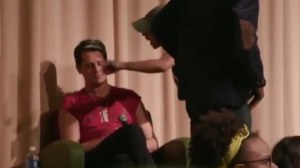
After the foul-mouthed and intimidating protest continued (one of the protesters simulated punching Milo Yiannopoulos in the face), the event was ultimately cancelled. The screeching, hysterical mob had their victory, aided and abetted by the silent university administrators who reportedly skulked in the corner and refused to take any action – save forbidding on-site security and the Chicago Police from removing the protesters and allowing the event to proceed.

Stories like this are now a dime-a-dozen. Almost every day brings some new egregious case of free speech suppression by supposedly “oppressed” protesters, grown increasingly emboldened with the knowledge that their universities would never dare to bring disciplinary proceedings against them for fear of unleashing the full force of mob justice.

But though these outrages are now common, we should not lose sight of what is lost when the forces of censorship and thought control succeed in one of their grotesque actions. In this case, the DePaul Republican society had fundraised extensively and gone to a significant effort to organise a high-profile event and attract a well-known if controversial speaker (Milo Yiannopoulos including the stop as part of his “Dangerous Faggot” tour of the United States). Many hours and many thousands of dollars doubtless went into organising the event. And hundreds of students made efforts to attend, in some cases travelling from far afield.

The very least that these students should have been able to expect from their university is that the leadership foster an environment of free speech in which the event could take place, and that administrators come down decisively on their side when their lawful event was disrupted. And yet DePaul University signally failed to fulfil this most elementary of duties, ostensibly because the victims were conservative and the perpetrators shielded by the blame-proof cloak of the Black Lives Matter movement.

Sitver continues:

While an invited speaker was harassed and harangued by protesters, DePaul administrators cowered indecisively in a corner. Faced with a serious challenge to first-amendment rights on their campus, they were visibly frightened of confronting the protesters, who tied themselves to the “Black Lives Matter” movement.

Administrators had fought against hosting the conservative event for over three months. As they watched the event unravel, they seemed almost relieved to see the radical protesters fulfil their wishes. The rights implications were utterly lost on them. All they wanted was a nice, quiet, homogeneously-thinking campus.

Only days before the event, administrators had demanded that DePaul College Republicans, the club that hosted the event, pay hundreds of extra dollars in security costs. This was a clear breach of contract, but the organizers paid the fee under threat of cancellation. Yet, after ordering a dozen security officers, the administrators prevented them from restoring order, forcing them to stand down.

I talked to a few of the dozen Chicago police officers eventually called into the building, and they were irate. They were well-trained, and well-equipped to handle scenarios such as this. They wanted to do their job, and remove the protesters, but administrators demanded they stand passively and watch. Once again, violence prevailed over free speech on a liberal college campus, and the administration was 100% complicit.

And the great sickness at the heart of the academic establishment which allowed these protesters to act with such impunity is revealed in the official response of DePaul University president Dennis Holtschneider, who made absolutely clear that his sympathies lay with the belligerent protesters and not the innocent student society which had its long-planned event ruined in a brazen attack on free speech.

Immediately after the event, Holtschneider wrote:

Mr. Yiannopoulos and I share very few opinions.  He argues that there is no wage gap for women, a difficult position to maintain in light of government data.  As a gay man, he has claimed that sexual preference is entirely a choice, something few if any LGTBQ individuals would claim as their own experience.  He claims that white men have fewer privileges than women or people of color, whom he believes are unfairly privileged in modern society — a statement that is immediately suspect when white men continue to occupy the vast majority of top positions in nearly every major industry.

Generally, I do not respond to speakers of Mr. Yiannopoulos’ ilk, as I believe they are more entertainers and self-serving provocateurs than the public intellectuals they purport to be.  Their shtick is to shock and incite a strong emotional response they can then use to discredit the moral high ground claimed by their opponents. This is unworthy of university discourse, but not unfamiliar across American higher education.  There will always be speakers who exploit the differences within our human community to their own benefit, blissfully unconcerned with the damage they leave behind.

In other words, Holtschneider cannot even bring himself to unequivocally condemn the acts of the protesters – rather, he begins with this lengthy and cowardly disclaimer, making it crystal clear to any would-be student tormentors that he disagrees with pretty much everything that Yiannopoulos says and believes. Such a statement, it hardly needs pointing out, should be utterly redundant in a university setting. Whether the university president agrees or disagrees with the views expressed by a lawfully invited speaker is utterly irrelevant when it comes to condemning the subsequent disruption of the event. Yet Holtschneider is so terrified of his restive student population that he has to get his disclaimer in quick and early.

The statement continues:

Now that our speaker has moved on to UC Santa Barbara and UCLA, we at DePaul have some reflecting and sorting out to do.  Student Affairs will be inviting the organizers of both the event and the protest — as well as any others who wish — to meet with them for this purpose.  I’ve asked them to reflect on how future events should be staffed so that they proceed without interruption; how protests are to be more effectively assisted and enabled; and how the underlying differences around race, gender and orientation that were made evident in yesterday’s events can be explored in depth in the coming academic year.

This is about the tamest statement of disciplinary intent one could imagine. University administrators will not be summoning and ordering those who participated in this suppression of free speech to attend and account for their actions – rather, they will merely be “invited” to share their thoughts, and come armed with reflections on how things might be done differently next time.

At this point it is worth reminding ourselves that it is the university administrators who are supposed to be the authority figures, not the anti free speech student protesters. And when students have egregiously violated the university’s own code of conduct – as Sargon of Akkad shows conclusively that they did – campus authorities have considerable scope in imposing sanctions on the guilty parties. Yet the DePaul hierarchy seems so terrified of incurring the wrath of their own students that the most they are willing to do is meekly request a sit-down with the young woman who jabbed her fist mere inches from the face of an invited guest speaker.

At the end of his statement, Holtschneider does manage to scrape together the basic decency to apologise to the DePaul College Republicans for the disruption and abandonment of their event. But free speech is not something which can be protected in retrospect, or the harm inflicted by its suppression made good by a subsequent apology. Either a speaker is able to air his thoughts in the public square, free from intimidation and undue disruption, or he is not.

Issuing an apology once an event has already been disrupted and abandoned does nothing to redress the injury to free speech which has taken place. If anything, failing to tackle disruptive protests as they occur and relying on subsequent mealy-mouthed apologies exacerbates the problem, emboldening militant students to repeat the same childishly aggressive behaviours again and elsewhere, knowing that they will be free to achieve their aims while any mild repercussions will lag long behind.

Thus far, in the battle for academic freedom and free speech rights on campus, university authorities have been found dangerously wanting. At best they are paralysed by an overwhelming fear of their most militant students and the potential disruption (and potentially career-ending bad PR) they can bring, and at worst they are outright collaborators in the activists’ efforts to suppress freedom of speech and establish a culture of intellectual and ideological homogeneity on campus.

This is untenable. Academic institutions cannot properly function when the most immature and authoritarian students are flattered and pandered to by terrified university leaders. And neither can conservative students alone be expected to keep the flame of academic freedom and free speech alive while fully grown academics cower in the corner and shamefully shirk their own duties.

University administrations should be championing the cause of academic freedom and providing vital air cover to students on the front line of the debate. But sadly, at present many university leaders would rather stab such students in the back rather than openly support their right to freedom of speech and expression.

And for this cowardice they should feel heartily ashamed.
 

DePaul University - Milo Yiannopoulos - Protest - Free Speech

Safe Space Notice - 2

Agree with this article? Violently disagree? Scroll down to leave a comment.

Follow Semi-Partisan Politics on TwitterFacebook and Medium.

In Turkey, Journalists Sentenced To Jail For Charlie Hebdo Solidarity

Charlie Hebdo cover - Tout Est Pardonne

In Turkey, Theocracy – 1, Free Press – 0

Turkey takes another step towards fundamentalist theocracy as freedom of the press recedes even further.

Hurriyet Daily News reports:

Two journalists were sentenced to two years in prison on April 28 for republishing in their columns a cover of French satirical magazine Charlie Hebdo featuring an image of the Prophet Muhammad.

Istanbul’s Second Criminal Court of First Instance sentenced daily Cumhuriyet journalists Ceyda Karan and Hikmet Çetinkaya to two years on charges of “openly encouraging hate and enmity among people via the press” for reprinting the caricature of the Islamic prophet after the Jan. 7, 2015, attacks on Charlie Hebdo in Paris that killed 12 people.

However, the court ruled for the acquittal of the journalists on charges of “insulting people’s religious values” on the grounds that the criminal factors had not been constituted.

Some 1,280 people had filed a criminal complaint against Karan and Çetinkaya for republishing in their columns the cover of Charlie Hebdo, including Turkish President Recep Tayyip Erdoğan, his daughters Esra Albayrak and Sümeyye Erdoğan, his son Bilal Erdoğan, his son-in-law Energy Minister Berat Albayrak and his adviser Mustafa Varank.

So the climate for journalism in Turkey is now such that a despotic thin-skinned president and members of his parasitic family feel that it is appropriate to drag journalists before the court and have them convicted simply for carrying out objective reporting.

Closing down independent newspapers and converting them into pro-government propaganda outlets is apparently no longer enough. Individual journalists must also be persecuted and jailed for offending the sensibilities of the Turkish president, his close family members and a thousand or so other assorted religious fundamentalists who believe that their right to sail through life unoffended trumps the right of journalists to report the news.

The Telegraph outlines the wider negative trend:

But the sentencing comes amid a mushrooming crackdown on Turkish and international news media within the country. According to PEN International, some 28 writers and journalists were either detained or imprisoned in Turkey at the end of 2015 while more than 100 remained on trial, most for national security offenses.

Cumhuriyet’s editor-in-chief, Can Dündar, and the paper’s Ankara bureau chief, Erdem Gül, are currently on trial on trial behind closed doors on charges of revealing state secrets and could face multiple life sentences if found guilty.

International trial monitors and press freedom groups have condemned those proceedings, describing the case as an instance in which “journalism is on trial”.

And this is a country which entertains hopes of joining the European Union.

This is the regime which Europe Germany is scrambling to appease.

The sentencing of these journalists is unacceptable. But it is also exactly what many in Britain and the West tacitly condone when they leap to their feet in defence of the right of “marginalised” people to avoid having their religious faith and political opinions subjected to the same scrutiny, discussion and criticism as those from the “privileged” majority.

This is the legacy of every single person who supports the concept of “hate speech”, or whose condescending, neo-colonialist views of Muslims and other minorities hold that they are inherently less intelligent, less capable of engaging in debate and more prone to violence than the white majority, who should indulge them in their fragility or violent excesses like understanding parent figures.

As soon as one accepts the racist notion that some people are inherently less capable than others of having their beliefs and opinions challenged or even mocked, one opens the door to civil or criminal penalties for doing so.

When the Metropolitan Police arrest a man in London for tweeting something deemed by completely unconnected third parties to be “Islamophobic”, it becomes that much easier for authoritarian regimes in parts of the world with weaker democratic traditions to claim that they are only following “best practice”, that their despotic excesses are just a nothing but a difference of degree. And at the very least, this makes it much harder for Britain to remonstrate with Turkey. How can we lecture Turkey that arresting journalists is abhorrent when we do the same thing ourselves?

It is time for Britain and the West to reoccupy the depressingly deserted moral high ground. Yes, criticise Turkey for their government’s chilling suppression of free speech and a free press, and yes, proclaim that you are still Charlie (but only if you really are).

But as we do so, we should not allow the beam in beleaguered Turkey’s eye to distract us from the steadily-growing speck in our own.


Freedom of Speech - Free Speech

h/t Brendan O’Neill and  Mashable

Agree with this article? Violently disagree? Scroll down to leave a comment.

Follow Semi-Partisan Politics on TwitterFacebook and Medium.

Tales From The Safe Space, Part 30 – Students Against The NUS

Malia Bouattia - NUS President - Disaffiliation Campaign - National Union of Students

Some encouraging signs in the growing backlash against the censorious, paternalistic National Union of Students

For once, a positive development in these Tales From The Safe Space – the first green shoots of an anti-NUS, anti-SJW grassroots backlash among students who are sick of being spoken for by the identity politics cultists currently in positions of leadership both in local university students’ union and the national organisation.

NUSceptics is a new forum for students at British universities to advance the free speech agenda and organise disaffiliation campaigns from the irretrievably corrupted National Union of Students.

This piece by student Ellie Spawton hits the nail on the head on the need to resist the growth of the new victimhood culture taking root in universities and wider society.

Money quote:

The NUS panders to this culture of victimhood, seeing it as their role to protect and defend anyone deemed a minority, or lacking in privilege. Whereas traditionally university is where young adults gain their freedom and are subject to debates and ideas, the NUS’ nannyish, moral crusader involvement in students’ everyday lives restricts and stifles not only debate and freedom of speech, but also moral independence and independent thought.

[..] The most concerning issue of the NUS is not its censorious nature, but the fact that it doesn’t trust the students it represents. It treats us like we are unable to be exposed to opinions that don’t conform to the progressive mindset without being offended and needing to retreat to a ‘safe space’. It is removing our ability to make our own decisions and our own mistakes, and depriving us of the ability to speak out and challenge viewpoints. It is condoning and feeding the emerging culture of victimhood, which in turn is creating moral dependence, fuelling conflict and preventing the development of young minds. The NUS needs to step back, stop nannying us and focus on larger issues than identity politics.

It is heartening to see such sensible, small-L liberal ideas being expressed by some students, even if they are presently drowned out by the opposing voices of social justice and identity politics.

Whether or not any of the nascent NUS disaffiliation campaigns will succeed is currently unknown – though it seems like a long-shot since any such movement would have to be comprised largely of people who are not already engaged in student politics (those already politically active clearly being overwhelmingly in favour of recent developments, as it is they who voted for the policies in the first place).

This is where university faculty and administrators need to rediscover their cojones and their commitment to academic freedom, and step in to support these brave students protesting against their own unions. Clearly universities cannot overtly support any attempt to build rival student organisations which aim to represent students while upholding the right to free speech, but at the very least they must make clear that any reprisals against these students by the NUS, local students’ unions or other vengeful individuals will not be tolerated.

As always, the hard work in rolling back the present identity politics-soaked victimhood culture must be carried out by the students themselves. But universities have an academic – and moral – duty to provide them with some valuable air cover.


Safe Space Notice - 2

Top Image: Huffington Post

Agree with this article? Violently disagree? Scroll down to leave a comment.

Follow Semi-Partisan Politics on TwitterFacebook and Medium.

Tales From The Safe Space, Part 29 – The Surreal NUS Annual Conference

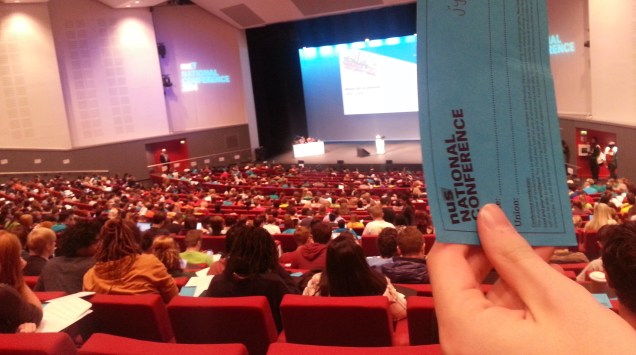
NUS annual conference

Down with the National Union of Students

We know that they are highly averse to clapping and that many of their affiliate university students’ unions have been entirely conquered by the Cult of Identity Politics, but what is life really like at the NUS annual conference?

Jack Grove has been into the lion’s den (or should that be sheep’s pen?), and reports in the Times Higher Education:

On arrival at the registration desk at the Brighton Centre, I was able to choose from a range of stickers that would indicate to delegates if I’d prefer to be addressed along the lines of “he/him/his” or perhaps “they/them/theirs”. Later in the day, delegates elected a full-time sabbatical officer to deal with trans issues – a major financial commitment for a union that can’t afford a paid post dedicated to postgraduate issues.

When Ms Bouattia was elected as president – the union’s first female black Muslim leader – her supporters were chided by the panel chair for clapping and cheering as this may cause distress to other delegates and trigger a trauma episode.

Instead, delegates were asked by a sincere delegate not to whoop or holler, or clap at all, but use “jazz hands” to show appreciation (people were asked to wiggle their fingers) as the noise created was “ableist” and had indeed caused the delegate in question to have a panic attack on previous occasions.

While Spiked’s Tom Slater reports:

The National Union of Students conference is over. But we’ll still have the memories – the jazz hands, the whingeing and the casual anti-Semitism. For this was the year when this tyranny of crybabies, this politburo of plonkers, truly outdid itself. Not only did delegates call for social-media apps to be banned (people are saying nasty things on them) and for Holocaust Memorial Day to be scrapped (apparently it’s not ‘inclusive’) — they also elected as the new NUS president Malia Bouattia, someone who thinks condemning ISIS might ‘send the wrong message’ and is wont to wax lyrical about the ‘Zionist-led media’.

This year’s shitshow has led to students around the country calling for their unions to disaffiliate from the NUS. About time. The NUS is a censorious, anti-democratic husk, propped up by right-on middle-class cliques. Though it claims to fight for students’ rights, it doesn’t have much truck with their right to speak freely, their right to conduct their sexual lives as they see fit, or even their right to party. In 2013, the NUS signed up to minimum pricing: this is a students’ union that thinks beer is too cheap.

It’s time to smash the NUS and start anew. Students need a union that truly looks out for them, that allows them to make common cause on the issues that matter. But, above all, they need a union that treats them as morally autonomous adults, that takes them seriously, that believes students can change the world rather than just be triggered by it.

I cannot emphasise enough that this is no longer a niche phenomenon. This is not a few isolated incidents, or a few overenthusiastic students on a few of the more liberal university campuses. This is not only nationwide, but also transatlantic.  And it is here to stay.

Here is a National Union of Students whose theoretical purpose is to represent the academic and pastoral interests of all students in the country, but which feels the need to lavish resources on a full-time Trans Issues officer at a time when they do not even have a paid officer to represent the different needs of postgraduate students. In other words, here is a union which has left behind any pretence of doing what a union should do, and instead devoted itself wholly to the furtherance of the identity politics agenda.

We would never witness this dereliction of duty in pursuit of secondary objectives in any other trade union, even (or especially) the most militant and prone to industrial action. The RMT union – and one has to hand it to them – seeks to grind out the best financial settlement possible for its members, and uses strikes or even just the threat of strikes to paralyse London, bring an elected Conservative mayor to his knees, and win key concessions for already well-paid tube drivers on the London Underground.

You would never see the RMT being half-hearted in its negotiations with Transport for London because its leadership was too distracted instituting a new Safe Space policy or agitating for mandatory social justice re-education courses for workers. They focus, with undeniable effectiveness, on fulfilling their primary duty to their members – namely, achieving the best possible employer settlements on wages and conditions.

And this is the key point. The National Union of Students not only no longer represents the majority of university students, it now pursues aims and objectives which are irrelevant to many of them and are even sometimes directly antagonistic toward them (particularly in the case of conservatives, small-L liberals or assorted others who simply value free speech). They no longer even claim to act for all students. They act primarily for those students bound up in the social justice movement.

It is now ten years since I graduated, and during my time at Cambridge and Warwick universities the NUS was never anything more than an annoyingly persistent leftist buzzing in my ear. Sure, it was stupid when the Warwick Students’ Union wasted time debating a motion to express their objection to George W. Bush making a state visit to Britain, but they did not actively go out of their way to interfere in my life. This is no longer the case. Now, the Warwick Students’ Union is rated Red in the annual Spiked university free speech rankings, and actively seeks to control what every student in campus is allowed to read, buy, think, hear or say.

In other words, a lot has changed in a decade. In just the last few years in particular, identity politics cultists and assorted Social Justice Warriors have made an unprecedented power play within students union, against university administrators and against any of their peers who do not subscribe to their own worldview. Those who graduated a decade or more ago and do not pay close attention to what is happening in our universities may well see this as alarmism at first glance – “surely things can’t be that ridiculous?” goes the common refrain.

But they are. And it is going to get worse. We are already at a point where holding conservative views on campus attracts outright ridicule and hostility. In a few more years, this opprobrium will spread to those who merely fail to sing from the social justice hymn sheet loudly and sincerely enough. And to date there has been almost zero fightback from the supposed adults in the room, the university faculties and administrators. Liberty-loving students have been left to face the onslaught alone.

Now, nobody can predict exactly what will be the consequence of a growing number of identity politics-infected young people graduating and joining the labour market and becoming involved in party political activism. Some will doubtless be jolted to their senses by their collision with reality, and come to look back in shame on their illiberal student ways. But many others will survive the impact, and when they regroup they will begin to look for ways to recreate their university Safe Space environment here among us. It has already begun.

So calling attention to the identity politics/social justice takeover of universities is not a fringe interest or a massive overreaction. This new focus by writers – including this blog’s own “Tales From The Safe Space” series – provides an unsettling preview of what life will be like in another decade, unless those who object to this therapeutic, victimhood culture begin to get organised and fight back.

But if you are happy for your future workplace to gradually turn into a never-ending NUS conference, then by all means continue burying your head in the sand.


Safe Space Notice - 2

Top Image: Lancaster University Students’ Union

Agree with this article? Violently disagree? Scroll down to leave a comment.

Follow Semi-Partisan Politics on TwitterFacebook and Medium.

Tales From The Safe Space, Part 28 – When Both Sides Use SJW Tactics

Safe Space University

If unchecked, identity politics and Social Justice Warrior tactics will lead to a stalemate on university campuses where everything is offensive, everyone is offended and both protest and counter-protest become impossible

Recently, this blog speculated as to what would happen if and when conservatives on university campuses finally get sick of being shouted down and censored on campus by social justice activists using the tactics of identity politics, and begin to adopt the same kind of arguments and tactics themselves as a kind of self-defence mechanism.

As I concluded at the time:

Nobody likes a pity party, but that is exactly what will get if conservative and liberal students face off against each other not as they should, through lively debate, but rather through constant, tear-stained appeals for the university authorities to intercede on behalf of their respective sides.

And in a sense, one cannot blame [conservative students] for behaving in this way. They have watched for months and years while identity politics-wielding left-wing students get every little thing that they demand from spineless university administrations, and shame into submission anybody who stands in their way.

It is not therefore an illogical leap when other students conclude that this is the best and most effective way of advancing one’s own agenda. If the Social Justice Warriors can mobilise support and win concessions by emphasising (and frankly, grossly exaggerating) their supposed victimhood and oppression, why should conservatives not do the same?

[..] But in the longer term, if through repeated practice young students become adept at flaunting their fragility and exalting in their helplessness, both sides will fight to a bloody draw, with nobody able to say or do anything on campus without immediately triggering a protest and counter-protest. University will truly no longer be a place for the discussion of ideas, but a sheltered place of “comfort and home” for weak-minded adult babies, an intellectual demilitarised zone protected by a field of verbal landmines laid by every competing minority group over the academic and political discourse.

And an “intellectual demilitarised zone” is exactly what we are now just beginning to see, with those people and groups who were traditionally the target of social justice warrior tactics now adopting the same language of victimhood and fragility in an attempt to deflect criticism of themselves and shame their accusers into dialling back their criticism.

The context in this case is that of UC Davis and the ongoing protests on that campus to force the resignation of their Chancellor, Linda Katehi. Much of the criticism of Katehi is actually justified in this case – she came to prominence for presiding over an infamous incident in 2011 where Occupy protesters were pepper sprayed by campus police, and subsequent efforts to scrub the internet of mentions of the event in the name of “online reputation management. Some of her failings are detailed in this local press report.

But the rights and wrongs of Katehi’s actions are irrelevant for the purposes of our analysis. What is if interest here is the fact that Katehi’s defenders among the university student population, faculty and administrators are now using the same language of beleaguered and bullied “victims” in an attempt to win public sympathy as well as respite from their accusers.

Jonathan Haidt comments on this phenomenon at The Atlantic:

At UC Davis, where student activists still hope to oust Chancellor Linda Katehi, critics of their activism are using concepts like “safe space” and “hostile climate” to attack it.

The student activists had occupied a small room outside Katehi’s office, planning to stay until their chancellor resigned or was removed from her post. By the time they left 36 days later, a petition that now bears roughly 100 signatures of UC Davis students and staff were demanding that they prematurely end their occupation, criticizing their tactics, and alleging a number of grave transgressions: The signatories accused the student activists of sexism, racism, bullying, abuse, and harassment, complaining that many who used the administration building “no longer feel safe.” The student activists say that those charges are unfair.

While regarding a different protest at Ohio State University, Conor Friedersdorf notes that this is not the only time that targets of a student protest have used the language and tactics of social justice warriors to plead vulnerability and seek to escape from criticism or protest:

Insofar as campus concepts like safe spaces, microaggressions, and claims of trauma over minor altercations spread from activist culture to campus culture, the powerful will inevitably make use of them. Where sensitivity to harm and subjective discomfort are king, and denying someone “a safe space” is verboten, folks standing in groups, confrontationally shouting out demands, will not fare well. When convenient, administrators will declare them scary and unfit for the safe space, exploiting how verboten it is to challenge anyone who says they feel afraid.

In cases like this one, it won’t matter that one of the least scary experiences in the world is walking into a university administration building at 7 a.m., well-rested and ready for work, to be greeted by a bunch of exhausted 18-year-old OSU students groggily looking up from the corner where they curled up with college hoodies as pillows. After years of reporting on occupations like this one, I’ve never heard of even one case of a college staff member of administrator coming away with even a scratch. Yet in the name of preserving “safe space,” these protesters were evicted.

This emergence of competitive grievance culture is only going to grow. Only last month, this blog remarked that competition between different identity groups all using the same anti free speech tactics is currently less marked on American university campuses compared to British institutions, but already it seems that the United States has caught up.

This is what our new victimhood culture has wrought. Expect to see this same scenario repeated again and again in the coming months, as those people who are traditionally the target of leftist campus activism – conservatives, university administrators and others – realise that they can “appropriate” the language and tactics of the SJWs to portray themselves as the real victims and get themselves off the hook.

As yet, the SJWs have no response to this tactic. As we have recently seen, many students indoctrinated into the Cult of Identity Politics are so terrified of putting a foot wrong themselves by saying or doing something “offensive” that their first reaction when confronted with any identity politics claim is to freeze like a deer in the headlights and then automatically accept it as valid.

According to this mindset, if a university administrator – heck, even a university Chancellor – claims that student protests and disagreement are making them feel unsafe, then it is the duty of the identity politics adherent to withdraw in deference to the fragility of the supposed victim. Thus any debate or protest, regardless of the participants, can now potentially be shut down simply by uttering the three words “I feel unsafe”.

As Jonathan Haidt notes, by using these illiberal tactics so freely and excessively, student activists have effectively created the weapon with which campus authorities may now attempt to silence them:

The civil-rights movement, the free-speech movement, the anti-Vietnam protests, and protesters on both sides of the gun and abortion questions have all deliberately tried to make others uncomfortable, intellectually if not physically. They’ve all shouted, insulted, provoked, and tried to deny their opponents “safe spaces.”

Today’s strain of campus progressivism has a more ambiguous relationship with traditional liberal values, finding them too viewpoint neutral and rough-and-tumble.

Still, most campus protests are left-leaning. And administrators cannot help but realize that almost all of that activism is, on some level, about confrontation—that it frequently involves a lot of shouting or chanting or marching or banging on drums. Now, any time such protests challenge the interests of the administration, or make their jobs marginally harder or their lives marginally more inconvenient, they can always pinpoint some folks who are earnestly upset or unnerved by all the ruckus.

They can always undermine the activists of the moment by finding the students experiencing “trauma” from all the conflict; the staff members who feel “unsafe” around protesters, the community member who, in the new paradigm, somehow feel “silenced.”

As best I can tell, this does not worry leftist activists yet, perhaps because they mostly operate on shorter time-horizons than other campus power brokers, or perhaps because they see themselves as marginalized and mistakenly believe these standards will never be applied to them, even though it’s already happening.

Haidt concludes his own analysis:

In the end, unreformed social justice activism may destroy itself.

One gets the slight impression that Haidt, despite his sterling work drawing attention to the growing illiberalism within universities, sees this as something at least partially regrettable.

This blog would regard the collapse of social justice activism under the weight of its own sanctimony – at least for as long as it is so closely intertwined with poisonous identity politics – as a great and unexpected triumph. But a prolonged stalemate with both sides using identity politics tactics to shame the other and parade their supposed victimhood in front of authorities and the observing public – with free speech rights being continuously eroded at both ends – still seems like the more likely outcome, at least in the medium term.

In short, our new victimhood culture is not going anywhere in a hurry. Therefore, those who oppose it must find other means of fighting back besides the counter-productive instinct to play the social justice warriors at their own game.


Safe Space Notice - 2

Agree with this article? Violently disagree? Scroll down to leave a comment.

Follow Semi-Partisan Politics on TwitterFacebook and Medium.