Nick Clegg, Defiler Of Liberalism, Has Something To Say About Populism

Populism is bad, mmkaaay?

“I think it’s important to remember populism can be a very positive, can be – I mean, Gandhi was a kind of populist. If populism is about challenging a complacent elite, challenging an established order, speaking for people who are not spoken for, populism is a really really important antidote for complacency in politics” – Nick Clegg

The only way that one can hold this seemingly benign attitude toward populism while deploring Brexit and the vote to leave the European Union is either to misunderstand the true nature and purpose of the EU, or to be engaging in deliberate deception.

Nick Clegg is not an uneducated man. With his career, he knows better than most precisely what the EU is, how it operates and where it is heading. He knows that the European Union is more than the “friendship ‘n co-operation”, humble free trade club portrayed by deceitful Remainers during the referendum campaign. In other words, the ignorance excuse is not available to Nick Clegg.

That leaves only the conclusion that Nick Clegg is a liar. A very affable and eloquent liar, certainly, but a liar all the same, and a particularly dangerous one for his gifts.

Nick Clegg would seriously have us believe that the European Union has nothing to do with a “complacent elite”, an “established order” or “complacency in politics”, and that therefore Britain voting to liberate ourselves from the EU is therefore the “bad kind” of populism as opposed to the virtuous kind, which he happily supports. How anybody could sit and listen to him advance this view without either laughing or heckling is completely beyond me.

What nonsense; Nick Clegg has no time for populism of any kind, because it inevitably threatens the rule and routines of the elite in which he is so personally ensconced. Besides the archetypal High Tory, it is hard to imagine a senior British politician with less affinity for anyone who supports any populism movement. At his core, Nick Clegg believes that politics is something to be done to the people by enlightened, “liberal” elites like himself, not something for the masses to influence, with their base prejudices and uncomfortable opinions.

We know this because immediately prior to praising populism, Nick Clegg also said this:

“Populism is redolent with kind of uncontrollable rages and angers and passions, whereas liberalism – at least the liberalism I believe in – is about reason, rationality and evidence, and so on and so forth.”

No. The “liberalism” that Nick Clegg believes in consists of insulating oneself inside an hermetically sealed, epistemically closed information loop, listening only to those “experts” or paying heed to those “facts” which are conveniently in line with one’s own globalist, anti-nation state worldview to the complete exclusion of all other parameters, angles and viewpoints, before applying “reason” to that desperately narrow window on reality and pronouncing verdicts which always comfort and never challenge the metropolitan Regressive Left mindset.

Nick Clegg is perfectly entitled to hold and profess those seethingly anti-democratic, elitist positions. But he should not be allowed to get away with calling himself a liberal while he does so.

Watch this fascinating Intelligence Squared debate/discussion between the excellent social psychologist Jonathan Haidt and the sneering, unrepentantly euro-elitist Nick Clegg, on the subject of populism.


nick-clegg

Bottom Image: Chatham House / Wikimedia Commons

Support Semi-Partisan Politics with a one-time or recurring donation:

Agree with this article? Violently disagree? Scroll down to leave a comment.

Follow Semi-Partisan Politics on TwitterFacebook and Medium.

Hysterical Remainers Are Inadvertently Making ‘Hard Brexit’ More Likely

Sam White has a great piece in Country Squire Magazine, in which he warns that the juvenile behaviour of bitter and hysterical Remainers is doing more than anything else to imperil the prospects of a smooth and orderly Brexit.

White writes:

One of the false charges levelled at Leave voters is that Brexit is an act of self-harm. That whatever reasons a person might have for voting to escape from the European Union, the amount of damage caused will always outweigh the benefits.

But from where I stand, the only masochistic inclinations come from hardcore Remainers themselves, as they attempt to hinder or halt a clean, well executed departure.

As they snipe and circle in a constant, bad tempered performance, drawing attention to their own discontent like hormonal adolescents, it becomes clear that they’ll try every trick at their disposal to oppose democracy.

An already impatient Leave camp is being made twitchy by the Remain contingent’s obstructive posturing, but can the Europhiles do any real damage?

The most vocal Remainers are so entrenched and irrational that they’ve actually shifted general opinion toward the very thing they’ve spent the past few months ardently demonising: a hard Brexit.

There are Leave supporters who’ve consistently argued that the only real Brexit is hard Brexit, and Remain have unwittingly reinforced this view. In fact, the idea of simply repealing the 1972 European Communities Act and walking nonchalantly away as if we’ve never heard of Article 50 now has a certain nihilistic, up-yours attraction. It’s the kind of thing Sid Vicious would do if he was in charge. Not so much a hard Brexit as a brick to the face Brexit.

That might give credibility to the charges of self harm though, and it’s unlikely our politicians would have the poised recklessness to pull it off. Instead, given the space to play smart, our negotiators would do best to take that most composedly British of approaches, and play the long game.

And were we united behind Brexit, they could do that.

However, with Remain jabbering and poking in the background like irritating, spoiled children, the considered approach becomes less attractive. What Brexiteer would feel comfortable with such a cautious route now, in the knowledge that amoral Remainers would have more time to subvert the plan?

Suddenly we’re a little less Roger Moore, and a bit more like John Cleese in Clockwise—quite prepared to steal a Porsche while dressed as a monk, as we race to trigger Article 50 before the entire glorious achievement can be stolen from us.

My emphasis in bold.

Sam White is quite correct. If we are determined to look at Brexit as a purely economic matter, as Remainers often seem to do, then right now there is no bigger threat than the possibility that the pro-EU crowd’s whiny filibustering might fuel a backlash which forces the government and MPs to take a harder (or more foolhardy) line in the secession negotiations than would otherwise be the case.

Pete North has previously picked up on the same danger, with reference to Nick Clegg an the Liberal Democrats:

And that is a problem if the Lib Dems are setting themselves up as the voice of the obstructionist remainers. It pretty much makes the EEA politically toxic. The option itself is hated among the majority of leavers, not least because they have, hook, line and sinker, bought the remainer narratives about it.

That puts us all in very dangerous territory. It forces the government to double down on seeking any solution but the EEA and consequently has them fumbling around in the dark for something politically palatable when the options are few. What that likely means is further delay and an attempt to bring about some kind of bespoke agreement that is the EEA in all but name.

As White notes, there is already a tedious contingent of Brexiteers, particularly online, who insist that despite the very clear wording of the referendum question, the British people also secretly gave an instruction to leave the single market, and that anything short of full and immediate divorce is some kind of dishonourable betrayal.

Throw in the fact that dishonest Remainers who only months ago were arguing that Britain’s prosperity depends on remaining in the political union have now retreated to the fallback position of calling for continued participation in the single market, and one can understand how the narrative of an elite anti-Brexit conspiracy is gaining traction and potentially leading to a hardening of stances among some Brexiteers.

White concludes:

Something these anti-democrats can never get their heads around is patriotism. The idea that a citizenry could be willing to risk a short-term financial hit in order to secure priceless, permanent sovereignty is apparently unfathomable.

They also have difficulty reconciling national integrity with being an outward looking, internationally-minded country, but of course there is no conflict between these things. Right now it’s the EU that appears stagnant and insular, while an independent, agile Britain looks fresh and ready to do business.

Perhaps it’s this intractable refusal to consider the value of nation states—in their most inclusive and forward thinking colours—that holds the Remainers back.

It’s true – many Remainers simply do not “get” patriotism, at least according to any reasonable definition of the word. Those who style themselves as “citizens of the world” are in fact no such thing. For as long as the nation state remains the basic building block of the global community and the ultimate guarantor of our rights and freedoms, permitting Britain’s sovereignty to be undermined is highly counterproductive.

But as this blog has argued, it goes deeper than that. It is not just that Remainers see concerns about self-determination and democracy as entirely secondary to short-term economic scaremongering concerns. It is that they are actively hostile to patriotism-based arguments, or indeed any harmless expression of patriotism.

And this haughty attitude risks fuelling a backlash which, when translated into domestic political pressure, may make it much harder for Theresa May’s government to pursue the kind of Brexit deal that we should be making.


European Union - United Kingdom - Britain - Flags

Support Semi-Partisan Politics with a one-time or recurring donation:

Agree with this article? Violently disagree? Scroll down to leave a comment.

Follow Semi-Partisan Politics on TwitterFacebook and Medium.

Why Should Brexiteers Be Magnanimous Toward Defeated Remainers? They Deserve No Such Goodwill

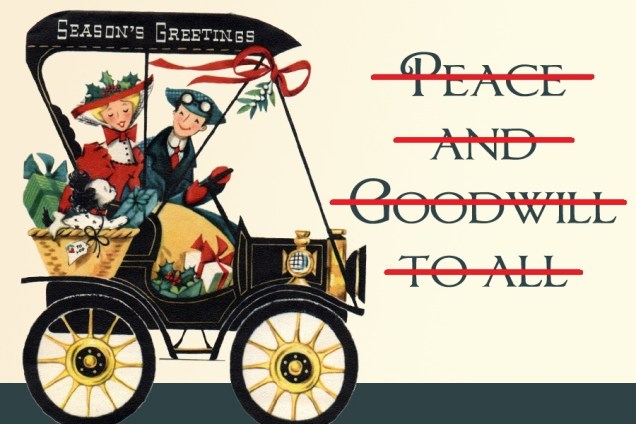
peace-and-goodwill-brexiteers-remainers-eu-referendum-brexit-european-union

Brexiteers should be magnanimous toward defeated Remainers? No, sorry. Remainers have behaved like deceitful, duplicitous, spoiled children both before and after the EU referendum, and have done nothing to deserve anyone’s goodwill

Peter Hitchens is both right and wrong in his latest Mail on Sunday column, in which he urges Brexiteers to show magnanimity toward defeated Remainers by swinging their support behind an interim Norway/EEA option for leaving the EU.

Hitchens writes:

Do you really think anyone in this deeply divided country has a mandate to go hell-for-leather for full immediate exit from the EU, regardless of costs and consequences?

I don’t. I think we might be very wise to settle for a Norway-style arrangement, and leave the rest for some other time.

A mandate is a mandate, but only because of the strange, rather illogical magic which says that a majority of one vote decides the issue. So it does.

But it doesn’t sweep away any duty to consider the defeated minority, our fellow countrymen and countrywomen, our neighbours, friends, colleagues, even relatives.

It may be that if the other side had won, they might have behaved badly towards us.

I have been in enough minorities in my time to have experienced that. But they would have been wrong to do so. And precisely because our cause is so good, we can afford to be generous in victory.

I get tired of the overblown shouting on both sides here. Anyone, even I, could see that a referendum was only the first step, and that lawyers, judges, civil servants, diplomats and the BBC would seek to frustrate a vote to leave.

That’s why I always wanted to take another, longer route out. I wasn’t surprised by the High Court decision that Parliament must be consulted, and I will be even less shocked if the so-called ‘Supreme Court’ takes the same view.

Hitchens is absolutely correct to endorse a Brexit model in which Britain retains our current level of access to the single market by continuing to participate in the EEA after our initial departure. One may not realise from listening to overzealous, hard Brexiteers, but this is nothing more than an acknowledgement of basic truth – that Brexit is inevitably going to be a process rather than an event, and that for this to work we need to find effective ways of tying the hundreds of loose ends created by severing ourselves from the EU in a way which minimises economic and diplomatic disruption while fulfilling the primary objective of leaving the political union.

But Hitchens is wrong to suggest that there should be any additional magnanimity toward Remainers, besides that which is absolutely essential for the interests of our cause. Lest everybody forget, Remainers have had their way exclusively for 40 years straight, with Britain participating as a paid-up member of the EU against the wishes of eurosceptics. During all this time there has been absolutely no magnanimity shown or generosity extended to those with doubts about the euro-federalist project, or concerns about the EU’s impact on democracy.

Brexiteers have been called “fruitcakes and loonies and closet racists” by none other than the former prime minister David Cameron, then leader of the party which by all rights should be most sympathetic to the eurosceptic cause. And Cameron was being positively polite in comparison to others. Furious Remainers, angry that their incompetent and small-minded campaign somehow managed to snatch defeat from the jaws of victory despite having the overwhelming support of the government, civil service and establishment, have been openly complaining that Brexiteers are the racist beneficiaries of a “post-factual” world where dark propaganda overshadows the EU’s inherent goodness (I debunked that lazy theory here and here).

And worse, Remainers have acted as though a nation state seeking to escape from a failing and spectacularly unloved supranational political union and reassert control over its democracy is not the result of genuine and valid political conviction but rather somehow the first step toward fascist tyranny.

I genuinely don’t know whether I have been more insulted by Remainers before the referendum or since it took place. During the campaign we had wall-to-wall Remainer scaremongering and the deliberate encouragement of public ignorance (with the false insistence that the EU is just about “friendly trade ‘n cooperation” and nothing more, that sure it has problems but the Magical EU Reform Unicorn will easily take care of them, and that anyone who disagrees is an Evil Uneducated Xenophobe).

And since the surprise victory for Leave, we have seen a parade of Remainer catastophising and hysterical garment-rending the likes of which have not been seen in my lifetime. Some of it has been dispiriting, coming from people whose opinions I used to respect. Some of it has been whimsical and borderline hilarious. But all of it has been wrong, and all of it has been offensive to Brexiteers, who have nonetheless fought the good fight despite the insults.

Hitchens goes on to sling some further insults at David Cameron, which this blog always enjoys:

People are already beginning to forget Mr Cameron. They shouldn’t. First, because so many who should have known better – Tory activists and then voters – fell for his marketing.

Second, because he is mainly responsible for the mess in which we now find ourselves. Try not to be fooled by this kind of person again.

And in the meantime, realise that, in these difficult times, we risk the sort of unforgiving, dangerous and destabilising divisions which are even now ripping through the USA. In such conditions, you may well get what you want, but only at a hard and bitter cost. Is that worth it?

Halfway out of the EU, which we can achieve now, may turn out to be a whole lot better than being halfway in.

But Hitchens mis-sells the EEA option, which is much better than being “halfway out” of the EU, as he describes it. Freedom from the EU’s political union, the “ever-closer union” ratchet, the ECJ and any future common taxation or military policies alone would be worth the effort. But as an EEA member (by rejoining EFTA and trading with the single market under that organisation’s EEA agreement) we would be subject to only around one third of current EU laws, many of which we would need to accept anyway in one form or another, in order to conform with global standards which the EU merely receives and rubber stamps. This is a lot more than some dismal halfway house, as Pete North eloquently explains.

This is political independence and breathing room for us to then consider how best to work with other like-minded countries and organisations to bring about the kind of non-parochial, global single market which could benefit Britain so greatly. By contrast, pushing for so-called “hard” Brexit not only glosses over innumerable complications, the ignorance of which could do profound economic and political harm to Britain were we to leave the EU without resolving them, it also makes Brexit less likely by alarming sufficient numbers of people that those who seek to stop Brexit altogether receive additional support.

Agitating for the hardest of hard Brexits is spectacularly unwise, inasmuch as that it would be an unnecessary act of deliberate economic self-harm – unnecessary because secession from the EU is eminently achievable without trying to undo 40 years of stealthy political integration in a fevered two-year bonfire of laws. And if recognising this basic reality seems like extending magnanimity toward Remainers, then let it be the only magnanimity they ever receive.

By now agitating for “soft Brexit” and Britain’s continued participation in the EU, Remainers are essentially exposing the fact that they lied continually throughout the referendum campaign. As this blog previously noted, during the referendum we were always told that leaving the EU would trigger all of these negative economic consequences. But now that Britain’s secession from the EU seems inevitable, Remainers have fallen back on the argument that it is leaving the single market which will cause us doom. This is actually much closer to the truth, but every day that they make this case shines a spotlight on the steaming lies and deceptions they told the British public during the referendum.

Therefore, if giving Remainers what they now want (continued single market access) still gets us out of the European Union in the most optimal way and exposes them as the shameless liars that they are, then I am more than happy to make that concession. But that is the only magnanimity that they will get from me.

Remainers have had things their way for forty years, never caring about the millions of Britons who dissented from the pro-EU political consensus, and often being actively hostile to us. Now that something has not gone their way for the first time in many of their pampered lives, I fail to understand why I am expected to sit beside their sick beds, holding their hands and reassuring them that I am not secretly part of a plot to bring fascism or splendid isolation back to the UK.

If that is what some Remainers seriously believe, then let them continue to think it. I hope that the gnawing concern gives them ulcers. I am done trying to reason with them. I am done placating them. I am done responding with reason when I am accused of ushering in the apocalypse, either through ignorance or malevolence. I am done extending the hand of friendship. No Brexiteer should feel compelled to defer to the delicate emotions of these selfish adult babies.

They had their way for forty years. Now we get to do things our way for a change.

Life is tough like that. Suck it up, Remainers. Enjoy the political wilderness – we knew it well ourselves, once.


 

madeleina-kay-cant-help-falling-in-love-with-eu

European Union - United Kingdom - Britain - Flags

Support Semi-Partisan Politics with a one-time or recurring donation:

Agree with this article? Violently disagree? Scroll down to leave a comment.

Follow Semi-Partisan Politics on TwitterFacebook and Medium.

Brexit Catastrophisation Watch, Part 9 – Another Song For Europe

The long-awaited follow-up single is finally here…

Madeleina Kay, an almost Vera Lynn-like character among disappointed Remainers, has released another classic ode to the EU, following up on her first hit, “All I Want For Christmas Is EU“.

This one is an adaptation of the Elvis Presley classic “Can’t Help Falling in Love”, re-engineered as a tearful plea from a contrite Britain for the European Union to take us back.

The immortal lyrics:

Wise men say
Only fools Vote Leave
‘Cause I can’t help falling in love with EU
Shall we stay
Would it be a sin
If we can’t help falling in love with EU?

Every Remainer knows
It’s a catastrophe
But Brexit rest assured
It’s not meant to be

Take my hand
Accept this apology
‘Cause I can’t help falling in love with EU

As the Ode to Joy from Beethoven’s Ninth Symphony has been co-opted to serve as the European Union’s anthem, let this effort – sung here with the sweet innocence of a child – become the EU equivalent of Parry’s “Jerusalem”, etched into the hearts of every European citizen and fondly sung on all those many euro-patriotic occasions which we have in common across the continent, and which are so important to us all.

Deep breath.

Think about the European Union for a moment. Think about what the EU actually is, how it was founded, how it deliberately grew by stealth, its deliberate corrosion of member state democracy and the impact that the outsourcing of government to a supra-national level has had on political engagement across an entire continent.

Think about the harm that the EU’s protectionist trade policies have wrought on developing nations without and on economic competitiveness within.

Think about the way that this hulking relic from the post-war era, totally lacking in popular legitimacy and unable to meet the challenges of the 21st century without inevitably making them immeasurably worse, grinds ever-onward towards its pre-ordained federalist destination, deaf to all opposition.

Then imagine writing not one, but two love songs to that organisation.

Just think about it for a moment.

The more I see of Kay’s output, the more I am starting to suspect that she may actually be a cunning Brexiteer, trolling the pro-EU Brexit-deniers from deep behind enemy lines.

If so, then she is doing an absolutely masterful job.


madeleina-kay-cant-help-falling-in-love-with-eu

Support Semi-Partisan Politics with a one-time or recurring donation:

Agree with this article? Violently disagree? Scroll down to leave a comment.

Follow Semi-Partisan Politics on TwitterFacebook and Medium.

After Brexit, A Swift US-UK Free Trade Agreement Will Be Economically And Diplomatically Beneficial

The National Review might not be down on all the fine details of Brexit*, and quite possibly put too much faith in the elimination of tariffs as a means of spurring trade, given the modern shift toward non-tariff barriers, but their forthright and optimistic call for a swift US-UK trade agreement is most welcome nonetheless.

(*In which they are hardly alone, joined by most of the UK media and many elected British politicians, who unlike the National Review have no excuse for their ignorance)

Stephen Meyer writes:

First, a free-trade agreement between the U.S. and U.K. would foster trade and growth in both countries without subjecting either to the onerous external regulation and loss of democratic control that Britain has experienced in the European Union. Until now, the exclusive nature of the EU prevented Britain from establishing a free-trade pact with America, its most lucrative trading partner, to the detriment of tariff-paying businesses in both countries.

Nevertheless, under treaties governing EU membership, the U.K. cannot make free trade deals with non-EU partners. It must apply the growth-suppressing common EU external tariff, an average of 4.5 percent, to all imports. Once Britain legally extricates itself from the EU, that can change — and should. An agreement between the world’s largest and fifth-largest economies will create a huge free trade zone, benefiting businesses and spurring growth on both sides of the Atlantic.

Second, an agreement that focuses on eliminating tariffs, but not creating supranational oversight bodies, will protect both countries from the loss of sovereignty that British voters rejected with Brexit and that Mr. Trump has criticized. Such a simplified deal would require U.S. companies operating in (or exporting to) the U.K. to accept U.K. law, and U.K. companies operating in the U.S. to do the same. Since U.K. and U.S. law is so similar and both countries have so many lawyers versed in the commercial law of the other, international oversight would prove largely unnecessary. In a bilateral treaty, significant disputes or grievances can simply trigger provisions to renegotiate terms — or to accept arbitration in limited cases before mutually agreed tribunals.

This, of course, serves to underscore the importance of freeing ourselves from the customs union as part of any interim and permanent Brexit deal. To do otherwise would truly be an act of self-harm, constraining Britain’s ability to negotiate freely with other countries just so that bitter Remainers can cling slightly closer to the vestiges of their European dream, with no commensurate benefit whatsoever.

But as Meyer notes, a US-UK trade deal would matter symbolically and diplomatically just as much as economically:

A free trade offer will also help repair the U.S.-U.K. special relationship after eight years of intentional neglect and decades of slow erosion as the result of Britain’s gradual absorption into the EU. Strengthening the alliance with Britain will promote U.S. national security because it will free the U.K. to act decisively as a bilateral partner when the strategic interests of our two countries align — as they often have.

The Obama years have witnessed a dramatic weakening in the strategic position of the United States and the West, as well as a diminution of U.S. military power. In addition to rebuilding military capacity, as Trump has promised, the United States now badly needs genuine allies with shared interests who have demonstrated the will and capability to stand alongside America in times of international crisis. More than any other ally, Great Britain has consistently demonstrated that proclivity and capability: Apart from France, only the U.K. among U.S. allies maintains an independent nuclear deterrent and the capacity to project significant naval power. Among NATO allies, only the U.K. keeps its treaty commitment to spend 2 percent of GDP on defense.

Whatever else one may think of Donald Trump – and this blog is not a fan – it is at least heartening to hear some vaguely warm sentiments being spoken about Britain again from soon-to-be White House aides.

This blog has generally admired Barack Obama’s temperament (if not his policies), but his thinly-disguised disdain for Britain and the transatlantic alliance will not be missed. President Obama can be as chummy as he likes with Chancellor Merkel, but when the going gets tough, it is the UK with our nuclear deterrent, blue water navy, deployable armed forces and positive disposition toward America upon which the United States will immediately rely. America’s natural closest allies have not always felt the warmth they might have reasonably expected from the Obama White House. Hopefully this will soon change.

Meyer concludes:

Offering the right kind of trade deal to the British — as they negotiate the return of their own national sovereignty — will decisively advance that goal.

A pragmatic assessment of the mutual shared interests of two great powers and firm allies. Now, doesn’t that sound an awful lot better than Barack Obama’s rigid and unimaginative defence of the failing European supranational project, and his haughty insistence that Britain would go to the “back of the queue” in America’s estimation?


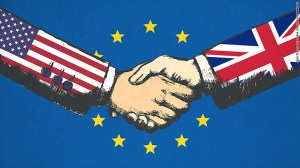
European Union - USA - UK British flags

Support Semi-Partisan Politics with a one-time or recurring donation:

Agree with this article? Violently disagree? Scroll down to leave a comment.

Follow Semi-Partisan Politics on TwitterFacebook and Medium.