An Anti-Immigration Brexit Campaign Is Doomed To Failure

Michael Gove - EU Referendum - Vote Leave - Immigration

Ben Kelly of Conservatives for Liberty and The Sceptic Isle has an excellent new piece explaining why a Leave campaign focused on immigration is both depressingly regressive and doomed to failure.

Kelly’s warning is in response to Michael Gove’s latest contribution to the Vote Leave campaign, as reported today by ITV:

Michael Gove has warned the UK faces a migration “free for all” unless it leaves the EU, as the Leave camp moved to exploit an admission from the Government that EU free movement of labour rules make it harder to curb immigration.

The Justice Secretary insisted potential new members of the EU posed a “direct and serious threat” to public services such as the NHS, and social harmony.

He said five countries “due to join the European Union” – Albania, Macedonia, Montenegro, Serbia and Turkey – which he warned would mean Britain’s public services would not be left in a “strong position”.

Writing from the perspective of The Leave Alliance (an independent grassroots movement for Brexit supported by this blog) which advocates exiting the EU’s political union and using EFTA/EEA membership to maintain access to the single market, Kelly writes:

A recent ComRes poll that asked the question “what is the most important issue in your decision on the EU Referendum?” was illuminating. 47% said the economy was the most important factor, with immigration trailing on 24%. So the belief that it doesn’t matter that the Leave campaign loses the economic argument because they can win on immigration is bunkum.

First and foremost, people will vote according the economic risk. That is why we propose an EEA based solution; it de-risks Brexit, secures the economy and gives us a soft landing. That is stage one of the secession process, a safe platform to build on. This is the key to winning the referendum and thereby restoring democracy and self-governance in the United Kingdom. In any case, it will likely be the only offer on the table for Article 50 negotiations and is the likely government course of action.

Although the EFTA/EEA solution puts on hold changes to freedom of movement it crucially protects our Single Market participation and thereby neutralises the economic uncertainty surrounding Brexit. In the long term we can make the case for reforms to freedom of movement, but pending such reform there is plenty of scope for improving the management of our borders with a coordinated set of policies designed to address push/pull factors. We would also gain the option of activating the “emergency brake” provision in the EEA Agreement as a temporary safeguard measure against exceedingly high net migration numbers.

Many who unrealistically seek a clean break Brexit and want everything at once will see this position as sub-optimal, but the alternative – pulling out of the EU’s freedom of movement provisions – would lose us access to the Single Market.  Without continued access to the Single Market, we cannot win the referendum because we lose the economic argument.

Those who insist on ending freedom of movement and imposing strict new immigration controls on Day 1 are letting their own “perfect scenario” be the enemy of the good. The type of Brexit necessary to deliver what Vote Leave are promising inevitably means losing access to the single market, membership of which is contingent on adopting free movement of people. This creates a degree of economic uncertainty which is gleefully seized upon by the Remain campaign and makes it virtually impossible for Leave to win the referendum.

By contrast, exiting to an EFTA/EEA holding pattern allows Britain to extricate herself from political union with the EU while maintaining the stability in the economic sphere which is necessary to reassure the 47% of voters for whom this will be the deciding factor. Further changes to immigration policy can then follow according to the democratic will of the British people, subject to various economic and political constraints.

It should be pointed out, too, that the accession of the next group of EU candidate countries – Albania, Macedonia, Montenegro, Serbia and Turkey – could be more than a decade away from joining, and in Turkey’s case this may well not happen at all. This gives plenty of time for Britain to secure freedom from political union, and then flex our independent policy levers to address push and pull factors as Kelly advocates.

Kelly concludes:

Stepping back into the EEA means leaving political and judicial union safely.  From that position of security and strength a world of opportunity opens up. Over time we can take advantage of regaining control over a vast swathes of policy making and review the statute books. Gradually we can move towards a more bespoke “British model” of relations with the EU and form a coalition to push for necessary reforms.

Disastrously, this is seemingly unacceptable to a number of inflexible and uncompromising Eurosceptics who reject freedom of movement and the Single Market and are therefore actively adding to the perceived uncertainty of Brexit. Regressive Euroscepticism, which is unwilling to compromise and refuses to acknowledge that freedom of movement actually has many great positives, is a disease that will lead only to abject failure.

We need an optimistic message and a positive, liberal vision. The ability to move freely across Europe is hugely beneficial in so many ways and a great many Britons enjoy those benefits and will fear losing their rights.  EEA immigration has been good for this country in many clear and measurable ways, economically and socially, and this absolutely has to be said.

An independent Britain must be a positive, diverse and liberal country with an open economy; this is the key to our cultural and social dynamism and how we can make a great success of Brexit. Leave cannot possibly win with a regressive vision that contradicts this. An anti-immigration campaign arguing for the abolition of freedom of movement and the loss of Single Market access is guaranteed to lose, and the failure will be richly deserved.

The New Statesman’s political editor George Eaton is also devastatingly accurate with his take on Vote Leave’s pivot back to immigration:

Britain’s high immigration rate is undeniably of concern to many voters. The boast that EU withdrawal would exempt the UK from free movement (though Norway and Switzerland show it may not) is perhaps the best card the Brexiters have to play. But it may not deliver victory. The Remain campaign speaks of a “plateau” beyond which Leave cannot advance. There are millions of people whose priority is reducing immigration – just not enough for the outers to win. The issue is to them what the NHS was to Ed Miliband’s Labour – a strategic comfort blanket.

[..] The more the Brexiters play the migration card, the greater the risk that they animate their core voters while alienating others. It was for this reason that Vote Leave resolved to run an optimistic campaign, non-centred on immigration. Gove’s rhetorical escalation shows that they are struggling to abide by this vow.

In raising the salience of immigration, Leave is playing to its strengths. Until it is able to neutralise its weaknesses, that will remain a displacement activity.

Continuing to place this uncompromising immigration message front and centre in the Leave campaign is the quickest and surest way to a 45-55 defeat on June 23. The only ones not to realise this seem to be the official Leave campaign, who are more interested in covering their blushes and resetting the agenda after having their flimsy economic case taken apart last week by a gleeful Remain campaign.

Any campaign aimed at motivating core supporters at the expense of alienating swing voters (by preventing the adoption of a plan which would ease their economic concerns) is not helpful at this stage. Persisting with exactly the same unfocused, populist message which helped to secure the referendum will not also help to win it, and telling the UKIP contingent exactly what they want to hear rather than challenging them to think more strategically and longer-term could well be looked back on as the single biggest failure of the campaign.
 

European Union - United Kingdom - Britain - Flags

Top Image: Independent

Agree with this article? Violently disagree? Scroll down to leave a comment.

Follow Semi-Partisan Politics on TwitterFacebook and Medium.

Now Boris Johnson Is No Platformed – For Being ‘Disrespectful’ To Barack Obama

Boris Johnson - Kings College - Disinvitation - No Platformed - EU Referendum - Barack Obama

UPDATE 26/04/2016 – See postscript

Preening, virtue-signalling student activists have now ‘No Platformed’ Boris Johnson in a prissy act of reprisal and censure for the London mayor’s response to Barack Obama’s intervention in the EU referendum debate

The way things are going, someone should establish a sweepstakes in which people can bet on which perfectly mainstream, household name celebrity or politician will be next to be “No Platformed” by censorious students aghast at the prospect of having to hear ideas contrary to their own.

And on this occasion, anyone with money on Boris Johnson would be collecting a handsome payout right now, for apparently the Conservative MP and serving Mayor of London is the latest personality to be deemed simply too dangerous and uncouth to pollute the sensitive ears of fragile, puritanical students.

This stems, of course, from the furore over Boris Johnson’s response to US president Barack Obama’s intervention in the EU referendum debate. Johnson, writing in the Sun, mentioned in passing the fact that “some said [Obama’s decision to remove a bust of Winston Churchill from the Oval Office when he became president] was a symbol of the part-Kenyan President’s ancestral dislike of the British empire”.

And so the student censors in charge of the King’s Think Tank, who can see into the hearts of all men and determine good or evil intent with unswerving accuracy, judged that Boris Johnson wrote these words as a coded racist dog-whistle, and that he should therefore be disinvited from giving a planned speech as part of their “EU Referendum Event Series“.

(Anyone who actually bothered to read the Sun article would see that not only was Boris Johnson merely stating a fact – that some people did indeed say that Obama’s Kenyan heritage was behind his decision to remove the bust of Churchill – but that he then went on to dismiss this as the likely reason. But the League of the Perpetually Outraged are never ones to let facts get in the way of a good hissy fit).

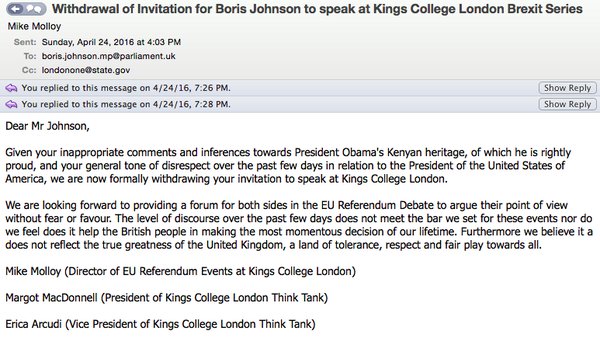
The chiding email which the King’s Think Tank leaders sent to Boris Johnson informing him of his “punishment” is a tour de force in the kind of self-importance and finger-wagging authoritarianism in which the current generation of students so masterfully specialise:

Dear Mr Johnson,

Given your inappropriate comments and inferences toward President Obama’s Kenyan heritage, of which he is rightly proud, and your general tone of disrespect over the past few days in relation to the President of the United States of America, we are now formally withdrawing your invitation to speak at Kings College London.

We are looking forward to providing a forum for both sides in the EU Referendum Debate to argue their point of view without fear or favour. The level of discourse over the past few days does not meet the bar we set for these events nor do we feel does it help the British people in making the most momentous decision of our lifetime. Furthermore we believe it does not reflect the true greatness of the United Kingdom, a land of tolerance, respect and fair play towards all.

Mike Molloy (Director of EU Referendum Events at Kings College London)

Margot MacDonnell (President of Kings College London Think Tank)

Erica Arcudi (Vice President of Kings College London Think Tank)

Behold the new generation of student radicals, fearlessly standing up in defence of the American president, the most powerful man in the world! How edgy. How counter-cultural. How brave.

This case is particularly disturbing, for this act of No Platforming is true, unapologetic censorship as punishment. At no point in their petulant email to Boris Johnson did the student leaders of the King’s College London think tank suggest that Boris Johnson’s words and conduct had caused (or were likely to cause) any actual “harm” to the debate attendees, in the way that student activists typically claim that hearing ideas with which they disagree will cause them actual mental harm.

On the contrary, Boris Johnson was No Platformed simply because the student directors of the King’s Think Tank disapproved of what he said (or rather, the sentiments which were attributed to him), and decided that he ought to be punished for his free speech transgression.

Note the hectoring, chiding, schoolmarm-ish attitude evident in the phrases “your general tone of disrespect” and “the level of discourse over the past few days does not meet the bar we set”. In other words, now speakers can be summarily disinvited from participating in an event not because of something that they say, but merely the “tone” in which they say it.

This is authoritarian behavioural policing layered on top of thought policing. This blog has absolutely no respect or affection for Boris Johnson, but this disinvitation is absurd. Johnson dared to push back forcefully against Barack Obama’s intervention in the EU referendum debate, and for that crime the King’s Think Tank apparently plan to deny event attendees the opportunity to hear the mayor of their own city and a prominent voice in the Brexit campaign speak on what they themselves admit is the “most momentous decision of our lifetime”.

And why? Simply because three self-righteous students took exception to the tone (repeat: not the content but the tone) of Boris Johnson’s comments, wilfully misinterpreted an article he wrote in the Sun, and decided that the correct course of action would be for them to “discipline” the London mayor by rescinding his invitation to speak – their equivalent of docking his pocket money.

Imagine how proud Mike Molloy, Margot MacDonnell and Erica Arcudi, leaders of King’s Think Tank, must feel now that they have high-handedly scolded and dismissed such a high profile figure as Boris Johnson. Just think of all the social justice kudos points that each of them has accrued by casting themselves as the concerned, ever-watchful Defenders of the Oppressed, bravely riding to the rescue of the President of the United States – an oppressed and marginalised man who was “harmed” by the cruel words of Boris Johnson and clearly needed their help to redress the yawning power differential unfairly favouring the mighty mayor of London.

Because that is what this is really about. This is not about trying to prevent a speaker with abhorrent or even mildly unpalatable views from airing his thoughts on King’s College campus. This is about three jumped-up, virtue-signalling student activists trying to get in the news by portraying themselves as so morally righteous that they simply had to take action to scold the Bad Man for saying mean things about Barack Obama. Right now, their phones and Facebook feeds will be filling up with approving comments from their fellow social justice cultists, giving them the additional currency and status within their movement that they so desperately crave.

So mission accomplished, King’s Think Tank. Tens or hundreds of students and members of the public who had been looking forward to hearing the London mayor and quizzing him on his views will now not have the opportunity to do so. But if a few self-aggrandising student “leaders” get to strut and fret their day in the 24-hour news cycle and burnish their identity politics credentials in front of their admiring peers, then it is all worthwhile.


Postscript: According to an updated statement from the King’s Think Tank, the email to Boris Johnson was sent without the approval of either the President or Vice President of the society. Presumably this means that the Director of EU Referendum Events, Mike Molloy, was acting alone and outside of his authority. I have requested explicit confirmation of this from Margot McDonnell, president of King’s Think Tank, and asked whether if this is indeed the case, whether Mike Molloy  is subject to any reprimand, censure or other action for overstepping his authority. I have not yet received a response to my further questions.


Safe Space Notice - 2

Agree with this article? Violently disagree? Scroll down to leave a comment.

Follow Semi-Partisan Politics on TwitterFacebook and Medium.

With Allies Like These…

Get Britain Out - EU Referendum - Save 40 per week

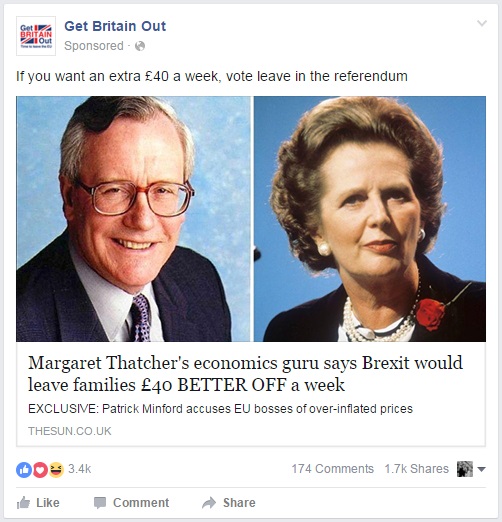
With allies like Patrick Minford and Get Britain Out, who needs the Remain campaign?

The Sun reports:

Maggie Thatcher’s economics guru stormed into the referendum battle last night, claiming Brexit would cut living costs by £40 a week.

Professor Patrick Minford accused EU chiefs of imposing over-inflated prices on everything from food to cars.

And he calculated tearing down trade barriers after we leave will boost growth and bring consumer prices down by 8p in the Pound.

Prof Minford said: “Prices are 20 per cent higher inside the EU compared with world prices.

“The system is designed to keep prices up and consumers are paying for this.

“But if we pulled out, your average Sun on Sunday reader would be 40 quid a week better off.

Well, that’s sorted then. Punch a few numbers into the Minford Model and it turns out that £40 will magically materialise in our wallets the moment we achieve Brexit. Great! That will just about cover the cost of a bottle of Veuve Cliquot to toast the restoration of our democracy.

How long until Vote Leave use this “analysis” to knock up their own version of Britain Stronger in Europe’s risible calculator, which shows how terribly destitute we will all be if we are so rash as to spurn the European Union?

How long until either of the main campaigns treats the British electorate like intelligent adults?*


*rhetorical question


European Union - United Kingdom - Britain - Flags

Agree with this article? Violently disagree? Scroll down to leave a comment.

Follow Semi-Partisan Politics on TwitterFacebook and Medium.

If The Remain Campaign Succeed In Cheating Their Way To Victory, Their Joy Will Be Short Lived

EU Referendum - Divisive - Bitterness

There will be no kissing and making up on 24 June

Much like this blog, Pete North is angry at the conduct of this referendum campaign by the arrayed forces of Remain, and sees little point in hiding the fact:

We’ve had decades of their rule, decades of their orthodoxy and no means to challenge their political dominance. We’ve been watching and waiting for years. Watching as successive governments have ceded ever more power, ever more control and have insulated themselves from the wishes of the public. Well, now we’ve got our referendum. And now we see just how deeply the game is rigged.

So we’re angry to say the least. Angry at what has been done to us, done in our name, and angry that once again democracy is being trampled on to preserve the orthodoxy. And we do not take kindly to being lied to.

There’s an old saying that politics is between you, me and the swamp. Minorities on either side, playing games for the votes in the middle. But unlike classic politics, this is not a left vs right dispute. There are only those above the line and those below the line. Those who have the power and those who do not. In this estimation, the establishment holds all of the cards. It has always known a challenge to its legitimacy would one day come which is why it set out to bribe institutions in advance.

We Brexiteers on the other hand have what we have. An angry rabble with keyboards. And let’s face it, none of us are ever going on the front cover of Vogue. We’re a bunch of griping, moaning angry people who seem to hate just about everyone in politics and everything they do. We’re not helped by a pretty shoddy Leave campaign either, with some fairly odious spokesmen.

We are irredeemably spit. We all hate each other. I despise the Toryboys and I loathe Ukip. I hate all political tribalism. I’m not a joiner of clans. But there’s one thing that unites us all. All of us can articulate a better definition of democracy than any of those would would have us remain in the EU – and though we can’t seem to agree on coherent Brexit plan, we all know what democracy is, why we should have it and crucially why the EU is the absolute opposite of it.

And that’s why this referendum really settles nothing. The Remainers will play their little games, steal the referendum and carry on as before; feathering their own nests and consolidating their power. But we’re not going anywhere. We’re not giving up. And we are taking names. Us Brexiteers hold deep grudges. We are in it for the duration.

We will remember Cameron the fraud. We will remember Hague and Corbyn as turncoats. We will remember the frauds like Boris Johnson who used the cause for their own advancement. We will remember the parasites who had their fingers in the till. We will remember all those hacks and policy wonks who twisted the truth. We will not forget what was done here. And unlike 1975 – we have a full record of who said what. The internet never forgets.

And North’s blood-chilling conclusion:

In fact, we are going to be pure poison. If you thought the SNP were sore losers, you ain’t seen nothing. A remain vote will ensure domestic politics remains permanently toxic. While these part timers waft into to the Brexit debate with their tedious rhetoric about Brexiteers being little englanders and xenophobes, and venting their empty rhetoric of cooperation and internationalism, we have been here from the beginning. Will be here at the end.

You can stifle an idea, but you can’t kill one. Especially not that seemingly antiquated notion that the people should be able to refuse their government. The EU may be powerful but it is not stronger than the desire for democracy. And if it takes another generation to get what we want then that is what we will do. There is only one way this fight ends – Britain leaving the European Union. We will either do it amicably and by the book – or we will do it some other way. The general public may well go back into their political slumber, but we Brexiteers will be back – and in between, we are going to cause merry hell.

I should say that I agree with nearly everything in Pete’s piece – as always, his diagnosis of the flaws of the EU is spot-on, and his objections rooted not in shameless partisan positioning (like nearly every Remain supporter on the Left) but in a deep love and respect for democracy.

I can’t say that I look forward to the idea of being “pure poison”, or causing merry hell. But increasingly, I cannot see an alternative if, as is still likely, the Remain camp prevails on the back of a campaign based on sowing fear, uncertainty and doubt.

There are some political issues where I don’t get my way – in fact, as a libertarian / conservatarian living in Britain, it is pretty near all of them – where I am still happy to play the game according to the rules. I think personal taxes are too high, for example, as a result of decades of fiscal drag and Gordon Brown’s only partially-repealed spiteful hike. But I’m not going to take my toys and go home in protest, refusing to engage and participate in the democratic process because we don’t have a flatter tax system.

Likewise with the size of the state. This blog believes that government does far too much for far too many people – including many who are already self-sufficient and do not need government largesse, as well as many who could know self sufficiency if only they had the right short-term help and weren’t indefinitely coddled by the welfare state. But it is not the relatively unambitious and half-finished work of implementing Universal Credit which has enraged me against this supposedly conservative government.

On all manner of issues I’m happy to play for incremental progress, accept the victories as well as the losses for my side, and then move on to the next battle. But this is different. The European Union question is different.

The EU referendum is not about whether we want politics to be a little bit more left wing or a bit more right wing. It is not about tweaking tax policy, industrial policy, reforming benefits, or social issues. It is so much more fundamental than that, because whether or not Britain votes to remain in the EU says in a single gesture what kind of country we are, and what kind of country we want to be.

And the same thing applies at the personal level. I have never had a problem socialising and being friends with people from all across the political spectrum. Most of my social circle probably leans significantly to the Left, if anything, and while it leads to the occasional lively conversation there is always a full measure of respect. But – and I don’t take any great joy in writing this – I do not think I will be able to help thinking less of people who vote for Britain to remain in the EU.

Now, that doesn’t go for every Remain supporter. If I knew that someone is voting Remain because they truly believe in the European project, that they admit that political union is being brought about by stealth but that the ends justify the means, that they “feel” more European than British and want to forge a new combined European state, then I would profoundly disagree with them but I could respect that position. It is a positive (although distasteful to me) vision of Europe, and it is an honest one. I know several people who do take that position, and I am at my happiest when I am debating with them because I don’t feel like part of my soul is dying while I do it.

My problem is with those who either see supporting the European Union as some kind of necessary virtue-signalling act to be accepted in their social circle (oh, aren’t UKIP simply awful, darling?), and those who abrogate any notion of acting as an engaged and enlightened citizens with a responsibility to this country and to democracy, and so vote based solely on their wallets or other narrow personal interests. I will struggle to look upon such people in quite the same way after this referendum.

Maybe that is easy for me to say – I do not have a lot materially at stake in this referendum, financially or otherwise. My job is not dependent on EU funding, and the immediate interests of my family are not threatened by Brexit. All of these are mitigating factors – if my own salary and job security were directly or even indirectly contingent on staying in the EU, I concede that it would take a superhuman effort to overcome the instinct toward confirmation bias which would encourage me to seek out other facts and opinions supporting the Remain case.

But human beings are emotional creatures and the fact cannot be denied: I have a lot invested in this campaign, in terms of this blog and my other campaigning activities on the side. With such an early referendum and with the government doing everything short of stuffing ballot boxes with fake votes to assure a Remain vote, I remain pessimistic about our chances, though I fight to win. But if we lose, the behaviour and motivations of many of those agitating for Remain is such that I will be very angry for a very long time. And I will not be the only one.

(None of this should be taken as a Rebecca Roache-style, “unfriend all my Tory acquaintances on Facebook in a fit of moral grandstanding, virtue-signalling post-election leftist pique” piece of melodrama. But there will be a degree of real disappointment, if for no other reason than it will confirm that those who vote Remain and I clearly see the world in a profoundly, irreconcilably different way).

Britain should be ready for the wave of anger that is likely to break over our heads on 24 June. In the event of a Leave vote, expect a lot of short term hysterics from the virtue-signallers and special interests, most of which will die down once it becomes evident that Britain will be exiting to an EEA/EFTA holding position and maintaining single market access. But in the event of a Remain vote, given the underhanded way that the government has been fighting the referendum campaign, expect the SNP on steroids – a long, guerilla campaign of attrition directed against anyone and everyone who betrayed the Brexit cause.

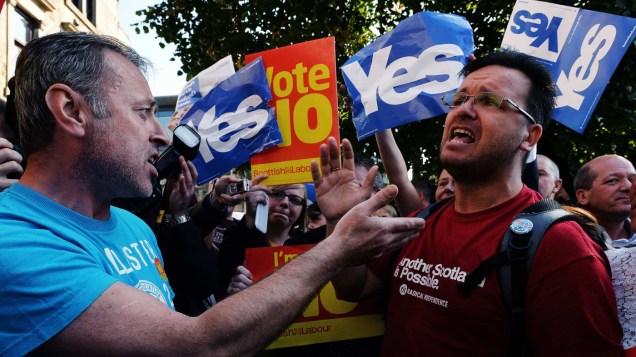
Chris Deerin painted a vivid and I believe accurate prediction of the future in a piece for CapX last year, comparing the likely fallout from the EU referendum to the aftermath of the 2014 Scottish independence referendum:

I have been bemused and fascinated by the number of English people telling me in recent weeks that “it won’t be like Scotland” – that this will be a more sedate affair, will inspire less passion, do less long-term damage. Well, perhaps. But, as we Scots say, ah hae ma doots.

What was most extraordinary about last year’s independence vote was the turnout: 84.5 per cent, the largest since the introduction of universal suffrage in the UK in 1918. Many of those voting were people who had never before even considered entering a polling station. What happened? There was certainly a long, noisy, impassioned campaign. There was global interest beyond anything we’d experienced before, but beyond this were two key factors that I believe drove this historic level of engagement.

The first was timing – the referendum came along after a decade in which every significant British institution had suffered either a scandal, a crisis of confidence or a loss of purpose, from Westminster to the media to the City to the military. The ties that bind had never been looser, respect for the status quo never lower.

Second, people were asked an existential question: who are you? This is not nothing. You will want to answer. You will want to answer on behalf of yourself and your family and your nation. Especially when you realise that the answer really matters – no safe seats to consider, no popular or unpopular incumbent MPs, no First Past The Post system ensuring only a few marginals get all the attention. Every individual counts. This is the big one, for keeps. So: in or out?

Deerin concludes:

Ultimately, we are about to ask the people of Britain an existential question: who are you? They will know that their voice counts this time, and that the consequences of the decision will be enormous and era-defining. They will think about themselves, their family and their country. They will get angry with the other side. Some very harsh words will be exchanged. Tempers will be lost and relationships fractured. And afterwards, whatever the outcome, the losers will be very sore, for a long time.

Not like Scotland? Don’t say you weren’t warned.

Like I say, I have no great desire to spend the next year walking around angry, holding nearly the entire political class in derision and many of my fellow citizens in open contempt. It does not warm my heart, in the same way that many left wing activists clearly revel in their anger and the righteousness of their cause, bleating about socialism and hating the Evil Tories.

But to my mind, there is a right way to vote in this referendum and a clearly, unambiguously wrong way to vote, and it is not hard to tell the difference between the two. The right way strikes a blow for democracy, self-determination and the normalcy of independence enjoyed by every single major country in the world outside Europe, while the wrong way would be to reward people who do not dare to advance their own positive argument for European political union, and so instead spend the bulk of their time pecking over the foibles, inconsistencies and other low-hanging fruit offered up by the hapless official Leave campaign.

In the event of defeat, then, the only question open to disappointed Brexiteers will be whether or not they use that anger and channel it toward some positive action to further the eurosceptic cause. This blog will do just that. Semi-Partisan Politics is in this for the long haul. Because as Pete North rightly says, you can stifle an idea like Brexit, but you cannot kill it.

I continue to fight this referendum campaign to win. But if we are fated to lose, I will not be going anywhere. If my generation is not to be the generation which restores democracy and self-governance to the United Kingdom then we can at least ensure that the flame of liberty is kept alive until it is time to try again – assuming that the doomed project does not implode under the weight of its own internal contradictions and the relentless pressure of global events, making the Brexit debate redundant.

And in the meantime, I and many others will make life as painfully difficult and unfulfilling as we can for all those in public life – particularly those in the Conservative Party – who come down on the wrong side of this referendum. That much I can promise.


European Union - United Kingdom - Britain - Flags

Top Image: CapX

Agree with this article? Violently disagree? Scroll down to leave a comment.

Follow Semi-Partisan Politics on TwitterFacebook and Medium.

Flexcit For Newbies – A Comprehensive Plan For Safely Leaving The EU

The Leave Alliance - Flexcit Workshop - EU Referendum - Brexit

There now follows a message from The Leave Alliance…

Richard North announces:

We’re all set up for the big day at the ROSL. The programme is all organised, with an opening address by Christopher Booker, the TED-style talk on Flexcit from me, and then Question Time.

The question-time is one of the key elements of the afternoon. Unlike the typical “talking head” presentation, you the audience are the stars. We’re looking for at least ten volunteers, each to ask a focused question, in a similar format. The questioner makes a short statement from the floor to introduce the subject, and then directs the question at the panel, comprising myself and Booker.

[..] Once we’ve chewed over the answer, the questioner gets a come-back, if they want it, and then we close on that issue and move to the next.  After editing, each becomes a YouTube clip, giving us a steady flow of material to post on the web.

Some of the topics to be addressed by the panel are as follows:

  • What will be the effect of Brexit on farming?
  • How will fishermen benefit from Brexit?
  • In view of the controversy over savings on contributions, how much do you think the UK will save?
  • Why isn’t Flexcit getting more (any) attention from the media?
  • Will expats be forced to return to the UK?
  • What guarantee can you give that the Efta/EEA option would not end up as the final step instead of the first?
  • What would happen if the UK failed to reach a trade agreement before leaving the EU?
  • Would the UK need to re-negotiate all its trade deals after Brexit?
  • Would the UK lose out by not being part of TTIP?
  • Will UK defence and security be damaged by Brexit?

Throughout the afternoon, we’ll have roving cameras, recording for vox pop contributions, with people responding to the simple question: “why do you want to leave the EU?” We’ll edit and collate the responses, which will make for another, and truly historic film clip.

I will be in attendance, representing Semi-Partisan Politics, for what promises to be a great event – and one which will answer many common questions about Flexcit.

The event will be held at the following time and place – do come along if you are able, I understand that tickets will be on sale on the door for £15 which is a small price well worth paying for an afternoon of education on the most important and existential question facing Britain today.


Princess Alexandra Hall

Royal Overseas League

Overseas House, Park Place, St James’s Street

London, SW1A 1LR

Saturday 23 April, 2pm – 6pm


The Leave Alliance - Flexcit

Agree with this article? Violently disagree? Scroll down to leave a comment.

Follow Semi-Partisan Politics on TwitterFacebook and Medium.