The Real Deplorables

pop-art-donald-trump-2

We must not judge all Donald Trump supporters by the actions of his most obnoxious social media cheerleaders

With polls showing that Donald Trump would be cruising to likely victory in November’s presidential election if only men (with whom Trump leads in the polls) were allowed to cast a vote, a depressing new hashtag – #Repealthe19 – has started trending on Twitter, advocating for the repeal of the Nineteenth Amendment granting women’s suffrage.

Deplorable? Of course. But it is also likely the handiwork of a few bored Trump-supporting trolls, and hardly representative of the millions of women and men who choose to support Donald Trump’s candidacy. Yet this will not stop commentators on the Left, politically and emotionally invested in a Hillary Clinton victory, from portraying this juvenile and offensive stunt as being part of a broader Trumpist attack on women, and extrapolating the actions of a few immature idiots to smear the character and motivations of other, innocent Americans.

As it applies to Donald Trump’s own personal behaviour, such criticism is entirely justified – by bragging that his celebrity entitles him to “grab [women] by the pussy” Trump has further highlighted an especially unsavoury aspect of his character which we should all have already been aware, and not soon forget. But while criticism of the man himself is entirely valid and even essential, we must be careful to avoid falling into the comforting trap of assuming that the many people who support Donald Trump share the same retrograde views of the candidate and/or his troll army.

In the ongoing aftermath of Hillary Clinton’s recorded comments stating that “you could put half of Trump’s supporters into what I call the basket of deplorables“, journalist Michael Tracey warns political pundits against making the mistake of tarring all Trump supporters with the same brush.

Writing in The American Conservative, Tracey warns:

To broaden their horizons, such pundits might consider visiting some places in so-called “swing states” where Trump support is widespread, rather than just bloviating from behind their computer screens. Traversing these areas, one can’t help but bristle at Hillary’s “deplorables” theory as not only politically counterproductive, but seriously foul. She—like the pundits promoting her—has gotten the analysis totally inverted.

The real “deplorables” generally aren’t the people whom Hillary denounced as wholly “irredeemable,” or at whom economically secure commentators fulminate on a regular basis. More obviously “deplorable” are Hillary’s fellow financial, political, economic, and military elites who wrecked the economy, got us mired in endless unwinnable foreign wars, and erected a virtually impenetrable cultural barrier between everyday Americans trying to live fruitful lives and their pretentious, well-heeled superiors ensconced in select coastal enclaves. It is thanks to the actions ofthis “basket of deplorables” that we’re in the situation we’re in, where an oaf like Trump is perilously close to seizing the presidency.

At a recent Trump rally in Lancaster County, Pa., I was bemused to encounter a coterie of local Amish people who’d traveled there together by bus. Asked why they backed Trump, the overwhelming response was that Amish folks just wanted to preserve their traditional way of life (which they saw as under siege) and perceived Trump as enabling them to carry on with it. Some told me they supported Trump not because of some overweening disdain for their nation’s fellowmen, or immigrants, or even coastal liberals, but because they felt that the federal government was intruding on their ability to properly run their small farms.

More:

This also holds true in Lewiston, Maine, where Trump is favored to win the 2nd Congressional District and therefore at least one (potentially crucial) electoral vote. (Maine and Nebraska allocate their electoral votes by congressional district.) Lots of Franco-Americans populate this area, and many old-timers still speak French with a distinctive Central Mainer dialect. (Often it comes out when folks get inebriated at the bars in town.) When I visited recently, everyone basically had the same story: mills use to be the lifeblood of the local economy and by extension its civic institutions. Once the mills inexplicably shuttered, these workers lost their sense of location and community. Social-club memberships dwindled; parades and marches down the main thoroughfare became less of an attraction. There’s just not a hell of a lot going on nowadays, except Patriots games on TV, drinking, and drugs. Anybody with the means usually either bolts for relatively more prosperous Bangor to the north, or south to Boston and beyond.

Are the people who live in Lewiston really “deplorables”? Most of them like Trump, but they’re not the ones who crashed the economy or agitated to invade Iraq, as Hillary did.

Again: perhaps the true deplorables are the unaccountable elites whose decisions directly worsened life for millions of Americans. Oddly, you never hear Hillary running around to high-roller fundraisers condemning Goldman Sachs for their deplorable conduct; maybe that’s because they’ve directly given her and Bill hundreds of thousands of dollars for “speeches,” excerpts of which finally came out last Friday and are just as degenerate as you’d expect. (Goldman banned partners from giving money to Trump’s campaign, but handing over cash to Hillary is still perfectly fine.)

Tracey concludes:

Maybe the Amish of southeast Pennsylvania or the Franco-Americans of central Maine don’t use the correct Twitter hashtags or subscribe to Lena Dunham’s newsletter, but they’re still good people with normal ambitions for a happy, secure life. Screeching “deplorable!” at them is itself deplorable, especially because it lets the elites who bungled the country’s affairs off the hook.

This is my assessment too. There is a world of difference between some of Donald Trump’s most prolific (and obnoxious) social media supporters and the quiet men and women of middle America who see him as preferable to a President Hillary Clinton. You can argue (as this blog does) that these people are wrong, and that they are attaching their hopes and dreams to the wrong champion in supporting an egotistical authoritarian like Donald Trump. But they in no way, shape or form can they be described as “deplorable”.

Many of these people work hard, for stagnating pay which dooms them to falling living standards scarcely comprehended by the coastal journalists who scorn them. They raise families, attend church, give to charity, serve in the military. Sure, they might not be steeped in the latest fastidious trends of social justice or identity politics, but very few of them could be described as being full of hate.

Last Christmas, while we were back Stateside with my wife’s family in McAllen, Texas, I was perusing the shelves at Costco or Sam’s Club when I noticed Donald Trump’s new book “Crippled America: How To Make America Great Again” staring up at me from the bargain bin. Noticing me notice the book was a kindly-looking old man who wandered over, pointed at the volume in my hand and said, without a note of hesitation in his voice, “that man will save America”.

I had the briefest of conversations with him. Was this man an overt racist, sexist or homophobe? It certainly didn’t appear so, as far as I could tell. The baseball cap he was wearing suggested that he was a veteran, while his general appearance suggested that perhaps he was not brimming over with disposable income. And oh yes – like many people in that part of the country, he was Hispanic. Maybe that accounts for the strength of Clinton’s seething contempt toward members of her taken-for-granted minority constituencies who refuse to “see the light” and support her.

You can call this man deplorable if you will. Hillary Clinton has already preemptively labelled him so. Perhaps he is not quite “irredeemable“, though. Perhaps, like the African American protester she had thrown out of her rally the other day, by virtue of being a minority he might get away with merely being followed home and re-educated to better appreciate everything that Clinton is doing for him.

But the Hillary Clinton campaign and the American political elite in general are making a grave mistake if they assume that Donald Trump’s noisiest and most obnoxious cheerleaders on social media are representative of that beleaguered rump of Middle Americans who see him as their only route of escape from a status quo which has profoundly failed them.

Clinton has suggested that Trump supporters who repeat the “Make America Great Again” campaign slogan are somehow being unpatriotic for effectively suggesting that America is not already great. And if you are a typical Clinton supporter, perhaps your America is unquestionably great, delivering bountiful career opportunities and a consistently rising standard of living for you and everyone you know. But many others are less fortunate. In fact, the version of America which confronts many Trump supporters each and every day is significantly less “great” in nearly all of the ways which matter most to someone struggling to get by.

And these people deserve better than to be scorned and preemptively written off by the likely next president of the United States.
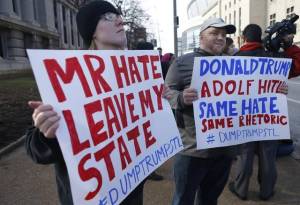
 

Donald Trump Protesters - St Louis

Top Image: Pixabay

Support Semi-Partisan Politics with a one-time or recurring donation:

Agree with this article? Violently disagree? Scroll down to leave a comment.

Follow Semi-Partisan Politics on TwitterFacebook and Medium.

A Crisis Of Identity: When Global Elites Forget How To Be Patriotic

global-elite

The global, liberal elite are increasingly transcending any lingering commitment to patriotism and national identity, setting them on a collision course with the small-c conservative majority

Michael Lind has an unmissable essay in the National Review this week, entitled “The Open-Borders ‘Liberaltarianism’ of the New Urban Elite“, which manages to explain so much about the rise of Donald Trump and the growing inability of political elites in America and Britain to speak to whole swathes of the country they supposedly control.

The crux of Lind’s argument seems to be that the educated, liberal (to use American parlance) inhabitants of the large cities have increasingly taken on what were always fringe libertarian ideas about open borders and the irrelevance or undesirability of the nation state, leading them to pursue policies and espouse values which alienate the more suburban and rural population.

Key quote:

To date, the public conversation on both sides of the Atlantic has been dominated almost entirely by the elite inhabitants of Densitaria, interrupted only by occasional populist revolts such as the Trump phenomenon or the Brexit vote. In a relatively short period of time, a new elite ideology has emerged that contrasts the dynamic, multicultural, libertarian city-state with the allegedly anachronistic and immoral nation-state. This ascendant worldview unites the open-borders economics and cosmopolitan, utilitarian morality of old-fashioned libertarianism with an idealization of the largest cities and their denizens.

In the 1970s and 1980s, libertarians made all of the major arguments heard from globalists since the 1990s: Favoring citizens over foreign nationals is the equivalent of racism; national borders impeding the free flow of labor and goods are both immoral and inefficient; the goal of trade and immigration policy should not be the relative security or relative wealth of particular countries, but the absolute economic well-being of all human beings.

Until the 1990s, this was an eccentric minority perspective in the U.S. and other democracies, encountered only in small-circulation libertarian journals or in the work of the occasional unworldly academic theorist of cosmopolitan ethics. But in the 2000s, as affluent whites from the professional class and their Latino, immigrant, and black allies displaced working-class whites as the base of the Democratic party, the traditional labor-liberal opposition to low-wage immigration and offshoring of industry was replaced by a new open-borders progressivism distinguishable from traditional libertarianism only by its unworkable combination of support for unrestricted immigration with a generous national welfare state.

This certainly accounts for one of the main reasons behind the Labour Party’s civil war in Britain – from the Blair era onward, Labour has been entirely captured by the open-borders progressives and increasingly turned its back on its former working class voter base. Even under the current Labour leadership election, both candidates hold open borders convictions to their core, even if only Owen Smith is stupid enough to rant about overturning the EU referendum result in public.

It also accounts for the increasing public rage (among non-progressives) about immigration in America, where the Democrats are proud and unrepentant in their support for illegal immigration while the Republicans have talked a tough talk for decades yet done nothing, precisely because the Republican political elites benefit from the current immigration status quo as much as anyone. Enter Donald Trump to an arena where nobody else is even seriously talking about the impact of mass immigration on wages and cultural cohesion, and one cannot be surprised when his crude, simplistic solutions gain political traction.

More:

The combination of open-borders “liberaltarianism” and trendy urbanist hype might lead one to wonder whether leagues of dynamic city-states should replace moribund modern nation-states. Benjamin Barber has published a book titled If Mayors Ruled the World: Dysfunctional Nations, Rising Cities. Barber is one of the founders of the Global Parliament of Mayors, which, according to his website, can help “fill the void left by nation states who [sic] are increasingly dysfunctional.” The economist Paul Romer has proposed boosting Third World development by means of semi-autonomous “charter cities,” which to his critics look remarkably like Western colonial enclaves.

Not even Barber and Romer propose actual urban independence. While cities may teach one another best practices, there is not the slightest chance that leading American cities will secede from the United States, link up with other city-states around the world, and form a new, global version of the Hanseatic League or the Delian League.

We saw the same loose talk after the EU referendum vote, with many Londoners (most of whom have no conception of what the EU really is or how it works) furious at having part of their cosmopolitan identity ripped away from them (as they see it) suggesting that London should somehow secede from the rest of the “backward” United Kingdom and become its own independent city state.

Of course this would never actually happen, but it shows just how disconnected the metropolitan elites are becoming from the country as a whole, and the sheer contempt with which they regard other regions which dared to express their patriotism and belief in self-determination by voting for Brexit. It is also misplaced arrogance of the worst sort – the lights would go out and people would begin to starve in London within days were it not for the arterial links of people and goods from the supposedly terrible and backward rural and suburban regions.

And it is this continual feeling of disrespect, I think, which does so much to drive populist insurgencies like the rise of Donald Trump, and (if I am honest) even those populist causes that I actually agree with, like Brexit. People in the industrial and commuter heartlands, as well as rural folk, are getting increasingly sick of being told that they are too backward, too intolerant, too racist, that their own priorities and concerns do not matter and that they should be led in all regards by an urban elite who don’t even seem terribly attached to the country that gives them life and liberty, and who find the slightest display of national pride or patriotism almost painfully embarrassing.

I’m fortunate. I got into a good university and managed to embark on a career which has seen me work in numerous countries across three continents. But if this had not been the case – if, like many of my peers, an international business career was either never on the cards or simply not what I wanted to do – then I would probably be quite put out by people whose interest and commitment to any one country seems transitory at best telling me what I should think about immigration, global governance and democracy.

Now living in remain-voting West Hampstead, I am surrounded by the kind of people who are aghast at the Brexit vote and who consider it a calamity brought down upon the heads by the kind of ignorant, unwashed oiks whom they would never normally speak to unless they were fixing their car or serving them a burger. I can see how it must grate with Middle England, because it grates with me.

Lind goes on to touch on this point:

What appears to be a debate among globalists and nationalists, then, is really a debate about the structure of the 21st-century nation-state. There are real dangers associated with the coalescing elite ideology of post-national globalism or, to be precise, national-elite pseudo-globalism.

One danger is groupthink resulting from the attempt by the new globalists to equate even enlightened and civic nationalism with racism. When the economist Larry Summers, nobody’s idea of a pitchfork-waving populist, tentatively called for “responsible nationalism,” he was criticized by The Economist, whose open-borders libertarianism, once eccentric, has become near-orthodoxy among the trans-Atlantic elite.

And closes with this stark warning:

The most significant threat is the possibility that the abandonment of national patriotism by many elite citizens of the nation-state for make-believe cosmopolitanism will weaken national unity, to the benefit of sub-national racism, ethnocentrism, and regionalism. The loyalties that succeed national solidarity are likely to be narrower, not broader. If history is any guide, the victims of tribalism and illiberal populism are likely to include would-be citizens of the world who despise the nation-states that make possible not only their wealth but also their security.

Absolutely. This blog has been banging on for years about the continued importance of the nation state as the final guarantor of most of our most precious rights and freedoms. But the nation state is also, in the democratic age, a relatively harmless way of allowing people to feel and express a sense of belonging and community pride without tipping over into other, much darker expressions of identity.

Those weepy europhiles mourning Britain’s imminent departure from the EU because they consider themselves “European citizens” might want to pause and think through the consequences of further undermining the nation state, which is the primary aim of their beloved project. Because enlightened, one-world government is a few centuries away yet, and whatever crops up to replace the nation state that they so eagerly undermine will likely be unpleasant, even violent.

And while it may not be purely libertarian, this blog would much rather live in a world of moderate, familiar nationalist rivalry than descend into the known horrors of ethnic or religious sectarianism. We already see the early fruits of this blinkered commitment to “multiculturalism” in self-segregated and un-policed communities here in Britain among certain immigrant populations. We don’t need to extend those delights to the entire population.

What is the solution? Michael Lind does not offer one, and this blog does not see an easy fix either. But when global elites (Davos Man and the like) and the next tier down (those with international lives and careers) have more in common with each other than with those of other socio-economic groups and communities in their own countries, it is a recipe for political alienation and the eventual fracturing of our civic life.

To avoid disaster and a true crisis of democracy, our ruling elites in the political and commercial sphere must somehow learn to be patriotic again – for if the nation state has no champions it will go on being relentlessly undermined on all fronts. But right now there is little evidence that they are remotely interested in bridging the growing chasm between their own interests and those of the people they supposedly “serve”.

This leaves the field wide open for the likes of Donald Trump and UKIP 3.0 to make inroads with voters left cold by the other options available to them. And the time may soon come when the political elites sorely regret ceding this territory.


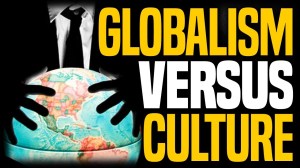
globalism-versus-culture

Bottom Image: Stefan Molyneux, Globalism versus Culture

Support Semi-Partisan Politics with a one-time or recurring donation:

Agree with this article? Violently disagree? Scroll down to leave a comment.

Follow Semi-Partisan Politics on TwitterFacebook and Medium.

Owen Smith Yearns To Defy The British People And Thwart Brexit. Let Him Try.

Owen Smith’s desperate, EU-loving Labour leadership candidacy is a giant F-U to the very people the Labour Party needs to be courting if it ever wants to regain power

Fresh from announcing his plans to host a jolly afternoon tea party for Islamic State in the gardens of Buckingham Palace, contemptible Labour Party nobody Owen Smith has continued to set about alienating Labour’s already furious working class base by pitching himself as a champion of the metro-left’s childish demand that democracy be overturned and the EU referendum result disregarded.

From the Guardian:

Owen Smith has accused Jeremy Corbyn of having never believed in the European project and is seeking to turn the issue of the EU referendum into the key dividing line in the battle for the Labour leadership.

The Labour leader hit back by telling his challenger that he had to respect the result of June’s referendum and accept that Brexit was on the table.

In his strongest attack yet, Smith – whose team are planning to place debate over the EU at the heart of their campaign – said:

“I think Jeremy can’t bring himself to say he would argue for a second referendum or put into a Labour manifesto that we would stay within the European Union because he fundamentally never believed in the European union.

“That is why he steadfastly refuses [to promise a second referendum], even though he acknowledges a likely Tory Brexit will diminish workers’ rights; damage social protections; damage our ability to deal with tax avoidance. Even though he thinks that is likely to happen, he thinks it more important that we stay outside the EU – I think that is a deep deep mistake.”

Smith, who is trailing well behind in the polls, hopes that a pledge for Labour to take Britain back into the EU will appeal to pro-European Labour members and boost his chances.

“We should be fighting harder, why can’t you say you would fight to stay in?” he shouted.

Why won’t he FIGHT, mummy? Why won’t the Bad Man fight for us to stay in our pwecious European Union? Why won’t he stand up to the Evil Tor-eees and make the wefewendum wesult go away? It’s not fair mummy, it’s not fair!

Pathetic. Utterly pathetic. If by some complete miracle (probably involving the abduction of Jeremy Corbyn by aliens) Owen Smith does become leader of the Labour Party, what little is left of Labour’s depleted working class base will march off into the sunset forever. Labour will be able to add northern England to Scotland on the growing list of UK regions where anyone wearing a red campaign rosette is no longer welcome.

You know what? Good luck to him. I hope Owen Smith actually wins the Labour leadership contest and joins up with other antidemocratic snakes like Hampstead & Kilburn’s Tulip Siddiq in trying to derail Brexit in Parliament. If Smith thinks that things are bad now, I look forward to observing the expression on his face when the entire fabric of the Labour Party comes apart in his well-manicured, pampered, ex-lobbyist’s hands as he loses his faltering grip on constituency after Brexit-supporting constituency.

I look forward to future generations of politics students learning about the daring exploits of Owen Smith, the man who stuck two metropolitan fingers up at Labour’s own working class voter base and led his party to true, permanent electoral Armageddon.

So bring it on, Owen. Hug the European Union even tighter, tell all the Brexit-supporting people whose votes your party needs to go to hell again, and bring. it. on.


Owen Smith - Labour Party Leadership Coup

European Union - United Kingdom - Britain - Flags

Support Semi-Partisan Politics with a one-time or recurring donation:

Agree with this article? Violently disagree? Scroll down to leave a comment.

Follow Semi-Partisan Politics on TwitterFacebook and Medium.

Pathologising Donald Trump Supporters Will Not Diminish His Appeal

The voices in this New York Times video of Donald Trump supporters may be “unfiltered”, but they were chosen very carefully indeed to reinforce every negative liberal stereotype about people who have the temerity to support Donald Trump

It is hard to understand exactly the New York Times thinks it is trying to accomplish with videos like this one, published today, scornfully “studying” Donald Trump supporters with a keen anthropologist’s eye, while tarring his many moderate supporters by associating them all with the most intemperate, rude and racist characters that their camera can find.

The Times helpfully explains to its readers that “at Donald Trump’s rallies, some supporters express themselves with slurs and violent language”, before linking them to a video in which the absolute worst dregs of the Trump campaign are paraded before the Times’ liberal audience like it were some kind of Victorian circus freak show.

And sure enough, after the obligatory trigger warning from the Times, the video’s subjects make themselves look extremely stupid, as well as racist and misogynistic in places. But this in itself is hardly surprising – it is obvious that racists and other undesirables will be disproportionately (though not exclusively) drawn to a populist politician like Trump, but this does not mean that a majority of Trump supporters share these vile sentiments.

In fact, one wonders why the liberal media which goes to excessive pains to avoid linking all Muslims with the actions of Islamist terrorists, and which frets about broadcasting the names and biographies of mass shooting perpetrators suddenly loses all squeamishness when it comes to linking all Donald Trump supporters with the specimens shown in their video. Why does the Times titillate its readers by showing the worst side of the Donald Trump campaign rather than making a hard-hitting and informative piece  debating the issues with some of the many Trump supporters who turn up to his rallies minus white robes and burning crosses?

If anything, this video reveals the bias of the New York Times, and the desperate liberal (in the American sense of the word) need to paint anything contradictory to their own worldview as being seeded in intolerance, bigotry and hate. This bias is never clearer when the Times’ video attempts to portray Trump supporters as anti-immigration, period. At one point in the video, an editor’s caption reads “vitriolic language is often aimed at immigrants”.

If the filmmakers wanted to produce a respectable, balanced piece rather than juicy footage for their Trump freak show, they might have engaged those supporters in conversation. But had they done so, it would have quickly become apparent that the Trump supporters oppose illegal immigration, not all immigration. These days, of course, the decadent New York Times is completely incapable of distinguishing between the two. All immigrants are saintly figures holding hands beneath a rainbow to the Times, a newspaper which long ago ceased any mention of illegality and started talking about “undocumented” migrants instead (whoops, where did their documents go, one wonders). And so the camera rolls, the supporters chant “build the wall!” and New York Times readers are bolstered in their prejudice that anybody who opposes illegal immigration is a big fat racist who actually opposes all immigration.

And so it goes on, for issue after issue. Legitimate questions and concerns about Hillary Clinton’s conduct and record are ignored while footage of a Trump supporter shouting “Hillary is a whore!” feeds the narrative that Trump supporters are entirely unreasoning and uncouth creatures. Serious questions about how the American political establishment speaks about and responds to Islamist terror attacks are swatted aside so that we can focus on the redneck wearing a “Fuck Islam” shirt. Forget nuance. Forget the decent people who go to Trump rallies as a fun family day out. Just focus on the morons and reinforce the message: the people who support Donald Trump are as unacceptable as the candidate himself.

Watching the New York Times (and much of the establishment media) report on Donald Trump supporters is like watching a David Attenborough wildlife documentary in which the grizzled naturalist attempts to explain to us the feeding and mating rituals of some lower primate species – recognisably similar to us in some ways, but far more primitive and with rituals and customs which we civilised people cannot possibly understand without their expert interpretation.

Watch the video. I challenge you to watch it and come away feeling anything other than that this is an unbearably condescending hit piece on Trump supporters, a nauseating attempt by a Clinton-backing newspaper to “play to the gallery” with a compilation of all the worst Trump supporters imaginable rather than an attempt at serious journalistic enquiry.

I’ve said it before (in the context of the Brexit debate and, repeatedly, the US presidential election) and I’ll say it again: pathologising one’s political opponents and assuming (or at least publicly declaring) that they are motivated by hatred and malevolence is the sure path to defeat, and is no way to unite a fraying country. And prissy little video explainers like this one by the New York Times only serve to further divide Americans, giving liberals more reason to be smug and Trump supporters more reason to feel besieged.

Imagine that you are a wealthy, Times-reading East Coaster. Does this video make you question any of the beliefs which currently make you want to vote for Hillary Clinton? Does the video make you question whether the Trump supporters have even the kernel of a legitimate point about immigration, or trade, or national security? Or does the video boldly reinforce all of your existing prejudices about Trump supporters, reassure you that you are quite right to fear and despise them, and encourage you to keep shouting your own message louder and louder rather seeking dialogue with people the New York Times clearly portrays as being impenetrable to reason?

This is coastal elitist mockery of flyover country writ large. It is unbearably sanctimonious, and does nothing to further understanding and dialogue between Americans of different political and cultural backgrounds. It serves to further validate the accurate perception among Trump supporters that they are looked down on and belittled by the rest of the country. And, if another external economic, security or political shock turns this election into a dead heat between Hillary Clinton and Donald Trump, the high-handedly arrogant way in which the establishment media treats the insurgents could push Donald Trump over the line on Tuesday 8 November.

This blog has no time whatsoever for Donald Trump. But I have endless time for his supporters, the majority of whom are decent people – to think otherwise would be to write off a massive proportion of the country based on their political views. And while I firmly believe that Trump’s simplistic solutions, policy ignorance and prickly ego would do immense harm if set loose in the Oval Office, right now I am more offended by the New York Times’ portrayal of all Trump supporters as though they are somehow less than human, less intelligent, with less self control and possessed of unique and grievous character defects which are supposedly entirely missing from their more enlightened, liberal compatriots.

One expects this kind of two-dimensional, good vs evil, sanctimonious ra-ra nonsense from the Huffington Post or other leftist agitprop sites. But the New York Times supposedly aspires to something higher, something more closely resembling journalism.

Everything about this video fails that test.


Donald Trump Protesters - St Louis

Support Semi-Partisan Politics with a one-time or recurring donation:

Agree with this article? Violently disagree? Scroll down to leave a comment.

Follow Semi-Partisan Politics on TwitterFacebook and Medium.

There Is Nothing Noble Or Virtuous About Defending The EU

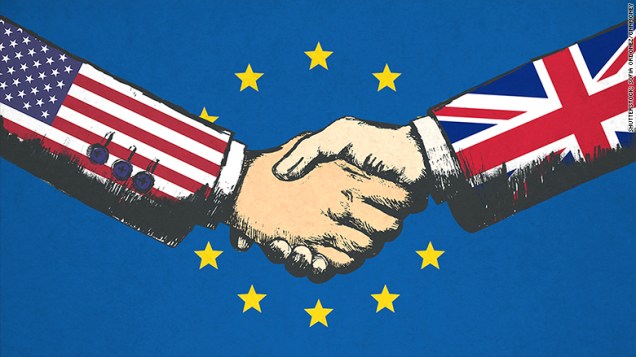
European Union - USA - UK British flags

The EU’s defenders in the middle class and political/cultural elite love to believe that they are supporting a grand and noble project, but close their eyes to the economic and democratic damage wrought by this failing supranational union

An opinion piece in the New York Times provides a welcome antidote to that newspaper’s fatuous, instinctive pro-Europeanism.

Tim Parks writes:

Had I had the right to vote, which I have lost after 30 years living in Italy, I would have voted to remain in the European Union. But I do not think it a scandal that others think differently. If it was a scandal that people voted to leave, then surely it was a scandal to have held a referendum at all. And if it is a scandal to hold a referendum on an issue central to the destiny of a nation and about which its people feel deeply, then I have misunderstood the meaning of freedom and democracy in the West.

So why the extraordinary incredulity and indignation? Why the sense of betrayal? Why do so many people find this result unacceptable? It seems that over the last 30 or 40 years the idea has taken hold that there can be no peaceful or productive future for Europe without the European Union. As a result, anyone who voted to be outside it must be discredited as pernicious or ignorant, perpetrator or victim of some sinister populism. In the United States, this unhelpful reaction has taken the form of likening the leaders of the Leave campaign to Donald J. Trump. But Britain is not America and this was not a presidential election. Immigration played a role, but no one in the Leave campaign was suggesting Muslims be banned from Britain. On the contrary, some Muslims supported the Brexit vote. To see the debates of other countries in terms of one’s own internal politics is always a failure of imagination.

All this shock, horror and kneejerk denigration might be understandable if the European Union were notching up important successes and resolving its member states’ many problems, or if, at the very least, it had a figurehead with whom European citizens could identify, someone of whom one might say, “However badly things are going, I have faith in so and so, I believe he or she really does have the interests of my nation at heart, really is concerned about unemployment in my town,” be it Newcastle or Naples.

Obviously the EU has no such figureheads. Its vaunted “founding fathers” are unknown and unloved by all but the most starry-eyed euro federalists, its parliament a fraud, its stolen anthem a joke and its leaders held in widespread contempt. It cannot appeal to any sense of collective destiny because the loyalty of the vast majority of EU citizens lies first and foremost with their own nation state.

And Parks is quite right to note that the EU is failing across most of the metrics by which one might reasonably judge success. Economic growth, employment and social cohesion have all been thrown under the bus in the name of European political union, while the countries most let down by the EU project remain within the union only because they suffer from a national form of Stockholm Syndrome.

Parks points out:

But the Union’s greatest failing is that after decades of regulations of every possible kind it has not brought the nations of the Continent closer together. Day by day Italians are told whether their government’s economic policy has been accepted or rejected by Berlin, but about the Germans they know little or nothing. In each country, we follow our own national news media and are locked into the agendas of our own political systems. We are separate nations but not sovereign nations. We obey the dictates of Brussels and read Jonathan Franzen and “Harry Potter.” We watch American films and follow the American elections far more closely than those of any other country in the European Union. Is this a community?

But best of all is when Parks turns his gaze on the middle class and political elites who remain the EU’s strongest defenders:

The middle classes, the cultured elite, love the idea that they are taking part in a historic project that will bring peace and prosperity to the Continent, put an end to war, take steps to defend the environment, protect Europeans from superpower ambitions and multinational depredations, etc., etc. I love this idea, too. Like so many others, I take comfort in this noble enterprise.

But when the project does not bring prosperity, when it does not do enough to protect the environment, when its protectionist trading policies systematically damage the economies of the third world, I, like everyone else, don’t want to think about it; we prefer to close our eyes. This is not the narrative we like to believe we live in.

[..] With Brexit this decades-old spell is set to break. And how does the liberal elite on both sides of the Atlantic react to this deafening alarm? They scream foul and blame the dumb British working classes for spoiling the party. It might be wiser to examine our own attachment to a narrative that is going nowhere.

But the defiant liberal elite will not let go of their false narrative, preferring to nurture a sense of grievance and display to the world a shameful contempt for democracy.

Just this weekend, grieving metropolitan Remainers held a “Picnic against Brexit” in Green Park, in what was billed as an opportunity for people to “heal” and “comfort” one another. Disappointed Remainers are literally treating their defeat in the EU referendum as a kind of emotional trauma, an unendurable shock to the system for a group of people who have had their way since 1973, came to rely on the EU’s comfort blanket and who simply cannot conceive of life as a citizen of an independent country.

An emotional reaction of this strength is only possible when one genuinely believes that one is fighting on the side of righteousness and possesses a monopoly on the virtues of wisdom, compassion and truth. It is much like the arrogance of tearful Labour supporters who simply could not understand why the country rejected Ed Miliband and re-elected the Evil Tories in the 2015 general election. The strong overlap between these two groups of people is no coincidence.

For people who make up a supposed intellectual and moral elite, the Remainers-in-denial are extraordinarily unperceptive. Even now, they can not accept that the 52% of their fellow citizens – including many working class voters – who voted to leave the EU might have a point, that their beloved European Union might not be the wonderful and benevolent force for good that they insist it is. On the contrary, they stubbornly continue to insist that those who voted for Brexit did so  either out of ignorance or malice, and work to prevent Brexit from happening.

This will not end well. Sneering contempt for the political opinions and values of ordinary people has not done the elites any good this electoral cycle, in Britain or America. If the elites are at all interested in bridging the divide and repairing their relationship with the rest of the country then they must start displaying the kind of introspection and empathy demonstrated by Tim Parks in his NYT article – and far fewer disdainful middle class picnics against democracy.


Brexit - EU - European Union Flag - Missing Star - Britain - UK

Top Image: CNN

Agree with this article? Violently disagree? Scroll down to leave a comment.

Follow Semi-Partisan Politics on TwitterFacebook and Medium.