Defenders Of The Nation State Are Not The Authoritarians Here – That Would Be The Unrepentant Globalists

One does not need to be a snarling authoritarian to reject the anti nation state, globalist worldview – and if being wary about the survival of our rights and liberties in a post-patriotic world makes one a populist then so be it

During his recent Intelligence Squared debate/discussion with Nick Clegg on the causes of the populist backlash currently roiling British, European and American politics, Jonathan Haidt makes an interesting observation:

Once you have these incredibly prosperous, peaceful, progressive societies, they people there begin to do a few things. First off, not everybody has those values. Everybody in the capital city and the university towns, they have these values. So if you look at our countries, in America we’re pretty retrograde in some ways, but if you look at our bubble places they’re just like Sweden. And that means that these people now think that, you know, nation states, they’re so arbitrary. And just imagine if there were no countries, it isn’t hard to do. Imagine if there was nothing to kill or die for, and no religion too! So this is the way the values shift, and this is what I and others are calling – the new left/right is the globalists versus the nationalists.

And so the globalist ethos is “tear down the walls, tear down the borders, nation states are arbitrary, why should my government privilege the people who happen to be born here rather than people who are much poorer elsewhere?” And so you get this globalist idea, you begin to get even a denial of patriotism, the claim – there are some pictures going around right wing media now in the United States of anti-Trump protesters holding signs that say “patriotism is racism”. So you get people acting in this globalist way, inviting immigration, spitting on the nation state, spitting on the country and people who are patriotic, and very opposed to assimilation when there is integration because that, as people on the Left in America would say that’s cultural genocide.

So you get wealthy, wonderful, successful societies that are so attractive to poor people around the world you get a flood of immigration, and they are met by the globalists who say “welcome welcome welcome, don’t assimilate because we don’t want to deny you your culture”. And this triggers an incredible emotional reaction in people who have the psychological type known as authoritarianism.

Now it’s a very negative term, but there’s a lot of psychological diversity in this world; there are some people who are attracted to the Lennonist vision, the John Lennon vision and there are other people who are more parochial – I don’t mean that in a bad way, I mean there are people who really care about hearth and home and God and country, and they are actually friends of order and stability, and they are friends of many good things about civic life.

But when they perceive that everybody is coming apart, that the moral world is coming apart, that’s when they get really racist, homophobic, they want to clamp down, they want to restore moral order, and if anybody here saw Donald Trump’s acceptance speech at the Republican National Committee that’s exactly what he said, he modelled himself after Richard Nixon’s 1968 speech, a time when cities are burning, there are riots, and Nixon came in – law and order will be restored, and that’s basically what Trump’s whole speech was.

So what I’m saying is successful democratic capitalist societies create – they change values, they generate wealth, they invite people in and then they make some of the people act in ways that trigger the other people to be furious, and those other people actually have a point because you have to have trust and social capital to have a redistributive welfare state. My point is that yes the economy matters and economic changes matter, but they matter in ways which always run through psychology.

I follow Haidt’s argument, but I do not see myself or many others of my acquaintance in the binary model he describes. For a start, I see nothing particularly liberal about the starry-eyed EU-supporting globalists, particularly when one examines the full palette of their typical political opinions. And there is certainly nothing inherently authoritarian about being a small-c conservative and fearing the jettisoning of the nation state in favour of an ill-defined globalism built upon the foundation of supranational institutions which are flawed, remote from the people and totally lacking in democratic legitimacy.

I and this blog are about as far from authoritarianism as it is possible to get, despite being staunchly pro-Brexit and anti-elite. I alternately use the labels conservatarian and libertarian to describe this blog’s desire for a much smaller state and greatly enhanced personal liberty – give me classical liberalism or give me death! The difference is that I see a strong and healthy nation state as being essential to the defence of these personal liberties, while the globalists (as described by Haidt) seem to lazily imagine that these liberties will automatically continue to endure beyond the era of the nation state.

Our experience with supranational governance – whether the United Nations or, more viscerally, the European Union, has not been a pleasant one in terms of democracy, accountability or the amount of control that ordinary people feel they have over their lives. Perhaps there are ways to reform those institutions in theory, but in practice they are loath to change and almost allergic to close scrutiny. Recall, even the prospect of losing its second largest economy and most powerful military member could not persuade the EU to consider the smallest of meaningful reforms.

Thus the European Union plods blindly onward towards a federal destination set decades ago by grey old men who presumed to decide for us how we ought to govern ourselves in the years following the Second World War, but who never thought to ask our permission. And the result is a remote and unloved supranational government whose “founding fathers” are unheralded and whose true leaders lack all accountability.

More worryingly, the ability of organic popular movements to influence the direction of supranational juggernauts like the EU is almost non-existent. Whether it is anti-austerity movements in Greece or the need for domestic industries to influence vital global trading rules in forums at which the EU speaks for all of us while really representing none of us, it is almost impossible to get the attention of EU leaders or encourage them to change direction. Just ask Greece’s Alexis Tsipras, or anybody who used to work in Britain’s beleaguered fishing industry.

I am patriotic because I love my country and consider it special and exceptional, yes. But I am also patriotic because I believe that the basic unit of the nation state remains a crucial building block in the world order, essential to the defence of our rights and liberties, and will remain so until humanity finds a way to make the various supranational institutions now undermining nation states more democratically legitimate and more responsive to popular opinion.

And so when confronted with a movement full of people who talk eagerly about being post-patriotic, who revel in being “more European than British” and who want to dissolve our democracy into a remote and dysfunctional supranational government of Europe without a second thought for our own distinct history and culture, I oppose them. Because however well-intentioned they may be, they are actively undermining the one institution (imperfect though it may be) which has thus far kept us relatively free and prosperous for centuries – our own nation state, the United Kingdom.

Does this make me an “authoritarian”? I hardly see how. While Britain has its share of authoritarian tendencies (which I despise and frequently campaign against), these tend to be even stronger on the continent. If hate speech laws seem draconian here, they would only become stricter if we were to harmonise our laws with those of much of mainland Europe. Want the police to regularly use water cannon to break up public protests? Again, look to Europe, not Britain. Much of Europe is ambivalent about property rights, to the extent that no watertight right to property is truly enshrined in the European Convention on Human Rights.

And putting all that aside, the vast majority of people in this and other European countries, when asked, do not want their countries to become dissolved into a federal European government and assume the subordinate rank of American states. Maybe rejecting this Utopian vision is backward and foolish, but a fully federal Europe is not what people want (which is why the EU has been forced to move in this direction by unapologetic stealth and deception for over half a century). So since the majority of people in the countries of Europe are not yet post-patriotic, how does opposing an institution which seeks to covertly undermine their wishes make me an authoritarian? And how does it make the people who know the truth but still support this vision enlightened “liberals”?

So much as I admire Jonathan Haidt, hail his work in exposing the Cult of Social Justice and Identity Politics and agree with most of his diagnosis of the reasons behind the current populist backlash, I cannot support his conclusion because it totally fails to take into account people like me and other liberal Leavers and Brexiteers.

Indeed, Haidt’s usual perceptiveness appears to desert him when he suggests that something simply snaps and makes people “get really racist, homophobic” when confronted with pro-globalism policies and sentiments. That is simply not how it works. All racists may be anti-globalist almost by definition, but that does not mean that everybody with reservations about globalism (as it currently exists) is remotely prone to racism.

Clearly there are other reasons for opposing globalist projects (or the current state of globalism, at least) that have nothing to do with authoritarianism, including those I have outlined here, which Haidt fails to take into consideration.

The full picture behind 2016’s populist backlash has yet to be fully understood.

 

globalism-versus-culture

Support Semi-Partisan Politics with a one-time or recurring donation:

Agree with this article? Violently disagree? Scroll down to leave a comment.

Follow Semi-Partisan Politics on TwitterFacebook and Medium.

Nick Clegg, Defiler Of Liberalism, Has Something To Say About Populism

Populism is bad, mmkaaay?

“I think it’s important to remember populism can be a very positive, can be – I mean, Gandhi was a kind of populist. If populism is about challenging a complacent elite, challenging an established order, speaking for people who are not spoken for, populism is a really really important antidote for complacency in politics” – Nick Clegg

The only way that one can hold this seemingly benign attitude toward populism while deploring Brexit and the vote to leave the European Union is either to misunderstand the true nature and purpose of the EU, or to be engaging in deliberate deception.

Nick Clegg is not an uneducated man. With his career, he knows better than most precisely what the EU is, how it operates and where it is heading. He knows that the European Union is more than the “friendship ‘n co-operation”, humble free trade club portrayed by deceitful Remainers during the referendum campaign. In other words, the ignorance excuse is not available to Nick Clegg.

That leaves only the conclusion that Nick Clegg is a liar. A very affable and eloquent liar, certainly, but a liar all the same, and a particularly dangerous one for his gifts.

Nick Clegg would seriously have us believe that the European Union has nothing to do with a “complacent elite”, an “established order” or “complacency in politics”, and that therefore Britain voting to liberate ourselves from the EU is therefore the “bad kind” of populism as opposed to the virtuous kind, which he happily supports. How anybody could sit and listen to him advance this view without either laughing or heckling is completely beyond me.

What nonsense; Nick Clegg has no time for populism of any kind, because it inevitably threatens the rule and routines of the elite in which he is so personally ensconced. Besides the archetypal High Tory, it is hard to imagine a senior British politician with less affinity for anyone who supports any populism movement. At his core, Nick Clegg believes that politics is something to be done to the people by enlightened, “liberal” elites like himself, not something for the masses to influence, with their base prejudices and uncomfortable opinions.

We know this because immediately prior to praising populism, Nick Clegg also said this:

“Populism is redolent with kind of uncontrollable rages and angers and passions, whereas liberalism – at least the liberalism I believe in – is about reason, rationality and evidence, and so on and so forth.”

No. The “liberalism” that Nick Clegg believes in consists of insulating oneself inside an hermetically sealed, epistemically closed information loop, listening only to those “experts” or paying heed to those “facts” which are conveniently in line with one’s own globalist, anti-nation state worldview to the complete exclusion of all other parameters, angles and viewpoints, before applying “reason” to that desperately narrow window on reality and pronouncing verdicts which always comfort and never challenge the metropolitan Regressive Left mindset.

Nick Clegg is perfectly entitled to hold and profess those seethingly anti-democratic, elitist positions. But he should not be allowed to get away with calling himself a liberal while he does so.

Watch this fascinating Intelligence Squared debate/discussion between the excellent social psychologist Jonathan Haidt and the sneering, unrepentantly euro-elitist Nick Clegg, on the subject of populism.


nick-clegg

Bottom Image: Chatham House / Wikimedia Commons

Support Semi-Partisan Politics with a one-time or recurring donation:

Agree with this article? Violently disagree? Scroll down to leave a comment.

Follow Semi-Partisan Politics on TwitterFacebook and Medium.

The Elites Are Fuelling A Backlash They Do Not Comprehend And May Not Withstand

david-cameron-resignation-statement

Accustomed to getting their own way and furious at being thwarted by mere democracy, the political elite are responding to recent setbacks by doubling down on behaviours which could soon see them swept away completely

One would be hard pressed to find a better charge sheet against the British political elite – and explanation for the populist backlash currently being felt by every well-manicured and over-rehearsed politician in the country – than the one recently laid out by Charles Moore in The Spectator.

Moore writes, in explaining why he is now “cheering for the populist right”:

It may sound Marxist to say this, but I do think the elites have constructed a world order which serves their interests, not those of their subject populations. You see it in little things, like the fact that European commissioners, when they leave their posts, receive enormous ‘transition’ payments (it was reported that Peter Mandelson got £1 million) on top of their salaries and pensions. You see it in big things, like the fact that nearly half the young people of Spain, Italy and Greece have to go without jobs in order to enforce Germanic theories about central banking and Brussels doctrines about European integration.

In the second half of the 20th century, the huge projects to which the western world bent its mind more or less worked — the Marshall Plan, Nato, the United Nations Security Council, even the European Community, when it had only six members. What are the equivalent achievements in the 21st century? A pseudo-virtuous climate change agreement reached only because its members know it won’t be observed. A banking crisis resolved in the interests of bankers. A threat from Islamist terrorism which the outgoing President of the most powerful nation on earth still cannot admit even exists.

It does sound a little Marxist to talk about the elites in this way, as Charles Moore fears, until one remembers that with our decaying institutions and system of crony capitalism, the best and most able to serve the marketplace of goods, services and ideas are no longer the ones rising to the top. Therefore, to criticise them is not to criticise capitalism or the free market, because if you were to strip away the privilege of those at the top of the political, legal and commercial worlds and force the inhabitants to fight their way back up to the top from a level playing field, most of them would be living on the streets within a year. This is the dismal calibre of people we now allow to rise to the top of our society; to criticise them is not Marxist, it is to yearn for some semblance of a meritocracy.

Moore continues:

The response of elites to their failures is too often to stigmatise the people who complain. Those who protest at immigration levels ten times higher than 30 years ago are treated as racists. Even the ballot box itself is seen as ‘populist’. Remainers argue that the referendum issues were ‘too complicated’ for voters. They seem actively to dislike the idea that our nation should once more be governed by its elected representatives. Having failed electorally, they turn to ‘lawfare’ — preferring a case before the Supreme Court to the direct implementation of what Parliament handed to the people to decide. Voters now believe that their rulers really do not like them very much, so the feeling becomes mutual.

Yes, a thousand times yes. And it is hilarious watching tone deaf politicians openly disparage the same parts of the electorate that they will be sucking up to in futility when the next general election rolls around. Most people possess a base level of social awareness. They know when they are being looked down upon, or worse, mocked. The experience shuts ears and hardens hearts against future persuasion. That so many MPs and commentators still do not realise this is a testament to the low calibre of people we have allowed to rise to the top of the political and journalism worlds.

Consider: Ed Miliband fought the 2015 general election on the premise that David Cameron and the Conservative Party were evil, far-right ideologues. Many respectable people who voted Tory in 2010 did not take kindly to the Labour Party suggesting that they were aiding and abetting evil, and now you can find Ed Miliband on the backbenches, giving forgettable speeches to a half empty Commons chamber. And yet the lesson has not been learned – many politicians now calling Brexit a calamity and deriding Brexiteers as either malevolent racists or useful idiots will be asking those same people for their vote in 2020 (or sooner). You don’t need to be Nostradamus to figure out how the electorate is likely to respond.

More from Moore:

In this respect, the culture war matters. You cannot go on saying that white straight males are brutes without eventually annoying them (and even a significant proportion of what John Prescott used to call their ‘womenfolk’). The cultural signals from the powerful are almost unthinkingly hostile to majority populations. This month, to take a minor example, a report into ‘diversity’ in the theatre commissioned by Andrew Lloyd Webber reported (reusing a phrase from Greg Dyke years ago) that it is ‘hideously white’. Why should the dominant racial characteristic of all western societies be considered ‘hideous’? If you said that anything was ‘hideously black’ you would (rightly) be shunned by polite society. Such asymmetry inspires revolt. The rise of Trumpery shows that the right has learnt a tactic of the left, which is to play up grievance to get power, money and attention. Grievance politics is extremely unattractive, but if western societies no longer deliver rising general prosperity and disrespect the people whom they are failing to serve, what do you expect?

And yet the Left continues to push aggressive multiculturalism and identity politics, even seeking to thwart Brexit so as to continue working towards their goal of undermining of the nation state.

This is dangerous. As Michael Lind once remarked, “the loyalties that succeed national solidarity are likely to be narrower, not broader”. Focus on individual racial identities, undermine the nation state, undermine Britain and any healthy sense of national identity and purpose we might otherwise have, and we very quickly descend into a jealously competing confederation of special interest groups, each one claiming some special victim status and viewing itself as oppressed by the others.

The Labour Party, which has long served the elites rather than the working man or woman, is currently in the process of falling down a chasm of their own making, between people who recognise and oppose this danger (their rapidly diminishing working class vote) and those who choose to remain blithely ignorant because they are not presently feeling many negative consequences (the virtue-signalling middle class clerisy). Both groups are coming to hate and scorn one another, yet Labour needs both to turn out in sufficient numbers if they are ever to win a general election again.

But indulge the populist side and the elitist side becomes enraged, and vice versa. Try to fudge the issue by making half-hearted gestures to each side (like Labour’s immigration coffee mug) and it alienates one side while failing to persuade the other.

In fact, populism vs elitism is rapidly becoming the new axis of our politics, which is a shame. There should be no question that when the interests and attitudes of the elite turn stridently against those of ordinary people, we should side with the ordinary people against the elites. That does not mean adopting every daft populist idea that comes along, but by actually taking into account the hopes, concerns and aspirations of ordinary people in regular policymaking we might hope to avoid finding ourselves in another situation where so many people see the likes of Donald Trump or Nigel Farage as their only salvation.

In other words, a certain amount of populism should be hardwired into our politics, so that it does not fester unseen and then break free to dominate proceedings and create destabilising uncertainty. The left vs right, authoritarian vs libertarian arguments remain far more interesting than the populism vs elitism shouting match, but it is currently being overshadowed as we debate idiotic questions like whether or not the wisdom of a powerful elite ought to cancel out the result of a national referendum. When we disagree about such fundamentals, worrying about what the government does and does not do for its citizens inevitably rather takes a back seat.

Moore concludes that “if, in a parliamentary democracy, the elites and the voters markedly diverge, one must surely bet that the elites are likelier to be wrong”. And the elites certainly have been short-sighted, self-serving and often outright wrong on a parade of key issues.

The political elite have perhaps one last chance to check their arrogant and selfish behaviour before they trigger an even bigger backlash, and things start to get really bad.


globalism-versus-culture

Support Semi-Partisan Politics with a one-time or recurring donation:

Agree with this article? Violently disagree? Scroll down to leave a comment.

Follow Semi-Partisan Politics on TwitterFacebook and Medium.

Article 50 Appeal: How Can The British People Respect A Remote And Opaque Judiciary They Do Not Understand?

uk-supreme-court-brexit-article-50-ruling-challenge-parliament-mps

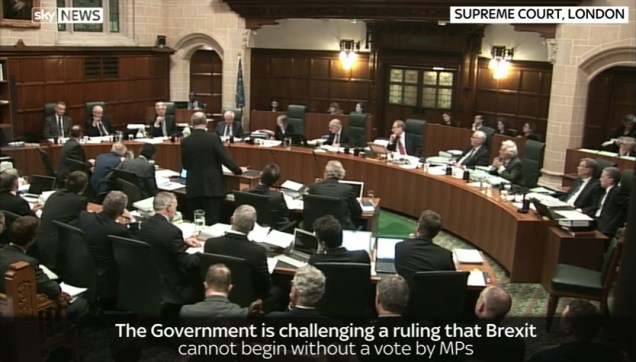
The nation’s eyes were fixed today on the UK Supreme Court as it hears the government’s appeal to overturn a High Court ruling that ministers cannot trigger Article 50 and begin the formal Brexit process without first winning a vote of MPs in parliament. But the arcane, complex and remote British judicial system makes it almost impossible for even informed citizens to follow proceedings or judge the validity of the court’s eventual findings for themselves

Unlike the much more famous United States Supreme Court, the UK Supreme Court is televised – anybody can log onto the court’s website and watch cases being heard via live webcast, including the momentous case currently before the court, in which the government is appealing a High Court ruling that ministers cannot trigger Article 50 of the Lisbon Treaty to formally begin the Brexit process without first gaining the assent of MPs in a parliamentary vote.

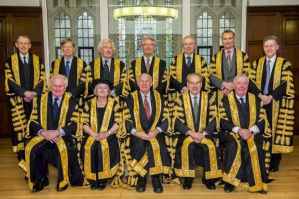
And so today the British news channels spent large parts of the day simply broadcasting the goings-on in Court room 1, where the appeal is being heard. Anybody with a passing interest was able to tune in and watch for themselves as the government’s legal team, led by the Attorney General, made their case to the eleven justices (incidentally the first time that all eleven had sat together for the same case).

And yet despite this wall-to-wall media coverage, I doubt that more than a fraction of those who watched any of the proceedings really understood what was happening, or could place the appeal and the arguments being made in the context of Britain’s judicial system and how it fits into our system of government. I include myself in that group of confused onlookers. And if citizens do not understand the basic workings of one of the three branches of government, how are they to know whether the decisions reached are just and legitimate? And how are they to confer their own legitimacy of acceptance upon those institutions?

If a case about mass surveillance makes it to the US Supreme Court, many Americans will automatically recognise that this concerns the Fourth Amendment (forbidding unreasonable searches and seizures of property by government). They may not know much more than that, but the fact that America has a written constitution gives even ill-educated citizens a basic frame of reference when discussing newsworthy legal matters, while a fundamental education in civics teaches them that a president or Congress cannot simply override the rulings of the Supreme Court if they find them inconvenient – and that trying to sidestep the court by amending the Constitution is prohibitively difficult, thus forming one of the famous “checks and balances” in the American system of government.

Contrast this basic civic awareness in America with the dire state of affairs in Britain. Although I do not have an opinion poll to back me up, I would be surprised if one third of British citizens knew that we even had a Supreme Court (it was only founded in 2009, taking over from the previous Law Lords), let alone the names of a single one of its justices.

(Incidentally, the PC Left and rabid practitioners of identity politics are missing a trick here – ten of the eleven current justices of the UK Supreme Court are old white men, with the remaining justice an old white woman. Are these people really the most qualified for the job, or did they get their positions through the chumocracy and establishment connections? Why is there no public confirmation process, to give democratic oversight to the selection of new justices, as there is in America? And yet how many times has the UK Supreme Court been picketed by angry Social Justice Warriors demanding gender and ethnic balance on the court? Never.)

I will be honest and start by admitting that prior to the EU referendum campaign this year, I could only name one justice of the UK Supreme Court – Lord Neuberger, the court’s president. And that’s awful. I write about politics and UK current affairs every day and consume several hours of news on television, the internet and social media besides, but I could only name one person on the bench of the UK Supreme Court. I could speak for hours about the US Supreme Court, its current and past justices and many of the famous cases it has decided, but not so for the Supreme Court of my own country. And if I can’t rattle off a handful of facts and names together with a brief commentary on their respective legal and ideological outlooks, how many people are actually able to do so?

How many laymen – people without a direct professional or personal interest in the workings or judgements of the court – actually do know who sits on the UK’s Supreme Court? How many could explain at a high level how the judicial system works, with the division between civil and criminal court, the work done by solicitors and barristers, and the hierarchy of trial and appellate courts? Or the difference between the Scottish system and that of England and Wales? All that I currently know, I learned from an Introduction to Business Law course while studying at university – there were no civics lessons in the 1990s National Curriculum while I was at school. And many others will not have even received this basic primer.

But how are we to fulfil our potential as informed and engaged citizens when we fail to understand how one of the three major branches of government works? Most people have a passable grasp of the executive and the legislature, even if they don’t recognise the Government and the Houses of Parliament using those terms. But I very much doubt that one adult in twenty could explain the fundamentals of our legal system, let alone the many layered intricacies.

But flip it around. Why would we know how our legal system works, or recognise the major personalities in the British legal scene? And why should we bother to take the time to educate ourselves?

People in America know the names and ideological leanings of the justices on their Supreme Court for a number of reasons. For a start, they take their civics a little bit more seriously on that side of the Atlantic – something that we could learn from.

But more than that, the American legal system is far more responsive to the citizenry than the British system is to us. One major difference is that many local judges are elected. Now, this may or may not be a good idea – and having watched a number of local races for positions on the bench, I have my grave doubts as to the wisdom of elected judges. But you can’t deny that you are likely to feel much closer to the legal system if you have a direct say in who gets to don the black robes.

Even more important is the fact that unlike we Brits, Americans have a written constitution to act as a common frame of reference when talking about legal matters. Even half-educated Americans will talk about whether something is “constitutional” or not, and apply this test to all manner of public policy debates, from government surveillance to gay marriage. This is important, because it gets people thinking beyond the mere fact of whether they agree or disagree with a particular law, and toward the broader question of exactly why the law in question is good or bad. That’s not to say the ensuing debate cannot still be ignorant and intemperate – it often is – but at least everyone is able to take part in the debate along the same parameters.

Consider the Edward Snowden leaks, when one whistleblower’s actions laid bare the extent of secret government surveillance in Britain, America and the other “Five Eyes” countries. In America, the people – outraged at this secret, systemic violation of their privacy – were able to haul officials in front of congressional committees and debate the legality of the government’s actions with reference to the Fourth Amendment, which prohibits unreasonable searches and seizures of property. And in due course, the American government had to make a number of concessions and restrict its surveillance activity. In Britain, by contrast, we had David Cameron and Theresa May pompously telling us that they respect the “tradition of liberty” but are basically going to do whatever they want. And what recourse had we to stop them? None.

Then there is the central role which the US Supreme Court often plays in matters of great social importance in America. In Britain, Parliament’s “elected dictatorship” is the Alpha and the Omega for nearly all significant decisions made in this country – the government can pass or repeal any law almost at will and with no reference to any higher text or law, so long as it can muster the votes in the House of Commons. The courts then simply apply what has been handed down by Parliament, which is sovereign. Refreshingly, this is not so in the United States.

Consider just some of the most famous cases – household names, even to those of us living in Britain. Dred ScottCitizens United. Roe vs Wade. Brown vs Board of Education. We may know next to nothing about American current affairs, but we know that these relate to slavery, campaign finance, abortion and racial segregation. Because in America, the president is not the only person who matters in politics. Nor are the leaders of Congress. The third branch of government matters equally, and how the Supreme Court chooses which cases to hear and applies their interpretation of the Constitution to those cases constitutes a vital check and balance in the American system.

Can you name a comparably important British legal case? They do exist – the Al Rawi case, for example, with its implications for the legality of secret hearings, or Nicklinson vs Ministry of Justice, which confirmed the current illegality of voluntary euthanasia, or the “right to die”. But few people know about these cases or why they are important, because the British legal system is so much more remote and unaccountable to the people.

Finally, there is the question of sovereignty. The United States Supreme Court is the final arbiter of what is and is not constitutional, and therefore applicable to American citizens. It cannot be shunted aside by an impatient government if it holds up or overturns key legislation, and nor can it be undermined from the outside – the court determines for itself which cases it will hear, and a majority decision made by five out of nine Supreme Court justices will then bind the government and lower courts. This goes against everything that the current British establishment – who are only too happy to wreck every institution and overturn any tradition in pursuit of their short term goals – stands for.

But crucially, the US Supreme Court is also not subordinate to any external or foreign body. By contrast, until Brexit is completed, the UK Supreme Court is treaty-bound to defer to the decisions of the Court of Justice of the European Union (CJEU), and must interpret all UK legislation not through the lens of compatibility with a British constitution, but rather to ensure its compliance with EU law and the European Convention of Human Rights.

This begs the question why we as a country do not trust ourselves enough to be the final arbiter of important issues affecting our society. Are we naturally more corrupt, untrustworthy or barbarous than our European neighbours, and in need of constant judicial restraint by our moral betters on the continent? Whatever the answer, the inescapable truth is that legal subjugation to an external, supranational body is the antithesis of national democracy.

So to recap, there exist a number of deficits between the American and UK legal systems in terms of ensuring citizen understanding and engagement with the judicial branch of government, namely:

1. A weaker sense of civic duty and engagement in Britain

2. Greater democratic distance between the people and the legal system in Britain, compared to America

3. Lack of a written British constitution as a common frame of reference when discussing legal matters

4. A much clearer link between decisions made in the US Supreme Court with American social policy

5. Lack of sovereignty: the American legal system is sovereign and subordinate to no external body, unlike the British legal system which (for now) remains subordinate to EU law

But in 2016, in the wake of the Brexit vote and with a key court case relating to the government’s execution of the referendum mandate to leave the EU having reached the Supreme Court, there is simply no good argument for continuing to abide such a remote, elitist and unaccountable legal system as we suffer in Britain. None. Especially when other countries, including our closest ally, have demonstrated a far better approach.

And anybody tempted to sniff haughtily at the American system, with their elected lower court judges and Scopes Monkey Trial culture wars should remember that however passionate and unseemly the public discourse can sometimes be across the Atlantic, this is only because more American people are actually engaged citizens with a moderate grasp of how their country actually works, and therefore confident enough to participate in that process. We should be so lucky to have a system as simple, accessible and easy to explain as they have in the United States.

And it should be a source of great shame to us that our journalists, politicians and private citizens often know more about another country’s legal system through watching Hollywood movies or Law & Order than they do about our own.

Right now, the American public is fixated on the issue of who President-elect Donald Trump will nominate to fill the Supreme Court seat left vacant by the late Antonin Scalia – a first rate mind and writer of opinions and dissents which are accessible and entertaining even to laymen like myself. Americans care about who takes up the ninth seat on their Supreme Court, because unlike Britain, their legal system is clearly more than a plaything of the establishment or a rubber stamp for the government of the day.

The ninth justice of the US Supreme Court may well end up casting crucial swing votes in important matters of human governance in the next decades, such as the right to bear arms in self defence, the right to privacy and the right to free speech. And these decisions could well have tangible, real-world consequences for the 330 million people who live under the court’s jurisdiction.

Elevating the people and the institutions into the public consciousness is not crass sensationalism, as some may charge. On the contrary, focusing on the personalities helps to elevate the issues to a place of prominence in our public discourse, which is exactly what we should be doing here if our own elites were not so busy trying to hide from public accountability anywhere they can scurry – be it behind the black veil of EU lawmaking in Brussels or the bewigged, dusty obscurity of the British legal system.

It will be ironic if it takes a bitter legal dispute over a referendum fought partly over the principle of restoring the supremacy of British laws to force Britain to finally take a proper, critical look at our currently impenetrable legal system. But public interest in legal matters peaks only very rarely, and so those of us who want to see real legal and constitutional reform have a slim opportunity – but also an obligation – to make our case.

For as things stand, a constitution and legal system in force over 3,000 miles and an ocean apart often feels more familiar – and less remote – than our own.

As things stand, the highest court in our country is hearing arguments and preparing to make a decision concerning the most significant political change to come to Britain since the Second World War, yet for most of us, the judges and lawyers may just as well be speaking in Klingon for all that we will learn from the proceedings.

And a legal system which is made deliberately opaque and inaccessible by definition can neither claim legitimacy nor deliver justice, on the Article 50 appeal or anything else.


Supreme Court Justices - United Kingdom

Support Semi-Partisan Politics with a one-time or recurring donation:

Agree with this article? Violently disagree? Scroll down to leave a comment.

Follow Semi-Partisan Politics on TwitterFacebook and Medium.

Brexit Denial Watch, Part 1 – Sarah Olney, The Liberal Democrats’ Special Secret Weapon

Slightly different to the Brexit Catastrophisation Watch series, these Brexit Denial Watch posts will focus on public figures of power and influence who marshal Olympian levels of denial to pretend to themselves and others that the British people did not really vote for Brexit, and that the referendum result can and should be overturned

Let’s all take a moment to savour the defeat of former Conservative MP for Richmond Park, Zac Goldsmith, in the by-election which he foolishly triggered after following through on his word to flounce out of the Conservative Party if the government finally took its boot of the neck of the aviation industry and authorised the expansion of London’s Heathrow airport.

Zac is a wishy-washy watercolour impression of a man, a Conservative In Name Only, Crown Prince of the NIMBYs, a snarling anti-aviation zealot and an utterly useless London mayoral candidate. British politics will miss his early departure like I missed my inflamed appendix after the Royal Free Hospital scooped it out. (How’s that one, Matthew Parris?)

But naturally, the Liberal Democrats’ surprising win in Richmond Park is being spun by a gleeful party as rather more than it is. One can understand the jubilation of a party reduced from being junior coalition partner to a pathetic rump of eight MPs at being able to add another warm body to their number, but they go too far when they claim that 20,000 people in leafy Richmond is such a representative sample of Britain that a by-election result (which often go against the government of the day) can be safely interpreted as the British public “changing their minds” about Brexit.

And this is exactly what the LibDems, in their arrogance, are now claiming. The Spectator reports:

Goldsmith hoped to focus on airport expansion and his decision to fulfil his promise to constituents to stand down if it was given the green light. But the Lib Dems had other ideas and made it about the EU. The Richmond borough voted heavily to remain — at 69/31 — and the Lib Dem campaign — which was also anti-Heathrow — focused on this. They highlighted Goldsmith’s support for Brexit and reached out to Remain voters — with Olney even promising to vote down Article 50 in the Commons, if elected.

In her acceptance speech, Olney said voters had ‘sent a shockwave through this Conservative Brexit government’ while Tim Farron made the bold claim that if this were a general election the ‘Conservatives would lose dozens of seats to the Liberal Democrats – and their majority with it’. Now this is jumping the gun a bit, and as Fraser notes, a lot of the result can be put down to the Lib Dem’s effective ground game where Goldsmith just didn’t seem to have one. But it can’t be denied that the Lib Dem strategy is working. In the Witney by-election, the party increased its votes share from 7pc to 30pc. They have clearly defined themselves as the party of Remain and in constituencies that voted to stay in the EU this message is resonating.

The newly-elected MP herself was even more explicit on Sky News:

Olney told Sky News that ‘it does look now as if we can have a vote in Parliament that might override the referendum – and I will, obviously, be voting to Remain because that is always what I have believed’.

This is hilarious. Furious, tantrum-throwing Remainers have been complaining since the small hours of 24 June that the 52% of people who put their cross in the box voting to leave the European Union were in fact doing anything other than seriously voting for Brexit. It was just a cry of dissatisfaction, we were told. It’s all about immigration, or globalisation, or multiculturalism, and if only politicians say enough platitudinous things to placate public feeling on those issues then there will be no need to go ahead and trigger Article 50 of the Lisbon Treaty, setting in motion the wheels of our departure.

And yet despite 17 million British voters casting their ballots to leave the European Union when the referendum question was both crystal clear and painstakingly discussed in advance (and the consequences clearly printed on the pro-Remain government propaganda sent to every household during the campaign), now we are supposed to believe that this vote was actually not a mandate or instruction to take Britain out of the European Union, while a single solitary by-election in leafy, pro-EU west London in which voters were explicitly choosing who to represent them in Parliament until the next general election, not casting a single-issue decision about Brexit is enough to cancel the whole thing.

Do these people hear just how arrogant they sound, and just how plain their attempts to game the system to their own advantage appear now that the curtain has been pulled back and the desperation of the moment has forced them to dispense with their usual subterfuge?

Besides, who knows whether the voters of Richmond Park really do want Liberal Democrat Sarah Olney as their new MP? As Brendan O’Neill put it on Facebook:

Anti-Brexit Lib Dem wins by-election in Richmond. But how can we be sure the people of Richmond really knew what they were voting for? Maybe they’re “low information”. Maybe they were made poisonously anti-Brexit by Guardian and Economist propaganda. Maybe they’re so hooked on Newsnight and Radio 4 that they can no longer think for themselves. Perhaps they were brainwashed by the demagogues Tony Blair and Richard Branson. Can we really trust such people to make big, important decisions like who should sit in parliament? We need a second vote. Give them another chance to get it right. The country must be saved from their ignorance.

Since the election, alarming new evidence has come to light – in the form of a car crash interview with Julia Hartley-Brewer on LBC radio, in which Sarah Olney jabbered like a madwoman, couldn’t answer a single question about Brexit and eventually panicked and had to be rescued by her spokesman after less than four minutes on air – which suggests that the people of Richmond Park may have unwittingly elected a complete and utter cretin to be their representative in Parliament for the next three and a half years.

Since the people of Richmond Park thought they were electing a competent  human being with a basic grasp of the issues rather than a flailing dilettante who cracks under the immense psychological pressure of a casual interview on morning radio, clearly they did not have all the facts. Clearly they were misled. Clearly they need another opportunity to consider their response in the light of this new information.

Isn’t that what we keep hearing about that idiotic “£350 million for the NHS” Vote Leave NHS bus?


Kumbaya - South Park - Brexit - European Union - EU Referendum

Support Semi-Partisan Politics with a one-time or recurring donation:

Agree with this article? Violently disagree? Scroll down to leave a comment.

Follow Semi-Partisan Politics on TwitterFacebook and Medium.