Janan Ganesh Is Wrong: Britain Can Still Make History – If We Leave The EU

Janan Ganesh - Financial Times - European Union - EU - Referendum - Brexit

A careless turn of phrase reveals a poisonous, negative attitude towards Britain held by prominent Remainers and EU apologists

What do passionate British europhiles and EU defenders really think about their own country?

This question is an eternal puzzle to Brexiteers, who have watched Remainers from the prime minister on down eagerly seize on every statement or piece of “proof” that Britain is too small and feeble to flourish without dissolving ourselves into the EU’s embryonic common European state.

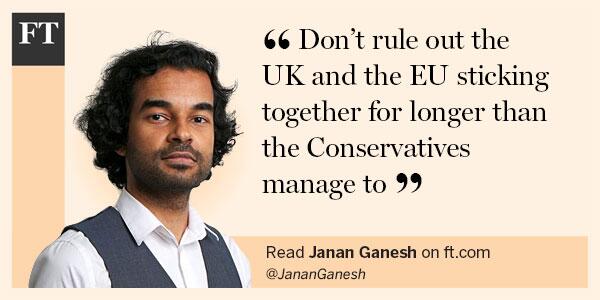
And now, finally, we have something of an answer. In his latest FT column bemoaning the intra-party warfare currently consuming the Conservative Party, George Osborne biographer Janan Ganesh has the following to say about the United Kingdom:

Britain is not where history happens any more but our two flirtations with secession — Scotland’s from the UK, the UK’s from the EU — pique the curiosity of outsiders. They must look at the intra-Tory venom and assume its seepage into wider society. If Scots were lastingly politicised, and riven, by their referendum, Britons as a whole might be too. The stakes are as large, the facts as contested, the principals on each side as seethingly at odds as they were in Scotland in 2014.

And still we demur. The notable feature of this referendum is its lack of notoriety. With three weeks to go, pubs are not blazing with anticipation or rancour. Friends and relatives are not falling out. Campaign events are unmarred by anything darker than cheeky heckles. On the morning of May 30, only one referendum-related story made the 10 most-read on the BBC news website, and that was trumped by a crocodile attack in Queensland, Australia.

And there it is. Doesn’t that perfectly sum up the tone which pervades nearly all of the Remain campaign’s messaging during the referendum – the idea of Britain as a has-been nation, a place which was once consequential but no longer a place “where history happens”?

And of course this is exactly what Janan Ganesh, his colleagues at the Financial Times and many others in the Remain camp actually do believe. They (wrongly) think that we are a small island not only in geographical terms but also in geopolitical terms. They think that we don’t matter any more, that we will never again shape the world because we are not powerful enough and because we are not exceptional enough to do so.

To the mind of a Remainer, it is utterly perplexing why anybody would want a country as weak, fragile and inconsequential as Britain to leave the safe harbour of the European Union and head out into the storm. Sure, they grudgingly acknowledge, we made our mark on history in the past – and at this point they will often pause to apologise profusely for that very history – but we should never expect to do so again.

The future, they insist, belongs to those shining civilisations such as China and Russia, apparently – despite the fact that Britain remains the fifth largest economy, (by some measures) the second military power, and is home to some of the best universities, companies, popular and high culture in the world. And Britain should be grateful for any scraps we are fortunate enough to steal from a “top table” dominated by other, better countries.

But if the world really is now such a scary place that the only recourse for “fading glory” Britain is to shelter inside a remorselessly tightening political union, how come other countries, many of them much smaller than us, are not also busy dissolving themselves into regional political blocs?

The threat of terrorism affects Australia too, as we saw with the 2014 Sydney hostage crisis. Australia would also be threatened by any global conflagration involving Vladimir Putin’s Russia. And Australia is just as vulnerable to a world economic downturn as Britain – if not more so, given her remote geographic location.

So why isn’t Australia hastening to form a political union with New Zealand and other APAC countries? Why is there no Pacific Union headquarters being constructed in Malaysia, or elections being held to elect MPPs to the new Pacific Parliament? Why is there no Pacific Court of Justice being set up to adjudicate and enforce adherence to region-wide regulations and human rights laws?

Why, for that matter, is Canada not racing to form a political Union with the United States and Mexico, following the EU’s lead and turning NAFTA from a free trade group into an explicitly political union?

The answer, of course, is that political union does nothing – nothing whatsoever – to meet or tackle the most serious challenges facing our world. Australia and New Zealand are perfectly capable of intergovernmental co-operation without the need to create a new and unaccountable supranational body sitting above them and assuming their sovereignty. Canada and the United States are not only able to trade freely with each other, they also co-operate closely on military and intelligence affairs – again, without a Parliament of the Americas to pass laws binding on their respective citizens.

So the question goes back to EU apologists and British pessimists like Janan Ganesh: exactly what is it about Britain which means that we cannot follow the example of Canada and the United States, Australia and New Zealand? What deficiency afflicts Britain which means that we cannot co-operate closely with European allies on important issues without also dissolving ourselves into a political union with them?

The EU apologists won’t tell you, because they can’t. Because there is simply no good reason why Britain could not maintain exceptionally close links with the countries of Europe – remaining in the European Economic Area, retaining free movement of people, working together on common security challenges and those areas where our foreign policy interests align – while being a sovereign, self-governing country outside the European Union.

And those who persist in saying otherwise are either fearful and ignorant themselves, or they are cynically lying to promote a supranational or federalist agenda which they cannot openly embrace in public.

Why should Britain no longer be a place where history continues to be made? Why can Britain not be the first country to realise that a century-old dream of European political union being brought about by a 1950s model of centralised, supranational governance is hopelessly ill suited to the Europe of 2016? Why should Britain not be the first country to grasp this reality and strike out away from euro-parochialism, charting a better path toward global engagement which other countries may then follow?

Why, in short, do those who insist that we must remain in the European Union have such desperately stunted vision and ambition for the global future which Britain could build?

 

European Union - United Kingdom - Britain - Flags

Agree with this article? Violently disagree? Scroll down to leave a comment.

Follow Semi-Partisan Politics on TwitterFacebook and Medium.

There Can Be No Rational Debate With Those Who Deceive Themselves About The EU’s Purpose And Destination

European Union - EU Referendum - Supranational Government - Brexit - Remain - Leave

I am no longer willing to indulge Remain supporters who insist on deceiving themselves (and others) that the European Union is a humble trading organisation with no pretensions to statehood or aspirations for ever more power

The question which exasperated EU defenders often ask when they (unsurprisingly) fail to win Brexiteers over to their side goes something like this: “But all these world leaders and heads of NGOs want Britain to stay in the European Union! Do you really think that you know better than all of these important people?”

And on the very surface it sounds like quite a disarming point – who are we, after all, to second guess the learned and wise decisions of our rightful rulers? But then one remembers that this is precisely what we are supposed to do. The very reason we moved beyond despotism and absolute monarchy is the fact that we do not want (and no longer have to suffer) a small, homogeneously educated “born to rule” class making decisions on our behalf unchecked; that the mere fact of occupying positions at the top of the establishment makes it likely that vested interests will begin to corrupt decision making, and that democratic checks and balances are the best means we have yet devised of guiding and restraining the behaviour of our very flawed, very human leaders.

This point is eloquently expanded upon in a new piece by Pete North, itself a response to a very smug and very ignorant piece in the Guardian by Nick Cohen, gloating at the unarguable ineptitude of the official Leave campaign.

Cohen simperingly asks:

There are dozens of good reasons for leaving the EU. Before endorsing them you should ask, do you feel that the Institute for Fiscal Studies, Bank of England, IMF, OECD and the hundreds of economists we survey this week are all lying? Do you feel that all our allies who are begging us to stay wish to lead us to our ruin? Do you feel that Boris Johnson is fit to be prime minister or any kind of minister for that matter? Do you feel that Scotland won’t leave? Do you feel that Irish politics won’t darken? Do you feel that Putin won’t rejoice? Do you feel the Leave gang will find answers in June to the questions it cannot answer in May?

In short, you’ve gotta ask yourself one question: do I feel lucky?

Well, do ya, punk?

To which Pete North replies:

In his closing remarks [Cohen] asks “do you feel that the Institute for Fiscal Studies, Bank of England, IMF, OECD and the hundreds of economists we survey this week are all lying?”

I think they are politically slanted toward the status quo. I think they are exploiting the weakness of Vote Leave to disingenuously cloud the issue. I think they are wilfully ignoring facts they don’t like thus lying by omission. And I also think they are wrong because (and I say this in full knowledge of how it sounds) I have examined it from more angles than they have, and have thought about it longer and harder than they have, and I have explored areas they are barely aware of. They are largely ignorant of the political and practical dynamics. Their forecasts are of limited use and only their short term forecasts based on the immediate aftershocks have any real worth. I will argue that til the cows come home.

Cohen then asks “Do you feel that all our allies who are begging us to stay wish to lead us to our ruin?”

This is a shallow question. Firstly who governs us is absolutely none of their business. But there is a consensus groupthink at the top of global politics where they believe their own rhetoric and the rhetoric upon which the EU stands. That drives their calls for Britain to remain. But this is not about what they want. That is why we are having a referendum. I also feel that Brexit threatens to disturb that cosy consensus and it threatens their agenda for the accumulation of power. I think that is a good reason to leave in its own right. Brexit is a message that the power belongs not to them but the people. And that’s what this is fundamentally all about.

Absolutely so. Remainers love to affect that they live in a world of hard-headed reality while those of us who support Brexit and the restoration of nation state democracy are either conspiracy theorists or dangerous fantasists. But in fact it is the other way around – we have seen how supporting Brexit in the face of a chorus of establishment opposition is not only understandable but absolutely necessary in order to prevent too much power accumulating among the elites at supranational level. And it is the Remainers who studiously ignore mountains of evidence in which the EU’s architects and leaders speak quite openly about their motivations and desire to create a common European state.

But of course this does not stop Remainers from prancing around as though the burden of proof were somehow on the side of the Brexiteers. Typically, this arrogance expresses itself through articles which read something like this:

Before we can even begin to think about leaving the EU, Brexit supporters have to answer these ten simple questions:

1. What categorical assurances can the Leave campaign give that there will not be a 3 point magnitude earthquake in Torquay if Britain votes to leave the EU?

2. Where is the Leave campaign’s fully costed plan showing Britain’s GDP increasing above current trends once we cut ourselves off from the world and hang up a big sign declaring that Britain is closed for business?

3. Where is the Leave campaign’s signed (in blood) declaration from Angela Merkel that British citizens will not have to pass an IQ test before entering Germany in the event of Brexit?

4. How many human sacrifices will Britain make to appease Barack Obama after angering the US president by ignoring his advice in the referendum?

5. Where is the Leave campaign’s signed (in blood) declaration from John Kerry that the United States will not close its embassy in London and suspend diplomatic relations with Britain?

6. Where is the Leave campaign’s statement, signed by 500 economists, standing behind an economic model which proves that the price of foie gras will remain stable if Britain leaves the EU?

7. Prove that average global temperatures will not rise in the event of Brexit.

8. Prove that France and Germany will not face off against one another precipitating a new world war in the event of Brexit. (And didn’t millions of soldiers perish in two world wars precisely so that a united, supranational government of Europe might one day arise in Brussels?)

9. Prove that the Evil Tory government will not pass a bill on June 24 abolishing maternity leave and establishing mandatory child labour if we leave the EU.

10. Produce a list of fifty elected heads of state, all of whom have clear political interests in the steady maintenance of the established international order and avoiding the slightest disruptions to (or distractions from) their domestic agendas, all declaring that they want Britain to leave the European Union (with which they must simultaneously maintain good diplomatic relations)

And when Brexiteers look puzzled and inevitably fail to answer each question in a way which satisfies the EU’s cheerleaders:

Aha! See, they don’t know what Brexit will look like! Can we really afford to take the risk? Etc. etc.

Personally, I’m done playing that game. Dancing to the sanctimonious tune of the EU cheerleaders does not interest me. I do not have to prove anything. Yes, in order to persuade a plurality of people that voting to leave the European Union is safe, there must be a comprehensive and rigorous plan. Such a plan already exists, and is finally being spoken of (in content if not always in name) by a growing number of Brexiteers and commentators alarmed at the childish incompetence of Vote Leave.

But beyond promoting this plan and urging people to read it, there is nothing further left for thinking Brexiteers to do in this regard. It will never be possible to give the EU worshippers the assurances they demand – to prove that the recipe for Nutella will never change if we leave the EU. And they know this. Definitively proving a counterfactual is not possible, and it is this con which is helping the Remain campaign to a consistent lead in the polls.

But it might be possible to respect Remain campaigners a little more if they were capable of being honest themselves about the organisation which they so eagerly defend. And so when asked by sneering Remainers to prove to 100% probability that the cabbage harvest will not wither in the event of Brexit, we should respond with some challenges of our own.

And this blog’s challenge to sincere, thinking Remain supporters is for them to complete the following statements in an honest and remotely plausible manner.

Statement 1: I understand that continent-wide supranational political union is not strictly necessary in order for countries and people to cooperate and work together to solve common challenges, but I still think Britain should remain in the EU because…

Statement 2: I appreciate that global bodies such as UNECE, Codex Alimentarius, the IMO and ILO are responsible for creating much of what goes on to become EU regulations and directives, but I believe Britain should remain in the EU rather than seeking to regain our seat and wield influence at the true top tables because…

And, of course:

Statement 3: I, [insert name], want Britain to remain in the European Union because in my heart I feel more European than British, and do not want to be torn away from what I really consider to be my true country.

Remain campaigners who repeat any of these statements straight into a television camera will have my grudging respect because they will be making a case for the European Union based not on airy wishful thinking about what the EU is and might become, but rather on truthfully admitting their understanding of and acquiescence to the EU’s eventual aim of becoming a unified European state.

Those who persist in pretending to themselves and the rest of us that the European Union is benign, super democratic and Just About Trade, however, can take a hike for the remainder of this referendum campaign.

I am no longer willing to debate this issue while the Remain side occupy a position of fundamental dishonesty as to their understanding and intentions. From 10 Downing Street to Canterbury Cathedral we are being lied to, and I will no longer do anything which remotely assists these invidious people in their shameful, dishonest work.


European Union - United Kingdom - Britain - Flags

Top Image: Telegraph

Agree with this article? Violently disagree? Scroll down to leave a comment.

Follow Semi-Partisan Politics on TwitterFacebook and Medium.

Britain’s Religious Leaders Squander Their Moral Authority By Supporting The EU And Forsaking Democracy

Rowan Williams - Brexit - EU Referendum

Another day, another insidious, arrogant attempt by religious leaders to suggest that God is a paid-up member of the Remain campaign

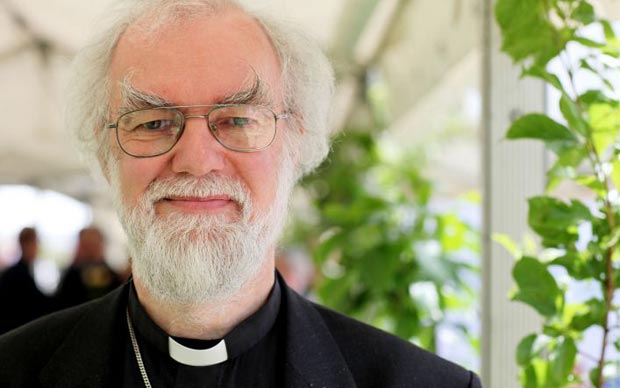
Read this portentous intervention in the EU referendum debate and tell me it isn’t the most fatuous, ignorant, sanctimonious bilge to be uttered by religious community leaders and supposed people of God in recent memory:

Faith is about integration and building bridges, not about isolation and erecting barriers. As leaders and senior figures of faith communities, we urge our co-religionists and others to think about the implications of a Leave vote for the things about which we are most passionate.

The past 70 years have been the longest period of peace in Europe’s history. Institutions that enable us to work together and understand both our differences and what we share in common contribute to our increased security and sense of collective endeavour.

What’s more, so many of the challenges we face today can only be addressed in a European, and indeed a global, context: combating poverty in the developing world, confronting climate change and providing the stability that is essential to tackling the migration crisis.

We hope that when voting on 23 June, people will reflect on whether undermining the international institutions charged with delivering these goals could conceivably contribute to a fairer, cleaner and safer world.

The letter is naturally signed by all of the usual suspects:

Rt Rev Rowan Williams, former archbishop of Canterbury; Rabbi Laura Janner-Klausner, Movement for Reform Judaism; Miqdaad Versi, assistant secretary general, Muslim Council of Britain; Jasvir Singh, chair, City Sikhs Network

Rt Rev Dr Ian Bradley, Church of Scotland & Reader in Church History and Practical Theology, University of St Andrews

Baroness Butler-Sloss, Chair, Commission on Religion and Belief in Public Life

The Rt Rev Professor Lord Harries of Pentregarth, Emeritus Professor of Divinity, Gresham College, Honorary Professor of theology, King’s College London & Former Bishop of Oxford

The Rt Rev Paul Bayes, Bishop of Liverpool

The list goes on. Sadly, from a personal perspective, it includes Bishop Thomas McMahon of the Diocese of Brentwood, who confirmed me into the Catholic church as a young, eighteen year old convert.

But if this ignorant waffle is the best thinking that modern Christianity can bring to bear on the EU referendum debate, then Christianity deserves to be in decline for it has ceased to be any kind of intellectual (let alone moral) force in this country.

If these learned people – many from the higher echelons of the establishment, some of them with theological doctorates to their name  – genuinely can’t discern the difference between leaving one supranational political institution one the one hand and disengaging North Korea-like from the entire world on the other, then they deserve neither our respect nor the media’s airtime. And if they do discern the difference but choose to pretend to their congregations that Brexit means automatic isolationism, then they need to go back and consult their respective holy books to remind themselves what is written about bearing false witness.

Putting political preferences aside for a moment, anybody of faith in this country – Brexiteer or Remainer – should be appalled by this clumsy and ignorant intervention. For if religion is to continue to play a meaningful role in public life (as it should), the representatives of our faith surely have a duty to understand the issues on which they choose to intervene.

One has to earn the right to be listened to and taken seriously in the public square, and the surest way to forfeit that right is to talk loudly from a position of ignorance. And if this letter in the Observer reveals anything, it is a wellspring of ignorance. Ignorance about what the European Union is, why it was created and the direction in which it is plainly, openly heading. Ignorance about the true foundations of peace in Europe – liberal democracy, post-war economic growth and NATO. Ignorance about the future of global trade and regulation. And a profound ignorance (or at least a tendency to conveniently shut out the example) of the rest of the world, which has conspicuously avoided grouping itself into the type of regional supranational political bloc which the bishops bizarrely claim is essential to freedom and prosperity.

Where is the thought here? Where is the serious introspection, the good faith effort to actually listen to the opposing side (the importance of which religious leaders often lecture us) rather than go charging in to battle against a dishonestly constructed straw man? How, in short, is any Brexit-supporting Christian (or follower of any other faith represented in this car crash of an intervention) supposed to respect or feel respected by their spiritual leaders, after no less a figure than a former Archbishop of Canterbury made it quite plain in the pages of the observer that he believes that Brexiteers are literally seeking to undermine peace in Europe for no good reason?

Can the bishops point to a chapter and verse direction in the Bible that nations should seek to merge their political institutions together slowly and by stealth, while claiming that it is somehow necessary in order to underpin free trade? Of course not. Can the bishops highlight a specific injunction from the Lord clarifying that “building bridges” with neighbours means seeking some kind of continent-wide homogeneity? No. Tumbleweeds. The theological case for European political union is nothing more than a wheedling, hand-wringing, simpering assertion that because Jesus commanded us to love one another as He loved us, we should nod our heads and go along with one specific plan for European integration dreamed up by old men scarred from the memory of two world wars.

(In case you protest that a short OpEd in a newspaper is no place to set out complex arguments in full, I refer you to my pieces hereherehere and here, where I extensively discuss the fact that a solid Christian case in favour of the European Union has yet to be made by any religious leader in the course of this sorry EU referendum debate).

Christianity - Europe - EU - Brexit - 3

If the story of religious intervention in the EU referendum thus far teaches us anything, it is that those who claim to lead our faith groups and communities are profoundly ignorant both about the country in which they live, and the world with which they seek to engage.

But worse than that, the bishops are often ignorant about their own flocks and congregations, many of whom have solidly moral and intellectual reasons for wanting Britain to leave the European Union, and who deserve better than to be effectively labelled as harbingers of the apocalypse by virtue-signalling prelates who are either too lazy to learn or too disingenuous to admit that the EU is not the alpha and the omega of democracy, trade and international cooperation.

At some point – maybe not on June 23, but probably in years rather than decades – the European Union will face a true crisis of democracy and legitimacy, as the passions of the narrow-minded European political elites diverge ever further from the interests of the people they lead. Whether this leads to civil unrest, antidemocratic coups d’etat or the breakup of the EU itself remains to be seen. But those bishops and other faith leaders who so airly signed their names to this letter proclaiming that anything other than a vote to Remain in the EU essentially means cheering on climate change, war and pestilence will find themselves dangerously exposed (which is perhaps why they have done so in their own names, but their organisations have held back).

For when the EU’s final crisis of democracy comes, the names of these faith leaders who today encouraged us to remain in the European Union will be mud. And deservedly so, for they have betrayed democracy either through their ignorance or their invidious EUphilia.

And if the bishops think that they and their values are being squeezed out of the public square now, they should wait until they are permanently associated in the public mind with actively working to keep Britain chained inside this failing, antidemocratic, euro-federalist experiment.

When the EU’s day of reckoning finally comes, the signatories to this letter may well yearn for that happy time when the public was merely indifferent about religion.


Christianity - Europe - EU - Brexit

Top Image: Telegraph

Support Semi-Partisan Politics with a one-time or recurring donation:

Agree with this article? Violently disagree? Scroll down to leave a comment.

Follow Semi-Partisan Politics on TwitterFacebook and Medium.

‘Tory Brexit’ Hysteria: Leftist Remainers Double Down Against Democracy

John McDonnell Tory Brexit

“Maybe Brexit one day, but not under a Tory government” – the Left’s stunning disregard for democracy makes a mockery of Jeremy Corbyn’s New Politics

The refrain is already familiar to us: But if we leave the EU, the current Conservative government might do the kind of things that they pledge in their manifestos! The only way to stop the democratically elected Conservative government from actually governing conservatively is to stay in the European Union, where it doesn’t matter which party holds power in Westminster!

One assumes that the Remain campaign have done some focus group testing on this sentiment and found it to be effective, but to many people this will sound like a chilling and cavalier disregard for democracy rather than an expression of the supposed best traditions and instincts of the Left.

And yet leftist Remainers are doubling down on this line of attack, trying to paint Brexit not simply as a matter of whether or not to leave the European Union, but as a purely Tory initiative, no doubt part of the Evil Tory government’s heartless, genocidal campaign against the sick and disabled.

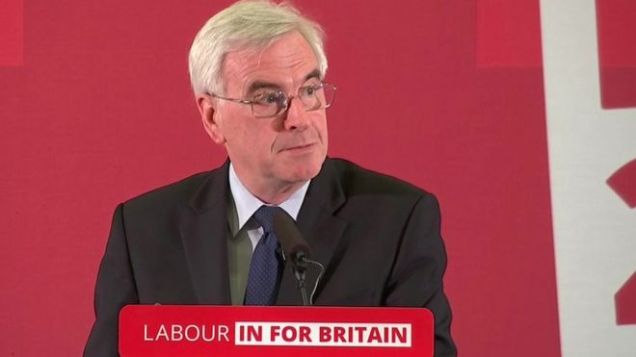
This attempt to sully the Brexiteers’ campaign to reclaim democracy as a purely partisan Conservative Party initiative is summed up in a new phrase being trialled by Labour’s John McDonnell: “Tory Brexit”.

Stephen Bush reports in the New Statesman:

John McDonnell has a new catchphrase: “Tory Brexit”.

It may sound uncomfortably close to the name of a new character in Star Wars but it’s what McDonnell and his team believe is the best route to turn Labour voters out for a Remain vote in the coming referendum.

Shadow ministers and Labour MPs are increasingly worried that Labour voters don’t know what the party’s stance on the referendum is – and even more troublingly, they don’t much care. That much of the media has covered the contest largely through the prism of the Conservative succession has only made matters worse. The government’s message about the dangers of Brexit, too, are calibrated towards the concerns of Tory voters: house prices, security, and the economy.

Tony Benn must be turning in his grave. For Benn was a Labour politician of principle and patriotism, one who realised that the gnawing short-term fear that the opposing party might get to implement some of their own policies when in government is not sufficient reason to neuter Westminster altogether by making it subordinate to supranational EU institutions.

By contrast, the leading lights in today’s Labour Party – including the Corbynites, who in many cases have been so sanctimonious about how the are the sole custodians of political principle, unlike those sellout New Labour types – couldn’t give a damn about democracy. They really couldn’t. And like John McDonnell, they openly boast about a Remain vote being key to thwarting the supposed actions of a democratically elected British government.

Bush continues:

It also has the added bonus of keeping open the idea that Brexit under a leftwing government mightn’t always be the worst thing in the world, which, depending on your perspective, either defangs the minority of Labour politicians who are pro-Brexit, or allows McDonnell and Jeremy Corbyn  to keep the party united while not closing the door on supporting a Leave vote at a later date. Either way, it’s canny politics.

Stephen Bush might call it canny politics. Anybody who really cares about democracy would call it appalling, craven political posturing bordering on constitutional vandalism – being willing to “switch sides” on an existential question like Britain’s future in the EU based purely on which party is currently enjoying a five year term in government.

It is also base scaremongering of the worst sort. In the event of a Brexit vote, the Conservative government which enters into secession negotiations with the EU will – regardless of who leads it – be comprised of many Remainers, if not a majority. And in order to get the terms of that renegotiation through Parliament, the deal must also attract a sufficient number of Remainers, including some in the Labour Party for the figures to add up. Immediately this means that all of the most apocalyptic Brexit scenarios being bandied about the media by disingenuous Remainers are out the window. And what remain will be a much more easily negotiated “off the shelf” interim solution which maintains political and economic stability – in other words, exit to EFTA in order to continue access to the EEA, also known as the Norway Option.

The trouble for Remainers is that this form of Brexit is incredibly benign. It ensures Britain’s continued unimpeded access to the Single Market, preserves freedom of movement (with a better “emergency brake” on immigration than is available to Britain as an EU member) and ensures maximum stability in every area, while removing us entirely from the antidemocratic, authoritarian political union of which most Britons want no part.

If this most likely form of Brexit was properly understood by the public (and Vote Leave shoulder the blame for failing to grasp the importance of adopting such a plan upfront), the Remainers’ case would be utterly blown apart. All of their apocalyptic doomsday scenarios would be invalidated, and they would be forced to fall back on their “real” arguments for wanting to remain in the EU – because they do not believe that Britain, the fifth largest economy and second most powerful nation on Earth, can prosper outside of a political union with our neighbours. Or because they genuinely feel more European than British, and are terrified of being torn away from what they have come to see as their true country.

But fighting a campaign purely based on hatred and pessimism about Britain and/or wanting everyone to be European citizens first and foremost would be toxic to many voters, and so is hardly a very solid path to 50%+1 of the vote in the EU referendum. Thus Remain have engaged in a constant campaign of fear, uncertainty and doubt (FUD) from the beginning, always assuming the most unlikely and traumatic of Brexit modes in their “analysis”, and now by trying to portray supporting Brexit as essentially voting for a turbo-charged Tory government.

These are the lies and evasions of a side which has lost the core argument on democracy and self-determination, which cannot state its real reasons for wanting to stay in the EU for fear of alienating the voters, and which has consequently decided to pummel the electorate into acquiescence by subjecting them to wall-to-wall scaremongering.

The “Tory Brexit” line may gain some traction, particularly among the credulous and those with a particularly flimsy grasp of how democracy is supposed to work. But those who claimed to represent the New Politics, the kinder and more honest way of conducting oneself in public life, will have their halos irrevocably tarnished by their participation in this grubby pro-EU campaign of fear, distortion and deceit.


European Union - United Kingdom - Britain - Flags

Top Image: BBC

Agree with this article? Violently disagree? Scroll down to leave a comment.

Follow Semi-Partisan Politics on TwitterFacebook and Medium.

The Moral And Intellectual Cowardice Of The Pro-EU Left

Ken Loach - Another Europe Is Possible - EU Referendum

The modern Left loves the EU because having lost the public argument for socialist policies, they see in Brussels their last and best hope of imposing their left-wing ideology on an unwilling population

Tom Slater has an excellent piece in Spiked, in which he takes to task all of the big name lefties – some of whom previously toyed with supporting Brexit as they watched the EU’s antidemocratic behaviour with growing horror – who are now supporting the Remain campaign, and thus betraying democracy when it truly matters.

Slater writes:

The last few prominent Eurosceptics on the left have started to peel away. They’ve been confronted with a once-in-a-generation opportunity to smash power, to strike out for democracy and to put the future of European politics firmly in the hands of the people, rather than a faceless, byzantine bureaucracy. And they’ve bottled it.

First there’s Yanis Varoufakis, the flash stepdad of European leftism and the former finance minister of ailing Greece. This is a man who has experienced the tyranny of the Brussels set firsthand. His modest proposals for rescuing debt-laden Greece from EU-enforced austerity were ignored. ‘Elections’, he was told by German finance minister Wolfgang Schäuble, ‘change nothing’. He quit government in protest as his Syriza comrade Alexis Tsipras signed an agreement that would once again shackle Greece to Troika diktat. What is the self-styled ‘erratic Marxist’ up to now? He’s touring the UK, telling Brits to say ‘Oxi’ to Brexit so that we can ‘reform the EU from within’.

Then there’s Owen Jones, the Corbyn choir boy who has followed the Labour leader’s transformation from Bennite Eurosceptic to apologetic Remainer. Last summer Jones called for the left to campaign for Brexit. After the horrors of Greece, he wrote, it’s time to ‘reclaim the Eurosceptic cause’. Now, just 10 months on, he’s joining Varoufakis on the campaign trail. His flirtation with principle over, he wants to ‘unite with people across the continent to build a democratic, workers’ Europe’. How propping up a democracy-thwarting institution puts you in line with the little guy is beyond me. Not least when said institution has effectively abolished workers’ rights in austerity-battered countries like Greece.

But perhaps the most glaring retreat of them all has come from Paul Mason. The former Channel 4 economics editor and ‘radical social democrat’ actually had the brass to pen an article titled ‘The left-wing case for Brexit (one day)’. One day. Those two, trembly words sum up the sentiment of these fair-weather Eurosceptics. Yes, yes, democracy – one day. Not now. Especially when, as Mason sees it, a Brexit would allow Michael Gove and Boris Johnson to ‘turn Britain into a neoliberal fantasy island’. He’s in favour of democracy, you see, just not when the pesky demos elects a government he doesn’t like. This is hypocrisy dressed up as strategic nous.

Tom Slater is absolutely correct to denounce each and every one of these reversals as a shameful failure of courage. His piece is entitled “The Progressives Afraid Of Change”, and regrettably that is exactly what we see from the supposedly ideologically pure Corbynite Left. Yet after having grown in prominence and power primarily by denouncing the compromises and betrayals of the centre-left, these virtue-signalling true believers are now selling out British democracy in exactly the same way, proving that they are no better than the Blairite New Labour government which they so despise.

This blog has also taken each of the prominent leftists identified by Tom Slater to task for their utter failure of courage and vision. My critiques of Owen Jones are here, herehere and here, Yanis Varoufakis here and Paul Mason here.

Slater continues:

In fact, it’s worse than that. It’s often said that the shift in left-wing attitudes towards the EU over the past few decades has been the result of pure political contingency. When, in the 1970s and 80s, the EU was seen as an avowedly capitalist project, Labourites and trade unionists took arms against it. Now that it’s been given a social-democratic lick of paint, replete with talk of workers’ rights and free movement, it gets the nod. But there’s something even more sickening going on here. These turncoat Remainers, these radicals for the status quo, don’t just bristle at the turn of public opinion, on economics or migration – they’re scared of it. Their Brexit-phobia is really a fear of the demos itself.

You see this in their panic-stricken talk of the furies Brexit might unleash. ‘We don’t know… how the plebeian end of the Leave campaign will react if they lose. My instinct says: badly’, writes Mason. Varoufakis, meanwhile, is even more pessimistic. Only fascists and racists, he says, will profit from the demise of the EU. A Brexit now would mean ‘anti-migrant racism, pandered to by the political establishment for decades’, writes a commentator in the New Statesman. There is constant talk of chaos. Democracy is seen not only as disagreeable, but as dangerous. The left, once intent on stirring the passions of the people, now wants to keep a lid on them at all costs.

This is why you shouldn’t take the left appeals to ‘reforming the EU from within’ seriously. Not only because Cameron’s paltry renegotiation revealed an EU incapable of making even minor concessions. Not only because the only salient proposal Varoufakis’s Democracy In Europe Movement has managed to come up with is livestreaming council meetings. But because the cowardice of the left in the face of Brexit is bred of the very same fear of an unshackled demos that forged the European Union in the first place.

Devastating, and utterly correct. For the European Union itself was deliberately designed to muffle and constraint the voices of national electorates, replacing them with the cool, cerebral and detached government of a supranational European elite, which is exactly what the pro-EU Left now want – a tool to suppress what they see as the “dangerous” authentic voices of the people.

Slater concludes:

The modern left’s detachment from the masses, its sneering distaste for our habits and desires, has fostered a profound fear of change itself. Their paranoia about where unleashed public passions might flow has led them to cling to the status quo for dear life. These are progressives terrified of change – and terrified of us. Faced with the opportunity to demolish an anti-democratic order, they are standing athwart, yelling Stop. History will not be kind to them.

But it is worse than a mere lack of vision and fear of change. Most offensive of all is the grubby desire of the pro-EU left to bypass democracy altogether, to give up on trying to persuade national electorates of the value of left wing policies and simply impose them from the EU’s unaccountable, supranational higher level of government.

As this blog recently put it:

The Left look around and see free markets accepted and delivering prosperity in nearly every country, including those who have sworn eternal opposition to capitalism. And despite the Corbynite takeover of the Labour Party in Britain, there is still no evidence of a groundswell of public longing for 1970s style statist economic policies to be brought out of mothballs. What chance, then, does the Left have to bring more of the economy under state control other than the extreme long shot of seizing control of Europe’s supranational layer of government on the back of the supposed European left-wing popular movement (DiEM25) talked up by Varoufakis and Jones?

As Varoufakis admits, “the retreat to the nation state is never going to benefit the Left”. The Left can only advance their cause by sidestepping nation states altogether, which means taking control of the EU, where national legislatures are bypassed and unpopular and even hated policies can be imposed on the peoples of Europe with very limited opportunity for effective resistance (see Greece). This may seem laughably unrealistic – and it is. But it is the Left’s only remaining hope, and so they cling stubbornly to their delusion even if it means betraying democracy and supporting the EU in its current form (and with its current policies) until the time comes for their popular revolution.

And that, to my mind at least, is the most disappointing thing of all. Even pugnacious, articulate left-wingers like Owen Jones and Paul Mason are unwilling to achieve their desired ends by first winning the public debate and then winning a national election. Their commitment to democracy is so feeble that they would rather see their preferred policies foisted on an unwilling British people from above by the European Union rather than do the hard work of winning support for those policies among the British electorate.

Of course, they don’t explain it this way themselves. Talk to Owen Jones and Paul Mason and you’ll get an earful about their deep concern for workers’ rights or some other emotive issue. But when push comes to shove, they would rather live in a country where their minority opinions were forced on the majority by Brussels than do the hard work of convincing voters of the necessity for left-wing policies.

And the Left are perfectly entitled to that opinion. They are entitled to advocate for Britain to remain in the European Union because they do not trust the British electorate to support what they see as essential policies at the ballot box. They can do all that. But they cannot any longer call themselves supporters of democracy.


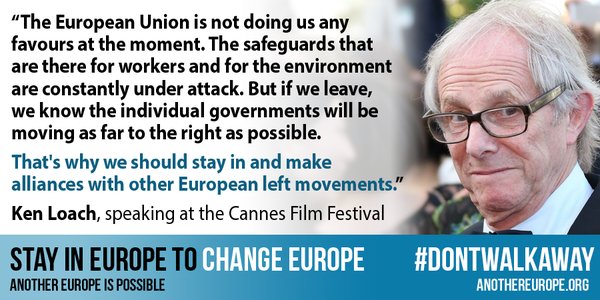
Postscript: Look at the image at the top of this article, showing a quote by filmmaker Ken Loach, in which he openly boasts that the chief advantage of the European Union is that it thwarts the will of democratically elected national governments. This is the toxic, antidemocratic position which left wing favourites like Owen Jones and Paul Mason have decided to embrace. Shame on them.


European Union - United Kingdom - Britain - Flags

Agree with this article? Violently disagree? Scroll down to leave a comment.

Follow Semi-Partisan Politics on TwitterFacebook and Medium.