Why Should Britain Help Germany Reform The EU?

David Cameron - Angela Merkel - EU - 2


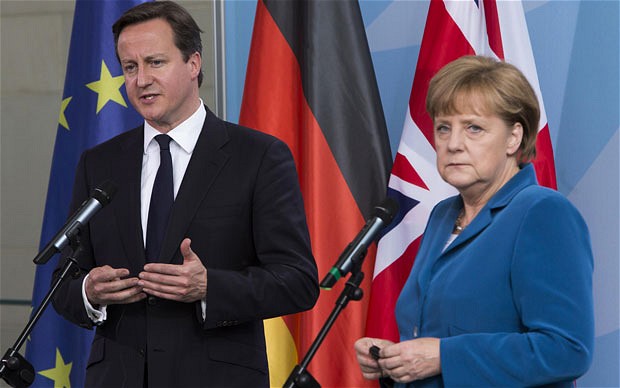
You have to hand it to Michael Fuchs, deputy chairman of Angela Merkel’s CDU party in Germany. If you genuinely want Britain to remain part of the European Union – for intentions noble or otherwise – the best way for other countries to achieve that outcome is by convincing the British people that they too are frustrated by Brussels bureaucracy, that they yearn for real reform, and envisage our humble selves at the heart of this great effort.

And this is exactly what Fuchs has done, presenting the face of German concern about Britain’s place in the EU while his ally Angela Merkel is preoccupied with the far more pressing matter of the Greek crisis.

From the Telegraph:

“I want the UK to stay in the EU, and I cannot even imagine an EU without the UK. I don’t want to imagine it,” [Fuchs] said.

“In particular, for us it’s not good because the UK is a partner promoting a free-market economy, much more than the southern hemisphere in Europe. [Some of these countries] want to have a more state-regulated economy, and the UK is more like us, for instance, like Holland and the northern hemisphere, so we would not be very happy to see it go.”

Mr Fuchs described Brussels as a “huge” bureaucracy that needed to be scaled back. “I fully agree with certain statements of [Prime Minister] David Cameron saying that Brussels need not be such a huge bureaucracy, with so much red tape.

“That’s quite important, I think, and we need Cameron’s help to change it.”

Unfortunately, when someone you normally expect to be an antagonist starts acting very friendly, there is usually an ulterior motive at play. Feigning concern for and agreement with a difficult negotiating partner is straight out of Hostage Negotiation Strategy 101, and just as the man in the FBI jacket doesn’t really care that your wife left you and isn’t really going to arrange that escape airplane filled with cash, so Germany isn’t really about to let awkward old Britain stop the wheels of an EU juggernaut which has been rolling and gaining momentum since the 1950s.

Continue reading

There Are Important Priorities Beyond Brexit And The British Bill Of Rights

David Cameron - EU Referendum - Brexit - Human Rights Act


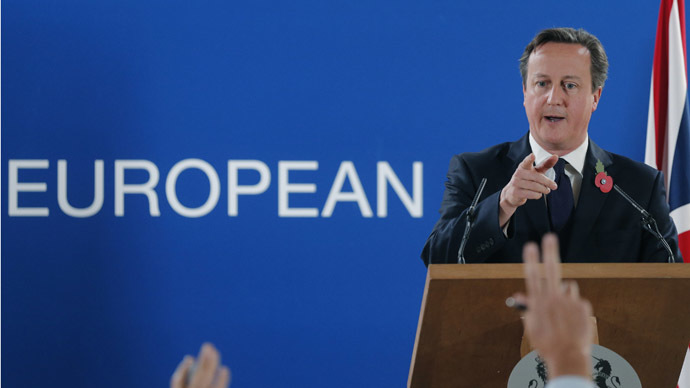
Janet Daley has a good piece in the Telegraph today, castigating the Tories for the way in which David Cameron’s government is rapidly turning the serious question of Britain’s future in the European Union into a farcical “pantomime”.

Taking the government to task for letting down those people who ‘kept the faith’ and voted Conservative in May, Daley laments:

But what a dispiriting carry-on it must seem to most voters, especially the ones who were really happy that they had kept their nerve and voted Conservative.

But here’s the money quote:

But our EU membership did not create the non-contributory benefit system in which people who have never paid in receive indefinite support. Nor did it give rise to our unique universal, free at the point of use, rationed health care system. And it certainly was not responsible for the poor educational achievements of so many young British people that companies prefer to import labour rather than cope with the shortcomings of our school standards.

This hits at an important question. Why is it that we want Britain to leave the European Union in the first place? And why do we actually want to unshackle ourselves from an international “human rights” mechanism that has been hijacked and turned into little more than a guarantor of social democratic dogma?

Continue reading

800 Years Of Magna Carta: Still Worth Celebrating, After All These Years

Magna Carta - 800 Years Anniversary - Human Rights - Freedom - Liberty - Britain - England


By Ben Kelly, blogger and editor of The Sceptic Isle.

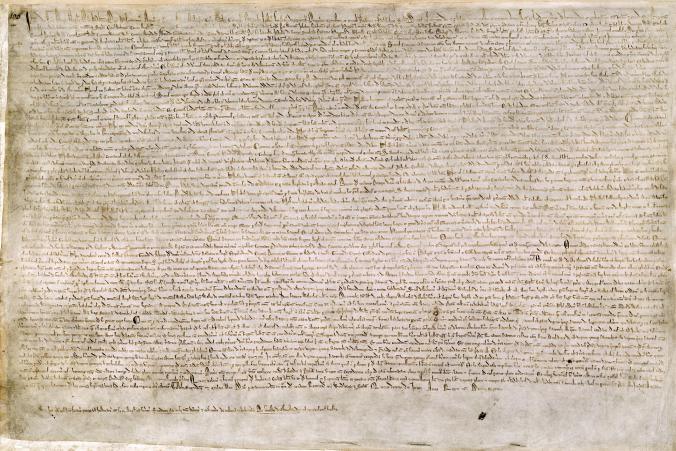
15 June 2015 marks 800 years since a rather famous charter was agreed by the unpopular King John at Runnymede, under pressure from a group of rebellious barons who had backed his failed war against the French and now sought to constrain him.

The severely weakened king had no choice but to bear witness to the sealing of what many now perceive as one of the world’s most important documents. It has become iconic, but it has its detractors. It is a favourite pastime of dry historians and politically motivated lawyers to pick the myth apart and express their disdain for the reverence shown to the old document.

It is quite true that we tend now to view it through rose tinted glasses after much historical revisionism and the creation of a national myth around the event.

The details of the actual event and the passage of the charter into law are often oversimplified or caricatured. The date which we will this year mark, and the document we celebrate, is revered in part because of the manner in which it has been used by those with a political agenda.

Continue reading

Farewell, Civil Liberties

Theresa May - David Cameron - Conservative Party - Civil Liberties- Free Speech


“For too long, we have been a passively tolerant society, saying to our citizens ‘as long as you obey the law, we will leave you alone'”David Cameron, 2015

Pick your poison.

What’s worse? A Labour government that ruins the economy and condemns millions of people to lives of hard subsistence, bleating all the while about how fair and progressive they are, or a Conservative government promising semi-competent handling of the economy but itching to trample away our precious few remaining civil liberties now that they are no longer restrained by coalition?

Britain voted for the latter on May 7 this year, and on balance this was probably the right choice in the short term. But with David Cameron back in Downing Street and Theresa May re-confirmed as Home Secretary, anyone remotely concerned about civil liberties and jealous of their existing freedoms will need to organise to stop them being steamrollered in a flurry of quick legislating while this Conservative majority government is still in its honeymoon phase.

The fact that David Cameron could utter such words as the head of government of a western country is absolutely appalling, and only reconfirms everything that this blog and many others have disliked about the current Conservative Party leadership for some time.

Gone is any sense of small-L liberalism, trusting the people to know and do what is best for themselves and their communities. And in its place comes a heavy-handed, hawkish paternalism, made all the more offensive by the patronising tone in which it seeks to assert control over our lawmaking.

Continue reading

Post-Election Left Wing Hate Watch

Tory Protests


I am angry. So angry. And I will take that anger to the streets when I can. I promise this. Because I’ll be mostly okay under a Tory government; I have a job, a home and a wonderful network of family and friends around as support. But I didn’t vote for me. I voted for society. Tory voters did not. Tory voters could not give a shit about anyone but themselves and their wallets. And I hate each and every one of you for this.

– Gareth Bundy, blogger and moralist


As this blog has noted, furious rants like this are not unusual among left wing activists. They were frequent before the election, and they have only increased in tone and volume as the Left lick their collective wounds after an unexpectedly heavy defeat.

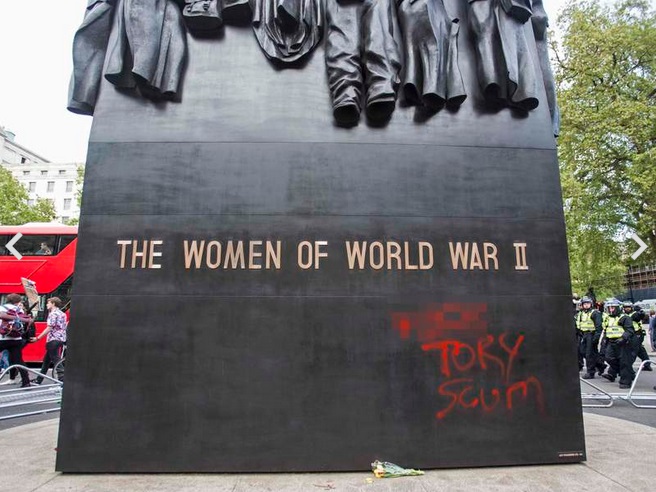
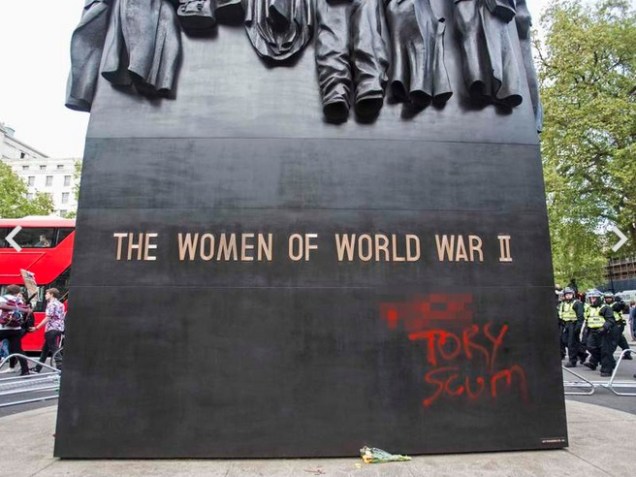
So long as they remain the preserve of crusading online moralists such as Gareth Bundy – or the people who, in their sickness, deface a London war memorial – this is not really noteworthy. The problem is that many non-activist Labour supporters, normal people who have marinated in the same left wing groupthink since at least 2010, quietly concur with the anti-Tory hysteria currently consuming the Left.

Used to hearing anti-austerity arguments and accepting them uncritically, it is taken for granted by many people that conservative ideas are inherently selfish and evil, and that people who vote Conservative (or, god forbid, UKIP) are heartless monsters, idiotic dupes at best and eager participants in a genocide of the poor and disabled at worst.

This is not to say that left wing ideas are not misrepresented, attacked or ridiculed by those on the right – they often are, and one certainly finds comments section bores and internet trolls of all political stripes. But at the moment, it is a particularly acute problem for the British left, because so much of the angry, activist hyperbole is accepted as truth by society and the popular culture. Of course Labour want to help the poor. Of course the Conservatives only govern in the interest of their rich friends.

The truth is never that simple. There is good and bad in everyone, and in most political parties – but many on the left do not want to see this. While those on the right tend to see their left-leaning fellow citizens as misguided or naive, the Left are increasingly inclined to view conservative ideas as inherently evil.

According to this blinkered mindset, someone can only possibly support the Tories out of a selfish concern for their own wallet or business prospects, certainly not because they believe conservative policies might actually do the most good for the most people. This is particularly ironic given the fact that many Labour policies consist of nothing more than conscience-soothing exercises in money-bombing intractable social problems, failing to tackle the root causes and trapping millions of people in lifelong dependency.

Besides, the Conservative government whose victory plunged the Left into such a deep depression is hardly truly conservative at all, having enthusiastically adopted the language and many of the policies of the left in their desperate bid to stay in power.

Universal benefits and free perks for even wealthy pensioners? Check. Support for nationalised healthcare? Check. Run down national defence to prop up bloated but protected social spending? Check. Support Britain’s continued membership of the EU (as David Cameron does)? Hell yes!

But so common is the perception that the Tories are the “nasty party” – and that conservative policies are inherently regressive, embraced only through personal selfishness – that the Conservatives could only win their election victory by dressing up in Labour Party clothing. And still people who were planning to vote Tory were so hesitant to admit their preference that the polls consistently failed to predict the scale of David Cameron’s eventual victory.

The Labour Party can make a serious, good faith effort to understand the nature and scale of their defeat, or they can retreat into the angry denialism favoured by some of their most ardent supporters – and as they did in 2010 when they chose Ed Miliband as their leader. At present, there are few encouraging signs that the British Left will take the higher road.

Far easier to just keep shouting “Tory scum, off our streets!”