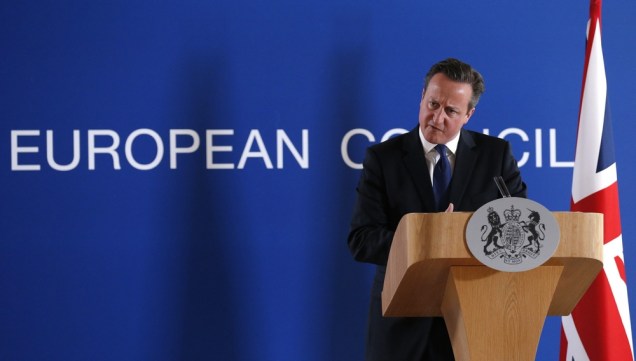
Cameron’s EU Deal – Reaction

BELGIUM EU SUMMIT

Didn’t he do well?

As our victorious prime minister returns to London to chair the fateful cabinet meeting which will now likely set the wheels in motion for a June referendum, it’s worth taking a brief survey of how David Cameron’s deal – essentially an embossed, artfully decorated statement of the status quo – is being received.

The division between those who are angry or depressed and those who are buoyantly cheerful really tells you all that you need to know.

Toby Young bristles at being asked to greet the status quo like a shiny new present, but recognises that such a devoutly europhile prime minister could scarcely be expected to to any better:

The attempt to spin this deal as a great victory, which grants Britain a “special status” within the EU, is unlikely to win the Prime Minister many friends. On the contrary, it may end up alienating people who haven’t yet made up their minds who will feel they’re being taken for fools.

[..] Crucially, the EU leaders made it clear that there won’t be any further reforms, at least none that will mean a transfer of powers away from the centre. So Downing Street won’t be able to spin this agreement as the beginning of a reform process rather than the EU’s best and final offer.

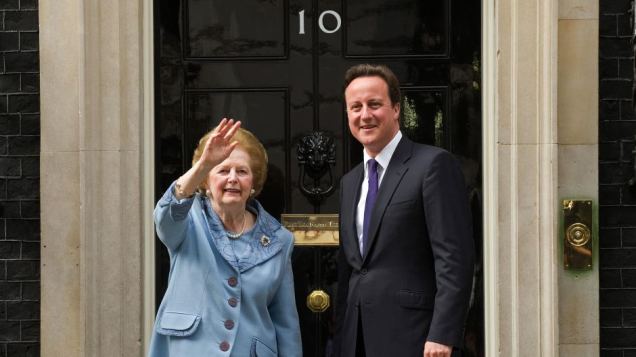
Many of the “wins” Cameron boasted about in his speech were just assurances that the EU isn’t going to take away the protections for Britain already won by Margaret Thatcher and John Major. We won’t be forced to join the euro! Whoopee doo.

Tim Stanley channels his inner Tony Blair and declares Cameron’s pitiful outcome to be “weak, weak, weak”:

David Cameron’s deal with Europe is weak, weak, weak. It could never be anything but. Why? Partly because the Prime Minister is an inveterate Europhile.

He approached these negotiations from the stance of someone who ultimately wanted to stay in – and how could he negotiate from strength when everyone around the table knew that he was bluffing? More importantly, the idea that Britain can build for itself a “special status” within Europe is pure fantasy.

The EU cannot be decentralised; the UK cannot prosper on its fringes. The only real choice is between the status quo and Brexit.

[..] The Europeans made it clear from the outset that there would be no rewriting of the fundemantal principles. Rightly so: one country cannot determine the direction of travel for the entire continent. And if one country gets to pick and choose its own rate of integration into the new super state – why, everyone else will want to do the same.

So Cameron could never have been given substantial reforms because just putting them on the table would have jeopardised the grand European project. We have reached a point in the history of the EU when what Britain needs and what Europe wants are no longer compatible. The only logical thing left to do is to leave.

Paul Goodman compares David Cameron’s loftily declared original list of renegotiation objectives with the limp and shrunken prize he now holds in his hand – and he makes the choice facing Conservative MPs crystal clear:

Many Conservative MPs told their voters and Associations at the last election that Britain’s relationship with the EU cannot go on as it is.  They are fully entitled to say now that they have changed their minds.  That they have been persuaded that Britain’s future is brighter as an EU member state.  That they will swallow any misgivings they have about the deal, and back their Party leader – who, after all, is on some measures the most successful Conservative leader of modern times bar Margaret Thatcher.  That this is no time to campaign for a referendum result that would turn an election-winning Prime Minister out of office, and destroy the reforming work of the first majority Tory Government in over 20 years.

What they cannot say, if they have declared that Britain’s relationship with the EU must see real reform, is that this deal makes a difference.  And if they want to see such change, the lesson of this summit is that it isn’t on offer.  Which leaves only one option open to them, and to Party members of the same mind – to back Brexit.

Meanwhile, the Guardian is priming its core audience of nodding-dog virtue-signallers with key arguments to use against Brexiteers, and confirms what any thinking person knows – that the ultimate decision has nothing to do with David Cameron’s non-existent concessions from Brussels:

First of all, the details of the deal are not the crucial issue. Months ago, when David Cameron revealed his renegotiation agenda, it was already clear that this was not going to be a fundamental redefinition of Britain’s relationship with the EU. Nor would we suddenly find ourselves in “a reformed Europe”. On this, Eurosceptics are right: Cameron’s demands were less than he pumped them up to be, and inevitably, given that 27 other European countries had to be satisfied, what he achieved is even more modest. But it would be madness to let a decision about the economic and political future of Britain for decades ahead hinge on the detail of an“emergency brake” on in-work benefits for migrants.

New Europeans – that pressure group of proto-EU citizens waiting impatiently for the new  European that they crave to finally hatch – are happy too:

The Prime Minister has secured his so-called “emergency brake” on in-work benefits paid to mobile EU citizens coming to Britain. However, it will not be his hand that is on the brake, despite his announcement to the contrary.

The brake is in the hand of the Council.  The Council may be ready to pull the brake for the UK already – but it is still the Council’s hand on the brake. The European Parliament would need to pass the necessary legislation.  So the earliest the legislation could be in place is 2017.

The emergency brake will operate like the transitional arrangements – after 7 years it will drop away. In the meantime, very few people will be affected because mobile EU citizens rarely apply for in-work benefits in the first four years. There is very little evidence to show that EU citizens are claiming in-work benefits on arrival in Britain.

[..] The potential savings from David Cameron’s “clamp down” on other benefits for mobile EU citizens are trivial and petty in the context of the national accounts. They amount to about £30m on some estimates. This is less than what it costs to run the Royal Opera House.

And they are right – the main “headline concession” that David Cameron managed to secure from Brussels remains entirely in the hands of the EU rather than Britain, and would make absolutely zero tangible difference to anything whether it is ultimately pulled or not.

These people have no reason to lie. They are the people who were potentially most affected by any major changes that David Cameron might have negotiated, so their relief (bordering in crowing) is absolutely genuine – and utterly damning of Cameron’s claim to have fundamentally changed our relationship with the EU.

Back to Tim Stanley for another eloquent denunciation of this brazen establishment stitch-up:

There are a million reasons to hate politics: the groupthink of the establishment is one of them. Cowardice is another. It’s like being governed by jellyfish: spineless synchronised swimming in one terminal direction.

For years Tories have used the issue of Europe to win votes, promising us either serious reform or a campaign to leave.

But not only was David Cameron’s renegotiation effort a paper tiger (Francois Hollande: “Just because it lasted a long time doesn’t mean that much happened”) but now the Cabinet has largely decided to follow its leader and back the In campaign.

[..] The entire weight of the state, media and big business will fall behind a campaign saying that Europe is good for us even if, from a distance, it appears to be a giant ball of flame hurtling into an abyss of despair.

Against this confederacy of dunces stands a small number of politicians brave enough to risk friendships and careers to tell us the truth – that this deal is a sham, the EU is dying and Britain is better off out.

I myself have nothing to add at this time. Others have already encapsulated what I feel, and said it better than I could – most notably Dr. Richard North at eureferendum.com, who echoes my reference last night to Neville Chamberlain:

Mr Cameron may have in his mind’s eye the image of Prime Minister Neville Chamberlain returning from Munich in 1938, triumphantly waving his “piece of paper” at Heston Airport (where the M4 service station now stands), but at least Mr Chamberlain’s “deal” bought us critical time, allowing us to re-arm sufficiently against the Nazi menace.

But this piece of paper is nothing but a fraud – a pretence. This Prime Minister has brought nothing back, nothing of substance, and is now intent on using is as the basis for a referendum where he is intent on selling his snake-oil “special status”.

Yet, all the time, Mr Cameron’s efforts have been a sideshow besides the main event – the real renegotiation under way to transform the 19 members of the Eurozone into a single state. That is the EU real agenda not the stage-managed drama of the Prime Minister emerging blinking into the light and announcing he has secured our future for a generation.

Nor should we assume that the Brussels barons will treat us kindly if we vote to remain in the EU. They will brush aside future British protests, telling us that we have had our chance to do things our way and rejected it. Our prospects sitting uneasily on the margins of the emerging superstate will not be promising. Unloved, ignored and marginalised, we face an uncertain, even risky future, on the outskirts of the new European empire.

But I, and this blog, will have much to say as we now fight onward to the 23 June referendum date. And those politicians who built their jealously-guarded careers and reputations on what turns out to be paper-thin euroscepticism should expect no understanding and no mercy.

The divided Leave camp has been caught napping – Cameron is going to the country with a desultory deal, entirely based on the belief that we are so divided that we will not be able to mount an effective Remain campaign – and by publicly embracing people like George Galloway, it seems that some of us are determined to prove him correct.

If you haven’t been paying attention so far, or have only half tuned in, then now is the time to perk up and fulfil your duty as an engaged citizen. We have just four months to win our freedom from the European Union and, if we succeed, potentially spark a renaissance of real democracy through Europe.
BELGIUM-EU-BRITAIN-POLITICS

Agree with this article? Violently disagree? Scroll down to leave a comment.

Follow Semi-Partisan Politics on TwitterFacebook and Medium.

The Daily Toast: Iain Dale Is Right, Boris Johnson The EU Agnostic Is No Leader

Boris Johnson - EU referendum

Any politician who has not yet stated their position on Brexit is politically calculating, not genuinely agnostic, and forfeits the right to call themselves a leader

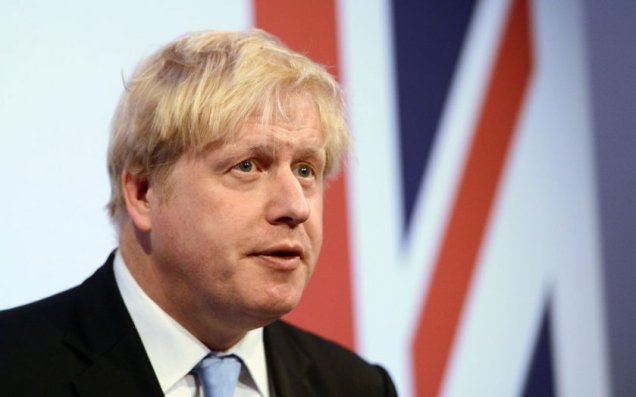
Iain Dale makes the short and convincing case that Boris Johnson is a man of absolutely no conviction on the most important issue of the day, and that consequently he should not be looked up to as a potential Conservative Party leader or prime minister.

Dale writes in Conservative Home:

Potential prime ministers need to be leaders, not followers. The fact that we won’t find out until today which side of the EU argument Boris Johnson will fall down on says a lot. We all know that he’s not a genuine Eurosceptic, so for him to continue to flirt with the Leave campaign tells us much about his political calculation.

I still think he will ally himself to the Prime Minister in the end, but let’s assume he doesn’t. Does anyone believe that such a move would be fired by genuine political conviction? Of course not.

In such circumstances, he will have calculated that if he becomes the de facto public face of the Leave campaign and that Britain then votes for Brexit, David Cameron would have no alternative but to resign – and that he himself would become party leader by acclamation.

Such a calculation may be right. But it would make Frank Underwood and Francis Urquhart look like amateurs. Some people may think that wouldn’t be a bad thing. I think it would stink.

Meanwhile, the Independent breathlessly “war-games” all of the possible outcomes, focusing on the most important thing in this entire EU referendum debate – the consequences for Boris Johnson’s precious career:

It’s decision time for Boris. Having spent months – if not years – teasing David Cameron (and the rest of us) as to whether he is an ‘outer’ or an ‘inner’ the time is fast approaching when the Mayor of London and possible future Tory leader (and Prime Minister) will have to make up his mind which side he is going to back in the EU Referendum.

Boris calls for Brexit – but the country says we want to stay.

This would be the worst of all worlds for Johnson’s burning ambition. He would have staked his reputation on a ‘leave’ vote and been rejected by the voters. He would be punished by Cameron and left to languish on the backbenches. His electoral mystique would be shattered and his chances of succeeding Cameron would disappear. Johnson knows this – and that is why he is so reluctant to take such a big risk and nail his colours to Brexit.

No, the time for Boris Johnson to make up his mind is not “fast approaching”. That time is now a rapidly-shrinking dot in the rear-view mirror.

Boris Johnson apparently aspires to lead the country. Real leaders (not that we have seen one in awhile) set out their vision and inspire, persuade, cajole or threaten their followers to march on toward their chosen destination. They do not wait to see which direction the majority of their flock split before sprinting to the front of the column and pretending to have been leading them all along. They do not skulk quietly at the back, grinning and flirting with both sides of an existential debate and hedging their bets until the last possible moment.

For a biographer and self-professed admirer of Winston Churchill, Boris Johnson is almost singularly lacking in any of the key qualities of our great wartime leader. Winston Churchill endured many years in the political wilderness due to the unpopularity of his political beliefs – beliefs which he expressed loudly and eloquently, whether they were right or wrong, wildly popular or deeply unfashionable. Churchill did not hedge his bets by making ambivalent noises about Nazi Germany’s re-armament in the 1930s – he railed against Hitler and strongly opposed the policy of appeasement, at a time when many in the country preferred to bury their heads in the sand and avoid facing reality.

Boris Johnson, by contrast, puts his own career first, second and third. And if he does have strong feelings one way or another about Britain’s membership of the EU, they are firmly subordinate to his concern for his own personal advancement. Yet he gets a free pass from the media on account of his bumbling persona and the fact that he is endlessly quotable, even when (as is nearly always the case) he is actually saying absolutely nothing of any importance or lasting value.

We have had leaders who care primarily about their public image and personal career advancement before. We have one now. Boris Johnson would just take this trend to its logical conclusion: the pursuit and holding of power as the first and only objective, with any core principle liable to be cast aside if doing so will help to shore up the incoherent centrist coalition of a support base – support which may be a mile wide but only an inch deep, as Tim Montgomerie warned on his recent departure from the Conservative Party.

Richard North says it best when it comes to the media’s obsession with Boris Johnson’s conspicuous fence-sitting:

Having to contend with this obsession, I have advanced, is like being a policeman attending a multiple car pile-up while a passer-by attempts to talk to him about their pet hamster.

If and when Boris Johnson finds it within himself to act like a leader, we should reconsider giving him the time of day. But so long as he continues to act in such a nakedly self-serving and principle-free way, the media should stop reporting on Boris’s dithering and start holding to account those people who actually have the courage to publicly declare their positions.


EU Democracy - Brexit

Agree with this article? Violently disagree? Scroll down to leave a comment.

Follow Semi-Partisan Politics on TwitterFacebook and Medium.

What Conservative Government? – Part 3, Tim Montgomerie Edition

David Cameron - Margaret Thatcher - Coke Zero Conservatism

You, sir, are no Margaret Thatcher

Tim Montgomerie has finally had enough. He is embarking down the lonely path of exile trodden by many of us who remain deeply proud to call ourselves conservatives (with a small C), but who feel absolutely no connection, affinity or devotion to the ideologically shapeshifting, centrist machine led by David Cameron. And he is resigning his membership of the Conservative Party.

Montie signs off with this warning in the Times:

The PM will no doubt treat with disdain my resignation like the departure of tens of thousands of once-loyal grassroots members who have already walked away. But one day an opposition party will get its act together or a wholly new party will emerge. At that point there’ll be a realisation that the Tories’ 40-odd per cent in current opinion polls was a mile wide but an inch deep; reflecting disappointment at alternatives rather than allegiance.

And at some point Britain will notice that the Conservatives didn’t fix the roof when the sun was shining. That we will head into the next economic downturn with the public finances still in precarious shape, with vital airport runways unbuilt and banks too-big-to-fail as big as ever. And if Mr Cameron gets his way we’ll still be powerless to control immigration from an economically turbulent, declining EU, of which we will be an impotent member.

But why desert the Tory party now that they finally hold a majority administration for the first time since 1997?

Tim’s reasons are exactly what you would expect – the abysmally centrist, soul-deadeningly unambitious agenda which has been set by David Cameron and George Osborne since 2010, and which this blog has been constantly condemning since I began writing back in 2012.

The Conservatives are supposed to be the party of fiscal responsibility, and yet the national debt has nearly doubled under George Osborne’s watch, while he struts and crows about his meagre attempts to reduce the annual budget deficit.

The Conservatives – at their best – lift people up out of disadvantaged circumstances and help them to realise their own innate potential, rather than trapping them in a life sentence of government dependency and subsistence. But David Cameron’s government has been half-hearted on housing, on infrastructure, on welfare – kicking the can down the road, and pandering to their wealthy, older, property-owning base at every turn.

The Conservatives are meant to be the party of a strong national defence, but under David Cameron the military has been pared back to the bone, with many essential capabilities (like maritime patrol aircraft) eliminated entirely just when they are needed most, and our aircraft carriers – crucial to maintaining Britain’s status as a world power with expeditionary military capabilities – decommissioned, with their replacement not due to come online until 2018.

The Conservatives are meant to be the party of national sovereignty and of patriotism, and yet in David Cameron we have a prime minister who only glibly and unconvincingly talked the eurosceptic talk, and who is currently perpetrating a fraud on the British people with his cosmetic and entirely irrelevant “renegotiation”.

And one might add (though Tim Montgomerie did not mention this in his resignation letter) that the Conservatives traditionally stood for individual liberty, and the right of the people to go about their lives unmolested and undisturbed by government. But David Cameron’s government – with its creepy “plan for every stage of your life” – is determined that the state involve itself in as much as possible, and has cynically exploited national security concerns to roll back civil liberties and undermine privacy.

But enough of me – I’ll let Montie speak for himself:

Could David Cameron be much more different [than Thatcher]? He promised to bring down immigration but despite Theresa May’s hollow rhetoric, it’s rising. And that defining mission to eliminate the deficit? The Treasury is still borrowing £75 billion a year — a burden on the next generation that would once have shocked and shamed us, and still should. The national debt is up by more than 50 per cent, but this hasn’t seen our armed forces rebuilt. They’ve been cut to the bone.

What about fundamental change in Britain’s relationship with Brussels that the PM pledged, promised and vowed to deliver? The 69 per cent who think he got a bad deal are right. The newspapers that called the deal a “joke”, “conjuring trick” and “delusion” weren’t exaggerating. But it took the Fourth Estate rather than Tory MPs to point out the emperor’s naked state. With a few honourable exceptions Conservative parliamentarians were silent when Mr Cameron, pretending to have changed anything that matters, stood at the same dispatch box at which Mrs Thatcher vowed to fight European integration.

This criticism is spot-on. It has been particularly galling in recent weeks to see just how few current Tory MPs – particularly of the newer intakes – have continued to voice the principled euroscepticism which they were only too happy to display while flaunting their wares to their local constituency party selection committees.

The EU referendum is not just another political issue to be legitimately haggled over by MPs who broadly share the same outlook. This isn’t an arcane policy debate or a minor difference of opinion over fiscal policy – it is absolutely fundamental to how Britain will be governed for the next decades and beyond, and the fact that so many Conservative MPs choose loyalty to their chameleon-in-chief over their constituents and their country is profoundly depressing.

Montie goes on to warn that the Conservative Party will not have the fortune of a weak and divided opposition forever – and that the narrow window for effecting real radical conservative reform is being missed:

For the moment Mr Cameron can get away with all of this. Labour moderates are no nearer getting rid of their extremist leader than when he was elected. It will probably take a generation before northern England and Scotland trust the Lib Dems again. And Ukip, although resilient at double figures in most opinion polls, is too Trump-ian to mount a credible challenge for power.

Faced with a weak, divided opposition in the 1980s Mrs Thatcher moved the country forward. She seized the opportunity to deliver tough reforms that a more effective opposition might have stopped. Today, David Cameron and George Osborne are doing little that Blairites or Cleggites could object to. I recently asked Peter Mandelson what separated his politics from that of Mr Osborne. He joked that the top rate of income tax was too high. At least I think he was joking.

This is also true. And Tim Montgomerie rightly acknowledges that there may well be short-term electoral dividends to be won with a doggedly centrist approach. But only if winning elections is all you care about. If you actually want to do something useful and positive with the power you wield, then the Cameron/Osborne approach is nothing short of a disaster.

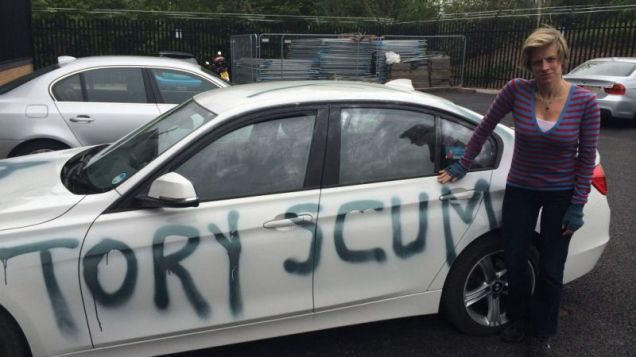
As I have written many times before on this blog, the unhinged, virtue-signalling British Left are determined to see the current Conservative government as some kind of ideologically extreme, Thatcher-on-steroids, evil and inhumane government, despite the fact that in reality the government is profoundly centrist. Ed Miliband first started allowing this narrative to take hold as he sought to buy breathing space for his party back in 2010, but six years on and the Labour Party are now in the midst of being devoured by the ‘Tory Scum’-roaring beast that they unleashed.

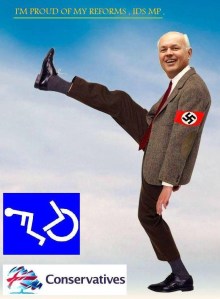
And since anything that conservatives of any stripe now do will automatically and reflexively be painted by the Left as malevolent and evil, there is absolutely no point in trying to curry favour with the centre-left by copying New Labour policy on taxes, wage controls or anything else. Since the hysterical Nazi comparisons are going to come flying at us come what may, we should at least be using this time of limited and disorganised opposition to boldly enact a radical conservative agenda, much as Thatcher did in the mid 1980s. But this is not happening, and Montie’s resignation suggests that he has given up hope of a change in strategy, even after Cameron goes and is (likely) replaced by Osborne.

And who can blame him? I saw the writing on the wall when I moved back from Chicago in 2011, as it became clear that Cameron’s ideological caution was not a function of being in coalition with the LibDems, but was actually his true, authentic self. And so I never rejoined the Conservative Party back then. But if I had, I too would be cutting up my membership card in solidarity with Montgomerie.

I’m currently reading an excellent book – “Thatcher’s Trial”, by Kwasi Kwarteng, the Conservative MP for Spelthorne. The book focuses on the early days of Margaret Thatcher’s premiership, specifically the period from March to September 1981 when she had to negotiate a difficult Budget and ultimately reassert her authority with a bold Cabinet reshuffle.

I’m only half way through Kwarteng’s book, but the portrait he paints is a true profile in courage – somebody with firm and unyielding principles, a strong ideological compass, a righteous hatred for consensus politics and the ability to impose her will on her party and her country. In short, Kwarteng is describing everything that David Cameron, Thatcher’s successor, is not.

Back when Jeremy Corbyn was on the cusp of being elected leader of the Labour Party, this blog asked:

If David Cameron’s Conservative Party was voted out of office today, what will future historians and political commentators say about this government fifty years from now? What will be the Cameron / Osborne legacy? What edifices of stone, statute and policy will remain standing as testament to their time in office? Try to picture it clearly.

Are you happy with what you see?

I genuinely don’t know what legacy David Cameron thinks he is building through the course of his rootless premiership. But it is not a legacy with which I wish to be associated in any way.

It has been lonely these past few years, being a conservative without a party at a time when political opponents assume we must be thrilled with David Cameron’s every slick and insincere pronouncement. But at least we now have Tim Montgomerie to keep us company in our solitude.

Now, the first order of business for the inaugural meeting of Conservatives in Exile: how do we get our party back, and save it (and the country) from Cameronism?


Britain's PM Cameron arrives to pose for a family photo during an EU leaders summit in Brussels

Agree with this article? Violently disagree? Scroll down to leave a comment.

Follow Semi-Partisan Politics on TwitterFacebook and Medium.

Only The Brave Now Dare Admit To Being Conservative Or Eurosceptic

Tory Scum - Graffiti Car

When ordinary people with perfectly mainstream opinions are hesitant to express themselves for fear of being accused of racism, prejudice, stupidity or worse, our democracy is in real trouble

If you voted Conservative or UKIP at the 2015 general election, you could be forgiven for wondering where the other fifteen million people who made the same choice are currently hiding themselves. David Cameron’s leadership may be uninspiring and his government’s achievements few, but these are hardly the paranoid, dying days of the Brown government – ordinarily there should still be a level of authentic, spontaneous support to be found out and about the country.

Equally, you may wonder how on earth it was possible for Ed Miliband and Labour to have lost that election, given the fact that social media and popular culture roar their hatred of the Evil Tories louder than ever, that it is almost impossible to find kindred spirits willing to admit to voting Conservative or UKIP, and the fact that conservative policies and beliefs are routinely derided as ignorant and selfish at best, and violent and vengeful at worst.

The current political environment can be quite lonely for anybody with conservative leanings – and it makes one wonder why the people who delivered David Cameron his House of Commons majority and propelled UKIP into a remarkably strong third place are so desperate to avoid drawing attention to themselves.

There have been a couple of worrying pieces in the media this week which highlight the fact that furious open hostility toward anything vaguely conservative or eurosceptic – often emanating from a small but determined band of opposing activists – is having a chilling effect on the political discourse and preventing small-c conservatives from openly articulating their opinions.

First, the Independent carries a letter from former Labour MP Tom Harris, who only felt able to “come out” as a eurosceptic after having left elected office. Sounding as though a weight had been lifted off his shoulders, Harris writes:

I was never a fully paid-up member of the Euro team. Early signs of unsoundness manifested themselves in my outright opposition to British membership of the euro when it was first launched. The whips’ office had its eye on me after I added my signature to a letter, back in 2002, warning the then Chancellor, Gordon Brown, to resist committing to abolishing the pound. And once you’ve decided to oppose that central mechanism for the creation of a European superstate, it’s a fairly short step to being painted as “anti-EU”.

But my instinct to vote Leave (probably running at 53 to 55 per cent right now) is not something that can be confessed in polite middle-class company. Such an admission might too easily be interpreted as a dislike of foreigners or, worse, a tolerance of Nigel Farage.

[..] The question is precisely the same one we were asked in 1975: should we stay or should we go? In the meantime, if asked over dinner how I intend to vote, I’ll do the sensible thing and change the subject to the range of breads in the Marks & Spencer food hall. Or The Archers.

And follows up in the Telegraph:

As for me, I will continue to pursue this enigma known as “the normal life” by having, expressing, then rejecting various opinions. No doubt they will be variously correct, wrong, misplaced, insightful and dangerous. I may believe in all of them, some of them, or none of them.

What’s it to you?

But among Labour circles and much of the wider Left, it is simply no longer “permissible” to hold eurosceptic views, or to believe that Britain’s democracy and vital national interests would be better served by leaving an explicitly political and ever-more closely integrating union which we never realised we were joining in the first place. The Tories are perceived to be eurosceptic (even though many of them are not), and so the prevailing dogma has it that one must be pro-EU to be anti-Tory.

Aside from the few brave (and mostly decidedly retro) souls who form Labour Leave, the question of Britain’s ongoing EU membership simply is not up for discussion. And to express any doubt whatsoever about Britain playing an enthusiastic part in this European political union is seen as treachery, automatic disqualification from membership of the movement.

Look at Jeremy Corbyn’s reversal on the issue. Love or hate Corbyn, he has been willing to stand up to a mostly hostile Parliamentary Labour Party on issue after issue, from military action in Syria to the Paris attacks to the question of Trident renewal. On all of these issues, the Labour leader has proven himself willing to enrage many of his MPs by holding firm to his deeply held convictions.

But what of his eurosceptic convictions? Jeremy Corbyn has been a lifelong eurosceptic, and voted for Britain to leave the European Community in the 1975 referendum. Corbyn holds this view about as strongly as any other, and yet it was on this issue alone where he instantly capitulated to the establishment and became a pro-EU advocate. What should rightly be a non-partisan issue pertaining to sovereignty and self-determination is instead imbued with nearly the same cultural weight and quasi-religious fervour as one finds in the American culture wars. Such is the power of the Left’s infatuation with the EU.

Jeremy Corbyn - EU Referendum - 1975 - Eurosceptic

The second article of concern is this worrying testimonial from a conservative-leaning history supply teacher who found himself drummed out of the school where he taught because colleagues complained when he failed to join in their frequent denunciations of the Tory government and all things conservative.

Joe Baron writes in The Spectator:

After keeping schtum for two months, I finally challenged a colleague’s view of the Tories. ‘Why are Tory voters thick?’ I asked. ‘Is it just because they happen to disagree with you?’

‘No,’ he replied. ‘Because they voted for cuts’.

‘Perhaps they saw the cuts as necessary,’ I said. ‘Surely it’s better to make savings now, rather than keep spending money we don’t have, go bankrupt and, like the Labour government of 1976, be forced to make even deeper cuts after going cap in hand to the IMF.’

‘That’s rubbish!’ said another colleague. And so it continued, though no one actually raised their voices, until they brushed off my argument with a blasé ‘yeah, yeah, yeah’ before gesturing towards the office door as if dismissing a recalcitrant child.

If Joe Baron had been loudly and forthrightly expressing his views in favour of Ed Miliband and the Labour Party, he would have been met with a chorus of approval and the respect of his colleagues. But in choosing to defend conservative ideas like government fiscal responsibility and personal self-sufficiency, Baron chose another path. A darker path:

I was called into the head’s office and told that, after a complaint from colleagues in my department, the school would no longer require my services. So I was effectively being dismissed for holding the wrong views, though of course the head dressed it up in a different garb: it was my manner rather than my opinions. Apparently I was ‘too assertive’.

As I remember it, my interlocutors were both red-faced and angry, and more than willing to use inflammatory language. I was told, at one point, that I was unfit to teach.

Interestingly, the head of department who refused to work with me — effectively calling for my dismissal — had several weeks previously decried the cruelty of zero-hours contracts. Where was her left-wing compassion when it came to sacking me, a married man with two children to support?

I suppose I’ve only got myself to blame. For a brief moment, I deluded myself into believing that schools actually encouraged tolerance and the questioning of orthodoxies through intellectual exploration, freedom of thought and speech. How silly of me.

Both cases – Tom Harris the former MP and Joe Baron the supply teacher – are examples of the visceral, real-world retribution which is threatened (and sometimes carried out) by those on the Left against people who have committed the thought crime of being a conservative. And this climate of anti-Tory hate-mongering not only distorts our political discourse, but undermines the health of our democracy, whose proper functioning relies on people with political differences being able to speak their consciences in good faith.

My own personal experience of this phenomenon has thrown up more depressing anecdotes than I can relate here. Friends who have sat next to me on the couch shouting at the television when one smug-faced Question Time panellist (or audience member) after another have deliberately misinterpreted and sanctimoniously condemned Nigel Farage or David Cameron, but who fall fearfully silent when the inevitable anti-Tory hate mobs form around the water cooler or on social media.

Or the senior PR executive I was chatting with at a recent event for the launch of Dan Hodges’ excellent chronicle of the 2015 general election, “One Minute To Ten”, who furtively looked around and dropped her voice to a hushed whisper before confiding to me that she actually voted Conservative, picking David Cameron over Ed Miliband.

Or the look on the faces of people I speak with in my hometown of Harlow, Essex, at the precise moment when a voice in the back of their head tells them to self-censor their speech and hold back their real opinions, for fear of ridicule or attack. They may have re-elected an excellent local Conservative MP in Robert Halfon, but few are willing to proudly and publicly stand by their decision months later, away from the privacy of the polling booth.

You just don’t see this same reticence on the other side. For a political movement which makes a great performance of supposedly being the voice of the voiceless and most marginalised people in the country, left-wingers have a near monopoly in many areas of the public discourse, particularly in the arts and entertainment sectors. And there are far fewer occasions or settings where it is necessary to pause and “read the room” before confessing one’s left-wingery than there are situations where conservatives have brutally learned the wisdom of self-censorship.

The problem is that it is not just the unhinged crazies sharing misspelled memes on the internet and typing in ALL CAPS below the line on news website articles. People like that exist on all points on the political spectrum from left to right, and the misogynistic ranting of one barking CyberKipper no more represents UKIP than the conspiratorial, anti-Semitic sermons of a self-declared Corbyn supporter reflect on Labour.

No, the real problem is the softer bigotry of bien-pensant public opinion – the arrogant assumptions of the dinner party set, well-heeled professional people in the office or having dinner at Carluccio’s – the middle class clerisy, Brendan O’Neill called them. Their willingness to lazily believe and repeat hysterical left-wing smears about conservatism and to virtue-signal in front of their friends by flaunting their vague and incoherent opposition to the Evil Tory government are the problem.

And it becomes a self-fulfilling prophecy. The more that left-wingers openly flaunt their views while attacking or shunning anybody who thinks differently, the more likely they are to only ever hear ideas and opinions which chime with their own worldviews, and falsely assume that they are universal.

But it’s not true. The 2015 general election proved that there is no silent left-wing majority in Britain, and there will be no “rainbow coalition” of left-wing political parties coming together to kick the Evil Tories out of office any time soon.

In fact, the only question is how much longer the Left can continue to punch above their rhetorical weight before the British people finally tire of the sanctimonious yapping of a bunch of ideologically incoherent, virtue-signalling, anti-aspirational opportunists and the temper tantrum they are throwing in the face of a very mild and utterly unremarkable centrist government.

How much longer will the silent majority-makers of this country be willing to silence themselves, censor their speech and edit their public opinions solely to avoid the screeching disapproval of these losers?

Right now, it may be hard for some to “come out” as conservatives. But the Left are loudly and brazenly overplaying a very weak hand, and the sooner that more of us start calling them out on it, the easier it will be for more people to stand up and take pride in not being just another centre-left drone.

Iain Duncan Smith - Tory Scum - Conservative Party - Nazis

Agree with this article? Violently disagree? Scroll down to leave a comment.

Follow Semi-Partisan Politics on TwitterFacebook and Medium.

Bilbo Baggins Dials Back The Anti-Conservative ‘Tory Scum’ Rhetoric

Martin Freeman – the artist best known as Bilbo Baggins / Dr. Watson – now says that it is wrong to call conservatives ‘evil’. But that’s not what he was hinting before the general election…

Now that he is no longer shilling for Ed Miliband and the Labour Party, actor Martin Freeman has come over all thoughtful and introspective.

Well, everything’s relative. But in a new interview given to the pretentious Rake magazine, Freeman pontificates that it is wrong and unfair to call Tories and those with conservative political opinions “evil”.

The Spectator notes:

In an interview with The Rake, Martin Freeman — who starred in Labour’s election broadcast when Ed Miliband was leader — says it’s unfair to call all Tories ‘evil’, as the left has been responsible for more deaths in recent years.

While Rake quotes Freeman as saying:

My team — the left, generally — has been responsible for more deaths in the last century than the other team if you count Stalin, Mao, the Khmer Rouge, the Shining Path… that’s not a good team.

The left is quite at home with evil bastards, actually. Religion doesn’t have a downpayment on genocide: there are atheists, materialists and socialists who have gone on quite happily with rape and murder.

How magnanimous of Martin Freeman, placing us all (conservatives, left-wingers and genocidal maniacs alike) on the same end of the sliding scale of evil – as though there were no difference between government making an honest and sometimes flawed effort to help and work for citizens on the one hand, and deliberately terrorising and oppressing them on the other.

But Bilbo Baggins was not always so well disposed to people on the political Right. Only a few short months ago, Martin Freeman’s face was barking at us from our television screens with his Labour-supporting party political broadcast, part hagiography of Milibandism and part bully pulpit from which to bash the Evil Tories.

Just for fun, let’s remind ourselves of what Martin Freeman was saying about anybody who failed to appreciate the wonders of Ed Miliband before the general election. I’ll interject with some observations of my own every now and then.

It’s a choice between two completely different sets of values. A choice about what kind of country we want to live in.

Well, if by “completely different” you mean New Labour with a red rosette and New Labour with a blue rosette, then yes. The colours under which the two main parties are fighting the campaign, blue and red, are indeed very different.

Now I don’t know about you, but my values are about community, compassion, decency, that’s how I was brought up.

Won’t somebody give that saint a halo already? The man cares about decency and compassion, didn’t you hear him? And as we all know, the basic human tenets of compassion and decency can now only be found in those who espouse left-wing politics.

So yeah, I could tell you the Tories would take us on a rollercoaster of cuts while Labour will make sure the economy works for all of us, not just the privileged few – like me. But it’s not just about that.

He could tell you that the Evil Tories are the barbarians at the gate, chomping at the bit to sink their fangs into our Precious Public Services and rip them to shreds. Martin Freeman could tell you that. He could wax eloquent on the subject for days. But he’s just a humble guy like you and me; he isn’t the kind of person to sully himself with party politics. So he’ll just let you know what he would say, were he inclined to mention the Tories.

I could tell you it seems like the Tories don’t believe in the NHS, while Labour is passionate about protecting it.

Martin Freeman could tell us that the Tories hate Our Blessed NHS, but since it would be based on absolutely no evidence whatsoever – neither the declared intentions of the Conservative Party or a reasonable inference from observing their behaviour in government over the past five years – instead he will just leave the vague accusation hanging ominously in the air. Because that’s what humble, regular guys like Martin Freeman do all the time. It certainly isn’t a long-practised political smear.

I could tell you that the Tories have got sod all to offer the young, whereas Labour will invest in the next generation’s education and guarantee – that word again – apprenticeships for them.

If Martin Freeman were so uncouth as to talk politics with us, he could mention how the Evil Tories absolutely loathe the young, and yearn for a future where a failed generation of ill educated and uninspired young people sit around getting pregnant, committing crimes and claiming endless benefits. As we all know, the Tories simply love it when people fail to reach their potential as human beings and live stunted lives of despair, deprivation and grinding poverty. What can I say – it gives us a warm glow inside. And Martin Freeman could tell us all about that, if only his speech were some kind of political message.

I could tell you that Labour will put the minimum wage up to £8, and ban those ‘orrible zero hours contracts, while the Tories would presumably do more of their tax cutting for millionaires.

Bilbo could tell us this, but he doesn’t know for sure. As the inclusion of the word “presumably” indicates, Martin Freeman didn’t actually bother to do any research before standing in front of the camera to pitch for Ed Miliband. Maybe the Tories would undo some more of Gordon Brown’s spiteful and counterproductive tax hikes on the rich (tax cuts for millionaires!), or maybe they might – oh, I don’t know – introduce a national living wage of £9 per hour, even higher than Labour propose. But since he couldn’t say for certain before the election, it was probably right to assume that those Nasty Tories will keep turning the screws on the poor.

But real though all that stuff is, and important though it is if you’re young in this country or broke in this country or if you’re unwell in this country – and let’s face it, we all need the NHS at some point – or if you are just plain working hard and finding life tough, there is a choice of two paths. The bottom line is what values are we choosing. Because in the end this choice we make really does matter.

Labour: they start from the right place. Community, compassion, fairness – I think all the best things about this country. I love this country so much and I love the people in it, and I think you do too. But really, for me, there’s only one choice. And I choose Labour.

Martin Freeman loves this country and everyone in it. Everyone, that is, apart from those people who disagree with him and think that a Labour government and a prime minister Ed Miliband would have been an unmitigated disaster and an utter failure of national aspiration. Those people, Bilbo Baggins somehow isn’t quite so keen on.

So to paraphrase Martin Freeman’s sanctimonious, moralising, self-aggrandising attitude toward the nearly 50% of his fellow British citizens who voted for a more right-leaning party in 2015: “I’m not saying that all Tories are Evil Nazi Scum. They may hate the sick and yearn to destroy Our NHS. They may have no compassion, unlike we Virtuous People of the Left. They may not care about the future of our children. But they’re not evil. Heavens, no. I certainly never intended to give that impression. The Tories aren’t scum, they’re just ethically challenged.”

Conservatives should rejoice, to thus receive the benediction of Martin Freeman. They aren’t evil after all. They just hold evil values. Not proper, wholesome Labour values.

What pious, self-regarding, moralising nonsense Bilbo Baggins talks. In fact, Martin Freeman represents everything that is wrong with left-wing politics today – captivated by its own supposed virtue, yet utterly bereft of ideas for improving or transforming the country besides the same old, tired schemes to bash the rich, punish success and reward mediocrity.

And now here comes Martin Freeman once again – a diminished and discredited figure after his beloved Ed Miliband barely persuaded his own friends and family to vote Labour at the general election – attempting to worm his way back into the good graces of the public by smugly pontificating against those who took him at his word back in May, and who now hysterically accuse conservatives of being “evil”. Suddenly, calling conservatives “evil” is a terribly gauche and inappropriate thing to do.

But that’s not what you were saying back in April and May 2015, is it, Mr. Freeman? When the general election campaign was raging, you lent your voice, image and public profile to a party political broadcast designed to benefit the Labour Party and in which you made highly speculative and slanderous statements about the priorities and the very character of conservative-minded voters.

Well, Martin Freeman can keep his values, and he can stick them. The hobbit’s newfound realisation that it is wrong to demonise half the population as being greedy, avaricious and soulless monsters is tired, belated and hypocritical in the extreme – especially considering the fact that Bilbo Baggins was leading the charge against the Evil Tory Scum on national television only a few months ago.

Martin Freeman: your half-hearted, obscure non-apology is most sincerely not accepted.


Martin Freeman - Labour Party - Tory Scum - Left Wing Hate Watch

Agree with this article? Violently disagree? Scroll down to leave a comment.

Follow Semi-Partisan Politics on TwitterFacebook and Medium.