What do Jeremy Corbyn And Tim Montgomerie Have In Common?

Tim Montgomerie - Jeremy Corbyn

Martin Kettle tells us in his latest Guardian column:

Tim Montgomerie and Jeremy Corbyn make unlikely bedfellows. The Tory activist and journalist – founder of ConservativeHome.com – is a self-proclaimed admirer of Margaret Thatcher. She’s the reason Montgomerie went into politics. For the leader of the Labour party, on the other hand, Thatcher embodies everything he would like a Labour government to dismantle, reverse and bury.

Yet the two men agree about one thing. Montgomerie tore up his Tory party card on Thursday, protesting that there is very little that David Cameron and George Osborne are doing, not least in Brussels this week, that Blairites or Cleggites could object to. When Corbyn ran for the Labour leadership last year, he made pretty much the same charge. What’s more, he won the contest because a lot of supporters agreed with him.

Montgomerie and Corbyn see the world very differently. But they both now belong to the growing part of the British public that believes parties must stand for more sharply defined aims that reflect a distinct view of the world. Many of this group believe, in addition, that the voters are crying out for such a change to be offered to them.

Kettle goes on to reach wildly different conclusions than this blog – his piece ends with an implied warning that ideology of either side should be kept firmly in the box, lest we end up with a British version of the US Republican Party. But in terms of surveying the scene, he is absolutely right.

Most recently, the backlash against centrism has been more a phenomenon of the Left than the Right. The Labour leadership contest blew open long-suppressed divisions and resentments about the direction of the party, and (remarkably) actually saw the long-subjugated old-school socialists regain control. The Right, by contrast, has not been so divided. Sure, we’ve had the rise of UKIP as a serious threat on the eurosceptic and traditionalist fronts, but most Tories have been so happy just to be back in majority government that there has been no real disquiet over what David Cameron is actually getting their party to do while in power.

But this could all be about to change. The EU referendum on 23 June will pit Tory against Tory as each of us confront the existential question facing our country. As Chris Deerin warned a year ago based on his experience of the Scottish independence referendum, the coming battle will be bitter and divisive. And only a hopeless optimist could think that once this internal Conservative warfare starts, other issues will not quickly be dragged into the debate – deeply suppressed differences over fiscal policy, housing policy, defence, welfare, energy and climate.

Kettle’s piece suggests that he would disagree, but I regard all of this to be an extremely welcome thing. The ridiculously narrow Overton window staked out by our two main political parties has left many millions of British people without a voice on some of the greatest issues of our day. Worse still, it stinks to high heaven – whether it is always the case or not – of an establishment collusion to protect the interests of the political class over and above the good of the country.

Anything which helps to break open the stranglehold of centrist, consensus politics on our public discourse should therefore be welcomed. That’s why this blog supported Jeremy Corbyn’s leadership of the Labour Party despite disagreeing with him on virtually every issue of substance. And it is why I will enthusiastically cheer any development which causes stress and discomfort to David Cameron, who – as Tim Montgomerie lamented – has undone nearly all of Thatcher’s radical influence on the Conservative Party.


Read my take on Tim Montgomerie’s resignation from the Conservative Party here, as part of the “What Conservative Government?” series.


Tim Montgomerie

Agree with this article? Violently disagree? Scroll down to leave a comment.

Follow Semi-Partisan Politics on TwitterFacebook and Medium.

What Conservative Government? – Part 3, Tim Montgomerie Edition

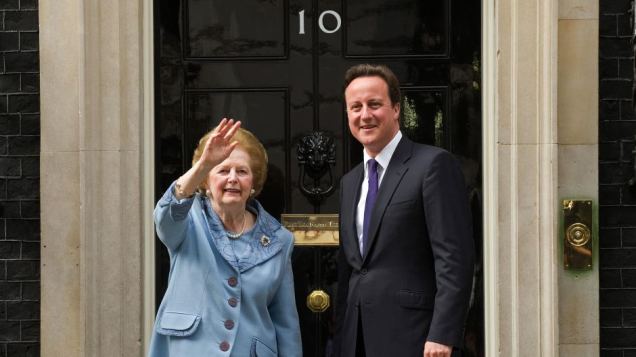
David Cameron - Margaret Thatcher - Coke Zero Conservatism

You, sir, are no Margaret Thatcher

Tim Montgomerie has finally had enough. He is embarking down the lonely path of exile trodden by many of us who remain deeply proud to call ourselves conservatives (with a small C), but who feel absolutely no connection, affinity or devotion to the ideologically shapeshifting, centrist machine led by David Cameron. And he is resigning his membership of the Conservative Party.

Montie signs off with this warning in the Times:

The PM will no doubt treat with disdain my resignation like the departure of tens of thousands of once-loyal grassroots members who have already walked away. But one day an opposition party will get its act together or a wholly new party will emerge. At that point there’ll be a realisation that the Tories’ 40-odd per cent in current opinion polls was a mile wide but an inch deep; reflecting disappointment at alternatives rather than allegiance.

And at some point Britain will notice that the Conservatives didn’t fix the roof when the sun was shining. That we will head into the next economic downturn with the public finances still in precarious shape, with vital airport runways unbuilt and banks too-big-to-fail as big as ever. And if Mr Cameron gets his way we’ll still be powerless to control immigration from an economically turbulent, declining EU, of which we will be an impotent member.

But why desert the Tory party now that they finally hold a majority administration for the first time since 1997?

Tim’s reasons are exactly what you would expect – the abysmally centrist, soul-deadeningly unambitious agenda which has been set by David Cameron and George Osborne since 2010, and which this blog has been constantly condemning since I began writing back in 2012.

The Conservatives are supposed to be the party of fiscal responsibility, and yet the national debt has nearly doubled under George Osborne’s watch, while he struts and crows about his meagre attempts to reduce the annual budget deficit.

The Conservatives – at their best – lift people up out of disadvantaged circumstances and help them to realise their own innate potential, rather than trapping them in a life sentence of government dependency and subsistence. But David Cameron’s government has been half-hearted on housing, on infrastructure, on welfare – kicking the can down the road, and pandering to their wealthy, older, property-owning base at every turn.

The Conservatives are meant to be the party of a strong national defence, but under David Cameron the military has been pared back to the bone, with many essential capabilities (like maritime patrol aircraft) eliminated entirely just when they are needed most, and our aircraft carriers – crucial to maintaining Britain’s status as a world power with expeditionary military capabilities – decommissioned, with their replacement not due to come online until 2018.

The Conservatives are meant to be the party of national sovereignty and of patriotism, and yet in David Cameron we have a prime minister who only glibly and unconvincingly talked the eurosceptic talk, and who is currently perpetrating a fraud on the British people with his cosmetic and entirely irrelevant “renegotiation”.

And one might add (though Tim Montgomerie did not mention this in his resignation letter) that the Conservatives traditionally stood for individual liberty, and the right of the people to go about their lives unmolested and undisturbed by government. But David Cameron’s government – with its creepy “plan for every stage of your life” – is determined that the state involve itself in as much as possible, and has cynically exploited national security concerns to roll back civil liberties and undermine privacy.

But enough of me – I’ll let Montie speak for himself:

Could David Cameron be much more different [than Thatcher]? He promised to bring down immigration but despite Theresa May’s hollow rhetoric, it’s rising. And that defining mission to eliminate the deficit? The Treasury is still borrowing £75 billion a year — a burden on the next generation that would once have shocked and shamed us, and still should. The national debt is up by more than 50 per cent, but this hasn’t seen our armed forces rebuilt. They’ve been cut to the bone.

What about fundamental change in Britain’s relationship with Brussels that the PM pledged, promised and vowed to deliver? The 69 per cent who think he got a bad deal are right. The newspapers that called the deal a “joke”, “conjuring trick” and “delusion” weren’t exaggerating. But it took the Fourth Estate rather than Tory MPs to point out the emperor’s naked state. With a few honourable exceptions Conservative parliamentarians were silent when Mr Cameron, pretending to have changed anything that matters, stood at the same dispatch box at which Mrs Thatcher vowed to fight European integration.

This criticism is spot-on. It has been particularly galling in recent weeks to see just how few current Tory MPs – particularly of the newer intakes – have continued to voice the principled euroscepticism which they were only too happy to display while flaunting their wares to their local constituency party selection committees.

The EU referendum is not just another political issue to be legitimately haggled over by MPs who broadly share the same outlook. This isn’t an arcane policy debate or a minor difference of opinion over fiscal policy – it is absolutely fundamental to how Britain will be governed for the next decades and beyond, and the fact that so many Conservative MPs choose loyalty to their chameleon-in-chief over their constituents and their country is profoundly depressing.

Montie goes on to warn that the Conservative Party will not have the fortune of a weak and divided opposition forever – and that the narrow window for effecting real radical conservative reform is being missed:

For the moment Mr Cameron can get away with all of this. Labour moderates are no nearer getting rid of their extremist leader than when he was elected. It will probably take a generation before northern England and Scotland trust the Lib Dems again. And Ukip, although resilient at double figures in most opinion polls, is too Trump-ian to mount a credible challenge for power.

Faced with a weak, divided opposition in the 1980s Mrs Thatcher moved the country forward. She seized the opportunity to deliver tough reforms that a more effective opposition might have stopped. Today, David Cameron and George Osborne are doing little that Blairites or Cleggites could object to. I recently asked Peter Mandelson what separated his politics from that of Mr Osborne. He joked that the top rate of income tax was too high. At least I think he was joking.

This is also true. And Tim Montgomerie rightly acknowledges that there may well be short-term electoral dividends to be won with a doggedly centrist approach. But only if winning elections is all you care about. If you actually want to do something useful and positive with the power you wield, then the Cameron/Osborne approach is nothing short of a disaster.

As I have written many times before on this blog, the unhinged, virtue-signalling British Left are determined to see the current Conservative government as some kind of ideologically extreme, Thatcher-on-steroids, evil and inhumane government, despite the fact that in reality the government is profoundly centrist. Ed Miliband first started allowing this narrative to take hold as he sought to buy breathing space for his party back in 2010, but six years on and the Labour Party are now in the midst of being devoured by the ‘Tory Scum’-roaring beast that they unleashed.

And since anything that conservatives of any stripe now do will automatically and reflexively be painted by the Left as malevolent and evil, there is absolutely no point in trying to curry favour with the centre-left by copying New Labour policy on taxes, wage controls or anything else. Since the hysterical Nazi comparisons are going to come flying at us come what may, we should at least be using this time of limited and disorganised opposition to boldly enact a radical conservative agenda, much as Thatcher did in the mid 1980s. But this is not happening, and Montie’s resignation suggests that he has given up hope of a change in strategy, even after Cameron goes and is (likely) replaced by Osborne.

And who can blame him? I saw the writing on the wall when I moved back from Chicago in 2011, as it became clear that Cameron’s ideological caution was not a function of being in coalition with the LibDems, but was actually his true, authentic self. And so I never rejoined the Conservative Party back then. But if I had, I too would be cutting up my membership card in solidarity with Montgomerie.

I’m currently reading an excellent book – “Thatcher’s Trial”, by Kwasi Kwarteng, the Conservative MP for Spelthorne. The book focuses on the early days of Margaret Thatcher’s premiership, specifically the period from March to September 1981 when she had to negotiate a difficult Budget and ultimately reassert her authority with a bold Cabinet reshuffle.

I’m only half way through Kwarteng’s book, but the portrait he paints is a true profile in courage – somebody with firm and unyielding principles, a strong ideological compass, a righteous hatred for consensus politics and the ability to impose her will on her party and her country. In short, Kwarteng is describing everything that David Cameron, Thatcher’s successor, is not.

Back when Jeremy Corbyn was on the cusp of being elected leader of the Labour Party, this blog asked:

If David Cameron’s Conservative Party was voted out of office today, what will future historians and political commentators say about this government fifty years from now? What will be the Cameron / Osborne legacy? What edifices of stone, statute and policy will remain standing as testament to their time in office? Try to picture it clearly.

Are you happy with what you see?

I genuinely don’t know what legacy David Cameron thinks he is building through the course of his rootless premiership. But it is not a legacy with which I wish to be associated in any way.

It has been lonely these past few years, being a conservative without a party at a time when political opponents assume we must be thrilled with David Cameron’s every slick and insincere pronouncement. But at least we now have Tim Montgomerie to keep us company in our solitude.

Now, the first order of business for the inaugural meeting of Conservatives in Exile: how do we get our party back, and save it (and the country) from Cameronism?

 

Britain's PM Cameron arrives to pose for a family photo during an EU leaders summit in Brussels

Agree with this article? Violently disagree? Scroll down to leave a comment.

Follow Semi-Partisan Politics on TwitterFacebook and Medium.

What Conservative Government? – Part 2

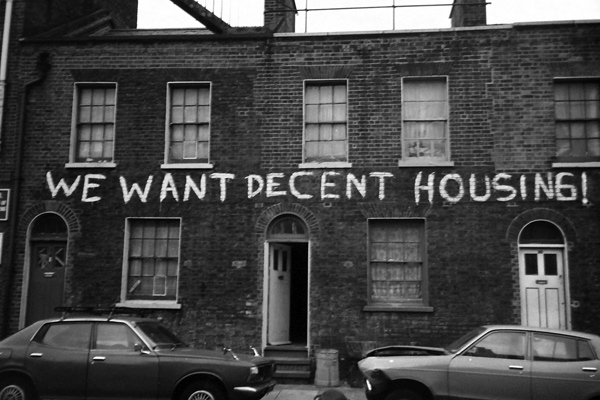
Housing Crisis

Rather than do any of the things which might actually ease the housing crisis, David Cameron’s Coke Zero Conservative government wants the state to enter the housebuilding business

When faced with the inescapable truth of the housing crisis – the fact that demand for housing is increasing faster than supply – David Cameron’s Conservative government has typically preferred to faff around with headline-chasing proposals to boost demand for the same inadequate housing stock rather than upset any of their vested interests by unleashing a real, consumer-focused supply side revolution.

But doing nothing at all in the face of a pressing national problem doesn’t look very good, and so the government has simultaneously been grasping around for eye-catching policies which give the illusion of taking serious action, while doing almost nothing to tackle the root causes.

And since this government is clearly content to pick freely from any policies ranging anywhere from the authoritarian left to the bland centre, they have come up with a doozy of a socialist idea: being unwilling to deregulate the market or meaningfully ease burdensome planning restrictions, the state will simply start commissioning new housing itself. What could possibly go wrong?

The breathless government press release informs us:

The Prime Minister will today announce that the government is to step in and directly commission thousands of new affordable homes.

In a radical new policy shift, not used on this scale since Thatcher and Heseltine started the Docklands, the government will directly commission the building of homes on publicly owned land. This will lead to quality homes built at a faster rate with smaller building firms – currently unable to take on big projects – able to get building on government sites where planning permission is already in place. The first wave of up to 13,000 will start on 4 sites outside of London in 2016 – up to 40% of which will be affordable ‘starter’ homes. This approach will also be used in at the Old Oak Common site in north west London.

A plan for every stage of your life, indeed.

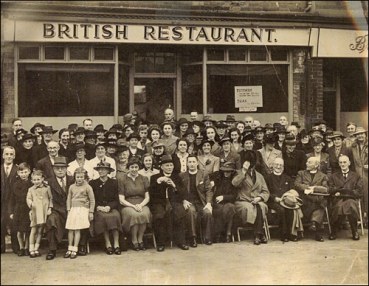
This amounts to nothing so much as a nationalised British Housing corporation – on a small scale for now, but who knows where or how far this statist adventure could lead us? Where once we had British Coal, British Steel, British Rail and even British Restaurants, now we are about to have British Housing foisted upon us – and by a supposedly conservative government, no less.

But just as nationalised, centrally planned companies like British Leyland churned out low quality, uncompetitive products that nobody wanted back in the last century, so British Housing will inevitably see the construction of more cookie-cutter, non-high-rise, low density “developments” that barely keep pace with rising demand and do nothing to tackle house prices or put the dream of home ownership within reach of more people.

But who cares? George Osborne will have another excuse to don his high-vis jacket, strap on his hard hat, and prance around a building site with his sleeves rolled up like a man of action and plausible Future Prime Minister. And that’s all that matters. Not solving real problems. Not applying the best of contemporary conservative thinking to transform Britain for the better. Just another good photo opportunity and more of the same endless, vacuous triangulation and electioneering.

Rigorous conservative thought and policymaking is capable of producing compelling answers to nearly all of the problems facing modern Britain – unemployment, housing, welfare, competitiveness and the democratic deficit. But we do not have a prime minister or a government who have any respect for conservative thought, or the principles of small government, free individuals and the free market as a force for good.

We have David Cameron, George Osborne and the bricks-and-mortar equivalent of British Rail sandwiches.


British Restaurants - Nationalisation

Agree with this article? Violently disagree? Scroll down to leave a comment.

Follow Semi-Partisan Politics on TwitterFacebook and Medium.

What Conservative Government? – Part 1

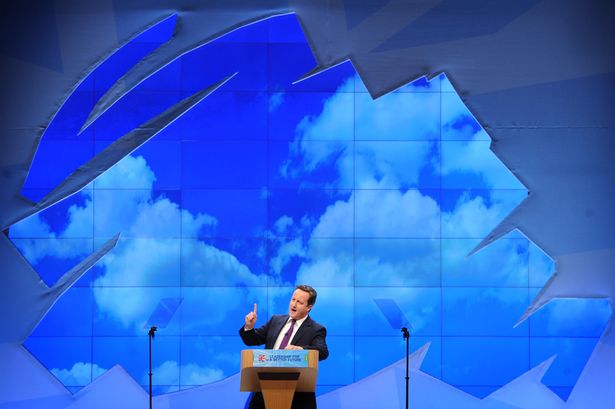
David Cameron - Conservative Party - Tree Logo - Coke Zero Conservatism

The Left may love to rail against the Evil Tory government inflicting untold harm on the defenceless people of Britain in service to their extreme, worse-than-Thatcher ideology. Of course, it’s all just hysterical, hyperbolic nonsense. This “What Conservative Government?” series will highlight multitudinous examples showing that David Cameron’s rootless, centrist Conservative Party is an authoritarian, Big Government carbon copy of Tony Blair’s New Labour.

Last week, I had the opportunity to debate the Conservative Culture Minister, Ed Vaizey, on the infantilisation of today’s students and their ludicrous demands for trigger warnings, safe spaces and the suppression of free speech.

This week, Vaizey pops up in Conservative Home, defending the government’s record on public libraries from left-wing attack (my emphasis added):

When I first became a Minister, we abolished the libraries quango and moved responsibility to the Arts Council.  We wanted to join up our cultural strategy with libraries.  This decision has been thoroughly vindicated.  The Arts Council has made £6 million of new Lottery funding available to libraries to host cultural events and realise their role as important community spaces.  Yesterday, they announced a further investment of more than £1.5 pounds, which will help library authorities work better together, and will support a range of national initiatives covering reading, digital literacy and health.

[..] Councils have a legal obligation to provide comprehensive and efficient library services, and must consult with the local population on plans. We are the first Government to review every closure. Central government can and will intervene if a council is planning dramatic cuts.

There is a serious point here, which is that the Labour Party are utterly disingenuous to attack the Conservatives for library closures, when only 11 of 79 library closures in the past five years have been ordered by Conservative councils. And there is probably merit to the implied suggestion that left-wing Labour councils are publicly rending their garments and spitefully shutting down high profile services as a kind of self-immolating protest against the Evil Tories in Westminster.

But what kind of conservative government obsesses about the “national initiatives” feeding into their “cultural strategy”, and watches over the shoulder of every local authority in the country, demanding the right to sign off on every single building closure? Certainly not any government that truly believes in smaller, leaner government or a renewed emphasis on localism and individual liberty.

Now, this centralise-first instinct in British politics is not new. And ironically, it is partly the legacy of the Thatcher government, which faced implacable resistance from rabidly left-wing local councils and believed that the only way to implement its agenda was to circumvent and/or neuter local authorities. But the New Labour governments of Tony Blair and Gordon Brown did nothing to reverse this process, and David Cameron’s Coke Zero Conservatives are in no hurry to undo the process.

But the over-centralisation of government is one of the biggest problems in British politics and civil life. It kills any attempt at radical experimentation or bold new policy initiatives in the crib, since everything must conform to the same national standards, either by legal requirement or the fear of endless angry “postcode lottery!” headlines in the press.

Why should the four home nations of the UK not have the ability to vary tax rates and bands as they see fit, according to local priorities, so long as all four pay the correct proportional share of their revenue to Westminster for UK-wide shared obligations such as foreign policy and defence?

Why should local authorities not be able to raise (or lower) sales taxes autonomously, in place of a fixed (and brutally high) VAT rate of 20%, returning funds to taxpayers or spending the revenues as local communities see fit?

Why should city councils not be permitted to implement hotel room taxes, as in nearly every major city around the world outside the UK, and use the revenue to promote local tourism in the provinces and regions?

(The one policy standing in David Cameron’s favour is the creation of local Police and Crime Commissioners – though it has been hard to generate any real enthusiasm for this form local control when it is not replicated in other areas of our lives).

A truly radical, campaigning conservative government would be asking these questions, developing policies to answer them, and then boldly implementing them across the nation. And now, after five years of Conservative government, Britain might be starting to feel the benefit of re-embracing liberty, individualism, localism and regional variation.

But of course, all of this would require the Conservative Party to actually govern like a conservative party.


Conservative Party Logo - Cameron - Oak Tree

Agree with this article? Violently disagree? Scroll down to leave a comment.

Follow Semi-Partisan Politics on TwitterFacebook and Medium.

Don’t Mock Bernie Sanders – David Cameron Is A Far Bigger Socialist

Spot The Socialist - David Cameron vs Bernie Sanders - Semi Partisan Politics - Sam Hooper

Agree with this article? Violently disagree? Scroll down to leave a comment.

Follow Semi-Partisan Politics on TwitterFacebook and Medium.