Postcard From America: When Words Fail, A Musical Analogy

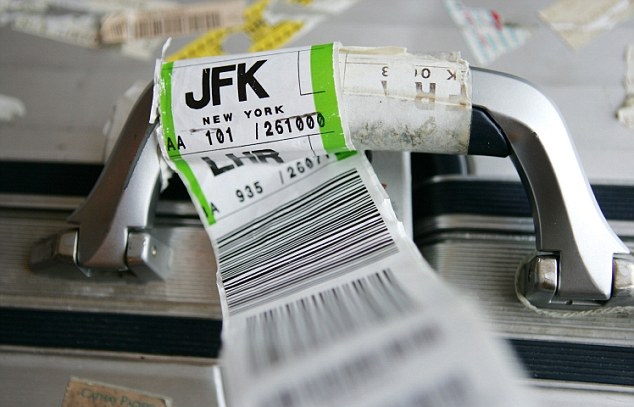
JFK LHR - Britain and America

I’m currently back in the United States to celebrate Christmas with family in Texas. These short “Postcards from America” will document a few of my thoughts as I escape the political whirlwind of Westminster and look back at Britain from the vantage point of our closest ally

A musical contrast between Britain and America

I have been trying to find a way to describe the feeling I always get when I arrive back in the United States of America, a land I consider to be my spiritual home even though I am not yet a citizen (though married to one).

It is very difficult to put into words the emotion that wells up even before exiting the airport, whether it be New York JFK, Chicago, Cleveland, Dallas, Houston, Miami, Seattle or any of the other gateways I have used on my well over fifty arrivals here. The feeling of having arrived in a land of promise and possibility, an electricity in the air and a repose for the spirit which I feel even while waiting to collect the suitcases from the carousel.

But when words fail, music sometimes speaks. And the best way I can find to describe the difference experienced when travelling from the United Kingdom to the United States is with this musical analogy.

Two performances of the same piece of music, recorded by two legendary artists. Prelude no. 3 in C Sharp Major, BWV 872 from The Well-Tempered Clavier by Johann Sebastian Bach, performed first by Sviatoslav Richter and then by Glenn Gould, my favourite pianist.

Imagine that this first recording represents life in Britain:

This is the Richter version of the Bach prelude. Languid and undeniably beautiful, yes, with the edges softened by extensive use of the pedal. You can almost sense the nearly three centuries spanning the prelude’s composition and the present day in this warm but muffled recording.

Now imagine moving from this setting to the utterly different world of the Glenn Gould version, representing America:

The two recordings could hardly be more different.

The musical notes are the same, just as Britain and America share a common language and very similar cultures by virtue of our shared history. But the two interpretations are worlds apart, just as everything from local culture to local government is different on either side of the Atlantic.

Nobody had ever played the music this way until Glenn Gould came along. Prior to Gould, playing Bach on the piano was a dry and dusty affair, characterised by performances and recordings which shrouded the intellectual beauty and emotional resonance with thick layers of stultifying sameness. And then Glenn Gould turned things upside down and showed that Bach’s keyboard music did not have to be a revered but inherently boring exercise; that by engaging with the music with a creative mind, it was possible to bring dead music to life.

The Gould version is bright and clear. The first half of the prelude is strutting and unselfconscious, while the second part takes off like a rocket – joyful, vibrant and carefree. The individual lines of both the prelude and fugue are more clearly articulated and easier to distinguish, while still contributing to a powerful and musically convincing whole. E pluribus unum. That’s America, right there in this recording.

Britain America 1

To my mind, this is the experience of moving from Britain to the United States. From an ancient land of history and heritage – the mother country – to the bright promise of the newer, bold and assertive superpower. The place where even in these difficult times, all things still seem possible.

A land where the sun shines infinitesimally brighter (my first action on arriving in Louisiana was to purchase new sunglasses. In December.) A land where the sky literally seems bigger, and the horizon wider. A land where the flavours are bolder, the entertainment glitzier, the music more vibrant and the people unfailingly friendly.

A country whose best features and deepest flaws are both so much more exaggerated than is the case in Britain – whether it be the remarkable philanthropic and community spirit on one hand, or the endemic tragedy of gun violence on the other.

But more than that, a country which still feels consequential in terms of shaping human events. A country whose politics and politicians – however glib and anti-intellectual they can sometimes be – still possess the aspiration and self-confidence to deal with weighty matters, to forge ahead in search of the best pathway to freedom and prosperity. And whose people still believe in their country as a force for good in the world, when they stay true to their values.

You can see the difference by comparing the raucous presidential primary debates currently underway here in America with the spirit-crushing televised encounters in Britain ahead of the May general election. In America, issues like healthcare, immigration, government surveillance and foreign intervention are debated fiercely in public – with both sides making reference to that most wonderful of things, a written constitution which makes the people sovereign and grants government strictly limited powers, rather than the other way around.

In Britain, by contrast, our leading politicians and political parties competed to be judged the safest custodian of our creaking public services. We went to the ballot box to decide who we trusted most to reduce the budget deficit, make the trains run on time and the bin collections more reliable. In granting David Cameron a second term as prime minister, we didn’t so much elect a world leader as appoint a lowly Comptroller of Public Services, someone to kick when we feel short-changed as passive consumers of state-provided rations.

On existential matters like Britain’s place in the world, the best way to promote economic growth or to ensure future national security, the British political debate during the election campaign could not have cared less – and there was virtually no difference in the statist paternalism of the two main parties, other than in rhetoric. No political party had the courage to suggest that our outdated, 1940s model of state healthcare delivery might need serious reimagining in the twenty-first century, and only a handful of us cared enough to call them out for their craven refusal to acknowledge this difficult truth, and many others besides.

Fewer than four million of us believed strongly enough in the principle of national democracy and sovereignty that we cast a vote for the one party which explicitly objected to the gradual absorption of Britain into the supranational state known as the European Union.

And through it all, this blog has felt like something of a voice in the wilderness, with no politician or party to champion the causes of personal liberty, free markets and national sovereignty upon which everything else rests – but which too many other people seem happy to forsake in exchange for a chimerical, temporary measure of security and prosperity.

Britain America 2

Here in the United States, for the precious couple of weeks until we go home, I don’t have to think about any of that. Of course America has issues of its own – big, intractable problems and burning injustices which befit a country of her size and consequence to address and overcome. But at least Americans still (just about) know who they are. At least they have not yet fractured into a messy coalition of competing special interest groups, to the extent which Britain has now splintered.

Patriotism and love of country still mean something in America. Yes, sometimes the sentiment expresses itself badly, through an ignorance of the rest of the world and the lazy assumption that America is always the best at any given thing. But perhaps unnoticed by many in Britain, there is also here an abundance of that quiet patriotism – the celebration of Independence Day and Thanksgiving, the flags flown in school classrooms without the ludicrous fear that it might “offend” someone of minority ethnic heritage, or the way that veterans are honoured and soldiers in uniform routinely invited to fill empty first class seats on airplanes – symbols and gestures which are the bedrock of a strong and cohesive society.

Of course debates rage fiercely in America – over Donald Trump, Hillary Clinton, the Koch brothers, the Tea Party, the Iraq war, the ISIS threat, birtherism, abortion, LGBT rights, church and state, the mainstream media and much more. The many are not always one. But when it really counts, they are one people. They bleed red, white and blue together.

America the beautiful: this is where I come to recharge my spiritual batteries. And as I prepare to throw myself into the battle for Brexit – defending the country of my birth and the concept of the nation state itself from an insidious form of supranational governance whose advocates have repeatedly failed to explain how democracy will be preserved in their brave new world – I will need all the power I can muster.

God bless Texas.

God bless America.

God save the Queen.

Britain America 3

Agree with this article? Violently disagree? Scroll down to leave a comment.

Follow Semi-Partisan Politics on TwitterFacebook and Medium.

Forget Migrant Benefits In The EU Debate; What About The S-Word?

Alan Johnson - Labour In for Britain

The EU debate is about so much more than relatively petty questions about migrant benefits and immigration. But few from the official “Leave” campaigns are willing to broaden the debate

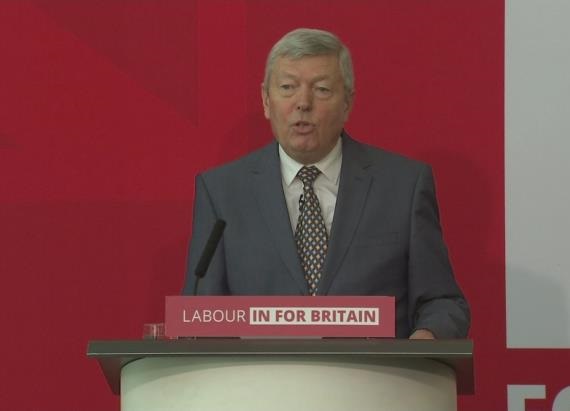
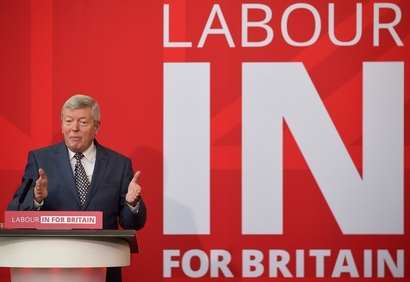
It is rare for this blog to find itself in agreement with Labour grandee Alan Johnson, chairman of the “Labour In For Britain” campaign group.

But Johnson is absolutely correct in his criticism – expressed on the Andrew Marr show today – that the EU debate has been narrowed down to an insultingly simplistic degree.

LabourList reports:

Johnson, who is leading Labour’s campaign to stay in the EU, appeared on The Andrew Marr show this morning to make the case for Britain to stay in the EU. He pointed out that issues like climate change can only be solved by countries working together, and that the EU was an essential “political union”.

He slammed the Prime Minister for narrowing the debate, saying there has been a lot of focus on Cameron’s attempt to ban migrants who are in work from receiving benefits until they have been employed in the UK for four years. Cameron is thought to have abandoned these plans in favour of imposing new limits on benefit payments to out-of-work migrants instead of those people in jobs. Johnson said this focus had distracted from other important issues.

Forget the orchestrated shenanigans over David Cameron’s supposed tussle with other EU leaders over migrant benefits – this is a ridiculous sideshow obsessed over by a credulous media, as my Conservatives for Liberty colleague and editor Ben Kelly wearily points out.

But Alan Johnson’s broader criticism is devastatingly accurate. From the outset, particularly on the “Leave” side, the Westminster campaign has been incredibly myopic and unimaginative.

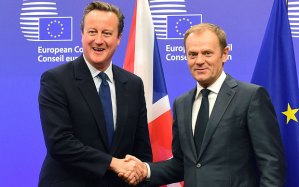
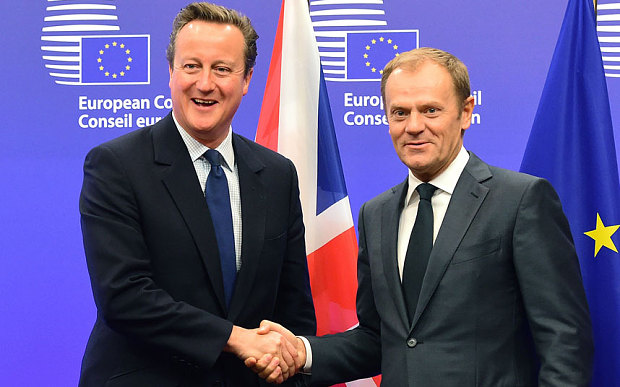
We should expect no better from the prime minister – David Cameron is an avowed europhile, has stated numerous times that his preference is for Britain to remain a member of the EU, and has been unable to force the words “campaign for Brexit” from his lips even as a remote hypothetical. And thus it is no surprise that Cameron went in to the renegotiation with no set demands (contrary to the media narrative) but simply with a begging letter to Donald Tusk pointing out areas for discussion.

And those areas do nothing to assuage the concerns of the thinking eurosceptic or Brexiteer. Because the real problem with our continued membership of the European Union is not immigration, welfare, fiscal policy, social policy or the euro. The real problem is the little-mentioned S-word: sovereignty. Because this one word encapsulates all of the many ways in which the EU infringes upon our democracy.

It’s not about Schengen, or the single market – Britain is already outside the former and a full member of the latter. That’s why when David Cameron comes back brandishing something called “associate membership” we should be immediately suspicious, because it will essentially be a formalisation of the status quo, with all of the existing drawbacks of Britain’s EU membership hardwired into a future new treaty, with a few extra problems sprinkled on top as a garnish.

The fundamental issue of sovereignty will go unanswered, because David Cameron is not even raising it as part of his sham renegotiation, and while the overly credulous may believe that a toothless and unenforceable exemption from “ever closer union” is some kind of great victory, it ignores the fact that our union with Europe is already far too close. The EU remains an explicitly political union (as Alan Johnson happily states in his Andrew Marr interview) and Britain remains firmly part of it.

Neither Leave.EU nor Vote Leave hammer the sovereignty aspect, having decided that scare stories about what the EU will do to “our NHS” (genuflect) and other public services will do more to win over the bovine masses. But sovereignty is the key.

Is Britain to be a real democracy, accountable to its own citizens once again? If so, then we need to recognise – and repeat endlessly – that national democracy and the European Union are fundamentally incompatible.

As the preamble to the Bertelsmann Stiftung report “A Fundamental Law of the European Union” (soon heading our way via the Five Presidents Report) explicitly states:

This proposal for a Fundamental Law of the European Union is a comprehensive revision of the Treaty of Lisbon (2007). Replacing the existing treaties, it takes a major step towards a federal union. It turns the European Commission into a democratic constitutional government, keeping to the method built by Jean Monnet in which the Commission drafts laws which are then enacted jointly by the Council, representing the states, and the European Parliament, representing the citizens. All the reforms proposed are aimed at strengthening the capacity of the EU to act.

It’s right there in black and white – a major step towards a federal union. The EU will drive a wedge between nation states and their citizens by enshrining and expanding the model whereby national governments sign off on laws and policies initiated by the EU Commission, while the people will have redress only through the European Parliament, thus (hope the federalists) gradually legitimising the Brussels and Strasbourg parliament.

But you’ll hear none of this from the major “Leave” campaigns, and certainly from nobody within the Conservative Party. The only real exception at present is the small but growing group of campaigners and bloggers coalescing around Dr. Richard North’s site eureferendum.com, who do a good job holding the media to account and pointing out lazy thinking and writing (sometimes including this blog) which unwittingly aids David Cameron’s agenda.

At least the Left and the “Remain” camps are able to appreciate that the EU referendum is a fundamental question of who we want to be as a country, and where we believe democracy and decision making should rightly sit. They have their particular vision – abhorrent to me, but clear and unambiguous – that the UK is a weak and ineffectual country incapable of robustly defending our own national interests, and that the fifth largest economy, formidable military power and cultural beacon that is the United Kingdom can only survive by dissolving our political identity into the European Union. And they will be repeating this message from now until referendum day.

The “Leave” campaigns have no similar clear vision. They believe that the referendum can be won by reducing the great questions of democracy and Britain’s place in the world to a tedious, nitpicking discussion over how many migrants can be kept out of Britain, or how much money saved by renegotiating the terms of our surrender. Alan Johnson’s view is utterly wrong, but at least he has the confidence to state his case.

When will the Leave campaigns appreciate that the referendum cannot be won if people believe that leaving the EU is a leap into the unknown, or when the only ones talking passionately about Britain’s place in the world are the europhiles?

When will the Leave campaigns stop their myopic obsession with issues like migrant benefits, an arbitrary issue picked by our devoutly pro-EU prime minister, which are only designed to distract our attention from the ultimate deal – associate membership – which will ultimately be presented?

And when will the Leave campaigns get over their overriding fear of the S-word?

David Cameron - Donald Tusk - EU Renegotiation - European Union - Brexit

Agree with this article? Violently disagree? Scroll down to leave a comment.

Follow Semi-Partisan Politics on TwitterFacebook and Medium.

The Daily Smackdown: David Cameron’s Transparent EU Posturing

David Cameron - Angela Merkel - Francois Hollande - EU Renegotiation - Brexit

David Cameron has no respect for our intelligence if he thinks we will be fooled by claims that he is seriously considering campaigning for Brexit

Like this blog, the Times instantly saw through the prime minister’s latest desperate, amateurish attempt at brinksmanship and the dissemination of information by an often credulous media.

When David Cameron’s allies leaked that the prime minister was seriously considering recommending a Leave vote in the referendum if his renegotiation continues to be “theatrically spurned” by his EU partners, the story seemed too transparently false to be true. And it is.

The Times commented:

“It is patently clear that [David Cameron] cannot and will not become the man who tossed aside Britain’s EU membership. The hints from his allies that he might do so were a desperate negotiating tactic that has rightly backfired. This sort of melodrama is more likely to make negotiating partners giggle than give way.”

Absolutely. Every one of Cameron’s actions since he reluctantly promised the referendum as a too-little-too-late anti-UKIP defence has reeked of his desperate desire to keep Britain in the European Union at all costs.

As this blog pointed out yesterday:

Anybody with even one foot rooted in reality should be able to tell that this latest court gossip is nothing but spin. Having (unsurprisingly) gotten nowhere with his renegotiation efforts thus far, David Cameron needs to appear tough and resolute for the home audience. After all, it is pretty embarrassing that the leader of a global power and the world’s fifth largest economy has achieved precisely nothing, despite having embarked on a well-publicised begging tour of Europe. When begging and pleading with the Czechs for permission to change UK welfare rules yields no fruit, some kind of strong public stance is essential to preserve any kind of dignity.

The prime minister has never been able to force the words “Brexit” or any other specific phrase about Britain leaving the EU from his lips, and only on rare occasions has he even alluded to the fact that “nothing is off the table” if he judges the results of his renegotiation to be unsatisfactory.

Of course, since Cameron went into the British renegotiation carrying no demands at all – a point worth emphasising, and well made by Richard North at eureferendum.com – he is hardly likely to find his own efforts wanting. Who, given the chance to mark their own homework, would give themselves an F?

And when it comes to nothing being off the table in the event of failure, it remains easier to imagine the prime minister succumbing to a tearful, foot-stamping tantrum on live television than it is to picture David Cameron addressing the nation and declaring that Britain’s national interest would be better served by being outside the European Union.

EU Democracy - Brexit

Agree with this article? Violently disagree? Scroll down to leave a comment.

Follow Semi-Partisan Politics on TwitterFacebook and Medium.

Credulous Media Swallow David Cameron’s EU Renegotiation Myths

David Cameron - Donald Tusk - EU Renegotiation - European Union - Brexit

Nobody in their right mind seriously believes that David Cameron will campaign for Britain to leave the European Union. But that didn’t stop the media from earnestly reporting Number 10’s Brexit bluster

David Cameron is about as far from being a eurosceptic as a Conservative prime minister could possibly be. Sure, he was forced by the rise of UKIP into pledging a referendum on Britain’s EU membership – despite having previously stated that he didn’t think a referendum was appropriate – but this was only ever a matter of political expediency, not heartfelt desire for Brexit or deep conviction that the people should have the right to decide their own destiny.

But this has not stopped the media from willingly and credulously lapping up the latest spin emanating from Number 10 Downing Street – the risible idea that if David Cameron’s EU partners continue to treat him like the pesky kid at the adult’s table, he might seriously campaign for Brexit.

From the Telegraph:

David Cameron has privately conceded he will have to campaign to leave the European Union if he continues to be “completely ignored” by Brussels, the Daily Telegraph has learned.

[..] It has now emerged that Mr Cameron is telling senior figures in his party that he will be willing to campaign for a British exit if EU leaders do not back down over his key reform plans.

“He has said that if he is completely ignored or if they give him nothing he will campaign to leave,” the source said. “He has made that clear.”

Anybody with even one foot rooted in reality should be able to tell that this latest court gossip is nothing but spin. Having (unsurprisingly) gotten nowhere with his renegotiation efforts thus far, David Cameron needs to appear tough and resolute for the home audience. After all, it is pretty embarrassing that the leader of a global power and the world’s fifth largest economy has achieved precisely nothing, despite having embarked on a well-publicised begging tour of Europe. When begging and pleading with the Czechs for permission to change UK welfare rules yields no fruit, some kind of strong public stance is essential to preserve any kind of dignity.

And let’s be frank – the Telegraph didn’t so much “learn” that Cameron is considering campaigning for Brexit through canny investigative journalism, but rather they probably received a tip-off authorised by the Conservative Party hierarchy to place that narrative into the news cycle.

And what a successful stunt it has been. Now we are duly talking about how the prime minister feels so frustrated with the progress of his renegotiation that he is considering this drastic step, when deep down they (and most of us) know that David Cameron would sooner leave his daughter unattended in Nigel Farage’s local pub than recommend to the British people that they vote to leave the EU.

The truth, of course, is that this was always a sham renegotiation. David Cameron didn’t even bother to consult with the British people as to what they wanted out of any new settlement with Europe before jetting off to Brussels to set out his puny demands, so how could he claim to be representing the public’s real concerns?

This whole exercise has been about starting with the outcome of a “Remain” vote and then working backwards to determine the least possible number of concessions required from the EU to deliver that goal, rather than starting with a hard-headed assessment of Britain’s own national interest or public sentiment. And such a back-to-front renegotiation was never going to bear fruit.

As Mark Wallace points out in Conservative Home:

The conventional wisdom is that the Prime Minister has cut back his list of renegotiation demands in order to reach a swift agreement, in which he can claim victory and then hold an early referendum. That probably was his hope; it would certainly make political sense. Unfortunately for him, each aspect of that plan is foundering while the clock ticks down.

With every day that this supposed renegotiation goes on, Britain looks more and more like the weak supplicant nation asking its superiors for scraps from the table – and being rebuffed. This would be humiliating enough, but it is also self-reinforcing. The fact that our EU partners have already seen Cameron going cap-in-hand around the capitals of Europe begging for concessions (rather than boldly stating the UK’s national interest or presenting a radically different vision of EU membership) means that they are emboldened to give away fewer concessions when he comes knocking again.

Right now, the EU has bigger fish to fry than the Brexit question. And with immigration and terrorism top of the agenda, EU leaders feel confident in pushing our renegotiation way down the list of priorities because they know – even if our credulous media claims not to know – that David Cameron will campaign for a “Remain” vote, come what may.

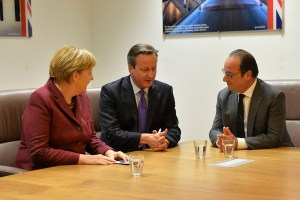
France and Germany are both diplomatically canny countries. If they suspected for a moment that their treatment of David Cameron might seriously cause him to snap and embrace the Brexit cause then they would immediately start making more conciliatory noises. Secretly they might be glad to be rid of Britain, but they know that Brexit would be a stunning, unacceptable repudiation of their vision for Europe. Thus the fact that there is no diplomatic panic in Berlin or Paris is proof that Angela Merkel and Francois Hollande know that their British counterpart remains utterly pliable and sickeningly eager to please.

David Cameron can continue to authorise leaks suggesting that he is contemplating campaigning for Brexit, if it makes him feel better when he is politely ignored by the leaders of other countries a fraction of our size and power. He can promise all the table-thumping rows in the world, too.

But the one thing he cannot do is convince those of us who see through his cheap tricks that he is a real eurosceptic, or that he would ever allow his name to go down in the history books as the man who led Britain out of the European Union.

David Cameron - Angela Merkel - Francois Hollande - EU Renegotiation - Brexit

Agree with this article? Violently disagree? Scroll down to leave a comment.

Follow Semi-Partisan Politics on TwitterFacebook and Medium.

Labour’s EU ‘Remain’ Campaign Launches With Their Weakest Argument

Alan Johnson - Labour - In for Britain - EU Referendum - Brexit

Claims that Britain being in the EU “keeps us safe” are completely without basis. Nations are more than capable of co-operating on national security without dissolving into the same flawed political union

If the slavishly europhile “Remain” campaigns are putting their best feet forward and leading with their strongest arguments then perhaps there is hope for we eurosceptics after all.

Last month, the farcical launch of Britain Stronger in Europe was tarnished by the somewhat unwilling presence of Lord Stuart Rose as campaign chairman, and then rendered ridiculous by “youth ambassador” June Sarpong’s confused non-endorsement in the press.

And now, with today’s launch of Labour In for Britain, the Labour Party’s own pro-EU campaign group, the europhiles decided to lead with the weakest of all their weak arguments – that leaving the EU would somehow be injurious to Britain’s national security. And they are quite willing to exploit the recent shocking terrorist attacks in Paris to do so.

Alan Johnson, chairman of the Labour In for Britain campaign, writes in the Mail:

We should be in no doubt that these are dangerous times. 

The tragic events in Paris, and the government’s recent confirmation that seven terror plots have been foiled in the UK in recent months, have underlined the threat that violent extremism poses to us here at home.

For some, the answer to this is to withdraw from Europe and to try to combat the threats we face on our own. 

So no positive vision, then. Just a lot of scaremongering followed by the reassurance that we can avoid being blown up in our favourite clubs and restaurants for the low, low price of the surrender of our democracy, sovereignty and right to self-determination.

Of course, Johnson never explains why leaving the explicitly political construct known as the EU would mean that Britain has to withdraw from Europe the continent, or Europe the home of our friends and allies. But then it is very much in his interest to conflate all of these things and falsely imply that leaving a political union means cutting ourselves off and standing alone in the world.

From a man who is constantly lauded as one of the Labour Party’s finest assets, a fundamentally decent man of irreproachable morals, this is really dirty and opportunistic stuff from Alan Johnson. Apparently there is no moratorium on using a mass killing for political gain when the people taking advantage of our shock and grief are do-gooder left wing types who think they know best for us.

Johnson continues:

Our campaign will focus on the economic security of British workers – the millions of British jobs that are linked to trade with Europe, and the employment rights that are enshrined in EU law. 

But we will also be laying out the ways in which Europe protects British citizens and keeps us safe.

First, working with our European partners provides us the best way to stop would-be terrorists entering Europe [..]

Second, thanks to the European Arrest Warrant, pushed through in 2004 under a Labour government, we are able to more effectively bring would-be terrorists to justice [..]

Finally, it should not be forgotten that Islamist terrorism is not the only threat we face. At a time of deep instability on Europe’s borders, Britain benefits from its ability respond collectively.

The Brexit campaign group Vote Leave are also pushing the security aspect quite hard, so it is unsurprising that the pro-EU groups want to cut them off by claiming that it is their position which will keep Britain safe. Unsurprising, but wrong.

And Johnson concludes:

By sharing intelligence, pooling resources and working together, European countries add value to each others’ efforts to keep the peace. A Brexit would leave us all more vulnerable.

Damningly, it is never explained why all of this co-operation is dependent on Britain remaining part of an ever-tightening political union with its own parliament and courts and government.

Alan Johnson never explains why our intelligence and security services rely on our EU membership every day to protect us from terrorist attacks. Because they don’t. This co-operation – and any other matters of vital national security – would go on regardless of our future relationship with the EU, because that’s how mature democracies work. Europe will not simply go off in a sulk and stop sharing intelligence with us simply because we decide that we no longer want to be just a star on the EU’s flag, because they need our military support and intelligence capabilities far more than we need theirs.

Don’t forget – Britain’s closest military ally and intelligence sharing partner is not any one of the European Union countries, but rather the United States. We host US air bases on our territory, we embed our own armed forces with theirs (and vice versa) on active operations and we buy and sell weapons and equipment to America. On the intelligence front, GCHQ and the NSA work together hand in glove – sometimes too closely, to the extent that they conducted mass surveillance without our knowledge – and are indispensable partners.

The closest of military allies and vital partners in global intelligence sharing – somehow the UK and US are able to maintain this partnership without a joint legislature handing down laws to Congress and Parliament, a judiciary sitting above our own respective Supreme Courts, or a shadow government running a large and expensive bureaucracy on our behalf.

And yet the europhiles will declare with a straight face that we desperately need this cumbersome, irrelevant and antidemocratic sideshow just to be able to ensure military and intelligence sharing co-operation with a country separated from us by just twenty miles English Channel. What nonsense.

So, Alan Johnson: why is it that Britain is able to maintain our closest and most strategic partnership in the world with the United States without ourselves becoming the 51st state, while a lesser degree of co-operation with the other countries of Europe is somehow impossible unless we dissolve ourselves into the same ever-tightening political union with them?

Truly, the security aspect is the weakest of all the pro-EU arguments, and yet it is the one with which Labour chose to lead. And the only possible calculus for doing so must have been the belief that people were still so shocked and traumatised by the recent terrorist attacks in Paris that they would be susceptible to scaremongering tactics which openly suggested that a vote against the European Union is a vote for more Paris-style attacks on our own city streets.

That tells you a lot about the intellectual weakness and desperation of pro-EU case and the “Remain” campaign as a whole. But it tells you even more about today’s grasping, manipulative and utterly shameless Labour Party.

Alan Johnson - In for Britain - EU Referendum - Brexit

Agree with this article? Violently disagree? Scroll down to leave a comment.

Follow Semi-Partisan Politics on TwitterFacebook and Medium.