The EU Snubs Britain At Its Own Risk

Friendship and cooperation

No, Theresa May was not mortally humiliated at the current EU summit underway in Brussels. Somehow, probably after a few nights in intensive care and some trauma therapy, the prime minister of the United Kingdom of Great Britain and Northern Ireland will bounce back from being denied the opportunity to make idle small talk for a few minutes with the likes of Federica Mogherini.

Let’s be serious. Were there non-stop footage of every political leader to ever attend an EU summit, we could undoubtedly find instances where each one of them stood alone with nobody to talk to for a short while, even the sainted Angela Merkel. Keep watching the video beyond the first twenty seconds and you actually see May engaged in several conversations with other European leaders. This is a complete non-story.

But seizing on the footage of Theresa May looking momentarily awkward, however, helps to reinforce a narrative that Remainers (and their friends in the media) are desperate to encourage – that of pathetic, little old Britain being banished to the margins of the world having voted to isolate ourselves “from Europe”.

This is an idiotic and superficial analysis, and it speaks volumes about the people pushing the theory that they seem to take delight in what they see as the humiliation of their own prime minister (who, let’s not forget, represents all of us). If Brexiteers have been too harsh in impugning the patriotism of Remainers, as is sometimes claimed, then now is the time for Remainers to finally take their patriotism out for a spin. They claim that our prime minister has just been insulted on the world stage – therefore they should be encouraging a collective national outrage rather than trying to score smug political points.

Remainers claimed throughout the referendum campaign that the EU is a bastion of rationality, of grown up countries cooperating sensibly with one another. Well, what is grown up and sensible about deliberately ostracising one head of government just because the member state she represents is exercising its right to leave (not that any such ostracisation took place)? What is enlightened and admirable about such childish behaviour? And why is this snarling, punitive and insecure little club something of which we would want any further part?

Iain Martin goes further in a piece for Reaction:

It’s a funny video, although not in the way May’s opponents might think.‎ Funny meaning odd, curious, in that your response to it is probably shaped by your existing view of May and Brexit.

For Leavers – and quite a few Remainers who accept the reality that Brexit will happen and no amount of shenanigans by Blair, Mandelson and Clegg (what a dream team!) will stop it ‎- a British Prime Minister being treated in a rude fashion will only encourage Brits to say “if that’s your attitude then please get stuffed” to the EU.

In that gathering I see a room that‎ is overwhelmingly male – a sausage party of smugness. May is too polite or diffident to charge up to them and start “handbagging” and beating up the boys Thatcher-style, so she hovers. Millions of people, most people, who lack liberal elite social confidence will know the feeling from school or parties ever since. It induces sympathy.

We’re not talking to you, you smell, we don’t like you, is the message. Oh, and ‎the UK is not invited to dinner.

The response all this provokes – in me, anyway – is incredulity at the continuing stupidity of the EU’s leaders in their determination to rough up Britain in a manner that amounts to self-harm. Yes, we voted to leave the EU, which is our right and had been coming for ages, ‎but we cannot leave Europe. That would be a geographic, culinary, cultural, commercial impossibility, thank goodness. That means we are going to have to get along, and find new ways of co-operating and co-existing. Punishing Britain and being rude to Theresa May is simply a waste of time and energy, when the world is changing this fast.

I would caution Iain Martin against going down the identity politics route, trying to drum up additional sympathy for Theresa May by portraying her as a lone female in a room of arrogant and threatening men. I see no evidence that gender has anything to do with this non-story. Martin (I assume) is not a fan of the Cult of Social Justice and Identity Politics, and he should avoid resorting to their tactic of playing the oppression card when engaging in argument.

But that minor quibble aside, Martin is quite right. Many people will indeed empathise with the awkwardness of walking into the middle of a room of people who generally already know each other quite well and who are already engrossed in conversation. Throw in the fact that the television cameras were rolling and May becomes quite a sympathetic character. So if Remainers’ best argument is now “see how they treat you when you scorn them and try to leave the club” then I think it will largely backfire.

If anything, the history of recent British diplomacy has been one of excessive fawning and deference, punching well beneath our weight considering our status as Europe’s second biggest economy, one of only two nuclear powers and possessing the continent’s most deployable and skilled armed forces, not to mention the popularity and dominance of our culture. Martin also picks up on this point:

Britain has the leading listening, intelligence and security capability in Europe, at a time when the place is under assault from jihadist maniacs and the Russians are out to discredit democracy and create mischief in elections in Germany and France. Even in its depleted state, Britain is a leading player in Nato, which is dedicated to the defence of Western Europe. On the cyberwarfare front in particular that defence is now an urgent priority.

The UK also provides in the City of London ‎the capital of the eurozone, which makes the giant debt machine go round. The British economy is growing and we buy a lot of cars and much else from Europe.

What will it take to wake up the countries of the EU? Their post-1989 experiment is in a terrible state, with the euro and open borders proving to be a disaster. They need a bit of humility and a rethink.

I don’t normally go for “we buy lots of cars from them!” style arguments, but it is not wrong, and everything else that Martin says is persuasive.

If anything, the trouble is that our goodwill and cooperation is too easily taken for granted by our partners. We tend to enforce EU laws and directives while other countries skirt, bend or flout them. We generally honour our obligations with little fuss. And so we should, when that behaviour is equally reciprocated. But right now that reciprocity is missing.

The fact that Britain will be a supplicant during the secession negotiations is currently emboldening the leaders of some otherwise quite unremarkable and forgettable countries to “play the big man” and swagger around, lecturing or threatening Britain safe under the wing of Brussels. They would be advised to realise that at some point Brexit will be complete, and that future goodwill and cooperation from Britain – which many of them need – should not be taken for granted if things become too heated or punitive during the exit negotiations.

Martin notes that the shift is already starting to happen:

Away from Brussels the smart Poles have realised that Britain will remain a partner, and are talking of the UK being the key country in the defence and security space in Europe. The Germans too, seem to be waking up to the need for a different way of thinking about these questions. The conversation at a dinner I was at recently with German policymakers and business people was one of the most interesting, open and illuminating things I’ve heard all year.

But Brussels blunders on, playing its usual games, thinking it clever to humiliate the naughty British. Carry on like this and they really can get stuffed.

It is altogether time for less EU-style holding hands beneath a rainbow (which is all fake, anyway) and more good old fashioned self-interest and realpolitik. Immediately following Brexit we witnessed a number of gestures of solidarity and support from true allies outside the EU while our supposed partners and allies within dealt in condescending language and veiled threats. That alone tells us that membership of the European Union has forced us to pour time and effort into nurturing partnerships which were never natural or terribly fruitful while having to ignore closer and more natural alliances beyond the artificial construct of the EU.

But if the EU and its member states are behaving irrationally and emotionally it is only because they remain in thrall to a beguiling, powerful but unachievable vision of continental political union by stealth from which Britain thankfully escaped. Sensing an existential threat to the group delusion, other countries may naturally wish to lash out at Britain, to make us “pay the price” (and there will be a price – serious Brexiteers have never shied away from that fact).

But while this may explain intransigent or punitive behaviour from the European Union, it will not excuse such antics for much longer. The time for childish temper tantrums and playground insults is over. Voters in Britain and across Europe did not elect their politicians with a mandate to create unnecessary drama just because one country chose to reject a rusting mid-century vision of political union and peaceably extricate itself from that union. And unnecessary drama they must absolutely not create.

A deal must be done and the deal will be done. Hopefully it will be a deal based on common sense, achieving the goal of extricating us from the political union we voted to leave while taking a transitory and measured approach (through continued EEA participation) to avoid any cliff-edges or avoidable economic disruption.

But whatever kind of deal emerges, it will not be influenced by video footage of Theresa May standing alone at an EU summit, no matter how much the images may warm the hearts of strangely-motivated Remainers.

 

theresa-may-snubbed-eu-summit-brussels

Support Semi-Partisan Politics with a one-time or recurring donation:

Agree with this article? Violently disagree? Scroll down to leave a comment.

Follow Semi-Partisan Politics on TwitterFacebook and Medium.

Labour’s Hopeless Immigration Quandary

harold-wilson

The Labour Party is doomed to break apart on the issue of immigration because the Metro-Left has become so ideologically insulated and closed-minded that they can no longer speak the same emotional language as half of their own voters (and the country)

Martin Kettle has some advice for the Labour Party as it wrestles to come up with a compromise between the blithe open borders attitude of the Corbynites and the suddenly nativist instinct of Midlands and Northern MPs whose seats may be in jeopardy unless the party moves convincingly on the issue of immigration.

Kettle lays out the issue in the Guardian:

After the issue of Brexit itself, voters think immigration is the most important question facing the country. But Labour’s poll ratings on immigration are terrible. Only 11% of voters in the most recent YouGov poll think Labour is the best party on immigration, with only 29% of Labour voters from the 2015 election – which Labour lost badly – agreeing. A mere 5% of leave voters think Labour is best on immigration.

If Labour’s priority is to re-secure its core voters on the issue, that is a very bad place to start from. Latest research by Chris Hanretty of the University of East Anglia suggests that 64% of Labour’s 232 parliamentary seats voted leave in June. So if it is correct that immigration control was the decisive issue in the leave win, Labour MPs are right to demand that, at the very least, their party says something about immigration that engages with that stark reality.

And suggests a solution based on dubious historical precedent:

There’s a framework for this. For most of the last half-century Labour’s policy was that managed migration made community integration and mutual trust possible. The policy had periods of success and failure. It was too repressive in the 1970s and it was too insouciant in the early 2000s, after EU enlargement. But until recently it worked reasonably, and won electoral consent.

Labour’s challenge in 2017 is to renew that same approach around the realities of Brexit. It won’t be easy, and it will involve compromises of the sort that Crossman expressed half a century ago. The policy cannot be based solely on liberal principles. But it cannot be based solely on ignoring those principles either.

It has to place intervention in the labour market to ensure fair treatment, alongside an unsentimental approach to immigration control. If Labour’s factions can at least agree to start from there, there’s just a chance that enough of the rest will fall into place.

But there can be no agreement between Labour’s factions. One faction – the metropolitan Regressive Left faction, incorporating everybody from leftists like Jeremy Corbyn to virtue signalling centrists – hold it as an article of faith that to even question whether everybody who wants to come to Britain should immediately be allowed to do so constitutes damning evidence of racism. The other faction – call them Old Labour, rooted in the party’s historic Northern, industrial and post-industrial heartlands – have not yet sacrificed patriotism and a belief in the uniqueness of British values and culture on the altar of globalisation, and fail to understand why immigration controls such as those imposed by countries like the United States or Australia are somehow racist.

These two sides simply cannot reconcile – certainly not so long as the metropolitan Regressive Left continues to arrogantly insult agnostics and sceptics, either accusing them of moral deficiency for failing to meekly toe the party line or ignoring their arguments altogether. In fact, with immigration currently a high priority political issue, one can argue convincingly that there is no longer any place for the two factions within the same political party, and that Labour must split (and probably should have done so some time ago).

Kettle, however, would have Labour look back to 1965 for a solution to their dilemma:

Yet the disagreement is not a new one, and Labour has succeeded in managing it before. Back in the summer of 1965, Harold Wilson’s Labour government published a radically restrictive white paper on immigration from the British commonwealth that shocked even cabinet ministers. “This has been one of the most difficult and unpleasant jobs the government has had to do,” the housing minister Richard Crossman wrote in his diaries. “We have become illiberal,” he mourned. “This will confirm the feeling that ours is not a socialist government.”

Nevertheless Crossman was absolutely sure that the controls were necessary. “I am convinced that if we hadn’t done all this we would have been faced with certain electoral defeat in the West Midlands and the south-east,” he went on. “Politically, fear of immigration is the most powerful undertow today … We felt we had to out-trump the Tories by doing what they would have done … I fear we were right.” Antisemitism and racism were endemic in Britain, Crossman suspected. “One has to deal with them by controlling immigration when it gets beyond a certain level.”

The fact that left-wing politicians and commentators would turn to the overtly racially tinged 1965 White Paper Immigration from the Commonwealth as a blueprint for dealing with Brexit and present-day immigration concerns only goes to show how little they understand the totally different present day context or appreciate the different public attitudes toward immigration in 2016.

The regressive leftist mind is seemingly unable to compute the idea that objections to unlimited immigration could be based upon anything other than racism. And perhaps this is partly understandable, when historically racism has formed one of the key objections to immigration. But no longer. Racism is now, thankfully, a fringe issue in Britain (despite the continual efforts of SJWs and others whose livelihoods depend on representing official victim classes to inflate the problem). Today’s concerns centre around integration and assimilation into society, and the affect on employment, infrastructure and public services.

None of these concerns are remotely race-based, and yet the response of the Labour Party has historically been to dismiss them all as a thin veneer covering for xenophobia. When voters plead with Labour politicians to believe them when they say that their objections are not connected with race, too often the response has been sneering dismissal. And even now, when some MPs and commentators are considering making concessions on immigration, it is done in the spirit of “we must join the British people in their racism as a matter of political survival” rather than a genuine attempt to understand legitimate public concerns.

And thus we have Martin Kettle essentially arguing that the Labour Party should hold its nose and support something which it believes to be overtly racist in order to stave off political annihilation. Why else cite the case of the 1965 White Paper, written at a time when “coloured immigration” was still openly spoken of as a specific problem?

High-minded it isn’t. But those words echo today because the essence of the argument in which Crossman’s generation participated – hard times, more migrants, native resentments, press and public prejudice, liberal principles under challenge, electoral defeats – has not altered all that much. Yet just as the Wilson Labour party was right to grasp the issue, though it could have grasped it far better, so the Corbyn party needs to grasp it in an equivalent way too.

This is the infuriating thing about leftists. They manage to be insufferable bordering on slanderous even in their attempts to be conciliatory and find compromise. Because they sincerely believe that any departure from their worldview can only be prompted by malice or grave moral failure, their attempts at dialogue with political opponents are awkward and strained as they inadvertently insult the people they are trying to flatter.

Martin Kettle has gotten it into his head that Brexit proves that the British people are having one of their funny turns and have come over all racist, just like we did in the 1960s. Unable to even consider that the Leave vote was prompted by sincere and virtuous political disagreement about the merits of EU membership, Kettle therefore suggests that the Labour Party recycle some good old fashioned racist outreach from 1965 as a kind of olive branch to persuade swivel-eyed Labour Brexiteers back into the fold.

This is the kind of clumsy gesture we have come to expect from a political elite which has become so isolated from much of the country that they can barely speak the same language. Listening to Martin Kettle try to strike up a rapport with Brexiteers would be like listening to me using Google Translate to talk to someone in Korean. The rough message might get through, but the garbled syntax would prove that I am not really speaking their language, that I do not truly understand them.

I’ve said it numerous times, and I will say it again: the Labour Party will not taste power or enjoy another general election victory until they stop giving off such strong signals that they openly despise the voters and hold more than half of the country in open disdain.

The British people do not want to be told “okay, we’ll try racism for awhile!” by an exasperated and uncomprehending Labour Party. They want to be listened to, to have their ideas and concerns heard and engaged with rather than being summarily dismissed.

This should not be a lot to ask, yet it is proving to be an almost impossible challenge for a bitterly divided Labour Party. And time is of the essence. Even assuming that the next general election takes place in 2020 and not earlier, it takes years to execute a convincing policy reversal while re-establish public credibility and familiarity.

If the Labour Party are to make a change and decide to meet the British people half way on the subject of immigration, then now is the time to do it. But with Jeremy Corbyn and John McDonnell in charge and an increasingly London-centric party behind them, don’t bet on it happening.


Britain Immigration EU

Top Image: Allan Warren / Wikimedia Commons

Support Semi-Partisan Politics with a one-time or recurring donation:

Agree with this article? Violently disagree? Scroll down to leave a comment.

Follow Semi-Partisan Politics on TwitterFacebook and Medium.

Nick Clegg, Defiler Of Liberalism, Has Something To Say About Populism

Populism is bad, mmkaaay?

“I think it’s important to remember populism can be a very positive, can be – I mean, Gandhi was a kind of populist. If populism is about challenging a complacent elite, challenging an established order, speaking for people who are not spoken for, populism is a really really important antidote for complacency in politics” – Nick Clegg

The only way that one can hold this seemingly benign attitude toward populism while deploring Brexit and the vote to leave the European Union is either to misunderstand the true nature and purpose of the EU, or to be engaging in deliberate deception.

Nick Clegg is not an uneducated man. With his career, he knows better than most precisely what the EU is, how it operates and where it is heading. He knows that the European Union is more than the “friendship ‘n co-operation”, humble free trade club portrayed by deceitful Remainers during the referendum campaign. In other words, the ignorance excuse is not available to Nick Clegg.

That leaves only the conclusion that Nick Clegg is a liar. A very affable and eloquent liar, certainly, but a liar all the same, and a particularly dangerous one for his gifts.

Nick Clegg would seriously have us believe that the European Union has nothing to do with a “complacent elite”, an “established order” or “complacency in politics”, and that therefore Britain voting to liberate ourselves from the EU is therefore the “bad kind” of populism as opposed to the virtuous kind, which he happily supports. How anybody could sit and listen to him advance this view without either laughing or heckling is completely beyond me.

What nonsense; Nick Clegg has no time for populism of any kind, because it inevitably threatens the rule and routines of the elite in which he is so personally ensconced. Besides the archetypal High Tory, it is hard to imagine a senior British politician with less affinity for anyone who supports any populism movement. At his core, Nick Clegg believes that politics is something to be done to the people by enlightened, “liberal” elites like himself, not something for the masses to influence, with their base prejudices and uncomfortable opinions.

We know this because immediately prior to praising populism, Nick Clegg also said this:

“Populism is redolent with kind of uncontrollable rages and angers and passions, whereas liberalism – at least the liberalism I believe in – is about reason, rationality and evidence, and so on and so forth.”

No. The “liberalism” that Nick Clegg believes in consists of insulating oneself inside an hermetically sealed, epistemically closed information loop, listening only to those “experts” or paying heed to those “facts” which are conveniently in line with one’s own globalist, anti-nation state worldview to the complete exclusion of all other parameters, angles and viewpoints, before applying “reason” to that desperately narrow window on reality and pronouncing verdicts which always comfort and never challenge the metropolitan Regressive Left mindset.

Nick Clegg is perfectly entitled to hold and profess those seethingly anti-democratic, elitist positions. But he should not be allowed to get away with calling himself a liberal while he does so.

Watch this fascinating Intelligence Squared debate/discussion between the excellent social psychologist Jonathan Haidt and the sneering, unrepentantly euro-elitist Nick Clegg, on the subject of populism.


nick-clegg

Bottom Image: Chatham House / Wikimedia Commons

Support Semi-Partisan Politics with a one-time or recurring donation:

Agree with this article? Violently disagree? Scroll down to leave a comment.

Follow Semi-Partisan Politics on TwitterFacebook and Medium.

The Elites Are Fuelling A Backlash They Do Not Comprehend And May Not Withstand

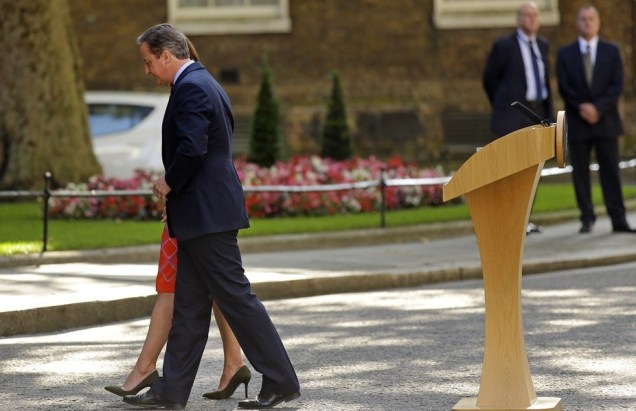
david-cameron-resignation-statement

Accustomed to getting their own way and furious at being thwarted by mere democracy, the political elite are responding to recent setbacks by doubling down on behaviours which could soon see them swept away completely

One would be hard pressed to find a better charge sheet against the British political elite – and explanation for the populist backlash currently being felt by every well-manicured and over-rehearsed politician in the country – than the one recently laid out by Charles Moore in The Spectator.

Moore writes, in explaining why he is now “cheering for the populist right”:

It may sound Marxist to say this, but I do think the elites have constructed a world order which serves their interests, not those of their subject populations. You see it in little things, like the fact that European commissioners, when they leave their posts, receive enormous ‘transition’ payments (it was reported that Peter Mandelson got £1 million) on top of their salaries and pensions. You see it in big things, like the fact that nearly half the young people of Spain, Italy and Greece have to go without jobs in order to enforce Germanic theories about central banking and Brussels doctrines about European integration.

In the second half of the 20th century, the huge projects to which the western world bent its mind more or less worked — the Marshall Plan, Nato, the United Nations Security Council, even the European Community, when it had only six members. What are the equivalent achievements in the 21st century? A pseudo-virtuous climate change agreement reached only because its members know it won’t be observed. A banking crisis resolved in the interests of bankers. A threat from Islamist terrorism which the outgoing President of the most powerful nation on earth still cannot admit even exists.

It does sound a little Marxist to talk about the elites in this way, as Charles Moore fears, until one remembers that with our decaying institutions and system of crony capitalism, the best and most able to serve the marketplace of goods, services and ideas are no longer the ones rising to the top. Therefore, to criticise them is not to criticise capitalism or the free market, because if you were to strip away the privilege of those at the top of the political, legal and commercial worlds and force the inhabitants to fight their way back up to the top from a level playing field, most of them would be living on the streets within a year. This is the dismal calibre of people we now allow to rise to the top of our society; to criticise them is not Marxist, it is to yearn for some semblance of a meritocracy.

Moore continues:

The response of elites to their failures is too often to stigmatise the people who complain. Those who protest at immigration levels ten times higher than 30 years ago are treated as racists. Even the ballot box itself is seen as ‘populist’. Remainers argue that the referendum issues were ‘too complicated’ for voters. They seem actively to dislike the idea that our nation should once more be governed by its elected representatives. Having failed electorally, they turn to ‘lawfare’ — preferring a case before the Supreme Court to the direct implementation of what Parliament handed to the people to decide. Voters now believe that their rulers really do not like them very much, so the feeling becomes mutual.

Yes, a thousand times yes. And it is hilarious watching tone deaf politicians openly disparage the same parts of the electorate that they will be sucking up to in futility when the next general election rolls around. Most people possess a base level of social awareness. They know when they are being looked down upon, or worse, mocked. The experience shuts ears and hardens hearts against future persuasion. That so many MPs and commentators still do not realise this is a testament to the low calibre of people we have allowed to rise to the top of the political and journalism worlds.

Consider: Ed Miliband fought the 2015 general election on the premise that David Cameron and the Conservative Party were evil, far-right ideologues. Many respectable people who voted Tory in 2010 did not take kindly to the Labour Party suggesting that they were aiding and abetting evil, and now you can find Ed Miliband on the backbenches, giving forgettable speeches to a half empty Commons chamber. And yet the lesson has not been learned – many politicians now calling Brexit a calamity and deriding Brexiteers as either malevolent racists or useful idiots will be asking those same people for their vote in 2020 (or sooner). You don’t need to be Nostradamus to figure out how the electorate is likely to respond.

More from Moore:

In this respect, the culture war matters. You cannot go on saying that white straight males are brutes without eventually annoying them (and even a significant proportion of what John Prescott used to call their ‘womenfolk’). The cultural signals from the powerful are almost unthinkingly hostile to majority populations. This month, to take a minor example, a report into ‘diversity’ in the theatre commissioned by Andrew Lloyd Webber reported (reusing a phrase from Greg Dyke years ago) that it is ‘hideously white’. Why should the dominant racial characteristic of all western societies be considered ‘hideous’? If you said that anything was ‘hideously black’ you would (rightly) be shunned by polite society. Such asymmetry inspires revolt. The rise of Trumpery shows that the right has learnt a tactic of the left, which is to play up grievance to get power, money and attention. Grievance politics is extremely unattractive, but if western societies no longer deliver rising general prosperity and disrespect the people whom they are failing to serve, what do you expect?

And yet the Left continues to push aggressive multiculturalism and identity politics, even seeking to thwart Brexit so as to continue working towards their goal of undermining of the nation state.

This is dangerous. As Michael Lind once remarked, “the loyalties that succeed national solidarity are likely to be narrower, not broader”. Focus on individual racial identities, undermine the nation state, undermine Britain and any healthy sense of national identity and purpose we might otherwise have, and we very quickly descend into a jealously competing confederation of special interest groups, each one claiming some special victim status and viewing itself as oppressed by the others.

The Labour Party, which has long served the elites rather than the working man or woman, is currently in the process of falling down a chasm of their own making, between people who recognise and oppose this danger (their rapidly diminishing working class vote) and those who choose to remain blithely ignorant because they are not presently feeling many negative consequences (the virtue-signalling middle class clerisy). Both groups are coming to hate and scorn one another, yet Labour needs both to turn out in sufficient numbers if they are ever to win a general election again.

But indulge the populist side and the elitist side becomes enraged, and vice versa. Try to fudge the issue by making half-hearted gestures to each side (like Labour’s immigration coffee mug) and it alienates one side while failing to persuade the other.

In fact, populism vs elitism is rapidly becoming the new axis of our politics, which is a shame. There should be no question that when the interests and attitudes of the elite turn stridently against those of ordinary people, we should side with the ordinary people against the elites. That does not mean adopting every daft populist idea that comes along, but by actually taking into account the hopes, concerns and aspirations of ordinary people in regular policymaking we might hope to avoid finding ourselves in another situation where so many people see the likes of Donald Trump or Nigel Farage as their only salvation.

In other words, a certain amount of populism should be hardwired into our politics, so that it does not fester unseen and then break free to dominate proceedings and create destabilising uncertainty. The left vs right, authoritarian vs libertarian arguments remain far more interesting than the populism vs elitism shouting match, but it is currently being overshadowed as we debate idiotic questions like whether or not the wisdom of a powerful elite ought to cancel out the result of a national referendum. When we disagree about such fundamentals, worrying about what the government does and does not do for its citizens inevitably rather takes a back seat.

Moore concludes that “if, in a parliamentary democracy, the elites and the voters markedly diverge, one must surely bet that the elites are likelier to be wrong”. And the elites certainly have been short-sighted, self-serving and often outright wrong on a parade of key issues.

The political elite have perhaps one last chance to check their arrogant and selfish behaviour before they trigger an even bigger backlash, and things start to get really bad.


globalism-versus-culture

Support Semi-Partisan Politics with a one-time or recurring donation:

Agree with this article? Violently disagree? Scroll down to leave a comment.

Follow Semi-Partisan Politics on TwitterFacebook and Medium.

Ann Widdecombe Is Right To Encourage Rebellion Against Political Correctness

18-year-old Sam would be horrified to hear 33-year-old Sam admit it*, but Ann Widdecombe is actually right more often than she is wrong – and never more right than when she recently gave an interview to BBC Parliament and veered onto the topic of political correctness.

(* As a 19-year-old lefty student at Cambridge, full of self-righteous assurance and moral superiority, I once accosted Ann Widdecombe in the bar of the Cambridge Union after the annual “This House Has No Confidence In Her Majesty’s Government” debate and no doubt made a complete idiot of myself in the process, though for some time afterwards it pleased me to brag about having supposedly confounded Widdecombe with my impeccable logic and well-rehearsed diatribe against the Evil Tor-ees.)

The BBC reports:

Political correctness is “silencing a great body of thought”, the 69-year old says, to the point where she wonders if we can still claim to live in a free society.

She worries that almost everyone is under pressure to keep their views to themselves, not just those with strongly-held political or ethical convictions

“You actually get bright, intelligent people that could hold their own anyway, saying to you: ‘Well, of course you can’t say that these days’. And I think: ‘Yes you can’.

“This is not the Soviet Union. You should not be constrained by state orthodoxy.

“You should be able to say what you individually think and if it is unpopular, you should stand your ground.”

And continues:

In such a climate, she says it is doubly important that politicians speak out.

“The only people who don’t have to (keep quiet) are the parliamentarians. We can say what we like. We can be against gay marriage, we can be against abortion, we can want to limit immigration – we can say what we like.

“The ordinary citizen is much less blessed these days. I’ve always said if you hold a view what is the point of holding it if you don’t stick by it.”

Widdecombe is absolutely right to emphasise the special responsibility which falls upon those with unpopular or minority views to actually air their beliefs so that unpopular ideas can be tested and either be found wanting and discarded or be acclaimed and more widely adopted based on their merits.

I have just come back from a friend’s Christmas party in a very fashionable part of London, a lovely evening, but one in which I was (for the second time this month) presented with the situation in which a fellow party-goer and friend-of-a-friend casually disparaged Brexit and Brexiteers to my face, automatically assuming that I would agree with their stance.

As happened last time, a virtual decision tree flickered to life in my mind. Do I do what the political blogger and ardent Brexiteer in me wants most, and dramatically out myself as a Leave voter before going on to deliver some barbed and witty put-downs of smug London-dwelling Remainers? If I do so, will it escalate into an argument which might be embarrassing for the hosts? Will it embarrass my wife? Is there a genuine opportunity to change minds, or is this just an opportunity to invite social ostracisation with no realistic potential upside?

On different days and in different scenarios and moods, I opt to go down different branches of the decision tree. On this occasion, knowing my audience, I deemed that there was no realistic opportunity to change minds or even plant the seeds of doubt, and so I changed the subject and ended up having a very pleasant conversation with the chap about other matters.

It is important to note that this friend-of-a-friend is a good guy in every respect – he is just lost to reason on one particular, highly important topic. And while I may not have been afforded the same courtesy had the situation been reversed, I think it is important for Brexiteers to hold themselves to higher standards of behaviour than some Remainers seem to be displaying in their sneering contempt of those who dared to vote their principles rather than their wallets.

On other occasions, I have taken the opposite approach and confronted idiotic EU-worship and criticism of Brexit with the immediate revelation that I am a eurosceptic Brexiteer and that anybody intending to insult Brexiteers in my presence had better be packing something more powerful than smug, idiotic, failed talking points from Stronger In. The last time I took this approach, a couple of weeks ago, the person concerned physically moved her seat a couple of inches further away from me, and frosty silence reigned throughout dinner.

Aside from casual interactions with friends (who no doubt feel duty-bound not to dismiss me out of hand because of our shared history) I have had zero success talking to Remainers in social settings with any degree of success, regardless of the approach I choose. But I am increasingly coming to the opinion that on this subject, as Ann Widdecombe says, “you should be able to say what you individually think and if it is unpopular, you should stand your ground”.

Of course there will always be times when getting into a heated political debate at somebody’s wedding reception is not the right course of action. But having now witnessed how a fairly representative sample of professional young Londoners feel about Brexit and Brexiteers, I think that these people urgently need to hear dissenting voices – if not to change their minds (for such a feat seems impossible) then at least to make the point that there are intelligent young professional Londoners out there who do support Brexit and whose political philosophy consists of something more than vacuous, superficial internationalism and a readiness to believe pro-EU propaganda and apologetics.

And whether the subject is Brexit or any of the issues falling under the suffocating blanket of social justice and identity politics, now is not the time for Brexiteers, conservatives, free speech supporters or other modern day heretics to stay hidden in the closet. Not with so much at stake.

Some of the most illiberal movements in society right now – the establishment’s rearguard fight against Brexit, the trampling of free speech under the jackboots of the Cult of Social Justice and Identity Politics – are fuelled by ignorance of and antipathy toward those who dissent from the leftist orthodoxy. Those dissenters such as myself, living deep behind enemy lines in places like central London, almost have a duty to show that Brexiteers, anti-SJWs and other latter-day thought criminals are more than the two-dimensional caricatures painted by screeching left-wing propaganda outlets like the Guardian and Independent.

95 percent of the time, this may be a lost cause. But once in awhile it may lead to a conversation, and even to a changed mind. Was swallowing my tongue and changing the subject in the face of lazy Brexit criticism the right decision this evening, given that the payoff for me was an hour of pleasant small talk and the knowledge that I helped perpetuate ignorance on such an important subject? Probably not.

Next time I am confronted with the Brexit/Social Justice-in-a-social-situation decision tree, I shall hold my ground unapologetically. Henceforth, the price of airily expressing half-baked political opinions in my presence, in the arrogant expectation that everyone present will concur, will be a thundering response from me which might make even Ann Widdecombe proud. Not only when I am feeling particularly up for a debate, but every single time, even when I would rather have a quiet, conflict-free evening.

That much is the least that I can do – that we all should be doing – for the causes in which we believe.


brexit-pixabay

Brexit - EU Referendum - European Union - Apocalypse

Support Semi-Partisan Politics with a one-time or recurring donation:

Agree with this article? Violently disagree? Scroll down to leave a comment.

Follow Semi-Partisan Politics on TwitterFacebook and Medium.