Music For The Day

Definitely not Gilbert & Sullivan

“The Lost Chord”, a song by Sir Arthur Sullivan, setting to music a poem by Adelaide Anne Procter. In this 1939 recording, the song is performed by British tenor Webster Booth.

The song was immediately popular on its publication in 1877, and was memorably performed by Italian tenor Enrico Caruso at a benefit concert for the families of the victims of the Titanic sinking at the Metropolitan Opera in New York on 29 April 1912.

The song is also performed movingly in the Mike Leigh film “Topsy Turvy”, focusing on the famous and often fraught partnership between Arthur Sullivan and his librettist WS Gilbert.

Almost achingly Victorian in style, The Lost Chord has more than a shade of morbidity to it, together with that 19th century greater ease and familiarity with death and loss, which 140 years of medical advances have incrementally, thankfully, deprived us.


The Lost Chord

Seated one day at the organ, I was weary and ill at ease,
And my fingers wander’d idly over the noisy keys;
I knew not what I was playing, or what I was dreaming then,
But I struck one chord of music like the sound of a great Amen.

It flooded the crimson twilight like the close of an angel’s psalm,
And it lay on my fever’d spirit with a touch of infinite calm.
It quieted pain and sorrow like love overcoming strife,
It seem’d the harmonious echo from our discordant life.

It link’d all perplexèd meanings into one perfect peace
And trembled away into silence as if it were loth to cease;
I have sought, but I seek it vainly, that one lost chord divine,
Which came from the soul of the organ and enter’d into mine.

It may be that Death’s bright angel will speak in that chord again;
It may be that only in Heav’n I shall hear that grand Amen!


the-lost-chord-sir-arthur-sullivan

Image: Gilbert and Sullivan Archive

Follow Semi-Partisan Politics on TwitterFacebook and Medium.

A Crisis Of Identity: When Global Elites Forget How To Be Patriotic

global-elite

The global, liberal elite are increasingly transcending any lingering commitment to patriotism and national identity, setting them on a collision course with the small-c conservative majority

Michael Lind has an unmissable essay in the National Review this week, entitled “The Open-Borders ‘Liberaltarianism’ of the New Urban Elite“, which manages to explain so much about the rise of Donald Trump and the growing inability of political elites in America and Britain to speak to whole swathes of the country they supposedly control.

The crux of Lind’s argument seems to be that the educated, liberal (to use American parlance) inhabitants of the large cities have increasingly taken on what were always fringe libertarian ideas about open borders and the irrelevance or undesirability of the nation state, leading them to pursue policies and espouse values which alienate the more suburban and rural population.

Key quote:

To date, the public conversation on both sides of the Atlantic has been dominated almost entirely by the elite inhabitants of Densitaria, interrupted only by occasional populist revolts such as the Trump phenomenon or the Brexit vote. In a relatively short period of time, a new elite ideology has emerged that contrasts the dynamic, multicultural, libertarian city-state with the allegedly anachronistic and immoral nation-state. This ascendant worldview unites the open-borders economics and cosmopolitan, utilitarian morality of old-fashioned libertarianism with an idealization of the largest cities and their denizens.

In the 1970s and 1980s, libertarians made all of the major arguments heard from globalists since the 1990s: Favoring citizens over foreign nationals is the equivalent of racism; national borders impeding the free flow of labor and goods are both immoral and inefficient; the goal of trade and immigration policy should not be the relative security or relative wealth of particular countries, but the absolute economic well-being of all human beings.

Until the 1990s, this was an eccentric minority perspective in the U.S. and other democracies, encountered only in small-circulation libertarian journals or in the work of the occasional unworldly academic theorist of cosmopolitan ethics. But in the 2000s, as affluent whites from the professional class and their Latino, immigrant, and black allies displaced working-class whites as the base of the Democratic party, the traditional labor-liberal opposition to low-wage immigration and offshoring of industry was replaced by a new open-borders progressivism distinguishable from traditional libertarianism only by its unworkable combination of support for unrestricted immigration with a generous national welfare state.

This certainly accounts for one of the main reasons behind the Labour Party’s civil war in Britain – from the Blair era onward, Labour has been entirely captured by the open-borders progressives and increasingly turned its back on its former working class voter base. Even under the current Labour leadership election, both candidates hold open borders convictions to their core, even if only Owen Smith is stupid enough to rant about overturning the EU referendum result in public.

It also accounts for the increasing public rage (among non-progressives) about immigration in America, where the Democrats are proud and unrepentant in their support for illegal immigration while the Republicans have talked a tough talk for decades yet done nothing, precisely because the Republican political elites benefit from the current immigration status quo as much as anyone. Enter Donald Trump to an arena where nobody else is even seriously talking about the impact of mass immigration on wages and cultural cohesion, and one cannot be surprised when his crude, simplistic solutions gain political traction.

More:

The combination of open-borders “liberaltarianism” and trendy urbanist hype might lead one to wonder whether leagues of dynamic city-states should replace moribund modern nation-states. Benjamin Barber has published a book titled If Mayors Ruled the World: Dysfunctional Nations, Rising Cities. Barber is one of the founders of the Global Parliament of Mayors, which, according to his website, can help “fill the void left by nation states who [sic] are increasingly dysfunctional.” The economist Paul Romer has proposed boosting Third World development by means of semi-autonomous “charter cities,” which to his critics look remarkably like Western colonial enclaves.

Not even Barber and Romer propose actual urban independence. While cities may teach one another best practices, there is not the slightest chance that leading American cities will secede from the United States, link up with other city-states around the world, and form a new, global version of the Hanseatic League or the Delian League.

We saw the same loose talk after the EU referendum vote, with many Londoners (most of whom have no conception of what the EU really is or how it works) furious at having part of their cosmopolitan identity ripped away from them (as they see it) suggesting that London should somehow secede from the rest of the “backward” United Kingdom and become its own independent city state.

Of course this would never actually happen, but it shows just how disconnected the metropolitan elites are becoming from the country as a whole, and the sheer contempt with which they regard other regions which dared to express their patriotism and belief in self-determination by voting for Brexit. It is also misplaced arrogance of the worst sort – the lights would go out and people would begin to starve in London within days were it not for the arterial links of people and goods from the supposedly terrible and backward rural and suburban regions.

And it is this continual feeling of disrespect, I think, which does so much to drive populist insurgencies like the rise of Donald Trump, and (if I am honest) even those populist causes that I actually agree with, like Brexit. People in the industrial and commuter heartlands, as well as rural folk, are getting increasingly sick of being told that they are too backward, too intolerant, too racist, that their own priorities and concerns do not matter and that they should be led in all regards by an urban elite who don’t even seem terribly attached to the country that gives them life and liberty, and who find the slightest display of national pride or patriotism almost painfully embarrassing.

I’m fortunate. I got into a good university and managed to embark on a career which has seen me work in numerous countries across three continents. But if this had not been the case – if, like many of my peers, an international business career was either never on the cards or simply not what I wanted to do – then I would probably be quite put out by people whose interest and commitment to any one country seems transitory at best telling me what I should think about immigration, global governance and democracy.

Now living in remain-voting West Hampstead, I am surrounded by the kind of people who are aghast at the Brexit vote and who consider it a calamity brought down upon the heads by the kind of ignorant, unwashed oiks whom they would never normally speak to unless they were fixing their car or serving them a burger. I can see how it must grate with Middle England, because it grates with me.

Lind goes on to touch on this point:

What appears to be a debate among globalists and nationalists, then, is really a debate about the structure of the 21st-century nation-state. There are real dangers associated with the coalescing elite ideology of post-national globalism or, to be precise, national-elite pseudo-globalism.

One danger is groupthink resulting from the attempt by the new globalists to equate even enlightened and civic nationalism with racism. When the economist Larry Summers, nobody’s idea of a pitchfork-waving populist, tentatively called for “responsible nationalism,” he was criticized by The Economist, whose open-borders libertarianism, once eccentric, has become near-orthodoxy among the trans-Atlantic elite.

And closes with this stark warning:

The most significant threat is the possibility that the abandonment of national patriotism by many elite citizens of the nation-state for make-believe cosmopolitanism will weaken national unity, to the benefit of sub-national racism, ethnocentrism, and regionalism. The loyalties that succeed national solidarity are likely to be narrower, not broader. If history is any guide, the victims of tribalism and illiberal populism are likely to include would-be citizens of the world who despise the nation-states that make possible not only their wealth but also their security.

Absolutely. This blog has been banging on for years about the continued importance of the nation state as the final guarantor of most of our most precious rights and freedoms. But the nation state is also, in the democratic age, a relatively harmless way of allowing people to feel and express a sense of belonging and community pride without tipping over into other, much darker expressions of identity.

Those weepy europhiles mourning Britain’s imminent departure from the EU because they consider themselves “European citizens” might want to pause and think through the consequences of further undermining the nation state, which is the primary aim of their beloved project. Because enlightened, one-world government is a few centuries away yet, and whatever crops up to replace the nation state that they so eagerly undermine will likely be unpleasant, even violent.

And while it may not be purely libertarian, this blog would much rather live in a world of moderate, familiar nationalist rivalry than descend into the known horrors of ethnic or religious sectarianism. We already see the early fruits of this blinkered commitment to “multiculturalism” in self-segregated and un-policed communities here in Britain among certain immigrant populations. We don’t need to extend those delights to the entire population.

What is the solution? Michael Lind does not offer one, and this blog does not see an easy fix either. But when global elites (Davos Man and the like) and the next tier down (those with international lives and careers) have more in common with each other than with those of other socio-economic groups and communities in their own countries, it is a recipe for political alienation and the eventual fracturing of our civic life.

To avoid disaster and a true crisis of democracy, our ruling elites in the political and commercial sphere must somehow learn to be patriotic again – for if the nation state has no champions it will go on being relentlessly undermined on all fronts. But right now there is little evidence that they are remotely interested in bridging the growing chasm between their own interests and those of the people they supposedly “serve”.

This leaves the field wide open for the likes of Donald Trump and UKIP 3.0 to make inroads with voters left cold by the other options available to them. And the time may soon come when the political elites sorely regret ceding this territory.

 

globalism-versus-culture

Bottom Image: Stefan Molyneux, Globalism versus Culture

Support Semi-Partisan Politics with a one-time or recurring donation:

Agree with this article? Violently disagree? Scroll down to leave a comment.

Follow Semi-Partisan Politics on TwitterFacebook and Medium.

No Amount Of ‘Education’ Will Make Sceptical Europeans Love The EU

What to do when the continent’s biggest military power and second-largest economy decides to leave your crumbling, tarnished and perennially unwanted supranational political union? Finally consider meaningful reforms? Engage in a sincere listening exercise? Devolve power back to nation states and local communities? Do anything, anything at all, to signal that the European Union might be something that works for the people rather than something which is done to them?

Of course not. When faced with incontrovertible evidence that citizens are starting to rebel en masse against the idea of shared sovereignty, dissolving borders and supranational government, clearly the correct thing to do is to declare that European citizens simply don’t understand the wonderful gift bequeathed to them, and then pledge to funnel more money towards their re-education.

From the Guardian:

The European commission will spend tens of millions more euros promoting the ideal of the EU citizen, in defiance of British ministers, under plans drawn up by officials in Brussels in the wake of the Brexit vote.

Officials for the European parliament claim there is now a clear need for a significant increase in spending on the Europe for Citizens (EFC) programme, which aims to foster the notion of an EU citizenry. The programme had its budget cut from €215m (£185m) to €185.5m (£159m) after a request from Britain in 2013.

“Considering the current political climate, in which an increasing number of citizens question the foundations of the EU, decisive action is indispensable,” an assessment of the programme by officials in the European parliament reports.

“It is for this reason that the reduction in funding for the EFC programme is a serious handicap to successful implementation: to reiterate, the budget for the current EFC programme is €185.5m (down from €215m under the previous programme), which amounts to merely 0.0171% of the EU multiannual financial framework.”

The aim of EFC is said to be that of developing “a better understanding” of the EU across all its member states, to fund remembrance events for key moments in European history and combat scepticism about the EU project.

The assessment document says that funding “which promotes and enables citizens to engage in European matters is of vital importance, especially in times when Euroscepticism is on the rise”.

This only emphasises the degree to which the European Union is an answer to a question which was never even asked. If the various peoples of Europe had gradually come to realise over the course of the 20th century that they shared such a common heritage of laws, language, culture and strategic interests that they wanted to institute a shared common government then the EU or something like it would have developed organically.

But of course no such thing happened – the idea of supranational political union was artificially imposed on European people largely by stealth and in secret over the course of many decades. And while many members of the European political elite get misty-eyed over the EU, the majority of its citizens tolerate rather than welcome this extra layer of government. The flag and the anthem are utterly meaningless to most of the EU’s 510 million citizens – the spine does not stiffen nor the heart quicken at the sight of the twelve stars or the strains of “Ode to Joy”. And unlike the American founding fathers, the secretive “founders” of the EU are unknown, unloved and languish in richly-deserved obscurity.

The hard truth for the euro-federalists is that no amount of money spent on “education” will make people fall in love with the European Union. Love of family, community and country is something which must well up from within; it cannot be successfully imposed by external agents. And likewise, if people do not feel instinctively European over and above their distinct national identities, a true European demos cannot be created – despite the best efforts of the European Union’s architects to defy both human nature and democracy.

Double the peak budget and spend another €215m on idealising the European Union and creating uncritical, misleading propaganda and it will still make no difference, save lining the pockets of opportunistic “cultural” and “artistic” parasites who will happily take taxpayer money to plaster the EU logo over their concerts, plays and workshops.

In other words, it is the perfect EU project. Just don’t expect it to make the slightest bit of difference to anything at all.


eu-europe-for-citizens-programme

Support Semi-Partisan Politics with a one-time or recurring donation:

Agree with this article? Violently disagree? Scroll down to leave a comment.

Follow Semi-Partisan Politics on TwitterFacebook and Medium.

Alan Johnson’s Permanent Revolution

Despite Owen Smith’s imminent, glorious defeat at the hands of Jeremy Corbyn in the Labour leadership contest Take 2, New Labour grandee Alan Johnson is in no mood for acceptance and reconciliation.

In fact, as the Telegraph reports, Alan Johnson is still firmly stuck in the “denial” stage of grief for the stalled New Labour centrist agenda to which he dedicated his political career:

Moderate Labour MPs must wage a remorseless campaign to undermine Jeremy Corbyn’s leadership “year after year” or the party will die, Alan Johnson has said.

The former Cabinet minister called on his colleagues on the centre-Left to “recapture this party” from Mr Corbyn and his socialist allies by emulating their record of opposing previous Labour leaders.

Mr Corbyn is expected to be re-elected as party leader next week, with another landslide majority from members, but he lacks the support of most of his own MPs.

The Labour leader admitted on Saturday to making mistakes and disclosed that he would be making a peace offer to MPs in an attempt to persuade his critics to return to the shadow cabinet.

However, Mr Johnson, the former Home Secretary, condemned Mr Corbyn as “useless”, “incompetent” and “incapable” of running a political party, and called on rebels not to give up their efforts to oust him.

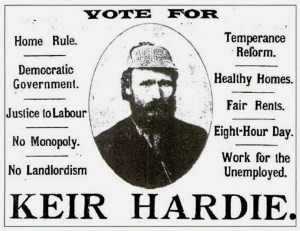
So it’s to be a permanent revolution, then – at least in the puffed-up, self-important world of Alan Johnson’s imagination. Labour MPs should continue to loudly and proudly wear their contempt for their core voters like a perverse badge of honour, be it on Brexit or their preferred choice for leader of the party. The PLP should ruthlessly pursue its own agenda while still demanding and assuming the support of the CLPs who stated their preference for Corbyn, and who will become increasingly enraged by any further attempts to remove him. What could possibly go wrong?

Back on planet Earth, though, the groundwork continues to be laid for the PLP’s abject, humiliating capitulation to Jeremy Corbyn – as this blog has discussed here and here.

Labour’s centrist MPs have severely tarnished their reputation by opportunistically exploiting the EU referendum result to rise up against their party leader, and then failing to put forth any better candidates than the hapless Angela Eagle and the detestable Owen Smith. They have no real political capital left to spend, and while the Corbynite dream of mass deselections may still be out of reach now, another mass rebellion of the centrists would all but guarantee a severe grassroots response.

Besides, all this talk of petulant, hysterical and unending opposition to Corbynism is a bit rich coming from a man repeatedly urged to step up and challenge for the Labour Party leadership himself, but who lacked the courage and willingness for self-sacrifice to answer the call even once.

If Alan Johnson really wants to recapture the Labour Party from the Corbynites, he might consider sitting down with a notepad and pen and trying to come up with some attractive new centrist policies which don’t simply look like splitting the difference between Margaret Thatcher and Michael Foot. Want ordinary people to be enthused by centre-leftish policies? Then stop making them such a darn fudge. Stop desperately chasing votes and start crafting the policies which might actually win votes.

But why go to the trouble of doing anything constructive when one can just carp from the sidelines?


keir-hardie-labour-party

Support Semi-Partisan Politics with a one-time or recurring donation:

Agree with this article? Violently disagree? Scroll down to leave a comment.

Follow Semi-Partisan Politics on TwitterFacebook and Medium.

The Future Of This Blog: Readership Poll

Political Blogging 2

To infinity, and beyond…


UPDATE – 18 September: Many thanks to all those who have completed the surveys and taken the time to share comments or send me emails with your further thoughts as to the future of this blog – your input is very much appreciated, and the feedback I am getting is very useful. The polls will stay open for a further five days and then I will review the results in detail and blog my response and future plans. In the meantime, business as usual…


Driven primarily by the recent EU referendum, 2016 has already been by far the biggest year in the four-year history of Semi-Partisan Politics, with all daily, monthly and annual pageview records easily surpassed and many new readers arriving from around the world – not to mention a successful appearance on the BBC Daily Politics.

I want to thank all of you for your readership and support, and for making my angry and sometimes less-than-coherent rantings a part of your daily reading. To those who made generous financial contributions during the EU referendum campaign – a heartfelt thank you. I could not have sustained the pace of blogging and analysis over that hectic period without your help. And to those who have become regular commenters – you continue to teach me, challenge and stretch my thinking in new directions rather than simply reinforcing my existing prejudices. Your input has made me a more rounded thinker and (I hope) a better writer. Thank you.

But now we must look to the future…

Soon, both the EU referendum and the upcoming historic US presidential election will be receding dots in the rear-view mirror, and at this time of change I wanted to reach out to you, my loyal readers, to get a sense of how you would like to see this blog grow and develop over the next 12 months and beyond. I am particularly keen to know whether you think the current blog format (length and frequency of posts) is about right, or if you would like to see stylistic changes, as well as to get a sense of what you think I should be writing about in terms of issues.

I have my own thoughts on the matter, and may as well put my cards on the table. In order to increase readership (and hopefully engagement) further I am thinking of continuing the current schedule of 1-2 normal length commentaries per day, but to supplement this with an additional number (3-5) of short commentaries or reactions to different political developments or stories, as is common in most successful political blogs. These would just be a couple of paragraphs of commentary in reaction to a developing story or a noteworthy piece published elsewhere.

I am conscious that by only posting once or twice per day this blog fails to articulate a position on a lot of significant stories, and this is something I would like to change. And while I will never equal the prodigious output of my blogging hero, the great Andrew Sullivan, I have come to believe that more frequency and variety of posts will hopefully be of interest, encourage more debate and hopefully force me to grow as a political writer.

But all of that being said, I am open to persuasion. Therefore I would be very grateful if you could answer the three main poll questions shown below, to give me a better sense of what you enjoy at Semi-Partisan Politics and what you think can and should be changed.

The first question relates to the format of the blog, i.e. the length and frequency of posts. Please select your one preferred option here:


The second question relates to the topics covered at Semi-Partisan Politics, and whether you think that the site would benefit from a change or sharpening of focus. Here, you can select as many options and topics as you like:


While the third question looks at whether or not I should expand into other social media to reach a potentially much larger audience. Again, you can select as many options as you want in this case:


I would greatly appreciate your feedback on these key questions. Each mini-poll lets you add in your own answer if none of the pre-set responses accurately capture your preference. But if you have any longer or more general comments, please do use the Comments feature to let me know your more detailed thoughts.

Though this blog remains small and relatively unknown (or at least generally unacknowledged by the Westminster media – increasingly I see themes and analyses first expounded here cropping up some months later in more prestigious publications), I think that over the past year in particular something of a community has been forged here, one which I greatly value. I am eager for this growth to continue, and look forward to receiving your input as to how Semi-Partisan Politics should best adapt to face the future.

Thank you for your continued readership and support.


Political Blogging

Support Semi-Partisan Politics with a one-time or recurring donation:

Follow Semi-Partisan Politics on TwitterFacebook and Medium.