In this excellent piece, Andrew Sullivan anticipates the potential eventual outcomes from Pope Francis’ survey of Catholics on their views on the family and family life. Whilst I fear that a wholehearted embrace by the Church hierarchy of the more “progressive” responses such as that by leading German theologians (heavily discussed by Andrew in the article), we can all dare to dream. Any move by Francis and the Church to move toward viewing human sexuality as a gift rather than a doctrinal minefield of issues to be policed and rules to be enforced can only be a good and wonderful thing.
One of the great question marks still hanging over Pope Francis’ tenure as Bishop of Rome is whether any actual doctrinal changes will occur. Damon Linker has a provocative and honest piece out wondering if “liberal” Catholics even care about doctrine any more – because so many have been content simply to celebrate the sharp transformation of tone in the Francis era and the new emphasis on Christianity as an urgent and empowering and demanding way of life. Money quote:
I had assumed all along that liberal Catholics wanted to liberalize Catholic doctrine — that they wanted to bring the church, as I wrote in TNR, “into conformity with the egalitarian ethos of modern liberalism, including its embrace of gay rights, sexual freedom, and gender equality.” But here was a liberal Catholic telling me I’d gotten it all wrong. The pope’s warm, welcoming words are “everything,” Trish said, because…
One real gem of an idea nestling in between the usual stale nonsense.
–
Yesterday we were treated to the spectacle of Work & Pensions Secretary Iain Duncan Smith promising to “slash Britain’s benefits bill” by picking around the edges of the problem and denying benefits to immigrants who do not speak fluent English, a transparent piece of Daily-Mail-pandering that sows despair in the hearts of anyone who wants to seriously reform Britain’s welfare system.
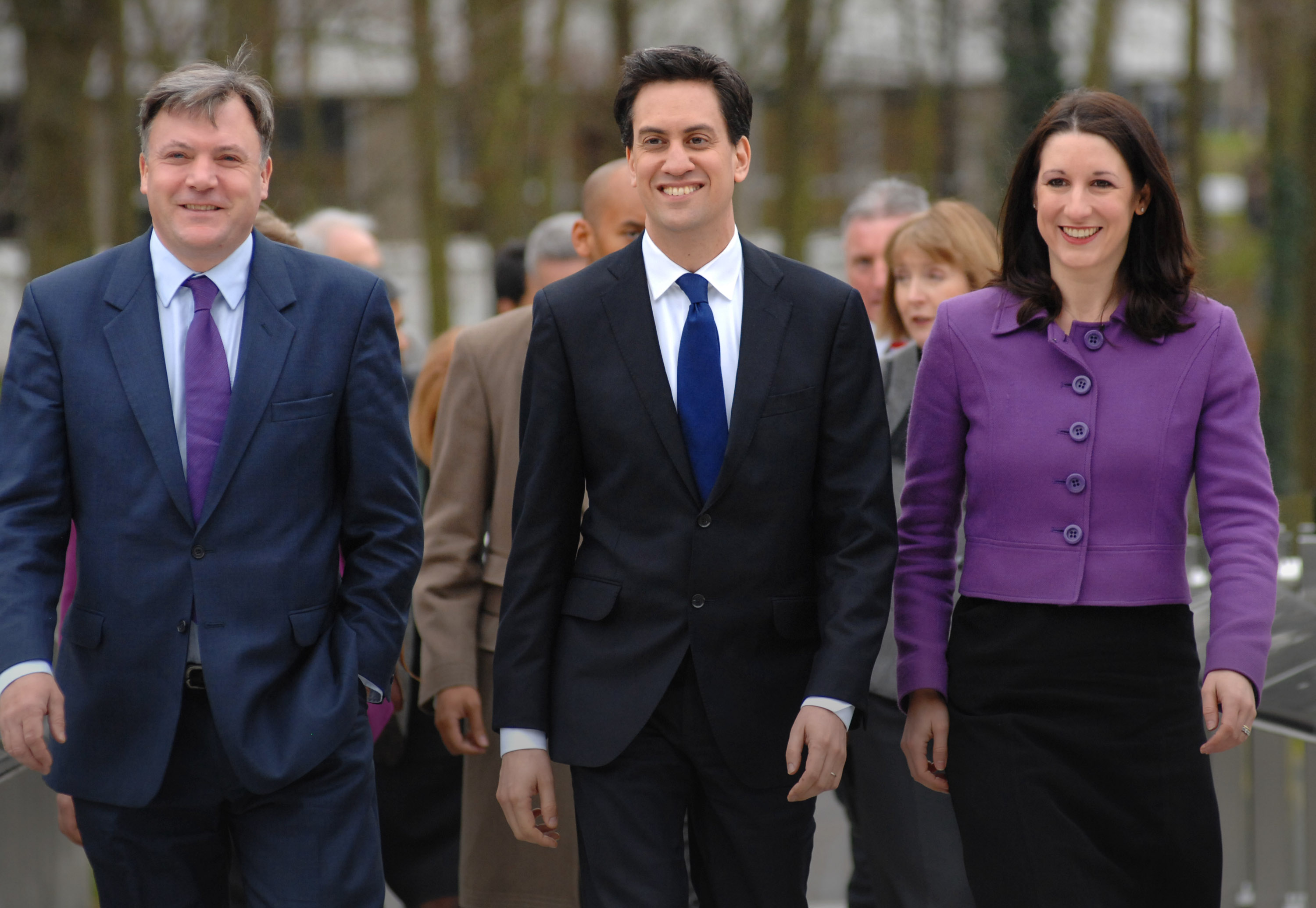
This was a triumphant case of grabbing headlines whilst accomplishing nothing courtesy of the Conservative Party, but it turns out that Labour were not to be outdone. Today, it was the turn of Rachel Reeves, the shadow Work & Pensions Secretary, to put on the Tough Love hat and have a crack at the welfare problem.
Almost anticipating the backlash and onslaught of scepticism, The Guardian hide the story well away in the depths of their online news site, reporting:
Labour would force jobseeker’s allowance claimants with inadequate maths or English to go on basic skills courses as a condition of receiving their benefit, Rachel Reeves, the shadow work and pensions secretary, will say on Monday .
It is estimated that one in 10 of Britain’s 250,000 monthly new JSA claimants have inadequate maths or English, two skills critical to finding work. Nearly 20% of those with repeat claims have problems with reading or numeracy. Labour said the pledge could be funded from the existing skills programme.
Much as with the Tory announcement on welfare, there is nothing inherently wrong with this idea. If a significant proportion of repeat benefits claimants have low literacy or numeracy skills that could be holding them back from gainful employment, then it is probably right and proper to take action to address this skills gap. If, as Labour claim, the testing could be funded with existing money then so much the better. But while there is nothing wrong with the proposal itself, there is everything wrong with unveiling it as a major announcement or in any way a serious attempt at policy change.
Dan Hodges, writing in The Telegraph, spares no time in shooting down the proposal and exposing it for what it is:
Reeves’s speech was trailed in this morning’s Independent. “Her mission is to create a ‘fair and affordable social security system’, with ‘sticks and carrots’ to get the unemployed back to work, which will be good for them and for taxpayers,” wrote the newspaper’s political editor Andy Grice.
That’s not Rachel Reeves’s mission. Her mission, handed to her by her leader, is to make the country think she is planning “tough” reform of welfare, whilst at the same time reassuring the Labour movement she is not preparing any significant reform at all.
“It is hard, but it is also fair. You can call it tough love,” said Reeves. No you can’t. Setting someone a maths test isn’t tough, or loving. It’s a maths test. At her school did they say “right Rachel, you’ve got an hour of PE, an hour of Geography and then an hour of tough love”?
He then rightly contrasts the awesome size of Britain’s welfare bill (here he separates out pensions) with the puny scale of the measures that Reeves is proposing:
Is there anyone anywhere who thinks a maths test will come anywhere near addressing the current crisis of welfare, or if you prefer, the crisis being created by the attack on welfare? It is a nonsensical policy. Saying “the big problem with the welfare system is very few claimants have good numeracy skills” is like saying “the biggest problem with the welfare system is very few claimants have Indian elephants as pets”. It’s true, but it’s irrelevant. Teach them better maths. Teach them better English. Teach them to lightly fry chorizo and play Bach. What impact is that seriously going to have on the nation’s £100 billion welfare bill?
Hodges (who, in course of the past year, has become my favourite Labour-in-exile commentator) believes that Labour would do well to stop talking about welfare altogether, for fear of making themselves appear even more incoherent and opportunistic than they do at present. I would be tempted to agree with him, but for the presence of one genuinely good and revolutionary idea in Reeves’ speech, the proposal to award higher level unemployment benefits to long-term or higher rate taxpayers for the first months of their claim, so as to provide a “soft landing” for those newly out of work.
The Guardian reports:
In her biggest speech since taking on the portfolio, Reeves will also confirm she is seeking to strengthen the contributory principle by exploring how long-term taxpayers can receive a higher-rate allowance for the first months that they are unemployed.
This is laudable, and something that I have myself supported for a long time. Such an action would return the concept of unemployment benefits or Jobseeker’s Allowance to being viewed as a kind of insurance rather than an ever-present and unchanging right.
Why should it be that someone who has worked over a period of years, perhaps in a well paying job, and has contributed many thousands of pounds to the treasury should, on losing his or her job, receive exactly the same allowance as a young person living at home who managed to fall out of eleven years of compulsory education without any qualifications? For the newly-unemployed high earner, jobless benefits may be a way of scraping together enough money to keep making rent, mortgage or bill payments while they scramble to find new work. For the unemployed eighteen year old, that same money may be nothing more than beer tokens to be redeemed at the nearest Wetherspoons pub.
Of course this is a generalisation and of course we cannot individually means test the level of benefits awarded to each claimant based on their individual circumstances – nor would it be the appropriate role of government to attempt such a thing. But surely it is not so outrageous to restore a link between the amount of money contributed in taxes over the years by a new claimant and the amount that they are awarded in benefits? Is that not part of “making work pay”, as well as making sure that capable but overstretched workers (probably with limited to no savings) in today’s precarious economy don’t fall off a complete financial cliff if they happen to lose their jobs? If I sound at all bitter when I discuss this, it is because my argument comes from my own bitter experience.
So overall, another day of great frustration on welfare. Labour have joined the Conservatives in seeking to tinker around the edges in pursuit of cosmetic change and tabloid approval, while the crux of the problem remains conspicuously untackled. The only shining light in the whole tired song and dance, the newly-broached idea of giving higher allowances to higher-contributing taxpayers, was proposed by the party I least suspected to ever endorse such a thing (how on earth did Iain Duncan Smith let Ed Miliband steal a march on him like this?) and while it is truly refreshing to see this being advocated by a major political party in the UK, it is almost sure to die a slow death under withering barrages from the far left proclaiming it “unfair” and “discriminatory”, and another step on the road to a “two-tier Britain”. So clearly and vividly do I see the imminent death of the proposal that it is very hard to generate enthusiasm about its announcement.
From a Conservative perspective, it should also be troubling to David Cameron and to Tory supporters to see Iain Duncan Smith join Michael Gove as the second Conservative minister to be completely outmanoeuvred by their Labour counterpart. With Gove it was the Labour proposal to license teachers and enhance their professional standing and standards, and now with Duncan Smith the Tories were nowhere to be seen when Labour suggested tiered unemployment benefits according to contributions.
In the first years of the coalition government we were continually told of the revolutionary new ideas and policies being cooked up by ambitious Tory ministers determined to enact real change and make their mark after eleven stultifying years of New Labour’s centralisation and standardisation efforts. In 2014, innovation and revolutionary ideas are hard to come by anywhere at all in British political life, but where it does exist, it is not emanating from the Conservative Party.
This should worry anyone who does not want to see the spirit of Gordon Brown in the guise of Ed Miliband reoccupy 10 Downing Street next May.
Two very interesting pieces from the New York Times on the expectations we place on our young people, on those who educate and nurture them, and on our governments. The statistics and minutiae relate to the United States, but the underlying themes and sentiments are, I think, equally relevant to the United Kingdom.
The first is by Thomas Friedman, who lays bare two oft-neglected reasons why educational outcomes in the United States are falling behind those of other countries – the fact that American children are much less willing than they were even in recent decades to put in the work to achieve at high levels, and the fact that their parents demand too little (or demand the wrong things) of the schools to which they are sent. Friedman quotes Education Secretary Arne Duncan’s recent speech to the National Assessment Governing Board’s Education Summit for Parent Leaders:
In 2009, President Obama met with President Lee of South Korea and asked him about his biggest challenge in education. President Lee answered without hesitation: parents in South Korea were ‘too demanding.’ Even his poorest parents demanded a world-class education for their children, and he was having to spend millions of dollars each year to teach English to students in first grade, because his parents won’t let him wait until second grade. … I [wish] our biggest challenge here in the U.S. was too many parents demanding excellent schools.
Imagine that. It would be wonderful to face a problem such as that faced by South Korea here in Britain. A nation full of parents – of all socioeconomic groups – so anxious for their children to succeed, to learn foreign languages, to get ahead from day one, that not only do they actively help their children to succeed academically, but also punish politicians who are perceived to stand in the way of that progress. In Britain, it seems that almost the opposite has taken place – government has rushed with great eagerness to throw money at the education system, with spending doubling in a relatively short period of time, while parents sit back and expect the entire job to be done for them. And those parents who do take a particularly active interest are looked down on by the rest and labelled “pushy parents”, while supposedly serious think tanks propose charging the richer and more astute parents to send their children to the same state schools that other children attend for free.
Friedman asks the following question, one which he hopes President Obama will take up in his upcoming State of the Union address:
Are we falling behind as a country in education not just because we fail to recruit the smartest college students to become teachers or reform-resistant teachers’ unions, but because of our culture today: too many parents and too many kids just don’t take education seriously enough and don’t want to put in the work needed today to really excel?
Ultimately, it is not all about government. It isn’t all about paying our taxes and sitting back and expecting the rest to fall into place automatically. It is difficult in Britain, because the tax burden is so heavy and the state so large that it is almost right to expect miraculous things from the government in all areas. But as a nation I believe we urgently need to dis-enthrall ourselves from the idea that government spending and government policy are the only lever available to improve educational outcomes.
He may have many powers, but he can’t make your kids smarter.
A revolution in personal responsibility and self-motivation would go such a long way. But who will have the courage to lead such a revolution, when the Conservative-led government, supposedly the champions of individual liberty and personal responsibility, is more inclined to protect parents from the potential consequences of their lazy parenting by erecting a pornography filter on the internet than to risk offending them by suggesting that they are derelict in allowing television and the internet to raise their children unsupervised?
————————————-
The second article is depressing in quite another way, and concerns parents who suspect that their child might be gifted. Seth Stephens-Davidowitz writes that an analysis of Google searches reveals that parents in the United States are much more likely to suspect their sons of being intellectually gifted than their daughters, and are more likely to worry about the weight of their daughters than their sons. In other words, even if children were to be magically shielded from the weight of expectations and stereotypes in society at large, some of the most pervasive and damaging ones – that girls should be pretty and slim, and boys intelligent – originate from much closer to home.
To wit:
Start with intelligence. It’s hardly surprising that parents of young children are often excited at the thought that their child may be gifted. In fact, of all Google searches starting “Is my 2-year-old,” the most common next word is “gifted.” But this question is not asked equally about young boys and young girls. Parents are two and a half times more likely to ask “Is my son gifted?” than “Is my daughter gifted?” Parents show a similar bias when using other phrases related to intelligence that they may shy away from saying aloud, like, “Is my son a genius?”
And this:
What concerns do parents disproportionately have for their daughters? Primarily, anything related to appearance. Consider questions about a child’s weight. Parents Google “Is my daughter overweight?” roughly twice as frequently as they Google “Is my son overweight?” Just as with giftedness, this gender bias is not grounded in reality. About 30 percent of girls are overweight, while 33 percent of boys are. Even though scales measure more overweight boys than girls, parents see — or worry about — overweight girls much more often than overweight boys.
Parents are about twice as likely to ask how to get their daughters to lose weight as they are to ask how to get their sons to do the same. Google search data also tell us that mothers and fathers are more likely to wonder whether their daughter is “beautiful” or “ugly.”
If she’s gifted then that’s a bonus, but the real question is whether or not she is overweight.
Apparently these biases transcend socioeconomic group and political affiliation, and so the results cannot be neatly explained away along these lines.
While I probably should not be surprised at these findings, they still make for fairly sobering reading. Stephens-Davidowitz wonders whether there might be a measurable change in the statistics once a woman is elected president and that the eyes of the holdouts might then finally be opened to the intellectual equality of women, but I fear that just as the Obama presidency failed to usher in the post-racial American era, so the first woman president will struggle to overcome the inertia of this weight of expectation.
Two pieces on expectations. The expectations we hold for ourselves, our children and our government. Some food for thought as the weekend draws to a close.
Four years of painstaking research have finally revealed the gaping black hole in Britain’s finances, the reason why the British state has grown so large and expensive yet manages to achieve such mediocre outcomes in so many areas.
No, it wasn’t throwing ever larger sums of money at the same inefficient education and healthcare delivery models. Nothing to do with a rigid retirement age at a time of ever increasing life expectancy. It turns out that the problem was providing multilingual access to benefit claim forms, and translating services to immigrants who lack fluent English. Armed with this knowledge, Iain Duncan Smith, the Work and Pensions secretary, has drafted a clever scheme to fix everything.
The Daily Mail, for whose readers this policy was so transparently and cravenly crafted, summarises it thus:
In a radical bid to slash Britain’s benefits bill, the Prime Minister intends to stop printing welfare paperwork in foreign languages and prevent claimants using taxpayer-funded translators at benefits offices.
The move – which would also hit British residents who cannot speak English – was due to be announced tomorrow, but has been delayed following a row with Nick Clegg.
Tories hope that axeing foreign-language versions of documents explaining how to claim benefits would make it harder for immigrants such as newly arrived Romanians and Bulgarians to cash in on the UK’s benefits system, encourage others already here to learn English – and save money spent on translators.
Anyone who thinks that taking this action will slash Britain’s annual welfare bill needs to go away, look at the figures and then maintain a long period of dignified silence. Social security spending (pensions and benefits) will cost Britain £256 billion in 2014. How much of that vast sum do people really think goes toward printing forms in multiple language and hiring translators? Who, exactly, is the Work and Pensions secretary trying to fool?
Just use Google Translator, that will save some cash.
If you want to do the things that IDS proposes to save some money around the edges then that’s one thing, but to enact them and claim that it will “slash the welfare bill” is misleading and disingenuous. Iain Duncan Smith is a talented minister with otherwise good ideas, and it is discouraging to see him wasting his efforts proposing ideas such as this when he knows full well that they will go nowhere towards solving our fiscal problems.
Of course, there are doubtless some lazy immigrants who are perfectly capable of learning English sufficiently well to be able to function independently, and yet who choose not to do so for one reason or another. Where this refusal is rooted in a stubborn unwillingness to integrate into British society and desire to remain part of an insular and closed community, this is a particular cause for concern, because integrating new immigrants effectively into our country is vital for social, law and order and national security reasons. But threatening to cut benefits from immigrant claimants is highly unlikely to either solve the problem of people persistently failing to learn English or dramatically cut the welfare bill.
If the Tories’ concern about new immigrants struggling to integrate into British society is genuine, then they should propose some positive ideas to help promote inclusion and cohesion, and suggest ways to make it easier for new arrivals to learn their new native language. There should be some carrot (even if the incentive is of the cheapest kind, such as pointing people in the direction of existing English courses at local colleges and institutions) as well as the stick of cutting off access to benefits. If they are not seen to tackle the problem from both ends, many people (myself included) will suspect them of cynical motives.
And cynical they are. This is a proposal designed entirely to grab headlines, but more worryingly than that, it is a proposal designed to win the approval of the Daily Mail. If the Conservative party is really gearing up for 2015 general election mode by pandering to the prejudices of their base rather than reaching out to those whose instincts are to vote Labour or Liberal Democrat (who are likely to roll their eyes at policy announcements such as this) then there is grave cause for concern at their electoral prospects.
All is not yet lost – the Conservative Party has recently shown some signs of attempting to reach out beyond their core supporters. But, as so often, we see these small steps forward immediately neutralised by the two steps back of the let’s-bash-the-immigrants rhetoric. Shedding the label of the “nasty party” is not helped by policy proposals such as this.
The sardonic response from the Liberal Democrats puts it best:
“These are proposals from the Tories which haven’t been agreed in Government,” [the LibDem source] said.
“We’ve already taken significant steps to make sure we all enjoy the right to move and to work, but not a freedom to claim.
“We will look at these proposals, but would prefer the Tories to agree policies in Government rather than chase Ukip’s tail via the Sunday papers.”
The Conservatives would do well to heed this particular pearl of wisdom from their inexperienced junior coalition partners.