
Baker Street, London.
Baker Street, London.

We recently saw the Labour Party make some potentially sensible proposals on education – moving to enhance the status of teachers by simultaneously licensing them and requiring them to undertake continual professional accreditation, and making it easier to fire consistently underperforming teachers and helping them transition out of the profession.
Contrast this good news of the Labour Party embracing a carrot-and-stick performance-based approach to educational reform, with this dismal, tired suggestion from Social Market Foundation. The Guardian reports the details of their latest proposal:
One proposal would see popular state schools being means tested, with the most affluent parents being charged for their children to attend top schools.
Families earning more than £80,000 a year should contribute financially, with those with an annual income above £200,000 having to pay the full price of their children’s education at the best state schools. Fees should be the same for the wealthy as those charged at independent day schools.
This “parent premium” for households earning more than £200,000 a year would generate surplus funds, a quarter of which would be retained by the school, with the rest redistributed among other state schools.
We can lump this nonsensical idea together with all of the other vengeful “clobber the rich” schemes broached by those on the left to create a fairly accurate picture of their ideal Britain. In their Ideal Britain, anyone earning much over £150,000 a year would be subject to a 50% marginal tax rate on their income. And when they reached £200,000 a year, a household wanting to send their children to a “popular state school” would have to pay a school fee in line with the fees charged by private day schools, because why the hell not?

Implementing this policy would likely cause a fair bit of bemusement and anger among the evil rich fat cats being targeted, as they rightly assume that the hefty taxes that they pay entitle them to equal access to the state services that they help to fund. If, when a household has paid well over half of their income to the government once income tax, national insurance, other direct taxes and VAT are taken into account, I don’t think it is very unreasonable to assume that they have contributed enough and maybe give them a break. But not according to the Social Market Foundation. Having gone through the fiscal wringer once already, SMF sees them ripe for further punitive action, charging them for access to the good state schools that they are already paying to fund.
What next? Means testing access to NHS services? Charging for chemotherapy or kidney transplants? Where does this end?
In fact, the SMF proposal would create the bizarre and perverse financial incentive for parents to send their child to a “less good” or less popular state school so as to avoid spending up to £30,000 a year in fees. Their children might suffer as a result, but perhaps those who advocate for ideas such as this would see that as a good thing. By dragging down the progeny of the rich and successful, we create the more equal, mediocre society that they long for.
This is regressive social engineering of the worst kind, dragging down the successful and clobbering them for more money, funds which would be used for the nebulous purpose of “helping the less fortunate”. As always, the methods of taking from the rich and successful are very enthusiastically and clearly articulated, but the process by which those seized funds would be translated directly into helping the less fortunate is much more vague.
The long and short of it is this. I may greatly disagree with the current heavy tax burden, and the huge, creaking behemoth state that it funds, but I also recognise that it is the concept of everyone paying in and everyone being eligible to partake of the results that helps to create social cohesion and makes us a country rather than a bunch of economic agents who happen to live on the same island. Charging richer parents to send their children to schools that they have already paid taxes to provide – indeed, closing off access to any public services from the wealthy people who provide the lions share of the funding for them – only serves to further entrench the us vs. them atmosphere already roiling our country, but this time would give the rich some ammunition to justifiably argue their corner.
Spending on education increased from £40.6 billion in 1999 to £88.6 billion in 2014, and is estimated to rise further to £90.9 billion in 2016. If British educational standards are indeed stagnating or worsening, chronic underinvestment does not make a convincing scapegoat. Making rich people pay market rates to avail themselves of the public services that they have already funded through their taxes would no doubt fulfill many of the darker, more insidious desires of some on the left. But one thing that it would certainly not do is fix our educational problems.


Abbey Road, London.
Tourists and Beatles fans waiting to cross the zebra crossing outside Abbey Road Studios, St. John’s Wood. Taken from the top of the 139 bus.

Evidently given prior notice of the dissatisfaction that was certain to fall on his head should he fail to announce any substantive changes to the bulk telephony data collection programme that flourished under his administration, President Obama triangulated and managed to set out a plan that included the illusion of substantive changes. It may prove enough to fool the trusting and the credulous, but there are precious few of those sorts of people left to be fobbed off.
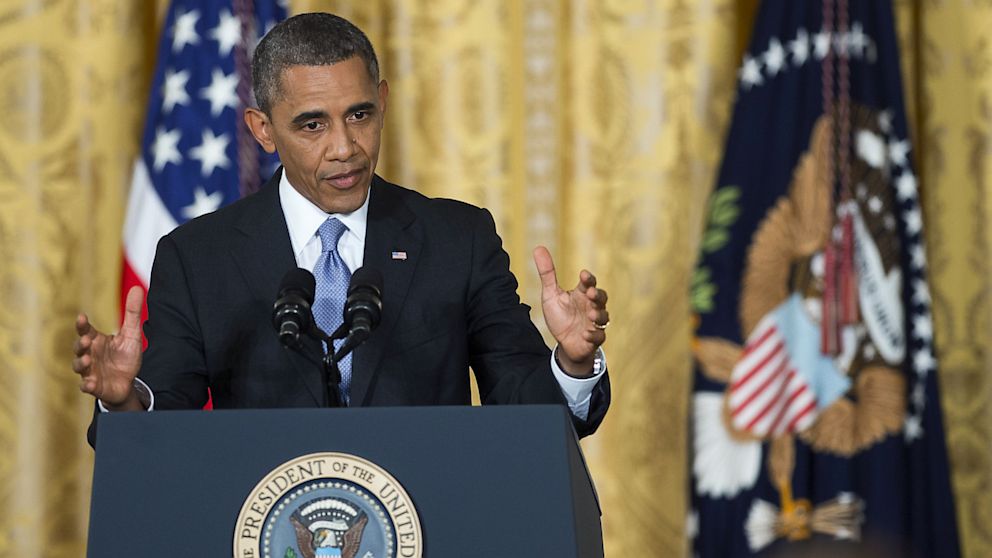
The New York Times gives a good overview:
President Obama, declaring that advances in technology had made it harder “to both defend our nation and uphold our civil liberties,” announced carefully calculated changes to surveillance policies on Friday, saying he would restrict the ability of intelligence agencies to gain access to telephone data, and would ultimately move that data out of the hands of the government.
But Mr. Obama left in place significant elements of the broad surveillance net assembled by the National Security Agency, and left the implementation of many of his changes up to Congress and the intelligence agencies themselves.
The one announcement not earlier anticipated by the New York Times was the fact that the president may be slightly more amenable to the idea of telecommunications companies or as-yet unspecified third parties holding the unconstitutionally-gotten telephony metadata, rather than the NSA itself. The Times reports:
On the question of which entity will hold the storehouse of phone metadata, the president said Mr. Holder would make recommendations in 60 days. Privacy advocates have called for telecommunications providers to keep the data, though many of the companies are resisting it.
And resist they should. Due to the sensitive and highly politically charged nature of the data being held, why would a private firm wish to open itself to potential liability from lawsuits by hosting the data? Furthermore, unsavoury and unconstitutional though it may be for the government to be collating this data, it is probably more secure in the hands of the paranoid and capable people at the NSA than it would be in some corporate data centre.
But all of this is beside the point – it is not the question of where the data is hosted that upsets civil libertarians. If someone robbed banks for a living, the main concern of the public would not be where the robber is hiding the stolen cash before laundering it, it would be the fact that he is robbing banks in the first place. Similarly, the point of contention here is not whether the US government or private telecommunications companies holds vast troves of data about the telephone calls made by US and foreign citizens – it is the fact that the government seeks to monitor and check this information without a warrant to do so in the first place.
It is hard to listen to anything that Obama says on the issue of national security and privacy without remembering that he wouldn’t be saying anything at all had his clandestine spying apparatus not been revealed to the world by Edward Snowden, and that the debate that he now seeks to claim credit for starting would, if he had his way, be held only between competing interests in government, well out of the view or input of the public.
Glenn Greenwald is of the same viewpoint, seeing right through the sham:
The crux of this tactic is that US political leaders pretend to validate and even channel public anger by acknowledging that there are “serious questions that have been raised”. They vow changes to fix the system and ensure these problems never happen again. And they then set out, with their actions, to do exactly the opposite: to make the system prettier and more politically palatable with empty, cosmetic “reforms” so as to placate public anger while leaving the system fundamentally unchanged, even more immune than before to serious challenge.
And how cosmetic these proposed “reforms” really are. Caught in the act of carrying out unconstitutional searches and intrusions into the private communications of US citizens, the president’s response is not to admit any fault, but to utter meaningless platitudes about the importance of “America’s values” while changing nothing of any substance at all:
And now we have the spectacle of President Obama reciting paeans to the values of individual privacy and the pressing need for NSA safeguards. “Individual freedom is the wellspring of human progress,” he gushed with an impressively straight face. “One thing I’m certain of, this debate will make us stronger,” he pronounced, while still seeking to imprison for decades the whistleblower who enabled that debate. The bottom line, he said, is this: “I believe we need a new approach.”
I have just finished reading the excellent essay by George Orwell, “Politics and the English Language”. As well as helping me to realise just how pretentious and cumbersome my own writing can sometimes be on this blog (for which I can only apologise and pledge to try harder), it furnished me with this gem, this eternal truth:
If you simplify your English, you are freed from the worst follies of orthodoxy. You cannot speak any of the necessary dialects, and when you make a stupid remark its stupidity will be obvious, even to yourself. Political language – and with variations this is true of all political parties, from Conservatives to Anarchists – is designed to make lies sound truthful and murder respectable, and to give an appearance of solidity to pure wind.
And this one:
In our time, political speech and writing are largely the defence of the indefensible … Thus political language has to consist largely of euphamism, question-begging and sheer cloudy vagueness. Defenceless villages are bombarded from the air, the inhabitants driven out into the countryside, the cattle machine-gunned, the huts set on fire with incendiary bullets: this is called pacification. Millions of peasants are robbed of their farms and sent trudging along the roads with no more than they can carry: this is called transfer of population or rectification of frontiers … Such phraseology is needed if one wants to name things without calling up mental pictures of them.
President Obama, justifying the intrustive actions of the NSA and seeking to cast his proposed cosmetic reforms in a favourable light, and himself as a champion of individual liberty, said this:
“In an extraordinarily difficult job — one in which actions are second-guessed, success is unreported, and failure can be catastrophic — the men and women of the intelligence community, including the NSA, consistently follow protocols designed to protect the privacy of ordinary people,” he declared. “What sustains those who work at NSA and our other intelligence agencies through all these pressures is the knowledge that their professionalism and dedication play a central role in the defense of our nation.”
And this:
And yet, in our rush to respond to very real and novel threats, the risks of government overreach – the possibility that we lose some of our core liberties in pursuit of security – became more pronounced. We saw, in the immediate aftermath of 9/11, our government engaged in enhanced interrogation techniques that contradicted our values. As a Senator, I was critical of several practices, such as warrantless wiretaps. And all too often new authorities were instituted without adequate public debate.
Through a combination of action by the courts, increased congressional oversight, and adjustments by the previous Administration, some of the worst excesses that emerged after 9/11 were curbed by the time I took office. But a variety of factors have continued to complicate America’s efforts to both defend our nation and uphold our civil liberties.
The “worst excesses” to which Obama refers? Torture. Extraordinary rendition. Illegal search and invasion of privacy. But “techniques that contradicted our values” sounds so much better, so much more clinical and so much less descriptive of what happened.
This isn’t good, is it?

Former French president Nicolas Sarkozy is now weighing in on the ongoing scandal of the presidential booty calls and morning croissants, claiming that President Hollande has made himself and the French presidency “ridiculous”.
The Telegraph reports the following quote attributed to Sarkozy by French investigative journal Le Canard:
“While everyone has the right to a private life, when one is a public figure and president, one must be careful to avoid being ridiculous,” he is quoted as scoffing.
“Well, that photo of Hollande coming out of his mistress’ place with a motorbike helmet makes Hollande look totally ridiculous. He is the ridiculous president.”
The Daily Mail gives an even less flattering report of Sarkozy’s views:
Former French president Nicolas Sarkozy views his successor Francois Hollande as a ‘ridiculous little fat man who dyes his hair’, it emerged today.
The vicious attack is reported by l’Express, the highly respected Paris news magazine whose editor is a close friend of Mr Sarkozy’s third wife, Carla Bruni.
As I see it, the bottom line is this – in three weeks, the French president has to fly to Washington, D.C. to represent his country abroad and maintain bilateral ties with a close ally. And all anyone will care about is whether Hollande might be found late at night zipping around capitol hill on the back of a scooter, looking for ladies. Even if there are non-scandal-related questions at the joint press conference, the only soundbites that will be reported will relate to the scandal back home in France. Hollande is supposed to make his country look good abroad, strengthen bilateral ties and promote France’s interests. Barring a miracle and a swift resolution to this tawdry affair, he won’t be doing that for some time to come.
The scandal is also now causing disquiet and unrest at home, as Buzzfeed reports that a man was arrested for dumping several tonnes of horse manure in front of the Palais Bourbon in protest at Hollande and the French political class in general:

And so this isn’t just an issue of invasion of privacy, or an educational tale highlighting the different attitudes toward privacy between the French and Anglo-American cultures. This is about basic competence, and the ability of a senior politician and statesman to effectively do their job. Actions taken in ones private life can impact this ability to effectively perform the job, and while the utmost respect and tact should rightly be shown to the president as he works through any problems in his personal life (as many have already argued), the most searching and uncompromising oversight should be applied to his performance in the job.
Francois Hollande has, through his own actions, rendered himself incompetent and, to some degree, incapacitated – politically, at least. This incapacity may be temporary or it may be irreversible, but either way it is self-inflicted and profound. It is down to the French people to determine how long they are willing to tolerate a leader for their failings, not in terms of their personal life but in terms of their ability to do the job.


