Rotherham & Cologne: A Tale Of Two Cities Betrayed By Political Correctness

Cologne - Sexual Harrassment Abuse - Virtue Signalling

High-handed elites with their fear and contempt for ordinary people are the greatest internal threat now facing our society

If Western civilisation does ever collapse in upon itself, it will not be the fault of radical Islam, UKIP, Jeremy Corbyn, Donald Trump or Kim Jong-Un’s home-made H-bomb.

It is becoming increasingly clear to me that the fastest route to national or civilisational decline is for our elites to persist in their policy of signalling their virtue by furiously ignoring inconvenient realities, and having infinitely more fear and contempt for their fellow citizens than any real, external threat to our freedom and security.

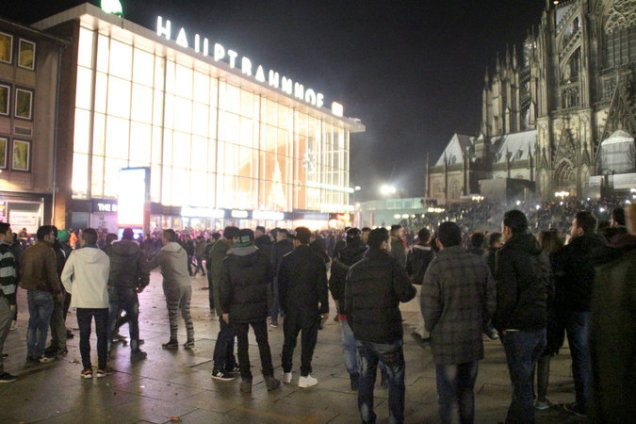
Consider the scandal now unfolding in Germany, where city officials and the media stand accused of covering up important news about a spate of sexual attacks in the city of Cologne, for reasons of political correctness and a painful reluctance to highlight a potential link between these attacks on women and the immigrant population.

From the New York Times:

The tensions simmering beneath Germany’s willingness to take in one million migrants blew into the open on Tuesday after reports that scores of young women in Cologne had been groped and robbed on New Year’s Eve by gangs of men described by the authorities as having “a North African or Arabic” appearance.

[..] The assaults initially were not highlighted by the police and were largely ignored by the German news media in the days afterward.

[..] The descriptions of the assailants — by the police and victims quoted in the news media — as young foreign men who spoke neither German nor English immediately stoked the debate over how to integrate such large numbers of migrants and focused new attention on how to deal with the influx of young, mostly Muslim men from more socially conservative cultures where women do not share the same freedoms and protections as men.

Shockingly, this story has only received significant traction over the past couple of days, despite the events taking place a week ago.

One can almost imagine the terrified police officials and news editors in Germany, sitting on this story of unquestionable public interest, yet paralysed into inaction by the all-consuming fear of appearing in any way racist – as though it were not perfectly possible to report the news in a sober and measured way, giving the facts without casting aspersions on an entire ethnic group or community.

But to the minds of many people in authority – not only in Germany, but across Europe – reporting a story which amounted to a question of public safety for the women of Cologne was remarkably not an open-and-shut case, but rather a morally ambiguous grey area fraught with hazard and difficulty.

The reason for this moral and professional failure is twofold. Firstly, there was the ever-present impulse to be seen as virtuous, progressive and in no way racist (as though noting the ethnicity of a criminal suspect is somehow smoking gun evidence of prejudicial thought). One cannot underestimate the corrosive effect that this pressure to be seen not just as tolerant but blindly uncritical of other cultures has on people who hold positions of trust in our society.

But secondly – and even more insidiously – there is the fear of “we the people”, and the nervous contempt with which elements of our political class view their fellow citizens. It is the mindset which whispers in the ear of police chiefs and news editors that they cannot possibly report a story about mass sexual harrasment in a major European city, because the particulars of the case might drive the ordinary “sheeple” into committing a murderous, anti-immigrant pogrom. It holds the people in such low regard that they are seen as mindless automatons liable to do anything suggested by Evil Mass Media.

Both of these noxious ideas are complete nonsense, of course. It is perfectly possible to report a pertinent social or ethnic dimension to an important news story without giving in to base racism or crude stereotyping, and most people are perfectly capable of watching or reading such a story without themselves being motivated to commit criminal acts against people who share the same appearance or ethnicity as the alleged suspects. Yet these are the poisonous ideas influencing people in positions of civic leadership throughout Europe.

In some ways, the scandal emerging out of Cologne resembles the Rotherham sexual abuse scandal in the UK, which finally made news headlines in Britain in 2013. Obviously there is no comparison in terms of the scale of the atrocity committed – in Rotherham, hundreds of girls were systematically abused and raped by gangs of men while the authorities turned a blind eye – but the first response of those in positions of civic authority has been startlingly similar. As in Rotherham, officials in Cologne first chose to bury their heads in the sand and wish the problem away rather than risk the reputational harm (or imagined public disorder) that would have arisen had they sounded the alarm.

As Mick Hume notes in his powerful and timely book “Trigger Warning: Is The Fear Of Being Offensive Killing Free Speech?“:

Why did the local authorities try to close down media reporting and public debate of the child sex scandal? Not because the council and police in Rotherham had some sort of soft spot for sex criminals. It was because they were afraid of being accused of racism, and exacerbating community tensions, by allowing it to be said that Asian men were abusing white girls. They did not want to suppress the story because it was false. They wanted to suppress it because it was true.

[..] In other words they feared the reaction of local people if the media were permitted to report the truth and people were allowed free discussion of the facts. Or to put it more bluntly, they suspected that the Rotherham public were a malleable lynch-mob-in-waiting, a collection of puppets that could be inflamed into race riots by a spark from a Home Office report or a newspaper investigation.

[..] The authorities feared that there might be race riots in Rotherham if locals heard a bad word about child sexual exploitation from the press or right-wing politicians. So interfering in the right of the public to know the facts and judge for themselves became the first instinct of liberal-minded officials and politicians. Rather than have uncomfortable truths in the public domain, they tried to keep the free-speech genie in the bottle.

Inevitably, this “liberal” interference only serves to make matters infinitely worse by allowing problems to fester unresolved.

And yet the consequences of allowing the people to hear or know the uncomfortable truth are never as calamitous as the elites always fear, as Mick Hume points out with respect to Rotherham:

This was not done in the name of restricting free speech of course, but of protecting the innocent and maintaining community cohesion. Whatever they called it, the result of interfering with free speech and limiting debate was, as always, to make matters worse. When the long-suppressed truth finally came out there were no race riots in Rotherham – people are not the mindless automatons that some appear to believe. But the scandal left deep divisions and scars that threatened to sink, never mind rock, the multicultural boat.

If this problem manifested itself only in cases of sexual abuse going unreported and unaddressed it would of course remain a horrendous sickness in our society and a grave failure of the state to protect half of its population. But it would not be an immediate, existential threat to large, modern countries like Britain and Germany.

However, this worrying trend is by no means limited to the sexual abuse of women, or the dereliction of duty by civic leaders in provincial cities. All around Britain – and indeed Europe – we see the same failure to tackle non-integration and non-assimilation with Western norms by recent migrants or their children. Even when the lack of commonly held British values and a shared common identity leads to whole families upping and departing for Syria to fight for ISIS against the country which gave them life and liberty, many of us refuse to face the problem square on.

It’s not just Rotherham. There is a festering crisis of British and Western values, and a determined unwillingness from some quarters – for reasons of political correctness and fear of the masses – to challenge cultures and behaviours which fall short of our hard fought, painstakingly-built commitment to freedom of speech, freedom of (or from) religion, respect for the role of law and equality for women.

But it is not the child rapists or locally-grown terrorists who are even the greatest problem. Evil as those deplorable crimes are, the people who currently present the bigger threat to our society are those in the political elite or positions of civic leadership who seek to make a public virtue out of their tolerance-at-all-costs approach to multiculturalism. Some of these people may mean well. But their misguided dogma threatens our country and our liberties with a slow death by a thousand cuts.

And it is this corrosive attitude – whether expressed in Cologne or Rotherham, London or Brussels – which we must fight against first and foremost.
Rotherham Sexual Abuse Scandal - Cologne Sexual Harrassment

Agree with this article? Violently disagree? Scroll down to leave a comment.

Follow Semi-Partisan Politics on TwitterFacebook and Medium.

Corbynites And Moderates Share The Blame For Revenge Reshuffle Chaos

Miliband appoints Abbott as Health Minister

Nobody in the Labour Party comes away from the shadow cabinet reshuffle looking very good. But particular anger should be reserved for the supposedly mature moderates and centrists, whose claim to be more dignified and trustworthy than the Corbynites has been utterly destroyed

When it comes to the conduct of Labour MPs during the so-called “revenge reshuffle”, LabourList’s Emma Burnell is very much of a “plague on all their houses” mindset.

Of Jeremy Corbyn and his intemperate supporters, Burnell writes:

On what planet is it a good idea to start briefing about a reshuffle and it’s potential casualties over the period more commonly dedicated to peace, goodwill and a slow news cycle?

On what planet is it a good idea to then hold that reshuffle on the day your activists got up super-early, in the cold and the rain to leaflet stations across the country thus stepping all over your own fares campaign?

On what planet is it OK to brief the potential loss of your Shadow Foreign Secretary, then brief he’s staying, then brief he might be going after all, then keep him? I’m sure the public is completely convinced of your faith in him and the job he’s doing. Anyway, not like it’s an important role…

On what planet is it even slightly a good idea to take four days to reshuffle what turns out to be a derisory number of posts?

Valid questions, all. The way that Corbyn conducted this reshuffle can be most generously described as bumbling and naive, but the aggravating words of some of his supporters and loyalists – including John McDonnell and Diane Abbott – make it seem downright vindictive and vicious.

To take just one example, it helps nobody that Labour’s shadow foreign secretary now clings on to his job a diminished figure, drained of authority after days and weeks of speculation that he would be sacked. If Jeremy Corbyn wanted to get rid of Hillary Benn because of their opposing views on Syria, that is his prerogative as leader. But to leave Benn twisting in the wind for days on end was not just personally cruel, but also very poor party management.

Of the Corbyn-hating moderates, Burnell writes:

You are not entitled to a Shadow Cabinet position. When you get sacked, take it like a grown up and act with some dignity. Particularly if you know in your heart you’ve given the Leader every reason to do it. Yes, the crowing on the left is hideous. Don’t fight hideous with hideous.

If you want to coordinate a revolution, it will take more than three junior MPs with similar politics. If Corbyn is as unelectable as you think and should be got rid of, stop bloody serving in his Cabinet. Don’t idle up to saying so, resign and get it on a bloody t shirt. If you aren’t going to do that – en masse – then shut the hell up.

Stop blaming everyone else for your woes. “It’s the Soft Left’s fault” “It’s Ed Miliband’s fault” “It’s Andy Burnham’s fault” “It’s Tom Watson’s fault” “It’s Lord Collins’ fault”. It’s your fault. You lost an election and riled the selectorate so badly with reheated, rehashed out of date Blairism. I’m not talking about Liz Kendall’s campaign (though there was far too much Blair there) I’m talking about the last 20 years. Years of disengagement, disrespect and downright dishonesty towards a membership who chose to have their revenge after suffering fools with only seething resentment for too long.

Amen. This blog has been saying the same thing since Jeremy Corbyn was first elected as Labour leader – and even earlier. The self-entitled centrists of the Labour Party are currently willing to blame anyone and everything for the rise of Jeremy Corbyn other than the fact that there exists only a rotting abscess where their own sincerely held policies and positive vision for Britain should reside.

When Labour Party members, affiliates and supporters cast their votes in the Labour leadership contest, they were asked to pick between Jeremy Corbyn, two bland machine politicians (Yvette Cooper and Andy Burnham) and one unapologetic Blairite (Liz Kendall) whose political bravery could not make up for the fact that she was seen as too similar to the present centrist Conservative government (not that David Cameron’s hysterical critics are willing to accept the fact that the government is centrist).

Given the soul-sapping choice faced by Labour supporters, it is entirely understandable that many of them embraced Jeremy Corbyn, a man who is no Tony Benn but at least maintained the courage of his socialist convictions through long years of unpopularity in the political wilderness. Jeremy Corbyn’s candidacy awoke something in the hearts of thousands of people (and not only those on the Left) who had slowly come to realise that for all the calculated bluster there was actually vanishingly little to choose between Labour and the Conservatives, or the bland centrist consensus which captures both parties.

Corbyn’s restive critics within the Labour Party seem to think that Jeremy Corbyn is the problem when in reality he is only the symptom. They think that by continually undermining their leader and forcing him from office they can make everything well again, when in reality they will still be no closer to answering the existential question facing them: what does the Labour Party of 2016 actually stand for? At least Jeremy Corbyn is able to answer the damn question without resorting to focus group approved platitudes – and that’s why he is now leader.

So who is more to blame for the “revenge reshuffle” chaos? I agree with Emma Burnell that neither the Corbynites nor the centrists-in-exile covered themselves in glory this past week, or even these past three months. In fact, the petulant, childish public behaviour exhibited by both sides has been utterly depressing.

Ultimately, however, one has to reserve special criticism, scorn and disappointment for the supposedly calm and rational Labour moderates, including those unremarkable prima donnas who flounced out of Jeremy Corbyn’s shadow cabinet this week.

Remember, the socialist Left of the Labour Party has not tasted power or influence for well over two decades, in which time their ideas have been marginalised and their ranks depleted. If we are to forgive anyone for acts of political naivety or excessive zealousness these past few months, it should probably be the people who have no living experience of official opposition, let alone government.

Jeremy Corbyn’s centrist critics, on the other hand, have no such excuse for their behaviour. They cannot blame their undignified public temper tantrums on a lack of experience – their wing of the party has been in the ascendency for years, and they know what it is to live and work under the sensationalist eye of the Westminster media. When they feed their foot-stomping anti-Corbyn screeds to the newspapers, they know exactly what they are doing.

Right now, the only claim to legitimacy held by Labour moderates is the rapidly fraying notion that they are the mature, sensible ones in this debate – that unlike the partisan extremists of the Corbyn wing, they are well versed in the art of government and compromise, and can be trusted to provide a rational, serious alternative to the Conservatives.

That claim is currently being shot to pieces, and all because a ragtag group of thoroughly unexceptional moderate Labour MPs are kicking up such a stink about their brief exile from the halls of influence that they would sooner bring the Labour Party crashing down around their heads than suck it up and accept that Jeremy Corbyn gets to call the shots until such time as he loses the support of his party membership.

If an older family member picks a fight with a younger sibling, one typically sides with the child on the basis that the adult should know better, being possessed of so much more maturity and life experience. We would rightly hold the adult to a higher standard.

At present, Labour’s moderates and centrists are holding themselves to the same desperately low standard of behaviour as the most partisan of Corbynites. And it is increasingly difficult to tell which side are the adults in the Labour family, if indeed there are any left at all.

img_0013

Agree with this article? Violently disagree? Scroll down to leave a comment.

Follow Semi-Partisan Politics on TwitterFacebook and Medium.

The Daily Toast: The Christian Case For Brexit, And Against The EU

Christianity - Europe - EU - Brexit - 3

There’s nothing Christian – or in any way moral – about throwing away our hard-won democracy in the drooling pursuit of European political union

Adrian Hilton of the excellent Archbishop Cranmer blog has a very noteworthy piece in Reimagining Europe, making the rare (but very welcome) argument against the European Union from a Christian perspective.

Hilton writes:

Unlike many politicians and most bishops and other circulating elites, I don’t equate historic Europe with the political civic empire called the EU, and it seems that my desire for UK secession from this artificial construct makes me ‘un-Christian’.

How welcome these words are. The lazy but insidious notion that the continent of Europe and the political construct known as the European Union are one and the same thing is hugely damaging yet near-universally held. People worry about “leaving Europe” as if by leaving one particular (very expensive) geopolitical club, Britain would literally be levering herself away from the continent of Europe, walling ourselves off in Fortress Britain, when this is clearly not the case.

But the lazy belief that British membership of the European Union is somehow as logical and essential as our geographical location within the continent of Europe is widespread, and so it is unsurprising to see it mindlessly repeated by the Church of England.

The same goes for the risible idea that leaving the EU would be to cease any kind of friendship or cooperation with the other countries of Europe, another argument commonly deployed by europhiles, as Hilton recounts:

“So we stop working with our neighbours; finding common ground; influencing for good – not my idea of Christian,” [Lord Deben] tweeted to me a few weeks ago. Like Jeremy Corbyn, it seems, I’m locked into an otiose 1970s view of the world. Everything has changed, and I just haven’t realised that sovereign nations can no longer work effectively with their neighbours on matters such as trade, taxation and regulation: “Most big international decisions (are) made between EU and US,” Lord Deben asserted, before needling: “Why do you want Britain excluded?”

You see how the caricature goes? The EU is ‘top table’ (though it really isn’t, but that’s another blog post), and Christians who favour UK-EU secession become isolationist, xenophobic, un-(anti?)-Christian ‘little Englanders’. He didn’t say ‘fruitcakes, loonies and closet racists’, but he might as well have done. My ‘idea of Christian’ is self-evidently blinded by nationalistic bigotry and naively fomenting apocalypse. No matter how much you try to reason back with gracious statistics, humble facts and philosophical insights, the inference is clear and crushing: there is no place in the Church of the Enlightenment for those who identify with the narrow, sectarian parochialism of a national democratic polity. No informed, intelligent or discerning Christian could possibly be so spiritually witless or theologically illiterate as to advocate withdrawal from the EU.

But of course there is nothing Christian about allowing the United Kingdom – our flawed but essentially decent democracy – to be subsumed into an explicitly political supranational union which is the peculiar, flawed vision of founding fathers who – unlike their American predecessors – are largely unknown and unloved, because their elitist vision for technocratic governance so utterly fails to resonate in the hearts of Europe’s citizens.

Neither is there anything “moral” or Christian about divesting ourselves of judicial, legislative and executive sovereignty, only to slowly and stealthily transfer and pool those powers into an entity with which most of us feel absolutely no heartfelt love, affiliation or loyalty.

Or as Hilton so eloquently puts it:

I support the Leave campaign not because I desire economic isolation or social exclusion from the Continent, but to extricate the UK from the unaccountable elitist pursuit of unending politico-economic integration at the expense of democracy, accountability and liberty, which, to me, are perfectly sound biblical principles.

Ask a europhile how these principles are to be preserved in a European Union of relentless, unapologetic political integration and you will be met with a very long silence.

Ask a europhile how they plan to preserve democracy when they undermine the nation state at every turn, and give its powers to a supranational organisation which commands no feeling of affinity, and you will get tumbleweeds. Because they have no answer. Either they have not thought the issue through, or – far more frightening – they have thought about the ramifications for our democracy, but simply don’t care.

Hilton concludes:

We, the governed, ask ‘Who governs?’, and the answer is lost in a pathology of bureaucracy and unfathomable institutional structures which seem purposely designed to convey a façade of democracy while shielding the executive elite government from the inconvenience of elections. We are governed by a wealthy, supranational, technocratic oligarchy, and no popular vote can remove them or change the direction of policy. This might fulfil Lord Deben’s apprehension of righteous government, and I am sensible to the fellow-feelings of European humanity in its unanimous yearning to eradicate civil strife and internecine war. But all I see are disparate peoples desperate for the restoration of national identity against the failures of forced continental integration.

UKIP. Front National. The Danish People’s Party. Jobbik. The Freedom Party. Finns. All across Europe, eurosceptic parties – some mainstream, some more extreme and less pleasant – are flourishing because of a growing number of citizens who have had enough of enforced European political unity and remote government-by-technocrat, and who would much rather that meaningful power returned from Brussels to the level where they feel a sense of belonging – be that their region, province or country.

Too often – at least in Britain, with the media’s patronising and dismissive coverage of UKIP leading up to the European and general elections – we explain away these populist movements, or belittle their support base by suggesting that they are all economically left-behind losers or curtain-twitching village racists.

And it’s partly true, only not as an insult. If you are a well paid professional in rude financial health you can better afford to be a consumer rather than a thinking citizen. You can use your vote to signal your virtue (anyone but UKIP!) or advance your lazily thought out utopian daydreams, with little fear of the consequences. But those of our fellow citizens on the sharp edge of globalisation – those whose livelihoods are impacted by deindustrialisation, new technology, outsourcing and the information economy – tend to see things differently.

This doesn’t mean that we should adopt every nativist, protectionist policy that comes along – because barriers to trade are never the right answer. But it does mean that we should acknowledge that the eurosceptic parties of the Right and the Left are at least asking some important questions that the mainstream parties, trapped in their centrist consensus groupthink, have consistently failed to do.

And too often the Church has sided with the establishment, reflecting the voice of the political class and the prosperous middle class rather than the informed citizenry or the imperilled working class. Worse still, it has done so while shamelessly dressing itself in the robes of enlightened internationalism, progressivism and virtue.

If nothing else, it is encouraging to see that thanks to the likes of Adrian Hilton, they will no longer be allowed to do so unchallenged.

More semi-partisan commentary on Re-imagining Europe here and here.

Christianity - Europe - EU - Brexit

Agree with this article? Violently disagree? Scroll down to leave a comment.

Follow Semi-Partisan Politics on TwitterFacebook and Medium.

The Revenge Reshuffle: For Some Critics, Jeremy Corbyn Can Do No Right


There is no honour in the behaviour of Jeremy Corbyn’s shadow cabinet malcontents

Amid all the noise and self-important whining provoked by Jeremy Corbyn’s first shadow cabinet reshuffle, an important point is being rather overlooked – that as Labour leader, Corbyn is entitled to appoint or dismiss whoever he wants in order to build a cohesive and effective team. And the open defiance and public disagreement which continues to emanate from some restive shadow cabinet members would never have been tolerated under any other leader.

Maya Goodfellow writes in LabourList:

This is not, and was never going to be, a revenge reshuffle. It is not a contradiction of Jeremy Corbyn’s brand of honest, inclusive politics. By replacing shadow defence secretary Maria Eagle with Emily Thornberry, shadow EU Pat McFadden with Pat Glass and sacking Michael Dugher, Labour’s leader is doing his job – a position to which he was elected by 59.5% of the selectorate. On a landslide victory. He is well within his job description to make sure that his shadow cabinet is the most effective it can be. But you wouldn’t know that, listening to some Labour MPs, they’re clinging to the anti-Corbyn bandwagon – and they aren’t doing themselves or their party any favours.

For a small, vocal group of MPs Jeremy Corbyn can do no right. In fact, almost everything he does is wrong. These people are well within their right to point out areas of disagreement and argue their own point of view, but actively briefing against Corbyn, dismissing certain activists and shining a spotlight on discontent – instead of the Tories – is pernicious.

Goodfellow goes on to cite other famous historical reshuffles which – perhaps thanks to a stiffer upper lip and the lack of social media – did not lead to quite such an orgy of public posturing and self-aggrandisement, including those of Harold MacMillan and Margaret Thatcher.

Right now, it’s impossible to see how Labour’s restive moderates think that they are helping matters. They hate Corbyn and believe that he is leading Labour toward a third general election defeat, that much they have made abundantly clear. But do they seriously believe they are helping the situation with their incessant carping and tendency to run to the press with juicy anti-Corbyn quotes every time he does something they don’t like?

At some point, party unity – or at least trying to take seriously their responsibilities as the official opposition – should kick in, and encourage Labour MPs and politicos to stop targeting each other in order to focus on opposing the government. And yet we never seem to reach this promised land.

As Goodfellow observes:

The comments made by some MPs in recent months have been frustrating to witness. Change is difficult; negotiating with people you don’t agree with on certain issues is hard. Even when we try to take the personalities out of it, politics is so very personal.

But the way they’ve been acting is an insult to the overwhelming number of people who voted for Corbyn and a let down for all those people who desperately need a vocal, concise and coherent Labour opposition.

Is the sacking of the shadow culture secretary really something to go running to the press with angry quotes over, or taking to Twitter in high dudgeon about? Were any of Jeremy Corbyn’s unremarkable changes to his team truly so shocking that they merited a live TV resignation on the BBC?

Hardly. But the juvenile behaviour of Labour’s temporarily-out-of-power centrists is very revealing indeed. It speaks to their over-inflated egos and sense of self regard that they feel the need to publicly disassociate themselves from Jeremy Corbyn in the media rather than buckling down and helping him to oppose the government; that they are in many cases more concerned about how Corbyn’s leadership reflects on them and affects their future career prospects rather than how they can best serve the party and the country.

It would take a socialist miracle for Jeremy Corbyn to ever find himself in 10 Downing Street as prime minister, the odds (thankfully) are so small. But how Labour chooses to spend its wilderness years is important because it determines the type of party which will eventually emerge as a vote-winning force. Are they to stay deep within their comfort zone and become an angry party of protest, or will they oppose the government thoroughly by developing a credible alternative blueprint for government?

As Michael White notes in the Guardian, with reference to 1930s Labour leader George Lansbury:

Labour had been reduced to 52 seats in the general election of 1931, but Lansbury’s principled leadership cheered up the party activists and kept the show on the road. He’d never wanted to be leader (at 73 he was even older than Jeremy) and kept offering to resign. After hardheaded unions voted for a more robust stand against Hitler than Christian pacifism, he insisted on going.

But his legacy allowed Clem Attlee, the “interim” leader (1935-55) to triple the party’s MPs to 154 at the 1935 election. It survived to win the next election – the war delayed it until 1945 – decisively and do great things.

Like Lansbury, Corbyn’s principles and essential decency are obvious for all to see. He’s trying to make the best of a bad job when his party has just suffered a defeat arguably “worse for the Labour party than 1931”, chiefly because of the loss of Scotland to the SNP and at a time when many Labour supporters are, as in 1931, under the economic cosh.

It doesn’t sound like a recipe for success, does it? No, and I don’t think it’s meant to be.

Think of Jeremy Corbyn as the night watchman rather than the team captain, adjusting your expectations and success metrics accordingly, and moderate Labour’s hysterical overreaction to the “revenge reshuffle” begins to seem even more shrill and misplaced.

Jeremy Corbyn’s critics are measuring his performance and appeal with the wrong yardstick, in the belief that the 2020 general election is still winnable if only they can tame or replace their unexpected leader. Viewed this way, Labour centrists would do much better to quit the unconvincing “not in my name!” routine, get behind their leader when they can and maintain a signified silence when they can’t. And this should remain their strategy so long as they have a snowball’s chance in hell of retaking the leadership from Corbyn.

Labour MPs and shadow cabinet members currently revelling in the anarchy of being able to brief against their party leader to a salivating press corps with near total impunity should ask themselves what will undermining Corbyn from within actually accomplish when he won the leadership election by a landslide and retains significant support among the party base?

Seriously, what is their best case scenario?  All of this teenage sulking succeeds in destabilising Jeremy Corbyn and forcing a new leadership election, and then what? Labour’s army of activists forgive the parliamentary party for toppling their hero and willingly vote for Liz Kendall the second time around? The British public forget that Labour embraced Corbynmania in 2015 when they come to vote in 2020?

No. These temper tantrums against Corbyn from the centre-left serve one purpose, and one purpose alone. They act as a pressure release valve for the frustrations – and a balm to the bruised egos – of a group of forgettable, utterly unexceptional centrist politicians who so comprehensively failed to inspire excitement with their visions and policies that their mediocrity allowed Corbyn to win in the first place.

But these preening anti-Corbynites – who feign to be so much wiser and more pragmatic than we partisan hotheads on either side of the aisle – should consider the precedent for open dissent and disloyalty which they are now setting, as it will be very difficult to roll it back and expect the level of deference and respect accorded to say, Ed Miliband, when Jeremy Corbyn eventually leaves the stage and a new leader seeks to assert their authority. In fact, good luck to any party leader who has to endure the sheer volume of friendly fire taken every day by Corbyn.

Allister Heath, with uncharacteristic presumption about (and condescension toward) the working class, their likes and dislikes, writes in The Telegraph:

There is no going back from any of this. For the hard-left Labour activists who brought Corbyn to power, this is a belated Christmas present: their man is delivering on their terrifying agenda, and in turn they are helping to recruit a steady flow of new, radical and often London-based members. They want to turn Labour into a cross between a latter-day version of the Greater London Council, circa 1981, when Red Ken was in charge, and the current Green Party.

But for the rest of Labour, including most MPs, it’s a disaster. The traditional, patriotic working class, still a large chunk of the electorate, has even less time for the antics of the Stop the War Coalition and the Campaign for Nuclear Disarmament than other voters. They may be nervous about foreign adventures, but they loathe terrorists, love the Armed Forces and care deeply about national security. Labour needs both the “progressive” and the “working-class” elements of its coalition to come together if it is to win elections, but the careful balance found by Tony Blair is being deliberately jettisoned by the Corbynites.

Heath continues, in praise of those Labour MPs who either flounced out of Jeremy Corbyn’s shadow cabinet or were sacked in the reshuffle:

The truth is that it is no longer possible for any sensible Labour politician to serve in Corbyn’s shadow cabinet while retaining their self-respect. In time, Jonathan Reynolds, Stephen Doughty and Kevan Jones, the three shadow ministers who quit, will be seen as heroes: they put their principles first. They were braver that many members of the shadow cabinet.

[..] There are others in the same boat. Regardless of how they caveat their position, they are endorsing a leadership which has nothing but contempt for the values and aspirations of Middle England, and which believes in appeasing the extremists who seek to harm us. It is decision time for members of the shadow cabinet: they must quit, or be held responsible for the catastrophe about to engulf the Labour Party.

Set aside Allister Heath’s wildly misplaced hero-worship of utterly unremarkable politicians such as Jonathan Reynolds, Stephen Doughty and Kevan Jones. Many of Heath’s criticisms of Corbyn’s policies are correct, but he makes the classic mistake of assuming that the Labour Party should hold the same policies as the Conservative Party on a broad range of topics.

The drawback to having a broad, stultifying political consensus on everything from nuclear deterrence to the NHS is that when there is nothing left to debate, people lose interest in politics and stop taking part. Our current centrist malaise and the rise in voter apathy are not unrelated phenomena – when our political debate is reduced to arguing over who will better manage our public services, people understandably switch off. Jeremy Corbyn still offers the last, best opportunity to break this consensus and widen the Overton window in British politics, raising the possibility of a small state, free market revival – if we have the stomach to fight for it.

Heath of all people should appreciate this. Many of the small-government, conservative policies that he would no doubt like to see implemented are doomed never to see the light of day because of the political consensus typified by Blair, Brown, Miliband and Cameron. And there will never be space for more radical right wing ideas and policies so long as we become outraged when Jeremy Corbyn and his followers express their own, stridently left-wing ideas.

Thus even staunch conservatives have reason to support Jeremy Corbyn, and deplore those centrist malcontents within Labour who seek to topple him. Supporting Corbyn as a conservative does not mean endorsing his socialist policies – it means having the magnanimity and confidence in our own ideas to allow other, different arguments to be heard.

Jeremy Corbyn won the Labour leadership election by a landslide. That says an awful lot about the candidates who ran against him, the wing of the party from which they hailed, and our beleaguered, centrist politics in general.

But it is time for malcontents in the shadow cabinet and the media to get over it and learn to live in this new reality with a modicum of dignity.

Jeremy Corbyn - Cabinet reshuffle

Agree with this article? Violently disagree? Scroll down to leave a comment.

Follow Semi-Partisan Politics on TwitterFacebook and Medium.

You Wouldn’t Buy A Song Praising HMRC, So Stop Worshipping The NHS

NHS Choir - Harriet Nerva

Buying and praising the NHS Choir’s Christmas single is not “harmless fun”. In fact, anyone who truly believes in improving healthcare should see through this complacent, self-congratulatory piece of propaganda

It’s amazing how easy it is to be published in the Guardian, just so long as you hold the “correct” right-on, trendily left wing views, and have distinguished yourself with some suitably ostentatious act of public virtue-signalling.

Enter Harriet Nerva, junior doctor and newly ordained High Priestess of the NHS. Nerva is one of the principal architects of that sappy piece of virtue-signalling NHS propaganda inflicted on the (sadly often-willing) British populace this winter – the “Bridge Over You” single which predictably made it to Christmas No. 1 in the charts.

I explained at the time why singing hymns to a powerful government monopoly was neither a morally virtuous nor a productive thing to do, and was met with a predictable chorus of criticism and accusations of being a Christmas Grinch. But the argument against this latest piece of NHS-worship needs to be restated and expanded, particularly in light of the failure of other commentators to utter a critical word, and also because of the nauseating victory lap currently being taken by the #NHS4XmasNo1 campaign chiefs.

In her self-aggrandising victory speech, published in the Guardian, Nerva begins by declaring:

As a junior doctor, I started a campaign that united the public, staff and patients in its demand for a free and properly funded healthcare service for all.

Already it starts to become clear that this is all about the Harriet Nerva Show first and foremost, long before any other consideration. The article continues:

Since becoming a junior doctor 18 months ago, I have felt immensely proud to work for the NHS. In particular, I’ve been humbled by how well we cared for one patient in their dying days, and felt privileged to have forged a relationship with this person in the last few weeks of their life.

Again, this is boastful and irrelevant. Nerva isn’t “humbled” by anything, she is proud of her accomplishment – and that’s fine, but not when it is wrapped in the pretence of promoting the NHS, or when the fact that she gave good care to a dying patient is misused as an argument for persevering with one very specific model of healthcare delivery.

Nerva concludes by inadvertently calling the song what it really is – a religious hymn:

This campaign has made it clear that the public, staff and patients are singing from the same hymn sheet. We are united in the belief that we should have a free and properly funded healthcare service available to all in our society, one that values and respects its staff and users. The choir have sung, the public have spoken, and now it’s time to listen.

Meanwhile, the Mirror reports approvingly:

Harriet told Mirror Online: “I didn’t have any links with the choir but what they have produced is a fantastic celebration of the NHS”.

“Seeing the video moved me to tears. The context of it is very powerful. I qualified 15 months ago and I love the NHS, I’m very proud of it. And I feel getting it to Number One would bring to the public’s eye the fantastic service it provides in very challenging times”.

But this reasoning is nonsense. Everyone in Britain already knows about the excellent and important work done by doctors and nurses, and the vast majority support the NHS. It’s hardly as though there is some massive popular revolt against our system of nationalised healthcare.

Most people seem content with our current system when they bother to think about it at all, and (left-wing scaremongering aside) no major politician from any party has serious plans to dismantle what currently exists, let alone end the principle of healthcare free at the point of use.

So, since there is no imminent threat to the NHS (it survived eighteen years of Tory government before 1997, and will do so again), what is this really all about? What really motivated a junior doctor to make us endure this turgid hymn to the NHS?

NHS Choir - Christmas Single - 3

By prancing around with her Twitter hashtags and handwritten signs, Harriet Nerva isn’t just saying that she shares our presumed love for the NHS or has a strong devotion to providing healthcare. What she is really saying is that she is a better person than you, because she A) works for the NHS, and B) organised a huge act of public NHS-worship.

“Think you’re a good person just because you like the NHS?”, Nerva is saying. “Well I’m ten times better than you, because I got the British people to collectively sing a hymn to the NHS on Christmas Day. I love the NHS so much that I made this extraordinarily extravagant public gesture. What did you do?”

And of course short of sacrificing ourselves on a huge pyre as a burnt offering to the NHS, there is nothing that we can do to better her accomplishment. Harriet Nerva wins.

But this is noisy, shallow virtue-signalling, and nothing more. I’m sorry if it sounds harsh or seems unpleasant to rain all over what first looks like a harmless act of charity, but the NHS Choir’s Christmas single is so much more than that. And so much worse. It is yet another part of the vast tapestry of reflexive NHS worship which smothers Britain, and prevents us from looking critically and dispassionately at one of the most important issues in our society.

And we need to wake up, stop patting ourselves on the back for the accomplishments of previous generations, and recognise that singing hymns to an outdated healthcare delivery model from the 1940s is going to do nothing – nada, zilch – to ensure that Britons enjoy the best healthcare in the world in this century.

NHS Worship - London Olympic Games 1

It is therefore heartening to see a few other brave souls also now daring to stick their heads above the parapet and call the NHS Christmas single what it is – emotionally manipulative propaganda.

My Conservatives for Liberty colleague and Creative Director, Paul Nizinskyj, also picks up on the pseudo-religious undertones beneath this latest act of NHS-worship:

This was encouraged by a message on the music video, which urged people to “Show how much you #LoveYourNHS” by buying the single. Well, this is a concept I struggle with, because I have no love for a catastrophically flawed system of healthcare which seriously fails its patients, despite the best efforts of its frontline staff.

But that distinction – between the structure of the NHS and the people who work for it – is one we seem to struggle with in this country. So, instead of a conversation about why the NHS continues to fail the people who pay for it, we again exalted it as an infallible deity, this time in a kind of Christmas Day papal coronation.

One of the Left’s greatest successes has been to conflate “Our NHS” with “healthcare” in the minds of the British people, so that the two concepts effectively merge to become one and the same. This was a war of words, and the Left won a total victory – now, even those people who are naturally sceptical of government monopolies often speak of the two terms interchangeably, and carve out an illogical exception for the NHS when they extol the virtues of competition and privatisation.

But as Nizinskyj points out:

I’m certain dedicated health professionals would be dedicated and professional under whichever system of healthcare they were working, but the results of that hard work often depend on whether the system is working with them or against them. And, when it comes to the NHS, I’m afraid it’s working against them.

This is the point which continually eludes the NHS priests and their congregation of grateful but uncritical Britons. Yes, of course the doctors and nurses who saved your life / delivered your baby / cared for your dying relative did an amazing job. But that is a reflection on them, not on the system in which they operate.

Lives are saved, babies are delivered and dying relatives cared for in healthcare systems all over the world. Many of these other healthcare systems do the job very well, if not better, than the NHS. Many of these other healthcare systems are also free at the point of use. Very few of them are like the American system, which is always cynically held up as a bogeyman to scare British voters and shut down debate. And yet mysteriously, none of these other healthcare systems copy the NHS model.

Think about that for a moment. Every day, people are treated with love and dedication in hospitals and healthcare systems around the world, and in many cases receive comparable or better care without being stuck with a bill that they can’t afford. Yes, poor people actually receive medical care in other countries, not just Britain. And yet we are not able to even look at these other systems or ask ourselves the question whether the decision we made as a country in 1948 is still the best choice in 2016.

Why are we not able to do this? Why can we not look at best practice from around the world and strive to emulate and build on these ideas so that we have the very best healthcare in the world, rather than being satisfied with an ebbing and subsiding parity? Because of people like Harriet Nerva, and the closed-minded viewpoint of legions of others like her.

NHS Choir - Harriet Nerva - 2

There are two forces are at work here. First, there is the British public’s irrational, unshakeable devotion to “Our NHS”, about which a bad word can never be spoken. Sure, you can criticise waiting lists, falling standards or the inevitable winter crises, but politicians question the wisdom of sticking with the NHS model itself at great peril – and so none do.

And secondly, there is the growing phenomenon of online virtue-signalling, fuelled by social media, in which your political stances are worn and discarded like this year’s latest fashion, and where your stance on key social issues is taken to determine whether you are a “good” or “bad” person. Thus thousands of Twitter bios proudly proclaim that the account owner is a “lefty” or that “I voted for Corbyn”, while people looking for love (or something else) on dating sites like Tinder will often have “don’t bother if you are a Tory”, or other dismissive words to that effect, emblazoned on their profiles.

Take the British public’s “pre-existing condition” of an uncritically sentimental attachment to the NHS and add the social cachet and sense of identity which now comes from blaring one’s political views online and wearing political stances like a fashion statement, and this is what you get: people taking selfies of themselves holding up devotional banners praising the NHS, and even more people singing hymns in honour of Saint Aneurin Bevan’s sacramental gift to our nation.

It’s the easiest thing in the world to get swept up in the NHS love-fest. You are guaranteed to get smiles from strangers and likes on social media with every unthinking post and re-tweet of a “Love Your NHS” meme. You will suffer no negative consequences at all for declaring your blind loyalty to this one particular branch of government, and in fact will be praised for doing so. Just by clicking a few buttons and sharing a couple of posts on social media, 90% of the population will think you are magnificent.

But it is not magnificent. It’s self-aggrandising, counterproductive and wrong. It actively detracts from efforts to improve healthcare for Britons, and it stifles and prejudices a much needed public debate before it can even take place.

I’m sorry to be Scrooge this winter, but there’s no other way of saying this: if you bought the NHS Christmas single, you are part of the problem, not the solution.

Christmas number 1 race

Agree with this article? Violently disagree? Scroll down to leave a comment.

Follow Semi-Partisan Politics on TwitterFacebook and Medium.