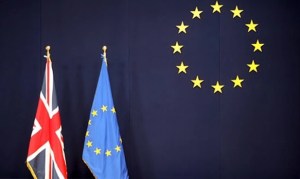
Deal Or No Deal?

Deal.

So, to summarise our prime minister’s magisterial achievement at the European Council summit in Brussels:

  • We won’t become part of something (a European superstate) which can only come about through a new treaty which Britain already has the right not to ratify, making this renegotiation “win” utterly superfluous
  • We have supposedly won a unique exemption from “ever closer union”, though curiously the treaty which firmly commits us to this goal will go unamended
  • We won’t join the euro – an obvious extension of the status quo which any British prime minister could have achieved simply by staying home in Downing Street and binge-watching Netflix
  • Same for Schengen and “open borders”
  • There will be new restrictions on migrant benefits, now apparently a burning issue yet something which wasn’t even on most people’s list of EU grievances until David Cameron suddenly started talking about it just prior to his European shuttle diplomacy

Peace for our time.

Britain - UK - European Union - Referendum - Brexit - Punishment Beating

Agree with this article? Violently disagree? Scroll down to leave a comment.

Follow Semi-Partisan Politics on TwitterFacebook and Medium.

The Daily Toast: Iain Dale Is Right, Boris Johnson The EU Agnostic Is No Leader

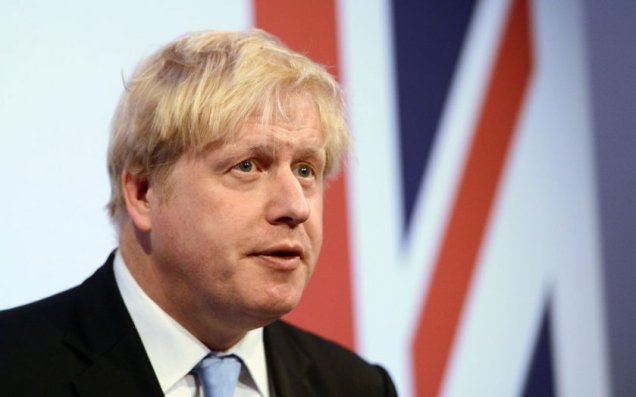
Boris Johnson - EU referendum

Any politician who has not yet stated their position on Brexit is politically calculating, not genuinely agnostic, and forfeits the right to call themselves a leader

Iain Dale makes the short and convincing case that Boris Johnson is a man of absolutely no conviction on the most important issue of the day, and that consequently he should not be looked up to as a potential Conservative Party leader or prime minister.

Dale writes in Conservative Home:

Potential prime ministers need to be leaders, not followers. The fact that we won’t find out until today which side of the EU argument Boris Johnson will fall down on says a lot. We all know that he’s not a genuine Eurosceptic, so for him to continue to flirt with the Leave campaign tells us much about his political calculation.

I still think he will ally himself to the Prime Minister in the end, but let’s assume he doesn’t. Does anyone believe that such a move would be fired by genuine political conviction? Of course not.

In such circumstances, he will have calculated that if he becomes the de facto public face of the Leave campaign and that Britain then votes for Brexit, David Cameron would have no alternative but to resign – and that he himself would become party leader by acclamation.

Such a calculation may be right. But it would make Frank Underwood and Francis Urquhart look like amateurs. Some people may think that wouldn’t be a bad thing. I think it would stink.

Meanwhile, the Independent breathlessly “war-games” all of the possible outcomes, focusing on the most important thing in this entire EU referendum debate – the consequences for Boris Johnson’s precious career:

It’s decision time for Boris. Having spent months – if not years – teasing David Cameron (and the rest of us) as to whether he is an ‘outer’ or an ‘inner’ the time is fast approaching when the Mayor of London and possible future Tory leader (and Prime Minister) will have to make up his mind which side he is going to back in the EU Referendum.

Boris calls for Brexit – but the country says we want to stay.

This would be the worst of all worlds for Johnson’s burning ambition. He would have staked his reputation on a ‘leave’ vote and been rejected by the voters. He would be punished by Cameron and left to languish on the backbenches. His electoral mystique would be shattered and his chances of succeeding Cameron would disappear. Johnson knows this – and that is why he is so reluctant to take such a big risk and nail his colours to Brexit.

No, the time for Boris Johnson to make up his mind is not “fast approaching”. That time is now a rapidly-shrinking dot in the rear-view mirror.

Boris Johnson apparently aspires to lead the country. Real leaders (not that we have seen one in awhile) set out their vision and inspire, persuade, cajole or threaten their followers to march on toward their chosen destination. They do not wait to see which direction the majority of their flock split before sprinting to the front of the column and pretending to have been leading them all along. They do not skulk quietly at the back, grinning and flirting with both sides of an existential debate and hedging their bets until the last possible moment.

For a biographer and self-professed admirer of Winston Churchill, Boris Johnson is almost singularly lacking in any of the key qualities of our great wartime leader. Winston Churchill endured many years in the political wilderness due to the unpopularity of his political beliefs – beliefs which he expressed loudly and eloquently, whether they were right or wrong, wildly popular or deeply unfashionable. Churchill did not hedge his bets by making ambivalent noises about Nazi Germany’s re-armament in the 1930s – he railed against Hitler and strongly opposed the policy of appeasement, at a time when many in the country preferred to bury their heads in the sand and avoid facing reality.

Boris Johnson, by contrast, puts his own career first, second and third. And if he does have strong feelings one way or another about Britain’s membership of the EU, they are firmly subordinate to his concern for his own personal advancement. Yet he gets a free pass from the media on account of his bumbling persona and the fact that he is endlessly quotable, even when (as is nearly always the case) he is actually saying absolutely nothing of any importance or lasting value.

We have had leaders who care primarily about their public image and personal career advancement before. We have one now. Boris Johnson would just take this trend to its logical conclusion: the pursuit and holding of power as the first and only objective, with any core principle liable to be cast aside if doing so will help to shore up the incoherent centrist coalition of a support base – support which may be a mile wide but only an inch deep, as Tim Montgomerie warned on his recent departure from the Conservative Party.

Richard North says it best when it comes to the media’s obsession with Boris Johnson’s conspicuous fence-sitting:

Having to contend with this obsession, I have advanced, is like being a policeman attending a multiple car pile-up while a passer-by attempts to talk to him about their pet hamster.

If and when Boris Johnson finds it within himself to act like a leader, we should reconsider giving him the time of day. But so long as he continues to act in such a nakedly self-serving and principle-free way, the media should stop reporting on Boris’s dithering and start holding to account those people who actually have the courage to publicly declare their positions.


EU Democracy - Brexit

Agree with this article? Violently disagree? Scroll down to leave a comment.

Follow Semi-Partisan Politics on TwitterFacebook and Medium.

Quote For The Day

Westminster - Big Ben - Parliament - Night

You might not be willing to devote the time and energy to understand how electricity actually works, or the mechanisms of your democracy, or the insights behind irrational decision making. More likely, you don’t want to expend the emotional labor to push through feeling dumb as you dig deep on your way to getting smart.

That’s always been an option. You can just use the tool without understanding it, copy the leader without realizing where she’s going, follow instructions without questioning them.

You can choose to be a cog in a machine you don’t understand.

If that’s working for you, no need to change it.

Seth Godin


With the EU referendum potentially only months away, it is incumbent on all of us to be informed citizens at this time, and not passive consumers or myopic public service users. We can think with our hearts and our wallets, but we must think with our heads first and foremost, and actually seek to understand the issues beyond the soundbites – no matter what side of the Brexit debate we think we are on.

This debate is about more than the bogus and unverifiable trade and investment statistics put out by the official campaigns on either side. It is about sovereignty, the continued relevance of the nation state as a key building block in world affairs, and the future of human governance itself. The choice we make – and the precedent we set in either validating or rejecting the EU model – may prove to be the most influential thing that the United Kingdom does on the world stage since Suez.

Do we reaffirm our commitment to the nation state as the best guarantor of our freedoms and liberties, or do we take a leap into the unknown by remaining in the EU and following it to its ultimate destination – a future of remote, supranational governance with all the trappings of democracy, but none of its spirit? That is the question before us.

It demands our full and serious attention as engaged citizens. We owe that much to our children, who will feel the benefit or suffer the consequences of the choice we make.

I explore these ideas in more detail in this piece from 2015, entitled “What comes after Britain?”

Cogs - Democracy

EU Referendum - Brexit - Democracy

Agree with this article? Violently disagree? Scroll down to leave a comment.

Follow Semi-Partisan Politics on TwitterFacebook and Medium.

What Conservative Government? – Part 3, Tim Montgomerie Edition

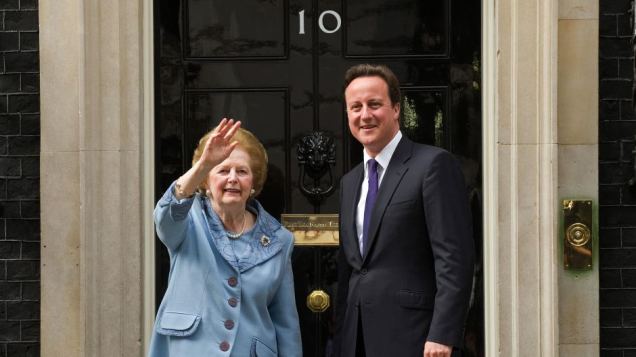
David Cameron - Margaret Thatcher - Coke Zero Conservatism

You, sir, are no Margaret Thatcher

Tim Montgomerie has finally had enough. He is embarking down the lonely path of exile trodden by many of us who remain deeply proud to call ourselves conservatives (with a small C), but who feel absolutely no connection, affinity or devotion to the ideologically shapeshifting, centrist machine led by David Cameron. And he is resigning his membership of the Conservative Party.

Montie signs off with this warning in the Times:

The PM will no doubt treat with disdain my resignation like the departure of tens of thousands of once-loyal grassroots members who have already walked away. But one day an opposition party will get its act together or a wholly new party will emerge. At that point there’ll be a realisation that the Tories’ 40-odd per cent in current opinion polls was a mile wide but an inch deep; reflecting disappointment at alternatives rather than allegiance.

And at some point Britain will notice that the Conservatives didn’t fix the roof when the sun was shining. That we will head into the next economic downturn with the public finances still in precarious shape, with vital airport runways unbuilt and banks too-big-to-fail as big as ever. And if Mr Cameron gets his way we’ll still be powerless to control immigration from an economically turbulent, declining EU, of which we will be an impotent member.

But why desert the Tory party now that they finally hold a majority administration for the first time since 1997?

Tim’s reasons are exactly what you would expect – the abysmally centrist, soul-deadeningly unambitious agenda which has been set by David Cameron and George Osborne since 2010, and which this blog has been constantly condemning since I began writing back in 2012.

The Conservatives are supposed to be the party of fiscal responsibility, and yet the national debt has nearly doubled under George Osborne’s watch, while he struts and crows about his meagre attempts to reduce the annual budget deficit.

The Conservatives – at their best – lift people up out of disadvantaged circumstances and help them to realise their own innate potential, rather than trapping them in a life sentence of government dependency and subsistence. But David Cameron’s government has been half-hearted on housing, on infrastructure, on welfare – kicking the can down the road, and pandering to their wealthy, older, property-owning base at every turn.

The Conservatives are meant to be the party of a strong national defence, but under David Cameron the military has been pared back to the bone, with many essential capabilities (like maritime patrol aircraft) eliminated entirely just when they are needed most, and our aircraft carriers – crucial to maintaining Britain’s status as a world power with expeditionary military capabilities – decommissioned, with their replacement not due to come online until 2018.

The Conservatives are meant to be the party of national sovereignty and of patriotism, and yet in David Cameron we have a prime minister who only glibly and unconvincingly talked the eurosceptic talk, and who is currently perpetrating a fraud on the British people with his cosmetic and entirely irrelevant “renegotiation”.

And one might add (though Tim Montgomerie did not mention this in his resignation letter) that the Conservatives traditionally stood for individual liberty, and the right of the people to go about their lives unmolested and undisturbed by government. But David Cameron’s government – with its creepy “plan for every stage of your life” – is determined that the state involve itself in as much as possible, and has cynically exploited national security concerns to roll back civil liberties and undermine privacy.

But enough of me – I’ll let Montie speak for himself:

Could David Cameron be much more different [than Thatcher]? He promised to bring down immigration but despite Theresa May’s hollow rhetoric, it’s rising. And that defining mission to eliminate the deficit? The Treasury is still borrowing £75 billion a year — a burden on the next generation that would once have shocked and shamed us, and still should. The national debt is up by more than 50 per cent, but this hasn’t seen our armed forces rebuilt. They’ve been cut to the bone.

What about fundamental change in Britain’s relationship with Brussels that the PM pledged, promised and vowed to deliver? The 69 per cent who think he got a bad deal are right. The newspapers that called the deal a “joke”, “conjuring trick” and “delusion” weren’t exaggerating. But it took the Fourth Estate rather than Tory MPs to point out the emperor’s naked state. With a few honourable exceptions Conservative parliamentarians were silent when Mr Cameron, pretending to have changed anything that matters, stood at the same dispatch box at which Mrs Thatcher vowed to fight European integration.

This criticism is spot-on. It has been particularly galling in recent weeks to see just how few current Tory MPs – particularly of the newer intakes – have continued to voice the principled euroscepticism which they were only too happy to display while flaunting their wares to their local constituency party selection committees.

The EU referendum is not just another political issue to be legitimately haggled over by MPs who broadly share the same outlook. This isn’t an arcane policy debate or a minor difference of opinion over fiscal policy – it is absolutely fundamental to how Britain will be governed for the next decades and beyond, and the fact that so many Conservative MPs choose loyalty to their chameleon-in-chief over their constituents and their country is profoundly depressing.

Montie goes on to warn that the Conservative Party will not have the fortune of a weak and divided opposition forever – and that the narrow window for effecting real radical conservative reform is being missed:

For the moment Mr Cameron can get away with all of this. Labour moderates are no nearer getting rid of their extremist leader than when he was elected. It will probably take a generation before northern England and Scotland trust the Lib Dems again. And Ukip, although resilient at double figures in most opinion polls, is too Trump-ian to mount a credible challenge for power.

Faced with a weak, divided opposition in the 1980s Mrs Thatcher moved the country forward. She seized the opportunity to deliver tough reforms that a more effective opposition might have stopped. Today, David Cameron and George Osborne are doing little that Blairites or Cleggites could object to. I recently asked Peter Mandelson what separated his politics from that of Mr Osborne. He joked that the top rate of income tax was too high. At least I think he was joking.

This is also true. And Tim Montgomerie rightly acknowledges that there may well be short-term electoral dividends to be won with a doggedly centrist approach. But only if winning elections is all you care about. If you actually want to do something useful and positive with the power you wield, then the Cameron/Osborne approach is nothing short of a disaster.

As I have written many times before on this blog, the unhinged, virtue-signalling British Left are determined to see the current Conservative government as some kind of ideologically extreme, Thatcher-on-steroids, evil and inhumane government, despite the fact that in reality the government is profoundly centrist. Ed Miliband first started allowing this narrative to take hold as he sought to buy breathing space for his party back in 2010, but six years on and the Labour Party are now in the midst of being devoured by the ‘Tory Scum’-roaring beast that they unleashed.

And since anything that conservatives of any stripe now do will automatically and reflexively be painted by the Left as malevolent and evil, there is absolutely no point in trying to curry favour with the centre-left by copying New Labour policy on taxes, wage controls or anything else. Since the hysterical Nazi comparisons are going to come flying at us come what may, we should at least be using this time of limited and disorganised opposition to boldly enact a radical conservative agenda, much as Thatcher did in the mid 1980s. But this is not happening, and Montie’s resignation suggests that he has given up hope of a change in strategy, even after Cameron goes and is (likely) replaced by Osborne.

And who can blame him? I saw the writing on the wall when I moved back from Chicago in 2011, as it became clear that Cameron’s ideological caution was not a function of being in coalition with the LibDems, but was actually his true, authentic self. And so I never rejoined the Conservative Party back then. But if I had, I too would be cutting up my membership card in solidarity with Montgomerie.

I’m currently reading an excellent book – “Thatcher’s Trial”, by Kwasi Kwarteng, the Conservative MP for Spelthorne. The book focuses on the early days of Margaret Thatcher’s premiership, specifically the period from March to September 1981 when she had to negotiate a difficult Budget and ultimately reassert her authority with a bold Cabinet reshuffle.

I’m only half way through Kwarteng’s book, but the portrait he paints is a true profile in courage – somebody with firm and unyielding principles, a strong ideological compass, a righteous hatred for consensus politics and the ability to impose her will on her party and her country. In short, Kwarteng is describing everything that David Cameron, Thatcher’s successor, is not.

Back when Jeremy Corbyn was on the cusp of being elected leader of the Labour Party, this blog asked:

If David Cameron’s Conservative Party was voted out of office today, what will future historians and political commentators say about this government fifty years from now? What will be the Cameron / Osborne legacy? What edifices of stone, statute and policy will remain standing as testament to their time in office? Try to picture it clearly.

Are you happy with what you see?

I genuinely don’t know what legacy David Cameron thinks he is building through the course of his rootless premiership. But it is not a legacy with which I wish to be associated in any way.

It has been lonely these past few years, being a conservative without a party at a time when political opponents assume we must be thrilled with David Cameron’s every slick and insincere pronouncement. But at least we now have Tim Montgomerie to keep us company in our solitude.

Now, the first order of business for the inaugural meeting of Conservatives in Exile: how do we get our party back, and save it (and the country) from Cameronism?
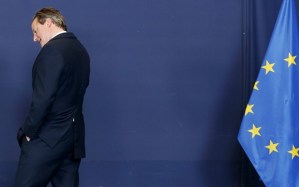
 

Britain's PM Cameron arrives to pose for a family photo during an EU leaders summit in Brussels

Agree with this article? Violently disagree? Scroll down to leave a comment.

Follow Semi-Partisan Politics on TwitterFacebook and Medium.

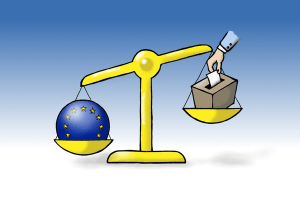
In A Democratic Battle Between Westminster And The EU Parliament, There Is No Contest

EU Parliament - European Union - Democratic Deficit

Democracy does not start and end with proportional representation, and claims that the EU Parliament has more democratic legitimacy than the UK Parliament in Westminster are absurd

Continuing his argument against Brexit, Paddy Briggs makes a point on his “Letter from London” blog that I have seen recur several times among pro-EU advocates – namely, that it is the British parliament which lacks democratic legitimacy, and that the EU parliament (by virtue of being elected using a more proportional system) is actually the better and more legitimate of the two.

Briggs writes:

The European Union is not as democratic as it might be but it is still more democratic than the national parliaments of some of its members – including that of Britain. We choose who will represent us in Strasbourg and Brussels (the MEPs) via a fair voting system under which every vote counts. In Britain we have an unfair voting system and even a whole Upper House that is not elected at all!

It shouldn’t be necessary to refute this particular line of argument, but I’ll do so for the record, since a clear effort is underway to turn one of the key weaknesses in the europhile armoury into an unlikely – and misleading – strength.

Democracy is not just a matter of how proportional your electoral system is. You could have the most proportional system in the world, with MEPs allocated precisely according to vote share across the European Union, and you would still be light years away from democracy. Because democracy means so much more than just allocating seats in a legislature according to the vote share of the pitifully small percentage of people who bother to take part in European elections.

And what Paddy Briggs neglects to mention is the fact that the EU has a fundamental flaw far worse than the UK Parliament lacking proportional representation. The EU parliament lacks the first half of the word “democracy ” itself – it lacks a demos.

The unavoidable truth which the EU federalists and Briggs seem desperate not to acknowledge is that most EU citizens simply do not feel European first and foremost. Therefore, any attempt at supranational governance which forms a pyramid with the EU at the top, national legislatures beneath and regional and local assemblies below that is doomed to fail, because hardly anyone recognises the legitimacy of the top layer. Subsidiarity is all very well – Briggs talks it up in his piece, and makes valid criticisms of over-centralised British government – but it is irrelevant if there was never any requirement or demand for the Brussels top layer in the first place.

You can have the best parliament in the world, but if people do not feel a part of the organisation or state which it supposedly serves then it will inevitably become nothing more than an ineffectual talking shop for the failed elites and third-tier politicians who couldn’t make it in the premier league back home. Sound familiar?

Worse still, as the unwanted process of EU integration continues, we will likely see the remaining “moderate” parties squeezed out of the EU parliament entirely, and replaced by parties which – unlike UKIP – may actually be genuinely extremist in outlook, and fully deserving of Briggs’ scorn. At that point, it will be unthinkable to include the EU parliament in the European Union’s central decision-making, and the only part of the whole machine with any claim to democratic legitimacy will be cut out of the loop entirely to prevent Golden Dawn from determining social policy for the whole of Europe.

Paddy Briggs feels like a European citizen – one of my fellow Brexiteer bloggers might well describe him as a proto-EU national just waiting for the state to hatch. And that’s fine. But Briggs is in the tiny minority, and he should have the honesty to admit as much, and recognise that his “European first” identity is not shared by most people in Britain.

One might also mention that an institution can hardly be said to be “democratic” when it is unable to propose new legislation of its own, and is in effect merely a rubber stamp for initiatives cooked up by the European Commission or accountability-dodging national heads of government – again, nothing to do with the different electoral systems in Westminster and Brussels/Strasbourg. If somebody brings me home a surprise dinner from a restaurant of their choice, picked without my knowledge or input, and I only have the choice between eating that meal or going hungry, it can hardly be said that I have freedom of choice over my diet. The same goes for the EU parliament and the legislation which oozes through it.

Briggs goes on to say:

We now have a bizarre situation where the British Government, the leadership of all our respectable political parties, virtually every one of our national institutions, the majority of our Members of Parliament, virtually every major Business (and more) acknowledge the necessity not just of remaining in the EU but in improving the effectiveness of our participation.

But you could (and should) also interpret this statement as evidence that every group with entrenched establishment power – government elites, cultural elites, corporations – is in favour of maintaining the status quo, while euroscepticism is rife among individual private citizens. Which is, of course, actually the case.

There is indeed a divide on the question of Britain’s place in the EU, but the fault line does not lie between sober-minded rational people on one side and frothing-at-the-mouth eurosceptics on the other. The line is drawn between people who currently benefit from the status quo or might potentially lose money in the event of change on one hand, and the little guy – people whose very government is being ripped away from them against their will – on the other.

It is rather disingenuous to suggest that “every one of our national institutions” is in favour of remaining in the EU as though they independently arrived at this decision through clear-headed analysis, while deliberately ignoring the fact that many of these same institutions – from the BBC to universities – also happen to receive large cash grants from Brussels (or rather, from the UK taxpayer via the Brussels pork machine).

Ultimately, the EU referendum comes down to a question of sovereignty. The S-word. Forget the trumped up trade figures on both sides, which are unverifiable and can be fought to a draw. And forget the scaremongering, too. If you truly believe that most people in the UK feel European before they feel British (and I’d love to know who you are hanging out with, if so) then by all means vote “Remain”. You may as well, since the European institutions would indeed then have more legitimacy than the UK institutions – though I would love to see you now explain the low voter turnout in EU elections.

But if you believe – correctly – that the majority of UK citizens feel British more than they feel European, then you have a responsibility to vote for Brexit, because to do otherwise would doom us to remain part of an explicitly political union whose governance is undemocratic by simple virtue of nobody believing in the EU as a legitimate, organic construct. To do anything other than vote for Brexit would be to condemn your fellow citizens to a future where our highest level of governance is at a level we do not recognise or feel a part of. And that would be truly anti-democratic.

I agree with many of Paddy’s criticisms of the current UK constitutional settlement, particularly with regard to the legislature and our unelected upper house. But it is a stretch too far to claim that the EU parliament is somehow more democratic than our own, when hardly anybody can be motivated to take part in EU elections, and even those who do would struggle to tell you the name of their MEP – certainly not the case for the Westminster parliament.

The British political system has many flaws (which is why I am attracted to the Harrogate Agenda as a sensible series of steps to improve our governance) in need of urgent remedy, but to claim that it is in any way worse than that toothless talking shop of an EU parliament is quite simply divorced from reality, cherry-picking facts in support of a tottering narrative.

I hope that on reflection Paddy Briggs will recognise some of the shortcomings in his argument, and retract his assertion that the EU parliament has greater democratic legitimacy than that of the UK parliament. I don’t for a moment begrudge Briggs his sincerely held pro-EU position, but neither will I stand by while europhiles attempt to unfairly denigrate the United Kingdom in an attempt to make their rusting, 1950s anachronism of a European superstate seem more appealing by contrast.

The EU federalist dream must stand and fight on its own merits in this referendum – and its advocates should not pursue a dishonourable victory by attempting to undermine the good standing of the United Kingdom for rhetorical gain.

European Parliament

Agree with this article? Violently disagree? Scroll down to leave a comment.

Follow Semi-Partisan Politics on TwitterFacebook and Medium.